So you stop drinking.
Or using.
So why do you feel more anxious?
Maybe you expected that once you removed the substance,
Your anxiety would start getting better.
But instead,
You feel restless.
Your mind won't stop.
You notice every sensation in your body.
You worry about things you never seemed to worry about before.
And sometimes,
The anxiety gets intense enough that you start thinking,
If this is what recovery feels like,
How am I supposed to keep doing this?
If that's been your experience,
I want you to understand something important.
Feeling anxious in recovery doesn't necessarily mean that something is going wrong.
In many cases,
Anxiety is part of your mind and body.
Learning how to function without the thing they became accustomed to using for relief.
And learning how to respond to that anxiety differently.
Can become one of the most important parts of protecting your recovery.
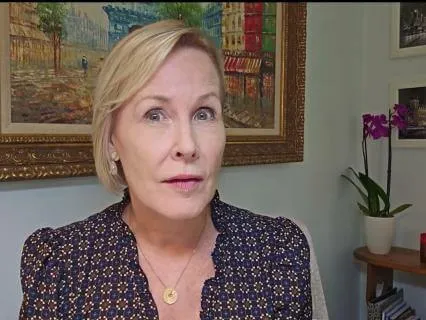
Welcome to Resilience and Recovery,
Mind,
Body,
And Spirit.
I'm Dr.
KJ Foster,
And in this series,
We're going to talk about recovery as something much bigger than simply not drinking or using.
Because recovery involves your brain.
Your nervous system.
Your emotions.
Your relationships.
Your identity.
Your spirituality.
And ultimately,
Learning how to live through experiences you may once have tried to escape.
And today we're starting with something I see all the time.
Anxiety in recovery.
Why anxiety can become more noticeable.
For many people,
Alcohol or drugs didn't just create problems.
They also solved problems temporarily.
Maybe alcohol quieted your thoughts.
Maybe using helped you disconnect from uncomfortable emotions.
Maybe it gave you relief.
From social anxiety.
Maybe it helped you sleep.
Maybe it helped you stop thinking about something painful.
Maybe.
It simply changed how you felt for a little while.
And that's important to understand.
Because your brain learns from what works.
In the short term.
If I'm anxious,
And I drink.
And my anxiety decreases,
My brain learns that helped.
If I'm overwhelmed.
And I use and suddenly I don't feel as overwhelmed.
My brain learns,
Do that again.
That's how a coping strategy can gradually become a pattern.
And eventually,
A pattern can become something your brain expects.
Then recovery removes that familiar response.
The anxiety comes.
But now you're not drinking.
You're not using.
You're not escaping in the same way.
And suddenly,
You may become much more aware of feelings that were there all along.
Your nervous system.
Is adjusting too.
There's also a physical component to this.
When substances have repeatedly affected the brain and nervous system,
The body adapts.
It tries to maintain balance.
So when the substance is removed,
The nervous system doesn't necessarily return to baseline immediately.
Depending upon the substance,
The person,
How long they used,
How much they used,
And many other factors,
There can be a period of adjustment.
You may experience things like Restlessness.
Difficulty sleeping Irritability increased sensitivity to stress.
Physical tension.
Racing thoughts.
Or anxiety that seems to come out of nowhere.
And one of the biggest mistakes we can make.
Is assuming I'm anxious,
Therefore,
Something must be wrong.
Sometimes your nervous system is simply doing what nervous systems do.
It's adjusting.
It's learning.
It's recalibrating.
And that takes time.
But there's another layer.
This is the part I think we sometimes overlook in recovery.
You aren't only learning how to live without a substance.
You're learning how to experience life.
Without immediately changing how you feel.
And those are very different things.
Because let's say anxiety shows up.
Your old learning may have been.
Anxiety,
Get rid of it.
Recovery introduces another possibility.
Anxiety.
Allow it to be present.
Continue living.
That sounds simple.
It isn't always easy.
Because when you've spent years responding to uncomfortable feelings as problems that need to be changed,
Allowing an uncomfortable feeling to exist can feel incredibly unfamiliar.
Your brain may interpret discomfort as something's wrong.
I can't handle this.
This isn't going away.
I need relief.
And that's where anxiety and relapse vulnerability can intersect.
The problem isn't always the anxiety.
One of the most important things I've learned in my own recovery and in working with people struggling with anxiety and addiction is that the feeling itself is often only part of the problem.
The other part is what we do because the feeling is there.
We fight it.
We analyze it.
We try to determine why it's happening.
We check whether it's getting better.
We avoid things.
We seek reassurance.
We tell ourselves.
I shouldn't feel like this.
And in recovery,
Another thought may appear.
I need something to make this stop.
That's the moment I want you to begin noticing.
Not because having the thought means you're going to relapse.
It doesn't.
But because it gives you an opportunity to practice a different response.
Recovery is new learning.
This is one of my favorite ways of thinking about recovery.
Recovery isn't simply about stopping an old behavior.
It's about creating new learning.
Every time you experience anxiety and don't drink?
New learning.
Every time you have an urge and don't have to immediately act on it,
New learning.
Every time you have a difficult day and allow it to be a difficult day.
New learning.
Every time you experience uncertainty without demanding an answer.
New learning.
Your brain gets another experience that says.
Apparently,
I can feel this and still be okay.
Knot.
I love this feeling.
Knot I hope I feel anxious tomorrow.
Just.
.
.
I don't have to escape this.
And over time.
Those experiences matter.
This is where resilience begins.
Enters recovery.
Sometimes we think resilience means becoming so strong that things don't bother us anymore.
I don't think that's what resilience is.
Resilience is having the capacity to experience discomfort without allowing discomfort to make every decision for you.
That's enormously important in recovery.
Because recovery doesn't promise.
A life without anxiety.
Or sadness.
Or anger.
Or loneliness or uncertainty.
Recovery gives you the opportunity to build a life in which those experiences no longer automatically require escape.
That's a very different goal.
And in my experience,
A much more sustainable one.
What can you practice?
So if you are experiencing anxiety in recovery,
Here are three things I want you to begin practicing.
First,
Notice the feeling before trying to fix the feeling.
I'm noticing anxiety.
That's it.
You don't immediately have to determine why.
Second.
Notice the urge that comes with it.
Maybe it's,
I need to calm down.
I need reassurance.
I need to figure this out.
Or.
.
.
I need something to take the edge off.
Notice the urge without automatically following it.
Third,
Practice allowing the experience to be unfinished.
You might say,
I can feel anxious without solving this right now.
This is uncomfortable.
And I don't have to escape it.
Or simply Anxiety can come with me.
And then return your attention to what you were doing.
That's the practice.
Not making anxiety disappear.
Changing what happens next.
Practice for the week.
I want every episode of Resilience and Recovery to leave you with something you can actually practice.
So this week.
When you notice anxiety,
Pause before doing anything about it.
Notice.
What am I feeling?
And then What is my brain urging me to do because I'm feeling it?
You don't necessarily need to stop the urge.
You don't need to make yourself feel.
Differently.
Just create a little space between feeling urge and response.
That's where choice begins.
And choice is one of the places where recovery grows.
If anxiety has felt stronger.
Since you entered recovery.
I hope this helps you see it differently.
Your goal isn't to become someone who never feels anxious.
Your goal is to become someone who can experience anxiety without automatically needing to escape from it.
That's resilient.
And that's recovery.
Next week,
We're going to talk about another experience that can be incredibly confusing in recovery.
Why nothing seems to feel good anymore,
Even though you've stopped drinking or using.
We'll talk about what's happening in the brain.
Why this experience can occur.
And why it doesn't necessarily mean recovery isn't working.
Until then.
Remember.
You don't have to feel good to practice recovery.
Sometimes,
Recovery is simply learning that you can stay when you don't.