Welcome to Restful Journeys.
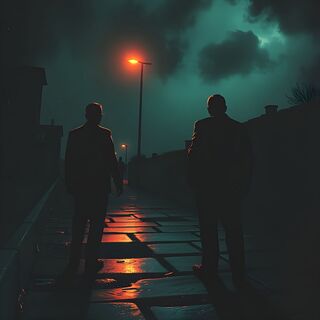
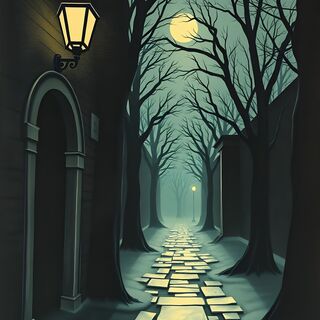
In this track I will continue reading The Last Cozy Lantern of Briar Hollow.
This will be chapter six.
Please find a comfortable place to sit or lie down and relax.
Take a few moments to clear your mind and allow yourself to listen to these words.
Let's continue with Chapter 6 What Mina Sawl Vos stopped on the cobbles halfway down the lane because the window above her had a nose in it.
It was pressed flat.
A small pale button of a nose with a mouth squashed open beneath and two eyes fixed on her coat.
Breath bloomed on the glass and shrank,
Bloomed and shrank.
Vos had come down from the square,
Meaning to knock on a door,
And think of a first question on the way.
She had not planned to be inspected before she got there.
Behind her,
The tower clock had said ten to four when she crossed the square.
Her own watch said it was eleven minutes slow.
The nose withdrew.
A face took its place,
Whole now,
Round,
Freckled,
With a fringe cut by someone in a hurry.
The face considered her for a long while.
Voss lifted one hand as she might to a customer across the shop.
And held it there.
Good afternoon.
She called up.
You'll be Mina Callaway.
The face did not ask how she knew.
It vanished from the glass and somewhere inside the house a pair of soft souls went down a stair,
One step at a time,
With no hurry in them.
Voss climbed the short flight to the front step and waited beside the door.
It opened inward before she had decided whether to knock.
Mina came out,
A small girl in a pinafore with her sleeves pushed past the elbow and stood facing her with her hands at her sides.
Voss had to look well down to meet her eyes.
She said nothing.
Vos,
Who had mended clocks for people who also said nothing,
Said nothing back and let herself be looked at.
Mina reached out and took hold of the shoulder of Vos's coat.
She turned over the cloth,
Looked at the lining,
And sniffed the fold.
Oil.
She said.
Machine oil.
Most days I smell of it before I smell of anything else.
Is that a point against me?
Mina did not answer.
She let the coat go and took hold of Vos' right hand instead,
Turned it palm down and poked the first finger,
Then the second,
Hard as if testing fruit.
Ink had worked into the whorls so deeply that no scrubbing at the end basin had lifted it.
It doesn't come off.
Mina said.
I've tried pumice and vinegar and once a very rude word.
The gap in Mina's front teeth showed for an instant and was put away again.
She turned her attention to the satchel.
Without asking,
She lifted the flap with two fingers and bent her head to look inside.
Voss held still and did not offer to open it wider.
The tweezers lay in their roll,
The files stood in their loops,
The small hammer sat in its pocket,
And the oil model was corked and wedged upright beside a twist of rag.
Mina looked at each in turn,
Lips moving slightly,
As though counting.
She touched only the hammer with one fingertip on the flat of its head.
That's the smallest one I own.
Voss said.
It moves the pin about a width of a hair.
Anything bigger would be showing off.
Mina let the flap fall and looked at the buckle,
Which she did not touch,
And then at Voss's face,
Which she did.
Her eyes went over it the way they had gone over the fingers.
Boss stood and was weighed.
She was aware of wanting,
Quite badly,
To pass.
Then Mina's voice came,
Flat and perfectly clear.
Are those for killing clocks or for mending them?
Mending,
Mostly.
She said.
Killing them is what pigeons are for.
Mina absorbed this,
Then nodded once,
As if a price had been agreed.
Is that your only question?
She asks.
Vaughn said.
I have several.
I'll ask them one at a time,
If that suits.
I'm better at it than at the other way.
What other way?
All at once.
Adults do it.
It makes the person answer the easiest one and forget the rest.
Mina considered that and found it sound.
She sat down on the top step with her knees drawn up under her pinafore and patted the stone beside her.
Voss lowered herself onto it and her satchel clinked against the boards of the door frame.
Right.
Boss said.
The night Mr.
Vance died.
What were you doing?
I was in bed.
All night?
That's a second question,
Said Mina.
So it is.
And I will draw it.
I was in bed.
Mina repeated,
With the patience of a teacher going over a sum for a slow pupil.
Voss nodded and took her time over the next one.
What was the fog like?
It was as thick as porridge.
Lumpy porridge or smooth.
Lumpy with a skin on.
Minu's gap-toothed mouth showed briefly and went away again.
You could not see the mill from here.
You cannot see the end of our garden.
Vos glanced at her cuff where the figures she had penciled that morning were still legible.
Could you hear anything from your window?
I could hear the lane.
And what does the lane sound like?
Mina thought about it honestly.
Water from the mill race.
A shudder that bangs when the wind comes At the cottage by the bend.
Boots.
Sometimes.
Boots are different when there's fog.
They go soft at the front and then they stop being there.
That's very well put.
Boss said,
And meant it.
She had spent twenty years listening to gear trains through a cabinet wall and had never said it so neatly about anything.
Did you see anyone?
I saw Mina began and stopped.
She looked at Voss.
It was not a shy look.
She studied her face the way Vos studied a palette before deciding whether it would take another year's wear.
The corners of the mouth,
The sed of the eyes,
Whether anything gave.
Vos kept her own face as plain as a clock dial and looked back at the lane where Hen was crossing the cobbles with great deliberation and no apparent destination.
A full minute went by that way.
Boss did not feel it.
I was awake at my window.
Mino said at last.
Late,
After mother had gone to sleep.
Yes,
Said Vos.
I saw Dr.
Finch walking back along Mill Lane.
Late.
She said it exactly as she had said the porridge,
And then she shut her mouth and picked at a flake of paint on the edge of the step.
Vos let a moment pass,
And the hen reached the far curb and vanished into a gap by the wall.
She thought of a girl of ten,
Kept up past her hour by a restless head,
Watching a lane she knew by heart.
At that age,
The hour of the night is a loose thing.
Late might be 10 o'clock.
Or it might be two.
And the doctor was a man called out at all hours to confinements and fevers and the sudden bad turns of old people.
If anyone in the village had cause to be on that lane after dark.
It was he.
Thank you.
Ball said.
That helps.
Is it?
Mina asked,
Sharp as a pen.
I don't know yet,
" Paul said.
But I'd rather have it than not.
Most people would sooner give me their opinions than their facts.
Mina seemed to find this an acceptable answer.
She stopped picking at the paint.
You can ask me other things,
" she said,
If you like.
I like that very much.
Baal said.
Voss dug into the pocket of her coat,
Past a bent washer and a stub of pencil,
And came up with a boiled sweet and a twist of waxed paper.
She held it out on her flat palm,
The way she would offer a lump of sugar to a horse of uncertain temper.
Mina looked at it.
Then she looked at Voss.
Then she took it between her finger and thumb,
With the care of someone accepting a legal document,
And slid it into her pinafore pocket without unwrapping it.
The paper crackled once on the way down.
You're not going to eat it.
Voss asked.
It's for after.
Mina padded the pocket flat.
Mother counts them.
Does she count them in the jar or in your pocket?
She's very thorough.
Mina said it with some pride and some warning.
Then I'll make sure to hand over only the one.
Yes,
That's best.
Mina considered the lane behind Voss,
The sloping line of roofs going down towards the mill,
And seemed to come to a decision about it.
The cottage second from the mill has the best cat on the lane,
She said.
He's grey.
He sits on the sill and watches the water.
What does he see here?
Water,
She said it as though Vos had asked something slightly foolish.
He likes it.
He's never once gone in.
A sound policy.
I've known engineers with less sense.
The cat by the surgery is a thief.
Mina ticked it off on one finger.
He had a kipper off our table in the spring and sat on the wall to finish it where we could see.
Brazen!
Did you chase them?
Mother did,
With a broom.
He didn't hurry.
She let that sink in.
And the one at the mill door is only a dog in a cat's coat.
The second finger went up.
He barks,
Not properly,
But it's not a meow.
Vos laughed,
Short and surprised,
And she did not mind having been caught at it.
Is that the whole lane then?
Three cats.
That's all that count.
Mina nodded once.
The verdict delivered.
There's a yellow one at the end,
But he's only visiting.
I'll strike him from the record.
You should.
Mina's grin came then,
Wide enough to show the gap in her teeth.
Come back when you've got a better coat.
She said.
What's wrong with this one?
It's got a hole under the arm.
Voss lifted her elbow and found,
Sure enough,
A split seam she had been meaning to deal with since the spring.
She poked a finger through it to be certain.
So it has.
She said.
You'd make a poor clock restorer.
You can dim everyone on sight.
Yes.
Mina agreed with perfect calm.
Then I'll bring a better coat,
And you may inspect the other arm.
I will.
Vos touched the two fingers to her elbow in a salute.
Mina did not return it,
But she did not go in either.
When Vos glanced back from the third doorway up,
The girl was still sitting on the step with one hand flat in her pocket,
Watching.
Three doorways up,
The lane began to climb in earnest and Vos shortened her stride to match it.
She kept to the crown of the road and counted lanterns as she passed them.
Unlit and waiting,
Up to the one by the lane's mouth where the paving widened and the square began.
The tower's shadow had stretched across half the cobbles.
Somebody had propped a ladder against the church wall and did not come back for it.
The grocer's boy was dragging a crate of cabbages in through the square shop door,
And he gave Vos the nod of a person who has been told about her.
She nodded back.
It was the third knot of the day and she was beginning to feel like a fixture.
The vent's cottage door stood ajar.
She did not knock.
She put her head in and said into the dim kitchen,
Anyone minding the shop?
The kitchen answered with the smell of tallow and a kettle ticking as it cooled.
At the back,
The workroom door was wide,
And beyond it,
A square of daylight lay on the flag.
She went through,
Past the workbench with its vise,
Past the bare nail by the door,
And out through the back onto the workshop step.
Allara sat there with her knees up and a wrench across them.
The oil can tilted in her right hand.
A bead of oil crept down the spout and she caught it with her thumb without looking.
Her satchel lay open on the boards beside her knee.
Phos lowered herself onto the end of the step.
You found the girl.
Allara said,
Not looking up from the wrench.
I found the girl.
She found me.
Vos lowered her own satchel to the step and held out a hand.
Have you a rag?
I've got her opinion of my coat all over me,
And I'd like something to put it on.
Allara pulled a gray rag from her apron pocket and passed it across without breaking the slow turn of the wrench.
The cloth was soft with use and smelled strongly of machine oil,
Sweet and a little burnt.
Vos shook it out,
Found it already stained to the color of strong tea,
And began on her fingers for something to do with her hands.
Did she tell you about the cats?
Allura has.
The one by the surgery is a thief.
It is.
It's had more of my suppers than I have.
" Alara laughed,
Short and warm,
And ran oil along the thread.
A drop fell and darkened the step.
She doesn't talk to everyone,
You know.
She told Mr.
Gower once that his meal sounded like a man with a cough,
And he didn't speak to her for a month.
I'll count it a promotion then.
Out past the cottage wall,
The square was losing its edges.
A lamppost stood at the corner,
Black against the gray,
And the tower clock showed a time Vos would not have trusted.
Allara glanced at it,
Then at the sky,
And tightened her grip on the wrench.
Forty lanterns waited,
And the light was going.
Vos shifted along the step,
Close enough that her elbows nearly touched,
And leaned her against the doorpost.
The oil was cool on her skin.
I wanted to ask you something,
" she said,
Light as she could make it,
As one asks after a neighbor's hip.
About the morning they carried your uncle home.
How did it go?
The wrench stops.
Alar lowered it to her knee and after a moment set the oil can down on the step between them with a small ten-click.
She looked out over the square rather than Voss.
You want the morning.
She said.
Not the evening.
The morning,
" said Vos.
Lara picked the wrench up again,
Tipped three drops from the can onto the jaw,
And worked the adjuster with her thumb until it ran smooth.
They brought him in on a shutter.
She said.
Two of the men from the hollow,
And I took the foot.
God knows why.
I think I wanted something to be doing.
She spun the adjuster the other way.
They laid him in the front room and Dr.
Finch came at first sight to see him.
Somebody must have knocked him up.
Boss wiped a smear from the wrench's handle.
The rag was already black at one corner and stank of lamp oil and tallow.
Did he say much?
Not much.
He looked at Uncle and he said what you'd expect.
She squinted along it and set it down on her knee.
I went out to fetch water.
We'd nothing in the house.
I'd forgotten the bucket was dry.
The pump's across the square and it sticks.
So I was a little while.
He stayed in the room with the uncle's things until I came back.
Hmm.
Said Vos and handed the wrench back.
Does the pump always stick or only when you're in a hurry?
Only when you're in a hurry.
It knows.
Allara gave the adjuster another turn and listened to it.
Head tilted,
Dewey Vos listened to an escapement.
It was kind of him,
Really,
Coming so early.
He'd have been up half the night with somebody's cough,
And he came anyway,
In his good coat.
She dribbled oil into the other jaw.
Then the bread started.
A neighbor from the end of the row brought a whole loaf before it even got to the bucket on the hob,
Still warm.
Then another.
I counted five by noon.
I don't know what they thought I'd do with five loaves.
Eat them by the look of the one on your table.
I'm still leading them.
Alara's laugh cracked in the middle and she rubbed her wrist across her cheek.
Leaving a streak of oil there.
And the widow next door,
Who couldn't stand my uncle,
Mind.
They hadn't spoke properly since the business with the hedge.
She sat in my kitchen and cried for two hours,
Great heaving sobs.
I made her tea three times.
In the end,
I thought,
Well,
Somebody ought to,
And it plainly wasn't going to be me.
Some people do it for the whole house.
Said Voss.
She did it for the whole street.
You could hear her at the pump.
Alara shook her head and passed the wrench across.
Wipe that.
It's the one he took on rounds,
And it's never been this clean in its life.
He'd be furious.
Vos took it and ran the rag along the shaft,
Then down into the groove of the jaw,
Where the old grease had packed hard.
She worked it out with the corner of the rag.
The step creaked as she shifted her weight,
And across the square the baker's boy was dragging in the last of the shutters.
Doctors were called to the dead as well as the dying,
She thought,
And a man who came early and in his good coat had done only what his trade required.
Did he stay long once you were back?
" Long enough to say the proper things.
Then he went off to his breakfast,
I suppose.
" Allara took the wrench,
Closed the jaw on her palm,
And opened it again,
Satisfied.
Why?
Did you want to ask him something else?
You've been very thorough with the whole village.
Only because the whole village has been so informative.
Said Voss.
I've had a girl tell me about cats,
A landlady tell me about shortbread,
And I've told a doctor about stairs.
Well,
You can't say you've not been told things.
Allara smiled and for a moment it nearly reached her eyes.
Did the neighbors stay long?
Till dark,
Some of them.
Then they all went home at once,
As if somebody had rung a bell.
Allara tipped the can to check the level and frowned at how little was left.
The dust ground was the worst.
I did it alone,
All 40.
I kept reaching for him to take the can.
Vos went on wiping her fingers,
Though they were as clean as they would get.
Behind them,
The first lamp on the square needed lighting,
And neither of them looked at it yet.
Balls full of the rag over her knuckles.
What will you do when the clock's finished?
Allara's oil can paused above the wrench head.
A bead gathered at the spout and fell onto the step and she watched it go.
Do.
She said.
Wind it,
I suppose.
Somebody has to carry the key up those stairs now,
And I don't think the vestry will manage it by committee.
After that,
When it's running true and the lanterns are lit and there's nothing left to mend,
The satchel sat open on the step beside her knee.
Alara's free hand went to it and lay flat on the leather.
Between the mending book and the tin of matches,
A square of folded paper showed its corner,
Cream-colored and softened at the crease as though it had been folded and unfolded more than once.
Boss looked at the wrench instead.
It was a good wrench,
With a jaw worn bright from honest use.
There's always lanterns.
Alara said.
40 of them,
And they eat oil like boys eat pie.
She pulled the satchel an inch closer.
Ask me after the oiling.
Is that a date or a dodge?
Both.
I'm very economical.
She held up the oil can.
If you're going to sit on my step,
You can make yourself useful.
Hold this steady while I work the jaw.
And don't tip it onto the stone.
I scrubbed that on Monday.
On Monday,
You were not grieving.
On Monday,
I was a woman who scrubbed her step.
Said Allara,
And went back to the wrench.
Voss held the can.
Allara worked oil into the groove where the teeth met and wiped it out again with her thumb,
Black and thick.
She turned the adjusting screw a full circle,
And it moved smoothly,
Which told Voss someone had cared for it for years.
She did not say so.
She suspected Allara knew.
Said Ellora after a while to the Kin rather than to Vos.
Told me this morning I ought to take to a lodger for company.
" I told her I had a ledger for company.
Did she take it well?
She said ledgers don't make soup.
She has a point.
She always has a point.
That's what's so tiring about her.
Alar gave the screw a final turn and set the wrench down on the stone,
With the care of a person putting down something that might go off.
Is it clean?
" Vos picked it up and held it to what was left of the sky.
The square had gone the color of pewter,
And the tower,
At the far side of it,
Stood a shade darker than the roofs.
Somewhere behind the cottage a door banged,
And a woman called a child in to supper,
By every name the child owned.
Of tidy tools.
Neither of them reached for it.
Allara's hand was still on her satchel,
Her fingers spread across the leather,
And her eyes had gone out over the square to where the first lantern post stood waiting for its flame.
It was nearly time.
They both knew it without saying so.
The oil was measured,
The taper was trimmed,
And the girl who carried the can for forty lanterns beside her uncle for years,
Had around to walk with nobody beside her.
She thought of the morning she had just been given,
Plain and in order,
Bread and water and a crying neighbor,
Each laid down in its place,
And of how neatly Ellara had stepped past,
After the oiling,
Without setting a foot on it.
Still,
She would ask,
Not today,
With the light going and the taper waiting,
And the folded paper tucked back out of sight.
But tomorrow overbred in a voice that might be mistaken for idle.
She would ask about the evening itself,
From the last lantern lit to the first word that came up the lane.
She set her palms on her knees and stood.
The step creaked under her and a long,
Dry complaint as she bent to take her satchel from the stone.
Tomorrow then.
She said.
After the oiling.
After the oiling.
Said Alara,
Not quite smiling,
And reached for the paper.
That concludes Chapter Six,
What Mina Saw.
From the story,
The Last Cozy Lantern of Briar Hollow.
Thank you very much for continuing to listen to this story.
I hope that you have become relaxed,
Peaceful and possibly fallen asleep.