Welcome to Restful Journeys.
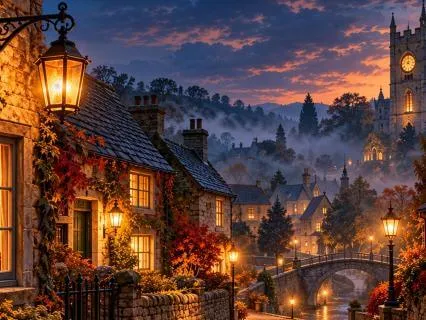
In this track I will continue reading The Last Cozy Lantern of Briar Hollow.
This will be chapter two.
Please find a comfortable place to sit or lie down and relax.
Take a few moments to clear your mind and allow yourself to listen to these words.
Let's continue with Chapter Two,
Fourteen Posts and a Seal.
Hallow,
The good sort,
Not the sort the vicar buys.
Now then,
You'll want the receipt in your head,
Because I don't write them down for anyone who's staying more than a week.
Voss had come in a few minutes earlier to the jangle of a bell on a bent spring and had set her satchel on the counter to free both hands for the ten.
It sat beside the ledger now,
Its buckles clicking when she leaned on it.
Behind her,
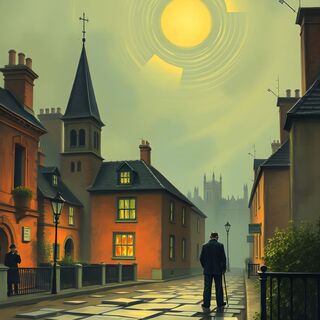
The shop window was a pale square with the nearest lamppost inside it and nothing past that.
The shelves ran up to the ceiling on both sides,
Candles on the left and thread on the right.
And the air tasted of tallow and tin.
You know my name.
Boss said.
She had not given it.
Vos,
Clock,
Came on the morning cart with a satchel the size of a spaniel.
Halloway pushed her spectacles up her nose and consulted the ledger,
Not Vos.
Maude had it from the carter,
I had it from the maude's girl,
And the vicar had it from me,
So it's reliable.
Two pence,
Three,
Four.
You'll be wanting the shortbread at the end.
Buy the buy,
But that's Mod's business.
I was going to ask about the tower.
Everyone is.
Halloway laid the last copper in Vossa's palm and closed the ledger on her pencil.
Four loaves gone before eight this morning,
Which is not a Tuesday habit,
So the whole square has been in.
Ten pairs of boots on that step by nine o'clock,
And every one of them wanted to tell me about Eldred before I'd got the shutters back.
She tucked the pencil behind her ear.
Dr.
Finch has seen it all,
Naturally.
He's our physician.
Treasurer of the clock fund too,
So he'll be the one you want when it comes to paying for your brass.
A man of two keys.
A man of three if you count the surgery.
Now then.
.
.
Hallowee pulled a square of brown paper off the roll and flattened it with her forearm.
The physician was quite clear it was a fall,
Went up to wind the clock,
Or came down from it,
On those steps,
In that fog,
And that was that.
He signed what was needed at first light.
The coroner's been sent for,
Naturally,
But Dr.
Finch says it'll be a formality,
And I'd had heard if he thought otherwise.
She laid the six candles in a row on the paper and rolled them tight,
Folding the ends in her thumbs.
The paper crackled as she pulled the string round twice and knotted it hard enough to creak.
Voss watched the string bite into the paper.
Do you always sell the certainty with the candles?
It comes free.
Holloway bit off the loose end of string.
Same as the weather report,
And that's usually wrong.
I wondered whether it was extra.
Not in this shop.
Halloway's glance came up over their spectacles,
Quick and amused,
And went back down to the ledger.
I don't say it to be sharp,
Love.
I say it so you'll hear it said the right way round before you hear it said another.
It's a small place.
By dinner,
You'll have it from six mouths,
And four of them will have the stare at the wrong height.
Which hide is right?
Steep.
Halloway shrugged.
It's a tower.
Vos turned the tin over once in her fingers and read the lid.
A heron,
Faded,
Standing in reeds.
And Allara Vance?
Does the shop have a view on her?
The shop has a view on everyone,
And the view on Allara is that she carries more than she'll say,
And nobody's offered to take it off her.
Holloway squared a stack of paper bags on the counter.
Now then,
Are you wanting anything else?
Wick trimmers?
Thread?
I have a brown paper sack for the satchel if it's taking the weather.
The satchel has survived worse than weather.
Then that's your lot,
Love.
" Halloway slid the wrapped bundle across the oak and set the tin on top of it,
Square on,
As if she were closing a lid.
Mind the step on your way out.
It's the only one in the square that's honest about being a step.
Voss tucked the tin into the crook of one arm and the candles under the other and hooked the satchel up with two fingers.
At the door,
The bent spring jangled the bell again,
And the fog took the first of the lampposts back into itself.
The step was honest as promised.
Voss founded with her boot,
Came down onto slick cobbles,
And stood a moment,
Working out how to carry a tin of tea,
A bundle of candles,
And a satchel without dropping the one that would hurt most.
Tea on top,
" said Allara from a few paces off.
Always the tea on top.
Uncle used to say you can replace a candle.
She was leaning against the nearest iron post,
Her cap set straight again,
As if she'd been there some time and had not minded.
She pushed off at its false approach and laid a bare hand flat against the metal.
She stepped out and pointed across the cobbles,
And her finger went from post to post like a woman telling beads.
Two by the church wall,
Three,
Four,
That's the pair either side of the square shop,
And you'll have seen Halloway's face in the window of both.
Five is by the cottage.
Six.
Seven.
The fog had begun to thin the far ones to smudges,
Each with a faint yellow bruise where the glass sat.
Eight's behind the pump.
You can't see it,
But trust me.
Fourteen round the square.
Fourteen.
And you'd think that was the job.
Vos had been counting under her breath and had gotten to eleven before the rest were lost.
It's not the job?
Forty!
Allara held up four fingers,
Then thought better of it and dropped her hand.
Forty lanterns,
Oil,
Every one lit by hand,
Every dusk.
The square's the easy part.
It's all flat and everybody's watching.
The rest are strung out along the lanes and up the hill path and round the church wall.
And the hill path has a style in it that I have fallen over more times than I'll admit to a stranger.
She scuffed a boot against the cobbles.
Uncle lit every one,
And I walked beside him with the can and the taper.
We'd come back here when the last one caught and he'd look at the tower clock and tell me how late we were.
Were you late?
Always.
Four minutes,
Usually.
He said it was the style.
Alar laughed,
Short and surprised,
And then looked at the post under her hand as though it had said something.
You'd get the trimming done in the afternoon,
And the wicks and the glass wiped,
And then at dusk,
Taper,
Taper,
Taper.
Uncle could do the whole square in the time it took the church bell to finish.
You would have thought he was lighting a pipe.
Voss shifted her parcels to the other arm.
From where she stood the fourteen post made a ring with a hole in it,
The hole being wherever the gray was thickest.
Forty is a great many,
" she said.
It would take two people the better part of an hour.
It took us 50 minutes on a good night.
Ellora had begun walking slowly towards the cottage,
And Vos fell in beside her.
50 and a bit.
It's the oil that slows you.
You can't hurry oil.
No.
Vos waited until they passed the fifth post,
The one with the chip out of its base.
And who has done the rounds since?
Alara's stride did not break,
But the hand that had been pointing went into the pocket of her dress.
I will,
Tonight on my own,
All forty.
She said,
And in the same breath,
Brightly,
Mind the gutter,
It's steeper than it looks.
Now,
That's the pump,
That's the church,
And that's the cottage,
Which you've seen.
Take the key before we go in,
Because the tower door sticks if you don't lift it as you turn.
I had gathered it was a door of opinions.
You've no idea.
The corner of Alar's mouth went up,
Though not far.
They had reached the low wall in front of the cottage,
Where a single post stood with its glass catching what little light the morning gave.
Foss stopped by it and set her satchel on the wall.
Allura turned to her.
Wait here,
Would you?
I know I said tomorrow for this stare,
But you'll sleep better for having seen it.
In the square,
I mean.
Don't wander off to the church.
They'll have you doing the flowers.
The key hangs by Uncle's coat,
And I'll have to find it.
Because it isn't where it was.
And I'll be two minutes.
Three.
I shall be here,
" said Vos.
I am a great one for standing.
Alara was already at the cottage gate,
One hand on the latch.
The gates squeaked,
And the sounds seemed to carry a long way in that air.
Vos set the candles on the wall,
The tent on top of them,
And tilted her head back to find the clock face.
The tower showed as far as its third course of stone,
And above that there was nothing at all to tell her the time.
Allara came back across the square at near run.
The iron key held out in front of her like something she had caught.
She went past Boss's pile on the wall without slowing.
You've left the tea on the wall,
" she said.
The wall has not complained.
Maud will hear of it by supper.
Alara fitted the key into the lock,
Put her shoulder to the door,
And it gave a groan Vos felt in her back teeth.
Mind the sill.
It's higher than it looks.
Uncle used to say it was there to keep the square out.
Vos collected the tea and candles after all,
Since a bundle on the wall was an invitation,
And followed her over the sill.
The round room was quieter than the square.
A bench stood against the near wall.
The stair rose out of the floor on the far side,
And the door,
Once Allara had pushed it behind them,
Took most of the daylight with it.
The flagstones on the foot of the stair lay swept and bare,
With nothing to mark the place.
Nobody had thought to rope anything off.
It had been a fall,
And in Briar Hollow,
A fall was something you grieved over,
Not something you guarded.
Handrails on your left going up,
" Allara said.
It's rusty and flaking,
So don't grip it unless you mean to.
I never grip anything I haven't been introduced to.
Allara snorted and started up.
Voss set the candles and the tin on the bench and went after her,
One hand finding the rail,
Which smelled of old iron,
And numbed her palm within three steps.
The first turn closed behind them.
The stair wound up a tight spiral with a rope width of rail to hold,
And the steps were not flat.
Each one dipped in the middle,
As if a thumb had been pressed into dough.
How many?
Both asked.
Forty-three to the clock room,
Forty-four if you count the landing,
Which Uncle did,
And I don't.
Alara climbed with her skirt bunched in one fist and her free hand not touching anything.
He came up every week,
Winding day.
You could set the almanac by him.
He'd be at the door by the second bell with his flask and his grumbling.
And the fog was just like this that night,
Thick as wool.
You couldn't see the post from the cottage step.
Voss took her hand from the rail and laid it flat on the tread above,
Then on the one below.
It held a long curve,
Smooth as the inside of a bowl,
And in the center of each step was a shallow trough where two or three centuries of boots had gone.
She followed it with her fingertips to the wall end,
Where the stone was still sharp.
Whoever cut these never expected a lamplighter,
She said.
Or a Clockmaker,
Come to that.
They expected monks,
I think.
Uncle said the monks had smaller feet.
A window slit came up on the left,
A hand's width across,
And as tall as Voss's forearm.
Behind it,
The fog moved.
It did not drift,
So much as lean,
A slow shoulder against the glass,
And now and then,
A thread of it found a gap in the frame and wound inside to hang between them.
Voss put her face to the slit.
She could see no square,
No posts,
No cottage.
And below,
A gate squeaked and the sound came up the shaft,
Thin and late.
Fourteen posts out there,
" she said.
And I can't find one.
That's why Uncle carried the pole.
You feel for the post with your hand and light by memory.
Allara had stopped two steps above,
Waiting,
And her voice was brisker now,
Almost cheerful.
You'll get used to it.
By the third week,
You'll be glad of the fog.
It hides the bits of the village that need paint.
Is that what you tell visitors?
It's what I tell the vicar.
They went on.
The slits came every eight steps and each one showed Vos the same blankness,
A little darker than the last.
Her calves had begun to remark on the climb when the stairs straightened out and ended at a low wooden door with an iron ring for a handle.
Allara put her palm on the ring and the door swung in over a floor of scored boards.
Beyond it took the frame,
A great black bed of iron and oak as long as a cart,
The wheels stacked in like plates in a rack.
A thin light came through the louvers at the far side and lay along the brass of the nearest arbor in a single line.
Vos sat at the great wheel,
The pinions,
The pendulum rod going down into the dark of its own well,
And a drum on the left with a rope coiled on it,
Fat as her wrist.
Then Elora stepped across the seal and filled the doorway,
And the view narrowed to her cap and her shoulder.
I want the lamp up here,
" Voss said.
And a week to look.
You'll have the lamp.
Vos let the frame go and waited a breath until Ellara turned.
She spoke gently because the question was one she would rather not have been asked herself.
Tell me about the days before,
You and your uncle.
" Allara's shoulders went up,
A small stiff lift,
As though someone had touched a bruise.
Her hand stayed on the iron ring.
We were ordinary,
That's all.
She said.
Then in a rush,
With her eyes on the frame and not on Vos.
Which drum will you start on?
The going train or the striking?
Only the striking one wants the rope scene too,
And Uncle always said the going train was the temperamental one,
So if you mean to take your time,
You'd best.
The one that squeaks,
" Vos said.
They all squeak.
Then I shall be thorough.
She stepped back from the doorway to give the other woman room.
I generally find that if I begin with the loudest,
The others lose their nerve.
Laura huffed,
Almost to laugh,
And pulled the clock room door without latching it.
You're odd.
She said.
I am often told,
Usually by people holding the bill.
They went down,
Alara led as she led up,
But she kept her hands on the rail this time and her eyes on her feet,
And she did not remark on the slits.
Voss counted the troughs under her boots.
Forty-three and a landing,
Which she decided to count,
If only to have one thing in the building to side with the dead man on.
The ground room felt almost warm after the shaft.
Voss collected the candles and the tea from the bench.
And stood on the sill while Elora pulled the door shut and bent to the lock.
The key turned with two heavy clicks.
Elora tried the ring once,
The way a person tests a knot,
And slid the key into her dress pocket and buttoned the flap over it.
Half past eight tomorrow.
She said.
Bring your own breakfast.
I'll bring the lamp.
She was already walking back towards the cottage gate,
And the fog had her to the shoulders,
Then the cap,
Before Vos had got the tea tin settled under her arm.
The lane began where the square's last post stood,
And Vos started down it with the candles under one arm and the tea tin under the other.
The cobbles tilted at once,
And each stone was a small decision about where her heel should go.
She walked it like a gear train,
Counting.
The fog gave her the distances.
A post showed as a pale smudge about ten paces ahead,
Hardened into iron as she reached it,
And went soft again behind her.
The first had a beaded rail she brushed with her elbow.
The second and third went by,
And the fourth stood at a plain door with a brass plate screwed beside it.
And a step scrubbed paler than the lane.
The curtains in the front window were drawn,
And no one came out.
She went on.
Across the lane from it stood a low house with a gate.
The name on the gatepost was painted,
Not carved,
Calloway.
A window beside the gate held a curtain,
A flowerpot of something dead for the winter,
And no face.
Vos glanced at the pot,
Then at her own hands,
Which were holding a lot of shopping for a woman who had come to fix a clock.
Five,
" she said to the lane,
Which gave her the fifth post in answer.
Past it,
The lane had stopped pretending to be a street.
The cobbles gave out to packed earth,
And the sound changed,
A slow,
Wet thudding that came up through the soles of her boots before she placed it.
The sixth post stood at the bottom side of a gate in a stone wall,
And past it,
The stream ran under a low roof of fog,
So close to the lane that she could smell it.
Over the gate,
A board read,
Garo's Mill.
The mill door behind it was shut.
She stood and listened.
The wheel turned on its axle with a groan at the top of every stroke,
A wooden bearing wanting grease.
She would have said so aloud if anyone had been there to enjoy it.
She rattled the gate once with two fingers.
It was latched on the inside and nobody came.
She called.
Good afternoon,
At a volume meant for politeness,
Not for being heard over a wheel,
And the wheel went on thudding.
Well,
She told it,
You're not wrong to be busy.
She shifted the tin which had started to sweat against her coat and decided that was the mill scene.
There was no one to ask and nothing she needed from it that afternoon.
She turned back up the lane.
A pill was another matter.
The cobble shone and her boot slid on every third one,
So she kept to the crown of the lane where the stones laid tighter.
The calloway curtain had not moved.
The gate had not opened.
A cat sat on the wall further up,
Looked at her and laughed.
At the surgery,
She stopped to shift the parcels again.
The post by the brass plate was the only one in the lane where she'd have had to step around a puddle,
And she stood at its edge to avoid doing so.
At eye height,
The lantern hung in its iron cradle,
A plain square cage with a glass door set into the front.
A daub of red wax was pressed over the latch,
Thumb wide and flattened,
Dull in the flat light.
The glass was whole,
The wick inside was black,
And the flame was out.
She looked at it for the length of one breath,
Then tucked both hands more firmly around her shopping.
She did not.
Touch it.
A lamp put to bed with the lid on then.
She said to the empty lane,
And the lane let the joke go by.
The surgery curtains stayed shut.
She went on up the lane,
Past the third post,
The second,
The first,
And the stump of the last post at the lip of the square.
The cobbles flattened under her boots.
She came out of the lane's throat,
And the square lay ahead of her with its fourteen posts standing in their ring,
Each one a dark stroke in turn.
The tower stood in the middle of them with its face hidden.
Other arm and went to find the hollow inn.
The nearest post loomed out of the fog at twenty paces,
The next at thirty,
And Voss walked the gaps between them like a woman counting strokes of a pendulum.
By the sixth post,
The inn was a wall of pale stone with a lit window in it.
She pushed the door open and went in,
And the heat of the common room hit her cheeks before the smell did.
Pie crust,
Spilled beer,
Wood smoke.
The common room was nearly empty.
Two old men sat by the fireplace with a draught board between them.
Behind the long oak bar,
A broad woman in a flower-streaked apron was hauling a tray out of the back kitchen door with her hip.
Shut that behind you,
Love.
You're letting the weather in.
The woman boomed and Vos shut it.
Sit,
Sit.
" Vos chose the stool at the end of the bar.
It creaked under her like a hinge wanting oil.
She set the candles and the tin of tea on the counter,
Let the satchel slide to the floor against her boot,
And began counting coins from her coat pocket into a small pile.
One night,
I want to know about the rest,
But I can pay for the first.
A plate landed in front of her before she reached the third coin.
It held a wedge of pie the size of a paving stone,
Gravy still creeping from the steam vent.
A mug of tea followed,
Dark as a pond,
So hot the handle ticked against the counter.
Steak pie and a mug of tea.
Said the woman.
Eat it while it's talking.
I was going to ask what you had.
You've got it.
Now,
Have the shortbread after,
Not the cake.
The cake's gone soggy.
She said it as a plain instruction,
Like directing a traveler around a flooded ford,
Then threw back her head and laughed at something Vos had not noticed saying.
It burst out sharp and shrill and rattled the glasses on their hooks.
One of the dross players looked up,
Nodded as though it settled something,
And looked down again.
Voss wrapped both her hands around the mug.
The warmth went up through her fingertips and into her wrists,
And she realized how long she'd been holding her shoulders around her ears.
She lowered them.
How did you know I would ask for cake?
Everyone asks for cake.
It's a cake sort of village.
Maud,
The board over the kitchen door,
Said,
M.
Pinnock,
Licensed to sell,
Swept the coins into her palm without counting them,
Squinted at the pile once,
And dropped them in the till.
Halloway's already been through,
You know.
Says you bought the good candles,
Not the cheap ones.
She took it very well.
I did not tell her I was staying here.
No,
Love.
You didn't have to.
Maud reached under the counter,
Came up with an iron key stamped with a three on a wooden tag worn smooth as a river pebble,
And slid it along the oak until it stopped against Vos' wrist.
Top of the stair,
Third door.
It sticks at the bottom corner,
So give it a shoulder,
And the window won't shut.
Fire's late,
But it once matches.
Supper's whenever you're hungry,
Which by the look of you is now,
And breakfast is when I say it is.
She had not asked a name.
She had not asked to trade,
Or how long,
Or whether the clockwoman would be wanting the room by the week.
The key sat against Vos's wrist,
And the tea steamed,
And Maud had already turned to slap a cloth along the far end of the bar as though Vos had been drinking there for years.
Vos cut into the pie.
The crust gave with a crackle and the smell rose up to her face,
Beef and dark beer and pepper.
She ate three mouthfuls without looking up.
Behind her,
One of the draught players moved a piece,
And the other said,
Ah,
With deep disappointment.
When the plate was half clean,
She picked up the key and turned the tag over.
A three was scratched into the wood,
Matching the three stamped on the key's bow.
The tag was warm from the till drawer.
Shortbread's in the jar by the kettle,
Dear.
Take two,
" Mauld called without turning around.
I count them,
But I count generously.
Voss gathered the candles into the crook of her arm and tucked the tin of tea on top.
She drained the mug and left it on the bar,
Took two pieces of shortbread from the jar by the kettle and set them on the edge of the plate,
Hooked the satchel with two fingers and took the key between her teeth for the length of time it took to lift the plate in her free hand.
I was going to ask for the cake.
She said around the iron.
She took the key from her teeth and said it again so it came out as words.
But two will do.
Maud's laugh went up through the rafters.
Voss carried the pie to the foot of the stair and the first tread complained under her foot.
The second tread complained as well and the third made a noise like a small dog being stepped on.
Voss climbed the rest with the plate in one hand and the candles and tea tin in the crook of her arm and found the landing at the top,
Lit by a single candle in a dish.
The corridor had four doors.
Door three stuck at the bottom corner and she put her hip to it.
The room inside was narrow enough to cross in four steps,
A bed with a patchwork cover,
A table under the window,
A hook in the wall beside it.
The window looked down on the square.
Somebody had put a jug of water on the table and a folded towel on the bed,
And somebody else,
By the smell of it,
Had aired the room with the kitchen door open.
She set the pie on the table and hung her satchel on the hook by the window.
It settled against the wall with the soft clink of tweezers meeting files.
She ate standing up at first,
Then sat on the bed's edge with the plate on her knee.
The crust broke into flakes onto the patchwork,
And the pie was good in a way that made her glad she had not held out for cake.
She finished it,
Then both pieces of shortbread,
And put the plate on the floor.
The candle she had bought from the hallway went into the dish on the table.
Then she shook off her boots,
Set them side by side by the door,
And lay down on the bed with her coat still on.
The bed creaked once,
A long note,
And then gave up the argument and held her.
At the window,
Fog pressed against the glass and tapped it now and then,
The way a moth might.
Past it,
The square showed as a scatter of each one a lantern on its iron stem.
She counted them from where she lay and got as far as eight before the fog took it.
They sat in their places and looked as though they had always been there,
All of them the same soft yellow,
And the tower between them was a darker shape with no top to it at all.
Somebody had lit them.
Alara on her own,
On her own.
Vols lay on her back and looked at the ceiling beam.
The village had given her its account three times before supper.
Eldred was dead,
The physician had said it was a fall,
And nobody had asked for anything more.
It did not need her anyway.
She had been hired to make a clock tick.
She thought about the lantern on the mill lane instead,
A lamp put to bed outside of surgery and found nothing in it to hold on to.
A lamp that was out was nothing.
Half the lamps in any village were out at noon.
The tapping at the glass went on.
Down in the common room,
Maud's laugh climbed up through the floorboards,
An octave higher than anything warranted,
And somebody answered it with a thump on a table.
Daylight,
She told the ceiling beam,
And could not have said whether she meant the clock or the lamp.
That concludes Chapter 2 from the story The Last Cozy Lantern of Briar Hollow.
Thank you so much for listening.
I hope you've enjoyed this story.
Become relaxed and possibly fallen asleep.