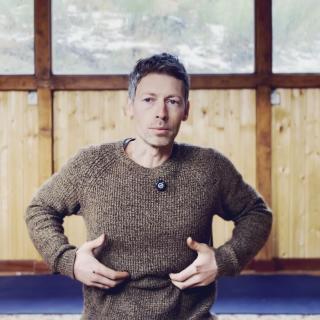
So we're going to use short breath holds followed by a recovery breath so reducing the breath a little bit.
To improve our CO2 tolerance.
So the goal isn't to hold the breath for as long as you can,
The goal is to stay calm as the CO2 rises slightly.
The recovery pressure should also be a little bit reduced as long as we can stay relaxed.
So it's the recovery breath that's really the training.
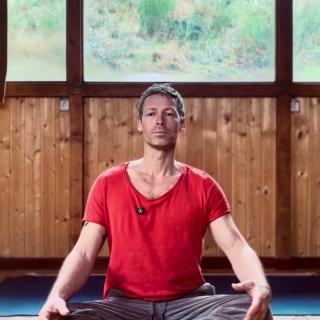
So you can come to sit up Relax your shoulders.
Close the mouth gently.
Breathing remains through the nose throughout.
Take a normal inhale a normal exhale and at the end of your exhale pause hold the breath out not in a forced way and hold it out for maybe three to five seconds.
And then.
.
.
Breathe in naturally.
And how?
And we want to reduce our breathing now for about 20 to 30 seconds.
So breathing in a way that makes you feel like you might want to take in a bigger breath but you don't.
If it feels strained in any way then shorten the hold next time.
It's the recovery quality that matters more than the duration of the treatment.
Retention.
Again after your next exhalation hold the breath out.
Maybe five,
Four,
Two one and release and take a very soft nasal inhale little bit less air than you would normally.
Naturally relaxed,
Prolonged exhalation.
If you stay calm,
You're teaching your nervous system that the signal to breathe in is safe,
It's relaxed.
Again normal inhale,
Normal exhale and hold the breath out.
This time maybe five to eight seconds if it feels okay.
Otherwise three seconds is fine.
And release and again very slightly reducing your breath Staying calm.
Staying relaxed.
Okay,
Allow your breath to return to its natural rhythm.
So we only did three repetitions in this but ideally you can do this for about five minutes every day and that's enough to start to really improve your CO2 tolerance.
So just remember that it's the consistency of the practice is more important than the intensity.
So staying relaxed and calm as you perform the practice.