Welcome to the Reality Check Podcast.
I'm Zachary Phillips.
So today I want to talk about the idea of just slow breathing as an anxiety relief.
It's often viewed as a clichéd response or a clichéd help,
You know,
Just take a slow breath.
But the thing is,
Is that it actually works and I fear that a lot of people will just sort of discount it and not even try it.
So I just wanted to basically use this podcast as a way to get you trying slow breathing and then give you some ways to implement it into your life.
Because it has been a bit of a game changer for me.
So let's just,
No matter what you're doing,
We can do just one slow breath.
I don't like the idea of meditating or striving for obvious reasons.
But even if you are,
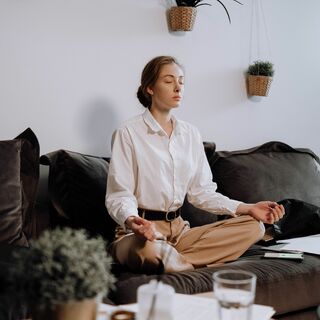
You can still take a deep slow breath in through the nose and out through the mouth.
Let's just do it right now.
Now tell me,
Tell me if you don't feel something then,
A slight bit of relaxation,
A little bit of a release.
And that's just one breath.
I know it's a little bit of an anecdotal thing here,
But if it works for you,
It works.
It doesn't have to be justified to anyone else.
That's just one breath.
So then the question becomes is like,
Well,
How can we optimise this practice?
How can we make it so we're implementing this strategy of calm breathing when we need it?
I actually got this idea from my psychologist.
She was suggesting that I have a sort of a resting tension,
A resting level of anxiety that's quite high.
You know,
Let's say 10 is the worst,
Zero is nothing.
I'm sort of sitting at a seven or an eight of,
You know,
On-ness or tension or stress-ness.
And it would be good for me to be able to just intermittently throughout the day bring myself back down to a two or a three,
You know.
You're still ready to go.
You're still,
You know,
Responding to stuff that's happening,
But you're not so tense.
So the solution we came up with was to do slow breathing for three minutes in response to transitions.
So,
For example,
Transitioning between the end of exercise to starting the next activity,
Before and after work,
Those sort of things.
So like when you're sort of starting a new activity or ending an activity.
And what I've done is I've got myself a watch that has a countdown timer.
Basically,
I can set the time and then I press the button and it counts down.
And for that amount of time,
I just do some slow,
Calm breathing like we did before.
Deep breaths in through the nose and out through the mouth for three minutes.
And I'm really finding that it's quite helpful.
I'm finding that my anxiety is reducing.
I'm feeling quite calm.
Now,
It's not just about the slow breathing because there's sort of a bit of a meditation and a bit of visualization that can go with it that can really help.
So you'll take your slow,
Calm breaths in through the nose,
Out through the mouth,
Nice and slow.
And then you'll feel tension in the body or thoughts popping up in the mind.
And the process is just to sort of visualize yourself breathing into that tension.
So if you have some tension in your chest or in your shoulders or your legs,
You just imagine yourself big,
Slow breaths and those breaths sort of grabbing that tension and releasing it with each out breath.
And the same thing with thoughts.
If you notice that you're feeling anxious or bored or tense or,
You know,
You're wanting to do something,
Whatever pops up,
Whatever pops up,
You just breathe into that space and then you let it go.
And it really,
Really does help.
I encourage you to try three minutes of slow breathing.
Now,
I use either my watch or a kitchen timer.
I don't use my phone because I find that phones are quite tempting in the sense that I'll go to do it and then I find myself stuck on social media doing nothing,
Nothing useful.
So that's my approach.
But if you can use your phone,
Great.
The other benefit of this is to implement slow breathing with kids.
My son is,
At time of recording,
Four and a half years old.
And we've been doing slow breathing with him as a response to physical pain and emotional distress his whole life.
And it's paying dividends.
We notice him when he's stressed,
Self-prompting himself to take some slow,
Calm breaths.
And it helps actively to reduce the anxiety.
It helps actively to reduce the pain.
It cuts the tensions short because he's taking a proactive step to help himself.
Does it work every time?
No.
Does he do it every time?
No.
But it's a marked difference between where he was to where he is now because it's just he's learning to use that skill.
So on top of that,
On top of the idea of doing it with myself,
Whenever I sort of transition and he's around,
I'll be like,
Hey,
Buddy,
Let's do some slow,
Calm breaths.
And I make him the timer man.
So I get him to press the timer on my watch and he loves it.
And then we sit and do some calm breathing.
And at the end,
When he's silent,
I'm like,
Man,
You just use that superpower of silence.
You did so well.
And he loves it.
And I've noticed that when I see him stressed,
I'll be like,
Oh,
Let's just do three minutes of calm breathing together.
And a lot of the time it helps.
And the final implementation of slow breathing is in terms of when I notice myself feeling triggered.
I might have an emotional overreaction or anything like that.
And if I notice that rather than sort of trying to keep acting through,
I'll just take that three minutes to do some slow,
Calm breathing.
And then by the end of it,
I'm in a lot better headspace to deal.
The problem is,
Is when I'm in those triggered states,
When I'm feeling that PTSD-like responses,
I sometimes forget.
I sometimes forget to do the calm breathing.
So then I rely on my partner or the people around me like,
Hey,
Let's do some calm breathing together and we can work it out.
So this podcast,
This episode is just a very short one to just suggest.
Do some calm breathing.
Let's do a breath now.
Just just another big,
Slow breath in through the nose and out through the mouth.
Ready?
See how it has a way of just cutting out and just sort of putting a stopgap between the sort of constant chatter,
My constant chatter,
Your brain's constant chatter that keeps occurring.
It's really worth implementing.
The final thing I want to play for you in relation to slow breathing is a three-ish minute guided meditation that I've done for kids.
I'll play it shortly,
But basically it's something that you could play for your kids,
Kids that are anywhere from sort of three to eight,
Basically that will get them practicing slow breathing and teaching them how to do it.
I like to sort of connect meditation with kids in the idea through the eyes of silent superheroes.
If you think about it,
There's this drive for kids to want to be superheroes.
But in our world,
In the real world,
Obviously you can't have the powers that the comics project.
But what can you have?
Well,
If you practice meditation,
You can be calmer.
You can be more in control.
You can be focused.
And all of those things will help your kid to better act in their daily life.
They'll get more done.
They'll be able to focus on their tasks.
They'll have more fun.
They'll have less arguments.
They'll get more of what they want.
That's the superpower they can get.
So I'll play that for you now.
Now,
If you're driving,
Obviously be wise with this.
It's just some slow breathing,
So you should be okay.
But obviously I don't want any accidents or anything like that.
It's just a three-minute guided meditation for kids,
And I'll play that now.
Hi there.
I want to let you know a super simple trick that you can do every day to be super focused,
Super calm,
And give you some superpowers right now.
All you need to do is take some slow and calm breaths.
And whenever you're feeling upset,
If you feel angry or sad or hurt,
You can use the superpower of calm breathing to feel better.
Let's give it a try.
Just take a seat.
Get yourself nice and comfortable.
Take a big slow breath in through the nose and out through the mouth.
Are you ready?
Let's do it.
That's it.
That's all you need to do.
If you find yourself feeling angry or upset or if you hurt yourself in some way,
And there's no one there to give you a big warm hug,
Just give yourself some time to do some calm breaths.
I usually find that after three slow,
Calm breaths,
I'm feeling absolutely perfect,
And I'm back and I'm ready to go.
Let's do three slow,
Calm breaths together right now.
Are you ready?
Let's begin.
Great work.
How do you feel now?
So if you're ever feeling angry or upset or sore,
Just take a moment and do three slow,
Calm breaths.
I'll play this recording and you can breathe along with me together.
And you know what?
If after three breaths you're still feeling a little bit sad or still feeling a little bit sore or still feeling a little bit angry,
That's okay.
That's completely fine.
You know what you can do if you still feel a little bit sore or angry or sad?
You got it.
Just do some more calm breaths.
Just another three calm breaths.
Let's do it right now.
Are you ready?
Let's begin.
Great work.
Together with calm breathing,
We can become real world superheroes.
Have a great day.
Okay,
So you can find that guided meditation for kids on my Insight Timer profile.
I'll put a link down to that guided meditation just in its entirety,
So just the three-minute session there.
So you can play it again and again via the Insight Timer app.
It's free and available.
And I've got a variety of other short talks,
Guided meditations and all of that good stuff.
There's even some courses up on there that you can check out.
But that meditation will be free to play over again and again.
So check the link down below and check out my profile on Insight Timer.
Anyway,
Have a good one and breathe.