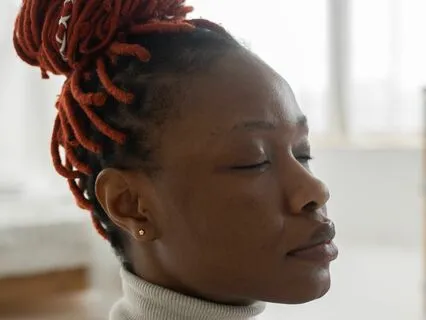
I want to posit the idea of taking a slow,
Mindful,
Calm breath in response to your own emotional triggers,
In response to overwhelm,
In response to you losing your temper,
To getting angry.
It's very easy as an employee,
As a boss,
As a parent to blame the other person,
To see a situation arising,
To feel that anger arising inside you and to put it upon the other person.
Now they may be quote unquote at fault,
But your emotions really ultimately have nothing to do with them,
Right?
Part of the emotionality,
Part of the anger,
Part of that overwhelm is your response to them.
Maybe it's a perception of being used or abused or jaded or taken for granted of.
There's something at the core that's causing you to get angry because other times those same actions won't evoke or elicit the same response in you.
Now yes,
There are moments that are more frustrating than others,
But regardless,
It would be a good practice to be able to recognize it when it's happening,
To take a step back and take a slow,
Calm,
Mindful breath to get back to focus,
To get back on board and to be calm.
Because I tell you what,
In every one of those situations,
Being calm will help to diffuse the situation.
Being calm allows you to detach,
To see the truth and then act in a better way.
When you're overwhelmed emotionally,
Your decision making is limited.
The choices you make and what you do are not your best work.
So it's better and beneficial to always calm yourself down.
So embracing this truth,
I've taken to recognizing as best as possible when I'm upset.
If I find myself angry or upset at someone else,
That itself is the sign that I need to calm down.
Now there is legitimate feelings that are arising due to whatever's happening,
But the fact that I feel angry at someone else,
The fact that I'm overwhelmed,
That feeling of overwhelm at an externality is the trigger.
That is the trigger.
When I notice that,
That's when I take the slow,
Calm breath.
That's when I take the action to calm myself down.
I feel the overwhelm arising.
It's like all that thing's happening.
And I notice this push and pull.
I want to keep speaking.
I want to keep yelling.
I want to keep doing.
I want to fix the problem now.
But then I recognize,
Oh,
This is happening again.
I'm not calm.
I need to calm myself down and then from that calm space,
Calm me will be able to better address this situation.
But the thing here is that I've had to learn to trust my future calm self.
I want to fix the problem.
I'm anxious.
I'm angry.
I'm overwhelmed.
It needs to be fixed now.
I'm sure you've had those feelings.
But instead,
It's better to learn to trust your future self.
Go,
Okay,
I am compromised right now.
Until I'm not compromised,
I.
E.
Until I'm calm,
Nothing of what I do here will be of ultimate long-term worth.
It might feel better to yell in the moment or run and hide in the moment or do any other number of things,
But the best thing you can do is to calm yourself down.
This is evoking a practice that hopefully you have every day,
The daily routine of meditation or calm breathing or whatever your practice is.
I would suggest to leverage that in the same way that you would leverage the strength you gain from daily lifting in the gym to real-world tasks.
Leverage that feeling and apply it to your life.
Use those skills you've learned on the meditation mat every day to take a slow,
Calm breath,
To take two minutes of slow,
Calm breathing,
And then return to the problem if it still is a problem.
Because I tell you what,
A good 70 to 80 to 90% of the time,
I realize that the problem is in me.
I'm overwhelmed.
I'm frustrated.
I'm anxious.
And the other person is just responding to me and my emotionality.
Once I calm down,
I see the actual reality from a detached perspective,
And I can work through it.
Don't worry if you notice yourself getting overwhelmed,
Angry,
Anxious,
Emotional.
Take a breath,
Take two minutes of breathing,
Then come back to it from a detached perspective.
And trust me,
Your decision-making will thank you.