Resting the mind throughout the day in your daily routine.
You may notice the mind growing restless or agitated,
Although you cannot always control your mind.
You can encourage it to be more at ease.
Learning to do this will help you respond rather than react to your thoughts and emotions.
This practice gives you the opportunity to train the mind to slow down when it becomes overactive and helps you practice ease and relaxation instead of perpetuating those difficult mental states.
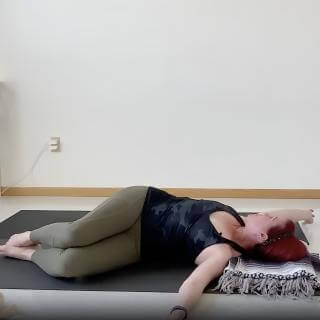
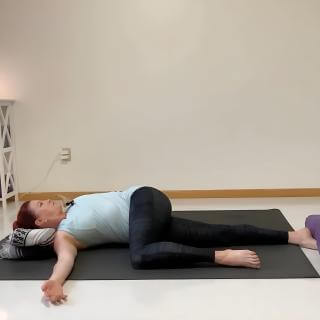
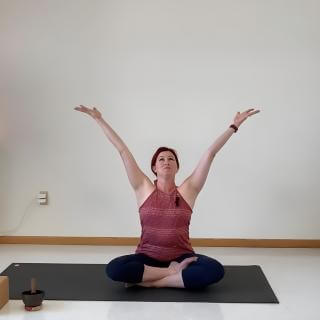
You can sit upright or lie down for this practice.
If you are experiencing anxiety or stress in this moment,
Lying down may encourage relaxation.
Take a few deep breaths.
Inhaling,
Fill the lungs completely.
Hold the breath for just a second or two and exhale slowly.
As you let the breath go,
Try to empty the lungs slowly and completely.
Recognize that you cannot control every thought that arises and connect with your intention to relax the mind.
If thoughts are present,
Just leave them be.
Offer yourself two simple phrases of kindness toward the mind.
May my mind be at ease.
May I be at ease with my mind.
Synchronize these phrases with your exhale,
Offering one phrase every time you breathe out.
Inhale.
May my mind be at ease.
Inhale.
May I be at ease with my mind.
Hear each word and try to connect with your own intention to care for the mind.
When the thinking mind starts up,
Come back to the breath and the phrases.
Even if you can only say one phrase before the mind wanders,
You are still moving toward relaxation by continuing to practice.
Sometimes the mind just won't settle down.
The harder you strain,
The more agitated it grows.
If your mind is overactive and won't slow down,
Try instead to change your response to that experience.
Instead of stressing to calm the mind,
Focus your energy on accepting that the mind is working overtime and on responding with compassion.
Sometimes the mind and its thoughts can become painful in certain moments.
You may be feeling guilt,
Anxiety,
Or grief.
In these times,
The above phrases may not be appropriate.
Switch instead to mantras of compassion.
Recognize that it hurts and tend to your pain with care.
Try this simple sentiment.
May I care for this pain.
Inhale.
May I care for this pain.
As we start to move out of this meditation,
Watch your mind during the day.
Notice when it becomes uncomfortable or agitated and return to these phrases with breath.
Allow your eyes to open and return to the activity of daily life.