Hello,
Welcome to another What Is Now?
Experience.
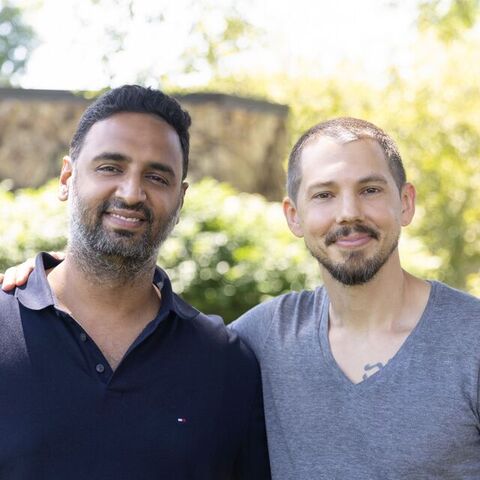
I'm Charles Freely and I'm here with my good friend Sakib Rizvi.
If we had to be categorized,
We're both investigators of consciousness with training backgrounds and professional experience in the world of psychological and spiritual healing.
Each of these sessions is an adventure of the present moment.
Sakib and I begin each session by sitting in silence for one minute and then simply see what arises now.
We have no plan,
No prepared material or concepts to cover,
But are placing our trust in the wisdom of this right now experience.
This is an expression of our shared philosophy of healing.
If we can only let go of our desire for the present moment to be a certain way other than it is,
Then we can find the unexpected answers of what is actually now.
So if you will join us,
We will begin with one minute of silence and you can use this minute in whatever way you like.
With your eyes closed,
Sitting,
Eyes open,
Standing or walking or driving in your car.
We only ask that you return to what is actually happening right now in this moment to reset the momentum of the day and open up to just this.
After this minute,
Sakib and I will explore whatever arises between us.
We identify themes of our exploration as we go and then Sakib finishes with a short guided meditation based on the themes that arise in the session.
And now let's enter one minute of silence together as we explore what is now really.
And I'll hear a bell to start and end this one minute of your day.
How was this?
What is now experience for you today?
Just had a little burp arise,
I think I might have mentioned before my feelings about a burp being a pure expression of truth,
Maybe more purely than anything I could say.
So it's kind of funny for that to arise in response to that question.
Because maybe that's my true answer.
But I noticed I was,
Per usual,
There was quite a bit of thought arising.
And a couple things.
I felt kind of raw today.
And like,
I don't know how to describe it exactly,
But like,
Almost like there's some sensitive wound,
That if you were to touch it,
There'd be a sharp reaction to it,
Sort of feeling that all over my body,
In a way,
Not in any painful way,
But just like a really kind of sensitive raw feeling.
And I was also,
I noticed myself sort of leaning forward.
Like this,
Almost like having thoughts kind of like rushing against me,
And then I'm withstanding them and leaning forward into something that is below the thoughts or beyond the thoughts that is like really just here.
And it's like I wasn't passively receiving it as much as I was like,
Kind of like trying is right,
But sort of diving into this,
Just like this experience.
It was like wind,
Sort of the visual that I have of thoughts continually coming at me.
And then I'm just sort of,
There's a very stable,
Sturdy me that is like pushing through all of that thought,
Like some sort of aerodynamic machine.
And how,
What was that wound experience like?
How would you describe that?
How would you deconstruct that?
I think that feeling is always there.
And there's something powerful about it and also very tender and sensitive.
It reminds me of the monastery that I go to.
And I think one of my first visits there,
I was down doing laundry with one of the monks that had been there for a long time.
And we were just talking for a little bit.
And I asked him about this experience of pain that I was having in my chest area during meditation and wondering if there was something wrong with my posture.
Maybe I've shared this with you before.
And he was like,
I forget what he said exactly,
But he turned it to my emotional experience.
He was like,
Is there anything that you're holding on to or haven't let go of?
And he kind of described that meditative experience of really sitting for hours and hours in meditation as something that's a real heart opening.
You might have heard that term before.
But I do feel like through this practice,
A meditative practice,
Whatever you want to call it,
Over time,
I've become increasingly sensitive.
And there's more of an easy flow of emotion to the surface,
Not in a way that feels overwhelming,
But in a kind of beautiful way where I feel more and more raw more of the time.
I don't know,
What does that sound like to you?
Have you had a similar experience or even just your experience of sensitivity or emotion?
Yeah,
I think it is becoming more aware of what is there in the body.
And as you were mentioning your experience in the monastery,
I also remembered my experience when I was in a meditation retreat.
And during that retreat,
A lot of things were coming up for me,
Emotions,
Pain in the physical body,
Because I think in that state,
We become more aware of what's going on in our own body.
And I don't remember if I have mentioned this or not,
But we were watching in this Buddhist meditation center,
We were watching a movie,
A dharma movie.
And in that movie,
There was this monk who was meditating and he had a child with him.
So that child was playing around and that child,
While this monk was meditating,
That child put a flower above the ear of this monk while he was meditating.
And during that time,
The monk during the meditation smiled,
And it was like a very playful relationship that the child and the monk had.
And just as I was watching this movie,
There were like 50 people sitting in the audience.
And I started crying,
I started sobbing,
Literally,
And I was very loudly sobbing,
Crying.
And it was so weird.
And I couldn't understand that for a while,
Why is this happening to me?
Why am I crying?
It was like,
I was not able to control it,
It was just coming out of me.
And then I felt embarrassed.
And I went out of that movie hall,
And I just went for a walk by myself.
And then I realized that,
I think it triggered something in me that is regarding my relationship with my father.
I think this relationship that I saw between the monk and the child,
It made me crave to have such a relationship with my father,
Which maybe I couldn't experience in my childhood.
And that triggered a lot of emotions.
So that was the time when I meditated for like,
This I have experienced a lot when I go to meditation retreats,
And I'm like meditating for hours and hours every day,
Then such emotions and then such even physical pain would come out very,
Very strongly.
And I think it's a state of becoming more self aware.
Thanks for sharing that.
How is it as you remember it now or talk about it?
It's good because I was able to look at that,
I was able to observe that.
Initially I used to have an emotional charge.
And I realized that whenever I would see a son and a father,
Having a good relationship that will bring an emotional charge in me.
However,
Now when I was able to look at that,
Okay,
Where is this coming from?
I even had a word with my father regarding this.
And we kind of hear that part of our relationship to a certain extent.
So that emotional charge might not be still there,
But it was a great experience of self awareness.
Sounds powerful and kind of beautiful to me.
I think I heard you say the word like embarrassed about it in that moment.
Maybe that that was a sign of weakness or something or a lack of strength.
Yeah.
I mean,
It seems to me anyways,
More and more that that is the sign of great power and the one who is like willing to open up to that.
That's like a real powerful thing.
Yeah,
Yeah.
No,
I,
You know,
And this is something that I eventually managed to do,
Like,
You know,
Not being ashamed of crying,
Being a man,
But that was the very initial stages for me of learning meditation.
And at that time for me,
Because,
You know,
Being a man and the kind of culture that I have been brought up in,
I was not supposed to cry and crying was like an embarrassing thing.
So in that moment,
I felt embarrassed.
And yeah,
And in fact,
Even,
You know,
A few days ago,
I was I was in your session and I saw your dad supporting you in the session during the session.
And that was also,
You know,
Kind of brought up an emotional charge for me.
So that was beautiful to see between you and your father kind of brought a hope in me regarding my relationship with my father.
And there's a whole mixture of things there for me.
It makes me think of,
I'd be interested to know if this comes up for you at all in your work.
And I'm not sure how much we've really talked about the work that we do with the listeners.
So we both do guided meditations and live sessions and courses on this app called Insight Timer and a variety of other things.
And we both do our own versions of individual work and from our own different backgrounds and it was like our own different styles of doing it,
But also maybe very tied in some ways.
And you describing that experience,
One thing that I come across a fair amount,
I would say is the understandable,
Like holding on to a desire for things to be different when you when one was younger and maybe a deeply held on to resistance to like opening up to what was missed and the pain of what the child version of you never got because there might be still a part that is kind of hanging on for something to be different while I was growing up.
But to,
And you might also be aware of it,
But to really to feel that and in order to transcend it and move on in a way that is not still holding on to that is maybe to have to feel like a lot of grief and like a death of this child part of you that has been there from the beginning that has always craved this thing that they really deserved and wanted and needed and still feel like they need.
Maybe they do,
Maybe they'll always need it.
But maybe for the experience of liberation or like,
Or fulfilling your full potential based on the life that you have,
There might be the need to really feel the grief and loss that your maybe child self is still wishing doesn't have to be the case.
Yeah.
I wonder if that's making sense or what you think about that?
Yeah,
No,
It does.
It absolutely does.
And I've seen that in my work also experiencing,
You know,
With people here on Inside Timer,
My own experiences that that is absolutely true.
What you're saying about grieving part,
Totally bringing an acceptance of what is rather than thinking about what can be or what could have been.
Yeah,
I think and that is the most difficult,
Difficult part of the work to bring ourselves to the acceptance of what is rather than what should be or what could have been.
Just thinking,
And I'm still fleshing this out of my mind,
But it could also mean to,
It could also lead to like big changes in your life,
Because so many things might have been availed kind of effort to still receive that thing that you never received.
Whether it might be in relationships or in your work or something,
These could still be ongoing efforts.
And it could be maybe like those behaviors that we continue to do,
Even though we know that they are like,
Why do I keep doing this?
Maybe in some way,
It's their efforts of our child selves that are still somehow trying to get the attention of maybe those figures or get the thing that they never got.
And this version of us doesn't have the adult capacity to like understand that,
Well,
That's not going to get that,
But that could be their only hope,
Their only like,
Well,
If I keep doing this,
Maybe if I keep being bad,
Or if I keep whatever it might be,
However I can get that love and attention from this other figure that never gave it to me.
Yeah,
Yeah.
No,
I think you are absolutely right.
And I also believe that one part of it is acceptance,
The other part of it is healing.
So,
One is acceptance.
Okay,
I had this relationship with someone,
This relationship maybe didn't work out well for me,
Whoever it was,
A partner or a father figure or mother or child,
Whatever that is.
But then I believe once we build that acceptance,
As you said,
Once we grieve a lot,
There is also an opportunity to heal.
But that healing doesn't come from an expectation.
So healing the relationship,
Maybe even just having a conversation in which you talk about things,
Simply just a conversation rather than trying to force that relationship or trying to force things in that relationship.
So acceptance one and then healing.
So yeah,
I think both are necessary.
Healing also is a very tricky part because when we do have those conversations with those people once again,
Then old things come in that conversation,
Old patterns repeat and we might also start having certain expectations that okay,
Now that I'm working on this healing,
Now I'm talking to this person,
It might be that my relationship might improve.
So there is an expectation there as well.
But doing it with total acceptance and without having any expectations,
That can be helpful.
Yeah,
That's tough,
I think.
Because you could be doing all of this work and all this effort on your end.
But at the same time,
Whoever else is involved,
They may not be doing that or they may not be interested in doing that.
And that can make it even more frustrating for you to be opening up,
Being vulnerable,
Being honest and then not receiving something back.
So I hear what you're saying,
A big part of maybe the healing is to take ownership of what you can and then genuinely… Absolutely and identifying that.
Identifying that whether this healing should be done just by myself or whether this healing can be done potentially between two people.
But if there is no potential of healing between two people,
Then I think all the healing is about just about you rather than the other person.
So yeah.
Yeah.
Hard to gauge that too,
Because I can imagine and I know from experience with some of the people that I've worked with,
Like,
How do you know,
Like when to stop because you might continue to put it on your shoulders and be like,
Well,
I'm just not trying hard enough.
And if I try a little bit more or if I do this or do that,
Or if this didn't work,
Maybe I should try this.
Because I can imagine that that would continue to maybe replay feelings of maybe some shame and guilt that you have about yourself and like,
Oh,
This is just another example of me doing it wrong.
And so I need to keep trying when in reality,
Maybe you're doing the best you can.
It's just that the other whoever this other figure or combination of figures involved are,
They're actually not interested in this or they're not aware of it or they're incapable of it or like whatever it might be.
It's making me think of this,
Like there's a popular notion in psychology where,
And maybe we've talked about this before,
You're probably aware of it,
Where like a child early on in life,
If their parents,
Like if there's,
Or if at large there's society or if there's stuff that is going on that's really wrong,
It's a safer thing for the child to see themselves as bad,
That I'm bad.
Because if the world is bad or if my caregivers are bad,
Like that is a much scarier possibility than if it's just me.
Because if my caregivers are bad,
Well,
There's out of my control and like,
Especially as a helpless child,
It's like a really scary thing.
And then if that could be an indicator that the world at large is a scary place to be in,
Which is like,
Holy shit,
Like,
How do I face that?
When that might be the reality,
But to take it on yourself,
Likely not with the awareness that this is what is happening,
But that,
Okay,
There's something wrong with me at the core,
So I need to be a really good child,
Or I need to like play the parent figure for my parents,
Or I need to do these things.
And as long as I can do that,
Then things will be okay and the world will be safe.
And as long as there's something wrong with me,
I can work on that for the rest of my life.
But maybe kind of what we're talking about is to see if there never was actually anything wrong with you.
And to open up to the pain of there might be things wrong with the world,
Or there's things wrong with with everybody.
And like,
There's a lot of pain and sadness to feel in the midst of that,
Maybe on the flip side of that is living a really present and free life.
Yeah.
And it might be that there are there is no nothing wrong with the world,
You know,
Considering that we all have,
Maybe we don't have yet acceptance for all,
Like the qualities,
All qualities that a human being has.
And what I what I realized in my journey that each one of us has,
Like all the qualities,
You know,
Starting from,
You know,
Someone like a Buddha going up to someone like a Hitler,
We have all the qualities inside us is just about the various circumstances that we go through in life,
What those qualities can,
You know,
Can trigger.
So for example,
Someone who is born in a family where crime is something which is like normal,
Crime is something which is an everyday activity,
Then that person might be,
You know,
At heart a good person,
But crime is so normal for that person that he or she doesn't see it in a way which is wrong.
But for someone who,
You know,
Who has been in a in a family where there have been certain morals principles for them,
That is a such a dangerous or wrong thing to do.
So it's all about the circumstances that we we are in.
And we fail to see at times,
You know,
What circumstances my,
You know,
The people in our lives who,
Who are our parents who are,
You know,
Our partners,
What is the conditioning that they have gone through,
What are the experiences that they have gone through.
And maybe just realizing that there is nothing as good or bad,
It's just the behavior they are exhibiting is just due to that conditioning and that those experiences,
Experiences that they have been through.
I think once we come to that realization as well,
Then we can also build acceptance for not only ourselves,
But also for the other person and not see them as something evil.
It's funny you say that I,
I think I heard you,
Like,
Mentioning the Buddha and Hitler sort of in the same camp in some way.
And I reading a book by Henry Miller,
You ever read anything by him or come across him before?
I mean,
Someone that I hadn't read anything of his until recently,
But he I kept coming across him and other people's books,
And I get excited when that happens.
And so I started reading something of his and it's like,
Oh,
He's,
It feels like he's just really speaking my language.
But he said something very similar.
And he said exactly those people he was,
He was like,
There was,
He was talking about these people with incredible power and influence on the world.
And he's,
He I think he said Jesus and the Buddha and Hitler and I forget who the other one was,
But it was on this other side of the spectrum.
And I can't remember how exactly he differentiated.
But it was something about how Jesus and the Buddha are coming from a,
In his mind,
Coming from a needless place,
And a place of a real like self understanding,
They're coming from their core,
They've gone down to the very kind of basics of who they are.
And now they're acting out of like zero need,
They're just naturally acting in the world in this way that is really powerful,
Because it's like,
It's not dependent on the rules of society.
And like,
They just they don't need these things that other people take as givens.
That makes them very powerful figures,
Versus these other people may be coming from a place of a lack of self understanding and,
And a lot of need,
And you need for power,
And they break the rules on purpose,
And but they're also something about them makes them really powerful and that they can they can transcend these rules and get other people on their side.
Because maybe they're speaking to a lot of these people that also don't understand themselves,
Which is maybe the vast majority of the population,
Speaking to something that is really that powers them up in a way that feels really good.
I thought that was kind of an interesting comparison where like,
The places that those two ways of being are coming from one being a place of like,
Total lack of need.
Other one being a place of like,
I need I need I need.
Yeah,
Yeah.
Yeah,
Yeah.
And I think that is a very interesting way he put it.
And I also think that that can change.
Now,
I think our belief comes in this picture.
And you know,
If,
If we,
If you believe in the concept of multiple lives,
You know,
Then I think if you see the story of Buddha,
And I'm not 100% sure about it,
But I heard someone mentioning I was in a Buddhist retreat.
And I heard someone mentioning that the Buddha had,
You know,
When he achieved enlightenment,
He could see each and every life of his.
And you know,
All the past lives,
All the lives that he has been living,
Or is living simultaneously in this moment.
And he said that in one of those lives,
Buddha was a murderer.
And in this life,
You know,
After so so much of self work,
In this particular life,
He reached that state of enlightenment.
So what they were trying to say that,
That we have all these qualities inside us,
But at different points of time in the journey of our soul,
We exhibit these different qualities.
So it's like,
When we see as a person,
Someone like a Hitler,
You know,
We say,
Oh,
This person has a lower consciousness,
We see someone like a Buddha,
We say,
Oh,
This person has a higher consciousness.
But the point is,
It's not about lower or higher,
It's about they are at a different point of consciousness,
They are at different points in the journey of their soul,
A Hitler might become a Buddha,
You know,
In certain lifetime,
And a Buddha might again become a Hitler in another lifetime.
So yeah,
I thought that,
You know,
That monk that was telling this story,
That was very interesting.
Yeah,
Really interesting.
Makes me think of another.
I enjoy when we kind of bounce off with these different anecdotes and memories.
It's such a cool thing to notice how this,
You know,
It starts with you asking me how my minute of silence was,
And somehow has led us in this,
This like,
Tree branch of things to find ourselves here.
And now it's just like bursting with,
Oh,
That thing and this thing,
You just remind me of this.
Yeah,
There's so much creation that is just like exploding.
Yeah,
There's so much potential that reminds me of Nikola Tesla.
And he said that,
You know,
In just a cubic centimeter of space,
There is like,
Infinite power of the universe,
You know,
Just a cubic centimeter of space,
Energy in that can power the entire world.
And I can see that as this present moment,
This now moment,
You know,
That this now moment,
This vacuum,
This zero point field that we start from,
And we eventually how that builds into creativity and you know,
Different things.
It's just,
Yeah,
In this space where we're both,
We're open to it in a playful and safe way where anything can be explored,
Because I could see it maybe staying,
Like,
I don't know whether it's lower or higher,
But staying somewhere on a very kind of limited level if we're maintaining this kind of transactional thing.
But if we start with that zero point,
And then we're just sort of nourish it,
And we're in this space of openness,
Yeah,
It can really go anywhere in this really unpredictable and fun way.
But so that reminded me mentioning the multiple lives and just kind of the different parts of the journey,
It might not feel totally related,
But,
And maybe I've mentioned this before,
That's probably also a thing that happens as we have more of these meetings,
Because there's,
We have probably only a finite number of these memories and stories to some degree,
But we're still also constantly absorbing them,
I think.
So maybe this one has come up before,
Tell me if you've heard it.
It's about the,
There's this,
Like,
You know,
Monk or spiritual master figure,
And there's a warrior,
Like a military or samurai warrior or something like that.
And the warrior comes to the monk because he's found that this monk is like the greatest master and he's the best wisdom to become the best warrior.
And are you familiar with this?
Yeah,
You did something,
I think you mentioned,
I'm not sure if in this podcast or separately,
But you,
Yeah.
So he goes to the master and he basically just asks for his guidance or his wisdom,
Like,
You know,
Lead me in some way,
Please.
And then,
And the master responds by making fun of him and he like berates him.
He says like,
Who are,
What kind of warrior could you,
Who could you possibly protect?
And keeps on doing this as the warrior gets more and more angry.
And here the master is this like old feeble man,
And the warrior is this strong,
Like strapping person.
And so he's getting so overwhelmed with anger and he,
The master keeps on berating him,
Keeps on making fun of him until the point where he takes his sword out and he's like about to attack the master.
And then the master is like,
He stops and he says,
Here open the gates of hell.
And then the warrior sees what the master is telling him and like understands the wisdom of that and sheaths the sword back and sits back down in front of the master,
Sort of in a very deferential position.
And then the master says,
Here,
Open the gates of heaven.
And I really liked that.
And I'm remembering now,
I think probably the beginning of that is the warrior asking like what is heaven and hell?
And so then that's the progression that happens.
And he has some sort of experience what hell is,
And then experience what heaven is interpersonally.
Just make me think of these different manifestations and that we all have maybe the full continuum of this stuff inside of us.
Yeah,
Yeah,
No,
That's a beautiful story.
And no,
I don't think you mentioned it in the podcast.
And it's so wonderful to listen to that.
And I think heaven and hell,
I think we as human beings,
We experience heaven and hell in just single life.
It's not only about multiple lifetimes.
We can see that how we have been in different situations.
Have not we experienced anger?
Have not we experienced traces of ego?
Have not we experienced moments of compassion?
I think all these characteristics,
These extreme characteristics we have experienced,
Not only in multiple lifetimes,
But within this lifetime as well.
And I was doing a session on projections.
And I'm sure you are very much familiar with this as this is part of your field,
That how we project onto others.
And I was asking this question.
So I told them to list down people who they hate the most.
So someone listed a person in their family,
Someone listed a political figure.
There were people who talked about Hitler.
And then I asked them,
Okay,
So what qualities do these people have?
So someone then wrote,
Okay,
These people are full of ego.
These people are full of anger and all that.
And then I asked them the question,
Okay,
Now tell me,
Have you ever in your life experienced this?
Have you ever been angry?
Have you ever been egoistic?
And for all those,
They were like about 10 to 15 listings for all those listings.
They said,
Yes,
We have been.
Now someone was like,
Okay,
I don't have the quality of a murderer.
I said,
Okay,
What kind of a person will be a murderer?
So then he said,
Okay,
Someone who is very full of rage,
Who is hurt deeply.
And then they found that,
Okay,
Those qualities are there within them.
So I believe that not only in multiple lifetimes,
But also in this lifetime,
We do get traces of experiencing all those qualities,
Which are on that white spectrum of,
As we said,
You know,
Put that to it.
Yeah.
Yeah.
As you were talking,
I was just thinking maybe in order to feel the feeling of hate,
It's maybe it's dependent on you seeing something in that person that you know and feel and maybe hate about yourself or wish that that part of you didn't exist or have been trying to get rid of for so long.
And because I wonder if,
If not for and really knowing the thing in some intimate way,
If it would elicit that really strong reaction from you to see someone else.
Yeah,
Yeah.
That's why it's triggering you.
Like,
If anything,
You see someone in something,
Some,
You know,
Some aspect in someone,
You see that quality.
And if you're getting triggered by it,
Or if you're having an emotional charge around it,
Then that means that that aspect is something which you have not embraced in yourself.
That particular quality is something that you have not embraced in yourself.
Had you embraced it in yourself,
Have you forgiven yourself about that you would have forgiven the other person as well for the same quality.
Not to put you on the spot or and it's okay if you don't think of something,
But I wonder is there something for you that you feel like lives in that realm still that you notice causes,
Triggers you or causes a reaction in you from other people?
Hmm,
Yeah,
Yeah,
It does.
And recently,
I was discussing this with a friend of mine.
And I was mentioning about someone trying to show off their work,
Trying to show off their work that you know,
This person or this person is,
Is someone I was saying something like this person is just doing,
You know,
These things to gain followers,
This person is just doing this thing to show himself as someone who was,
I was saying the statement,
And she pointed me out right in that moment,
Because we just moments ago,
We were discussing about these projections and she said,
See that as a project projection.
And then I was defending No,
That is not a prediction.
I'm not someone and I could then see my own emotional charge around it.
And then I asked myself that,
Have I done this recently?
Have I done this before?
And then I realized,
Oh,
Yes,
I have.
And this is the aspect which I have not embraced in myself.
This is the aspect which I have not forgiven about,
You know,
Myself.
And that's why when someone else is doing it,
It's causing that trigger in me.
It's because that's a really interesting one.
Because I feel like I can empathize with that.
And likely,
I would imagine both of us,
Like have this to some degree,
Because we're,
We find ourselves on insight timer,
We're doing this,
Like there's some element of desire to be seen and have a reach and have people hear us in some way,
Even if it doesn't feel like it's coming from that need,
There must in some way be that like deep desire.
In the unconscious,
Like consciously,
We might not think about that.
But there might be something in the unconscious that is,
You know,
Causing that trigger.
And like,
For me,
I'm just,
I'm thinking in relation to that,
I have another one in mind too,
But how I've historically been a very,
Quote,
Unquote,
Introverted person,
Very,
Very quiet person,
And very socially anxious,
Especially in the past.
This has changed quite a bit over time,
But it's still that way to a certain degree.
And I wonder how much that's related to like,
A real deep desire to be seen and to have people pay me attention,
Because I think I sort of adopted this way of being in the world where it's like,
I don't need that attention.
So I'm going to be introverted and retreat and not share a lot.
But there's,
But maybe I think a big part of that has been why I get so anxious is because I so desperately want the other person to see me and to connect with me.
And I'm afraid that if I show them who I am,
They won't like it,
Or they won't connect with me.
So in some way,
I've like built up over years,
This sort of version of myself to share that I feel kind of confident about.
And in some way,
It's maybe satisfying this,
This deep desire to just like connect with people,
Sort of on my own terms in a way.
And I congratulate you for saying that,
Because that's so powerful and like being vulnerable to talk about it.
Because this is something,
You know,
Usually someone who is doing such kind of work will not talk about and will not accept that,
Okay,
No,
I have this desire to,
You know,
Maybe be seen or show things,
Show my work.
But this is truly powerful.
And this makes me realize that how these conversations that we have,
Help us to know ourselves better,
Help us to,
You know,
Even know what is going on in our own unconscious.
Yeah,
I was just thinking it could be nice or interesting for the listener,
As we're talking to be reflecting on,
Like,
What are those situations that feel triggering for themselves and,
And maybe you don't see where this might be reflecting something in you,
But you might see how there is a part of you that is like craving something also in this same realm.
And just to add it like a little extra perspective,
Not to say that there's anything wrong for for feeling that way,
But just maybe see more of the full picture,
I think.
Yeah,
So valuable.
Yeah,
Yeah,
Absolutely.
Yeah.
I was recently,
As you were talking about this,
It reminded me of a series that I was watching.
And the series is called Westworld.
And they create like different AIs in that.
And have you seen that?
So in in one of those,
In one of the episodes,
There was this guy who was an AI,
And they had created an alternate version of this guy.
So this guy was the western version.
And the other alternate version was the Japanese version.
And this western guy,
He was like,
He was very angry with this Japanese version,
He was,
You know,
Whenever he would see that Japanese version of his,
He would just flip and he would want to kill that Japanese guy.
And then they thought,
You know,
They were thinking about why is this AI behaving in such a weird way?
You know,
Why?
Why is he reacting?
And then someone said,
Oh,
Because that is his own projection.
And he,
You know,
He's not able to accept,
He has not accepted many things inside him,
He has not embraced so many things inside him.
And that is why he's getting triggered by the same actions when he's seen someone else.
Yeah,
His own alternate versions.
In a version that appears like strange.
Yeah,
It makes me think of so much of the hate that exists now.
And that also makes me think that if I meet myself tomorrow,
You know,
How would I react?
That's such an interesting thing to think about.
Yeah.
If you saw you online doing these same things,
But yeah,
But you didn't know that it was you,
How would you respond?
Because even I like,
I'll notice a feeling of judgment sometimes like just instinctive judgment maybe towards another person on insight timer,
Which is bizarre.
But it's,
And I think it comes from maybe an insecurity,
There's some level of like,
Competition in this world,
Which is a weird,
Interesting element of this whole thing.
But I could imagine maybe feeling bad towards myself.
I mean,
Something I do feel proud of is my willingness and my constant efforts and notice those automatic judgments,
Because that's just going to inevitably happen.
And to step back from them,
But it's kind of funny to notice when they continue to know I totally resonates with me,
It happens with me as well,
And it is so good to talk about this because this is how we can transform it.
So what do you think about shifting into maybe some sort of practice?
Sure,
Yeah,
This is an interesting practice,
Which I just mentioned that comes to my mind.
So let's do that.
Sounds good.
So now we shift into small short guided meditation,
And you can get into your meditative posture and gradually close your eyes.
Or maybe you if you don't want to close your eyes,
That's absolutely fine.
Whatever that comfortable posture is for you.
And now you can just be aware of your breath.
You can maybe just focus on your nostrils or you can even follow the flow of your breath in through your nose into your windpipe,
Into your lungs,
And back from your lungs through your windpipe and out through your nose again.
And with each breath,
Feel your body relaxing.
Feel your mind and your body coming to this present moment.
And then in your mind's eye.
Imagine and visualize that you are meeting yourself.
See yourself sitting in front of you,
Across from you and just observe yourself.
Observe the face of this alternate self of yours.
Observe the expressions.
Observe the body language.
And just check how do you feel about this person?
What is the vibe that this person is giving out?
Maybe just notice what are the things that you like and dislike about this person.
Yes,
That works out great.
And then you can gradually bring your awareness back to your own body,
To the presence of your body in your surroundings.
You can move your hands and feet.
Gradually in your own time,
You can open your eyes and come out of the meditation.
So before we end this session,
I'm curious to know what was your experience?
It was nice to notice how positively I felt towards myself.
Beautiful.
Usually,
I have a lot of experience of doing that for myself and other people in terms of an inner child.
I really liked the experience of doing it with myself now.
And it felt very novel,
But I saw myself laying out on the couch,
Sitting there,
Kind of relaxed.
And I felt very assured.
Maybe it's because I know myself,
Of their intentions towards me,
Which is just they desired me to feel good and held no ill will towards me as I was there sitting with them.
So it was a new and really nice experience.
What was it like for you as you went through it?
Yeah,
For me,
It was,
I could see initially all the wonderful qualities,
But there were certain things that I noticed,
That I might not like about myself.
And one of those was being humble.
So this was something I observed.
Now,
I don't know where this is coming from,
But it's something for me to contemplate on.
I was telling myself that be more humble,
Be more humble.
Interesting.
Yeah.
Something to sit with.
Yeah.
Yeah.
And for the listener,
If you,
We would love to know that what was your experience?
And if you want,
You can share that through the comments.
And it will be really interesting to know.
So let's see.
Sounds good.
Thank you for that.
As always,
I really appreciate your willingness and your ability to just do that in the moment.
It's been my pleasure and thank you for the amazing time today.
See you soon.
See you.
Thank you for joining us in the What Is Now?
Experience.
We hope that you liked the episode.
If there were any insights or ideas arising for you as you were listening to our conversation,
Then you can share those ideas through your comments.
We would love to know.
Stay tuned for the next episode.
Namaste.