Hello,
Welcome to another What Is Now?
Experience.
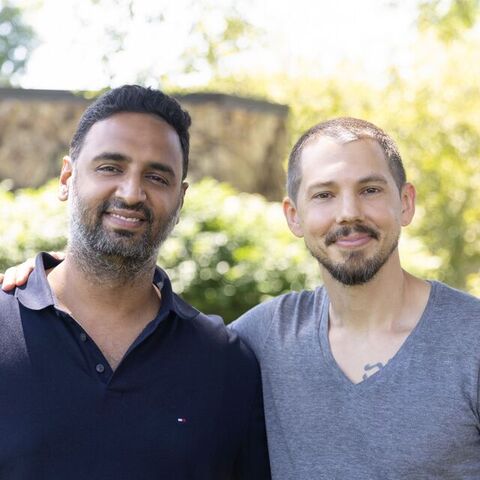
I'm Charles Freely,
And I'm here with my good friend Sakib Rizvi.
If we had to be categorized,
We're both investigators of consciousness,
With training backgrounds and professional experience in the world of psychological and spiritual healing.
Each of these sessions is an adventure of the present moment.
Sakib and I begin each session by sitting in silence for one minute,
And then simply see what arises now.
We have no plan,
No prepared material or concepts to cover,
But are placing our trust in the wisdom of this right now experience.
This is an expression of our shared philosophy of healing.
If we can only let go of our desire for the present moment to be a certain way,
Other than it is,
Then we can find the unexpected answers of what is actually now.
So if you will join us,
We will begin with one minute of silence,
And you can use this minute in whatever way you like,
With your eyes closed,
Sitting,
Eyes open,
Standing,
Or walking or driving in your car.
We only ask that you return to what is actually happening right now in this moment,
To reset the momentum of the day,
And open up to just this.
After this minute,
Sakib and I will explore whatever arises between us.
We identify themes of our exploration as we go,
And then Sakib finishes with a short guided meditation based on the themes that arise in the session.
And now let's enter one minute of silence together as we explore what is now really.
You'll hear a bell to start and end this one minute of your day.
Anything you notice in particular?
It was different for me this time,
This silence,
And I was in a state of kind of not having any thoughts.
And I think it was more of a meditative state in which I was just able to be here now in the present moment.
Usually there would be some thought arising or inside,
But this time it was different.
But then finally towards the end of the silence,
There was this thought that came up and the thought was that I'm dumb.
And I don't know why it came up.
I think it came up because I was not having any thoughts and it felt like being dumb.
Usually we are,
Maybe it comes from our conditioning from the society that we need to think,
We need to do something,
At least if not doing anything physically,
But at least maybe creating a plan in our mind,
Strategizing,
Contemplating on things.
But because I wasn't doing any of that,
I felt this feeling of being dumb that I'm not doing anything.
I was dumb.
What was the,
Or even as you think of it now,
What was the tone of it like,
Or the feeling tone of that,
The voice that's said that?
It was nice.
It was more of like a good feeling for being dumb coming,
That was coming from inside,
But then there were certain fears arising of not doing anything.
Maybe these fears are arising from the belief systems,
The way we have been brought up to just do all the time.
And the fears were telling me that you need to do something here.
You need to think of something to speak during this episode,
Something has to come up.
And then this,
This phrase came up in my mind,
A voice said that you are dumb.
Yeah.
Interesting.
Is that,
So I hear two things there.
One of it being,
Which is maybe unexpected,
Kind of nice to be quote unquote dumb.
And there being a good feeling there.
And then on the other side,
There being something critical that says that you are dumb in a critical way.
You should be something different.
Yes.
What is that?
What is that voice like the second one?
The second voice is more like this person.
And I think now I can see that there are two aspects of me to maybe two personalities within me,
You know,
The way it's depicted in religions,
The angel and the devil.
So the angel is saying here that,
You know,
You are dumb in a nice way.
That's great to be just here in this moment.
However,
The devil is saying that,
No,
You need to do something here.
You need to think of something here.
You have to like,
You know,
Spend this one hour in this,
In this podcast,
And you have to talk about something productive.
You have to like come up with a conversation.
And this was something similar that I was also noticing yesterday when I was just taking a walk,
You know,
By the ocean side,
And I was in that I came in that state of not having any thoughts just being in the moment.
But then there was this voice,
You know,
The other side,
The devil telling me that,
How can you spend one hour not doing anything,
Not thinking anything,
At least if you're by the ocean side,
If you're not doing anything,
At least you should think about something you should,
You know,
Plan you need to do so many things.
So these are like the angels and demons within me.
Do you experience this?
Or maybe you can tell us what was your experience of this one minute?
Hmm.
Well,
I'll stay with where you're going.
Because I certainly do seem to experience both of those.
And I do feel quite a bit of pressure,
Sometimes to and it's a weird kind of doing maybe in the line that of work that we're in,
Because maybe we could subtly fool ourselves that we're not doing the typical type of,
Of always doing something like maybe if it's reading a book about something or,
Or meditating,
Or hosting a podcast,
Or whatever these things are.
And you know,
This is kind of interesting,
Just to just to puncture that line of thought right now.
I noticed myself lose my train of thought,
And I could potentially try to find it or finish it.
But it might also be kind of cool to just allow that to take place and not finish the thought of where I was going.
Yeah.
What's it like for you when I when I say that,
Or I wonder if you even have a sense of me not before I said that of not finishing the train of thought,
Or losing?
I think in the previous session,
I was talking about previous episode,
I was talking about,
You know,
My admiration for Jiddu Krishnamurti,
The way he would take long pauses before saying anything.
I think I saw Jiddu in you right now.
I was in fact,
Inspired by this pause of yours that,
You know,
You are taking that pause to let just just let things come up.
And because sometimes we have this sense of anxiety,
Or this idea that we need to finish what we are saying,
You know,
There is an expectation from the listener as well.
But it was really beautiful,
Actually.
Yeah,
There feels like something very kind of sweet and tender to me about a space to be able to do that,
To just stop where you're going and be like,
I don't even know where exactly I was going.
It started with something and then I noticed kind of losing it.
And then to be able to just share about that with you.
Like maybe the word I want to say is well up a little bit,
But there's just like,
Even moisture that I feel there's something kind of raw and opening about being able to just kind of like what you're saying about Krishnamurti to be in a space where you can explore like that.
Yeah.
Yeah,
And I'm not sure if I told this previously,
But Krishnamurti was also,
You know,
Very against people writing in his sessions,
Taking down notes,
And he would just say that just be with yourself,
Inquire what is here.
I think this is something which I have noticed,
The people who actually have that deep insight and tell things from the present moment,
The way what we are doing right now,
You know,
With this episode of What Is Now,
I think that is something I really feel connected to.
And maybe when you are taking that pause,
It is something I'm like more intently listening now because I know that something deep is going to come up rather than,
You know,
Repeating,
We repeating our thoughts,
Or maybe just saying something from our ideas that are already there.
Yeah.
And it makes me think of in relation to something I learned in my psychotherapy training within a sort of a particular realm or school of it and a particular mentor who was kind of within the school,
You might call it Gestalt.
Are you familiar with kind of the Gestalt school of psychology and psychotherapy?
A little bit,
Yeah.
But if you want to elaborate on that.
Very focused on your present alive experience and this mentor of mine sort of,
He helped me establish a barometer of my work with an individual and a very clear barometer of kind of you could put it into good and bad or better or not as good therapy.
And the barometer being how alive do you feel?
Like how,
How present is this interaction and forget what you're talking about,
Like who cares what the content is just gauge how alive it feels.
And if you're not feeling that alive or that connected in the moment,
Just notice like what that is and make some sort of shift to bring you back to a present moment connection and just keep doing that.
Totally letting go of like direction or where this is supposed to go or why I'm saying the thing that I'm saying,
Just noticing at this moment,
Do I feel more connected or do I feel more kind of distant or up in my head?
And then how can I shift back to being right here with you?
And so I guess there in that moment,
I was kind of noticing something that is maybe a little bit more head driven or I have a particular narrative direction that I'm moving in.
And then feeling myself maybe even getting a little,
Not lost,
But just like now I'm kind of just delivering something.
And I'm trying to figure out how to get to the end of this thing that I started,
But also noticing inside me that feeling,
Which is more alive than the narrative path that I'm trying to get to.
So then in that moment to try to take the risk to stop and get off the path and then share with you where I am right now.
What my question to you is,
Isn't that a scary place to be?
Scary.
Yeah.
Like in the sense that when you have ideas in your mind,
And this is something I'm working on myself and I see the value in this.
So for example,
When we are doing a session or something,
Or maybe even this episode,
When we have ideas in our mind,
It's a much more comfortable place to be because now we know what we are talking about.
Now we are like,
We know what is we are going to say next,
But not having those ideas as being in the moment and letting things come up.
Isn't like that.
Is there a feeling of fear there?
Is there fear for you?
I just want to know that maybe I will not be able to talk about anything.
Maybe I will not speak about anything for,
For many moments,
Which can be seen as something embarrassing for many people.
Yeah.
Or maybe like dumb or awkward,
Or they don't even actually know what they're talking about.
Which maybe is true.
I would say yes.
As you were talking,
The word that came to my mind was naked.
It's like you're allowing your underlying self to be naked versus where you typically have the clothing of structure and some train of thought or a particular thing to be delivering.
It's like,
I'm sort of viewing that as clothes that you're wearing on top of something that are socially appropriate and that people can see.
And they're like,
Okay,
Yeah,
I get that.
And I'm on board.
But then to take your clothes off might be a scary on your behalf and be jarring for the person that you're engaged with.
Yeah,
Yeah.
Yeah,
I think.
But how do you like,
How do you overcome that idea?
How do you overcome that,
You know,
Fear of being naked?
To me,
It feels like it's become at least,
And I want to hear what you think too.
Maybe along this path that we both kind of find ourselves maybe on some sort of similar path of self discovery and discovery of what the present moment is.
It feels like less and less of an option not to.
Because that's where things are interesting.
Like that's where things are a lot in real and new.
That's what's I guess enjoyable to me about living.
It's like the it's the real thing,
I guess,
Or it's more real than something that feels more comfortable or controlled or guarded.
It is scary,
But it's also that's where I want to be because it's scary.
And I guess,
Or maybe it's a reframe of what scary means.
Scary being a pointer to what is like cool and awesome about this chance to be alive versus it being a pointer to something that you should avoid at all costs.
I don't have this image just popped to my mind that I often bring up in my individual work and that I think of sometimes.
Have I mentioned this,
The notion of like a real flower versus a plastic flower?
No you're having that.
And so a real flower is clearly if you were to choose,
I would guess at least in most situations if you were to choose to have a real flower or a plastic flower like on your desk or something that you would choose the real flower because it's clearly so much more beautiful and it's so much more unique.
But at the same time,
It's short lived and it's going to quickly decompose and die and it requires like watering and all of this.
And the plastic flower doesn't require much of anything and will live indefinitely unless like it's damaged or you throw it away or something.
And this is a I think of this in terms of like how we live and how we can be so easily pulled to try to live the life of a plastic flower because there's more security and comfort and and it's like that's how like all these other people are that you see and on TV and there's this idea of what a plastic flower is and like that can give you some sense of maybe control and safety in this life versus you already are a real flower and it's so much more beautiful than that.
But to face up to your flowerness and to like fully be your flowerness is to also embrace like the ugliness of it and the fact that it's going to die in the near future and the fact that it's not like any other flower and all of this.
So maybe think of that like the notion of fear.
Maybe there's a reframe of possibly seeing this dichotomy of the plastic flower and the real flower and then through potentially maybe seeing it clearly the choices is obvious of what I want to be in my short time here.
But I think I probably frequently still get pulled back into what you might call the quote unquote plastic flower way of living.
Yeah,
So that's a wonderful analogy.
And I think I can see it as facing our fears,
You know,
Facing the fear and what I've been able to do with with this podcast and with you is that I've been able to face my fears to just be in let things come up rather than you know,
Talking from ideas that are already there in my mind.
And this reminds me of my journey and of trying to understand that how I can speak,
You know,
Well,
How can I connect with the audience,
And I was doing some courses in which I was listening to certain self development teachers,
I was reading their books,
And I think almost everybody talks about,
Like speaking in a way which is which can convince the audience,
You know,
You give certain pointers,
And there was this teacher was telling that you give certain pointers to people,
You know,
You make them write down so that they get this idea that,
You know,
They are getting some value out of the session when you write them down.
It's like playing with the psychology of people.
And you,
You know,
You are very clear and concise about what you're talking,
You're telling people what they will get at the end of the session,
You know,
What is it that they can expect out of the session.
And I was doing that for a long time.
But then I realized that.
So I had this session with one on one session with a psychic medium.
And she was channeling and she was like connecting to my own higher self,
My soul,
Whatever you call that,
I don't know that how that happens.
But she did that.
And she said that your higher self and your soul is telling me that trust yourself.
You know,
You're not trusting yourself.
This is like running away from yourself when you are just thinking of things,
What you what you want to speak in your sessions,
Or what do you want to speak about whenever you are giving that workshop or you know,
Public discourse,
When you are writing them down,
When you already know what you want to speak,
That is like not trusting yourself enough.
And if you trust yourself enough,
When you are just there,
You know,
Vulnerable,
Naked,
Dumb,
As you said,
Then the thing that will go through you,
You know,
The the energy of the universe that will pass through you the insights,
The ideas that will be really powerful,
And that can take your life to another level,
That can take your own consciousness to another level.
And it can also benefit other people and other people really want that they want their your originality rather than,
You know,
Your repeated ideas.
So that was,
That was a very,
Like,
Transforming session for me with that medium.
And,
You know,
Since then,
I have this intention of just being in the know,
And I'm so glad,
You know,
Maybe this is synchronicity from the universe that you came in my life,
And you know,
We started this together.
Yeah,
Yeah.
Wow.
Do you maybe do you or did you when we started?
Did you have any resistance to engaging in this way?
Yes,
Yes.
I had those fears coming up,
You know,
That what will I talk about?
I have that question in my mind that,
Okay,
I have been learning so much.
I've been reading books,
I've been like writing down things,
I have those ideas in my mind,
And then presenting those ideas.
But what will I talk about now if I don't have ideas,
It was a very,
You know,
As I said,
And that's why I asked this question to you,
You know,
Is it scary for you,
Because it was really scary for me to just leave that attachment to all the old ideas and to just be here and now.
But it has been so beautiful.
And I realized that this is usually what I do when I'm by myself and I'm,
You know,
Writing ideas in my notebook.
I think that,
You know,
I'm in the morning when I wake up,
I do this.
So I usually just sit with myself and I whatever comes up,
I write that down in my diary.
I realized that I have been doing that I just need to trust myself in that way in a similar way during these sessions.
Yeah,
So maybe we're sort of gradually expanding that comfort that we might have individually.
I'm thinking of myself,
Like after a meditation in the morning,
I have a journal,
And there's the zero inhibition to write anything,
And it might not even make sense.
So it could be just some combination of words or even a drawing or something.
And we're sort of potentially expanding that to an interpersonal space here of just,
I mean,
Maybe it's not the elimination of fear,
But it's the acceptance of fear as part of this process and for that to be totally okay.
A potentially beautiful image that I have there is that it's so there's this ball of that inside of you and me and it's sort of expanding and connecting here.
And then we're also maybe infecting the listening audience to a certain degree with some courage to continue to explore these kind of questions on their own and with other people in their lives in this open way.
And the whole sort of ripple effect of it being okay to be vulnerable and to not know where it is that you're going or what it is that you're saying.
And then that person inevitably impacts the other person,
Maybe makes them feel more okay with exploring something versus interacting in a very superficial,
Transactional kind of way.
Maybe that's a kind of a breakdown or a dichotomy that I see transactional versus play.
And it feels to me like we're in a state of play in which it's okay for anything to come up versus there's a transaction happening and there's sort of a winner loser kind of element to it.
Yeah,
I know you're saying that I'm thinking about what stops me from doing that and what has taught me from doing that.
Maybe this fear of judgment,
I don't know what others might think about me,
But if we can work on that and maybe if I'm thinking of a possible scenario in the future,
I think it will be really powerful to do this in groups,
People gathering together in large numbers and just exploring that together and being with themselves and a space where which is non-judgmental,
A space which is where people are just true.
And I think in that space,
Such beautiful creativity,
Brainstorming,
Many things like magic can happen in that space.
Now I'm also thinking about this,
Makes me go back to the time when I was working in the corporate and when I used to have these corporate meetings,
I would see,
Now I can see that I would mostly see people to having those pointers in front of them and then discussing,
But rarely there were those brainstorming sessions in which we are just in the moment and things are coming up.
I think those brainstorming sessions in that job that I was doing,
Those were the most powerful sessions and those were the sessions where the creativity was at its peak and we came up with great ideas that helped the organization to grow.
So maybe even in the corporate space,
This can be something really powerful.
What do you think?
I would agree.
Yeah.
I imagine that anything you do can be done in an alive and creative way,
No matter what it is.
And there's potentially always the possibility of engaging in it in a really present alive way and it sounds like what we're saying is that maybe that's also the way that can make it something incredible or really great.
The thing that you really want it to be or that others are looking for,
Like you have to,
Or maybe not have to,
But there's something about getting out of your own way to allow it to unfold.
And then it is this thing that only you could have created,
But it takes also the acceptance of the fear of how it's going to turn out or maybe that if you were to go and try to find it,
It won't be there.
And then what's going to happen?
Like you're going to look dumb or you'll be exposed for not having this creative thing or like you Sake will be exposed for not really being an authority on whatever this thing is or me not knowing what I'm talking about.
Yeah.
And I'm so glad that we don't have any specific topics for these episodes.
I need to be concieve notions regarding the topics because then we don't,
We neither we have that expectation and I believe neither the listener has that expectation that we are experts on this particular topic.
So there's this space of allowing ourselves to just be and not having that fear of judgment from the listener.
I wonder what that's like for the listener now as they reflect on maybe however many times they've been here with us,
Or if this is their first time,
What it's like to be included in this space of openness and hopefully to fear to feel our genuine willingness to be here in this open and vulnerable way.
This feels like a really precious kind of raw pulsing living space to be in.
I'm also curious to know so I was we were talking about what I experienced in that one minute,
What was your experience?
What was my experience?
It was also a fairly blank period of time.
And we talked last time about eyes open meditation.
And this time I engaged in it eyes open.
And I was just sort of taking in my desk in front of me,
Which is kind of cool looking here.
It's very geometrical.
It's like different lines moving in different directions.
And I was just experiencing that.
It was a very visual experience.
What happens to you in such moments like the way you just described?
And maybe at times when you are not thinking about anything or not doing anything?
What is that usually experienced for you?
Like is,
Are you able to sustain that for longer durations?
Or is it that there is this voice or that fear that comes up that you need to do something or you can't be in this space?
How is that for you?
Hmm.
I might not have totally captured what you're asking.
But my first response is that something like in this moment,
And I think I stopped to talk about this last time as well.
That's something.
So you say something and then in this moment now,
Something is just arising.
And I feel like I quote unquote,
Am getting out of the way of it.
But then quickly,
I quote unquote,
Will come back in and will probably start to try to manipulate and control these words that are flowing out of me.
And that's when I'll probably lose maybe my train of thought or I'll start to wonder what you're thinking about something or maybe a nonverbal that I see from you.
And then I start to maybe intentionally try to filter what it is that I'm talking about.
But most of the time,
It's just I feel really lucky to,
For whatever reason,
Have moved into more of a state of play interpersonally,
Where I'm just like,
Oh,
This person just asked me a question.
So what's going to come up when I respond to them?
I don't know what it's going to be.
And it's just going to unfold.
And then if I can allow that to happen,
It feels like it's so much more alive and connected and sounds good,
Ultimately,
Maybe to the other person,
Even if I forget what it was that I was talking about.
I don't know if that answers your question.
Yeah,
It does.
It does to a great extent.
One thing that I also want to and you know,
I'm in that questioning mode right now,
Asking you a lot of questions,
Because this is something I'm really curious about and contemplating that.
How,
What maybe is the percentage of time,
I don't know if I should say percentage,
But what is the proportion of time that we allow ourselves to just be?
Now why I'm saying that,
Let me give you an example,
You know,
Of my journey,
Where initially I was in a period of,
You know,
There was a period of six months when I just moved to Canada.
And at that time,
Most of the time,
I was just in that being state,
Where I was not having any thoughts,
You know,
Not,
Not having too many thoughts,
Not having the,
The way to maybe do something and to,
You know,
Achieve something.
And that was a beautiful space to be in.
However,
In that six months,
I realized that my productivity levels had gone down drastically.
Then,
You know,
There came a time in my life for,
For I think,
The past six months or so past one year or so,
Where I was in that doing mode more rather than in being more,
But recently lately,
I started again experiencing that being mode.
So I'm like in a state of confusion,
Where do I be or do I do,
You know,
What is that balance and how much time I'm getting these questions,
Like how much time can I just spend in a day to just be in the moment?
So like,
How do you figure that out for yourself?
So your question,
It makes me think of like the notion of the middle path and,
And how that's,
There's something really maybe difficult about finding that because we might be pulled to want it to be all one or,
Or all another like to get sucked into constantly doing or sucked into just being and maybe not feeling the energy to,
To do as much.
To me,
It feels like there's some sort of optimal balanced wavelength of,
Of like going hard into doing and that could look many different ways.
I consider doing for me in some way,
Like reading could be a sort of doing where I'm like consuming something and learning,
Growing.
But then to have time where I'm silent and still is like,
It allows for that to become digested and then,
And then I can move back into doing but now through that digestion,
It's like the stuff has become a part of me and I can use it in my own new way.
And it makes me think of like a fist and an open hand and like the possibility of,
Of just like constantly opening and closing or not constantly,
But fluidly opening and closing the hand because you need to like to pick up a fruit,
You know,
To eat it,
You have to be able to hold it and grab it and then bring it to your mouth.
But then if you keep the fruit in your hand for the rest of the day,
That hand will no longer be able to be used for anything else.
You have to like let go of it and place it back down.
Yeah.
I don't know,
Then this makes me think of just maybe following some intuitive wisdom for being and doing like if I feel hungry,
I use my hand to grab the fruit and I eat it and then I put it back down and my hand is now free for whatever it might want to grab on to next kind of thing.
And so more logistically,
That's a great question in terms of how you find the balance of that.
I know I try to have a long sort of period of what feels like being to me at the start of my day before I dive into doing because then I think my doing is so much more informed by like a place of kind of groundedness and peace versus the opposite of that.
Something I'd like to inject more of throughout my days are moments of stillness.
I think I do that at a micro level.
I think I probably have thousands of micro moments of stillness,
But to have maybe a bit more five minute period here where I just stop everything and sit.
I don't know.
How do you find the balance of that?
Yeah,
I think when I was listening to you,
I realized that some somewhere deep down I know the answer is just that then again my rational mind is wanting me to evaluate things here because I realized that when you mentioned that word intuitive guidance,
Intuitive wisdom,
I realized that it is intuitive.
Maybe you cannot take a pen and paper and write down,
Okay,
These are like six hours in a day where I will spend just being in rest 10 hours or 12 hours in doing mode because maybe when you are spending those six hours in just being mode,
There is this desire to do something.
Maybe you're feeling like doing something at that time,
But you have dedicated that time for just being and maybe when you are doing,
Then you have dedicated that time for doing,
But you just want to be in that moment.
So this again started making me question about schedules that how effective are schedules when we fix time for doing a particular thing or just being in that moment.
And that then again brought me to the idea of flow and Taoism in which Lao Tzu talks about just going with the flow with the natural energy,
Whatever you feel like doing in the moment do that rather than having any schedules or fixed ideas of doing things.
Makes me think of how you can have a schedule to maybe give you some grasp of the day ahead of you,
But then within those things,
You have the option of being alive.
You have the option of being within whatever that thing is that you're doing.
If it's a meeting or if it's a work task or exercise or whatever it is,
The parameters have been limited to some degree of your experience just based on whatever it is that you're scheduling to do at that time.
But then once you're in it,
There is quite a big world of possibility,
I think,
In terms of how that thing could unfold.
So if you can maybe accept,
Okay,
This is what I'm doing now and now I can be open to it.
I can notice my resistance to it.
Like I remember in the last place that I worked,
I had to do these particular notes after each individual session.
They were kind of the bane of my existence to a certain degree and I felt so much resistance against them.
But I then realized like,
Well,
This is something I have to do.
And I think through shifting into,
Okay,
This is what I'm doing.
How can I connect to what is actually meaningful about this task now?
And how can I see this as a brand new experience versus being like,
Okay,
There's these notes and I hate them and I don't actually want to do them.
So it's going to take away so much from what could possibly be my present moment experience if I was to open back up to it in this new way.
So I think about that often.
Any feeling of resistance to use that as a valuable opportunity to go to explore inward,
Like what is really my resistance to this situation and how can I maybe open back up to it?
Is there a fear that is causing me to not open back up to it?
Okay,
Well maybe that's valuable too.
How can I open up to that fear here?
Maybe that's pointing me in a really important direction of something that I need to face or I could continue to avoid it.
And then it's just going to get,
Build up regret over time because I'm not facing it.
I don't know.
Those are just some thoughts that I have.
And like,
How is that for you?
Because as you were mentioning it,
I remember like the time when I allowed myself to do that,
To just look at my resistance.
And I went back to my time when I was working as a marketing manager and I had this task in front of me of doing so many things.
I remember I was just then sitting with that and asking myself,
Okay,
What is my resistance?
And the answer that came was,
I just don't want to be here.
So that made me go away from the task.
So what I want to understand is that how is that helpful to you?
I mean,
It makes me think of potentially the real flower and the fake flower that might be pointing out something deeply important to you of like,
I don't want to be here.
And then it's up to you what to do with that.
Because that could mean really big,
Difficult things in your life.
I'm going to uproot what my life has been up to this point.
Yeah,
And it did actually.
It made me leave my job.
I guess the thing that I'm thinking is the more that you do that,
Maybe the more obviously you're seeing the answers that are in front of you.
But there might be a sort of a past version or a conditioned version that doesn't want to look at that.
Because that would mean maybe looking at what you've been missing or like what you've regret or how hard it would be to do this other thing that maybe you really deeply want to do.
Or maybe if you were to try and then it didn't work out,
That would be worse than if I just stayed here and kept on not liking what I'm doing.
Makes me think of that.
I'm sure I've shared this line before from Sheldon Kopp,
The one about we often prefer the control of guaranteed unhappiness over the uncertainty of possible happiness.
Right.
That's beautiful.
But I wonder if by continuing to have some stillness and really investigate the resistance,
That kind of answer might become more and more obviously clear to the point where you have to do something about it.
Like kind of like you said you did.
Yeah,
Yeah.
Yeah.
And I think it was you were right about that.
Because when I when I gave myself that opportunity to ask this question that what is my resistance that helped me to make that life changing decision,
Which actually was,
You know,
In the long run beneficial to me.
So yeah,
I can see the value there now.
Great.
So maybe let's get into meditation and see that,
You know,
What is now?
Sounds great.
Okay,
So maybe we can today,
Just be in the moment and see what the listener can see what comes up for them,
You know,
Something similar to the practice that we we do in the beginning of the session,
Which is silence,
But this time,
Maybe just observing our own thoughts,
And being and seeing that what is now.
Okay,
So the listener,
People who are listening,
You can get into your comfortable posture,
Whatever that is for you,
The meditative posture.
And if you want to keep your eyes open,
If you want to close your eyes,
It's up to you.
So let's begin.
Maybe you can bring your awareness to your breath.
And just observe your breath.
Following the inflow and the outflow of the breath.
Just allowing your mind to just be here and now in this moment.
Allowing your body to be here and now in this moment.
Allowing your body,
Loosening up and enjoying this moment totally.
Allowing your mind to be here and now in this moment.
And then maybe you can just notice if there are any thoughts in your mind right now.
And just see what is it that you might be thinking about.
Even if that is a single thought.
And maybe seeing those thoughts as bubbles,
Visualizing them as bubbles floating in front of you.
With each thought representing one bubble.
Or maybe seeing those thoughts on a screen in front of you with the pictures on the screen changing with every thought.
And then becoming aware of this awareness that is watching the thoughts.
Who is watching the thoughts?
Feel the presence of this awareness that is observing,
Watching.
And still finding your And then you can gradually bring your awareness back to your body.
And then gradually in your body,
Your arms,
Your hands,
Your feet,
The weight of your body on the couch or on the chair or on the floor.
And then gradually in your own time,
You can come out of the meditation.
As always,
My pleasure.
It was a great time today.
Look forward to being with you and with you all next time.
See you.
Stay tuned for the next episode.
Namaste.