Welcome to your practice.
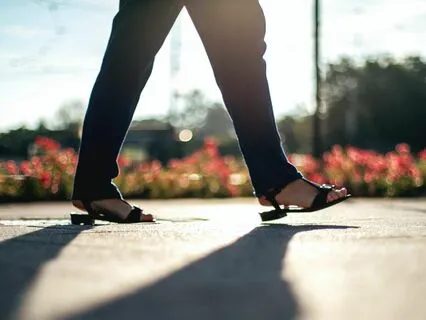
This Soma-ing practice is to be used while walking and you could be walking for any reason anywhere and for any length of time whether that's commuting,
Running errands,
Going for a walk to get outside.
It is recommended if you can to have this practice in one ear only.
So if you're able to use one side of your earphones or earbuds any way that allows you to hear the guidance of this practice and also be able to hear what's happening in the environment around you.
The theme of this practice is that of balance,
Something that many of us can feel like we struggle with,
Feeling like we have enough balance in some or all areas of our lives.
As we start today just take a moment to consider how balanced you're feeling in your life right now.
The word balance means to you.
In this practice we'll be using awareness of the sensations in our bodies and our body's movements to consider,
Reflect on,
And feel more balance.
Particularly becoming aware of the balance that we already have.
Although we can feel out of balance in areas of our lives especially in certain periods that are more intense and drawing us to one end of the spectrum,
Not feeling like we have enough time for other areas and often not enough time to care for ourselves.
It can be especially helpful in these times to tune into and remember that our bodies,
That this vessel that is allowing us to live,
Experience life,
Engage with life,
Is actually always moving towards balance.
That our bodies know what balance is even if we don't feel it.
And our bodies know that balance is not one moment.
That balance is what happens between the movements in our lives.
That if you were to take a snapshot of any moment you would be out of balance for that moment but it's when we zoom out a little bit that we actually can see the balance between the parts.
So as you consider those thoughts I'm going to invite you to turn your attention towards your feet and particularly with the contact that your feet are making with what's beneath them.
So your feet might be bare on the ground,
You might be wearing socks or shoes,
And begin to notice the changing contact in the soles of your feet.
Noticing what parts of your feet are making contact and how this is continually shifting.
Noticing how this contact feels,
The sensations against your feet of softness or solidity,
The texture and temperature.
You might feel more sensation in certain parts of your soles of your feet than others.
As you walk,
I invite you to just pause mid-step for a moment.
Notice where you've paused.
If you're on one foot or between feet.
And how balanced do you feel in this moment?
Likely not completely balanced,
Especially if you paused between feet with one foot partly on the ground and the other foot.
You might notice that it's taking a lot more effort from your body to feel balance when you've stopped moving.
And I'm going to invite you to start moving again.
And notice the difference here.
Notice that once you are in movement,
That although each moment of your walk,
You're moving in and out of balance,
That overall you are balanced.
That your body stays upright.
That although you're making only a small area of contact with the earth,
That the structure of your feet,
The movement of your legs,
This complex movement of walking that you've been practicing for so many years is all about balance.
That your body knows exactly how to move so that you can move yourself forward.
And you can get to where you need to go as you continue to walk.
Notice these continual movements.
The changing of contact with the earth.
Noticing how your legs are moving through space.
Your feet move.
Your ankles move.
Your knees bend.
Your thighs move in your hips.
Your hips are moving in space.
Feeling how this movement is even all the way up into your torso,
Into your shoulders,
Arms,
And hands.
And feeling how your neck and head move and change as you walk.
Seeing if you can take in how complex yet seemingly easy this practice of walking is.
You probably don't think about or even notice because your body knows how to do it for you.
Your body knows how to keep you balanced.
It knows how to catch you so that you don't fall.
And that you change different terrain or come to some stairs or a hill that you make the adjustments you need.
When you're running late and you need to rush,
Everything shifts exactly how it needs to be balanced to keep you moving.
Even if you're walking has some level of discomfort in some way.
There might be some pain,
Some imbalance.
Your body knows how to compensate for that and is able to keep you moving anyway.
You've chosen this walking practice because you have a body that is able to walk.
And seeing if you can breathe in some gratitude for this continually balancing body that knows how to adjust.
It's going through a whole complicated process of using the energy that you have inside you,
Getting the oxygen it needs to move your muscles,
The embodied memory of how to move all your parts of your body in concert with each other,
And then bringing your awareness to your breath.
Which is another automatic process that we have in our body that most of the time we are breathing without needing to pay attention to our breath.
And that our bodies know exactly how much to breathe in and how much to breathe out.
So without changing your breath in any way,
Seeing if you can notice your breath,
Feeling your inhale,
Noticing if there's any pause between your inhale and exhale,
And feeling your exhale as well as any pause.
And just become curious of the balance.
Is your inhale or exhale longer?
Is your breath pausing at any point?
Depending on how fast you are walking,
You may notice your breath speeding up or slowing down.
You might also notice that your breath is changing when you bring your awareness to it.
Just like our walking that our bodies are continually allowing us to do without our awareness,
So does our breath.
Yet we can also bring our awareness to our breath and have some influence on that balance.
So trying to be aware of your breath and finding out the choice that you have in your own balance.
I'm going to invite you to start to make your inhales a little bit longer than your exhales.
Finding your own pace because depending on how fast or slow you're walking,
You might need to breathe faster or slower.
You might like to count longer for your inhale and exhale.
Maybe your inhale goes deeper.
Noticing where that inhale travels to.
If it enters through your nose or mouth,
Through your throat,
Down into your lungs,
Or else does your breath travel to as you focus on that inhale.
Focus on elongating that inhale and noticing what it feels like to bring more attention to the inhale.
You're likely feeling more energy,
More awareness in certain body parts.
The practice of elongating our inhales can be very helpful for us to bring a greater sense of energizedness to our bodies,
Especially if we're feeling tired.
We automatically intensify,
Deepen,
And elongate our inhales when we speed up our movement.
When our bodies know that we need more energy to move faster,
When we're exercising,
We're climbing,
We're doing more vigorous movement.
So just as our bodies know to increase our inhale,
We can choose to increase our inhale if our balance is feeling too much to the tired,
Lethargic,
Depressed side of our experience.
Now seeing if you can find a sense of balance between inhale and exhale,
Bringing them to the same length of inhale and exhale for just a moment.
Now I'm going to invite you to lengthen your exhale.
Again,
You will choose the speed that works for you depending on the pace of your walk,
Which might have changed since you started this practice.
You might again like to count,
Counting longer for your exhale than inhale this time,
And really focusing on the sensations of that exhale,
Noticing how your body moves,
And where you feel the breath,
Feeling the texture and temperature of the breath as it leaves your body,
And seeing if you can notice what it feels in your body,
What happens to your energy,
To your walk.
Perhaps you've even slowed down your walk without even intending to.
As you focus on elongating this exhale,
You might feel some of your body soften,
Get heavier,
And this focus,
This elongation,
This deepening of our exhale often happens automatically when our bodies get stressed,
When there's too much energy.
We very often calm ourselves down by focusing on that exhale because our bodies know when our nervous systems are getting out of balance,
And this is one of the most accessible ways to center ourselves,
To move back towards a middle ground of balance,
That any time we feel anxiety,
Stress,
Overwhelm,
Too much energy,
We can elongate our exhale,
Or even just bring our awareness to our exhale,
That it only takes a moment to turn our attention to our exhale,
Noticing how that can affect our balance,
And then letting your breath find the pace the pace that feels best for it right now.
You might have really taken something to lengthen and intensify your inhale or your exhale,
Because that wasn't what your body needed in this moment on your walk,
And so letting your body show you what is the pace and balance of breathing that is best for you in this moment,
And as you feel that continual inhale,
Exhale,
Marveling in your body's capacity to take in and release,
Even if it doesn't always feel like you're able to give and receive an equal measure that your body does,
Especially if you struggle,
Perhaps with receiving as much as you give,
Of focusing inward as much as outward,
Your body is doing this for you.
Your body knows the balance of oxygen and carbon dioxide that's needed to keep you alive,
To keep you moving,
And that you're giving,
Receiving equally,
That you're taking in and you're letting go,
And one of the reasons we practice so often becoming aware of our breath is because it has so much to teach us of what we already know,
And perhaps it's more a remembering and reconnecting to the capacities that are innate within our bodies,
And then letting your awareness move away from your breath,
Coming back to the movement of your body,
Noticing how your body is moving in space,
The sensations through your feet and arms,
Through your torso and arms,
Through your head and neck,
Can you become aware of your body continually moving,
Tuning into the gross movements that are happening through your walking,
Seeing if you can sense and feel any of the movements inside of your breath,
Your digestion,
And your body is constantly calibrating,
Equalizing,
Shifting,
And that you can now turn your awareness to what you're noticing around you,
That you don't even have to pay attention to your body moving,
Breathing,
Digesting,
Digesting,
Sensing,
That you can bring your entire awareness to what you're seeing around you,
Noticing where you are,
You can see in your environment,
If there are any other people,
What objects are around you,
Noticing the color of what you can see,
The movements of what you can see,
And can you also bring your attention to your other senses that are allowing you to take in what's around you,
Feeling your skin,
And where any air is making contact with your skin,
Feeling the temperature of this air,
Noticing what sounds you can hear around you as you tune into what you can hear,
Maybe noticing sounds that you weren't aware were there,
Noticing if there are any smells around you,
Noticing how you can be in choice to turn your attention to your environment and how you're able to sense the world around you through sight and sound and touch and smell,
Just as you can choose to tune into what you're feeling on the inside,
Noticing the sensations and movements inside your own body,
Noticing your breath.
I invite you now to see if you can expand your awareness to take in both the inside and the outside,
Feeling how your body is moving and the sensations as it moves,
As well as how it's moving in space,
How it's moving through the space around you,
How this moving,
Breathing,
Alive body is part of everything around you.
And as you choose to have your attention expand to include both the sensations inside and out,
To use the power of your attention and awareness to feel how your movements are part of the world around you,
You are part of your environment,
You are part of your environment,
Or you are one part of this planet that we all share,
Seeing if you can invite a sense of knowing of the greater balance that you are part of,
That even in one moment or one movement,
Or even a period of time in your own life that may not feel balanced the way you would like it to,
To letting the connection to your own body and your body's connection to the world remind you of the greater balance within your own life and with our shared living.
And let this practice today of tuning into our walking remind us of the choice we have in where we place our attention.
Much of what tends to feel imbalanced is where our awareness and attention goes,
As it does tend to go towards things that feel very important to us.
And when we can cultivate more capacity to choose where we're focusing,
The more that we can gain perspective,
The more that we can apprehend a balance that we might have not known was there.
And as the practice draws to a close,
For this time,
Take a moment to thank yourself for making the choice to attend to yourself and intend a cultivating of more awareness and a greater sense of balance within your body and your life.