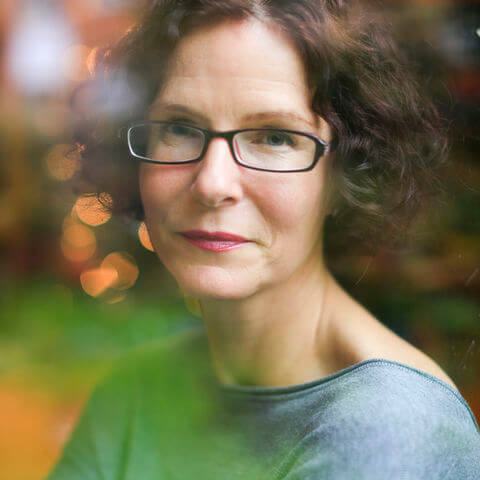
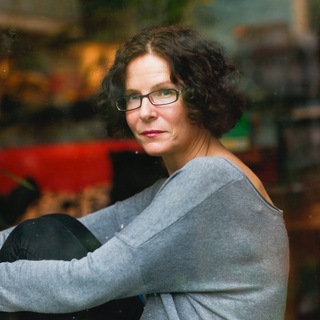
I'm Vanessa Potter and this is Finding Your Right Mind,
A podcast that champions citizen science and investigates the many different ways in which we can improve our own health and wellbeing,
Giving us less stressful,
More connected and happier lives.
Wouldn't that be a nice theme?
Welcome back!
I am so excited to launch Series 3 with a very different project.
It's called Park Bathe.
If you missed the trailer for this or if you haven't yet heard about this project,
I am going to fill you in.
Earlier this year,
I talked to Kirsten McEwen,
Who is a health researcher at Derby University.
Kirsten and I had a really good chat about compassion and about many of the misconceptions around this practice.
For one,
It doesn't make you a pushover or a mug and we had a really interesting chat.
This is us talking back then.
Yeah,
This really comes from the misconception about compassion.
People think that it's a low position in the human hierarchy,
That if you have compassion,
You're somehow inferior to others,
That it's a weakness or that it's associated with pity or letting yourself off the hook.
I've heard many people say,
Oh,
I don't want to have a pity party.
That really does come from a misconception of compassion that it's a weakness,
But it takes an enormous amount of courage to have compassion because you're engaging with distress,
Whether it's somebody else's or your own,
You're engaging with it rather than avoiding it or dissociating from it.
So check out her interview if you'd like to listen to that.
Afterwards,
Kirsten and I got chatting about walking and talking,
Two of my favourite things.
I was fascinated about how walking in nature had so many health benefits and this is something I wrote about in my first book,
Anecdotally,
Although back then I didn't really know the science,
Probably not so surprising.
But that got us onto forest bathing,
Which is another area of research for Kirsten.
It turns out Kirsten has just run the first forest bathing comparative study in the UK.
So it was by complete chance that I was talking to the right person.
And this series is really going to get into exactly what forest bathing is.
Because just saying it's mindful walking in nature while absorbing the woodland atmosphere,
Which is what it is,
Doesn't really go any way to give it justice or really explain what the experience is like.
So that's how it all started.
And that's how my interest in forest bathing turned into an incredible project called Park Bathe.
So after my first interview with Kirsten,
We jumped on a second call and within an hour we knew we were going to work on a really exciting and very special project together.
I connected to what Kirsten had told me about forest bathing because of my own experiences of walking in nature after I lost my sight in 2012.
And she was really interested in the ways in which I harnessed,
And yes I will say it,
The healing benefits of being in a natural environment.
Because nature does heal and in so many weird and wonderful ways and that is what we're going to find out much more about.
So I'm talking to researchers and nature experts to find out just how nature benefits us.
Not just our physical health but our mental health.
Because let's face it,
Nature is visible,
It's all around us,
But the wellbeing benefits of being in nature are sometimes invisible.
A lot happens either on an unconscious or even cellular level and a lot happens beneath our conscious radar.
But I'm hoping this series will uncover and reveal the beneficial compounds and chemicals that are hidden beneath the mulch and leaves that we tramp over in your local park and how knowing that can bring about real change in your life.
And I'll also get into how the name Park Bathe came about.
So hold fire,
All of that is going to be revealed.
But before I get onto that,
I'm going to zip back in time so you get a real idea of how this whole project opened up for me.
It's relevant to not just how Park Bathe came about,
But why and it might go some way to share my passion for what wellness is all about.
So this is the backstory.
In 2012,
Picture a pretty stressed out TV producer hitting 40 with two small children under four.
That was me.
I'd just taken the summer off as I'd already made the decision to go freelance and spend some time with my kids.
In the September of 2012,
My daughter started school and it was when she'd been in reception for about two weeks that that thing,
Fate,
Came along and lobbed one hell of a curve ball my way.
What happened to me was a little bit like being hit by a freight train.
It came out of nowhere.
On October the 2nd,
I woke up feeling,
Well,
A bit odd,
A bit dizzy and strange.
I hot footed it to the doctor and a lovely locum GP sent me to A&E where I spent the day being tested for,
Well,
Pretty much anything and everything.
My vision was affected and I experienced a strange static buzzing but they couldn't find anything wrong with me so they sent me home.
The next morning it was my daughter's fifth birthday and I woke up to hear her shrieking downstairs as she was shredding wrapping paper off presents.
But as I came to upstairs lying in my bed,
I realised that I'd lost about 70% of my vision.
It had disappeared just like that overnight.
It was a bit like wearing sunglasses inside but of course I wasn't.
Anyway,
Fast forward 48 hours and I'm now lying in a hospital bed completely blind and paralysed with a lot of doctors padding around me whispering that they didn't have a Scooby Doo what was wrong with me.
So what do you do?
You're lying there and no one can tell you if you're even going to live.
It's pretty horrific.
But this is where I suppose my love affair with the mind started because at that moment my mind took over.
A couple of years before I got ill I'd been on a Buddhist retreat and learnt to meditate although back then and we're talking 2009 I thought it was all a load of rubbish and I really didn't get why you would spend 20 minutes twice a day sitting still meditating.
But later in life I'd learnt self-hypnosis when I had my children and also some relaxing breathing exercises.
So by 2010 I had a few more tools in my mental kit bag.
So when push came to shove my mind rifled through that kit bag of resources and it picked out what it needed to help me survive.
So lying in that hospital bed I started visualising a beach.
This was one of the exercises I'd been taught.
An imaginary made up place that was so beautiful and peaceful that it calmed my mind and body and it took my nervous system out of the sympathetic,
The panic alarm mode which is fight or flight,
This sense of hyperarousal and it gently shifted me into the parasympathetic mode which is what I needed,
The rest and digest mode.
I needed that system to be activated to heal and mend my broken visual system.
So where does nature and walking fit in?
Well it really does fit in I can tell you.
Because it was over the next year that I spent hours and hours learning to walk again and I did this in my local park.
I literally took one step at a time.
That paralysis that hit me with my blindness did eventually go but it took months of slow walking around the park to bring it back.
And my vision didn't just switch back on either.
I was sent home from hospital legally blind and only able to see a swirling grey mist.
In time some lines and shapes appeared and I used the natural landscape to stimulate my visual recovery.
I would examine leaves,
Tree bark,
Road signs,
Lamp posts,
Pretty much anything that took my attention and helped me reignite my visual senses.
I was the crazy lady talking to lamp posts on my local streets reminding my visual system what the colour blue was and what a leaf vein looked like.
It took over a year for me to be able to see again and now I'm partially sighted.
So there you have it.
A super quick back story.
But that's the why behind this project and it's why I want to share the benefits of slowing down and spending some time wallowing in nature guilt free.
But we need to train ourselves not to skim past what is right in front of our noses.
I'm talking about a conscious engagement.
A sense of being here and not inside our heads or like a rabbit caught in the headlights.
Forest Bathing is about being an active participant in this thing we call real life.
I'm using nature to help us do that.
Because I don't know about you but I sometimes think life is a bit like a movie that I'm playing a bit part in.
And yet the moment we open up our senses the world rushes in.
Colours,
Smell,
Textures,
Detail and these seemingly unimportant tiny scraps of life can open up new experiences and leave us feeling emotions like joy,
Gratitude and connection.
So who would have thought a bit of dirt,
A broken musty twig,
A leaf could give you so much.
Well keep listening folks because honestly I'm going to totally rebrand how less is most certainly more.
This Forest Bathing stuff is going to blow your minds.
So let's get to this simple unassuming thing called Forest Bathing.
What is it?
I'm going to get onto this much more later on but this is what Kirsten describes it as.
Forest Bathing is just a slow walk in nature.
It could be in your garden or your park but it's really about connecting with your surroundings.
So using your senses,
So listening to nature,
Looking at nature,
Touching nature to really get in your senses and not be in your mind and your to-do list.
That sounds deceptively simple doesn't it?
And rather appealing.
Finding a way to stop obsessing over our to-do list would be rather nice wouldn't it?
But don't be fooled by the simplicity.
There is an awful lot going on when we walk slowly in nature.
You may not realise this but Forest Bathing actually originated in Japan in the 1980s and it's still a health prescription there.
Now this was implemented by the government which means it's something you can choose if you visit your doctor and you've got a heart or respiratory illness or you're suffering stress or anxiety,
Your doctor in Japan can offer you two options.
You can either take drugs or medicine or you can visit a Forest Bathing centre.
I spoke with Dr Quinley who is one of the leading researchers in this field.
He's written a number of books on the subject and I can heartily recommend Forest Bathing,
How Trees Help You Find Health and Happiness.
As Dr Lee not only talks about how to do Forest Bathing and the benefits but describes some of the fascinating Japanese studies that have been done and the science that's starting to emerge.
Now we're going to get into all the geeky,
Super cool science in much more detail in later episodes where Quinley tells me all about how nature boosts natural killer cells within the body that help prevent cancer and the remarkable effect that phytoncides,
Which are the chemicals that trees emit,
Have upon our immune system.
But for the moment here is Dr Lee's definition of Shinrin-Yoku which is where the translation of Forest Bathing comes from and his explanation of how it all came about.
Researchers in Japan have tried to find a new method to reduce stress by visiting forests and have proposed a new concept called Shinrin-Yoku for taking in the forest through our senses.
So now you know why we call it Forest Bathing over here.
The bathing simply means absorbing and taking in the forest atmosphere so there's no water,
No skinny dipping or swimming cosses required.
So while the translation has some people scratching their heads or rolling their eyes,
What yeah does sound a bit well vague and fluffy,
It's hard to argue with the science.
This is Kirsten talking to one of the groups we've taken around Crystal Palace Park explaining how she came to research this field.
She touches upon our nervous system and its functions which is central to much of the research into the benefits of Forest Bathing and something else that we'll get into more later on.
When I first heard about Forest Bathing I was a bit sceptical because I really love nature already and I do a lot of exercise in nature and I didn't really understand how profound it could be to slow down and really notice those small details but I was really convinced by the research evidence I was seeing in my job.
So I found research in Japan which shows that it reduces blood pressure,
Helps with cardiovascular health,
Immune system,
Stress and sleep quality so there's lots of benefits to spending time in nature and just being a bit slower and more mindful about it.
And I think we're all familiar with our fight flight system with feeling stressed if you got stuck in traffic or if you had a disagreement at work or being in our drive system where we feel like we have to be under pressure all the time,
Being productive,
Rushing around,
Being busy,
We're all very familiar with those two systems and I think we often neglect our rest and digest system so being able to slow down and relax and just notice those small details so hopefully on today's walk we're going to get more into our rest and digest or parasympathetic nervous system as it's known.
So if anyone feels tired during the walk and starts yawning that's fine,
That's actually a compliment because it means we're getting into our parasympathetic.
So now I've hopefully explained what forest bathing is,
I need to tell you about what Kirsten and I have been up to in the park this autumn.
It started with a small pilot study back in April and you can see a link to the short film we made of that in the show notes.
Kirsten and I wanted to see if we could make Shinrin-Yoku accessible for busy,
Urban,
Slightly sceptical city dwellers.
Traditionally you'd spend two to three hours in a quiet,
Possibly quite remote forest which isn't possible for everyone.
For many people in this country ancient woodland isn't always accessible or even inviting.
There's a variety of reasons why people may not want to give up that much time or even choose to spend the best part of a day immersed in nature.
For some it's cultural,
For others financial or just personal.
Maybe it's just not a habit they have,
Maybe they weren't brought up playing in nature so visiting a green space just doesn't feel familiar or even safe.
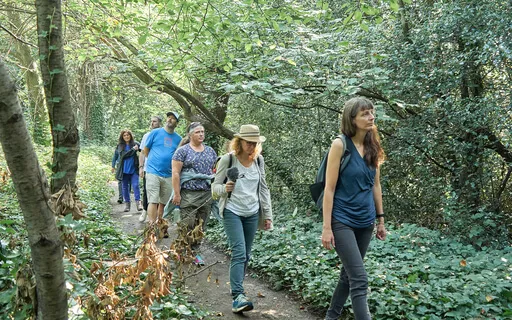
Kirsten and I wanted to streamline all the good parts of forest bathing and adapt it to work in a highly populated urban park and Crystal Palace was a great place to experiment with this.
We spent several weekends wrecking routes and eventually found a section of the park utilising a small section of the Great North Woods and we set about planning the sensory activities we'd do along the way.
We also decided to record heart rate variability as this is a great way to measure stress levels.
We'd hope that after a walk heart rates would go down but that heart rate variability would go up as this shows the heart is regulating stress better.
We wanted to appeal to skeptics,
To those people for whom the idea of mindful walking was utter rubbish or woo-woo nonsense.
We figured if they could see objective measurements that showed how much the experience lowered their stress levels it might offer them a cheap,
Easy to learn and easy to repeat accessible health solution.
This was citizen science in action and my husband Ed was our first guinea pig and Kirsten led him and I on a horribly wet and windy day around Crystal Palace Park.
But even with the wind howling and the rain lashing it was an exhilarating experience and we left the park sopping wet but grinning.
Ed wore a heart rate monitor which is just a chest strap that went on underneath his shirt and even tramping around the park,
Let's face it,
To humour me,
He experienced an increase in heart rate variability which would please any GP looking to lower stress levels in a patient.
Fired up we applied for National Lottery funding and got it!
I decided to name the project Park Bathe because we were offering forest bathing in a park.
We pledged to provide guided walks for 60 local people and we aimed to appeal to a wide audience including yes,
Sceptical men who are often put off health interventions like this.
Very quickly people started to book up our walking slots,
Some were curious,
Some needed new ways to manage anxiety,
Isolation,
Grief,
Depression or health problems,
Many of which were a direct result of Covid.
I spoke to some of our earlier park bathers when they first arrived to check in for a walk.
Can I do a quick chat with you?
Yes.
Fantastic,
So thank you for coming along and being patient with our heart monitors.
What drew you to opt to have a heart monitor on today?
To see if it did anything because it's a quantifiable science rather than how I just feel because I could choose how I felt so if I got really wet and it was raining then I might feel a bit grumpy and not knowing what it did for me.
So it's that added layer?
Yeah.
Fantastic.
Have you ever done forest bathing before?
No.
I've heard,
I saw an article about it of just an advert but never done it and sort of slightly sceptical of doing it in an urban environment with lots of noises going on.
And what makes you sceptical about that one?
Maybe just sort of the sound of aircraft people shouting,
Traffic going past versus being in the middle of nowhere where that's all filtered out.
Yeah,
No I understand.
And considering your sort of reservations about the noise and the fact that we're in an urban environment,
We scale this on a score where zero is you're not sceptical at all or unsure but seven is you're really quite unsure.
Where do you think you sit at the moment?
Probably about a four.
Four?
Yeah,
Because the park sounds fairly busy at the moment as well.
Yeah,
And Saturday is a quite good day to do this because it is busy.
Yeah.
So that's part of this model is working around that and seeing if we can.
So on a weekday sometimes the park is quite quiet.
That's interesting.
So if we'd come here on a Monday wet morning and everyone's in school then the park's generally quieter.
And you would maybe feel differently about that.
Yeah.
So that's interesting.
So if we do this and you get some objective measures that are encouraging for yourself and you find some benefit,
Do you think you might do it in the future?
Is that why you're here?
I might do and I think I'm also aware that I do nothing for myself.
So it's actually a big change for me to come out and do some me time,
Mindfulness or anything.
So it's a matter of,
You know,
The usual cycle,
Get up,
Work,
Go to bed.
So this is breaking that cycle?
It is breaking the cycle.
So I'm looking forward to it.
Good.
Fantastic.
Well,
Thank you.
That's okay.
You'll find out how she got on in just a moment.
That Saturday was a really busy day.
We even had the park maintenance guys in the background with chainsaws for most of that one hour walk.
Most of our groups consist of around eight to ten people.
And who comes varies.
It's a mixture of men and women aged anything between 20 and 80.
And they all come for different reasons.
And they all told me different stories.
And in many cases it was about how the pandemic had affected their lives.
I think some were surprised to find themselves standing in the park,
Talking to me and about to go on a slow,
Mindful walk with let's face it,
Two strange women.
But there they were,
And they were prepared to give it a go.
I heard lots of times that they were looking for something and that they might be sceptical,
But there was an element of hope that this might be the thing they'd been looking for.
Well,
Like other people have said,
Over the last 18 months in particular lockdown and I lost my job a year ago,
Getting out into nature has been really important to me.
But in terms of it being a real thing or something you can measure or something you can do courses or formal things around,
I know nothing about.
So that's where my curiosity comes from,
I guess.
Fantastic.
And that's interesting you say about lockdown.
Do you think you would have come to something like this 18 months,
Two years ago?
Probably not.
Probably not.
My partner,
This is very much her sort of territory.
And we don't sort of share those same interests.
But you know,
I'm curious because of that because she's kind of a yoga nature,
You know,
Kind of body,
Mind,
Spirit kind of person.
So if this was to be useful for you,
What kind of skills would be good for you to walk away?
What how could it help you in your life?
Do you think?
I think maybe just actually,
In a way formalising it,
Committing to it in a way that's at the moment,
I just get into nature when I can on a sort of casual basis,
Don't know what effect it's having on me,
Maybe being able to understand that better and actually commit to building it into my life more perhaps.
The sceptic scores that Kirsten uses are really important.
They're very helpful because they give us a scale.
And it indicates how sceptical or unsure people feel about spending an hour walking mindfully in an urban park.
We scale them from nought to seven.
Now nought would be somebody who is completely relaxed and not worried at all about spending an hour in the park.
And a seventh score would be someone who's very nervous,
Very unsure,
With deep reservations about spending this time.
Some were nervous,
Actually,
A lot of them were nervous.
It was important that everyone felt safe and supported.
So our two volunteers,
Elaine and Laura,
Were a vital part of helping us on walk days,
And were on hand if anybody needed anything.
One of my favourite parts of this project though,
Has been interviewing people straight after their park bathe session.
It's really interesting to notice the changes in people after doing park bathe.
You can even hear it.
Hello.
Hello.
How are you feeling?
Actually calm.
I feel,
Oops,
Just seen,
Oh it looked like a mouse that was dead,
But it was a stick.
Now I feel quite calm.
And I realised that,
I didn't realise that maybe relaxation was linked to also a feeling of tiredness.
So almost quite tired after it.
But I think that's because I'm actually,
I would say I'm quite relaxed.
I think because my senses were like,
Aroused and heightened,
I was very aware that being in a group,
A woman walking in the woods,
I would normally be more attuned to feeling scared by myself.
But that I didn't have to worry about because I was with other people,
So I wasn't actually worried about my safety.
And so it's sort of trying,
If I was going to repeat it,
Would be a matter of making sure that I felt safe to get the full benefit like I did today.
We're hoping to offer regular walks,
Like weekly walks,
As a sort of a follow on from this.
So that sounds like maybe that would be what you would be looking for.
Yeah,
Sort of safety in numbers.
Yeah,
I would definitely be interested because it's made me realise I do very little for myself.
So it's been nice spending time with myself for a change and putting others first.
Fantastic.
And you were about a four in your unsure range,
Sceptic range.
What do you know?
Probably maybe a one,
One and a half,
If you get halves.
You can always have a half,
You can have three quarters if you want.
Probably about one and a half now.
I'll take that.
You don't have to shoehorn something new.
You just adapt what you're doing.
I think that attitude of just a little bit now and then and go,
Just reminder,
This is for me.
Yes.
And we know we've done the measures.
Yeah,
So it's obviously good and so it's got a health benefit without just focusing on how many steps have you got done today.
Yeah,
It's got a stamp of approval now.
Yeah.
Fantastic.
Thank you so much for coming along today.
That's alright.
Brilliant.
Thank you.
Quite a few people that came along had deep reservations.
Many couldn't believe it could have a significant impact on how they felt or a measurable health benefit.
In those early days,
We didn't know either.
As you can see,
A 1.
5 score was a really good result.
When we scale our experiences,
We can see the changes,
The shifts in our perception for ourself.
One couple talked to me after their walk.
Both were clutching leaves and twigs and seed heads they'd collected.
And you'll hear how a fallen bit of tree bark and an unripe blackberry took on a whole new meaning.
How'd you get on with that?
I thought it was brilliant.
Yeah.
I mean,
I really did not think of anything else.
Fantastic.
To do,
You know,
With anything apart from what I was looking at and smelling and seeing.
It was really good.
If it was any different,
You know,
I wouldn't have guessed that my heart rate had gone down a lot or that the variability had changed.
It's something that you're conscious of.
But it had.
So that's obviously something was going on.
Fantastic.
And so you've got this park locally for you?
Yeah.
Will you come back and do something like this?
I think we should add it on to a walk.
Yeah.
We're up here a lot.
But like I say,
Normally just trying to get the rings done on your watch.
So we sort of march around it fairly quickly usually.
But maybe we'll just kind of,
How we incorporate it.
It feels more relaxed,
Really relaxed.
Yeah.
Well,
One of the things that Park Bay is intending is to utilise your local park.
As one of the gentlemen said,
You know,
You don't have to go to an ancient woodland to feel this way.
You can do it here with some simple exercises.
And it's not prescriptive,
It's adaptive.
So the idea is exactly what you've just said.
What can we do?
We'll do a walk.
How can we bolt this on or incorporate it for other people to get ideas?
We inspire each other often in these groups because someone comes up with a brilliant idea and everyone else goes,
That's good and can adopt it.
I think a lot of people would benefit from doing this,
Don't you?
Yeah.
People who probably wouldn't think they would.
I think they really would.
Yeah.
That's the thing about it.
It's often perceived as just too sinful and too obvious.
So people don't.
Yeah.
That's why we're doing this.
Yeah.
You've got to walk through the experience literally.
Unless you have someone,
Just walking slowly,
You would never walk.
I would never walk at that pace otherwise.
And I don't know,
You have to,
It's very helpful,
I think.
It really was.
To me,
I think it's like reawakening childhood.
I think I was more connected with nature when I was younger and I would be fascinated by all these things.
You know what I mean?
That would be something that I would have loved when I was a kid.
But now looking at it,
It's really nice.
You picked up some really cool stuff.
You did.
You've got some kind of,
You could put that on the wall.
You could.
It's kind of got an incredible artistic feel to it with its swirls and squiggles and the colour and a spiky thing.
Is that a bit of a blackberry but an unripe one?
Yes.
Yeah.
Very playful and actually quite beautiful.
Yeah,
It is nice.
I'm impressed with it.
I'm not annoyed,
It's all arty.
Yeah,
That's what I mean.
You just forget,
I think,
And you become,
You know,
Your life,
You get disconnected.
Yes.
That's exactly what we're trying to do with this.
Oh,
It's brilliant.
Thank you so much.
Fantastic.
It's been a delight having you here and thank you for talking to me.
Thank you.
Thank you.
Bye.
So both Kirsten and Quinley talk a lot about the importance of our senses when it comes to shinrin-yoku or forest bathing.
And this isn't that surprising.
Humans are made from nature.
It's taken nearly 7 million years for us to be the versions of humans that we are today.
Our DNA was formed in nature for most of those millions of years.
The industrial revolution has only taken up,
What,
The last 300,
400 years.
So this idea of living in houses and cities surrounded by concrete is new.
And yet nature is not new.
We've spent 99.
9% of our time in nature and only that last 0.
1% surrounded in concrete in this urbanised modern world we live in.
So experiencing forest bathing is not teaching ourselves something new.
It's allowing our bodies to revert back to its natural state and remember how we used to be.
So forest bathing is walking slowly in a natural environment whilst taken in the atmosphere.
And yet it's so much more than that because it involves using the senses in a mindful,
Conscious way.
So really it's quite different from walking through the park with a friend,
Nattering away or walking the dog or running with headphones on.
It's really easy to shrug off or disregard this practice as,
Yeah,
Well,
So what?
Why slow down?
What would I get out of doing that?
How can that be so great?
You don't do anything.
And you see,
There's the point.
You don't really do anything.
And yet,
And I know this sounds a little bit annoying,
So you're going to have to just bear with me,
Everything happens in that not doing moment.
It's when we do less that our brain shifts gear.
If you feel like your life goes 100 miles an hour on the motorway with the world whizzing past your window,
With you unable to take anything in,
You think fast,
You eat fast,
You speak fast,
We breathe fast,
Then forest bathing is a bit like taking your foot off the gas and slowing right down,
Enough to even pull into a wooded lay-by and stop and actually look out of the window.
And more than just look,
Wind down your window,
Smell the smells and the scents of the leaves,
Hear the birdsong.
And if you get out of your car,
Touch the earth,
Or,
God forbid,
Touch a tree.
Forest bathing is about living consciously and actively with our full attention.
And man,
I can tell you,
When you do that,
The world opens up.
And as one person said,
The only way to get it is to do it.
So join me next time where Kirsten and I will get into the nitty-gritty of forest bathing science.
And this is really exciting.
Even if you aren't really a science person,
Some of the studies and what they have found are really life-changing.
One study put people into a climate-controlled room and asked them to touch a piece of wood.
They also asked people to look at a bunch of flowers and to stare at a picture.
And they recorded all of their wellbeing measures while they did it.
I can tell you the results are really surprising.
So tune in next time and Kirsten and I will reveal the science of forest bathing.
And also we'll give you some helpful tips on how you can bring nature into your home in really easy and practical ways.
If you've enjoyed this episode,
Please do share it and leave us a review.
Find us on social media.
We love to hear how you're getting on if you're trying park bathing yourself.
If you'd like to have a go,
You can use the free guided track,
Which is also available in this series.
Remember,
Even just 20 minutes outside has measurable health benefits.
I can promise you it changes your day.
Hope to see you next time.