Welcome to Finding Your Right Mind with me,
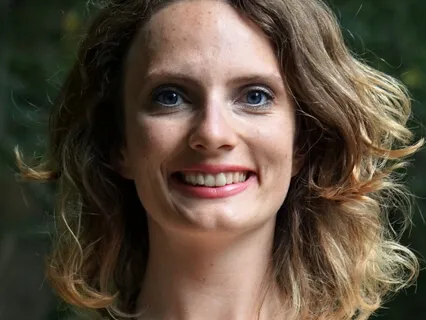
Vanessa Potter.
Meditation isn't one size fits all,
And mindfulness is not the only way to train your mind.
There are over 300 different techniques that can be found throughout world traditions.
Today I'm going to take a deep dive into all things meditation with Cara Matko and talk to her about an important study that has been investigating exactly what happens when meditators close their eyes.
Yes,
So I'm very happy that you invited me for this podcast.
My name is Cara Matko.
I'm from Germany.
I'm a researcher and finishing up my PhD.
And I'm interested in the basic working mechanisms of meditation and also the diversity of different meditation techniques because that's been kind of under researched till now.
Yeah,
And that's a great intro,
Actually.
One of the things that I find and I think is starting to be discussed is how meditation has become this kind of generic term to mean everything and anything.
It's like a shortcut.
And as you say,
That's rather misleading because there is an enormous diversity of techniques.
And I mean,
Really,
What we're going to talk about today is how meditation is not one size fits all.
That is probably the theme.
But maybe we can just go right back to the beginning.
Let me ask you the question,
What would you call meditation?
What is it exactly?
If you never meditated before,
What would you say it is?
Well,
This is a very difficult question because it's not that easy to answer what meditation is.
I mean,
I've come across like 300 different meditation techniques.
And these are very diverse.
And of course,
Like,
They share some commonalities,
I would say it's all to do with mental training.
And they all have some form of somatic components.
So they relate to the body in one way or the other.
But other than that,
The techniques,
The goals,
The motivation,
The framework in which meditate is so diverse,
It's really hard.
It might be actually that we need more definitions,
Like for different types of meditation.
Yeah,
I think that's really interesting,
Actually,
Because there's quite a lot of definitions for mindfulness,
Which is this ability to be here in this moment.
But of course,
A lot of practices are not about mindfulness,
They actually have quite different frameworks,
As you say.
But I like the fact that you said mind training,
I think if you were going to be really,
Really simplistic about it,
And a commonality,
Ultimately,
We are training our mind,
What for is where the diversity comes in.
But would you agree that mind training,
The mind is perhaps the underpinning fundamental of why we sit with our eyes closed?
Yeah,
Definitely.
One of the other things that I wanted to talk to you about today is why and how your study came about.
Because what has seemingly been happening in the meditation kind of research world is that meditation,
When it first started being researched in the 60s,
Everything was kind of bagged together,
Wasn't it?
They didn't really separate out techniques.
It was just meditation.
And this started to cause some problems.
And as you know,
The research went further and further and got deeper and deeper.
There was a need then to say,
Well,
Hang on a minute,
When these participants are sitting there with their eyes closed,
What is it that they're doing?
And I saw that that's actually the underpinning question that you asked in your study.
And you want to tell us a little bit more about why this is so important that this study has happened?
As you say,
This was our starting point,
Like the question,
What do meditators do when they wait?
Because it wasn't quite clear till now,
Because there's so many different forms of meditation.
I mean,
There's a meditative tradition in Christianity and Hinduism,
Buddhism,
And Jewish traditions and Sufi traditions.
There's such a variety.
And as you said,
Like in the history of meditation research,
We often look to the east,
And we see like these monks or nuns sitting there in the orange ropes or similar meditating with their eyes closed.
But I mean,
Sufi whirling and circling around himself or herself is as well a form of meditation.
And that's why we wanted to overcome this historical limitation of like Western research and broaden this perspective a bit and acknowledge the diversity that we see in all these different kinds of meditation,
All these different traditions.
And I mean,
There's been some,
Recently there have been some attempts to kind of broaden the perspective.
But all of these were kind of top down,
The researchers thought,
Okay,
How can we classify meditation?
Okay,
Let's do it that way.
But we approach this differently from the bottom up perspective.
So we really approached a lot of meditators and asked them,
What do you do when you meditate?
And then they provided us with like a lot of different answers,
A lot of different techniques,
And then we started to kind of thin it out a bit again,
And make it more concise.
And we came up with 50 different meditation techniques.
And we send those out to 700 other meditators who evaluated our collection and said,
How much experience do they have with each technique?
And then we could see that these 50 techniques are actually quite broadly practiced in a lot of different contexts.
And now in like the other studies we already did,
And we are planning to do,
We want to compare the techniques at work,
So to say,
Like in interventions.
And we recently taught a group of students to meditate.
And we had four different groups and four different techniques,
And they all were trained to meditate with these techniques for eight weeks.
And then we were interested to find out how does meditation work?
Where are the differences between the different meditation techniques?
Yeah,
Which is really interesting,
Because in the past,
I know when I first started my experiment,
And I was researching,
I knew there was lots of different ways to train the mind.
And back in 2016,
There seemed to be like three categories,
Focused attention,
Which is this idea of focusing your attention and just concentrating on your breath or a part of your body.
And then there was this idea of open monitoring,
Which is acknowledging that we have thousands of thoughts bombarding us constantly and not actually doing anything about it,
But just kind of observing those thoughts.
And then later on,
I believe,
Kind of compassion started to come in there with the crossover with loving kindness,
Which is this idea of feeling loving and having goodwill towards yourself and other people and in fact,
The whole world.
And then of course,
The mantras,
The mantra practices,
Which of course,
Transcendental Meditation,
They did a lot of research in the early days Maharishi was very determined,
Wasn't he,
To prove the scientific efficacy of meditation.
Yeah.
And for a long time,
I mean,
Correct me if I'm wrong,
But a long time,
It seemed that those were the categories,
Weren't they?
I'm thinking that actually,
You mentioned something there that I quite like to go back to,
You talked about whirling.
And just for no one that's ever heard of that has no idea what you're talking about,
Do you want to just talk about the movement categories of meditation you came across?
Yes.
So when we talk about whirling,
I guess many people have already seen or heard about Sufi dancers,
They're standing and whirling and dancing around themselves,
So to say,
And they have their arms stretched out.
And they do this for quite a long time.
And it's quite impressive that they don't get nausea or something.
But this is a really advanced form of meditation.
And as you said,
There's other forms of movement meditation.
In Buddhism,
There's a great deal of walking meditation,
Which we also had to walking meditation intervention and people quite liked it because it really brings you down to earth and away from the thoughts and down to the feet and feeling the body.
So yeah,
I think it's quite profound.
And I mean,
There's things like yoga or Qigong,
Tai Chi,
All these kinds of movement practices that have a very meditative aspect.
And of course,
It depends on how you practice yoga,
For example,
Whether it's meditative or not,
But it definitely has this aspect of meditating while moving and sensing and being aware of yourself being aware of your breath of your thoughts as well of your movements.
Yeah,
I think the movement meditations are hugely underrated.
Actually,
We have this association,
Don't we?
I think if you've never come to meditation,
You think you sit cross legged on a mat on a sofa on a chair,
And you've got your eyes closed and you're motionless,
Whereas actually,
The movement meditations are an entirely different experience.
And particularly if you are walking in nature,
I found doing a movement meditation,
It blew my mind because it literally opens the world up to you.
And I found,
I saw more literally like my peripheral vision just exploded and just suddenly things that I would not have noticed.
And of course,
This brings us back into meditation and about the attention and the concentration that's required.
You know,
I was training my attention to take in and absorb trees and the edge of a fence and to be slow about this and considered actually.
And it's interesting when you do those movement meditations that you realize is how fast you go.
And yeah,
I think meditation often has that impact.
It's not even so much what you're doing in that moment.
It's what you realize you're doing the rest of the time.
Yes.
Yeah.
I think a lot of meditation techniques are also about like becoming present and being aware of the present moment that is happening now and not thinking about the past or not thinking about the future.
But really,
Like you said,
Like when you're walking in the forest,
You kind of start to take in all this richness around you.
You become aware of the astounding impressions that you get from nature,
From your body,
From moving,
From breathing,
From listening.
And I think like meditation is a beautiful door into this realization of being present.
Yeah,
No,
Absolutely.
And it is a doorway.
I think that's a really good analogy.
The other thing,
We talked about walking and it kind of segues into this about body-centered techniques.
I think,
Again,
This association with meditation is it's about the mind.
But actually,
You mentioned the somatic word earlier,
And it might be really good to kind of get a little bit into that.
What does it mean by a body-centered technique?
Why do we use this word embodied?
Do you want to just go into that a little bit and explain that?
Yes.
So actually,
I just talked to another researcher yesterday,
And we realized that not all meditation techniques are that focused on the body.
I mean,
Not all the techniques aim that you get a better understanding of your body.
Some of them just like skip through that and go to the stages or states of really blissful and self-dissolution states.
So they kind of skip that.
But a lot of meditation techniques,
They really place the focus on the body.
And I think,
Especially in the West,
We're so much into our minds,
We're constantly thinking and not being aware of what we're thinking.
And when we tell people to meditate,
One thing many people realize is that how crowded their mind is,
How many thoughts are there,
How much what kind of a mess there is in their brain.
And then when they meditate,
They slowly begin to realize,
Okay,
I can control this mess,
I can actually influence my thoughts.
I think that's a very profound insight one can get through meditating.
And what helps a lot of people is to place their focus on the body,
Like to go out of the mind to be more present and to feel what's happening in your body,
To feel the breath,
To feel slight movements,
To feel even pain when you're sitting for a long time,
There's a lot of pain,
Of course,
But to acknowledge that and not to be fierce about it,
But be kind with it and be kind to yourself and reconnect maybe with your body.
Yeah,
You said the critical word there,
Didn't you reconnect?
Because we teach ourselves to disconnect.
I mean,
It's the terrifying state of society and the world and the speed at which we live.
Children are far more connected.
I see it with my children,
They're so much more connected to their bodies and intuitive about their bodies.
And again,
We seem to teach ourselves to ignore the signals that our bodies constantly give us.
I mean,
We follow the ones to eat,
But even those big signals we miss and ignore or question.
But I think what for me the embodiment nature of meditation is this listening to those subtle,
Quieter signals,
Tiny little sensations,
But also,
You know,
You talked about pain.
Pain is just a sensation,
Discomfort in whatever form it comes,
You know,
A tickle,
An itch.
It's a sensation and changing your relationship with the sensations within the body is,
I think,
Really fundamental within meditation or even,
I mean,
That feels quite advanced,
But even just before that,
A body scan.
I mean,
I spoke yesterday with somebody and she said to me,
What's a body scan?
And I thought,
Gosh,
Well,
Of course,
Why would you know?
Do you want to maybe explain what a body scan is just as a very simple,
Mindful practice?
Yes.
So the body scan is a practice that is quite wildly practiced in all kinds of traditions.
That's what we found as well.
So there's a lot of Hindus that do body scan,
A lot of Buddhists,
But also other meditators from other traditions who do the body scan.
And basically what you do is you close your eyes and then you scan your body.
You kind of try to be aware of every part of your body.
Like sometimes you start with the head,
Sometimes you start with the feet and then you just feel inside of your body,
Like,
How do my fingers feel?
How do my hands feel?
My arms,
My joints,
My organs.
And then you just like go bit by bit through your body and to try to be aware of everything,
But not to judge it and just be present in your body.
I found when I first started doing body scans,
And this is interesting if you got any of this from any of your participants,
It switched on my senses.
So obviously,
You know,
The tactile sense,
If I'm thinking about my ankles and my calves,
Then it's actually quite difficult,
I would say,
To focus to your body.
If you're not used to doing this,
And that's where the training of course comes in again,
It was actually quite hard to try and imagine.
Of course,
My mind wanted to ping pong off and it was like a rubber ball.
It just,
You know,
I couldn't make it stay in one place.
It was bouncing around my mind.
Yeah,
That's a beautiful,
Beautiful analogy.
It's called the monkey mind.
And that's what the mind does,
Of course,
It does that ping pong,
That bounce.
But the other thing I noticed was I suddenly,
I was doing it sitting upstairs,
Semi lying on my bed.
I suddenly heard birds.
I connected to my hearing senses.
And I suddenly I was aware of,
You know,
Noises.
And that was quite interesting.
Do you want to just talk about that?
Because I think that's the opening up of the senses,
Isn't it?
Yeah.
And what I find quite interesting is that,
I mean,
We talked,
Taught our participants in the last study,
Four different kinds of meditation with four different,
Very different voki.
So one group was doing this open monitoring meditation,
Just like sitting there and being aware of their thoughts and their emotions.
Another group was doing humming.
So there was sitting and humming for 15 minutes,
And then there were stopped humming and listened into the silence that I followed the humming.
The third group was doing walking meditation,
Like walking very,
Very slowly around the room and being aware of the body,
Being aware of their feet,
Of their senses.
And then the fourth group was doing concentrating on an object.
So they picked an object that might be a candle or a picture of a geometrical shape or even a glass of water.
And then they looked at this,
For example,
The glass of water,
They looked at it and they tried not to think about anything else,
Just about this glass of water.
And then they closed their eyes again,
And then they tried to visualize this glass of water in their minds.
And then they opened the eyes again.
So that was back and forth.
And so very,
Very different techniques.
But still,
People realized,
Okay,
I'm getting quieter.
I start to notice,
For example,
That I have a kind of strange feeling in my belly or I hear people going through the hallway.
I mean,
We're sitting in a university and of course there were people going through the hallway and some people got really distracted by this.
And then I said to them,
Well,
You know,
Don't get distracted.
It's just the sensation and it comes and it passes again and you just notice it and then it's gone again.
And I think that's a really important aspect that we can learn through meditation that we don't get attached to things we hear.
We don't get like emotional or relate this to ourselves and become personal.
Like we think,
Oh,
This person did this on purpose.
This person wanted to distract me.
This person wanted to get into my nerves,
But actually maybe he or she didn't.
And it's just a sensation.
And when you detach from like the sensation from your emotion and from your constant judging,
Then life gets easier.
Yeah.
Yeah.
I mean,
Gosh,
You brought up so many interesting themes there.
I'm like,
Oh,
Shall I go down the equanimous route or the sense,
You know,
Opening the senses or the attachment to sensations.
I mean,
There's so much in that to unpack.
And actually just on that note,
This is the point.
You know,
I think there's,
I mean,
Whenever I talk about doing this crazy experiment,
Practicing 12 different techniques,
Everyone kind of rolls their eyes and goes,
Well,
What's the point?
There isn't much to it.
You know,
You're just sitting there doing nothing.
Like you just touched upon so many different things that you don't do nothing.
It's such a complex business is meditation.
And even if you're doing quite significantly different practices as your participants did,
I mean,
A walking meditation to a humming one is very different to experience.
And yet their bodies reacted and produced similar effects,
Didn't they?
They had similar experiences.
It's easy to,
I think it's a good thing to equate meditating sometimes to exercise.
Ultimately,
You do exercise to keep yourself fit,
To be well,
To have your heart beating,
You know,
To maintain a good weight,
To feel good.
And it's the same with meditation.
Whether you do a whirling meditation,
A mindfulness of the breath,
A body scan,
Humming,
Or we might talk about some of the more unusual ones that you came across.
But whatever one you do,
Ultimately,
It's about even if you are aiming for some spiritual enlightenment,
You're still the fundamental underpinning is to make you feel well and good and be the best person that you can be to make your mental health and your well being better.
And I think sometimes that gets forgotten.
You can do the same meditation techniques for completely different reason.
I mean,
It could be that you enhance your well being.
It could also be that you just want to be like to enhance your concentration,
Because you want to be better at work or to have better grades.
And this doesn't have to relate in any way to spirituality or something.
I think there had been this discussion that like,
If we teach employees to be more mindful or more concentrative,
But we just do it so that they perform better.
Not for them to feel better.
Yeah,
I mean,
There's a difference.
And yeah,
So the techniques can be motivated very differently.
But one thing I think many people forget,
Especially in the West,
Is that traditionally,
Meditation wasn't meant to induce well being or something.
It was actually a path to enlightenment,
To self awareness,
To getting to know you and follow a spiritual path.
So it has this very rich tradition of people who are seriously interested in becoming the best person or not even this,
But transcending themselves somehow.
And I think nowadays,
Meditation is just treated as like a panacea.
You can become more concentrated,
You can become more relaxed or something.
But that's not what it actually was about earlier.
Yeah,
And that actually leads me into another area I was interested to talk about.
There's been a little bit of a backlash in recent years.
I'm thinking of a couple of books that have come out.
There's Ronald Purser's Muck Mindfulness,
The Buddha Pill,
Just kind of,
Well,
Doing slightly different things.
One talking about it as,
Ronald Purser talks about it as this capitalist spirituality,
Which is where you were going a little with big companies bringing it in to increase productivity.
And also treating it a little bit of,
Oh,
Look,
Well,
They're stressed.
Let's give a bit of mindfulness.
It's just a slap of sticking plaster on that problem.
And I know the Buddhist community were kind of like,
It's kind of not what it was intended for.
You know,
You're kind of twisting that a little bit.
So what do you think?
Do you think that meditation now is seen as a bit too fashionable,
A fad?
Do you think it's something that we don't understand and we misuse?
Well,
From my experience as a researcher,
I saw how people really got very interesting insights about their mind and the workings of their mind and their bodies.
And I saw how students who never meditated before,
They suddenly realized,
Oh my God,
My mind is so full,
But yeah,
Actually I can influence that a bit.
Or oh my God,
I have such a strong inner critic.
I can be kinder to myself.
Or things that I realized,
Oh God,
I feel tired.
I should actually get some sleep.
These kinds of insights that are really helpful for them.
But over the course of the time,
They also realized,
Okay,
I might do meditation when I'm stressed to relax.
But actually to relax,
You can do different things.
You can also do like progressive muscle relaxation or do yoga or go running.
I mean,
There's different ways to induce relaxation.
And what many students then said was,
Okay,
I've done some meditation,
But I don't need to do it every day.
I mean,
I can do it if I need it.
And there's only very few that really developed this kind of inner motivation,
This seeking.
Okay,
I want you to really know what meditation is about.
And that really continue to practice regularly and aim for some more.
I think that's a really interesting thing.
And I mean,
I certainly was introduced to meditation many,
Many years ago and dipped in and out and I absolutely treated it as a cure for something.
It was something I used when I needed it.
The thought,
And maybe this is the whole,
You know,
Western thinking,
The thought of maintaining this all the time,
Just for the sake of having a practice seemed bizarre to me.
I remember the first time being advised on a Buddhist retreat,
Yes,
We recommend that you meditate 20 minutes in the morning and 20 minutes at night.
And I was like,
You have to be kidding me.
Yeah,
I get it.
You know,
I've done this and I,
And actually they gave us a loving kindness practice,
Interestingly.
And I quite liked it,
Thinking nice thoughts about all the people around me.
But the thought of doing that morning and evening,
I had absolutely no connection to why that,
Why would do that.
And it was interesting because I felt they were asking me to do it.
And I think this is an interesting thing here,
Rather than me doing it for myself.
And I think perhaps a lot of new meditators sit,
They just dip beneath the surface of our complex and multi-layered consciousness.
And they perhaps don't see that this is a vast ocean and that actually if you do maintain it,
You'll dip a little further down and the further down you go,
Those insights,
Those intuitions you were talking about,
They get deeper and they become much more profound.
And actually,
Well,
Another subject,
They become challenging.
They become difficult,
But at the same time,
We know most things that are difficult in life,
They tend to be difficult for a reason.
And they often can have a positive outcome.
So what do you think,
You know,
Maintaining a practice and dipping down beneath the surface,
Do you see that with your participants?
They don't see that you maybe got to maintain it to get to those lower levels.
Yes.
So we did another study where we kind of enriched meditation with other practices.
So we had one group only meditating,
Then we had another group doing meditation and yoga practice,
Some postures and breathing exercises.
And then we had another group doing meditation,
Plus they received ethical education.
So in yoga,
You have ethical guidelines of moral conduct,
How to behave like,
For example,
Being truthful,
Being nonviolent,
Staying content.
So we taught them these principles and said that they should like apply them to their daily lives.
And the third group,
They did all three practices,
They did meditation,
Yoga,
And these ethics lessons.
And what we saw was that meditation alone wasn't that helpful,
Because people got bored really quickly.
They said,
Like,
What am I doing this for?
I mean,
It's nice from time to time,
But what's the purpose of this?
And the others,
They experienced a lot of positive effects.
For example,
The yoga seemed to really de-stress participants.
So they kind of,
Through the yoga practice,
They calmed down,
They really sank into their bodies,
And then they transitioned to the meditation with such a mental calm and bodily calm,
That I think it was much easier for them to connect to this practice.
And the other group that did the ethical education,
They got really emotional about all these topics.
And they said,
Oh,
My God,
I realize I'm never truthful,
Or I'm really stealing other people's time because I'm just calling them without asking,
Do you have time to speak to me,
And other things like this.
And then this group,
I think,
Was the most engaged because they really,
We provide them with a framework to frame meditation,
And to really connect it with some deeper meaning,
To like,
Become more self-aware,
To use it as one part of a path of spiritual development.
Of course,
Not every person,
Like,
Responded like this.
There were other people that said,
Okay,
It was nice to participate,
But now I'm just going to live like I've lived before.
But others,
I mean,
We followed them up after a year,
Like now.
And there were quite a few that said,
Yeah,
This was so helpful.
Now I see my relationships in different lights,
Or they kind of formed a group of meditators who meet and discuss topics,
And they meditate together.
And I think that's a very important aspect that if you really want to pursue meditation in the long term,
You should really find a good teacher with lots of experience who can guide you,
Who can explain things that happen to you.
I mean,
You've talked about challenges,
And all the ancient texts,
They also talk about challenges.
It's not that meditation is something easy,
Like taking a walk.
It's really difficult sometimes.
And sometimes you have a lot of pain,
Or sometimes you get really anxious.
But sometimes you experience a trauma that you have gotten.
Sometimes you just start crying,
And you don't know the reason why.
And then it's good to have a teacher who reassures you and who says,
This is absolutely normal.
Don't have to worry about this,
Or who says,
Okay,
Maybe you could work with a therapist about this trauma or these deep emotions that you find destabilizing.
So this is important.
And also to practice in community,
I think it really helps.
And this is what all participants repeatedly said,
That meeting with the group and practicing with the group is so much more easy.
So it's easier to stay there and really meditate for 20 or 25 minutes,
Because you have nowhere else to go.
And this is the time you schedule for meditation.
And you have other people that experience similar things.
And you can see that they're struggling just like you are,
Or that they're experiencing nice,
Blissful things.
Yeah,
You've hit upon something that chimes so much with me.
And it's something that I find myself saying to people who ask about my meditation practice.
We pluck out practices and techniques,
Don't we?
We look at them in this mechanical way from their original framework.
And of course,
They weren't put together.
They weren't designed to be practiced in the way that the West does this.
So it's hardly surprising if you're sitting at home,
Following meditation apps,
And finding it difficult,
Because you haven't got the support network around you.
And of course,
In Buddhist circles,
It's the Sangha.
And I realized quite early on how vital that is.
We are tribal.
We are human beings that need to be amongst others.
And so whilst the practice itself might be solitary,
It does,
I totally agree with you,
Needs to be done within that spiritual community.
And actually,
It doesn't have to be a spiritual community.
It can be any kind of group.
We don't have to put the spiritual tag on it.
But I think,
Yes,
You need to be with us,
And also with the movement,
And ethical frameworks,
But also food,
Health,
All of the tenants that were originally put in place around spiritual practice.
I think this is a fascinating topic.
And it kind of segues again into the pitfalls,
Why people give up a practice,
Because I think it's because they hit a lot of these issues,
And don't realize that they need to do this meditation thing that they do on their sofa,
Perhaps with other people.
So that's really interesting that your research brought that back,
Because it wasn't part of your instruction to them.
That's just something that happened.
Yeah.
And I also like,
For example,
People who did the humming meditation in the other study,
They always said,
It's so much nicer to do the humming in a group.
And it really resonates,
It creates this space of sound.
And that's really nice to be in this space.
And I do monthly meetings with the participants now,
Like the study ended in March.
So we had a couple of meetings,
People always say when they come to these meetings,
Oh,
This is so nice.
You know,
I don't meditate at home alone,
Because I don't can cannot motivate myself.
But when I'm here,
It's so nice to be in this group.
And it's so nice to meditate with you guys.
And it's so much easier to stay there in the meditation.
Yeah.
And during lockdown,
I got into quite a few regular,
So many online meditation practices and groups meeting.
And I found myself doing one at six o'clock every day.
And it's amazing how it became a trigger for me,
Because I did a longer practice then that I would perhaps have normally.
And that even though you're,
You know,
Just looking at a mobile phone with a load of faces or screens,
It didn't matter because you knew you were doing this collectively.
And even my family,
My son would go,
Isn't it six o'clock,
Mommy,
Don't you need to meditate?
So the schedule,
It impacted all of us.
So I think there's an awful lot,
Awful lot in that.
I wanted to ask you right at the beginning,
People could meditate on death,
They do these whirling,
Twirling around movement practices,
Some quite extraordinary ones that were on the list that you had,
What's the strangest meditation?
And this is just subjectively for you.
But what did you just go like,
Really,
What?
Yeah,
Actually,
There's this Buddhist practice of visualizing how the body decays and decomposes.
And there's different stages of how you really visualize how the body kind of dissects and in really much detail.
And I was like,
What?
But people do this to kind of overcome their bodily desires,
Which might be helpful,
Like when you're a monk,
And you have a vow of being celibate.
But like in the usual setting,
This might be a bit strange,
I guess,
Because we also talked about embodiment and how it's actually good to have a good connection to the body.
But obviously,
There's different perspectives on this question.
And what I also wanted to mention earlier was the Osho meditation forms.
Because Osho actually,
He said,
The Western mind is not suited to just sit there in silence from the start.
And he devised some forms of dynamic meditation.
So this is also like a set of techniques that follow one after the other.
And one is,
For example,
You just start jumping up and down and saying who?
And then you start in the second part,
You start screaming and just cursing around and doing anything that you want to do.
That's kind of a kartarsus.
And then there's something else.
And then in the end,
You just like,
Stand there in silence and be like in the moment.
And all these practices,
He devised them to help people to connect with themselves to get rid of their emotional ballast.
And yeah,
I have a colleague,
She is really into this kind of dynamic meditation forms.
And she's doing some research to see whether it's helpful for people to really do these exercises before doing like silent meditation,
Or not.
I think that's a really interesting field.
I mean,
I can't help but see that this must have crossovers with kind of trauma.
In that,
You know,
The way that the body somatically holds on to trauma,
And that these meditations start to butt up against,
I mean,
A very physical meditation like that.
I could imagine that it could butt up against embedded trauma,
And in that energetic release,
You know,
Because a lot of this seems to be about release.
And I think that's a really interesting field.
I mean,
It's just,
You know,
The massive can of worms that meditation is and meditation research.
So it's great that you guys have,
You know,
Lifted that lid and said,
Come on,
Let's,
You know,
Let's lay all the worms out and see how many we've got and what they do.
They all wriggle differently and weird analogy,
Perhaps.
But I think it's important to delve into it.
And I think if anybody is listening who has dabbled,
And a lot of people use that word dabbled with meditation,
And maybe not got on with it,
Be rest assured that there are many ways that you can interact with your own mind and indeed train it and any unhelpful experiences or beliefs that you might have around it,
You know,
You could easily shift those by shifting the practice and finding a good teacher and exploring gently exploring other ways to meditate.
Well,
I think that's absolutely brilliant.
And I find it just so interesting.
So where are you going now?
You've opened that can of worms.
Where does it take you next?
What's the next step?
So first of all,
I've got a lot of data that needs to be analyzed and published,
Obviously.
And so I'm really interested into getting into these working mechanisms,
Because I have my hunches and I have my impressions from the courses that I taught and from people like what people told me what they experienced and how it changed over time.
But this like to be like a real scientifically proper theory,
Maybe in the end,
We really need to do some research.
We really need to get down to explore some more kinds of different meditation techniques to really explore what kind of personality likes what kind of technique but that because that's also what we observed when we,
For example,
Told participants they they could choose their technique,
We just randomized them.
And then we told them,
Okay,
Your technique is walking.
And there they were like,
What's walking?
I thought meditation is about sitting.
And then after a while,
Some of them said,
Yeah,
Walking is actually quite nice.
And I have,
I think one or two participants who continue to come to this monthly sessions.
And they're like,
Yeah,
I really love walking meditation.
This is really my style.
And then we had other people we assigned to concentrating.
And when we talk told people that they should concentrate on an object,
They were like,
Oh,
My God,
This is so really challenging to be focused on this object and to not think about anything else.
And there were a couple that said after the intervention,
Okay,
I want to try something else.
And then they were more happy with the other technique.
And then I said,
Okay,
This is much easier for me,
I can stay with that.
And then we had another person who said,
Yeah,
I really enjoyed observing my thoughts and my emotions.
But then when she tried humming,
She said,
Oh,
My God,
Humming is such a amazing technique,
I will continue to do this one.
And what we also observed when we did the survey with 700 meditators,
That meditators experiment quite a lot.
They really try out different techniques.
And they really try this and then that and then they do a different direction,
Another tradition.
So I think that's okay.
Yeah,
I mean,
I'm all for exploration.
And it's a path,
You walk the path,
You know,
Maybe take one path,
And then you go down another path.
But if you were a brand new meditator,
Never meditated before,
Everyone's feeling the stresses of a pandemic,
A lot of worry,
Sleep problems,
If they were to start a new practice from scratch with no experience,
What what would you recommend having experienced so many different types and done this research?
Where is where's a good starting place?
I think it's not that easy,
Because people are so different.
And they're also so different in what they want and what they aim for and what's the motivation.
And I mean,
In different traditions,
They say,
They recommend for beginners to start with some concentrative technique.
So and or concentrate on the breath or the body,
Or a mantra.
Yeah,
Simple things.
Like I've heard a researcher on a conference say that focusing on the breath,
Especially like the breath in the breast or the abdomen is not such a great practice if you have trauma history.
Because people like this is the emotional center of the body,
If you practice,
Like if you focus on the breath in this emotional center,
It can get quite emotional quite soon,
Quite fast.
And she said that it's for those people,
It was easier to concentrate on their hands or their feet.
So I mean,
Body center techniques were one of the most practiced group of techniques out in all kinds of traditions.
And people had a lot of experience with this.
And I think they're really profound,
And they're really helpful.
But you really have to find a teacher,
I think.
And yeah,
It's so difficult.
It's not easy to recommend something.
It is it is difficult.
I agree.
But I'm with you with the mantra.
I think that's a relatively easy,
Effortless,
Perhaps not easy,
But effortless entry point.
And I totally agree with the body scan,
I have never really got on with the mindfulness of the breath,
I always find that difficult.
Whereas a body scan,
I think there's something about grounding the body,
And connecting with the physical self that's very satisfying,
And feels somehow nurturing.
And I think if you if you just go to start a little experiment with yourself,
Then a five,
10 minute body scan is perhaps a very gentle way to slide into a practice.
But I totally agree,
You need.
And there's lots of great courses around,
You need a teacher,
You need a center.
And there's lots of resource now.
And a lot of it's free or very,
Very cheap.
Yeah.
Well,
But when I think about it,
I think walking meditation might be a good practice as well.
Because this is one of the practices that we saw had the least negative effects on people.
Because people got really grounded.
We usually did some sharing at the beginning of the class and at the end of the class.
And people were always so grounded and relaxed after the walking meditation.
They were like,
Yeah,
I'm fine.
Everything's great.
So in contrast to people who did,
For example,
Observing thoughts and emotions,
They were like,
Oh,
My God,
And then I observe these thoughts.
And then I had this memory.
And then I felt something in my body come up.
And so they were really emotional.
And the walking meditation was quite down to earth.
And like you said,
At the beginning,
Like doing a walking meditation,
Nature is so nurturing.
I think it's one of the best things you could do.
And especially if you can do it barefoot.
I think that's great.
Yeah,
No,
I'm with you on that.
I regularly walk.
The only thing about the walking meditation is doing it slow.
You do get a few looks.
I actually did a walking meditation wearing the EEG headset that I wore for my whole experiment in my local park.
And I tried to disguise the headset with a very silly looking hat.
And I have to say,
I felt extraordinarily self-conscious.
I had to wait until everyone had sort of moved or gone past me.
But actually,
Even then,
Even with those circumstances,
Even wearing a,
You know,
A silly headset and feeling very self-conscious,
I instantly clicked into it within a few paces.
It's that slowing down because we're so fast.
The second your body slows down,
It's like it goes,
Hey,
Up.
Oh,
Right.
Oh,
Okay.
We're doing this.
And it's like the body knows the body,
You know,
It's this beautiful,
Amazing,
Clever thing that we have.
Yeah.
And I think what you said earlier again,
Also about the children.
I mean,
I've got two children and I watch them.
There's so much in the moment.
There's so much in the here and now.
I mean,
The older one is getting into the mind gradually.
She's eight now,
But when you watch children,
You see that they are just like there.
They're in their bodies.
They have no trouble breathing into their bellies like many adults.
They don't think about what they did yesterday or what will be tomorrow.
They are just like enjoying themselves.
And if you see a child really being in joy,
You just connect with that and you're also joyful.
And yeah,
I think a lot of meditation practice is also about like acknowledging this greatness of life and really seeing and enjoying watching children that just like run around and laugh because a lot of people have unlearned that.
Yeah,
And we have.
It's so true because we're all given it the second we're born and then we spend,
Society tells us our whole life to forget these things.
And then we meditate in our adulthood to try and get it back.
Anyway,
Don't want to live on a depressing note because there are things that we can do.
And I agree,
A walking meditation is definitely a great start.
Well,
Thank you so much for that.
I think that's been fascinating.
And I'm,
As I say,
Very pleased that you've investigated hundreds of different techniques and distilled to your 50 most popular techniques.
And I'm very interested to see where this research goes in the future.
So thanks for coming and talking to me.
Yeah.
Thanks for inviting me.
I can see you.