Starting the meditation,
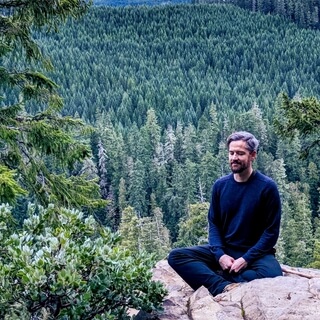
You can find a position,
A seat,
Laying down,
Standing,
Something that is comfortable and which you can sustain for an extended period of time,
About 20 minutes or longer.
And the position that you choose might not be super comfortable,
But again,
It's something where you can remain upright or awake for the remainder of the meditation.
And you can start the meditation by bringing your attention to your surroundings.
Just becoming aware of where you are,
What's around you,
Your environment.
And also becoming contextually aware that you might be in a house where there are other people.
You might be interrupted,
Maybe not.
You might be out in public,
Sitting on a bench or outside,
And there might be people that walk by and give you a strange look,
Wonder what you're doing.
And allowing all of those pieces of your environment to be part of your meditation as we continue.
Allowing yourself to incorporate and then return to the sensation of breathing.
So as we practice this Anupanisatti,
We're going to practice it in a way in which you might be able to better apply it to your day to day.
Whenever we're doing a task,
We might get distracted and then return.
And also,
We might want to be present with another sense or another situation.
Need to change objects of awareness,
But still stay present.
So again,
Taking in your surroundings,
Taking in your environment,
Coming out of the default mode way of thinking about oneself and how one feels,
What's past,
Whether what one is doing is right or wrong,
Whether what some other people are doing are right or wrong,
Judgments,
Right?
We're coming out and just perceiving what's around us right now in the present.
In a way,
Really staying with vision.
Just for a moment.
And then coming back to the body and slowly fading from vision to feeling your body breathing.
And notice the change from the external awareness to an internal awareness of sensation.
Slowly turning inward,
Letting go of the outside.
And if you want to close your eyes,
You can close your eyes.
And allowing your body to be,
To relax,
Letting go of any tension.
And if there is kind of stubborn tension or stuff that doesn't want to let go,
That's fine.
Just allowing that to be and allowing the body to breathe.
And having a little bit of love towards the body.
Letting it be imperfect in the breath.
It doesn't need to be a slow and calm and easy breath.
If that comes naturally,
Fine.
Just letting the body do its thing.
Just allowing it to breathe however it needs to breathe and having that patience for the body that it will slowly come around.
Find a peaceful state.
And then another part of taking in your environment is being aware of the sounds that you can hear.
Sounds that are far away,
Coming to your ear from far away.
Sounds that may be nearby or sounds that your body might be making.
Allowing yourself to be fully present with sound just for a moment.
Or just warming up the Anapanasati and coming back to the breathing.
And I'd like you to incorporate these other aspects of your experience.
Because at a later time,
They might be a distraction.
You might find some resistance to them.
So I'd like you just to allow them to be part of the practice right now.
So we're going to incorporate it all into the breathing.
Where your breath can really hold the whole of your experience.
Just recognizing sound,
You might notice sounds that are stable.
Sounds that are changing,
Intermittent.
Sounds that randomly come,
Sounds of people's voices can be particularly attracting for our mind.
And noticing how it has an effect on you and being present with sound and the response that you have to sound.
Allowing,
So letting go of a rigidity if there's rigidity of feeling like,
No,
We have to get back to the breath.
Just taking your time,
Sound.
And it's funny how you can really love something just by giving it your full attention.
And then coming back to the body and feeling the body breathing.
And again,
Trusting the body to breathe naturally.
And letting the relaxation happen a bit deeper this time.
Getting a sense of stillness begin to happen within the body and the breathing.
Even though the breathing is moving,
There's still this deeper stillness that starts to happen as you trust the breath and you let go of the control.
And maybe even slowly bringing your attention just to feeling the breath in one area.
It might be around the belly or I prefer around the nose.
Whatever works for you.
And beginning to give that your full attention.
Savoring.
Savoring the sensation of the in-breath and out-breath just from that one area.
And then we're going to check in with the body for a moment.
So we'll leave the breath for a moment,
Come to the body.
Feeling the sensation of your toes,
Your feet,
Feeling your shins and calf muscles.
Feeling pressure,
Tingling,
Tension.
Something might have fallen asleep by now.
And if you need to gently shift while sustaining your attention on the sensation of your body,
Not engaging any reactions but just noticing again sensation in the body.
Not falling back into a default mode of thinking about whether one is doing this right or wrong or making judgments.
Just staying present with sensation.
Feeling sensations in the knees,
Thighs and hamstrings.
Feeling yourself seated on a cushion or if you're standing,
Feeling your feet on the ground or laying down,
Feeling the weight of your body.
And feeling the movement of your body as you breathe.
Expanding of your chest and belly,
Of your back,
The movement of shoulders.
And even noticing if there's any emotional feelings in the stomach or on the heart or throat.
Letting your body be a tuning fork or tool to recognize your emotional state.
Once again,
Checking in with the heart.
Just seeing how you're doing.
Seeing sensations in the arms,
Hands and fingers.
Really giving those your full attention and then coming to sensations in the neck and throat.
Sensations in the jaw,
Teeth,
Gums and tongue.
Chin and lips.
Sensations around your cheeks and eyes and nose.
Feeling all the sensations around your face.
Allowing your face to relax and release.
Your eyebrows,
Your forehead,
Your scalp.
And allowing the body to breathe.
And finding that natural breath.
Checked in with your senses.
Checked in with the body.
Now really beginning to let all that go,
Come back to the breathing.
The sensation of the breath around the nose.
Wherever feels good for you.
Really starting to savor the sensation of an in-breath.
And sensation of an out-breath.
And if you want to use counting,
Feeling the in-breath,
Feeling the out-breath,
Counting one.
Feeling the in-breath,
Feeling the out-breath,
Counting two.
And even where that internal voice is,
Counting,
Replacing that in the area around the nose as well.
And savoring the sensation of each in-breath and each out-breath.
So letting the counting just be a support.
Counting all the way up to eight.
And then starting again at one,
Feeling the sensation of the in-breath and out-breath.
We'll let that happen for a few rounds.
And if you get distracted,
Your mind wanders off.
Coming back to the counting,
It's totally normal for that to happen.
It's part of the meditation.
It's an important part.
Coming back to the sensation of breathing and counting.
It's my end.
You you And Noticing if your thoughts have come in again getting distracted by thinking Or even if as you're paying attention to the breath there are little bits of thoughts in some way making the fidelity of your Concentration on the sensation of breathing a lower quality And seeing if you can begin to smooth that out So in a way doubling down on the concentration or on your focus on the breath Seeing if you can more fully give your attention so lend the attention to the sensation of breathing and Let go of the desire to think the desire to be off in the habitual way of thinking And seeing if you can give fully if you can release if you can sort of surrender To fully giving your attention to the breath Savoring fully the sensation of the in-breath and out-breath just in one place Having more continuous awareness of the breathing Feeling the in-breath Feeling the out-breath with a seamless awareness of the sensation in that one area and I'm gonna leave this meditation open-ended so you can continue practicing As long as feels comfortable allowing your concentration to go deeper To be clearer to be richer Savoring the sensation of breathing