Science-based breath work for healing.
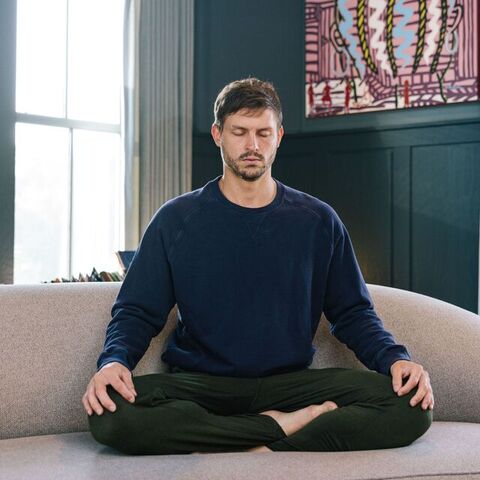
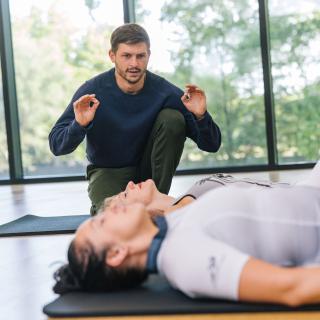
Begin by taking a seat and or laying down whatever is comfortable for you.
Settling into your position while taking a deep breath in all the way.
Big hold at the top in.
Hold at the top for three,
Two,
One.
Let it go.
Relax out.
Another big breath in.
Hold.
Holding at the top.
And let it go.
Relax.
Shift your weight.
Get slightly more comfortable,
Present,
Grounded.
We're gonna do another breath,
But this one through the lips like you're pulling through a straw.
Begin.
All the way,
Hold it.
Hold it.
Exhale,
Relax.
Let it go.
So notice this breath was slightly bigger than normal.
Let's go for that.
It's a little bit bigger.
Hold it and let it go.
Catch your breath.
Breathe gentle.
Breathe normal.
Shift your weight again if you need to shift any energy.
Catch your breath.
We're gonna do another inhale through the lips.
Through the lips is supportive of taking a bigger breath.
When you pull through the lips like you're pulling through a straw,
I want you to create a noise and a resistance which will help you inflate even more.
Begin.
Inhale deep.
Feel the inflation,
The full inflation.
Hold at the top.
And then exhale,
Relax.
Let it go.
The next breath will be your biggest yet.
Inhale lips.
Another sip.
One more sip.
Holding.
And then relax.
Calm breathing,
But also slightly deeper breath in.
Relax breathing out.
So slowing down your breath and noticing how breathing differently influences your physiology,
Influences your nervous system.
Big breaths can cause a slight stimulation and that's normal.
But now in these slow and deep breaths in and out,
You'll notice your heart rate slowly lowering along with the slowing of the breath in all the way.
And let it go.
Once again,
Shift your weight.
Catch your breath.
Shifting into nasal breathing.
In through the nose.
And then out through the mouth.
Notice I'm blowing like I'm gonna blow out a candle or 10 candles.
So deep breath in nose.
And blow out with a little bit more force.
I want that to come from the abdominal region.
Deep breath in nose.
Your core abdominal muscles helping round.
Squeeze out the shoulders.
Pull forward slightly.
Spine rounds forward.
Deep spine.
Inhale,
Rounded spine.
Exhale,
Blow it out.
So now we're focusing on the exhale,
Pushing everything out.
One more in.
Use your body to support blowing everything out,
Out,
Out.
Hold on the bottom and then squeeze out 10% more.
Good.
Deep breath in.
And let it go.
Now relax into slow breathing,
Calm breathing.
But also slightly deeper than normal breath in.
Feeling the air enter the lungs.
Feeling the air enter the cells,
Enter the body.
Breathing in and all the way out.
And as you continue to have conscious awareness on your breathing body,
Opening on the inhale,
Expanding on the inhale,
And then softening and relaxing on the exhale.
What you're creating in this moment in these slow and purposeful breaths is you're creating a healing environment for the physical body.
In order to heal effectively,
We need to have appropriate energy to be readily available for healing.
Taking control of your breath.
Deeper than normal.
A little bit bigger.
Inhale big.
Another sip.
Another sip.
Hold it.
Welcoming an increased inhale.
Let it go.
Relax.
And then blow out the bottom.
Blow out everything.
A deeper than normal exhale leads to a bigger breath in.
One more big.
Hold it.
Another sip.
Hold for just a moment.
And then let it go.
Purposeful expansion of breath welcomes positive stimulation of the body's nervous system,
But also of the body's healing mechanism.
So as you're slowing your breath now,
In between cycles of deep breaths,
You're still breathing slightly more bigger than normal.
Continue this slow and deep breath.
And know that the better you're breathing,
So this would be considered a more efficient breath,
A more full breath.
This more full body inhaling through the diaphragm,
Through the ribs,
Expanding,
Elongating the spine to the top,
And then exhale,
Letting everything go with a little bit of a press on the exhale.
This is considered a full body breath,
Which effectively increases lung capacity,
Increases aerobic efficiency.
It helps create a better pH balance in your blood,
Making oxygen more rich and readily available for healing.
The more oxygen efficiency,
The more energy available for healing.
Another round of deep breaths.
This round a little faster,
A little bit deeper,
A little bit more involved.
But go at the pace that feels good for you.
See if you can stay with the flow all the way in,
Out mouth,
Into the nose,
And let it go.
Bigger breath in,
And let it go.
Five more here,
And let it go.
Four more here,
And let it go.
Three,
And out faster.
Two,
And out faster.
One,
And out faster.
Slow,
Biggest breath hold at the top in,
And then exhale very gentle.
Hold on the bottom,
Hold,
No breath in,
No breath out,
No breath needed.
Plenty of oxygen because of these strong and deep full breaths.
Holding your breath on the bottom for 10,
9,
8,
7,
6,
5.
Before you breathe in,
Blow out a little candle,
Exhale everything out.
Seal your breath,
Hold for 5,
4,
3,
2.
Deep breath in,
Welcoming oxygen,
Another sip.
Holding for 3,
2,
Strong core,
Strong heart,
Strong healing,
Strong presence,
Let it go.
And then shift into calm breathing.
Buzzing,
Tingling,
Normal.
It'll come back to homeostasis.
Slow breathing,
Calm breathing.
Slightly deeper breath in,
Slightly longer,
Exhale out.
As you breathe in,
You're welcoming healing,
And as you exhale,
You're releasing stress.
As you breathe in,
You're welcoming positive energy,
And then as you exhale,
You're releasing all that does not serve you.
Continue with that flow,
Positive inhale,
Releasing exhale.
Keep on with that flow,
And relaxing the shoulders,
Relaxing the neck,
Stretching,
Relaxing the jaw.
And you're letting your body relax,
You're staying connected to the strength and engagement of breath.
And continue breathing calmly and deeply,
As long as feels good,
As long as feels empowering,
As long as feels good.