The truly compassionate person knows and understands the meaning of the word know.
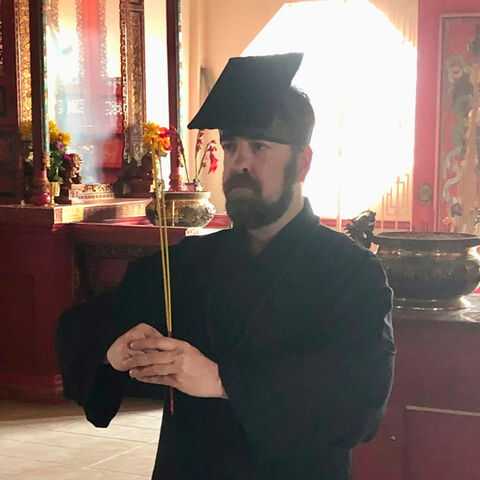
Taoist master and abbot,
Lao Jirqiang.
In the Dao De Jing,
Lao Tzu named Si,
Most often translated as compassion,
As first among his Sam Bao,
Or three treasures,
Which he upholds and guards within himself.
For a long time,
I had issues with the word in common usage,
Mostly because I felt its connotation was a sort of martyrdom.
But,
As with many things in life,
There wasn't an issue with the word a concept,
Rather,
My perspective and perception were skewed.
I've since come to understand that compassion is a great strength and kind of wisdom,
Which is probably why Lao Tzu lists it as first among his three.
It underpins the functional embodiment of the other two.
Without true compassion,
And the acceptance and layers of understanding that come with it,
Working with the ideas of moderation or restraint,
The second treasure,
And not daring to be first under heaven,
The third treasure,
In a measured,
Practical and sustainable way,
Eventually becomes futile.
Now having said this,
Compassion is related to,
But not synonymous with,
Kindness,
Sympathy,
Or empathy.
Compassion isn't particularly what we'd consider nice,
As sometimes the most compassionate thing we can do is just simply allow perceived failure and loss to be as they are,
Without trying to make things be different,
Even amidst great discomfort and turmoil.
What we and others need in the moment isn't always what we or they want.
Facing the uncomfortable,
Even downright painful experiences life often has for us and others,
Really demands courage and steadfastness.
Resisting the urge to fix everything for someone else requires still more.
Indeed,
The truly compassionate person knows and understands the meaning of the word know.
Compassion therefore requires a flexible firmness,
Not forced,
But persistent and consistent,
Alongside the discernment to know what showing compassion means in specific situations.
And like so many facets of Daoism as a process of living,
Compassion is a practice and a state,
With its outward expression contextual.
Sometimes,
What we need most is reassuring word,
Other times it might be a kick in the ass,
And still other times,
Non-interference in the circumstances of our world.
This last reason in particular is why I sometimes think of Si as meaning a sort of benevolent indifference,
As again,
Compassion isn't martyrdom,
And you can feel and care about things without attaching yourself to personal or ideological sinking ships.
This is where the practice and practical aspect of compassion factors in,
Because cultivating this discernment of appropriate action is a skill,
Guong.
One's overall practice can in fact be based on a foundation of compassion,
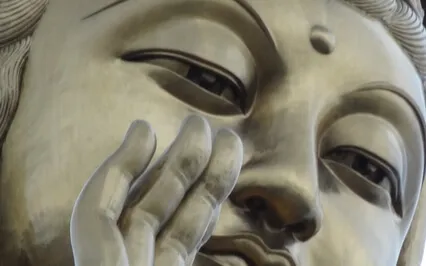
As is often seen among devotees of the Buddhist bodhisattva of compassion,
Guanyin,
Who is also known to Daoists as the immortal Sihang.
It all starts and ends with yourself.
How can you demonstrate compassion toward other beings if you've not first shown it to yourself?
How would you know,
Experientially,
What it even is?
How can you possibly give something to another if you don't already have it?
Notice and give attention to your inner dialogue and self-judgment about various things throughout your day,
And you'll get a good sense of where you are with this.
If you do find you've been overly critical of things in your inner world,
Remember to be patient and compassionate with yourself in this,
Too.
Wherever you are is where you are.
That's good enough,
And you start there.
First,
Practice compassion within the vast observatory of self,
And you'll likely find its expression flowing to others more freely.
Thank you,
And Da Wan.