Hello and welcome to another session of Conscious Living Collective,
A place where we explore ideas,
Practical ideas for better,
More conscious,
More fulfilled living.
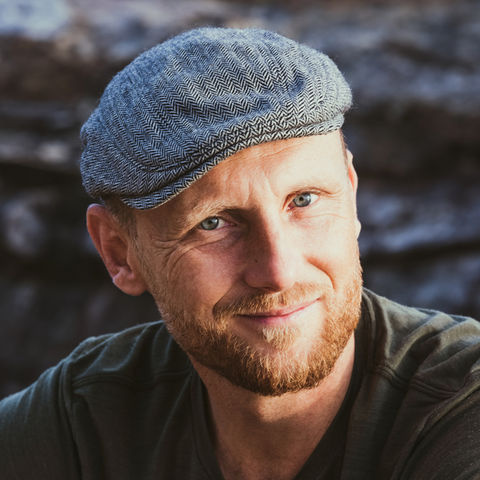
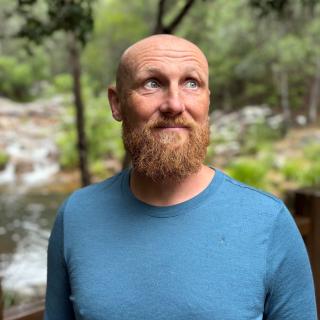
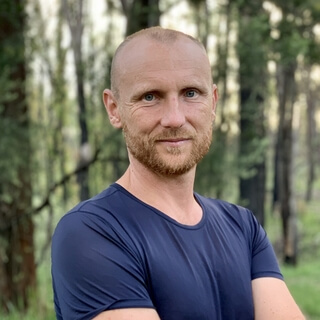
My name is Tomek,
I am a scientist,
Inside time a teacher,
But most importantly,
Like yourself,
A seeker,
Very much interested in exploring those ideas that bring me a fulfillment,
That empower me and to help me live much more conscious life.
It's a work in progress.
Welcome everyone to this session,
Good to see you here.
Hello Judith,
Hello Caroline,
Hello Charlotte.
As always,
I will give you a second or two to introduce yourself,
To say hello.
For those of you who are here for the first time,
Perhaps raise your hand and say hello and tell me where you're coming from and why you are here.
And the topic for today's session is understanding sleep,
Arguably the most fundamental function of human body,
Or as we see in a second,
A function that is not limited just to human beings,
But to most of the creatures existing on this planet.
Oh,
Hello Dave,
Hello Nola.
Oh,
We have Tomasz,
We share the same name from Poland.
Christy,
Hello Mary,
Good to see you.
Inea,
I'm sorry Inea if I mispronounce your sign name.
So yes,
We are here to explore and I'm always curious to know what is happening in your life.
And that's why I will be asking questions and asking you to contribute in the spirit of Conscious Living Collective.
It's not just me talking to camera,
But also I very much appreciate your interaction and your responses.
But again,
To begin off,
To start off with and kick off this session,
I'm curious if you are here for the first time.
So if you do,
Or if you are here for the first time,
Please raise your hand.
I'll be very glad to see you here.
Hello,
Inea from Austria.
Beautiful.
Okay.
Beautiful.
Inea is here for the first time.
Good to see you.
Yeah,
We have this session.
This session,
Tomasz is also for the first time.
Christy,
Beautiful.
First timer.
This session and this time slot,
It's always devoted to,
I call it a European session.
One session I hold for the people that are in the US or in the US time zone that covers a couple of different time zones.
And this session is devoted for those of you who live in Europe and cannot attend other sessions.
Okay.
Beautiful chance.
Good to see you.
I always want to welcome the first timers because I think it's something special about welcoming someone new to collective.
It is the nature of the collective that it cannot exist with your presence.
So I'm very,
Very happy that you are here.
Yeah,
Judith confirms that this is a good time for most of the Europeans.
So good to see you here.
Okay.
So to start off with,
I want to ask you a question about sleep.
What is your sleep routine?
Do you have a sleep routine?
And is your sleep a priority to you?
I'll be curious to know,
What do you think about sleep?
Do you have a routine?
Please.
Again,
I invite you to post comments in the comment section to create a conversation.
I'm always happy to contribute and to comment,
But I'd like to see how are you doing it?
Gita says,
I lay in bed and watch TV.
And there is a little emoji of a monkey covering her eyes.
Charlotte says,
I practice Meta before I go to sleep.
Very peaceful and fulfilling.
Wonderful.
I will make a comment,
Gita,
About watching TV because I sometimes subscribe to the same scenario.
I simply watch TV before going to bed.
And I will tell you why perhaps this is not the best idea if you wish to have fulfilling and good night rest.
Christy says,
Absolutely a priority.
Have a routine,
But sleep at the wrong time,
Usually 8 p.
M.
To early hours.
Example,
2 a.
M.
Very interesting.
Anaya says,
Usually I'm very tired,
But I wake up in the middle of the night and sometimes I find it hard to fall asleep again.
This is something that is actually very typical for most of the people.
Joe says,
Hello to everyone in Sydney.
It is also a good time to be here.
Chant,
Yes,
Routine,
No TV,
Sleep music on,
Inside timer,
Sleep stories,
Sleep priority for the whole family.
Phenomenal.
So as you can see,
We have a different experience,
A different approach to sleep.
But I want to begin the session by saying to you what actually sleep is.
For the majority of the time,
Scientists,
Even scientists and lay people approach sleep as a time of simply being unconscious.
You fall asleep,
You become unconscious and you wake up,
I know,
Seven,
Eight to nine hours later and you start doing the important stuff.
But actually,
Science shows now that sleep is not only a necessary function of a human body,
But it's very important one for that matter.
And during this session,
I want to explore a couple of those things that happen during sleep where you that may convince you and may make your sleep a priority.
So one of the things that might be not so not so straightforward and intuitive is that your brain during your sleep is actually not resting,
But it's very,
Very,
Very active,
Arguably is more active than during your waking state.
And that is related to things like memory consolidation.
If you don't have a good night's sleep,
There is a great chance that you will have a memory loss and everything,
Everything positive and wonderful you have done over the past day,
It will be forgotten.
Because if you don't explore,
If you don't experience deep sleep,
That memory consolidation that happens during the night hours does not happen.
And another function that has happened,
That happens,
That is particularly important during the time of pandemic that we coming out of and during time of COVID is that our immune system is very,
Very active.
There are many repairs that happen.
Your immune system gathers so called killer cells to help remove all those cancerous cells and all,
All the things that may prevent us from from having a perfect health.
So detoxification happens during sleep.
Also,
Those proteins that were not folded properly during the process of protein formation,
They being kind of chopped in pieces and discarded.
So there's a lot of things that happen during sleep that most of us don't realize.
But again,
Most of these things happen when we have a good sleeping routine.
If we do not have that sleeping routine,
Many of those processes may not happen or may be disturbed.
And as a result,
As research shows,
We may find be not so active in the morning or be a bit foggy.
Our ability to to process information or to memorize things might be disturbed.
So there is a very important role of sleep during there.
There's very important role that sleep plays in our impacts our daily routine.
And by having a very good night's sleep,
We actually helping ourselves to be more productive,
More more happy during the waking hours.
Caroline says such a precious time need to follow routine to get myself into the zone for decent sleep.
But your meditations always helped me to get the best sleep.
Thank you,
Caroline.
I'm very glad that you actually use my meditations to help you fall asleep.
And one of the things that helps obviously to have a good night's sleep is that routine that help your nervous system to balance out and switch from the sympathetic part of the nervous system or downregulate the parasympathetic branch of the nervous system and then engage sympathetic part of the nervous system.
So what happens then is that you come sleep in a calm and relaxed way.
Because it goes without saying,
And I think we live in times where sleeplessness is a pandemic,
When you feel anxious,
When you bring stuff,
A lot of emotional charge with you into sleep,
When you watch movies,
When you do things that keep you engaged all the time,
When you use blue light or light in general,
All those things,
They make your brain again go into that zone where sleep is impossible.
It's very difficult.
So I will talk about in a second,
But having that routine where we give ourselves an hour,
Even two hours before going to bed and slowing down,
Dimming lights,
It's very important to prepare you to have a good night's sleep.
Thank you,
Caroline,
For your generous and kind donation.
I very much appreciate it.
And I appreciate all your support.
Thank you so much for that.
Mary says,
Having worked all sorts of shifts,
Including lots of night work over many,
Many years,
Yes,
Sleep is a priority.
Often use yoga nidra to go back to sleep.
Thank you,
Mary,
For sharing that.
Particularly in the profession of nurses and all those shift workers,
Sleep tends to be very disrupted.
And as Mary says,
For every shift worker,
You should create a routine that will help you to make up for this time where you're supposed to sleep and you're not sleeping.
It is very important to pay particular,
Particular strong attention to your sleep routine.
Judith says,
I only can sleep four or five hours and then I'm totally awake.
Getting back to sleep is difficult.
This is another thing that it's very,
Very common that there are some that fall asleep very easily,
But then wake up much quicker before the night is over.
If you have this problem,
Please raise your hand.
I'd be curious to know how many of you actually experienced that.
So falling asleep easily,
But waking up the middle of the night and having difficult to fall asleep.
Here,
Christy says,
That's me.
Carolina,
My husband suffers from insomnia.
It's a nightmare and impacts everything,
Including your relationship.
Thank you,
Carolina,
For being vulnerable here and honest and sharing that with us.
Indeed,
Insomnia,
It's a huge problem.
At the same time,
It's something that it's increasingly,
It's growing at a rapid pace because for some reason,
In spite of the fact that we have technology and we have all those advantages that technology gives us,
One thing that is prevalent in our society is the epidemic of sleeplessness.
As for Christy and Judith,
Sometimes it's waking up,
It's falling asleep easily and then waking up in the middle of the night and won't be able to fall asleep.
Or for others,
Won't be able to fall asleep.
And then it takes you hours and hours to get in and have that good night's sleep.
Yeah,
Raise a hand,
Joe,
Mary,
Charlotte.
It is something that it is possible to change,
But it does take practice.
Again,
Something that I already mentioned,
Creating that routine about two hours,
Cutting down on artificial light for about two hours before you go to bed and then preparing your mind slowly,
Slowly and kind of tugging yourself into sleep through meditation,
Through some gentle reading,
Through music,
Maybe even burn a candle if you like it.
Aromatherapy helps to regulate your mood and downregulate nervous system or again,
Puts you at ease.
So it is very,
Actually,
When I was preparing to this session,
What I noticed is that a lot of young people in particular,
They take sleeping little as a badge of honor for some reason.
And that was very curious to me that,
You know,
Some people say,
Oh,
I only slept three hours tonight and they feel very proud of it.
I think some of those people do not understand the importance of sleep.
And I think something that I try to do during this session is to bring light to what is happening during those sleeping hours that we are not aware of.
And yet,
All those things are impacting our waking life on every single level.
So our intellect is impacted,
Our physical activity is impacted,
Our hormonal regulation is impacted,
Our circulatory system is impacted through our sleeping routine.
And I,
As a matter of fact,
Am using this watch to track my sleep,
To help me understand better what is happening during my sleep.
And maybe this is a good time to introduce,
Dave says,
I have quite a healthy routine,
Herbal tea,
Ambient music.
Also,
I sleep much better with my partner than alone.
You get so used to sharing your bed.
Thank you,
Dave,
For sharing that.
That's absolutely fantastic.
You see,
Preparing,
Music,
Herbal tea,
Phenomenal.
Thank you,
Dave,
For sharing that.
And most importantly,
It's a testimony that those things work.
However,
Everybody is different and I don't expect to use one method fits all.
It is always important to match those things that suit you and find what works for you,
What helps you to relax before you go to bed.
Jane Anne says,
Started happening to me in my 50s.
A friend recommended loratadine and non-drowsy antihistamine helped me to keep from touching the surface of consciousness,
Gradually retrain myself to sleep solidly again all night.
And yoga nidra,
Of course.
Thank you so much for sharing,
Jane Anne.
That's wonderful.
Again,
I want to highlight the aspect of retraining yourself.
This is not something that particularly for those who have very active life and a lot of your minds,
It's not necessarily easy to do,
But it is possible to train yourself to into the art of sleeping.
And something that I want to mention,
Maybe purely scientific for your knowledge,
During the night,
Many different things happen and sleep is usually divided in three phases.
We have a light sleep,
Which dominates our night routine.
We have a deep sleep and we have a REM sleep.
So when I check my daily routine on my watch,
My sleep is dominated by light sleep.
And this is not necessarily a bad thing.
It is,
However,
Important to recognize to have REM sleep.
REM sleep is mostly the time where we dream and also deep sleep.
And deep sleep,
It's something that is very important because that's where all the repairs happen.
That's where our body rests,
Rejuvenates and regenerates on a cellular level.
So like for me,
If you sometimes struggle with the deep sleep,
That's indication that perhaps we should pay particular attention to again,
Slowing in more before going to bed and preparing for good night's sleep.
So yeah,
So that's that.
And above everything else,
There is an aspect of sleeping that not too many people talk about.
And at the same time,
It's very obvious.
Do you know what that part of your sleep is?
I think you guessed correctly,
It's dreaming.
And for me,
Dreams present a wonderful opportunity to actually explore consciousness on much deeper level.
For majority of people,
Dreams are treated as simply unloading unconscious thoughts or processing daily events.
But dreams are much more than that.
Dreams,
As a matter of fact,
Can give us access to a deeper knowledge about ourselves.
As a matter of fact,
There are many different techniques that allow you to what I call seed dreaming or sorry,
Dream seeding,
Which means that you can program yourself by giving yourself suggestions to solve certain problems during the sleep time.
I remember as a kid,
I found it intuitively when I had to learn a poem by heart for the class next day.
It was sometimes difficult,
Particularly when I was tired.
But somehow,
Someway,
I find out when I put a maximum effort into learning that poem by heart,
And I fall asleep.
All of a sudden,
In the morning,
I would remember it very good and very well.
And repeating it would be much easier.
And now I know for a fact,
And science teaches me,
It is because of memory consolidation that happens during the night sleep.
Because what happens during sleep,
All the short term memories are transferred to the long term storage,
Where we actually,
It's much easier to use.
So go from the surface to the deeper storage where we can,
When learning happens.
So believe it or not,
But helping sleeping well helps you to learn better.
It seems like very,
Particularly for modern society,
Modern society seems like a very counter intuitive thing.
Well,
The more I work,
The better I learn,
The more effort I do.
But the truth is,
There is a limit to it.
We make an effort,
And we work hard.
But sleep is super important.
If we want to integrate all this new knowledge and those memories to our into our brain and put a structure to it.
A Christie say,
I don't tend to dream,
Or don't remember them.
A Christie,
I think that the former is more,
More probable that you don't remember dreams.
And this is very important thing actually to notice every person does dream,
But not everybody remembers dreams.
And that has to do with that REM,
Or rapid eye movement,
Part of the sleep where our brain takes or shows particular state,
You can detect it through EEG,
Various brainwaves that dominate REM sleep.
And that's where most of the deep dreaming happens.
But again,
If our sleep is disrupted,
Sometimes it's difficult to recall it.
Recall those dreams.
Because memory is,
Like I said,
An important part of the dream state.
If you don't have a good night's sleep,
Your REM is disrupted,
Your memory consolidation is disrupted.
And then as a result,
We might not always remember those dreams.
But again,
Remembering your dreams is like everything a practice.
You train your brain,
Rewire your brain to remember more and more dreams.
And the easiest way to do it is to write down your dreams in the morning.
When you seeded your dream saying,
I want to solve a problem,
Maybe,
I want to get to know myself better,
Or,
Or ask a particular problem before sleep,
And write down what happens in the morning.
And usually that happens in the first few minutes after you wake up.
For untrained brain to remember dreams,
It's a tricky thing.
And if you do not write even one or two words,
A snippet of your dream,
The first thing after waking up,
The chances are that later on,
You won't remember it.
Because all those memories are kind of on the surface and they evaporate very,
Very,
Very quickly.
Dave says there's a lot of or I see so many comments.
Thank you so much.
I apologize if if I'm not reading all of them,
Because they're going so quickly.
Carolina asked,
Which watch do you use to track your sleep?
Without,
Without giving an advertisement to Garmin,
I'm using party,
The one I use,
It's Garmin.
But these days,
There are so many different watches to help you track your sleep.
As a matter of fact,
You don't even have to buy a watch.
There are bracelets,
There are even rings that are connected with your mobile devices to help you track your sleep.
For some watch may be too uncomfortable to wear during sleep.
And that was the case for me,
Actually,
For a long time.
But again,
These days,
This technology developed so quickly,
That we can have essentially any device that suits your purpose.
And most importantly,
They're not very expensive.
For a price of just yeah,
I know 30 $40,
You can buy a device that helps you to track your sleep.
Dave,
There's a lot to be said for sleep solving.
Yeah,
Absolutely.
Sleep solving,
It's a kind of,
I call it a next level of,
Of sleeping routine,
You start with establishing a sound good restful sleep.
And then you can use it as a resource to do various various things start with problem solving.
And even things like lucid dreaming,
Which is another opportunity to explore consciousness on yet another level.
Anna says when I sleep less,
Then I need,
I need I forget things,
My cognitive,
My cognition is disturbed,
And even have set and negative thoughts.
Now I know it is my pattern of pattern of impact,
I wake up the middle of the night.
And so it's so difficult to go back to sleep.
But sometimes I have very good ideas during the night.
Thank you,
Anna for sharing this.
So there are two things there.
First of all,
It is scientifically shown that for people that struggle with sleep,
That battle insomnia,
It is very often correlated with depression,
And,
And eating disorders and many other things.
So again,
Sleep is so important that it can it has a potentially ability to impact other aspects of our life.
And goes without saying that it will,
It will affect our mood,
Good night's sleep will help us to wake up refreshed and in a good mood.
And if we don't have a good night's sleep,
It is very likely that it is going to,
You know,
Put us into that lower states of sadness,
Maybe even depression,
Anxiety.
Thank you very much for sharing that.
Mary,
I sometimes am able to recognize a dream as significant during the dream,
And I'm able to say to myself,
I must remember this dream when I wake up.
Phenomenal,
Mary,
Thank you so much for sharing that.
Again,
It is a kind of a next level of it,
But we are able to consciously interact with the dreams.
Again,
There's a whole scientific concept of lucid dreaming,
When you consciously wake up in a dream,
And you start being active participant of it.
Or on some level,
You can,
As Mary does say,
I do,
I do want to remember this dream,
Or I remember usually using a present tense is very important.
I remember this dream now.
And that helps you to send out information and remember better in the morning.
So thank you very much.
Thank you very much,
Mary.
Oh,
Hello,
Lanny.
Good to see you.
Historically,
My dreams only occasionally intruded on my waking state.
Since March 2020,
My dream have been cinematic,
Extensive,
Complicated plots.
Strange for me.
Thank you very much for sharing that,
Jane Anne.
I think this is something that happens.
It's a part of our life.
As we grow older,
Wiser,
When we start meditating,
It happens very often that actually this is being reflected in our dreams.
And this is something that is absolutely fascinating,
That dreams,
If we start interacting with them and start writing them down,
They may provide us with a wonderful source of knowledge about ourselves.
It is not necessarily,
By the way,
It's not necessarily very important to remember every detail of a dream.
Or sometimes we say,
We want to open the book and ask what does this particular dream means?
What I've learned that more than the content of the dream is important to remember,
How did you feel when you experienced those dreams?
Emotions are much more powerful than the actual content of it.
Because again,
Content,
It is influenced by the events of the day,
By the way we feel and so on and so forth.
But emotions,
Emotions,
They have that energy that carry through various scenarios.
Hello,
Natalie.
Christy,
I will think about this regarding dreaming.
Sorry,
The comments go,
Usually I'm trying to get back to sleep after waking.
Again,
Christy,
This is something,
Dreaming,
It's a kind of next level.
First of all,
It is important to establish a healthy,
Steady sleeping routine.
And then dreams will come as a part of the REM cycle.
And that usually happens,
By the way,
Towards the end of the night.
So particularly if you have a short dream,
Short sleep cycle,
Only three,
Four hours,
That's also a chance,
The chances are that you won't be able to remember and even have those dreams.
There's so many comments I'm not able to follow on all of them.
Akina says,
It is exciting to join live session.
Your class helped me a lot when I was going through tough times.
Thank you.
My pleasure.
Thank you for joining us,
Akina.
Yes,
Karolina says,
There are a few breathing techniques for sleep.
And I want to mention it maybe later.
But indeed,
478 is a magic technique that allows you to directly speak to your nervous system and bring your nervous system in,
Into state of balance.
And that's the best state to take into the dream where you sympathetic,
You know,
The branch of the nervous system that is responsible for flight or freeze,
It's overactive,
That may stop us or prevent us from falling asleep.
So using 478 breathing technique as a way of talking to your nervous system,
It's a wonderful and very effective method of helping you to fall asleep.
Barbara says my husband of 42 years died,
I gave him CPR,
Then he died.
I can't sleep without him.
Please help me.
I'm sorry to hear that,
Barbara.
This is really yes.
My condolences.
I feel very,
Very sorry.
Yeah,
There are there are some events I don't believe I it is possible during session like this to simply give you a one solution to your problem.
One solution to what you're experiencing.
But thank you very much for sharing it.
And,
And yeah,
Feel free to contact me outside of insight timer.
I offer one on one sessions as a part of my mentoring program.
And I'm not saying this is a typical problem I would tackle during my sessions.
But perhaps it's something that we can talk about.
So by all means,
But most importantly,
My condolences,
I'm really sorry to hear that happen.
And I'm not surprised at all that that you cannot fall asleep.
I think I think yeah,
This is very normal,
Natural and coming back to to that restoring that sleep pattern.
It's certainly not not an easy task,
Not an easy challenge.
So as you can see,
We are struggling with sleep for many different reasons.
And some of them are truly humongous challenges.
So once again,
Thanks for sharing.
Christie says stomach has a 478 breathing technique for anxiety,
Which I've used on the wake on waking during the during the night.
Indeed,
Indeed,
A lot of my sleep meditations,
Restful sleep,
Meditation for good night's sleep,
They use 478 breathing technique because it is a very effective in helping you to fall asleep and have a good night.
Good night rest.
Yeah.
Thank you,
Caroline,
For for saying that.
Barbara,
This is again,
This is a great place,
By the way,
To share those things.
And I can only imagine how difficult it is.
But the nature of this collective is to find like minded people like Caroline right now to that will be all for you a support in this difficult situation.
And and hopefully you can you can receive it from from many members of this group.
So thank you,
Caroline,
For offering Barbara your support.
Rashi says,
I am having anxiety and depression.
I'm irritated from taking medicine from four years.
Doctor said it can be because I'm 70,
17 years old.
So please help me.
I hope meditation helps.
Rashi,
Thank you so much for for sharing that.
And I'm sorry to hear that.
It is.
Again,
I'm not a doctor,
So I cannot offer a medical advice.
And please,
Please do not take anything I say as a medical advice.
But indeed,
Meditation has the ability to calm us down.
And that by itself has an impact on your sleeping routine and may help you to fall asleep.
So Rashi,
You're welcome to use my meditations to help you again deal with that anxiety and depression.
On my post popular meditation Insight Timer that most likely any of you who listen to me for for for extended period of time knows it's SOS help for stress and anxiety.
And that technique actually that meditation includes 478 breathing.
So yes,
Indeed.
Please do use it and I hope it will help you.
Yvonne asks about 478.
Breathing in on the count of four,
Holding on the count of seven and breathing out through your mouth as if you blow a candle on a count of eight.
I know it by heart because I use it almost every day.
And by the way,
Part of today's meditation will be 478.
So please stick around for the meditation part.
Donna asks when you count,
How fast do you count?
Usually 478 you stands for 478 seconds.
But if you count 1234 I think that's good enough.
And again,
It's up to up to you how you count it,
I wouldn't count it too fast.
If you have problem with breathing in,
If the inbreath is too,
It's too long,
Maybe you can increase the pace of counting.
If you cannot hold for seven,
Then make it faster.
But again,
It's technique that you apply to tool that you apply in your own circumstances,
Your own way you learn how to do it.
Okay.
CB for the first time,
Welcome.
And once again,
Thank you so much for your kind support and for all your donations that you make here.
They helped me to continue working and creating those sessions and creating more content for you.
So you can enjoy and we can create more tight conscious collective.
Thank you so much.
Thank you,
Anna.
I appreciate it.
Donna asked about counting out loud.
We leave it for I will count it for you during the meditation part of it.
So you will have a chance to practice.
But again,
I refer you to so many of my meditations inside timer that include this breathing technique where you can actually listen to my counting and you can breathe together with me.
Leah first time to beautiful,
Beautiful.
All right,
We spoke about do you have any other questions on the other comments with respect to your sleeping routine or maybe things that can help you.
So when you ask those questions,
I want to summarize our session.
So first of all,
We discussed why sleep is important and what happens during this sleep.
And it turns out is not simply a state where you feel unconscious and nothing happens.
On the contrary,
There are many physiological and mental processes that happen in the background,
Starting with detoxification,
Hormonal regulation,
Your immune system is very active,
Your brain clears out all of toxins and all this debris that has been collected there during the day.
So that's a physiological part.
On other level,
Sleep helps us to function well and helps us with our memories.
We also mentioned that sleep has three major phases,
Sleep,
Light sleep,
Deep sleep,
And REM sleep.
And during deep sleep,
Most of those important physiological process happens.
And during REM sleep,
That's where dreaming happens.
And another topic that we mentioned discussed is dreaming itself,
How important it can be to help us to solve various problems.
And if we establish a consistent and good sleeping routine,
We can take it to the next level and start discovering what happens during sleep through dreaming,
Discover ourselves through dreaming,
And discover things like dream seeding,
And lucid dreaming,
Another wonderful concept.
And then we came to giving a couple of advice with respect to what to do to actually make our sleep a bit better,
What to do to establish a good night's sleep routine.
And that includes an hour or two of quiet time,
No,
And the quiet time when you dim the lights,
When you slow down,
When you maybe read a book or listen to pleasant music,
As Dave does,
Maybe drink herbal tea,
And then using maybe meditation or 4-7-8 breathing technique,
Slowly,
Slowly getting into that dreamy,
Dreamy state and falling asleep.
And again,
Helping and making affirmations say,
I do want to have good night's sleep tonight,
Or I have restful sleep tonight may help that as well.
So we program ourselves to have better sleep and to make the sleep priority.
Thank you,
Carolina,
That's so generous of you.
And thank you,
Katie,
For your support.
Rashi,
I'm having breathing problems,
Which exercises best that can help me manage stress,
I cannot focus on study,
My head starts painful whole time.
Well,
We just in a moment we'll be practicing 4-7-8.
So how about we start there and see how it works for you.
Jane Anne says I practice a practice that helps me in the night is to turn on my side and consciously feel the lungs across the back,
Almost to bursting and slowly,
Slowly exhale and push the breath out and few times and I'm out like a light.
Also a way to cope with anxiety.
Thank you so much,
Jane Anne.
This is actually very much based on the technique that I'm describing.
So we're taking breath in,
We're holding the breath,
Right?
And then we're exhaling.
Jane Anne says uses maybe an extreme version of it.
And I'm sure you'll learn it for yourself.
But this is again,
This is based on again,
Pressing through when you're holding your breath,
You press against the vagus nerve,
That is the main nerve of the past sympathetic branch of your nervous system and helps them regulate that.
So it certainly has that method.
I understand scientifically how it can help you to actually fall asleep.
Thank you,
Jane Anne.
Thank you,
Carolina,
For your wonderful support.
Okay,
Guys,
It's been 44 minutes.
So how about we jump quickly into a short meditation so we can practice some of those things that we spoke about and see how it works for you.
So for those of you who,
For those of you who,
Who,
Who are in the times where the evening starts,
Or you about to go to sleep or,
Or soon go to sleep,
This might work as a sleep meditation.
But for those of you like in Europe,
When it's early morning,
Perhaps you can use it later,
Or at night where you will about to go to bed.
Okay.
So meditation,
By its nature,
As a one of the effects of meditation is to calm you down and to help you relax.
And certainly coming down and relaxing helps to fall asleep and either say that is necessary if you wish to have a good night's sleep.
So in this meditation,
I simply begin by a couple of cycles of 478.
And then you see for yourself how it works.
And you can use it later on.
And then we go into simple awareness of the breath.
And we see how 478 actually impacts that your nervous system and the results that it brings into connecting with your breath later.
Okay.
All right,
So let's begin.
So since you're not falling asleep yet and going to bed,
I assume that you are sitting down.
So make yourself feel at ease.
And before you close your eyes,
Shift into a position that will support a state of relaxation.
I usually put my feet on the ground,
My hands in my lap,
My back straight,
But not rigid,
Allowing the flow of breath,
Because we'll be working with our breathing.
And recognize that you are okay.
And you are in a good company.
And in spite of all the challenges that you're facing right now,
There are people right here right now that may face similar challenges.
And simply knowing that you are not alone in the struggle sometimes is good enough.
So allow your eyes to close and begin by recognizing that in spite of your circumstances,
In spite of everything,
You are loved,
You are worthy and you are enough.
And that is the very beginning of this meditation where you recognize your goodness and your basic nature as a good person.
And let us begin by a couple of cycles of four,
Seven,
Eight.
So once again,
Four stands for breathing in through your nose on the count of four,
Then hold your breath on the count of seven,
And then exhale through your mouth as if you slowly as you blow a candle on the count of eight.
So again,
Breathing into your nose,
Smelling roses,
And holding your breath and blowing a candle,
Exhaling through your mouth.
So let's begin.
In two,
Three,
Four.
Hold two,
Three,
Four,
Five,
Six,
Seven.
And now two,
Three,
Four,
Five,
Six,
Seven,
Eight.
In two,
Three,
Four.
Hold two,
Three,
Four,
Five,
Six,
Seven.
And now two,
Three,
Four,
Five,
Six,
Seven,
Eight.
In two,
Three,
Four.
Hold two,
Three,
Four,
Five,
Six,
Seven.
And now two,
Three,
Four,
Five,
Six,
Seven,
Eight.
In two,
Three,
Four.
Hold two,
Three,
Four,
Five,
Six,
Seven.
And now two,
Three,
Four,
Five,
Six,
Seven,
Eight.
Breathe normally and relax.
Allow yourself to simply feel the effects of four,
Seven,
Eight.
For some of you,
You may experience this as hot and cold sensations in your body,
Maybe a tingling in your extremities.
This is absolutely normal as you just introduced a fresh burst of oxygen into your bloodstream.
On the other hand,
Your nervous system comes into a balance.
Both sympathetic and parasympathetic part branches of your autonomous nervous system are coming together,
Balancing out.
And you may experience it as a sense of relaxation.
And as this happens,
Bring your awareness to your breath and focus your attention on sensation of expansion and contraction of your belly as you breathe in and breathe out.
Your belly expands as you breathe in and contracts as you breathe out.
And notice that this can be quite pleasant and relaxing in itself.
And if your mind wanders during this time,
If your attention is being captivated by thoughts,
Emotion,
Some situation from the last,
From the day,
Simply recognize that and bring yourself back to the sensation of rise and fall of your belly as you breathe in and breathe out.
And remember,
This is a very gentle practice.
So do it with kindness,
Knowing that each breath is like a mini meditation.
And one breath is sometimes enough to restore the balance,
Slowly getting into a zone of relaxation.
One breath at a time.
Wonderful.
And now to conclude,
Expand the awareness once again,
Including your entire body,
Recognize the space around you,
Feel the room around you through the boundaries of your physical body,
Coming back,
Reconnecting with physical senses,
Senses,
Smell,
Sound,
Touch,
Vision through your closed eyes.
And when you're ready in your own time,
Open your eyes and welcome back.
How wonderful.
I really hope that you are,
Everyone is okay.
And for those of you who asked questions about 4-7-8,
You had a chance to experience it on your own.
And again,
Remember,
This is something that it's a practice,
And you get better the more you practice it.
But it works,
Most importantly,
When you do it.
And if you do it,
It works.
Yeah,
If you're very relaxed myself,
I'm wondering how are you doing?
Maybe use one word to describe how you're feeling right now.
I'll be curious to know.
Carolina is happy.
Beautiful.
I'm glad to see.
CB is still awake.
Chrissy positive.
Caroline is sleepy.
Caroline,
You're not in the same time zone as you are,
But it's also coming towards the evening.
Thank you.
Thank you,
Donna.
Judith says that my meditation for good night's sleep works.
Wonderful.
Anna feels calm.
Breathing technique helped ready to start work.
Absolutely.
Mary is chilled.
JNN says,
Lovely to be with you all.
And so good to feel your comforting presence.
That's the purpose of Conscious Living Collective.
As a matter of fact,
I just changed the name of my circle from simply Tomek Circle to Conscious Living Collective.
Because I think that every group on Insight Timer should serve that very purpose of bringing us together and sharing the challenges and facing those challenges together.
And clearly,
Sleep is one of them.
So to conclude this session,
I want to thank you so much for your presence,
For your very,
Very generous support.
I received so many donations from you that will help me to continue my work and to create more content.
For those of you who join me later,
I will publish a recording of this meditation on my YouTube channel.
So feel free to go there.
For those of you who have questions,
Please refer to my new old circle called Conscious Living Collective with Tomek.
You're welcome to go there,
Join and ask questions.
And for those of you who are interested in upcoming sessions and all my content,
Just go to my Insight Timer profile and click that follow button.
And along that,
Click the bell button that allows you to receive very infrequent notifications,
Mostly about upcoming live events and meditations when I publish them.
But otherwise,
Thank you so very much for being here with me for almost an hour.
So many of you,
Thank you so much for joining me in yet another wonderful session of Conscious Living Collective.
For now,
I wish you a wonderful day or a pleasant evening wherever you are and I look forward to chatting,
Conversing and exploring with you next time.
Until then,
Bye-bye.