Wake the Fuck Up,
The podcast that mingles mindfulness,
Buddhism,
Brain science,
Evolutionary biology,
And real authentic human experience.
Welcome to Wake the Fuck Up.
Hello,
And welcome to the sixth episode of the Wake the Fuck Up podcast.
And yes,
It took until now to have the conversation,
What is mindfulness?
Episode six,
It's about time,
I know.
Mindfulness is a hot topic in today's society.
It's been on the cover of Time Magazine,
I think at least twice.
And every time I walk into a Whole Foods,
There are invariably a number of magazines that are either titled just mindfulness,
Or somewhere in the headline and the cover picture,
There it is,
Somebody meditating,
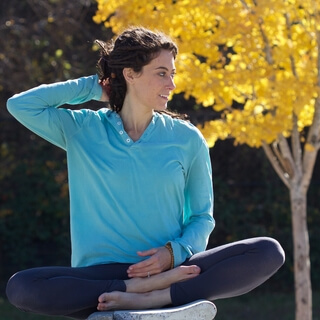
Someone doing yoga.
And so mindfulness is really become embedded in our society.
But it's one of those words that carries a connotation.
And sometimes that means that we don't actually know too much about what it means,
There's just this idea behind it.
And maybe I'll start with the story that when I first started practicing and even teaching yoga,
I would tell people that there was yoga,
And then there was all that hippie shit.
And to be honest with you,
It took some time for me to recognize that those two things ended up,
Of course,
Being exactly the same.
But the more I did yoga,
The more the hippie shit became real through my experience of myself,
My body,
My breath,
And the world inside and outside of me.
So you know,
I say that to say that I think the word mindfulness sometimes carries a connotation of hippie or woo woo or soft.
I've had the distinct honor and privilege of working with law enforcement and first responders,
Teaching meditation and mindfulness and breath work and the power of being able to have autonomy over your nervous system and even to be able to just know what's happening in the immediacy of a moment,
You know,
To be a law enforcement officer and or first responder and know what's happening on scene and not be driven by your impulsive,
Instinctual,
Fear-driven responses can be the difference literally,
Right,
Between life and death.
But for law enforcement and first responders,
Even just hearing the word mindfulness is hard because it does carry that connotation of woo woo and soft.
And so,
You know,
I want to start by just dispelling any notion that mindfulness is passive where it's unnecessary or detrimental to be passive.
Mindfulness asks us to act and to act courageously and sometimes that's really hard.
It's hard sometimes not to be passive when that's just the easier route and yet mindfulness demands that we act with wise compassion,
Compassion that's driven by knowing what is actually helpful.
And so I think authentically mindfulness is a path that is more courageous.
It's harder.
It asks us to really look deeply at ourselves and our lives and to live in a way that's driven by compassion and authenticity and not by blind trust in a system that we were born into without our say so.
So all of that is kind of beating around the bush.
Let's get to the hard facts.
What is mindfulness?
And I'll give you the definition that I learned via Jon Kabat-Zinn.
Jon started mindfulness-based stress reduction back in the 1970s and that's really the program that I think has given mindfulness a foothold here in the United States or in the West might we say.
And Jon's definition of mindfulness is paying attention to the present moment on purpose and without judgment.
And there are a few key pieces in there that if you broke apart what mindfulness really is,
There's the piece of attention.
Fundamentally what we're doing is we are hardwiring,
Honing our skill,
Our ability to pay attention to what's happening.
And I'll talk a little bit more about that in a moment.
But we're doing that on purpose or intentionally.
It's not happening by chance.
There's a reason behind it,
A benevolence,
A kind wish.
And then without judgment is just one of the ways that we pay attention in a form of mindfulness.
And I'm going to touch on this one first,
I think,
Because we can feel a textural difference between a moment of knowing what's happening and a moment of being mindfully aware.
And I might encourage you to think about a moment where you knew exactly what was happening,
But you thought what was happening sucked,
It was bullshit,
And it wasn't what you wanted.
You hated it and you wanted everything about it to go away or change.
That's absolutely knowing what's happening and it's full of judgment.
And there's nothing peaceful,
Sensitive,
Compassionate,
Buried inside of all of that judgment.
Mindfulness has the texture,
And I'm kind of rubbing my fingers together as I'm saying this because it really is sometimes just a soft sensation of being non-judgmental.
And that doesn't mean that we aren't clear about what's right and wrong.
We can be so clear about that and not be in a place of judging.
Or maybe another word for judging would be clinging to what we like or rejecting what we don't like.
We can still have experiences of liking and disliking and yet we can be like,
Huh,
I see that happening and that's fascinating,
But what do I really want to do with all of this?
And that kind of embodies this idea of a mindful awareness.
It's knowing without needing necessarily to act or not reacting but having the capacity to respond.
With that said,
One of my favorite quotes of all times that I think really beautifully articulates the capacity of mindfulness to create beauty and change in our lives is a quote by Viktor Frankl.
And he says,
Between a stimulus and a response there is a space.
And in that space lies our ability to choose.
And in that choice lies our growth and our freedom.
And I find mindfulness to be a widening of that gap between stimulus and response.
You guys,
We live so much of our lives on autopilot.
I mean,
From the moment we wake up in the morning,
Most of the time to the moment we go to sleep,
We're just fucking going.
From point A to point B to point C to point D,
Picking up our phone,
Distracted by our technology.
We don't even know if we're in the car getting from one place to another a lot of times how we even got there.
There's so much time,
Space where we aren't actually alive because we're not really present to what's happening.
We're lost somewhere in la-la land.
And it's no wonder that midlife crisis happens when we wake up one day and go,
Holy shit,
I'm 50 or 60 or 40,
Where the fuck did my life go?
Because we haven't been present to 75,
85,
90% of it.
Mindfulness is the ability to be fucking alive for the life that you're living.
And here's what I want to say,
Mindfulness is an innate capacity.
We are all already mindful in so many moments,
But they come spurred by something generally really beautiful or really fucking hard.
And the amazing thing is that mindfulness is a capacity that we can train ourselves to be better at.
I'm definitely going to do a podcast episode on neuroplasticity,
But neuroplasticity is basically the idea that your human brain is constantly changing.
What a gift.
The brain that you have right now in this moment is not the brain that you are going to have forever.
And the incredible thing is it can either change unconsciously from every habit and condition action that you continue to take,
Or you can self-direct that change to become the person that you desire to become.
Now when I say that,
I also want to encourage patience,
Self-kindness,
Self-compassion,
And love along the journey,
Because however old you are,
You have had that many years to hardwire your brain into this brain you have right now.
It's going to take some time to change it to the one you want it to be.
But the beautiful thing is the more you look at it,
The more you have the capacity to work with it.
And maybe I'll take a breath here to even restate that in a different way.
I like to think of mindfulness as taking your brain out on a date.
We spend so much of our time with our brain just unconsciously determining,
Literally,
Every single moment of our lives.
I mean,
Your brain is responsible for how you feel about every single moment,
Whether you're awake to it or asleep to it.
And yet we kind of spend no time actually getting to know our own brains,
Our own minds,
Our own thoughts.
So I love to think of mindfulness and particularly meditation,
Right?
Because when we meditate,
We sit down and we have a real capacity to look at what's happening inside of our heads,
Right?
So I like to think of this like taking your brain out on a date or taking your mind or taking your body out on a date.
You are taking you out on a first date and it's time to fall in love,
My dears,
Because you're stuck with yourself.
So sit across from the table with yourself when you sit down and meditation and get curious.
What does your brain do?
What thoughts naturally generate all on their own?
When you have nothing else engaging you,
What does your brain naturally fall into?
Is it positive thinking?
Is it negative thinking?
Are you thinking about work?
Are you thinking about some girl who's really beautiful?
What is it?
What is your mind doing?
Get to know yourself.
And the more you get to know yourself,
The more you have the capacity to create that space between stimulus and response,
Right?
So the stimulus comes in and your body and your mind naturally start generating a response.
Mindfulness is the breath where we pause.
We look at what's happening and we have a fucking choice.
How nice is that?
I also want to say when we think about mindfulness being an innate capacity,
Something we all have,
Right?
If I gave you a test to test your capacity for mindfulness right now,
Absolutely no one ever would score a zero.
If you're capable of taking the test,
That is to say,
You would not score a zero.
And one of the things that I feel like I've kind of learned,
But this is definitely a personal belief,
Maybe I would encourage you to get curious about your own life and whether you feel like this applies to you,
Is that I've come to believe that the things that are our hobbies in life,
The things that we love doing and that we would choose to do them all on our own.
So for me,
This is things like cycling,
Gardening,
Listening to music,
Whether it's on my headphones or at a concert or just hanging out with friends,
Spending time with my wife and my son,
Laying and cuddling with my puppies.
I would call all of these things habits,
Excuse me,
Hobbies,
Not habits.
Let's ix that.
Wrong H.
Hobbies,
Things that I love to do.
Rock climbing for sure.
So for me,
All of these things,
And I would encourage you for a moment,
What are your hobbies?
What are the things when if you have free time,
You're like,
All right,
I'm going to do this.
Maybe it's motorcycle riding,
Maybe it's fishing,
Maybe it's video games,
Whatever it is,
I would argue that the reason you love it so much is because you are naturally mindful when you're doing it.
I think that this is one of the ways our body and mind unconsciously take care of us,
That that sense of loving something and being driven to keep doing it is actually because you are so fully immersed in it that it is healing for your nervous system because you're mindful.
I think it's why we as human beings,
At least in Western culture,
Tend to be so addicted to and in love with extreme sports.
I used to skateboard,
I've snowboarded and wakeboarded before.
If you can't tell,
I like the things where you stand sideways.
I also did roller blade for a while too.
But I think the reason that we love these things so much is because we have to be mindful when we do them.
If you're not mindful on a skateboard and you go down a quarter pipe,
You're gonna eat shit.
If you're not mindful on a mountain top,
Whether you're skiing or snowboarding,
You're gonna face plant,
You're gonna roll down the mountain.
All of these things,
If you are not 100% fully immersed and present,
There's just the most subtle thing that can go wrong and you're gonna crash and burn,
Quite literally.
So,
This is what mindfulness is.
Mindfulness is just being right here,
Alive and fully present to what's happening.
And it doesn't have to be a doing.
I mean,
It's not a doing.
The fact that your hobbies,
Your favorite things to do,
Are places where you're innately mindful I hope encourages the knowing that mindfulness and being mindful should never be a doing.
It's like the antithesis of a doing.
It's when you finally stop doing and let go of our incessant need to do,
To fix,
To be in control,
And we just show up.
That's the moment where we feel exactly what it means to be mindful.
We feel it in the tingling of our fingertips.
As I said that,
I feel it in the rush of energy that just moved from my knees up my thighs,
In the breath that's moving in my chest.
It almost makes me want to cry.
It's like as soon as we stop and we let all of the old shit go away,
Oh,
There's so much love.
There's nothing but love.
What else is there when we let go and we show up to ourselves,
To this life,
To the colors,
To the vibrancy,
To the textures,
To the smells,
To the sounds?
I read a quote the other day by Mark Nepo that says,
The extraordinary is waiting just beneath the skin of everything that is ordinary.
Oh,
I love that so much.
This is mindfulness,
My dears.
It is the extraordinary beneath the skin of everything that is ordinary.
It is taking off the veil and seeing the aliveness in your body,
In your breath,
In the world around you.
It is being awake,
And it happens naturally the moment we're willing to let go.
I hope that this episode has brought clarity about not just the feeling of mindfulness,
Not just the definition of the word,
But how it actually explodes inside of us when we show up to ourselves that first date with our own minds and bodies.
If you have any questions,
Any thoughts,
Any curiosities,
If you even after this episode have no fucking clue what this means,
Hit me up,
Let me know.
Thank you for listening.
I'll see you next time.