This episode is brought to you by our newest Patreon supporters.
Rebecca M,
Simon R,
Mike C,
Ryan W,
Laurel E,
Danielle B,
Terry N,
Odin G,
Jean S,
Aaron K,
Sarah J,
And Andy Y.
Thanks so much to all of you and all of our members.
And if you'd like to become part of the Patreon community and enjoy the many benefits of membership,
You can go to 1UFeed.
Net slash join.
Perfectionism is such a disease,
Really in a way,
You know,
It's sad.
It makes us frightened of our own awesomeness.
Welcome to the 1UFeed.
Throughout time,
Great thinkers have recognized the importance of the thoughts we have.
Quotes like garbage in,
Garbage out,
Or you are what you think ring true.
And yet,
For many of us,
Our thoughts don't strengthen or empower us.
We tend toward negativity,
Self-pity,
Jealousy,
Or fear.
We see what we don't have instead of what we do.
We think things that hold us back and dampen our spirit.
But it's not just about thinking.
Our actions matter.
It takes conscious,
Consistent,
And creative effort to make a life worth living.
This podcast is about how other people keep themselves moving in the right direction.
How they feed their good wolf.
Thanks for joining us.
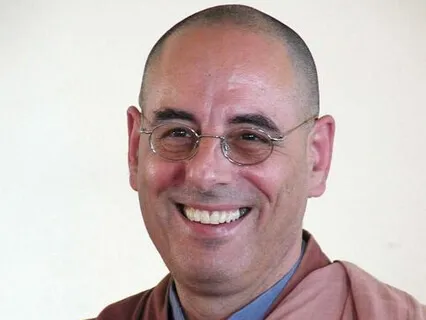
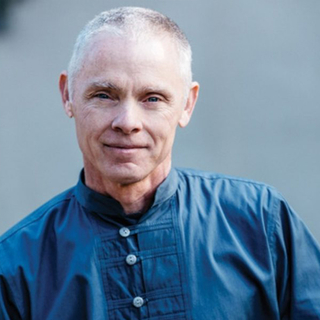
Our guest on this episode is Norman Fisher,
A poet,
Author,
Zen Buddhist teacher,
And priest.
He's a graduate of Iowa's Writers' Workshop and has been publishing poetry since 1979.
He's the author of 17 books of poetry,
6 books of prose on Zen and religion,
As well as numerous articles and essays.
Today,
Eric and Norman discuss his book,
The World Could Be Otherwise,
Imagination and the Bodhisattva Path.
Hi Norman,
Welcome to the show.
Thank you,
Good to be here.
It's a pleasure to have you on.
We are going to discuss your book called The World Could Be Otherwise,
Imagination and the Bodhisattva Path.
But before we do that,
Let's start like we always do with the parable.
And it goes like this.
There's a grandfather who's talking with his grandson.
He says,
In life there are two wolves inside of us that are always at battle.
One's a good wolf,
Which represents things like kindness and bravery and love.
And the other's a bad wolf,
Which represents things like greed and hatred and fear.
And the grandson stops and he thinks about it for a second and he looks up at his grandfather.
He says,
Well,
Grandfather,
Which one wins?
And the grandfather says,
The one you feed.
So I'd like to start off by asking you what that parable means to you in your life and in the work that you do.
Well,
Being a grandfather,
That's a very meaningful parable for me.
This is human beings,
Right?
We have these two wolves inside of us.
But maybe it would be a good idea to not think of one as bad and one as good,
But think of one as the one that brings us happiness and one as the one that brings us challenges and suffering.
And maybe we need both those things to be a full human being.
And we need to figure out how to get the wolf that brings us suffering and trouble to be in good communication with other wolves so that together they kind of bring us a life that has all the colors of the rainbow in it,
Not just the bright ones,
But also the dark ones.
I think that is very well said and an important point as we sort of think about this parable and where it's useful and where its uses kind of end up falling short.
So let's transition into the book.
I'd like to ask you first,
The book again is called The World Could Be Otherwise,
Imagination and the Bodhisattva Path.
I'd like to first start off by talking about the imagination part of this.
So talk to me about what role imagination has in spiritual paths,
Because that's what this book is.
It's about a spiritual path.
You're a Zen teacher.
So tell me what role imagination has.
Well,
In this book,
I'm trying to really redefine and expand what we usually mean by imagination.
I think the average person,
All of us,
You know,
Really,
The way that we've come to see this now in this time of maximum scientific materialist philosophy is we think that the material world,
The world of society,
The world of institutions,
The world of stuff is real.
And the imagination is the world of our fantasies.
You know,
It's stuff we make up.
It's like TV scripts and movies and stories and parables and ideas.
And that stuff is imaginative and not real.
It's not nearly as persuasive as institutions,
The newspaper,
The physical world.
So when I think of imagination,
I'm actually trying to change that dichotomy.
I'm actually trying to say,
As many,
Many philosophers,
Thinkers,
Poets,
Authors,
And religious people have said throughout the generations,
That in fact,
This world that we're living in,
We literally are imagining.
It's actually the case,
According to cognitive science,
That we do have sense organs that do take in raw data from a world,
But the actual world that we live in is a product of our imaginations as we put together that data into an imaginative framework.
So to a great extent,
You know,
We are making up the world,
Imagining the world according to our conditioning.
And what I'm arguing is that what we need in our time is an expansion of the imagination.
We need to realize the extent to which we are making up our world,
And we need to make it up based on a different set of more open,
More compassionate,
More loving,
More expansive assumptions.
And so for me,
That's what the spiritual path is really about.
To me,
The spiritual path in all its forms,
Not just Zen Buddhism or Buddhism,
But all spirituality for me is a path of imagination.
You know,
It's stories and myths and feelings and practices that expand the heart,
That expand our lives and make our lives that could be rather small and pathetic into something much more grand and much more expansive and much more loving.
So for me,
Imagination is really the world and how we think of the world and how we live in it.
There's so many good points in there that we could maybe hit on real quick,
But I think one of them is this idea that we think we're just sort of observing the world as it is out there,
But that's really not true.
We are observing the world through a certain set of senses that have certain abilities to take in certain things and others.
And then as you said,
A pretty high dose of construction of that world in a way that our brains have learned to do.
And so to the extent that we can sort of loosen our grasp on the world out there is exactly the way we think it looks.
It helps.
And then I think the second piece there that's so important,
And we talk about this on the show from time to time,
Is so much of what's happening in our heads are stories that we are making up.
Why not,
If that's the case,
Construct useful ones?
Yes,
Exactly.
And the reason why this is a Buddhist practice book,
Which includes meditation and all kinds of other practices as part of it,
Is that it's easy enough to decide to do that,
Right?
I am now going to make up a set of new stories for my life,
And I'm going to therefore have a better life.
That's an easy thing to say and an easy thought to have,
But it's not an easy thing to actually pull off,
Because the stories that we tell ourselves are deeply ingrained in us,
Right?
They're embedded in our psychologies,
Even almost in our bodies.
So in order to have a different story and a different view of our life and of our world,
We really need a real life change.
We need to do spiritual practices.
We need to do stuff on a daily basis.
We need to change our way of life if that's ever going to be a reality.
That's another really good point.
You're right,
It is far easier to say,
Oh,
I'm just going to change my stories,
My view of the world,
My attitude,
And actually doing that is a whole other animal.
Although I think the points that you're making are important.
I think that when we start to actually more deeply understand that we are making it up,
It does become easier,
Because before that,
It's just true,
Right?
And who's going to argue with truth once we can get that next step?
So yeah,
I love that idea.
I'm going to just read a little bit about what you say about imagination,
Because I think it's really good.
You say,
Imagination isn't an escape from reality.
Imagination deepens and enriches reality,
Adding texture,
Depth,
Dimension,
Feeling,
And possibility.
The truth is,
All that is creative and ennobling in us ultimately sources in the imagination.
Without imagination,
Reality is too flat,
Too matter-of-fact,
Lacking in color and fervor.
To go beyond the possible to the impossible,
We need to imagine it.
And I just love that paragraph,
Particularly the reality is too flat,
Too matter-of-fact,
Lacking in color and fervor,
Describes the experience of depression for me.
Yeah,
And it describes the experience of way too many people in our world.
I mean,
I think the world is really getting people down.
This idea of the world that we have is really difficult for people.
I mean,
I think that's why there is so much depression and addiction and all kinds of reduced function that we've got in our world,
Is because we have created for ourselves such a small and difficult world.
That's why I wrote the book.
I really wanted to say,
Look,
We can't live in that world.
We really have to live in another world.
And that's something that we don't need to depend on the government or somebody else to produce for us.
We can produce that ourselves through our own endeavors.
To be sure,
It takes some doing.
It's a big commitment,
And it's a whole change in our way of life.
But it is within our power to do that,
Especially when,
As you say,
We start with the insight that,
You know what,
We are making this for ourselves.
We do have the power to remake it.
We can do that.
So let's turn to the second part of the subtitle,
Which is the Bodhisattva Path.
So plenty of our listeners are going to know what a Bodhisattva is,
But I imagine plenty don't.
So let's start with what is a Bodhisattva and what is the Bodhisattva Path?
Well,
Let's see.
Buddhism has a lot of forms,
A lot of countries where it's been.
It's undergone a lot of development over its long history.
And there is one kind of Buddhism,
Which is called Mahayana Buddhism.
Mahayana Buddhism is mostly the Buddhism of China,
Japan,
And more or less Tibet.
In Vietnam,
It's different from the Buddhism of Sri Lanka and Thailand,
And therefore the Vipassana Buddhism that is so popular in America sources from Thailand and Sri Lanka and other countries in that area.
So it's not Mahayana Buddhism.
But Mahayana Buddhism is a very imaginative form of Buddhism.
And in Mahayana Buddhism,
The spiritual hero is more the Bodhisattva even than the Buddha.
So the Bodhisattva is a Buddha in training.
The Bodhisattva is an energetic and enthusiastic spiritual practitioner who is willing to make incredible efforts over a long period of time,
Not only to achieve spiritual awakening,
But specifically to achieve spiritual awakening for the benefit of others.
That's the motivation and the point of spiritual awakening,
Is to be able to help and express love for others.
So compassion and love and regard for sentient beings is the chief characteristic of the Bodhisattva.
And compassion and love lie at the heart of Mahayana Buddhist practice.
So that's who a Bodhisattva is.
Wonderful.
And so what is the Bodhisattva path?
Well,
The Bodhisattva path is the course of activity that a Bodhisattva commits herself to over the long haul.
So she just rolls up her sleeves and she says,
I'm going to do this path for the benefit of others,
And I'm going to just keep on doing it year after year,
Decade after decade,
Lifetime after lifetime.
In fact,
It doesn't matter to me how long I keep on doing this because I don't really have a goal other than complete happiness and well-being of infinite numbers of beings.
And so that's going to take a while.
I'm just going to go on and do this.
And there are many ways of defining the Bodhisattva path,
But I would say probably the dominant one is to define the path as the perfection of six different spiritual practices.
And these are the chapters in the book,
And I define and discuss these at length.
Each one in the book.
The first one is generosity or giving.
The second one is ethical conduct or moral practice.
The third one is tolerance or patient forbearance.
The fourth one is energy or joyful effort.
The fifth one is meditation.
And the sixth one is transcendent wisdom,
Which here specifically means the wisdom that enables a person to see with their own eyes and their whole body that there are no separate beings in this world,
Even though it looks like that to us,
And we feel our aloneness and we feel small,
Maybe against the mass of humanity.
In fact,
There are no separate beings.
There's only interconnection.
There's only love.
There's only spaciousness in which being is mixing and matching and flowing into and out of each other,
And that being that's flowing is really pure love.
And that's the only thing that in fact exists.
And so you can imagine that the development of this kind of transcendent wisdom is a real vision,
Is a real way that we actually see everything every day and all day long.
That takes a while,
And it's something that we aspire to and that we study and that we get glimpses of and that we try to develop more and more as much as possible in this lifetime,
But it's very much aspirational,
Even though actually we can really feel it and it can transform our lives even in a relatively short amount of time,
But there's no end to the possibilities for developing this vision.
So that's the sixth of the six bodhisattva practices.
And so the bodhisattva is practicing all these simultaneously,
Focusing on one,
Focusing on another,
But it defines a way of life of a person who is generous,
Who is ethical,
Who has a great patience with whatever happens,
Negative or positive,
Who has a lot of energy to continue the path,
Who has some serenity and calmness and a stable mind,
And who has this wonderful transcendent vision of a loving world.
That's a bodhisattva.
That's the path.
Excellent.
That's a very good explanation.
And I want to talk about the bodhisattva path.
To be all of those things,
We often describe them,
Or you describe them,
They're called the paramitas,
The six perfections,
Right?
We don't really perfect at any of those.
We go,
Well,
I don't know about that.
And one of the things I love in the book is you talk about the idea of ideals,
Right?
And you say ideals are imaginative projections.
We need them to propel us to better futures,
To inspire us to be better people,
But that they become problematic when we take them too literally.
And I think that's where a lot of people,
Myself included at many points,
Get in trouble.
We see this ideal of what a spiritual person is,
A bodhisattva,
Or the Buddha,
Or Jesus,
Or take your pick,
Right?
The Dalai Lama.
And we go,
Oh my goodness,
I'm nowhere near all that.
I can't live up to that.
And so I love your idea of the ideals get us in trouble when we take them too literally,
And that the thing about the bodhisattva ideal that's so great is it's so over the top,
You call it so absurdly imaginative,
That from the start we're clear,
Like there's no way we're going to get there.
Right.
One of the ideas that I use in the book is this idea of binocular vision.
I say that on the one hand,
You do need to think about,
There's no reason why you and I couldn't aspire to be perfect human beings.
There's no reason why you and I,
It doesn't make sense,
Because we're human beings,
Right?
Which is a sacred,
Wonderful thing to be.
Being a human being is awesome,
It's immense.
So there's no reason why you and I couldn't aspire to be as perfect a human being as Jesus or Buddha.
And we should.
We should ask that much of ourselves.
So that's a good thing.
We should really be doing that.
That's one eye.
So with one eye,
We should see our ultimate and extreme and wonderful human potential.
And with the other eye,
We should be very honest and realistic about our actual capacities and conduct right now.
So we see our many imperfections and we see all the ways that we're failing and all the ways that we fall down and pick ourselves up over and over again.
But since with the other eye,
We realize that in potential we are already Buddha and we are already Jesus,
We don't mind our imperfection.
In other words,
With two eyes you have depth,
Right?
That's the thing about binocular vision.
Human beings have binocular vision.
They have depth perception.
So with binocular vision,
We can be perfectly content and happy to see our failings.
And rather than being discouraged by them and measuring ourselves against an impossible ideal,
We say,
No,
This impossible ideal is in the horizon.
We're going in that direction.
We're going that way.
And part of our path is these stumbles and falls,
And that's the way it is for us.
And that's beautiful.
That's really kind of noble and wonderful.
It's not a problem for us,
Right?
Exactly.
I think that's so good.
I've been practicing Buddhism in various forms in different ways for a long time.
But in the last nine months,
I've made a pretty strong commitment to Zen.
And so I've been doing the Bodhisattva vows.
And they're essentially,
In the short version,
Beans are numberless.
I vow to save them.
And it's over the top.
It's over the top.
And so it was really helpful for me to read this idea about ideals.
And that there are imaginative goals taken in an imaginative world by imaginative beings.
And you say,
Such vows point out a direction and inspire our feeling and action,
But they don't pressure us.
And that was really helpful for me,
Because I'm relatively new to sort of saying these vows continuously and really thinking about them.
And part of what comes up in me when I say them is like,
Well,
For crying out loud,
That's a tall order.
Right,
Right.
Well,
This is such an important point.
This is such an important point.
Because,
You know,
I think it's so common for everyone to say,
I won't have a high aspiration,
Because I know I can't live up to it.
So let me have a much less inspiring,
Sort of more down-low aspiration,
Because then maybe I can really achieve it.
And that's a shame,
You know,
Because I think every human being really is awesome,
Especially in the light of the sixth paramita,
The sixth bodhisattva practice of transcendent wisdom.
You look at every human being and you see an awesome Buddha,
Even though inside that person might not feel it.
The truth is,
Every human life is sacred and precious,
And every human being is truly awesome.
So I think every human being should recognize that part of themselves.
And even though they know that they haven't realized their full potential,
They should be aware that it's there every single day with every thought and every feeling,
However debased it may seem.
And yet,
Perfectionism is such a disease,
Really,
In a way,
It's sad.
It makes us frightened of our own awesomeness.
Because we then use it as a weapon against ourselves,
Right?
It's terrible.
We use our own awesomeness as a weapon against ourselves,
And we don't allow ourselves to become aware of it and celebrate it.
And I think that's what the bodhisattva path is all about.
It's saying,
Let's celebrate the joy and the beauty of being human,
And let's strive to be the best possible human being that could ever be imagined.
And then let's have a good laugh,
Really,
Over how far we're not there.
But let's keep going.
Let's help each other to keep going on and on and on until someday,
Who knows when,
How or where or what,
We'll get there.
I love all parts of that.
I think the keeping a sense of humor about it is so important.
I think the aspirational part of it and the not being so hard on ourselves when we don't live up to it.
And I think you're right.
I think that I know certainly times in life as you mentioned that I can see where I have dialed down what I thought was possible in order to shrink the gap between where I was and where I thought I should be.
So if I just dial down where I think I could be or should be to much lower than that gap isn't there so much.
And I think,
In essence,
Sort of what we're saying is allow that gap to be there between where you are and what's totally possible.
But allow it to be there in a way that we don't suffer over.
Let's turn our attention to some of the six practices,
Paramitas or perfections,
Whatever you want to call them.
I don't think we're going to get through all of them.
But let's turn our attention to a couple of them.
And I think I'd like to start with joyful effort.
That's a good one.
I think the main thing that came up for me in reading that section and I think would come up for listeners in hearing,
Okay,
The practice of joyful effort is what do I do when I don't feel joyful or I don't feel like I've got much energy to make effort?
What is this practice calling for from me in those type of situations?
Well,
I think it's in that chapter that I tell the famous Zen story of Master Ma.
There's a Zen story called Master Ma is Sick.
Master Ma was a Zen master who was fabled for his strength and vitality and energy and ability to have lots of disciples and so on.
But this story takes place when he's quite sick in bed and probably even on his deathbed.
He's deathly ill.
And his attendant comes in and says,
How are you today?
And he answers,
Sun-faced Buddha,
Moon-faced Buddha.
You will learn that the Sun-faced Buddha is a very bright and strong Buddha that lives for many,
Many eons.
And the Moon-faced Buddha is a cool,
Quiet,
Soft Buddha that lives for a day and a night only.
So what Master Ma is saying is that whether I have vitality and energy or whether I am sick in my last illness,
Either way,
I'm a Buddha.
Either way,
It's enlightened effort.
So from the point of view of the practice of virya paramita or enthusiastic effort,
We make the kind of effort that our body and spirit is able to make.
So although the word enthusiastic effort sounds like it's vibrant and joyful,
And what if you're not vibrant and joyful every minute?
When you're tired,
The practice of enthusiastic effort is to take a rest.
Enthusiastic effort makes you pay attention to the energy that you are given in this lifetime and to use it well.
To know when it's time to rest,
To know when you need exercise,
To know when you need a break,
To be able to take care of yourself appropriately.
Giving yourself,
As you can,
Appropriate to the time and the place and the kind of energy that you have.
So clearly,
For example,
A young person is going to have more energy than a really old person,
Right?
There's no doubt about that.
That's one of the characteristics of aging is that elderly people have less energy.
You can't charge up a mountain when you're 75 the way you could when you were 25.
But the 75-year-old and the 25-year-old can practice equally joyful effort appropriate to their condition.
So it's a matter of attitude and spirit and also the wisdom to marshal your energies and know how to use them.
When you know how to practice joyful effort,
Even if you literally are on your deathbed and you literally can't anymore speak,
You can practice joyful effort to have a warm connection to everything around you,
Including those who are coming to visit you in these last hours.
You can give them the great gift of your joyful effort even in that condition.
So it's a complicated and not complicated,
But nuanced,
I should say,
A nuanced discussion.
And it's something that we study in ourselves and we come to learn over time how to have joyful effort,
How to practice that as a practice,
As something that we develop in our lifetime.
Is there any practice you could give or suggest that is a way of trying to practice that?
At the end of each chapter of the book,
I give practices for each of the six perfections or paramitas or practices of a bodhisattva.
And I give a number of practices for how to do joyful effort.
For instance,
All good practices for taking care of your body and mind,
Including your diet and your exercise and getting enough rest,
Those are practices for cultivating joyful effort.
If you are given to negative states of mind,
You would think,
I'm not supposed to have those negative states of mind.
If I have those negative states of mind,
It must be that I'm not practicing joyful effort.
Not true.
If your conditioning in your lifetime is given to negative states of mind naturally arising within you,
It's the studying of those negative states of mind and it's the taking care of and the acknowledgement of those negative states of mind that constitute for you at that time the practice of joyful effort.
So being aware of and embracing all states of mind is part of joyful effort.
Wonderful.
I think that's great.
Let's move on to another of the paramitas and I'd like to talk about patience.
Yeah,
That's another important one too,
Isn't it?
Yeah,
It is.
And there's something you said,
Obviously,
In an interview like this,
We can cover 1% of all the great things that you say.
So,
You know,
Knowing that we're going to miss a lot of it.
But you said a couple things about patience.
Maybe I'll read what you said and just ask you to sort of elaborate because I really loved both of them.
One was,
All I've said about the practice of patience amounts to something quite simple,
Just keep going.
And then the other is that the full perfection of the practice of patience can be affected with just this one practice,
Be of benefit to others.
So let's explore both of those,
This idea of just keep going and be of benefit to others and how those relate to patience.
Yes,
Well,
As far as just keep going,
Again,
Don't misunderstand that to mean,
You know,
I'm always rushing,
I'm always running,
I'm always pressing.
It doesn't mean that.
It means never imagine that you're off the path.
Never imagine,
Even in your deepest discouragement,
That it is not a part of the ongoing spiritual development that you are committed to.
Everything in your life that will arise arises for a reason,
And everything in your life that will arise is a part of your path.
That's what just keep going is,
The recognition that that's the case.
So whatever it is,
You turn toward it.
That's what patience,
The practice of patience in Buddhism literally means,
That when something arises,
Instead of trying to run away or think about something else or pick up some sort of a big stick and try to push it away or get rid of it or make it transform or disappear,
You simply turn toward this,
Whatever it is that's arising.
You turn toward it,
You take a breath,
You embrace it,
You feel some gratitude for it,
And you just keep going with the feeling.
So you're not afraid of it,
You're not denying it,
Pretending it's not there,
You're not saying,
Oh my God,
I have to fix this immediately,
I can't bear it.
No,
You're facing it,
You're embracing it,
You're breathing into it,
You're going forward with it.
That's what just keep going means in the context of the practice of patient forbearance.
I love that idea of,
I was talking with a coaching client about this today,
That so many of the things that we would look at as mistakes or failures or problems,
Actually,
Not only are they learning experiences,
They actually are the path itself.
They are not only on it,
They are it.
Exactly it.
That's exactly what I'm saying.
Yeah,
And the other one about always think of others,
In a way,
That's a simple practice.
So,
Literally,
You could say,
When I feel discouraged,
When I feel a lack of inspiration or energy for my spiritual path,
I'm going to identify that in myself,
And I will think of others.
So I could even have a practice,
Let's say,
There are a handful of people,
Let's say,
That I have a high regard for.
These people,
I love these people so much,
My family members or whoever it is,
I love them so much,
And they're so encouraging to me,
And I really want to be alive for these people.
So now that I'm feeling discouraged,
I will intentionally speak of those people and think of some way that I can be of benefit to them.
So maybe I should call my cousin or my friend,
Or maybe I notice that they're sick,
I'm aware,
Maybe I'll just see how they're doing,
Or maybe I'll send them an email or a card,
Or maybe I'll just sit here for a moment and remember their positive qualities that are so inspiring to me.
In other words,
As an intentional practice,
You think of others,
And you think of others in a positive light,
And you think of ways that you could be of benefit to them.
And that's a way of turning your negativity around,
Not denying it or trying to escape from it,
But just taking that same energy and turning it around.
Yeah,
I love just that phrase,
Be of benefit to others,
And in the book,
It's part of a paragraph where it's like,
If this happens,
Be of benefit to others,
If that happens,
Be of benefit.
I love it.
It reminds me a little bit of my 12-step practice back when I was more involved in that,
And it was like,
When all else fails,
Help another alcoholic.
It's an analogy about the craziness of favoring one's own suffering over the suffering of others.
Shanti Deva,
In his text called Guide to the Bodhisattva's Way of Life,
Presents often the most hilarious and counterintuitive arguments,
Which,
When you read them,
Make perfect sense,
And it strikes you as amazing that,
You know,
The way that we usually look at things that seem so reasonable is actually unreasonable.
And this is a case in point.
He says,
To most people,
It's perfectly obvious that you're concerned about your own suffering more than you're concerned about the suffering of others,
Because it's your suffering.
Other people suffer,
And yes,
You care about them,
But when you suffer,
Then it's really important,
And your suffering really draws your attention and takes up your whole effort.
And this seems to be perfectly reasonable to us,
Right?
I mean,
If I'm sick,
I drop everything I'm doing,
And I tend to myself,
And I forget about everybody else,
Because I'm sick.
But Shanti Deva says that,
Actually,
This is totally irrational.
It's totally irrational to favor yourself over others,
Because,
Think about it,
You have suffering,
Let's put your suffering in a pile over here,
Standing next to you,
And other people have suffering.
So let's put in a pile the suffering of every other human being on the planet Earth,
And let's,
For good measure,
Throw in the suffering of every animal and insect and anybody else who might have suffering.
Let's put that in a pile.
Now,
Which pile of suffering is larger?
Your own pathetic little pile of suffering,
Or this gigantic overwhelming pile of suffering on the other side?
So why would you be so concerned about this little pile of suffering when the other pile of suffering requires so much more regard and so much more attention?
Especially,
He says,
The truth is that the more you pay attention to your own little pile of suffering,
The more miserable you are,
And the more you pay attention to the suffering of others,
The happier you are.
So why in the world do we all think it makes sense for us to be so obsessed with our own suffering,
Which that obsession is only bringing us more and more misery,
And yet we think it makes sense for us to do that?
That's his argument,
And it really is to me quite wonderful and very funny and completely true.
Another idea I've heard in Buddhist training is this idea of sympathetic joy,
Like if you can feel joy,
Yeah,
And boy,
There's a whole lot more of it out there in the world than there is necessarily in our own lives,
And can we partake in that?
I just think it's a great argument.
It makes a lot of sense.
Yeah,
I was talking to a friend the other day who's elderly,
And he says,
Oh,
When I go to the park and I see all the young people running by with their young bodies,
I feel so envious.
And I said,
Well,
Why feel envious?
I mean,
In the moment when you're seeing someone running by and that person's young,
Healthy body is occupying your consciousness,
Well,
In that moment,
That is you.
Why don't you take the light in that?
Why don't you look around on the street for all the people that are happy and take that happiness for your own?
Why don't you extend your happiness all around you instead of bemoaning the problems that you might be having with your aging body?
You have those problems too,
And I'm not saying that you should deny them or ignore them,
But I'm saying why should you limit yourself to them and say that that's you and the rest of the world isn't you?
Yeah,
I love that idea.
Another one of those things that's probably a little bit easier to say than do,
But a practice that's worth doing.
Yes,
It's something you cultivate.
You work at it,
Make an effort to do it over and over again.
And as I think I say in the book,
People think of meditation practice,
The practice of silent sitting and breathing that people know about so much now,
People think of that practice as being a standalone practice that has a benefit.
What is seldom mentioned is the fact that if you have a meditation practice that's a regular practice for you and part of your life's routine,
It makes the myriad other practices like this one much more possible for you because you have a kind of pliability of mind and purchase on your own mind that gives you the ability to do many,
Many other practices.
So that's why meditation practice is so valuable,
Not only for its own sake,
But for the capacity it gives you to do so many other practices.
I agree 100%,
And I think that's an important piece to add on though because I think meditation is where the spiritual practice begins and ends for a lot of people.
And while meditation is,
I agree,
A very important practice has been very important in my life,
And I do agree it sort of trickles out into all other areas,
The part that I've been particularly interested in over the last six months is how do I infuse some of the ideas I get in meditation or reading or different places and infuse them into the other 20 some hours of my day,
Really weave those things in.
And so those are all spiritual practices too.
Yes,
That's right.
In a way,
All the wonderful scientific work that's been done to show the virtues of meditation for psychological and physical culture gives the false impression that meditation is like a medication,
You know,
Take one of these and then you'll feel better.
When in fact,
Meditation can really be seen and maybe more profitably seen as a linchpin in a whole culture,
A whole way of living,
A whole way of looking at life,
A whole way of being in your life,
All of which transforms your life.
And meditation is only on the foundation.
We have to build a house too.
I think that was the place I was going to go to kind of wrap us up as we near the end here is that in the Buddhist path,
There's an idea of,
You talk about the idea of a tripod that has three legs,
And those three legs are ethical conduct,
Meditation,
And understanding.
And so that this path really has all three of those.
And like any tripod,
Right,
There's got to be some degree of equalness between those three or you've got a pretty crappy tripod.
Right,
Exactly.
Right.
So we balance the three.
That's right.
So ethical conduct,
You know,
I think that's fairly straightforward.
That's also one of the practices in Paramitas that we talked about.
And then the other one is understanding,
Which is one that you talked about also,
And I'm not even in the two or three minutes we have left going to try and wade into understanding because it goes,
It goes pretty deep.
But the idea of not self,
About emptiness,
You know,
I think your book does a great job of really sort of going into some of those concepts of emptiness.
You and I are going to wrap up here because we are out of time.
But we're going to do a brief conversation in the post show a little bit more about meditation.
I'd like to explore an idea that formal meditation is not just a tool,
But it's actually a devotional practice.
Dojan says that and I'd like to explore that a little bit more.
So you and I will do that in the post show conversation.
Listeners,
You can get access to that and lots of other extras as well as the joy of supporting the show by becoming a member.
You can go to oneufeed.
Net slash support to do that.
Norman,
Thanks so much for taking the time to come on the show.
I've really enjoyed talking with you.
Thank you.
Thank you.
It's a real pleasure.
Thanks.
Thanks for joining us on the podcast.
We'd like to sincerely thank our sponsors for supporting the show.