You don't need to stop the thoughts,
You just need to change the relationship to them.
Welcome to The One You Feed.
Throughout time,
Great thinkers have recognized the importance of the thoughts we have.
Quotes like garbage in,
Garbage out,
Or you are what you think ring true.
And yet,
For many of us,
Our thoughts don't strengthen or empower us.
We tend toward negativity,
Self-pity,
Jealousy,
Or fear.
We see what we don't have instead of what we do.
We think things that hold us back and dampen our spirit.
But it's not just about thinking.
Our actions matter.
It takes conscious,
Consistent,
And creative effort to make a life worth living.
This podcast is about how other people keep themselves moving in the right direction.
How they feed their good wolf.
Thanks for joining us.
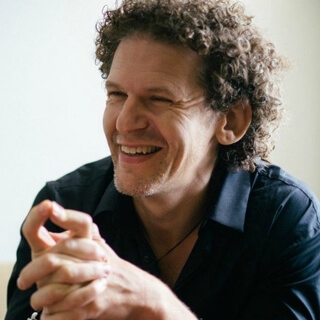
Our guest on this episode is Jeff Warren.
Jeff used to be a journalist for CBC's radios The Current and Ideas.
He's a researcher,
A writer,
And teacher of different meditation and personal growth practices.
His new book,
Written with Dan Harris,
Is called Meditation for Fidgety Skeptics.
I mentioned last week that we're releasing our first online course.
And it's finally here and I'm excited to share it with you.
It's a method that I have used for years to help me hold down a full-time job while building a solar company,
While building this podcast,
While raising kids.
Basically dealing with all the madness that all of you do also.
It's a five-step approach to managing stress,
Increasing productivity,
And being present in day-to-day life.
The course is for you if your mind's always racing,
If you're always thinking about things that need to be done,
And you need actual concrete strategies and smart tips to eliminate the overwhelm in your life.
As I said,
This method has served me so well over the years.
Basically it's a simple and effective way to reduce stress and get things done.
And I'm very excited that I'm now able to share it with you.
It's at OneYouFeed.
Net slash stress.
Again,
That's OneYouFeed.
Net slash stress.
I hope that you'll check it out and I sincerely hope that it's a benefit to you in your life.
Thanks.
And here's the interview with Jeff Warren.
Hi Jeff,
Welcome to the show.
Hi Eric,
Thanks for having me on.
You are a meditation teacher and you recently co-authored a book with Dan Harris,
Who's actually been on the show a couple times,
Meditation for Fidgety Skeptics,
A 10% happier how-to book.
And we'll get into it in a minute.
There's lots of great tips for meditation itself and we'll get into that and lots of other things.
But let's start like we normally do with the parable.
There's a grandfather who's talking with his grandson.
He says,
In life,
There are two wolves inside of us that are always at battle.
One is a good wolf,
Which represents things like kindness and bravery and love.
And the other is a bad wolf,
Which represents things like greed and hatred and fear.
And the grandson stops and thinks about it for a second and looks up at his grandfather.
And he says,
Grandfather,
Which one wins?
And the grandfather says,
The one you feed.
So I'd like to start off by asking you what that parable means to you in your life and in the work that you do.
Yeah,
It could not be more central.
It's been my main preoccupation since I've been an adult is trying to figure out what the consequences,
Because it's a true parable and it's very,
Very sobering.
And I've been kind of I actually remember this is a bit of a weird story,
But I remember being a little kid being maybe I was seven or eight and I had this insight experience as a little kid.
I saw myself doing some behavior and I realized if I keep doing this behavior,
This is going to become part of who I am.
This is going to become my character.
And I remember this distinct feeling of that insight.
And I and I was just very unusual because I wasn't necessarily very perceptive or you know,
It just was this thing that I suddenly and then the years later,
I remembered it.
So I've been trying to figure out how to live with that understanding ever since.
And I guess for me,
The big question is what are the habits can be changed?
And what are the ones that are just,
You know,
Hardwired into your nervous system that are just part of who you are?
Because I have a lot of serious,
You know,
Challenging habits that have to do with my own mental health issues and,
You know,
Intense distractibility and fixation and reactivity.
And it's those ones that I wonder in particular,
Can you,
How much of those can you really change?
And it's sort of been the guiding question of my life.
And also it's why I got into meditation and it's kind of a lot about what I teach.
And do you have an answer to that question?
How much you can change?
I was hoping you would know.
My experience is a lot.
Yeah,
So that's my experience too.
Well,
So I think I feel like I have to give a kind of,
You know,
It's an ongoing work in progress trying to understand how she can change.
And I think it differs a little bit from person to person.
I think it probably differs a lot.
I think when you have deep intractable things like ADD and emotional dysregulation and some of these things that I struggle with,
The question is how much of that can you change versus how much can you just change the relationship to the symptoms?
And I think there's both.
You can become more concentrated.
You can become clear.
You can become less reactive.
You can become less dysregulated.
Absolutely.
But a lot of the change that allows you to do this is this kind of paradoxical thing where you're getting more and more space around it.
It's that getting more space around it that you're interested in.
Like what is that?
It's not like the thing itself is going away.
There's still this conditioning.
There's still this piece in there.
But it's that you're shifting where you identify from to be more from the space around it,
You could say.
So is that changing it or is it just that it's become muted because there's something else that's started to come into the picture?
And I don't really know the answer to that other than that's just what my experience has been.
Yeah.
Well,
Being somewhat of a practical bent,
I think if you don't suffer from it as much,
You've changed it.
Whatever the mechanism that made that happen is.
And I agree with you.
I think the answer isn't change everything 100 percent.
But there was a point in my life where I was homeless and a heroin addict.
And that doesn't resonate in any part with the way I live today.
And so I think there are some pretty big transformations that are possible.
But there's also I wrestle with depression also.
And it's not gone.
But my relationship to it is so,
So different.
I think the conditions are or the symptoms are far more mild than they used to be.
And I've gotten a lot more skillful in how to relate to it.
Yeah,
That's really well said.
I would say it's a similar thing for me.
Sometimes I think one of the main things that I've gained through my practice is just this sense of perspective that I'm,
You know,
Able to now when I go into a darker place or I go into a challenging place where once it seemed all encompassing,
And I couldn't imagine how I would ever come out of it and I couldn't even and it felt like I was I would always be there.
Now I can go into that place and go,
Oh,
Yeah,
I've been here before and this will change.
And that in itself,
That pure simple sanity has been,
You know,
That's the game changer for me.
I agree.
And we'll talk more about meditation in a minute.
But one of your teachers is is Shinzen Young,
Who said possibly one of my favorite things that's ever been said,
Which is that suffering equals pain times resistance.
And so,
You know,
To take this model,
You know,
And talking about it,
If you consider the mental symptom,
Depression or ADHD to be the pain,
Maybe you can adjust that to some degree.
But it's the resistance that can be adjusted a lot and dramatically reduces the suffering.
I know for me,
Just recognizing that I have depression and when it comes on,
Not making a big fuss about it has saved me countless amounts of suffering because I no longer get thrust into the middle of an existential crisis.
I just go,
Oh,
You know,
It's like having a cold.
I'm going to have it for a few days and it's going to go away.
And it's just radically changed how much I suffer from that.
Can I ask you,
Do you catch it right away or is there a period where you kind of don't really realize you're kind of you find yourself in it and beginning to believe it and it takes a while to catch it?
I'm just curious your process.
I catch it really early now.
I mean,
I'm an old man.
So it's taken,
You know,
I've had plenty of years to hone this skill.
But,
You know,
I capture it right away.
It has a leading symptom for me and its leading symptom is an anhedonia where I suddenly like,
I can't think of anything I want to read or I want to listen to.
As soon as I start having that,
I'm like something's off because I normally,
You know,
Have a stack of,
You know,
25 books that I want to get to and,
You know,
There's a thousand songs I want to listen to and 50 podcasts.
And as soon as none of that interests me,
It's my leading indicator like,
Oh,
Here we are.
So I recognize it pretty quickly when that happens.
And how long does it take to cycle through?
That's a great question that I don't think I know an answer to because some of it has to do with what I do,
How I respond.
So some of the response is not making a big fuss about it.
And then other parts of the response are,
You know,
Do I force myself to get out and exercise?
Do I get outside in the sun?
Do I spend time with friends?
Do I,
You know,
To what extent am I trying to do things that I know help with the depression?
So that matters.
It,
You know,
The acute phase for me anymore seems to really just be a couple of days or,
You know,
A few days.
It never goes as deep as it used to.
It's just a general like,
You know,
I think is more than a deep pain.
It's just like,
I'm just not interested in anything for a period of time.
And then I,
You know,
The other thing I've realized is I've also I think I use the analogy of the emotional flu a lot because I think the other way that it's relevant is that just like the flu,
There's a lot of things I can do beforehand to give myself a better chance of not getting the flu.
Once I've got it,
There's still some things I can do.
But at that point,
I'm like,
Well,
I've kind of got it.
And so for me,
It's been a matter of managing it from,
You know,
Most of my depression management,
A lot of it is very physical managing it.
And then when it happens,
Just not making a big fuss about it.
That's so interesting for me to hear you talk about it,
Because I'm one of the things I'm trying to tease,
Figure out and kind of tease apart is what part of this rhythm for me is endogenous and what part of it is entirely driven by changes in external environment.
Because because like you,
I can do I know absolutely when I'm in nature a lot and when I'm,
You know,
I'm getting good physical activity and I have good meaningful work happening.
Certain things that I have in place that are much that definitely reduce the incidence of for me,
Not so much I get the kind of bipolar spikes,
I get mania and exhaustion.
And even the ADD is a kind of separate and related thing.
Those things are managed much more.
But at the same time,
There is some kind of endogenous rhythm.
You know,
I wonder what is this thing?
And are we all do we all have rhythms like this?
And I'd love to read something about that,
Because Buddhism certainly doesn't talk about that.
No,
I don't even know who does because it's not really out there in the literature.
Yeah,
Well,
I'm not sure anybody knows.
I mean,
I think depression is one of those things like addiction that far more than it is a thing.
It's really a condition or it's a conglomeration of different things.
And I think there's so many different types.
It's very difficult to be like,
This is what it is.
And so for me,
I have that same question,
And I don't spend a lot of time on it anymore because I do my best to take care of myself,
You know,
All the time.
And then when it comes,
I don't know,
Is it because I wasn't taking care of myself?
Sometimes I can look back and see that clearly.
And other times it just came up.
And and like I said,
When I get it,
I just kind of go,
Well,
All right.
But for me,
It's amazing that exercise is so far and away.
It's the biggest contributor for me that to my overall emotional mood,
Meditation is really important.
But I think exercise is the one that which I wish it wasn't because I don't you know,
It kind of it's kind of a drag.
Like I didn't work out for three days and now I'm,
You know,
Ready to jump off a ledge.
It seems like I'd like a little more,
A little more flexibility.
But it is what it is better than not having an option.
Well,
It's funny you're saying this because I sometimes feel like an imposter as a meditation teacher because I basically believe the same thing.
You know,
I'm a meditation teacher.
I meditate.
I love meditating.
But I find even more important than my sitting practice is movement.
And I try to integrate the meditation into the movement all the time.
But it's definitely I don't know if that's true for everybody.
But for me with my kind of hyperactivity,
I need to have some more of that dimension in there.
And I was something I was really down on my took me a long time to figure that out because I was indoctrinated in the usual.
I have student meditation teacher circles and had a disdain for the body in a weird way that really didn't serve me at all.
So,
You know,
Thank God I'm now more interested in my Qigong practice in some ways and,
You know,
Other movements because you can just see that it's the same.
You can apply exactly the same meditative principles,
But just do it in a kind of more slow movement.
Although there is something special about a sitting practice that is pretty unique.
I agree.
I mean,
I think if I had to pick only one intervention in my life,
I might pick exercise.
Maybe I'm not even sure that's true.
It's the one that seems to most benefit sort of my actual mood.
But I think meditation and the associated pieces do so much for my perspective and how I act in the world and who I am and my ability to be effective.
You know,
So it may not have as direct effect on my mood as exercise does,
But I think it has every bit as big an impact in my life as a whole.
And my ability to have perspective,
Which,
As you said earlier,
Is sometimes I think is,
You know,
85 percent of the game is just,
You know,
Can I can I keep the right perspective about things and being in a seated practice in particular,
Which is a kind of pure culture?
You know,
There's it's not like you're trying to practice walking around where there's many more distractions and and feelings.
It's like if you're sitting in a seated practice and you deliberately kind of try to simplify the environment,
It's really just you and,
You know,
The thoughts,
The emotions,
The sensations that are there.
And you can begin to really hone these fundamental sort of skills of how you're relating to that.
And there is definitely the promise in a meditation practice of beginning to really dramatically change your relationship to all that stimuli,
To all that conditioning.
Because,
You know,
As you know,
I mean,
In different contemplatives talk about it in different ways,
You know,
There's something else that starts to come into your experience,
Sort of oozing in from between the bits from the space.
And that that something else is,
You know,
It's easier to begin to get a signal on it,
A seated practice.
But,
Of course,
Eventually it spills out into your life.
Hi,
Everybody.
Audible is back as a sponsor.
And as you know,
I am always thrilled when they're a sponsor because I think they're such a great fit and I love their product.
A couple cool things about their app.
I love that I can just share excerpts right from the app with other people.
And I also love that if I'm listening to it on my phone in my car,
I can pick it back up on my iPad or on my computer or ask Alexa to pick it up.
It's very convenient just to kind of keep going with the book.
I'm going to give a couple recommendations today.
One is a novel I read recently called A Tale for the Time Being by Ruth.
I'm going to spell it for you.
It's a great book about a Japanese girl,
Her Zen grandmother,
And just there's so many wonderful things about it.
I loved it.
And then I also want to point out a nonfiction book that I listened to on Audible recently that I found very fascinating.
A great book called Quantum Enigma,
Physics Encounters Consciousness by Bruce Rosenblum and Fred Kuttner.
And the reason I like this book is that quantum physics is fascinating.
And it's interesting enough that it gets abused a lot,
Particularly in the New Age community,
As to what quantum physics tells us about the nature of reality.
What I love about this book is these guys are real scientists,
Real teachers at universities,
And they're giving in-depth explanation of quantum physics.
But they're not ignoring the very real questions it raises about consciousness.
And I just found it a fascinating book.
So either Quantum Enigma or Tale for the Time Being are two great choices.
Go to audible.
Com slash one you feed or text one you feed to 500-500.
One you feed is all spelled out O-N-E-Y-O-U-F-E-E-D.
Hi,
Everybody.
RXBar is also back as a sponsor,
And they've been good to the show and their food is delicious.
Their core ingredients basically do all the talking.
In each bar,
It's simply three eggs,
Two dates,
Six almonds,
And then some very basic real food ingredients to make it taste good.
Things like fruit,
Spices,
Cacao,
Whether you like sweet or savory,
Chocolate or fruit,
There's an RXBar for you.
They are gluten free,
Soy free,
Dairy free,
No added sugar,
Colors,
Flavors,
Preservatives or fillers.
Egg whites for protein.
The dates are there to bind.
The nuts are for texture.
They're great for breakfast on the go,
Snack at the office,
Throw in your bag for the plane,
Which is a very common one for me.
I love them.
It's the chocolate and sea salt is my favorite bar.
But my girlfriend loves blueberry.
So for 25 percent off your first order,
Visit RXBar dot com slash wolf and enter promo code wolf at checkout.
Again,
RXBar dot com slash wolf and enter promo code wolf at checkout.
RX bars.
Delicious.
And here's the rest of the interview with Jeff Warren.
Let's move into meditation a little bit here and move into the book a little bit.
First,
I'm going to start off with,
You know,
The book is you and Dan have both wrote it in some of its Dan's kind of exposition and then a lot of you sort of teaching meditation.
And one of the things that most interested me about Dan when I first read 10 percent happier was the phrase,
You know,
The voice in my head is an asshole.
And,
You know,
In the book,
It says meditation forces you into a direct collision with the fundamental fact of life that is not not often pointed out to us.
We all have a voice in our heads.
The voice is insatiable.
The default mental condition for too many human beings is dissatisfaction.
And that that is such a fundamental understanding to me.
And I think it's possibly that idea that we all have a voice in our head,
That that thing that's prattling on is not all of who I am or not who I am.
I think that might be the fundamental teaching of any that I've ever learned that piece.
And I think that meditation is so useful in helping me to catch it closer to the moment.
Yeah,
I agree.
I mean,
That was the first big revelation for me in practice.
My teacher Shenzhen is really big on helping his students parse apart the that inner world of thoughts,
Like so the auditory component,
The visual component,
The feeling component.
And,
You know,
Finally,
In meditation,
Beginning to notice how much of my inner world was dominated by these weird monologues that just would go on and on.
And,
You know,
The narration and the various characters that would appear and the critic and the sat in the other.
You begin to as you get,
As you know,
As when you practice,
You start to get more and more perspective in it.
They become more like for me,
They shifted into this sort of friendly band of characters.
You know,
They and I see them more as like they had their role.
They all had their kind of some reason that they came about some developmental reason that some compensation or who knows what.
And they're still they're still energy in those patterns.
But they're now I just see them as part of this kind of ongoing process of the body mind,
My particular body mind.
And it's happening.
And the more I practice,
The more I look with them with the same amusement and hopefully friendliness that I look to other things going on in my life,
Other people,
Other sensations.
It's just part of the single stream of stuff.
And that's,
Of course,
The great trajectory is like,
Can you learn to begin to not only see those things,
But start to let go of them of the need to reflexively identify with them?
And that's a very interesting reorientation,
Because,
Again,
It's that same thing.
I was it's the that what is this new thing that's coming into experience?
So I'm not I'm not inside that and identifying with that.
Then what am I?
Who am I?
Exactly.
Yeah,
I mean,
There's a part in the book where your dad says that,
You know,
A fellow meditator jokes that,
You know,
When that voice is in his head,
It feels like he's been kidnapped by the most boring person alive who says the same baloney over and over,
Most of it negative,
Nearly all of itself referential.
And I mean,
That is that describes it.
So well,
Mine,
Mine is not as malevolent as it used to be.
The you know,
The conversation that goes on my head is not is not as damaging or but it's mostly just boring.
And it's just the same thing over and over.
The phrase I've been running around with a lot lately is just trying to remind myself,
Like,
Come out of the conversation in my head.
I mean,
Obviously,
Meditation on the cushion is all about that.
But but just walking day to day,
You know,
I just keep trying to remind myself as often as possible.
Like,
Just get come out of the conversation in your head.
Like,
Don't pay attention to that.
Pay attention to nearly anything else,
Which when I do when I and when I'm very focused on it,
Like I have been,
Boy,
I live a better life.
I mean,
It's not like I stay out of the conversation in my head for more than about a minute at a time,
You know,
That I'm back in it and I'm back out.
But just remembering to step out of it is so like you said,
When when that voice isn't going,
There's something else that's there that is far more life affirming,
For lack of a better way to say it.
Yeah,
It's kind of like you think about opening a book.
Imagine you open the book and it was just a single like a single stream of words where there was no space between any of the words,
Just a giant stream of text.
That's sometimes what it feels like to be,
You know,
To be in my head,
Just a giant stream of black ink.
But the more I practice,
The more I can begin to see the space between the words.
And what's really interesting is as you start to spend more time in that space between the words,
The words themselves are given the contrast they need to become more interesting and more poignant.
And I don't mean just mean the words in your being the words now being everything.
You're the things you're seeing the sights,
The sounds,
The smells,
The feelings.
Now that the capacity to be in more stillness brings them into relief.
So there's this weird sense,
Though,
As you're beginning to move away from the world into this space thing or this is more room around it,
You're coming more intimately into the world at the same time.
Does that make sense?
Totally.
Let's now talk a little bit about meditation itself.
The book is really considered a how to guide.
And I think there are some really critical,
Very practical things about meditation that you guys teach.
And I kind of want to go through some of them because I think they're so important.
And one of them is this idea that I can't meditate or I'm not a good meditator.
It's this idea that we should be able to stop thinking and that when we don't stop thinking,
Which none of us do,
That we're not a good meditator.
Can you talk a little bit about that?
Because I think that is it.
At least for a lot of people I talked to that is the fundamental barrier to building a meditation practice.
Yeah,
I'm happy to.
I mean,
That was why I thought I was a hopeless meditator at the beginning that it would never work for me.
And to date,
I still all the time get lost in thought and have that voice.
And what you realize is that you don't need to stop the thoughts.
It's as you know,
You just need to change the relationship to them.
And so when people realize that,
That that's a huge kind of insight.
And then the real challenge is just shifting the ratio of your tension away from what you were feeding,
Which is the thinking to some other part of your experience.
And that the act of just shifting back,
Getting lost,
You know,
Then shifting back that as Dan would say,
That's a rep for the concentration part of what you're developing in a practice.
So you are doing the practice perfectly then.
It's not it's not need doesn't need to be any other than exactly that.
Then noticing that you got lost in the thought then going back into noticing the breath or whatever the you're focused on.
And then there are many,
Many ways of making that more easier and richer and more enjoyable that you can kind of add on to that.
But that essential movement is the movement of a practice.
So to have that normalized can do a lot for folks who are trapped inside that that dynamic thinking is something that's going wrong.
Yeah,
You guys say getting lost and starting over is not failing at meditation.
It is succeeding.
And I think it again,
I don't think we could say it enough that piece because I spent a lot of years the same way thinking I just couldn't meditate.
And then I would quit for a period of time.
And then eventually,
You know,
I would become convinced of the benefit again and I would,
You know,
Start up again.
And,
You know,
That went on for,
You know,
A lot of years.
And I'm sure people were saying it that like doesn't matter if you wander off.
But I wasn't getting that message for whatever reason.
You know,
I thought,
Well,
This is not peaceful.
My mind's not settling down.
The other thing I think that you guys say that I really like is that we're so quick to conclude that we can't meditate.
So we sit down,
We do it twice and our brain doesn't shut off.
We're like,
I can't do this.
I'm not any good at it,
Which if you you guys make the analogy to playing a musical instrument,
Like you would never sit down and the second time you pick up a guitar,
Expect to be playing stairway to heaven.
That's preposterous.
But we do that with meditation.
Exactly.
I mean,
It is literally a practice and and it's one that's developing very specific skills,
You know,
And just like the skill of playing an instrument,
You're slowly developing that dexterity and the capacity to concentrate on it and the openness to new nuances.
Exactly the same way in a meditation,
You're developing the concentration,
The ability to hold your attention in a particular direction,
But also the sensitivity and clarity,
The ability to kind of open to your experience and not judge it and to allow it to kind of move it through you.
Those are all particular skills to say nothing of the friendliness and the kindness that you bring to the whole endeavor.
Those things every time you sit down and if you have those in mind in particular,
They just develop of their own.
I mean,
It's just slowly raising those baselines.
And,
You know,
When you begin to there's a there's a moment when you can start to experience that as really a privilege that you're sitting with yourself and this moment of being able to kind of pay respects to this body mind and have this caring attitude in the way you sit and feel your breath with a kind of friendliness or a sense of just being happy that you're here.
That those things change this grueling practice,
Which can be so uncomfortable for us into something that we do for its own sake.
It really paradoxically starts to accelerate the benefits because because that is the thing you're training that fundamental attitude of being okay with your is the is sort of the ground of a meditation practice.
Yeah,
You pointed this in the book and the only other place I'd really ever heard it made this clear to me was well,
Actually,
Adi Ashanti has said something about it.
And then a book that you reference in your reading list,
The Mind Illuminated,
Which is just a book that has blown my mind over and over about meditation.
But how important it is when when we recognize that we've wandered off,
How important it is to almost celebrate the recognition instead of punishing ourselves.
And the idea,
Right,
Is if every time I recognize that my brain wandered off,
I chastise myself.
I'm training my brain not to do it because who wants to get chastised every time it's like Adi Ashanti says,
Like,
You know,
If every time somebody said,
Come here and give me a hug,
You got slapped,
You'd stop going for the hug soon.
And I think it's very similar to that is that that this and I wrestle with it because I think I've got years of I'm off the breath again.
Damn it.
You know that I'm really having to rewire that to really work very hard to recognize like,
Yes,
I caught myself.
Great news.
Good job.
And and you reference that a lot in the book.
And I think that's just such a useful teaching that I wish I had had a long time ago.
Me,
Too.
I was the same way.
I was very stern and judgmental when I started practicing.
I'm like,
I suck.
It's can't believe how bad I am.
I just it just became yet another thing I was failing at,
Which I could just give fodder to all that those internal neurotic processes.
But there's it did change.
There was a moment when I was I was a moment,
A process when I began to realize that really what I was doing here was kind of trying to train affability,
A sense of just being OK with whatever was going on.
And that now has just completely changed the whole nature of it.
You know,
It's even when I'm in the worst storm,
I'm having the worst seemingly least concentrated experience of meditation.
If it's undergirded by a sense of kind of mature allowing that this happens to be the experience that's happening now and that that's OK,
Then it's a success because that it's OK attitude is the deeper training.
Right.
The deeper training you come back to again and again and again.
And that spills out into everything else.
And it's directly relatable to our depression,
To our ADD,
To our mania,
To all these things.
You know,
The part of what makes those conditions so challenging is exactly what you said about the Shenzhen's quote.
It's the suffering that comes from resisting it or fighting it or trying to rework it or trying to all this stuff.
But when you can just say,
Hey,
You know what,
I'm just this imperfect person.
This is the reality of my situation.
That act alone makes all of that stuff so much more manageable.
And it actually begins to create open up a space where you can create certain kinds of changes.
So it's miraculous that it works that way.
This episode is brought to you by Casper mattress and Casper is a sleep brand that makes expertly designed products to help you get your best rest one night at a time.
A little bit of info about the mattresses themselves.
They are very cleverly designed to mimic human curves,
Providing support and comfort for all kinds of bodies.
And of course,
Since we spend one third of our lives sleeping,
We should be comfortable.
I think about that all the time.
I think about it with mattresses and I think about it with shoes.
The mattresses have a breathable design and it helps you sleep cool and kind of regulate your body temperature throughout the night.
They have over twenty thousand reviews and an average of four point eight stars across Casper,
Amazon and Google.
So Casper is becoming the Internet's favorite mattress.
Now Casper offers the original Casper mattress,
Which combines multiple supportive memory foams for a quality sleep surface with just the right amounts of both sink and bounce.
They also offer two other mattresses,
The Wave and the Essential.
And the Wave has a patent pending premium support system to mirror the shape of your body.
And then the Essential has a streamlined design at a price that won't keep you up at night.
They are all designed,
Developed and assembled in the U.
S.
And the amazing thing is they have complete hassle free returns if you're not completely satisfied.
So they deliver it right to your door in the small kind of how do they do that sized box.
And then,
You know,
Free shipping and returns in the U.
S.
And Canada.
And the most exciting part about all this for me is that I am actually now the proud owner of a queen size Casper mattress.
And it is so incredible.
It's really kind of hard to put it into words.
But what it kind of reminded me of when I first got it,
I got it all set up.
I had a really nice box spring that I put together.
And I basically feel like I'm sleeping in like a five star hotel.
It is just so fantastic.
The other nice thing is that I was able to just do all of this myself.
It's just a box.
I open it,
Follow the very simple instructions and basically have the whole thing set up within minutes.
So I think everybody kind of deserves to have that kind of a sleep experience at least once in their life.
And with the hassle free returns,
If you're not completely satisfied,
Then you literally could just try it for a couple nights.
See if you like it.
I can't imagine anyone in their right mind would ever be sending this thing back once you actually had the opportunity to sleep on it.
You can be sure of your purchase with Casper's 100 night risk free sleep on it trial.
And better yet,
You can get $50 towards select mattresses by visiting casper.
Com slash one you feed.
That's all spelled out O.
N.
E.
Y.
O.
U.
F.
E.
E.
D.
And use the same promo code one you feed at checkout terms and conditions apply.
So again,
Go to casper.
Com slash one you feed,
Use the promo code one you feed at checkout and get $50 off towards select mattresses.
And now back to the interview.
The other thing that you talk about that I think is so important is you say that the single greatest accelerator in a meditation practice is learning how to enjoy it or to look for the moments of joy or pleasure.
Again,
A concept I'd never really had until not too long ago that does seem to help is just trying to find whatever degree of enjoyment there is in it.
Absolutely.
Like there are certain qualities,
Enjoyment and curiosity are two that I can think of that they make the thing you're working with more interesting.
So when you're more interested in it,
You can begin to get absorbed more fully into it.
You so you begin to create the conditions for this natural flow of moving into through your commitment into this object of your attention.
And that is just like that.
It just creates this wonderful syrupy movement and flow and really accelerates development of those skills.
So so if you're a nerd,
Then you can use curiosity.
If you're a hedonist,
Then you can use enjoyment and they'll both work.
And if you're a little bit of both,
You know,
There you go.
Hey,
Totally mix it up.
Another thing that you mentioned in the book that I thought is so useful and I can't actually wait to try it out,
Which is to check in with yourself during meditation and ask yourself,
What's the attitude in my mind right now?
Absolutely.
It comes on what I was just saying.
You know,
The this is the fundamental training.
This is and you can have an attitude of kind of grim endurance.
You can have attitude of of like just eating your vegetables.
You can have an attitude of straight up antagonism for different parts of your experience.
If that's what you're doing,
Then that is the thing that you're going to be training.
That's the fundamental that will be the product of your meditation practice.
Rather,
If your attitude is one of being more welcoming to experience,
If your attitude is one of sort of the amusement by the unbelievable neurotic expanse of your personality that's bubbling up under the surface,
I mean,
All of those things are they're going to be the fundamental thing that you're training.
So attitude,
There are some teachers that only teach attitude,
You know,
Then I totally get it.
It comes clear and clear the longer you practice them how important that single thing is.
So and the other good news with that is you can fake it until you make it.
So you realize you have this grim attitude.
You can have a sense of humor about it and then you can kind of begin to practice at least being neutral,
You know,
And even that and that neutrality is actually a very rich attitude as the equanimity piece.
Yeah,
I heard you on an interview say something I thought was really,
Really interesting.
It's about talking about when we get a break from the sort of endless churn in our brain or the constant things.
You referenced it being like when a refrigerator shuts off.
So if you're in a room and the refrigerator is running and buzzing and all of a sudden that shuts off and you just notice like,
Wow,
I didn't even know that thing was there.
I think that's such a great description for what it can be like when the inner mind does take a little bit of a break.
That was the single most dramatic experience early on in my meditation career was at a retreat where I had literally that.
I was meditating and suddenly it went completely silent in my head and I had no idea up until then.
There had been so much noise.
And what was I mean,
It was unbelievable.
But the quiet and what was so interesting about it was it wasn't just that once that once that cooled out in there,
I could just have sat forever because there was no reason not to be sitting there anymore.
All the endless negotiation and subtle tugs and I like it.
I don't like it.
I could be doing could be doing that stuff.
That is the true kind of background noise of the mind,
Which is all friction.
It's all tensions and grippings and and it resistances.
Once all that cooled out,
There was no reason not to just be sitting here because sitting was inherently pleasurable of itself.
And I didn't have any sense of needing to get somewhere for the future.
So that was really,
Really interesting.
But the other part of it was when I went up into the dining hall and it became my meal and looked around the dining hall.
I realized that I was seeing people in a very different way that I could and I could really see the character in their faces.
And I could see I noticed things about their bearing and their demeanors and their habits that I just hadn't seen before.
Because every time I had been looking up until then,
There was a sense in which I was looking at them for the filter of my own,
You know,
My own biases,
My own desire to be liked or not liked.
And I couldn't imagine how something so there was such a fundamental shift.
I realized all that's that sound of the fridge was like a constant distortion of what was going on around me.
And with that,
With that gone,
I felt so much closer and was able to connect to people in a way that I that was very new for me.
And that was that really was the you know,
That was the time I realized,
OK,
This meditation thing is unbelievable.
There's something really powerful going on with this sitting technology because it was I never.
I've forgotten that.
And I've actually never I felt like in some ways I've never completely lost that.
There was something it never came back as loud,
You know,
The inner fridge,
But it's still there.
It's amazing how interesting the world can be when that voice isn't sort of taking up all of our attention.
I mean,
That's kind of what I've noticed is when I'm really caught in the voice and that's what's kind of happening,
I can look at the world and be like,
You know,
Whatever,
Like I don't even really notice it doesn't mean anything.
But when I get just a little bit of a break and I really direct my attention outwards,
It's all of a sudden like,
Wow.
Oh,
You know,
I didn't notice that before and I didn't notice that.
And oh,
That's really nice.
And I like that.
It's just it's a wonderful way to be.
And again,
It's not I don't want to get back into the idea of convincing people.
That's the only goal of meditation is that that happens.
And if that's not happening when you meditate,
You're not doing it right.
I don't I don't want to go back into that that area again.
But I think one of the benefits of meditation for me is at least a little bit more space from the constant inner self referential.
It's all about me,
Monotone voice and a little bit more ability to look at the rest of the world with an interest.
Because if you can pay attention to your breath for a while,
Everything else starts to look pretty interesting.
Exactly.
You realize that there's no reason you can't be looking at everything else.
Everything else is actually filled with its own thing,
Its own dustness,
Thingness.
And it seems like that there's less and less of a hierarchy between things.
That's another thing I've noticed that before there would only be certain things I would want to look at.
Oh,
I like this stuff or I want to look at this or these are the things I like.
Whereas,
You know,
It's not like I don't haven't lost that sense of appreciation for those things.
But everything else starts to come more into the fore as well.
And you realize that there's so much energy being spent just creating hierarchies of what you like and don't like.
And you just get lazy.
It's like,
I don't want to spend that energy all the time.
Yep.
Yep.
Choiceless awareness,
Right?
Exactly.
That's the ideal.
I think it's like the trajectory you're aiming for.
But of course,
There's all still lots of choices and preferences and we don't want to vilify that.
Right.
Yep.
So talk about equanimity.
I think Dan says that's your favorite word.
I don't know if that's true or not,
But let's wrap up with talking about equanimity.
Sure.
It is my favorite concept because it was something that I when I started practicing,
I had never ever thought of before.
And yet I had been wrestling with the profound lack of equanimity my whole life.
Meaning,
So the way my teacher Shinzen talks about equanimity is a lack of pushing and pulling on experience.
And up until a certain point in my life,
All I ever did was push and pull on my experience,
Was push things away and grab onto others.
And it just governed my life.
And not to mention my moods.
When I was in a good mood,
I would just grab onto it and keep feeding it.
And then it would crash down again.
And so I was constantly in these cycles of feeding the thing up and then coming back down.
So when I finally understood equanimity,
I began to realize that that was the way into really beginning to change those deep habits.
And so I would say from your parable of the one you feed,
There is you could feed the good wolf or you could feed the bad wolf.
But there's also the art of not feeding either in a strange way.
Although you might say that art is feeding the good wolf.
So the equanimity is a kind of opening to experience so that there's no friction and you're allowing the full sound to move through you.
You're allowing yourself to have the full feeling.
You're allowing the thought to be there.
Everything is being permitted to express itself.
And when everything is permitted to express itself,
This very strange and paradoxical thing can happen.
And what happens is you get a full you feel like you're experiencing the experience fully.
But in nowhere in it are you laying down any habits,
Because every habit is a process like gripping.
That's it's the gripping or the waxy buildup inside a habit that is what creates the inevitability of that habit.
So it comes around again.
But if you can be absolutely totally open in the present moment to experience,
You can experience things.
And I know this is sounds mystical,
Mystical.
But the experience is that it feels like you're not laying down any kind of reactivity habit at all.
That,
In fact,
The and it's in more than that.
If you're truly present,
There is a sense in which that openness is trickling down the habit world into the into your brain somehow,
Emptying out earlier patterns.
So many times I've had the experience in practice of just being so open and then feeling like either being so open with a sense of discomforting sensation or an emotion and it just feeling it all break up and empty out.
Or even more interesting later on,
I end up in an argument with my dad's say.
And suddenly the same the reactivity that I had around a particular pattern that he had is totally gone and gone for good sometimes.
And I realized that somehow that equanimity,
That that practice of just of not responding,
Of being open is it's starting to work through the out some of this stuff that's in the in the background.
And so it's so radical.
And and the more the more you go down this rabbit hole of exploring equanimity,
The more it gets into the kind of mystical territory,
Because it's just it's kind of like the zero point.
You realize the present moment is bigger and bigger and bigger.
Every time you go back in,
You realize there's a little bit more room there than you thought.
And you can get into that place that mystics talk about where time and space don't even I mean,
This is getting a little out there.
But it really is real as an experience,
You know,
Where it doesn't seem to apply.
There's only how present you are.
And from that place of present of being present,
You don't bring new conditioning with you into the next moment.
And it's I know it sounds preposterous,
But it's wonderful.
And it's true and as an experience and it's suffused with the feeling of the privilege of being here with the sacredness of of the moment with this inherent love for other people.
And it just flows out from there.
And I you know,
Dan doesn't like it when I get all mystical,
But I don't know how to talk about it in a way that isn't laden with what I'm describing and that sense of of gratitude and privilege,
You know,
Because it just is so beautiful.
And that all comes from equanimity.
You know,
And so that's why I'm completely devoted to that word and and maybe obsessed with is a better term,
But not gripping on it.
Well,
Jeff,
That was so beautifully said,
And I'm not sure that we I have anything to add to that at this point.
Listeners,
Jeff and I are going to continue the conversation over on Patreon.
And if you want to get bonus material from this and lots and lots of other interviews,
Head over to one you feed dot net slash support and you can look into becoming a supporter of the show.
And I think what we're going to talk about is awakening and Jeff's favorite books in the post show conversation.
So,
Jeff,
Thanks so much for coming on.
I had a great time.
Of course.
Thanks,
Eric.
Take care.
Bye bye.
If what you just heard was helpful to you,
Please consider making a donation to the One You Feed podcast.
Head over to one you feed dot net slash support.
The One You Feed podcast would like to sincerely thank our sponsors for supporting the show.