It is quite possible to live as the walking dead and then at the end discover that you haven't really lived and that's terrifying Welcome to the one you feed Throughout time great thinkers have recognized the importance of the thoughts we have Quotes like garbage in garbage out or you are what you think ring true And yet for many of us our thoughts don't strengthen or empower us we tend toward negativity self-pity Jealousy or fear we see what we don't have instead of what we do We think things that hold us back and dampen our spirit But it's not just about thinking our actions matter it takes conscious consistent and creative effort to make a life worth living This podcast is about how other people keep themselves moving in the right direction how they feed their good wolf Thanks for joining us our guest on this episode is Dr.
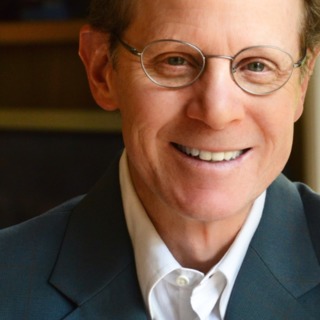
John Keag the professor and chair of philosophy at the University of Massachusetts He's written extensively in academic philosophy But his work has also appeared in the New York Times the Wall Street Journal the Paris Review and Harper's magazine Today John and Eric discuss his new book Sick Souls Healthy Minds How William James Can Save Your Life Hi John welcome to the show.
Hi Eric.
Thanks so much for having me I am really excited to have you on you're somebody I've wanted to talk to for several years now So I'm glad we got to make this happen We're going to be discussing among other things your latest book called Sick Souls Healthy Minds How William James Can Save Your Life But before we get into that let's start like we always do with the parable in the parable There is a grandfather who's talking with his grandson He says in life there are two wolves inside of us that are always at battle One is a good wolf which represents things like kindness and bravery and love and the other is a bad wolf Which represents things like greed and hatred and fear and the grandson stops and he thinks about it for a second And he looks up at his grandfather.
He says well grandfather which one wins and the grandfather says the one you feed So I'd like to start off by asking you what that parable means to you in your life and in the work that you do Well,
It's interesting when you first invited me.
I thought oh my gosh That's the story that my grandmother used to tell me except it was two dogs instead Yeah So I've given a bit of thought over the years and at the center of the story is an issue of choice the issue of choice about how you take up the circumstances in your life a Choice about how you interpret reality how you interpret the events of life and that it's up to you You have the choice to feed the good wolf My grandmother used to say that like the act of feeding is an intentional action and so if you're driving your car and you throw a sandwich out the window and a dog comes up and Accidentally eats the sandwich you haven't fed him in the way that the parable intends that it's about intention and you have the choice I'm reminded of the Holocaust survivor Viktor Frankl who also is the founder of Logotherapy saying that between stimulus and response there's a little bit of space and in that space is our freedom and That everything can be taken from a man except one thing The ability to respond to particular events or the ability to interpret one's reality And I think that this is what the parable is Getting at my grandmother would also say something to me that I think is more or less true She would say feeding a dog is a daily thing It's not once and done So there's a type of chance every day To feed the right animal and that is what life is It's just the time that we have to figure out how to improve the nick of time as Henry David Thoreau would say like that's what We do here now.
I think my grandmother's basically right about the daily Feedings,
But I think that if you think about it a wolf can go a long time Without eating and then gorges itself and I think that there are those events in life that are occasional that are momentous We really have a choice about who we become Where we tap meaning what we worship what we obsess over and those make us who we are in short That's what the parable means to me.
Yeah Well,
I love first that this was something that your your grandmother shared with you And I also love pointing out both aspects of that both the the sort of daily consistent feeding and These other sort of big moments.
I think about my recovery a lot and we're going to talk about that in a second because William James was named by Bill Wilson who founded a a when a a saved my life a couple times He said William James was an unintentional co-founder of a a you know because of his ideas But it makes me think about in my recovery,
You know,
People often ask me like well,
What was the big?
What was the big turning point and and I often say well Here's a couple turning points and those are important and at the same time They're not any more important than the thousands of choices.
I've made sense You know,
It's kind of both those things and I like that you point that out I mean in part my father and I say this in American philosophy a love story my father was a serious alcoholic and died at 56 of esophageal cancer and Never took that chance to feed the right beast Or did in certain respects but not in the respects that would save his life And I can tell you that at the end of his life He had an enormous amount of a regret which I now see is the scariest part of death It's not the death part that's so scary.
It's rather living a life that you're upset about at the end.
Yeah Yeah,
That certainly seems to be the case So William James is the subject of your book and as I mentioned he was Listed by Bill Wilson as one of the unintentional co-founders of a a mainly because Bill Wilson was so inspired by the varieties of religious experience,
But there's a great line in the appendix to the AA big book where I kind of thought we could start in which William James describes a couple types of religious experience one is the is the Type that he he lists throughout the book and the type that Bill Wilson had which are these overwhelming You know white light moments of transformative Spiritual experience but he also describes something called an educational variety spiritual experience which the founders of a a felt that was important to add in because people got this idea like if I don't have this Huge spiritual experience and I'm not having a real one and you know William James's point was yeah You can have those but you can also have this educational variety Which is one where you slowly progress you slowly learn and yet over a period of time you find yourself in a really different place And I was kind of curious.
I just thought I'd start by sort of bringing that idea up from a William James perspective I'm very interested that you hone in on this the sort of sacredness of the ordinary and in other words the Ways that we can orient ourselves to the universe that break us out of our standard insular Individualistic mindset and get us in touch with something a little bit bigger than ourselves And I think that that's what William James wants us to think about from beginning to end I mean he suffered from depression for much of his 30s.
He considered suicide very seriously and One of the keys for James is to feel connected to something beyond yourself before David Foster Wallace came along and said that our Insular mindset was our default setting for human beings William James was also saying pretty much the same thing in an essay called on a certain blindness in human beings He says that we have an innate tendency to think that we are absolutely the center of the universe and these educational devotional experiences or educational Spiritual experiences were habits that James took up every day to make himself a little bit more Aware of the universe at large and his part in it So in the varieties,
He says that there is a state of mind familiar to religious men and women I would add where you quote be as nothing in the waterspouts of God and it's just basically to be Silent in the waterspouts of God now you can say that this is a grand sort of thing But you can also in other words a huge transcendent mystical experience but I can tell you that what James believed is that you could get tastes of that on a hike up your local hill or you know listening to birds or Praying or doing any number of small acts where your Egoism is dislodged and you realize that the universe is not an antagonistic force,
But rather a thou James would call it in the varieties that it was a place where you could inhabit and live and Live with the universe rather than simply against it and you can do that in lots of little as you call them educational experiences Yeah,
I love that There's so many different directions I could go with that and I think where I want to go is Kind of back to the beginning with your book and William James,
Although I want to get back to Habit at some point because I love the way you talk about this in your book,
And I think you make some really Nuanced points around habit,
But I want to start with the title of the book six souls healthy minds What does?
William James mean when he talks about six souls so he makes this distinction in the varieties of religious experience between these two types of individuals or two types of mindsets and The healthy-minded is the person who is born into the world and who immediately thinks that the universe is some way fitted to his or her Purposes that they feel at home in the universe while the six-souled individual is born into the world and he or she feels themselves as alien that the world is an antagonistic place or as Albert Camus would later say is completely indifferent to our human purposes and that it's a Really frightening place and this is the six-souled individual and I think that while James is often regarded as the father of American pragmatism as a sort of go forth and conquer Philosophy a philosophy of action what we forget is that this philosophy of action his pragmatism Was put together and his psychology.
He was father of empirical psychology His psychology and philosophy was a response to his own sick soulness So he was the doctor who would cure himself and he did this through his philosophy and through his psychology Today we don't think about psychology or philosophy as saving your life But I think in William James's case as he struggled with suicide and depression the thoughts that he came across Could have a life-saving value and that's what I meant by the book in moments of crisis philosophy can respond in Meaningful emotional ways I think yeah I've always loved that six souls from William James and this idea of people who had to be Essentially twice born,
You know the people who were born once Who sort of were born?
Content and happy and felt like the world was a good place and those people who had to be Sort of born a second time and I am definitely in that ladder camp,
You know I would say for as long as I could possibly recall I think I felt like Hmm,
I don't quite fit here,
You know,
Something just isn't right You know the world and I just rub each other the wrong way and James had that feeling Through his 20s and 30s I mean he came out of this family that encouraged him to be free to exercise a huge amount of choice over his life and he cut he came out of a family that was quite affluent and When you're told to be free all the time It's no surprise that James felt constrained and felt anxious about the choices that he had And so through his 20s and 30s,
He didn't know which way to go.
He was paralyzed paralysis by analysis He also thought a lot about the fact that we are Mortal beings we have bodies That are subject to natural forces that decay and how do you face human finitude?
How do you face the fact that there's a inordinate amount of suffering in the world and when you suffer it seems like You're at the center of things once again as Wallace and James would say and I think that James is Philosophy begins to respond to that and say let's see if these six old folks can feel themselves a little bit more in harmony with a world that they once took as Alien in part when he answers the question in the 1890s his life worth living That's what James is telling his listeners at the Cambridge YMCA he's saying at a very deep level you are not alone and All you need to do is look open your eyes and you'll see that you're not alone And I think that's a very powerful message.
Yeah,
And I think that message of you're not alone in Feeling like a sick soul is so important I don't know how many people we would say are once born or need to be twice born or six souls or not It doesn't matter.
There's a ton who have this six old sense And I also think I mean James's answer to this question is life worth living is so Trenching,
I think usually we think about this question being answered in two mutually exclusive ways There's the yes and the no and the healthy-minded will always say yes,
Right every day the week the six sold When they're going through real sickness of the soul say no,
Right and they say no life is not worth living It's it like this is not the place for me Give me over to the blessed calm of non-existence and James had flirted with that no through his 20s and 30s and What he does in the 1890s when he's invited to address a number of suicides on Harvard's campus in this lecture Which becomes the essay is life worth living He says it's not yes or no is life worth living.
He says Maybe it depends on the liver You might think that it's flippant and in part James is kind of there's a bit of humor to James's comment But actually it's dead serious Because James is saying it depends it's up to you You get to choose the one you feed you get to choose it It's up to you to make life worth living in part And so when we're feeling disempowered when we're feeling real sickness of the soul We feel like we don't have freedom like we don't have power James is saying maybe it depends on the liver Is saying it's still up to you.
You still have the choice Now some of my students say to me.
I just want a yes.
Okay.
I just want the yes.
Tell me yes,
Dr Keck and I say maybe the maybe is better because maybe the maybe also says that Your feelings are not invalid.
You are not crazy to think that you are out of joint with the world Right,
But it also says maybe you should hold on and not throw yourself off the bridge Because the maybe is always there.
It's like hey,
Maybe maybe life is worth living Maybe tomorrow you'll wake up and see it slightly differently and maybe there are possibilities out there So,
I mean,
I'm curious to know what you think about his response to that or his answer to the question I agree with everything you said and I think the other thing about a maybe answer is that when you hear that you're like Oh,
Wait a second.
Somebody's kind of telling me the truth here Because when somebody just goes is life worth living they go Of course it is and you're like,
But it doesn't seem that way to me.
I feel like you're not hearing me When someone goes maybe you suddenly go maybe this guy's gonna get me Well,
Hang on like you make a great point you describe being at the Brooklyn Bridge and there being a I don't remember exactly What the sign said like something like life is worth living and you make the point like how many people are just Swated from jumping by that sign that says life is worth living.
You're like well But when you hear somebody state the truth,
You know It's what drew me to Buddhism so much when I first heard it as I went again Did Penn on you how you translate it?
Life is suffering life is full of suffering whatever you want to say But I felt like somebody is starting from a position I can get on board with You know and I think that is life worth living maybe feels like it starts from a position that feels to me like this is somebody who has Wrestled with the very real fact that sometimes it doesn't feel like it so I can trust and believe this person Absolutely.
I mean the sign wouldn't be at the bottom of the Brooklyn Bridge if there weren't those individuals who proved that This is not a universal.
I mean the sign is there for a reason It's because for many people they decide that life is not worth living and James is saying hey slow down Like let's just say maybe for the time being right the more I thought about it.
It's a deep philosophical point Which is I think James is encouraging us to realize That the most meaningful things in life where we tap meaning where we tap significance are Actually shot through with a maybe what I mean by that is James was urging us to realize that the universe is full of possibilities and That we get to explore them both at our own risk,
But also at our own reward That is what a maybe is it's a possibility and if I ask my students I say to them Hey,
What do you find most meaningful and they're like,
Well,
I fell in love with my girlfriend or I like playing soccer or I like playing music in other words Those are the things that get them up in the morning,
Right?
I say to them I say would that first kiss or would that love have been as Meaningful if everything was guaranteed about it wasn't there a big maybe isn't there always a big maybe at the base of love Right similarly with soccer.
Would you play the game if you knew the outcome already?
It's a big maybe and Similarly with music it's the variation and possibilities that you explore in music that actually are the most meaningful So don't tell me that a maybe is an important James says at the end of the essay He says the world is full of maybes and and I think that that's probably where meaning comes from James is suggesting I think to us I love that you say I think William James's philosophy saved my life or more accurately Encouraged me not to be afraid of life say a little more about that I mean there are a number of different aspects to James's philosophy that have helped me through some very very dark times So when I was 20 and I attempted suicide James was there basically saying Anyone who hasn't considered suicide he says this at the end of his life to his friend Benjamin blood He says anyone who has not at least thought about suicide or whether life is worth living Hasn't really had a full education and I thought oh well At least I'm not crazy and then when I look at James what I see is a companion and misery author Arthur Schopenhauer often Talks about this a companion and misery at least through his 20s and 30s if you look at James's letters through those times There's some deep suffering and I think sometimes Philosophy can afford us those individuals where we see.
Oh this experience that I'm having right now this dislocation that I feel this alienation that I feel is part of the human experience and individuals have the opportunity to Form lives as a response to that threat of alienation and James does this I think that as he works through his psychology,
Which is published in 1890 James is crafting a sort of how to manual on becoming better adjusted or as a means To being twice born if you're six-souled Now the psychology looks pretty the principles of psychology looks pretty dry But if you look in it,
James is noticing a couple of different things he's formulating a Theory of the emotions which hadn't been formed before or developed before Which was that the body keeps the score to use that famous expression in other words Our bodily positions how we use our bodies how we hold ourselves and what we do with our bodies Can significantly change the way that you feel James was ahead of his time when it came to yogic practice,
Right?
He was a big early supporter of yoga in this regard James also in the principles of psychology Articulated a theory of habit which really did a lot for my psyche James was not alone in the history of philosophy and thinking that habit was the great ballast of human behavior Aristotle thought that too But what James is interested in is how good habits are formed and how bad habits are broken And I think that that's what James gives us in the principles So let's go into habit a little bit more and talk about kind of what you just said there how good habits are formed and How bad habits are broken and then maybe we can go from there into?
What he saw is the downside of habit in some cases any kind of habit,
You know He saw a downside to but before we get to that Let's let's start with what did he have to teach us about how good habits are formed?
Well for better or for worse organisms are plastic in nature in other words they're malleable our bodies are malleable our neural nets are malleable and Donald have found out in the 20th century that neurons that Fire together wire together and James says that patterns of behavior instantiate themselves in our bodies and they prepare us to have those actions or have those events again So habit is a type of heuristic or a shorthand tool that allows us to negotiate our worlds in much easier ways than if we had to you know,
Start from scratch or reconstruct the wheel James's theory of habit says that activities that you do Form patterns in your body or in your way that you carry yourself He says that this is a good thing for most of human life,
But there's a downside to habit Namely that it can make us less aware of the surroundings in which we find ourselves.
So James was very worried about autopilot Okay in life.
So James was a big proponent of choice and freedom and he wanted to say that habit had its place But then also it should be guarded against if it got a life of its own or if it took on a life of its Own yeah,
He has a phrase that you use which is the irrepressible but subterranean force of habit You know and I love that idea that yeah habits are I guess it's kind of obvious But they're good when they're good,
You know good habits carry us along bad habits carry us along in a bad way and then I think the point that you were making is this Even the things that seem sort of neutral they deadness to life We just go through the motions or we go through autopilot.
I mean,
It's one of the great things about humans is That we can automate a certain amount of behavior and thinking Thinking but it's also equally bad news I think and I love that you referred to it you say this was a personal insight for me regarding the dangers of Midlife and so I'd love to talk a little bit about that beyond just broadly But why to you did it feel like this was a particular Danger of midlife.
I think when you are young you have all these great expectations and And then as you grow older,
I'm 42 now which won't seem very old to a lot of your listeners,
But When I was 20,
It seemed ancient and when you get older you realize that the expectations that you have that you've fallen radically short of them and That your life has fallen into a type of mundane rat race So you go to work only to make money so that you can buy gas so that you can drive your car to work and the cycle continues and then One day on the subway Perhaps you are looking around and a question comes to you That is tinged with weariness and amazement and the question is why like why the hell am I doing this?
And I think that that was one of the drives to go back into William James Additionally when the book came out I Was going through some serious health Problems.
I had a cardiac arrest at the age of 40 after running on a treadmill and it was a wake-up call after the bypass surgery that My habits needed to change that I needed to Stop drinking as much as I was that I needed to eat more that I needed to exercise less that I needed to Not be so obsessive about life That the habits that I had formed are just were killing me I mean it was a congenital issue,
But it was also an issue brought on by certain types of behaviors and I needed to change those those habits and James really has now helped me a great deal out of that James says that you should do two things that are difficult every day just for the habit of it or just for the practice and Sometimes the hardest thing to do is to break even rigorous habits In other words if you have a habit of treating yourself poorly and pushing yourself to extremes the hardest thing that one can do is simply sit and rest and And with bypass surgery you have no choice,
But James was there to say hey You formed habits now unfortunately or fortunately you have to break them.
I Think this idea of habit is so interesting because I generally think I've created good habits in my life that support me and my overall well-being and They do narrow the experiences That I tend to have you know so I've been really interested in this idea That we need a certain amount of habit and a certain amount of flexibility You know how do we have both you know how do I have enough habit that it supports my well-being enough positive habits?
And yet how do I have enough flexibility in life that things don't get so dull right?
I mean for James it was also an issue of consciousness It wasn't just the actions that you took But it's also the ways that you can look at the world and the willingness to look at different things Usually our angle of vision is so narrow that we see the world through a very circumscribed Frame it's usually a frame of utility It's usually a frame of like do we have money to pay rent are our kids doing okay are our partners doing all right?
Do I have clothes for tomorrow?
It's usually about me.
You know all about me all about I and James was repeatedly saying that consciousness is Mind-blowingly large I mean the abilities that we have to take in the world are actually quite astonishing our habitual lives narrow What we can see and what we can make sense of but he was always encouraging us to see beyond them he tells this famous story about going through a poor community in Appalachia and James goes by a house and he admits to his listeners He says at first this house looked so horrible.
I couldn't imagine how anyone would live there it didn't look at all like my Cambridge house and then James says to himself he says How narrow and how silly that?
Perspective is and that's the certain blindness in human beings.
I mean it just that you interpret reality through yourself Right and then James comes to the position.
He says overcoming that certain blindness would be something like realizing that others live lives that are as vibrant as your own and as meaningful as your own and Absolutely different from you but still meaningful and vibrant when we talk about habit.
It's not just an action It's also about the way that you take in the world.
It's about how you see the world Yeah You say in the book at one point our volition and the practical pursuits that structure and organize our lives is What keeps us from recognizing the full range of experience?
We regularly confuse what is urgent and immediate with what is actually important or miraculous Right and I am guilty of this in the extreme,
Right?
I confuse the immediate for the actually important and I mean whatever I urgently need to do in a day Takes over my entire world,
Right and I might very easily miss what is actually significant or meaningful I mean I think about your two wolves again,
And I think That the bad wolf the wolf of selfishness or the wolf of fear when the wolf of insecurity the wolf of cruelty this wolf is Fed if we don't actively choose the other wolf,
Right?
We're gonna fall into the wolf that you wouldn't want to find in a dark alley I mean like it's just gonna happen because of the fact that we are limited by our own vision Or we think we are limited by our own vision We're taught that the most important things in life are the most immediate the most,
You know local and that's simply not the case For James and for a number of other philosophers who have helped through the years right to quote James He says blind and dead does the clamor of our own practical interest make us to all other things I just love that idea,
You know Can we look beyond what seems like our to-do list or?
The things that we think will make us happy and and be present It's why for me I have chosen Zen as my spiritual practice because Zen is obsessed on this point You know Zen is very much focused on your direct and immediate experience like all the thoughts about it all the thoughts about everything that you need to do like just Experience what you're experiencing but try and experience it more deeply whatever it is.
It's why for me It's the practice that I have sort of landed on is because I become Imminently practical just what's the next thing that needs done?
You know,
Just let me give me a list of things that needs checked off I love it.
Let me just work my way through the list,
You know,
But that's not where the deeper experience of being comes from the comment blind and dead is telling if we are blind to this wider or deeper reality That we have a chance to experience the maybes of life,
Right?
If we are blind to those there's a very good chance That we're gonna reach the end of our days and discover that we haven't lived like Thoreau says I mean James is inheriting that American philosophical position that was expressed in Transcendentalism Live deliberately.
That's the message of Walton so that when you get to the end of life,
You don't discover that you haven't lived and when I Saw my father watched my father die I thought to myself it is quite possible to live as the walking dead and then at the end discover that you haven't really lived and that's terrifying and it really drives a Person into living more deeply or meaningfully I think so for example I think that Finitude and the fact that we only have a certain number of years and who knows when it's gonna at the end is actually gonna Come is an impetus to live more deeply if you only have a few more years your eyes get wide Or some people sense things more deeply I guess some people also shut down But I'd like to think that the end is an impetus to live now Yeah And I want to talk about something else that you say here in this section of the book where you're talking about William James kind of has a can-do mentality,
Right?
There's this will to believe,
You know There's a lot of you know taking life sort of by the horns But you say that this deeper experience of being is something that we can't just force To happen we can orient towards it we can block it but there's an openness To it and a receptivity to it that I don't quite know how you describe in the book But I think you use the word that that's unsettling in a way and I agree I feel very similar like I've hit this point in the last several years where I've gone.
Okay My will is a really useful tool for me in a lot of ways and yet when it comes to this deeper Experience of being there's a certain openness receptivity almost a grace That I'm not real comfortable with you and I both.
I mean I was brought up on Action,
I mean I was taught that if you work hard work yourself to the bone that Maybe you will be worthy of love.
I mean like and I was just taught that I mean my mother didn't intend that message to Come through but that's the one that came through and I love her to death She did a wonderful job if she's ever listening to this But um if we go back to that quote about to be as nothing in the waterspouts of God the first part of that quote is Telling it's to hold your will in abeyance and be as nothing in the waterspouts of God abeyance in other words you realize that the will can only take you so far and you actually do Nothing and you just receive okay and for somebody who's so used to Working and doing and going and going and going that's incredibly difficult because you feel if you're not acting then you're not worthwhile and that you're not worthy and One of the things that I've learned very recently Very very recently is that that is not the case that you can receive and the proper response To receiving life is gratitude rather than just working your butt off I will say one thing about the book about how it's structured is that the chapters Proceed in this way where you start at in the sixth soul you talk about William James's go out and conquer the world attitude with the will to believe and Then you get into consciousness and then like we say it's an issue of receiving sight seeing things again It's more passive and then you get into this issue of transcendence and hope and then wonder and what I was trying to do Is to very subtly suggest that these are the steps that one might take and for me the hope gratitude wonder Transcendence are really difficult.
I'm still way back I mean I'm still most days I'm still way back and just the work your butt off mode as I grow older I'm getting better or at least I hope I am.
Yeah Well,
I think that sort of in some ways mirrors my journey in some way certainly,
You know getting over alcoholism and addiction There was an element of very active work in that you know You go to meetings you help other Alcoholics you read the books you you know,
There was a real element of that and I still find you know If I look at my own spiritual life,
There is an element of will in it for sure and there's an element of openness and receptivity and it's both and in Zen we talk about this paradox all the time this paradox of like You need enough will to sort of practice and then yet you have to completely let go at that point and it is paradoxical It's challenging to do if it was just do one or the other it'd be easier to figure out like,
Okay Just will your way through it.
Okay,
I figure that out or if it was like just sit back and Do nothing and wait for things to happen.
Okay,
I could probably wrap my head around that too eventually It's the both that I think makes it tricky.
I think so,
Too I mean I very recently discovered a couple of William James's copies of Frederic Nietzsche and Nietzsche in the 19th century was talking about the same thing I mean Nietzsche's famous for the will to power and philosophy of the hammer and all this masculine action stuff But he also believes that we need what he calls the amor fati or the love of fate which is to say You can orient yourself to the circumstances that you are faced with This is not an issue of changing them some things you can't change.
I can't change my father I can't change the genetic disposition.
I was given I can't change lots of things But I can orient myself to those things in ways that I come to embrace them and even the most embarrassing or disgusting or Despicable things you can come to not only accept but understand it as just part of yourself of what you became Which is not simply resignation.
It's orienting yourself to the things that you cannot change in such a way that you feed the good wolf I Want to read a line that you wrote here and I want to talk a little bit about it You say when my sick soul struggles it is I think because I can't find generate or even feign the zest James is right that it can be found everywhere in activity perception imagination or reflection Which I have to say is little comfort when I can't find it anywhere So let's talk a little bit about what does that zest mean and I would say that that is also my primary Way that I feel sick sold anymore is it manifests as a lack of zest zest is at the center of a essay that James writes called what makes life significant and he says that what makes life significant is the zest of life that feeling of excitement the feeling of utter connection the feeling of having your eyes wide open and He was always on the lookout for it.
I mean James Might have talked about putting your will in abeyance But he was always on the lookout and on the move to find zest he bored very easily And I think that your question is a good one in other words How do you maintain interest?
How do you maintain attention?
How do you actually see something in new that you've seen over and over and over again?
So we're returning to the question of habit and the question of the midlife and When you're in midlife or the middle years you tend to Repeat yourself and repeat actions that you take over and over again,
And it's very difficult to see the newness in them It's very difficult to see anything particularly Particularly significant or meaningful or valuable about them just doesn't get you here Right and right in the solar plexus,
Right?
That's the feeling of zest and I think one of the keys to maintaining it I mean in part its imagination and it's the ability to See things anew.
I would go back to David Foster Wallace in this is water.
He says that he's standing in a Supermarket convenience store in a line and everybody's pissing him off because they're ahead of him But if he can just use a little bit of imaginative insight and to choose to think differently about this situation Then all of a sudden the line changes he notices people in the line.
He notices that the cashier is overtaxed He notices that the person who is behind him probably deserves to be ahead of him and the ability to see things differently I think is crucial in maintaining the ability to sense zest and James said that the real task of Philosophy is to think otherwise in other words to think outside the box and I think that also has existential value because it allows us to see zest in the ordinary or Experience zest in the midst of the ordinary.
I'll tell you something very personal which is before bypass surgery I Performed my duties in parenting very dutifully Right and I did the same thing every day,
But after a while I wasn't experiencing the zest and now after surgery For some reason even the little mundane things in life can sometimes I'm no Buddhist master here I'm not fainting to be but sometimes I can feel something new In an experience that I've had repeatedly But then I realize that I actually haven't had it repeatedly that there is newness,
Right?
You just have to open your eyes to it.
My grandmother would say you can't step in the river at the same place twice It's like she's a very very wise woman So I fully agree with what you're saying though about zest Yeah,
It's so interesting because I think my Zen training has taught me look more closely Just look again look deeper don't seek variety just look at what's already there look at it more deeply and that is wonderful and really good training and And I've started to also say hmm.
You know what?
I'm gonna introduce some novelty.
I'm going to Allow myself to do things that I don't normally do to try and Shake things up a little bit and can I come at this zest thing both directions?
One is to see more deeply into the ordinary moments to look at them differently,
You know And then the other is you know,
Can I just do a few more things?
There's a woman named Julie Cameron who wrote a book called the artists way and she has this great idea She calls him artist dates and she just says go out once a week by yourself and do something You wouldn't normally do take your inner artist out on a date and just do something a little bit different To sort of wake that and shake that person up And so I've sort of found for me that it's both those that helped me I've had periods in my life where I focus on the novelty.
Just give me something new.
Give me something new Give me something new and it's not very sustainable and and certainly not healthy in a lot of different ways It leads to a lot of less than healthy behavior And then I found on the other hand just hitting the same drum again of look differently is useful But I'm finding a little bit more success with blending the two I think that that's a hundred percent right and I think that if you look at James's own life in very normal interactions he's surprisingly insightful and compassionate and Look at things differently look at things differently.
Look at things differently I just got back from several months in Shakoro in New Hampshire where James summered and He bought that house because he said that he needed a little bit of wildness and he was he was a wild man My teacher Doug Anderson called him a Roman candle Yeah,
He put some expletives before the Roman candle and James was constantly on the move both looking for new experiences But then when he did have to settle down he tried to see things differently Yeah You say in the book something I like too Which is you said sometimes I try and identify what I find most zest list so to speak What leaves me feeling wholly numb or empty and then I try not to do that How does that resonate with you post-surgery?
I think that the need for zest becomes much more Crucial when you have a brush with death in other words,
You really look for the zest So this via negativa way where I say this is not giving me zest This is I mean,
I'm think about like Marie Kondo saying that you should throw away everything that doesn't give you joy But I mean,
This is kind of the it's like it's like this is not zest.
This is not zest This is not zest and then you kind of outline a space that has potential for zest and then you tread that that way That's been helpful,
Especially since the facts of life are that a lot of life Consists of very boring things and I'm not sugarcoating it.
It's boring.
It's mundane,
But Figure out what is really not giving you zest and then to move toward the path that you've created I think is a way to go that's funny as you're saying that I was thinking depending on the day Me following Marie Kondo's advice might mean I end up throwing everything away It's like well,
Nope,
It's all gotta go burn it all down burn it all I mean the truth of the matter is that I've done that several times already and it doesn't work out very well so I mean Burning it all down has its virtues But it's also very very painful difficult and I'd prefer not to have to burn anything else fully to the ground again I fully concur and you know I think for me there's been a realization as I've gotten older and hopefully a little bit wiser is like That idea of chasing what's new has a pretty limited shelf life to it Right,
Like you just you can only do that so long before it becomes very problematic You can't go very deep into anything if all the time you're just like this is not interesting throw it aside,
Right?
I think about this with relationships and also with well,
Let's just stick to relationships but I mean it's just in my limited experience of moving from one to the next and next and next and next settling down and committing to something is very difficult and Finding zest in the commitment I think is the task I mean I think it's the task of life in other words to find stability that is not deadening to find work That is not drudgery to find a relationship that is long But still interesting when we're talking about the balance between habit on the one hand and then novelty on the other I think we're talking about the same issue here Absolutely 100% and I think I have the same sort of realization in relationship as somebody who sort of Used to perpetually be like,
Okay.
I'm in this one.
It's not good enough I start looking for the next one,
You know I did that for a lot of years and I finally sort of realized like that's not gonna work you know,
Like how do you find the deepness the intimacy and the Interesting lists and zest in the commitment and I think if you look at also doing work That's valuable.
You've got to develop a certain degree of expertise Correct,
You know that takes time that takes focus that takes staying with something and you know,
How do I discover?
What's new within what's already here,
Right?
I mean I also think that there's something about flow that I think William James would have been very very much aware of and That flow states are real and they have will but they also have a type of receptivity or easiness to them I mean Laughter and falling in love these things you can't will yourself into but the will is not gone I mean these are choices,
But it's not the type of choice that you can force yourself into and so the habits of life that I formed when I was younger about pushing so hard and Thinking that this would be the only way for me to be lovable and that I had to earn everything That led to two destroyed marriages I mean other things did too,
But I'm sitting there after bypass surgery or I'm laying down after bypass surgery And I can't do anything.
I am just in the hospital room at Tufts and I'm thinking to myself I Almost killed myself like I pushed it way too hard and I did it for a reason But actually it was deeply counterproductive To work this hard,
You know and then Kath my partner Came in and she just laid beside me in the bed.
I couldn't do anything I mean,
I couldn't I couldn't move I couldn't make good small talk I was just a you know A piece of meat and she laid there next to me and moved over all the tubes and I thought oh my god I think she loves me and I'm not doing anything Yes,
That was a very deep realization That oh,
I don't have to do a gosh darn thing That there's a least of small part of the universe that is connected to me and I'm not I don't have to work for it I mean,
That's a that's a deep Thought at least for somebody like well our friend William James,
I think probably had that realization as well I think that is a beautiful place for us to wrap up John.
Thank you so much I have really enjoyed this conversation.
Like I said,
I've wanted to have you on for a while and I just had a gut sense It would be a great conversation.
It has been so thank you so much.
I really appreciate it Thanks,
Eric,
And I just want to say that I really admire what you've been doing here So thanks for having me on.
Thank you If what you just heard was helpful to you Please consider making a monthly donation to support the one you feed podcast When you join our membership community with this monthly pledge you get lots of exclusive members only benefits It's our way of saying thank you for your support now.
We are so grateful for the members of our community We wouldn't be able to do what we do without their support and we don't take a single dollar for granted To learn more make a donation at any level and become a member of the one you feed community go to one you feed dotnet Slash join the one you feed podcast would like to sincerely thank our sponsors for supporting the show