During the meditation is not actually the wonderful moment,
But much more is a training to become present with every moment.
And by doing so,
Again,
We end up being able to really inhabit our lives fully.
Welcome to the One You Feed.
Throughout time,
Great thinkers have recognized the importance of the thoughts we have.
Quotes like garbage in,
Garbage out,
Or you are what you think ring true.
And yet,
For many of us,
Our thoughts don't strengthen or empower us.
We tend toward negativity,
Self-pity,
Jealousy,
Or fear.
We see what we don't have instead of what we do.
We think things that hold us back and dampen our spirit.
But it's not just about thinking.
Our actions matter.
It takes conscious,
Consistent,
And creative effort to make a life worth living.
This podcast is about how other people keep themselves moving in the right direction,
How they feed their good wolf.
Thanks for joining us.
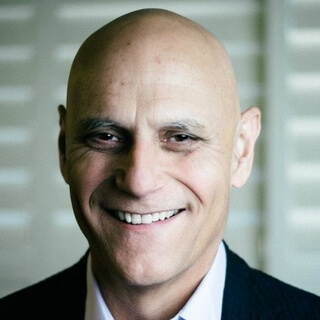
Our guest on this episode is Christopher Keevel,
An ordained Zen teacher who has been practicing since 1991 and teaching since 1998 in the lineage of his teacher,
Zen master,
Bo Mun.
Chris is also the managing director and founder of Wellspring Consulting and is the founder and host teacher of Garden Oak Sangha.
Today,
Chris and Eric discuss his book,
Finding Zen in the Ordinary,
Stories and Reflections.
Hi,
Christopher.
Welcome to the show.
Glad to be on.
Nice to meet you,
Eric.
Today,
We are going to be discussing your book,
Finding Zen in the Ordinary,
Stories and Reflections.
And we'll be talking about that.
We'll be talking about both of our Zen practices and lots of other things.
But before we get into that,
Let's start like we always do with a parable.
There is a grandparent talking with a grandchild.
And the grandparent says,
In life,
There are two wolves inside of us that are always at battle.
One is a good wolf,
Which represents things like kindness and bravery and love.
And the other is a bad wolf,
Which represents things like greed and hatred and fear.
And the grandchild stops,
Thinks about it for a second,
Looks up at the grandparents as well,
Which one wins?
And the grandparent says,
The one you feed.
So I'd like to start off by asking you what that parable means to you and your life and in the work that you do.
Eric,
Thank you.
And in reflecting on that parable,
I really came to a sense of it's about a relationship.
I think one of the things that I've been deeply touched by in my own growth and development and in the spiritual practice is how central relationship is.
And this is a relationship between a grandparent and a grandchild.
And the grandparent is giving something of meaning,
Something that the child can maintain and think about and can help guide their life.
And it's that relationship,
The grandparent being the giver and in the process being filled by that and the grandchild receiving and being filled by that too.
So it's a moment of teaching and growth.
And so that I think really came through to me as I went deeply into this story and tried to sense what is its meaning.
I reflected on other aspects as well.
There's certainly the part of attending to one's own life,
Spiritual practice,
And recognizing that there are certain ways of living,
Choices one makes,
Practices one engages in that really do support a more balanced life.
So there's a choice there in terms of the one you feed.
And then there's also the sense that there's really not two sides in the end.
And that it's not that there's one part of us that we need to starve so that the other one can grow,
But in fact it's through kind of a whole acceptance of each moment that leads us I think to our greatest presence and awareness.
And so the story also is good for a child,
But also at some sense there is the giving up of any sense of the good part and the bad part and entering into the whole and seeing what it teaches us.
I love the idea of reflecting on that relationship between the grandparent and grandchild as sort of being fundamental to the whole thing.
It's a really nice take.
I wanted to start by taking a couple lines from your book and just putting them out there and then sort of discussing them.
And the idea I wanted to start with is something you say,
So often what I'm doing is not what I choose.
While talking with an acquaintance at a party,
My eyes wander.
Is there someone else across the room I should be talking to instead?
When work appears impossible,
Other jobs seem better.
I could be an exercise trainer or just a stay at home dad.
Right?
And you kind of go on to talk about these different things and you say,
I have spent many years second guessing the here and now.
It's a loss.
Just choose this here and now.
Choose this route,
This time for rising.
Choose this job with its particularities.
Choose this person as the one I want to know.
Well,
When you read that to me,
It brings real emotion because it feels so central as an aspect in my life.
And that point,
You know,
What I'm doing is not what I choose.
The first thought of that phrase is this isn't the right thing for me to be doing.
But a deeper thought on that phrase is I have the opportunity to choose this moment.
There's a flip right in that statement where either I'm not doing the right thing or I'm not choosing what I'm in the midst of.
And for me,
That sense is so central to living life in a way that is whole.
And I say in that element that you just read back how I think we all struggle with missing our lives.
Our lives go by with so many mind moments when we are not actually being here.
And in particular,
Life has its challenges.
It's not easy and smooth sailing all the time,
Although it has its wonderful moments and challenging moments.
But trying to get outside of one's life and do something else is actually a source of great loss.
Yeah,
Yeah.
I love that the two elements you brought up there because there is the one which is simply letting go of this idea that what I want is somewhere else.
You know,
There's always a better moment than this one.
You know,
It makes me think of one of my favorite things in the world is Calvin and Hobbes.
There's a strip where Calvin is saying,
I'm happy,
But that's not good enough for me.
I demand euphoria,
Which makes me laugh because like you,
That has been so central to me.
But then I also love the way you flip that because a lot of times what I found is really helpful and I've just been talking with clients about this this week is about this idea of let's reflect on why you're doing what you're doing and get you back to approaching it from a point of choosing to do it because it's really easy to get into.
I have to,
But there's not a lot of things we have to do.
You know,
So we're choosing to do certain things and the more we can reconnect into that.
Here's why I'm taking my son to soccer practice tonight.
Not because I have to,
But because I value him,
I love him and I value his development.
Okay,
Now I'm actively sort of in a position of ownership in my life versus stuck in this,
Oh,
I have to do this.
It's a bit of a shift over in thinking,
But as I was reflecting on your comment and coming to speak with you,
I also was remembering back to things I've learned about managing addiction or avoiding addiction,
Which is related.
It's the attraction to something that is desirable but not good.
I think we're all addicted to different things.
In other words,
I don't think it's just a particular people who have problems with addiction.
We're addicted to food,
We're addicted to thought patterns,
We're addicted to certain life patterns,
The way we live our lives.
And what I've found is by paying close attention to my daily life and being aware of what arises as a result of my choices,
I can watch the consequences without judgment to see what happens.
For instance,
If I eat chocolate,
Which I enjoy from time to time,
I notice that it actually creates a mood swing in me that is unpleasant sometimes.
And it's substantial enough that I realize that it's not actually worth the chocolate plus the mood swing.
And so it's taken many repeats to get to a point where I'm actually not very interested in chocolate because of my memory of the mood swing at the moment when I'm thinking about engaging with chocolate.
And similarly in human relationships,
If I have a pattern of discord with somebody,
But I realize later that the pattern just kind of goes round and round,
Doesn't resolve,
I can see the moment in which I enter into the discord and choose a different way rather than just running down the same course of activity.
And those kinds of things have something of the same aspect as to what you just read in the book,
Which is attending to the present moment and what it actually is rising,
Rising there,
And then watching and seeing what rises in the next moment and the next moment and the next moment and putting it together in a chain,
In short cycles and long cycles to really understand the consequences of how one lives one's life.
And I think it's through that kind of attentiveness that we end up owning our lives more and therefore being able to inhabit who we truly are.
Yeah,
I think that's really well said.
And I think one of the key things in that is doing it without judgment,
Because the moment that we get into that harsh self judgment,
We're unable to really observe clearly and carefully,
Which is what you're describing,
You're describing,
I'm able to really watch this process,
I'm able to really see it.
And so being able to suspend that self judgment long enough to really watch and learn is so important and hard to do.
And sometimes that's why it takes lots of repetitions.
I think it's one reason meditation practice is so helpful.
It's not,
In my experience,
Always about becoming peaceful or calming the mind.
But it's about practicing being attentive to whatever is arising.
Sometimes people will say to me,
Well,
I can't meditate.
You know,
I've tried it doesn't work for me.
And people ask me,
You know,
So what do you do for someone who doesn't who can't meditate?
And I think that's a misperception of the fruits of meditation that,
At least in my experience,
There are some fruits that can allow one to get calmer and more peaceful in certain aspects of meditation,
Often when one first starts doing it.
But more it's a practice of being deeply attentive non-judgmentally to whatever is arising.
So if one is very worried about one's child,
Because they're in the vault with some thing that may be concerning,
Then one pays attention to what that worry is and its landscape.
And it may be hard to let that go and just go into some kind of meditation with no thinking.
Or if one is exhausted and feeling sort of the weight of exhaustion,
Meditation in that state is to deeply know exhaustion and what it is and how one experiences it.
And it's a training,
Therefore,
That during the meditation is not actually the wonderful one,
But much more as a training to become present with every moment.
And by doing so,
Again,
We end up being able to really inhabit our lives fully.
Let's go into meditation a little bit deeper.
How would you describe yourself?
A Zen teacher?
I would say a Zen teacher.
Zen teacher,
Yeah,
It's fine.
What is the basic instruction you give a beginning student on meditation?
I would say that it's helpful to sit in a very stable position.
If people can sit in a cross-legged position on a cushion on the floor or on a mat,
That's helpful because the spine is erect and not stiff but balanced.
And if that's not feasible,
Sitting in a chair with the feet on the floor,
So one has kind of a good center direct posture.
And a still balanced posture helps for a still balanced mind.
And then the simple practice that I often will tell people as a good way to engage in meditation and one that one can return to over the years is to count the out breath.
And so as one breathes in,
Then one breathes out and counts one.
Breathing in,
Breathe out and count two.
Breathing in,
Etc.
And count up to ten.
And after ten,
Return to one again.
And go back over up to ten and so forth.
It sounds very simple,
But I think what most people will find is that you don't get to ten before your mind interrupts and you're galloping off somewhere else.
And in that moment,
Part of the practice is to be non-judgmental but to be observant and say,
Oh look where my mind just went.
I'm thinking about dinner or what I'm going to be doing at work tomorrow.
And then bring it back to counting the breath.
And so it's not to see how many numbers you can count,
But the objective is to learn how to bring yourself back to a place of restful presence.
One will do it hundreds of times in meditation over and over again.
And again,
It's simply a practice of returning to one's center and learning that process.
And so that can be very helpful when one is in a tense situation in life or facing something that's particularly uncomfortable to bring oneself back to one's center again.
And this practice then helps develop that sense of presence in all sorts of different mind states.
A moment ago we were talking about when in meditation,
If you're feeling really exhausted,
Is to get to know what that exhaustion is like.
How do you transition somebody from,
All right,
I'm really focusing on the breath and everything I'm doing is I just come back to the breath.
That's the primary thing.
Into a practice of one that you just described where I'm beginning to look more closely at what's arising.
How do you move from just being focused onto the breath into something more open like we were talking about before?
Well,
There are a range of different meditative practices and following the breath is a very good one for people who are just learning it.
But I would take somebody through a range of different practices.
One is just being,
Just sitting and bringing oneself to a still presence with no counting or no methodology.
That's hard to sustain over much time,
But it's a beautiful one as well and worth practicing.
Another is there's the metta prayer for oneself and other beings and meditating on kindness and attentiveness to other beings can be helpful.
But all of these are a way of training the mind and heart,
The heart-mind,
To be present with an activity that brings one into the present moment.
And what I found is in meditation and on meditation retreats,
My general experience is that nothing is happening.
It's quite different from some other activities I've engaged in,
You know,
Yoga,
Spiritual dialogue where there's a lot of interpersonal fascination and excitement.
Simple meditative practice has generally felt to me that there's nothing happening.
It's just like there's no change.
I can't really put my finger on anything that's changing.
I find that,
For instance,
I go for a three-day or a week-long meditation.
Afterwards I start noticing that I'm living differently.
I notice that I am taking my life up in a somewhat different way,
Subtly but very consistently.
So differently from some workshops I've been to over the years where I feel like I had an incredible high but then it dies away three days later unless they're like,
I don't know what happened there.
This focus on the meditative practice seems to have nothing happening during the actual practice of it,
But that life actually starts to change.
And so when you say,
How do you take someone from that practice to the broader sense,
I think it happens on its own accord as one engages earnestly in the practice because the practice is a millennia-old tradition that is actually a way that we retune our entire inner psyche and wiring to be able to engage with our lives differently.
I want to ask you about your writing because the book is a series of short reflections,
Vignettes,
I would say poems.
I think I probably came across you on Twitter,
If I'm guessing,
Who knows how I saw you there,
But you also write on Twitter and you have a lot of classic Zen poets.
You have this ability where you're sort of taking the present moment and observations of it and you're tying it to something deeper.
And I'm just kind of curious,
Do you have a process for seeing the world that way?
I know that it emerges out of your deep meditative practice.
The reason I ask is I think poets see things in a very interesting way.
And the more that we can learn how poets are seeing things,
The more we can learn to see that way in our own lives.
Well,
Part of the training that I've engaged in in Zen is Koan study,
Which is the study of these traditional short little stories or vignettes that come through the Zen tradition over many centuries.
In these I've engaged with my teacher that I've learned from now almost 30 years.
One that comes to mind is one where the Zen teacher says to the student,
Step from the top of the 100-foot pole.
Step from the top of the 100-foot pole.
That's actually all that there's in that particular little engagement.
And it sets up an investigation of what is meant by that.
This responds then to your question about what my process is of learning to see the moment in a way that maybe goes deeper.
Because at first it sounds a little nonsensical or maybe there's somebody who's a circus person or something's going on.
But then if you take it into yourself as something real,
One realizes that there's moments in one's life when you feel like you're sort of on the top of something really tall and big.
But to move anywhere there's great risk.
It's times when one's holding on to one's own sense of personality.
There may be times when it's challenging to try to gain some access to something,
Difficulty in speaking to someone in a way that creates connection.
Stepping from the top of a 100-foot pole then is a sense of engagement into that space.
But the story at the top of the 100-foot pole is less important than the process of investigation to see what that little story means for oneself.
And with Cohen's study where one takes up many,
Many of these stories,
It's a repetitive process of seeing what is the deeper meaning in each of these stories that come through the Zen tradition.
And by doing that I think it's a training in how do I reflect on many ways of seeing a situation and bringing them to the deeper meaning.
And so in the writing of my book I did it from a place where it was arising from that meditative investigation.
You try to see a series of vignettes and stories from a place of deeper knowing.
And in the same way when I write my Twitter posts or tweets,
I try to write from that place as well.
My hope has been that there's lots and lots of books now on Buddhism and how to practice this and that and explain the practice and they give you a lot of different things you can do.
But I find that there's a fewer written materials when when you read them they draw you right there into the present moment.
They are actually the practice happening in front of you,
Inside of you,
Rather than a description of what you can do in order to get somewhere with it.
And so the book was set up to try to be an experience of the practice rather than to tell people about the practice.
And that was also my desire to try to have that deeper meaning arise in each of the vignettes so that it could draw people into their own discovery and their own thinking for themselves.
Yeah,
It's very much in the direct pointing style,
Right?
You can only point at reality,
Somebody has to experience it,
But it does have that nature of it.
As a koan student myself,
I recognize a lot of koans that sort of weave their way through both your tweets and the book.
It's really well done.
I want to hit a section of the book,
Though,
That's a little bit more reflection on are there stages along a path towards enlightenment?
And I really love this because you say I've heard many answers and you detail,
I don't know,
Seven or eight different answers to this question of,
Are there stages along a path towards enlightenment?
But I think we could even phrase that just to say,
What is spiritual growth about?
What does that even mean?
Where are we headed with this?
Let's just open that topic up to sort of explore for a minute.
Well,
I remember an argument I had with my brother a number of years ago.
He is a Taoist practitioner and he was talking to me about the various different stages that he was aware of within Taoism.
And I at the time was really focusing in on kind of a non-dual approach that is part of Zen.
And it seemed to me that there is a unitary aspect to our lives.
In fact,
There's no stages and life simply arises and it is this.
And once it's this,
That is it.
And yet,
As I reflected more deeply over more years of practice,
I read many more texts in the meditation and Buddhist traditions,
I started realizing that there were a lot of different opinions and ideas put forth on this question of,
Are there stages?
And right in the midst of the Buddhist practice,
There are the ten stages or the four different positions,
Or the gradual and sudden process,
And a variety of different sort of ways of commenting on this.
And yet,
There's also this unitary sense of there are in fact no stages.
And so I thought,
Rather than come down in one place to try to say,
You know,
This is my philosophy on enlightenment or a path of spiritual growth,
Why not explicate the fact that there's all sorts of ways of seeing this?
And in fact,
You're right,
I list off in a series of different statements,
You know,
Here's one that comes out of this source and this text,
And here's another one that comes from this tradition.
And what I end with,
I think,
Is,
You know,
Well,
I think I'm tired,
You know,
I got to sweep the floor and wash the dishes.
And recognizing that all of it is a philosophization,
And in fact,
Our lives come down to activity and presenting ourselves through that activity.
And so I think that the ideas about growth on a path of spiritual development are ideas and can be useful,
But are probably not able to touch what is really going on.
There's a wonderful phrase that George Bowman,
Who I've studied with for so many years and a teacher,
Says,
Which is,
The mind that asks the question is not the mind that will find the answer.
The mind that asks the question is not the mind that will find the answer.
And that's been a good reminder to ask the question,
But then let the deeper meaning emerge on its own.
You say at the end of that section,
The only yardstick I can really apply to spiritual growth is my own personal experience.
And if I am changing over time,
Then the yardstick is changing and can't be used as a tool of measurement.
And I like that.
And I think,
Like you said,
I think there's a value in recognizing some stages,
There's a value in recognizing that there is a path.
And there's also just now,
Boom,
Here it is.
There's a couple of these ideas that I thought we could explore a little bit more that I really liked.
One is this idea of spiritual growth as a helix.
Say more about that.
I have a different analogy for that,
But I want you to explain it and then we can sort of talk about it because this is a really interesting one.
Yeah,
Well,
I think one of the things that really struck me over a number of years of practice is I was,
Again,
I have a number of dialogues with my teacher in the book.
And one of the reasons I included that is because spiritual practice is so relational is really what I've learned,
That I don't think we gain development and growth in spiritual practice without the interaction with other people,
With their inspirations,
With them being a burr under the saddle,
With the challenges.
And the relationship with George Bowman,
The teacher I've worked with all these years,
Is explicated in the book as a demonstration in a way of this relationship has been profoundly important for my own growth and development.
And so at one point,
I think he describes spiritual growth kind of as a helix,
Something that a helix coils,
Goes around in circles but also rises or moves in a path.
And it was in response to a realization I had after many years of working together with him that we were repeating our conversations.
And frequently,
I wouldn't remember them that well and I would think I discovered something really important.
But I was also then going back through my notes as I was really working on this book and trying to figure out sort of what my path had been.
And I was a little bit chagrined to find that there were times two,
Three years ago when I had been having pretty much the same insight as I thought was entirely new on the day when I was reading it back again.
So I was like,
Wait a minute,
What's really going on here?
Is this just all kind of tomfoolery?
And so his likening it to a helix that we move and yet we cycle and that there's a combination of moving forward and cycling around that's going on all the time is kind of a beautiful way of thinking about it.
I love that because I think the other way that we can get discouraged on the spiritual path or the personal development path is that the same issues come up.
We get stuck in what feels like the same place.
We're like,
Well,
I thought I got through this,
You know.
And the analogy that I like is very similar to the one you make,
Which is being on a spiral staircase,
Right?
If you're on a spiral staircase and there's a picture hanging on the wall,
Every time you go around,
You're going to see that picture.
Ideally,
You're back there with that same issue,
But you're at a slightly higher level than last time you visited it.
And you know,
If it's one of your big ones,
You're going to come back around to it and hopefully you're slightly higher level than last time.
But boy,
The terrain looks very similar there.
But I love what you say about this.
You say,
Our practice is about returning to the same spot with no opinion.
But it's actually like an alpha helix.
I return to the same place,
But it's been refreshed.
I meet the same places.
I've been here a million times and I've never been here before.
And that point of I've never been here before,
I find also really helpful because I realized that if I just pay enough attention,
I realize I actually haven't been here before.
That it's my mind that's constructing it to be a repeat and that the mind constructing it as a repeat in many ways is the holding of me into that pattern.
And if I pay close enough attention,
I realize,
Wait a minute,
This is in fact not a repeat.
This is have new characteristics.
And so that can also be a releasing aspect.
Yeah,
That pain really close attention again.
It makes me think of that line.
You can never step in the same river twice,
Which is true.
The river is different than when you last stepped in it.
And yet when you step in a river,
It has some fundamental characteristics that you're like,
Well,
My foot's wet,
You know?
So it seems similar,
You know,
But there's differences.
And that's why the paying close attention is so important because the nature of our brain is to take shortcuts.
It's to say,
Oh,
I've,
I've seen this before.
You know,
Our visual site works this way,
Right?
It's just,
I'm looking at something in front of me.
I've seen it a hundred times.
I don't really see it.
What I was sort of getting at with your work around some of the poetry that you do is that I think what poetry when it's done right,
Points us towards,
It teaches me how to look closely.
How do I look at this same moment I've been in all these times before,
But look more closely and thus new things are revealed.
I had a beautiful moment in meditation this morning.
I've been working on a koan,
Which is just becoming entirely still.
Statement of the teacher is,
You know,
Go through,
Become entirely still,
A pure white strip of silk.
And there's a question of what that means.
And I was meditating this morning,
Somewhat buffeted by the challenges I was imagining of the day.
And I sit in meditation in front of a window and often I'm looking down.
But I looked up and my eyes went out the window to a large maple tree across our yard.
And my mind at first was like,
Oh yeah,
There's that maple tree.
And yet I was engaged in this seeking of what is this moment of entire stillness and a pure white strip of silk.
And I noticed that the entire maple tree was rustling gently in the wind.
The whole thing was in motion.
And yet it appeared to be still.
And there's something that really opened up for me,
Recognizing that that was really the shape of our lives.
That it looks like we're just,
You know,
Same old,
Same old,
Going to work again or doing the same routine.
And yet this sense of everything's moving and rustling and shifting constantly was a wonderful reminder.
That is a great reminder.
And that's a great koan.
I love some of the language in these koans.
That made me think of one that I worked on,
Which is there's a line from it,
Sitting in the room in absolute silence,
Mind filled like still water.
I have not been doing Zen as long as you have.
I've done a bunch of different things,
But Zen is my recent one.
I just passed my hundredth koan.
Wonderful.
That's beautiful.
Yeah.
Yeah.
In the tradition I'm in,
There's a hundred miscellaneous koans.
And then now I'm into the gateless gate.
I know these koans.
It's a very interesting way to meditate.
I was reading something by a contemporary Zen teacher who was a little frustrated by some of the old koan.
So he decided he was going to write his own koans.
This was a fellow that had practiced for many years.
But he found it was tremendously difficult.
And I think these koans come down with,
You know,
Centuries of burnishing and tuning in order to actually create a space for us to engage in.
So they've been really wonderful and helpful.
And each one is different.
It's quite remarkable to engage in koan study.
There's a story in the book that I really liked that I was wondering if you could tell us,
Not because it paints you as a great person,
Although it does do that,
But there's something more to it that I think is a beautiful story.
And it's a story about you being a young man involved in athletics.
I don't know which sport it was,
But you guys are riding the bus home after a game.
This was quite a moment in my life.
It was actually soccer.
It was probably when I was in my junior year in high school.
And we would go to way games with the soccer team.
And there was a bunch of us,
Maybe 30 boys.
And on the way home in the bus,
There had been a tradition that when we won a soccer game,
A few of the boys,
The tougher,
Rougher boys,
Would walk back in the bus and pick some hapless boy and reach down into his back of his pants and rip his jockstrap off forcibly,
Which of course was not at all comfortable for the boy,
Ashamed him,
And then hold the jockstrap up in the air and shout and sort of get the bus to kind of like shout along with them as a celebration of the victory and what they were doing to their boy.
For me,
It was a brutal and upsetting practice.
And I found that at some point during one of those rides home,
I stood up in the walkway on the school bus as these boys were coming toward the back and said,
If you're going to rip anyone's jockstrap off,
You're going to rip off mine.
And I just kind of stood in their way.
And they were angry,
But turned around and went sat down.
And when we got back to the school,
Those coaches stood up who had been sitting up in the front of the bus and not ever paying attention to this ritual.
And he announced,
We're not going to have any more jockstraps ripped off,
Basically stopped the practice.
For me,
It felt moving because I felt like it had been this energy arising in me to try to do something about an unjust behavior.
But the remarkable thing was years and years later,
When I was sitting in my office one day,
I got a call on the phone out of the blue.
And the fellow on the other end of the line said,
I'm a therapist and I'm working with a client who told me the story of how actually you kept his jockstrap from being ripped off in the bus and how meaningful that was to him.
And I have a practice,
Said this therapist,
Of trying to do one random act of kindness every day.
And I asked my client if I could call you and tell you about this story.
And he said yes.
And so I'm calling you just to relay how meaningful that was to the man who was a boy at that time.
And I wrote that in the book because of the moment of connection over years that happened.
I didn't consider myself to be a particularly out in front person in high school.
I wasn't on the first string generally on the soccer team and wasn't the top of the pack in any way.
So that impetus to stand up sort of came almost before thinking about it.
It was one of those unmeditated responses of like,
This is just wrong.
It was an example of how our deeper selves move us,
Move us to take action to stand up for something.
And I was using that as an example of kind of that inner self and how it operates.
Yeah,
I love that story because it just shows that we never know the deep impact that things have.
You know,
Just by fluke,
You got to know that that one thing had that impact,
But we just don't know.
And I love the way these things circle around.
Like that therapist is committed to an act of kindness.
So that therapist reaches out to you,
You know,
Now you know about this thing that you did.
Now you tell it.
I mean,
It's just all these positive actions just radiate in all these different ways.
You know,
We're not privileged most of the time to see them.
I wish more of the good that everybody puts into the world because most people put a lot of it into the world all the time.
I wish it was somehow like you could see it,
You could visualize it,
You could see some chart.
Here's the ripples of all my kindness out into the world,
Right?
I think if we could see that it would be beautiful.
And so we just have to on faith sort of go,
Well,
I guess it's happening.
So I love that story because it says,
You know,
Yeah,
It's happening.
I love the way you express that.
And I think it's a deep encouragement for all the good that we all do in the world.
One of the things we say at the one you feed a lot is that there's no shortcut to lasting happiness,
Right?
We've got to do the work to improve our lives.
But this can be really challenging to do without some support.
Our lives are busy.
There's a lot of things clawing at our attention.
And we might have ways of working with our thoughts,
Emotions,
And behaviors that are not very good for our well-being.
So if you'd like help working on any or all of those things,
I've got a couple of spots that have just opened up in my one-on-one coaching practice.
You can book a free 30-minute call to talk with me,
No pressure,
And we get to know each other at oneyoufeed.
Net slash coach.
So let's talk about a Zen phrase that I love.
And it's sort of fundamental to our Zen training.
It's great faith,
Great doubt,
And great courage.
I think in my tradition,
They reframe courage as determination.
But same thing,
Great faith,
Great doubt,
Great courage.
What do those three things mean to you?
Because they sound sort of contradictory at first.
Faith and doubt,
Like how do those go together?
Yeah.
These actually have quite a history in the Zen tradition and were developed,
I don't know,
Five,
Six hundred years ago and have been passed down from teacher to student through communities over the centuries.
And faith is a central urge to find.
It's the seeker.
It's the sense of something is there,
Something that doesn't go away.
And I think for many of us that are interested in a spiritual practice and know that there's something deep that we seek,
There's a faith born of resonance.
I know that there's something and there's value in seeking in that way.
And so I see it as quite different than a faith,
Which is like I need blind faith or I need rote faith or I'm just going to say I believe.
And that's the way I follow the statements that I should be following.
But more a sense of faith that arises because of one's own direct experience,
That there is something there that is deep that draws us forward to kindness,
Goodness,
Presence,
Connection,
All of the things that I think we have inherently as our birthright.
Doubt is something that plays off of the faith in that one never fully gets there.
At least in the Zen tradition,
One of the things that I find tremendously helpful and powerful in Zen,
Although it is a conundrum,
Is that one can have great faith and very profound awakening experiences and can learn deep truths through engagement in the practice.
And yet it's not long before one comes back around and it all seems to have fallen apart.
It doesn't work anymore or one is of a different mind state.
And this is a regular process and leads into a sense of doubt of what are we doing here?
Is this all just a kind of a silly hoax?
And in fact,
Anything that is a mental construction,
Anything that is a human created activity has charlatan aspects.
And therefore,
When one looks at sort of the activity of life,
It causes doubt to arise.
It's like,
I am not pure.
I do bad things.
So do other people around me.
I try to get someplace good in my life.
It doesn't always work.
What are we doing?
This seems like a mess.
This is actually our condition.
This is the truth of our condition.
It's not that one has great faith and one lives in the great temple of truth and beauty for the rest of one's life.
It's that one oscillates and struggles between this profound sense of there is something here and it doesn't go away that is deep and profound and meaningful.
And my life keeps getting messed up and I don't know what to do about it.
Those two then require courage in order to navigate that path because it's a great conundrum.
And if one truly wants to explicate one's faith and find a way,
And if one has to grapple with the honesty of one's doubt and not pretend that this is something that one struggles with,
Which I think anyone who's truly seeking does,
The courage is required in order to really carry oneself into that inquiry over and over again,
Which then I think leads one through this helix we are talking about.
But it's really the great faith,
Doubt,
And courage,
Or as you say,
Determination.
I think the reason why the word courage resonates for me a little bit better,
Although I think it's a translation of an Asian word which came perhaps from a Sanskrit word,
So I'm not sure that either courage or determination quite get at the original concept.
So either one can be used.
The courage I find in my life is necessary.
It requires courage to be totally present with what is actually happening.
It tries tremendous courage often because it is not the thing I really want to look at,
And therefore with that courage I can engage my faith and live with my doubt and continue to move ahead.
That just made me think of one of my favorite poems of all time.
It's very short.
I'm going to read it.
You might know it,
But I think it sums up what you said so well.
It's by William Stafford,
And it's called The Way It Is.
There's a thread you follow.
It goes among things that change,
But it doesn't change.
People wonder about what you are pursuing.
You have to explain about the thread,
But it's hard for others to see.
While you hold it,
You can't get lost.
Tragedies happen,
People get hurt or die,
And you suffer and get old.
Nothing you do can stop times unfolding.
You don't ever let go of the thread.
That's beautiful.
It also says to me,
When it says you don't ever let go of the thread,
In some ways one cannot let go of it.
One might pretend one has let go of it.
One might decide to go away from it.
But one is always connected with that thread.
Part of it is the process of remembering that one is actually connected with that thread.
The piece about great doubt that has always resonated with me is just to think of that as great questioning.
Like this really deep,
Like,
What is this?
What is this?
Whether it be the koan I'm practicing,
Whether it be the moment I'm in,
Whether it be the relationship,
But really,
Like,
Just deeply questioning.
It keeps changing,
And the questioning continues to refresh us to determine what is true now.
There's another section of the book that I wanted to touch on briefly,
Which is the principle of the secret or the emotional imperative.
Can you share what that means?
Well,
When we are engaged in anything that is challenging in life,
There is a sense of the I,
That you can't talk to me like that,
Or,
You know,
I'm not chopped liver,
Or I need to stand up for myself or get trampled.
And this emotional imperative arises for most of us a number of times a day.
It can be subtle and light.
It can be powerful and strong.
It can come up in an argument with someone or,
For me,
You know,
A client that I have in my consulting practice that maybe doesn't understand what we're doing or respect our work,
And I can feel really upset and disregarded.
That sense of standing up for oneself in an overblown way.
I'm not saying,
You know,
Having a good sense of self-confidence,
But there's this kind of imperative that operates in all of us because of the strength of the I am that operates.
I am Chris Keevel.
You are Eric Zimmer,
The sense of defending the self.
And that emotional imperative,
I think,
Drives so much of what we do.
And the secret underlying it is that it's a mirage.
It's an extremely powerful,
Extremely convincing mirage.
And that we have the opportunity to let it go and recognize that,
In fact,
There are thousands of ways of interpreting any given situation.
And that the I am self interprets it in order to defend that sense of self,
And that it arises over and over and over again in our human form.
I used to think,
When I was younger and doing my Zen practices,
That I would learn a way to not have to deal with this part of life because I would get spiritual and I wouldn't have to have this reaction to a sense of,
This is me.
I practiced and studied,
Letting go of one's ego and so forth.
And yet,
That's actually not how it works.
The way we operate,
I think,
Until we pass out of this life is this emotional imperative arises regularly.
And it's often hard to tell quite what it's doing or how to corral it.
And similar to earlier in the podcast where I talked about counting the breath and constantly bringing oneself back,
There's the practice of bringing oneself back to center when one is gripped by the emotional imperative.
To bring oneself back to realize that this too is a mirage.
And in fact,
Things are much simpler than they may appear.
And I can just take the next step forward.
And in many ways,
Things tend to work out as one does them.
And so that's really what that phrase is driving at in terms of the emotional imperative.
Yeah,
I love that you say after that,
The secret is the greatest power and strength will be found where you most don't want to go.
It's that treading into the places we don't want to look at,
We don't want to see.
And to say that,
You know,
It seems that to go into those places we most don't want to see,
You know,
Let's say if I got fired from my job and,
You know,
I know with things that are that painful,
I tend to deflect and I can't even think about it.
I do something else.
And to practice going to what the actual experience of that is feels like it's the scariest thing in the world.
I realize that I and I think many of us throw up all sorts of dust and smoke screens,
You know,
Get angry at somebody or eat extra or get sleepy or sick or,
You know,
There's all sorts of deflections because it feels like it's the most devastating thing that one could do is to go right to where one is feeling that great distress.
And it does take fortitude,
Which is the courage I was talking about.
But when one goes to that place,
That place one most doesn't want to be,
It doesn't actually make it feel better,
But it avoids all of the junk that arises around the deflection and the escape and the telling oneself stories that then trap one in all sorts of additional repercussions either within one's own self or with one's relationship with others.
And so if one can hold tight in the midst of that great distress and stay present and make,
You know,
Thoughtful choices about how to walk forward,
It's remarkable about how one's life calms down dramatically.
That's really well said.
You and I are going to continue in the post-show conversation.
We're going to talk a little bit about,
Well,
I'll just tease it like this.
It's a section of the book that says,
I didn't think it would be like this.
So you and I will do that in the post-show conversation.
Listeners,
If you'd like access to the post-show conversation,
Ad-free episodes,
A special episode I do called a teaching song and a poem and other member benefits,
And you want the joy of supporting a show that you love,
Go to oneufeed.
Net slash join.
Christopher,
Thanks so much for taking the time to come on.
I've really enjoyed this conversation and I really enjoyed your book.
Thank you so much,
Eric.
It's really a treat.
I very much enjoyed it.
If what you just heard was helpful to you,
Please consider making a monthly donation to support the One You Feed podcast.
When you join our membership community with this monthly pledge,
You get lots of exclusive members only benefits.
It's our way of saying thank you for your support.
We are so grateful for the members of our community.
We wouldn't be able to do what we do without their support and we don't take a single dollar for granted.
To learn more,
Make a donation at any level and become a member of the One You Feed community,
Go to oneufeed.
Net slash join.
The One You Feed podcast would like to sincerely thank our sponsors for supporting the show.