Well,
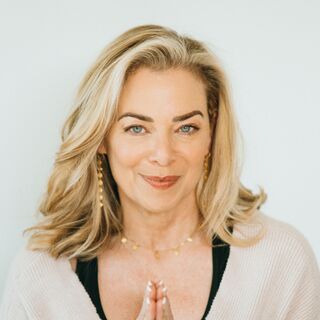
Hello and welcome to day eight of the Boundaries Challenge.
I'm your host,
Terri Cole,
And I am a licensed psychotherapist,
The author of Boundary Boss,
And the creator of the Boundary Bootcamp Course.
So yesterday we talked all about auto-advice giving,
And today we're talking all about boundaries and denial,
Or as I sometimes call it,
The lies we tell.
So we're going to be uncovering the lies you might tell yourself to avoid conflict or drawing boundaries.
Now,
This includes making excuses for other people's bad behavior,
And empaths are particularly vulnerable to this because we feel things deeply and have the capacity to put ourselves in another person's shoes.
So let's dive deeper with some examples of excuses.
Someone might say,
He's under so much pressure at work right now,
Which is why he screamed at me last night.
Or I know she doesn't mean it when she says hurtful things because she is always so emotional after fighting with her girlfriend.
So this behavior can also be fueled by fear.
For example,
If we're talking about a work situation,
You might think,
I'm afraid I'm making a big deal out of nothing.
Or if I go to human resources about Bob's inappropriate behavior,
I'm afraid I will be labeled as a drama queen or a troublemaker.
So we also can tell lies about ourselves to let ourselves off the hook.
We can actually lie in life,
Which is also having a disordered internal boundary.
So let's dive a little bit deeper.
I'm going to share a personal example with you.
When I was younger,
I was still in college.
I was going to therapy and I thought it was okay to make up what I thought were little white lies and make excuses for myself about things rather than owning up to it.
And I will never forget the therapy session where this huge light bulb went off.
I remember casually mentioning to my therapist Bev,
Oh,
I was late for work this morning,
So I told them I had a flat tire.
And at the end of the session,
She says to me,
Okay,
So in this session,
Terry,
We've established that you are a person who lies.
And that just hit me kind of different.
That hit me in some kind of way where I was like,
Oh my gosh,
I really don't want to be a person who lies.
I want to be someone who knows how to tell the truth.
But I grew up in a family where you weren't allowed to be angry.
So people did not directly tell the truth about the way they felt or what they thought,
Which is why I was in therapy so young.
So I worked with Bev for a long time to really become someone who kept my word and to become someone who expected others to keep their word as well.
So I stopped making excuses for other people's crappy behavior,
But I also stopped making excuses for my own.
Now this required unlearning and discipline and a certain amount of courage to just face the truth about what someone else is doing.
Because here's the thing about the other examples that we talked about.
If someone is under a lot of pressure at work and they do scream at you,
If it's your partner,
If you love them,
If they're normally not like that,
It's okay to say,
Hey,
I understand you're under a lot of pressure and I'm here to talk about it,
But I'm not here for you to take it out on me.
So it isn't like we're expecting our partners or our friends or our family to be perfect.
We just want to learn enough about disordered boundaries that we don't make excuses for their crappy behavior or take the blame for other people's crappy behavior.
So for today's daily mindful action,
I want you to think about this past week or really,
You know the players in your life,
You know the circumstances that you find yourself in,
But I want you to make a list of any excuses that you made for other people or for yourself to keep the peace,
Right?
To avoid speaking up,
Whether it's about what someone else did or whether it's about you.
Just to repeat that for clarity,
I want you to make a list of any excuses you made this week for yourself or for someone else to keep the peace or to avoid an uncomfortable situation.
If you need a prompt,
You might like to start with,
White lies I told this week to keep the peace or someone I let off the hook this week.
We will be doing this exercise for about three minutes.
I will keep my eye on the timer and I'll let you know when it's time to come back.
Okay,
Please finish up what you're writing and let's check in.
How are you feeling right now after writing about these big or small lies that you might be telling yourself to avoid setting boundaries with yourself and with others?
Take a look at your list.
Are there little white lies or excuses on the list that you tell over and over again?
Can you recall how long you might have been practicing these avoidance techniques?
This is a strong indicator that this is an area in your life where you need to set better boundaries.
I can't wait to read your comments and a gentle reminder that between now and our next session together,
Please listen to your boundary meditation,
Which you'll find on my profile.
I will see you tomorrow for Boundary Script Starters because it all gets so much easier when you have the words.