Welcome,
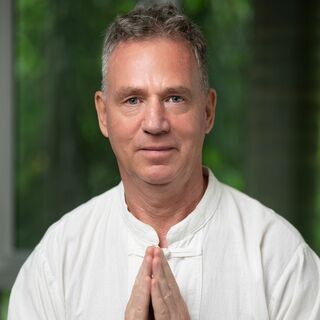
This is Tenzin and this is now session 7 of this 12 session Immune Boosting Program.
In this session we're going to go and look directly at the mental states,
The emotions which directly lead to and cause both our mental disturbance and unhappiness and consequently our physical suffering as well.
And we refer to these as negative or harmful emotions.
And generally when we're talking about emotion,
Emotion is described or defined as a heightened energetic state of mind.
And from that point of view an emotion is not necessarily positive or negative,
Bad or good,
It's simply a heightened energetic mental state.
But although that's the case,
When you look at the nature of emotions we find very clearly that there is a distinction or a difference between certain emotions being positive and beneficial both to our mental happiness and to our physical well-being.
And other types of emotions which are clearly harmful both to our mental well-being and therefore to our physical state as well.
And that division of emotions into positive ones and negative ones is something quite clear and quite knowable experientially.
And when we do that division and when we look at what the difference is between those two types of emotions,
Then we can see from two particular points ways in which they are clearly different.
The first thing is that a negative emotion or harmful emotion will always be uncomfortable and agitated in the mind.
If you look at yourself when you examine your mind when you're angry,
When you're jealous,
When you're fearful,
When you're anxious,
When you're depressed,
The mind is not comfortable.
The mind is agitated.
And sometimes you can see this very easily when you look at situations where you're not quite so sure about whether this is a good or a bad emotion that you're experiencing.
For me,
For example,
If I'm telling my children off for something,
Then you can tell your children off from two very different points of view or very different mental states.
One of them can be when you're tired or when you've got a headache or when you're trying to do something and the children are disturbing you and you become angry towards them,
Not because of what they're doing in particular.
They might not be doing anything particularly wrong,
But you take out your unhappiness on them.
You become angry or upset at them because they're disturbing you,
Because you're tired or because you have a headache.
And if you look at your mind in that moment,
You will inevitably find that the mind is not comfortable,
That there is an agitation,
There is a discomfort there in the mind.
You know you shouldn't be doing what you're doing.
But if you're telling your children off because they do something dangerous to themselves or they run in the road or something,
You can be just as wrathful,
Just as strong in what you're saying to them.
But your motivation,
Your mental state is not one of anger or negative.
You're doing it for them.
You're not doing it for yourself.
And if you look at your mind when you do that,
You'll find the mind is actually very calm.
Despite being strong and wrathful and even appearing angry,
If you're doing it purely for their benefit,
Then that's not a negative emotion.
And the mind will be quite strong,
Calm and comfortable when you look at it,
Despite the external appearance.
So we can see clearly how these harmful emotions are distinguished,
Are recognized by the state of our mind.
And if you're ever not sure whether you're feeling a positive or negative emotion,
Just look at your mind.
And this is why meditation is also so important,
To know your mind,
To be aware of your mind,
So that you can see,
I shouldn't be doing this.
This isn't a good,
Helpful emotion.
This is coming from a bad place.
It's coming from a negative place.
It's harming me and very often harming others as well.
So this is the first distinction between a positive and a negative emotion.
The negative ones are always uncomfortable and agitated,
Whereas a positive ones,
Even when they're very strong,
You're feeling overwhelming love or overwhelming compassion or connection to others.
It might be very strong.
Compassion could bring you to tears.
It can really crack your heart.
But you'll find that your mind in those moments is still very calm,
Or is still very comfortable rather than agitated.
And then you can see that it's a positive emotion.
So that's the first difference.
The second difference between a positive and a negative emotion,
I think is a more profound and a more important difference,
And that is that a negative emotion is always very unrealistic about the object it's feeling or acting or engaging with.
Whereas a positive emotion is much more realistic.
Now what does this mean?
There was actually a survey done in the 90s by an American doctor looking at anger and looking at how one views an object or a person towards whom you're angry.
And the conclusion of that research was that when you're angry towards someone,
The person you're angry towards is 90% a projection of your own mind.
In other words,
You're projecting onto that external person or object a reality which just isn't there.
And on the basis of that projection,
You become angry.
So in the case of anger,
For example,
We build up a picture of someone.
We see someone do something we don't like or hurts us in some way.
We let that build up,
We think of other things they've done or with other things we don't like.
We demonize that person and only once we demonize them,
We then feel justified in our anger.
And the same thing is true with other negative emotions.
Attachment,
Which many people don't feel,
Or grasping attachment.
Neediness.
That type of emotion many people feel is not so bad,
But of course it's doing the same thing.
Again,
The mind's agitated,
But also it's being very unrealistic.
Think about the honeymoon period of a relationship,
When the person that you're in love with appears to be completely perfect.
Even things which are really going to annoy you six months or one year down the line,
They seem very sweet in the beginning.
So again,
It's projection.
You're not being realistic.
The same thing is true with anxiety,
With fear.
Again,
Worry.
Surveys of research has been done on how much of the things you worry about actually come true.
And it's something like 5%,
Or even less.
Hardly any of the things we worry about actually happen.
So these negative or harmful emotions are not just uncomfortable or agitated in our mind,
But they're very unrealistic in the way in which they view the world.
They're always coming from an egocentric,
Self-centred point of view.
And that point of view is simply not the way the world is.
It's your point of view,
But it's not the reality of the world around you.
And one of the ways to work with these emotions is to simply see things from other people's point of view,
And try and see the whole picture rather than your picture.
And when you do that,
The negative emotion naturally begins to lessen and soften.
And it's actually very difficult when you do that,
To allow yourself to be angry,
Or jealous,
Or fearful,
Or proud,
Or whatever emotion it is.
So negative and positive emotions are distinguished from those two points of view.
Now how do we begin to work with these emotions?
The secret to working with negative emotions is,
As with so many of our mental attitudes or mental states,
Is a calm,
Focused observation of the emotion.
Suppression of the emotion of course doesn't work,
We all know that.
Expression of the emotion,
Although some psychological techniques talk about that,
Letting it out,
Going and shouting,
Beating up a pillow,
Running or whatever,
These things can have temporary benefit,
But they don't help in the long run,
Because they're simply hard-wiring the emotion into your nature.
They're making it worse in the long run.
So suppression doesn't work,
Expression doesn't work.
The key is simple observation.
It's the middle ground between those two extremes,
And just looking at the emotion.
And when you do that,
You gain some perspective.
You start to see that the emotion is not you,
It's just a thought in your mind.
It's just a feeling coming in your mind,
And that feeling is based on very inaccurate and very unrealistic projections.
And when you observe the emotion with a calm,
Dispassionate mind,
With a non-judgmental mind,
It becomes very easy to let it go.
And what we're going to do in our meditation practice today is that simple observation of the emotion.
And once you become familiar with doing that in meditation,
You'll find that you can actually do it in your daily life as well.
So when you get upset about something,
Or you have an argument with your partner,
Or whatever it may be,
You can step back,
Observe your mind,
Look at the negative emotion in your mind,
And be able to let it go.
And that's so,
So useful,
Because once you've let go of the negative emotion,
You could deal with the situation.
It's not that the situation is not there anymore.
But once the emotion has gone from it,
Then it's very easy to go and talk to the person,
Or go and sort out the situation.
It's very easy to do,
Because there's no discomfort from the emotion,
Which makes it so hard to deal with those things.
So becoming familiar with this observation practice is very useful,
Not just in meditation,
But to bring into the rest of your life,
To deal with these negative emotions,
These harmful emotions,
When they arise.
Because we must deal with them,
Because if we don't,
They're going to create more and more negative states of mind,
They're going to lead to more and more unhappiness,
They're going to lead to more and more problems between ourselves and others,
In our families,
In our relationships,
In our work environments,
They're always going to cause problems.
And those problems will not just stay on the mental level,
As we're working through this immune boosting program,
They're going to cause problems in our physical level,
They're going to lead to the fight and flight mode of our bodies,
Where we're living in stress and tension and anxiety,
And that will cause physical problems,
And it will block our immune system from working.
So dealing and working with these negative emotions is extremely important.
So good.
So your challenge for this session is to do the meditation,
As in the audio which follows,
To keep up with your calm abiding breathing meditation in the mornings,
To use what we've been talking about here to begin to feel the uncomfortable and the unrealistic nature of emotions.
Don't just ignore them,
Don't just push them away,
Don't suppress them,
Don't pretend they're not there,
But an honest facing up to emotions is the most skillful way to deal with them.
As well as that,
Maintain your mindful moments and mindful action,
And be introspective during the day.
And keep up with the meditations we've done in the previous sessions as you need them.
If you're holding on,
Let do the change meditation,
If you're living the future too much,
If you're not being alive,
Do the death meditation.
So use those meditations to become familiar with those meditations.
Good.
So in the next audio we'll do the actual meditation on emotions.
Thank you.