When our emotions run high,
Such as when we feel overwhelmed or stressed,
It feels like we lose control over our lives.
The good news is that you can use your breathing in the heat of this moment before you explode.
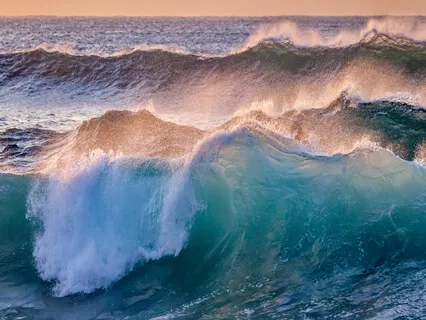
So let's use our breath to ride the waves of intense or difficult emotions.
Breath and emotions are tied together.
Breathing sends messages to your body and it affects your mood,
Your stress levels,
Even your immune system response.
The way we breathe can change our mental or emotional status.
For example,
If we breathe fast and shallow when we're anxious,
Our brain arousal center becomes overreactive and our stress responses are overreactive as well.
Because our sympathetic nervous system is activated.
So this can lead to increased alertness or anxiousness or wakefulness at night.
On the other hand,
If we breathe slow and deep and long,
We'll become calmer and more peaceful because the arousal part of the brain is not activated and our parasympathetic system is activated.
Parasympathetic nervous system is our rest and they are just responses in the body.
And you can look at animals.
For example,
Mouse and bunnies,
They have fast breathing and they are extremely nervous and anxious and mentally unstable.
They're restless and they live only for a short period of time.
But if you look at turtles or elephants,
They are slow and deep breathers.
They're calmer,
More peaceful,
And they have longer lives.
So today we'll practice Ujjayi breathing,
Which translates as victorious breathing or ocean breathing.
It has been used for thousands of years to synchronize breath with movements during yoga classes and practices.
It helps our cardiovascular and respiratory system and also nervous system to be balanced.
It helps to make our lungs stronger,
Hearts healthier.
It calms down our nerves and lowers the stress.
It improves our sleep.
Ocean breathing is acceptable to anyone.
And it doesn't matter if you're young or old or size,
But if you have difficulties with breathing or maybe some kind of conditions or diseases like asthma or COPD,
This breathing might be difficult for you.
And I suggest you to ask your doctor,
Consult with your MD before you practice just to make sure it is OK for you and safe for your health.
With Ujjayi breathing or ocean breathing,
There's a slight constriction at the back of the throat,
Which results in some kind of hissing sound.
So how do we do it?
First of all,
We're going to sit comfortably with the back straight and upright.
Your feet are on the floor,
Grounded,
Connected to the earth.
Close your eyes gently and relax your shoulders.
You can roll them back a few times.
Relax your neck,
Your jaw,
Your mouth,
Your face.
And now take a deep breath through the nose and a count of four.
Expanding your lower belly,
Filling it with air,
Making your belly white.
At the same time,
Keep your chest and upper body straight and still.
And you hold your breath for the count of three,
Observing it in your body and then slowly exhale the air through the nose for the count of seven.
And feel and observe your lower body,
How it's constructing inward toward the spine as your lungs empty all the air out.
Place the tip of your tongue at the roof of your mouth and keep it there for this practice,
For this pranayama.
The reason is because there are nerve endings and atiform meridians on the roof of your mouth,
On the upper palate,
That can activate the calming side of the nervous system.
So we can inhale through the nose and a count of four.
Hold the breath on the count of three and then exhale through the nose and a count of seven.
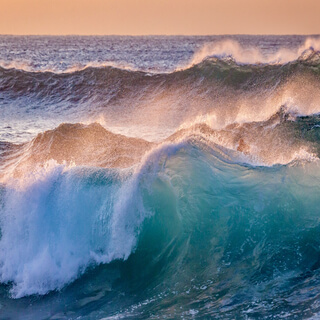
So keep inhaling and exhaling just like this and bring your awareness to the sound of the waves from within you.
Keep your awareness on the ocean sound,
Feel the waves flowing inside of you.
And if a thought comes,
Just observe it,
Feel it,
Breathe into your thoughts and let it go as a wave.
So we're gonna continue breathing,
Inhaling for four,
Holding for three,
Exhaling for seven.
It a gold copper ash copper ash copper ash copper ash copper ash copper ash copper ash copper ash copper ash copper ash copper ash copper asheri gold gold is a