Hello,
Everybody,
And welcome to Mindfulness Live.
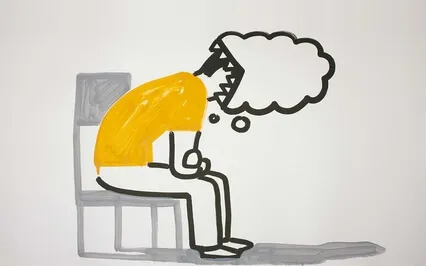
And today I want to talk about internal frustration.
That's to say,
Frustration which has become internalized,
We frustrate ourselves.
These are mental patterns which cause all sorts of problems and don't seem like they're caused by us.
They seem like they come from outside.
So we're going to look at that and try and understand how that happens.
First of all,
Make yourselves comfortable.
Take a nice breath and let go.
And it's all about letting go,
Allowing the breath to happen.
It really has nothing to do with your conscious choice.
It can do,
We can interfere with breathing,
But right now we're taking a step back and we're watching the breath as it happens by itself.
Just breath coming in.
And it's just breath going out.
And although many other things are happening too,
We're just watching the breath.
Not ignoring everything else that's going on,
But not paying attention to it either.
Everything,
All your attention is on the breath.
You start to feel that.
Is it slowing down?
Perhaps a deepening?
Or calming?
And the breath fills you and empties you.
And the process continues,
Doesn't stop.
Just the breath.
And now you follow the movement of the breath from the tip of your nostril into your throat and chest,
Down into your abdomen,
And a pause before the out breath,
Emptying the abdomen,
The chest,
Closing the throat,
And the nostrils,
And a pause.
A pause between each in-breath and out-breath,
A pause between each out-breath and in-breath,
So that instead of watching the breaths,
You can watch the pauses.
And the effect is the same,
To keep you focused in the present,
Knowing what you feel in your body as you breathe,
And as you are in this moment,
Feeling something good or bad or indifferent,
But a feeling,
A feeling of being alive,
Being conscious,
Being present.
And now,
If there is any peace in this moment,
Put your attention to it.
The calm of not having to do anything,
Not make a decision,
Not think about anyone else.
You don't even have to think about yourself,
Just your breath,
Just the calm,
Just the moment.
And now,
Taking three more breaths,
Open your eyes.
So internal frustration,
Internal frustration,
Is something that is not initially caused internally but it's internalized frustration,
In fact.
So for example,
My father was a very complicated man and our relationship was very complicated,
And there are ways in which I loved him,
And there are ways in which I hated him,
And that's okay,
Now I can process that,
But when I was little,
When I was a little child,
That was very confusing.
I love,
I hate,
What is it?
It's both,
But how could it be?
You know?
So that creates all sorts of pressure within,
Or created pressure within me to try and find a way to deal with this situation.
And what I did was what everybody does,
You go into denial,
Or you project something on the situation,
So when I was in denial,
I was basically saying,
Well,
No,
It's okay,
I love him,
He's my dad,
I love him,
Really,
I don't know what happened,
And I was just feeling bad.
So I'm sort of playing down one feeling and I'm bringing up the other,
And I'm not really opening myself to my feelings,
Honestly,
Because I'm not mature,
I mean,
I wouldn't expect to be able to do that.
But the point is that I'm laying down a pattern,
Or I laid down a pattern at that point,
In which that confusion became normal.
And of course,
That leads to what we call cognitive dissonance,
Where you've got conflicting feelings,
Which are pulling you in different directions,
And you don't know which one to follow.
Now,
I'm not saying that this particular sort of projection was responsible for what I'm going to tell you next,
But as I grew older,
I became a very unpredictable child and teenager,
I became explosive sometimes,
I could just come out with these outbursts.
And they didn't seem related to the situation we were in,
Where I'm talking with somebody about one thing and then I get angry in a way which seems unrelated.
So this is what happens with cognitive dissonance,
When you have these feelings which contradict each other,
You find ways to avoid facing them and dealing with them.
And as a result,
You get this explosive,
Well,
In my case,
It was explosive,
It may be,
You know,
It may result in complete shutting down,
It depends on you,
It depends on your individual psychology,
Your own way of dealing with it.
But it's important to understand that we all have this amazing human brain and we use it to develop coping strategies.
And many of those coping strategies are dysfunctional,
They're not healthy,
Because we form them young,
When we have no experience,
We don't know what we're doing.
And it's just a knee jerk sort of defensive denial or projection or whatever it is that we do.
So the frustration that comes from that is,
Well,
For me,
It came down to the frustration of not knowing who the hell I was,
What's going on here?
Well,
You know,
Why?
I was having a nice time,
We were talking about this,
And then all that happened,
Why did that come?
And then everyone's looking at me like,
What's wrong with you,
Man?
So,
So then I felt isolated.
And so you see how it plays out.
The point is,
You know,
Look,
What are we doing here,
We're trying to know ourselves.
And what was happening to me then,
I was becoming very unknown to myself,
When I behaved in this way.
I didn't know what was going on.
And I saw it was judged badly.
And I sort of got me into trouble.
But I didn't know how to get my hands on it.
I couldn't get to the root of it,
Because the root of it was denial.
I was pushing away these conflicting feelings,
Not willing to address the fact that I loved and I hated my father.
And it is very complicated.
But the essence of what we're doing is to be able to find and identify and look at all those things that we,
Those patterns,
Those comfort zones,
Those coping mechanisms that we created when we were very immature,
And which we continue to play out without any critical intervention,
Without any,
You know,
Real analysis of what's going on.
So there is a certain amount of analysis going on here.
And the bottom line is allowing for the fact that,
You know,
When I sit down in a quiet room and meditate,
Then I'm looking through my body and well,
How am I feeling?
I'm feeling sort of comfortable and cozy.
And I'm also in pain at the same time.
Well,
How could that be?
It doesn't really matter how it could be.
It's,
It's,
It's happening.
I've got pain in my knees.
Meanwhile,
The rest of my I'm nice and quiet and peaceful here.
So we do experience conflicting emotions.
And maybe they're not completely simultaneous.
Maybe it's one moment of this one moment of that.
It's hard to tell.
But they're very close together.
And we it feels like we experienced them together.
And as a result of that feeling,
We act out in other words,
We create some sort of coping mechanism,
Which seems to work at least in the short term.
So getting our finger on this,
Seeing these internal conflicts enables us to get behind the frustration.
Okay,
So the frustration is no longer something which just happens automatically.
But we,
We can see it before it arises,
We have that feeling of wait a minute,
There's something,
Something incomplete here.
I don't quite understand.
Just knowing that being able to make it conscious,
Telling yourself,
I don't understand this,
This is very conflictual.
This is confusing.
It allows you to explore it consciously,
Instead of simply letting those comfort zones,
Those patterns play out.
And that's the key to understanding yourself.
And understanding yourself is the key to change.
Because when you see how all this affects you negatively,
Then you can do something about it.
When you don't see it,
When you're just allowing everything down subconsciously,
Of course,
Nothing will change.
Actually,
That's not quite true.
The habit gets a little deeper each time you do it.
Even after all these years,
Each time you do it becomes a tiny bit more stubborn,
Harder to displace.
So realizing that,
Understanding that in every moment,
We have a choice,
Am I going to look squarely or am I going to sort of get on with my life and just just let those old patterns take care of things because they're so convenient,
You know.
But what do they result in?
Well,
Now I don't explode.
Because when back in those times when I was exploding,
It was so bad for my social life and for my mental balance,
I had to do something about it.
And I got a handle on it.
I understood it and I work with it.
But I also have to acknowledge that those patterns are still basically there.
They're in there somewhere and sometimes they want to come out.
But now I can see them pretty quickly.
It's hard for them to take over.
But never say never,
You never know what's going to happen.
Some things just overwhelm us so much that those patterns just kick in because we can't get a grip on what's going on around us and especially what's going on within us.
So trying to balance those two requires a certain amount of peace and space,
Which is why we create this meditative zone for ourselves.
And that enables us to see,
To understand and to change.
But it takes an effort,
Takes that little bit of effort to know and to admit to be vulnerable.
Because that's the other thing which keeps all those patterns and that reactive behavior,
It keeps it going,
Is the sense that,
Well,
This is me,
This is who I am,
And I have a right to be like this and this is how I handle things.
So there's a defensive thing in there too.
So it's all about,
It always comes down,
Know yourself,
Know yourself,
Accept yourself,
And then you can actually start to deal with yourself,
To see things in a new way,
To change your patterns,
To change your experience.
So that's my experience of frustration,
Or one example of it.
And that internal frustration is the worst,
But it's also the easiest to identify.
You know,
When I'm frustrated by something outside of me,
For example,
I just bought a new pair of glasses,
And there's a problem with the prescription,
And I have to deal with this thing.
So it's all new to me,
I've got to deal with these people and this technology.
So that's something completely separate,
It's brand new.
But the frustration that comes from me when I encounter a familiar situation,
Somebody says no to me when I expect them to say yes,
Then my reactivity which creates the real frustration is something I can actually get my hands on,
I can actually change that.
It is at least theoretically within my power.
And so I'm looking for ways to get in touch with that and understand it and start to let it go.
And I know it's a process,
It takes time,
You let go a little bit at a time.
And the more you let go,
The more you see into yourself.
And the more you understand also how fluid you are,
That you're in constant change,
That everything is changing,
And that you can have a part in that change,
It doesn't have to be automated.
And it doesn't have to be something that's completely out of your conscious mind.
So make yourselves comfortable.
Take a breath and let go.
And sometimes what you feel is the smooth unimpeded flow of air in and out of your lungs.
And at other times,
It seems hesitant or incomplete somehow,
Not satisfying.
And the tendency when we feel that is to try and fix it.
In other words,
To no longer just watch the breath,
But to change it.
And we want to resist that impulse.
You want to know how you breathe in any moment,
And what that reflects,
What that tells you about yourself,
About your mood,
And about how you experience this moment.
So staying with breath,
You ask,
So how am I feeling?
What's going on?
I'm breathing in,
Breathing out.
And I've been doing things since I got out of bed this morning,
And there's a residual leftover feeling from all that,
Of my mood.
So just watching that and knowing it.
But you're sitting in a quiet room,
Breathing steadily.
You're also watching all of this mood slow down,
Become spacious,
Getting in touch with yourself,
Knowing how you are right now.
And doing that with a sense of the unexpected,
Not knowing how you'll feel,
Any more than you know what will happen.
Identifying the feelings,
Recognizing the patterns.
And then breathing.
Breath comes in all the way through your nose,
Throat,
Lungs,
Pulling down from the abdomen,
Opening up your chest,
Expanding your rib cage,
Opening your throat,
Your nostrils,
Opening your mind.
And being here and now,
Being present and knowing,
Here I am.
This is my life.
This is real.
Not just thoughts or impressions or memories or projections.
Right now,
I'm in the moment in my body.
It's tangible.
I'm connected to my five senses.
I'm letting go of thoughts,
Ideas,
Fears,
Memories.
Watching and being without holding on.
It's like surfing.
You can't control the water.
You can only control your balance.
So you keep your balance.
When you lose it,
You make a note.
I lost my balance.
No need for surprise.
It's normal.
No need for frustration.
It's normal.
Sometimes we're balanced and sometimes we're not.
Sometimes even the best surfers fall off the surfboard.
Staying with the breath.
And feeling your body as a whole.
As a weight.
As a tension or a combination of tensions in all your muscles,
Keeping you sitting upright,
Standing,
Your head up,
Your back straight,
Your chest opening and closing.
Staying regularly.
Not too shallow,
Not too deep.
And most of all,
Keeping your attention in the body in the moment.
Knowing what you're sensing,
What it feels like to breathe.
And knowing how you are,
How you feel,
Your mood,
Your sense of calm or agitation,
Your sense of pleasure or pain.
And perhaps a combination of those,
A confusing mixture of feelings sometimes,
Which you allow for because it's normal.
And your goal is to understand how you normally are.
Now taking three more breaths.
Open your eyes.
Silence.
You