Hello,
And welcome to mindfulness live.
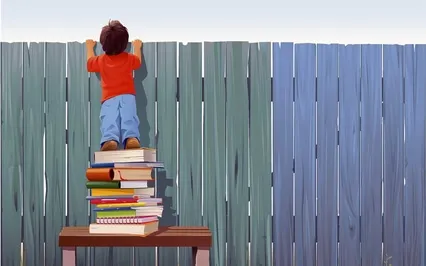
Today we talk about curiosity.
And curiosity is something that,
Well,
It's sort of something that we take for granted,
But that's exactly the opposite of what it should be.
For example,
Apples have fallen from trees for thousands of years,
Probably millions,
I don't know,
A long time.
But Isaac Newton was the first person who saw an apple falling from the tree and said,
Oh,
I wonder why that happened.
Now it's not that there was no answer,
There was an answer.
It was because God willed it.
That was the answer for everything.
But he wasn't satisfied.
It wasn't enough for him.
So he got to thinking about why that actually happened.
So in mindfulness,
Curiosity serves the same function,
Which is to question the things we take for granted.
Like,
I'm angry.
But why?
Why?
What is it that makes me angry right now?
Or I'm frustrated or I'm depressed or whatever it is,
Instead of just accepting,
Well,
I'm always like this,
This is my way,
This is my character,
Or you listen to what other people tell you shouldn't have done that.
That's why you're experiencing this.
Instead of that,
What we're trying to cultivate is a very,
Very honest,
Why?
Not a frustrated why,
Or,
Oh,
My God,
Why is this happening to me?
But why?
And the answer is not very important.
It's the question in which is important.
It's,
It's letting go of that sense of certainty that we have the answer that it's God's will,
As if that's enough.
We want more,
We want to use our mind to explore.
And that's what mindfulness does.
So make yourselves comfortable.
Take a nice breath.
And let go.
And as you watch the breath,
You're aware of this physical sensation,
This knowledge of breath coming in and out,
Which is so different from the questions we ask in our mind.
Specific questions with specific answers.
Instead,
We're just watching,
Just looking,
Still not taking anything for granted.
But this looking too,
Is curiosity.
Even though we ask no questions precisely,
We are open to knowledge,
Open to experience,
Open to discovery.
And that also means that we're open to changing our minds,
Changing our perspective,
Changing our mind.
So you stay with the breath.
Just allow the breath to come and go.
Knowing that you're here,
You're present.
The world is turning around you.
And you are conscious.
You don't simply take part in the world,
You also reflect it.
Sometimes you change it,
You get involved.
And to do that,
You have to be present.
To know where you are,
Sitting in this room,
What you're doing,
Watching my breath.
And knowing how you watch your breath objectively,
In a detached way,
Without expectations or judgments.
Just allowing the breath to come and go,
Accepting this moment,
Just as it is.
And the breath comes,
The breath comes.
Curiosity doesn't mean you're asking questions all the time.
It just means that your mind is open,
That you don't refuse any incoming information,
That you don't run,
You're not afraid.
So you stay with the breath.
You feel the friction of air,
Colder air coming in,
Warmer air leaving.
You feel the pumping of your chest,
The pressure building and releasing.
You watch the sense of time passing through you.
One moment following another,
Always changing.
Staying with the breath.
Staying with this moment.
Knowing I'm here,
I'm conscious,
I'm open,
I'm alive.
What's going to happen now?
Knowing that you don't know,
You accept.
You accept I don't know.
You embrace it.
You wait,
Perhaps wondering if you're going to find out,
If you'll learn something.
You never know,
You can never be sure.
And that uncertainty lies at the very heart of curiosity.
I don't know.
So I wonder,
I wonder.
And the more you wonder,
The more wondrous life becomes.
In fact,
It already is.
We just don't pay attention to that part of it.
Pay attention to what's familiar.
Now,
Taking three more breaths,
Open your eyes.
Security is a big deal for us.
We're always looking for security.
We want to feel safe.
We want to feel we fit in.
We want to feel knowledgeable,
In control,
Competent.
These are all ways of feeling that everything's okay,
Or most things are okay.
There's always something in the back of our mind,
There's always something which still needs to be done.
I have a half written email upstairs because I got stuck and I wasn't quite sure how to phrase it.
So that's a little tiny weenie,
A little bit of insecurity in my mind,
You know,
But there's always something,
Sometimes it's very big,
You know,
How am I going to pay my rent this month?
Or how am I going to speak to that person that I have to have a relationship with,
But I can't stand them?
There's all sorts of ways in which we can feel insecure.
That's not the point.
The point I want to make is that we want security,
We gravitate towards security.
We feel entitled to security actually.
And this is really the very opposite of curiosity.
Security means we know what's happening and we know what's going to happen.
Curiosity starts with that greatest of all scientific statements,
I don't know.
That's where it all begins.
When you admit fully and completely to yourself that you don't know how things are going and how they're going to turn out,
Then your eyes are really open wide.
It's like going to a foreign country where they don't speak your language,
They don't serve your food,
Nothing is familiar.
When you get there,
Whether you want it or not,
Your eyes are wide open because everything is so unfamiliar and a little bit threatening or maybe even very threatening.
Curiosity is really at the heart of mindfulness because it does away with judgment and expectation.
It reminds you always that you don't know and it can become really passionate.
In fact,
That's really the best way for it to evolve is as a passion.
Albert Einstein once said that I have no special skills,
I'm just extremely passionate,
Passionately curious.
That was,
And that's what it's about.
He was so curious and he put everything into it,
Every thought.
He was able to focus with incredible concentration,
Put these stories,
These what he called,
What do you call them?
Not mind games,
Mind,
I've forgotten the phrase,
Mental experiments anyway.
He figured things out just by going into his own mind and saying what if this happens,
Then that happens and it was all based on his observation.
So he's using his mind,
His cerebral mind,
Not in a way to project his way of seeing and to make everything look the way he wants it to look,
But he's using his thinking mind to really understand what he does know,
What he doesn't know,
Where the holes are in his knowledge and how he can fill them.
So we're not scientists,
We're not physicists and it doesn't really matter if you are or not,
But when it comes to ourselves,
For example,
Many,
Many years ago,
When I still had dark hair and it was beginning to go grey,
I used a little bit of hair dye in it to see if I could,
You know,
Make myself anyway.
I'm pretty vain as people go,
So you know,
Might as well admit it.
So I was doing this and then at one point I had an appointment with the dermatologist because I had various skin problems and he said,
Oh,
It might be dye.
And I was very embarrassed about the fact that I'd been dying my hair and I said,
Oh,
I don't use dye.
And he looked at me as if I'd lost my mind because he's a dermatologist.
He took one look and he could see very clearly,
You know,
It was obvious.
But when I walked away from this feeling very stupid and feeling embarrassed and thinking,
Why could I do,
Why would I do something like that?
And for a while that question was rhetorical.
I wasn't asking really why would I do this?
I was saying to myself,
Why the hell would you do that?
In other words,
It was a put down.
Okay.
I was being mean to myself.
I was not being constructive at all.
So when I finally realized what I was doing,
I switched that attitude to one of curiosity.
Why did I do that?
Well,
Because I was embarrassed.
Now we've got to lead.
Now I could follow that embarrassment and go back and say,
Oh,
That's why,
That's why I didn't know.
It's understandable.
Yeah,
Well,
It was stupid,
But what the hell?
Okay.
So not only did I feel less bad about myself,
I also understood something about myself and understood something about people in general,
Because it's not particularly unusual to be embarrassed by things like that.
And it's not particularly unusual to have that sort of denial answer either.
I don't die my hair.
Lots of people will say that,
You know,
I never had,
I never had plastic surgery.
You want me?
No,
No,
No,
No.
So it's the honest question.
It's getting from that,
It's getting from that rhetorical sort of denial,
Like,
I didn't do that.
Or why,
Why would I do that?
In a,
In a,
In a frustrated sense,
We're trying to shift that to a,
Why did,
Why did I do that in a purely curious sense?
Why did I do that?
So we have to overcome the embarrassment first.
We have to,
We have to see what's standing in our way to stop that question being an objective question,
Where it's simply another way of trying to preserve my security.
Because if I'm,
I know myself,
I'm stupid.
I say stupid things.
That's me.
That's who I am.
So it's a horrible way to think.
But nevertheless,
We do get a little bit of security from that.
There's a sense of knowing myself.
And there's a sense of maybe I'm being honest,
Although it's not really honest at all.
But that sense of security is getting in the way of the truth.
And the truth is an open pathway,
It leads me forward,
It helps me to understand myself better.
Whereas the security is,
Well,
We call it a security blanket,
Or a safe zone.
And that's something which keeps us inside our illusions,
Inside our denial and our fabrications.
And it's the opposite of being curious.
So curiosity is absolutely at the heart of mindfulness.
It's what it's all about.
And it's not about finding answers.
We'll speak about this later.
But it's not,
Curiosity does not just ask questions in order to find answers.
It asks questions in order to break down the wrong questions.
There's always the right question and the wrong question.
You know,
Why did I,
Why was I like that?
Why could I be so stupid?
That's the wrong question.
Why did I tell a little lie there?
That's the right question.
Well,
Because I was embarrassed,
And so on.
So that leads to a whole chain of events.
Why was I embarrassed?
There's all sorts of stuff you can do with that.
Well,
I get embarrassed a lot.
Well,
Why?
Where did that start?
It's important for us to understand where we came from,
Our tendencies,
You know,
The way that the patterns that we have in the way that we respond to different situations,
Whether we're with other people or if we're by ourselves.
And so exploring that takes curiosity and it takes letting go of security.
The two go together.
To be curious,
You have to let go of your sense of security,
Your sense of knowing,
Your sense of I should know.
You let go of all that.
I don't know.
I have no idea.
Maybe I've got an answer.
Maybe I haven't.
I'm going to keep my eyes open and see.
So again,
Trust comes into it.
We have to trust ourselves to keep our eyes open instead of just going into this,
Oh,
It's all very familiar.
Oh,
I know that.
It's okay.
That's the way I am.
Which gets us nowhere except back in the same patterns.
So make yourselves comfortable.
Take a nice breath.
And feel that breath because you've never felt that one before.
You've never breathed quite like this before.
You've never been quite in this position before or this mood or had this particular sequence of thoughts.
So open yourself up to an attitude of what's going on?
Not that you need answers,
But you need questions.
Questions break down certainty.
They open possibility.
So as you look out at the world with your eyes,
Ears,
Nose,
Taste,
The skin,
Sense of touch,
Be aware of differences.
Be aware of new ways of seeing.
Be aware of opportunities to take a risk.
Try something new.
Explore the world.
Explore yourself,
Your mind.
And discover that the more you don't know,
The more conscious you are,
More awake,
More alert,
More balanced,
Open,
Wise,
And also kind.
Allowing yourself to not know.
It enables you to allow others to not know and to understand that they have trouble too sometimes.
They can't answer every question.
And like you,
It's normal.
It's not surprising.
And they're like you and you're like them.
And we're all in the same boat.
And understanding this makes the world so much more harmonious and less threatening.
And that kindness is the best form of security you can have.
To know your own weaknesses,
Your own mortality,
And to know that it applies to everyone.
And that sometimes you get scared and everyone sometimes gets scared.
And at times you feel confident and capable and positive and optimistic.
And you recognize that.
And you bring it to the front of your mind.
You embrace it.
And you say,
This is how I feel.
And why?
What's going on?
Why do I feel so good?
In the same way that you might ask,
Why do I feel so bad?
So being curious,
Paying attention,
Watching yourself without judgment,
Without having to be a certain way,
Without preoccupation of who you should be,
How you should be.
And let go of that.
Pay attention to who you are,
How you are,
And how it feels to be you,
To be like that.
Staying with the breath.
Feeling your body in your chest.
It's a powerful movement,
The breath.
Feeling your body in the throat.
The pressure is quite strong as the air goes in and out in your throat.
And feeling your whole body,
The weight of it,
The mass of it,
The movement of it,
The adjustment,
The constant shifting,
And knowing I am alive and unconscious.
What is that?
What is this consciousness?
Now you're not looking for an answer in words.
You're simply looking at the experience.
You are here.
There's no question.
You are conscious.
There's no doubt.
Experience that.
Feel it.
What's your mood?
How do you feel?
And can you accept?
I don't know.
Can you explore?
I don't know.
Embrace it.
It's a great giver of freedom.
To say I don't know opens you to possibility and closes you to familiar patterns,
To automaticity,
To going through life half asleep.
So staying with the breath,
Staying with this moment,
Staying with I don't know,
So that your mind is open,
So that you're looking with curiosity,
Openness,
Humility,
And wisdom.
There is no greater wisdom than allowing yourself to not doubt.
And now taking three more breaths,
Open your eyes.