Welcome everyone.
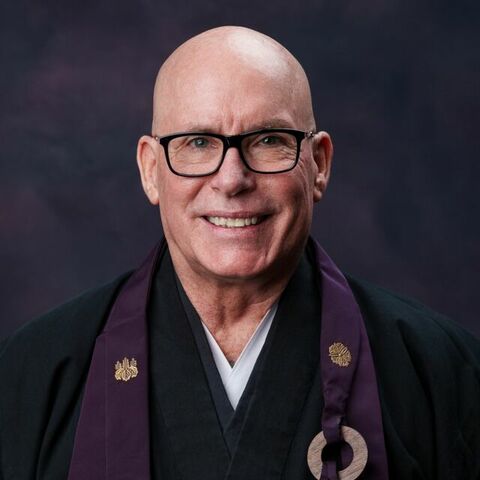
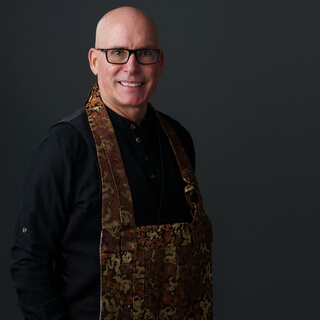
My name is Steven Snyder,
And I'm here today with my friend and esteemed colleague Rick Hansen,
And we're going to be talking about some interesting topics around cessation awakening nirvana,
And whatever else we can find that relates to that.
Well,
I'm super happy to be here,
Steven.
And as we kind of move through the formality part,
I think of you as a friend and a teacher,
And also just a great guy.
So,
In that context,
We started going back and forth about these particular topics,
Most recently in the larger frame of a kind of a long-standing relationship and conversation,
In part spurred by Joseph Goldstein's recent article about nirvana,
Especially as that often described as nirvana,
Although he chooses the word nibbana in its traditional form for various reasons,
In particular as it's explored in the framework of early Buddhism,
And the expression of early Buddhism in the Theravada tradition,
Mainly currently centered in Southeast Asia,
Although with many kind of currents moving into the West,
Including currents that I've been writing for the last 30 years or so.
And then that opened up to a larger conversation,
Including about ultimate matters like,
Is there God,
Which is a proxy of sorts for talking about the nature of the ultimate ground,
Particularly if we understood that tricky word with just three letters,
Starting with G and ending with D,
That it doesn't have to strictly mean the kind of personality that we find in the Bible and in the Abrahamic traditions of Judaism,
Christianity,
And Islam.
So,
With that said,
Here we go.
So,
What the heck are these ultimate matters?
And in particular,
I would just like to mark three distinctions.
One,
When people are having transformational,
Extraordinary experiences of Kensho or Satori,
Let's say,
As is described in Zen,
Or cessation,
As is described in early Buddhism,
Or a sense of immersion in the divine.
And I'm not saying that these things are the same.
I'm just kind of pointing to really the upper reaches of human potential,
As people talk about this.
When this is happening,
And then people come back,
Come back down from the mountain,
As it were,
To the marketplace in terms of the ox herding pictures,
Let's say,
When they come back down and share what they've learned,
And clearly they've been touched,
They've been transformed.
What was all that about?
Was it,
As many secular practitioners,
Who I respect highly,
Like Stephen Batchelor would say,
Who are atheists or very,
Very bare bones agnostics,
Is what's happened,
As they would say,
An extraordinary experience within the natural frame of ordinary reality and the clockwork unfolding of the Big Bang universe,
And that's it.
Period.
Deal with it,
As some have said to me directly.
Okay.
Or is that an encounter of a kind,
Beyond words,
Beyond ordinary experience,
To be sure,
Beyond concepts,
Is that an encounter of some kind with an existing something or other that is woven into the fabric of our universe,
Or in some sense,
Even transcends it,
That is radically distinct from ordinary reality in some meaningful way?
And then even further,
What are the attributes,
Potentially,
Of this,
I will just call it,
You know,
Radically distinct ground,
Capital G,
Ground?
Is it merely unconditioned,
Which is no small thing,
In the language of early Buddhism,
Is it merely eternal,
Timeless,
Absolute,
Vast,
Spacious,
A field of infinite possibility forever,
Period?
Or does it also have attributes of consciousness,
In some sense,
Awareness,
Is awareness even a quality of this ground?
And further even,
Is there something inherently benign,
Dare we say loving,
As an inherent attribute of this capital G ground?
So I figured you're probably the best person I know to ask you about all this,
Because you're super smart,
You straddle major traditions,
Including Zen and the Theravadin,
And you have profound practice yourself,
Throwing also non-dual teachings,
Diamond Heart kind of things,
Vedanta and all the rest of that,
And you do this without ego,
Which is maybe a marker of your own realization.
So,
Okay,
I've teed you up.
Very well,
Very well,
By the way.
Okay,
Good,
Good.
I'll sort of lob some pitches headed your way toward you there,
Standing at the plate.
Okay.
Good.
All right.
What do you make of all this?
Well,
And I will say,
Yeah,
I have spent over 20 years in the Zen tradition actively,
Over 20 years in the Theravadin tradition actively,
And I still practice in both traditions.
So they both still inform my understanding and have helped me with the new book I've written,
You know,
Demystifying Awakening,
Where I'm talking about the Zen and Theravadin models and how that works.
So what I suggest starting with is starting with Nibbana.
Let's start at the source.
And then I think as we work our way from there,
Then I think it'll begin to make sense and you'll see the framing that I hold.
And this framing is based on experience.
I mean,
It's also based on my reading and research.
For example,
In the Mahasi Sayadaw book,
The Manual of Insight,
It talks about Nibbana being the cessation of all materiality and all mentality.
And my Theravadin teacher,
Pahok Sayadaw,
In his book,
Knowing and Seeing,
Says the same thing,
That Nibbana is a complete cessation of all materiality and mentality.
So what does that actually mean?
Experientially,
There is a territory,
An unconditioned location that contains this quality.
This Nibbana is contained there.
And the way that I've experienced it and frame it and teach it is that there's sort of two sides to that coin.
There's the unmanifest side,
And there's the manifest side.
And starting at the unmanifest side,
That would be the territory where the experience of cessation would occur.
And the felt sense of this is as awareness and consciousness are making contact,
Let's say coming to the portal of cessation,
We can feel cessation.
To me,
It always feels like there's a pure love,
Like a tractor beam that's calling.
But there was a point at the portal where we have to choose to surrender.
And in the stages of insight in the mindfulness,
The Pasana lineage,
One of the last stages before Nibbana is the inside of terror.
And in this portal,
That's what gets confronted.
Fear,
Anxiety,
Worry,
We can call it terror.
Because the perception is a real perception.
Once there's a merger here,
There isn't a guarantee that there's going to be a distinguishing again.
In other words,
I don't know that a separation is going to happen again.
And we have to still surrender.
So there's an affirmative choice that gets made.
And so awareness and consciousness start into this tractor beam of love.
And the qualities of Nibbana are first it's dark,
It's a profound darkness,
It's completely formless and completely boundaryless.
So it has a vastness to it.
And the overriding quality to it is what I call absence,
Which we can also use the term emptiness from Buddhism.
I prefer absence because I use it to mean,
If we take a book off one of your bookshelves there,
And we look at that space there's a way we can use it as an absence rather than emptiness.
Like something was there and it's been removed temporarily.
And Steven,
Just for the clarity,
Cessation is the portal,
As it were,
To Nibbana.
There's a distinction there.
Cessation is kind of what happens,
The ordinary processes,
The ordinary condition processes of mind,
And maybe materiality as well,
Cease,
Which then reveals,
As it were,
Nibbana.
Is that what you're getting at?
There's a distinction there?
Yeah,
At least in Theravada Buddhism,
That would be Nibbana.
And I use the term Nibbana simply because Nirvana is so overused in Western culture.
We can get colognes and perfumes and all the way down from there.
So I try to avoid the overused terms for that reason also.
So in the process of cessation arising,
There is the mentality,
Materiality,
Turn off.
There's no body sense.
And then there's consciousness,
Which I consider to be awareness with memory of experience.
And then there's awareness.
So we have an awareness.
It's not a personal awareness.
It's an objective,
What I call pure awareness,
Meaning there's no history behind it.
It's just perception.
Because this territory also is non conceptual.
Concepts have stopped.
So we can witness the different aspects,
But there isn't a way to really discern or describe once it's happening.
And so once there is this absorption,
This cessation into the great mystery,
Then we are steeping in the source as the source,
Which would be to me,
Nibbana.
So we have that experience.
But there's also another side,
In my view,
To what I call the absolute realm.
And that's the manifest side.
We've been talking about the unmanifest.
But the unmanifest can become the manifest.
So on the manifest side,
First we have a brightness.
So the Nibbana side,
The cessation side was complete darkness.
I mean,
Just magnificent darkness.
The manifest side is complete brightness.
And I identify that mostly like,
If we're walking and we see the sun reflecting in a mirrored building,
And it hits your eye in that particular way,
Where you have to turn away or shield your eyes.
It's that quality of brightness,
Just a magnificent brightness.
And it has also pure love is one of the main qualities,
Pure beingness,
Presence,
And then again,
Pure awareness.
So awareness without content,
Without reflective ability.
It's just direct perception.
And there is a knowing and direct perception.
It's just not the ordinary way we use because here too,
There's no concept.
And the distinction you're drawing between the unmanifest and the manifest qualities of Nibbana,
Which by the way,
Sure sounds like a proxy term for the ultimate capital G ground slash the divine.
And also I think this is where we get the material about heaven,
Particularly from the pure love and pure beingness,
Pure presence.
Beautiful.
That's beautiful.
So,
Okay,
Really great.
So cessation is a psychophysical process that's natural,
Which then as it were opens the portal to that apprehension in some sense,
Right,
Of the ultimate.
The ultimate could be called Nibbana.
It could be called the unconditioned.
It could be called the ground.
It could be called the divine.
And that ultimate has these two aspects that are unmanifest and manifest.
I'm just trying to track the words because,
Wow,
Having tried to talk about this with so many people and write about it too and read about it,
Most people in my experience are so sloppy and deliberately almost or unwittingly at best,
Just foggy about the terminology,
Partly to avoid just saying it clearly.
So I super appreciate how clear you're being and I'm not trying to be pedantic here or semantic.
I'm just trying to really track the words and the distinctions for what you're talking about.
I appreciate you doing that.
And to say that both the unmanifest and manifest side would be unconditioned.
Yes,
Wow,
Let's just slow this down to let that sink in.
And the unconditioned simply means it's not subject to birth and death.
It always exists.
It always has existed.
If the entire universe somehow ended today,
The unconditioned would still be present.
And at some point when the conditions were ripe,
That manifest unmanifest would move into start into form.
It would start into condition form.
Incredibly awesome.
You know,
I'm feeling it while we talk about it and I invite people who are listening or watching to feel it also while you talk about it.
And to mark another distinction clearly,
In kind of fancy lingo,
You are describing Nibbāna slash the unconditioned slash the divine.
You are talking about all this ontologically,
Not just phenomenologically.
And secular,
Atheistic super practitioners talk about all this in a phenomenological frame.
For them,
It's a kind of experience.
They're not making statements about ultimate reality.
That's ontology.
And you are making a statement.
You are asserting that,
As you say,
There is a timeless,
Without beginning or end,
Unconditioned capital G ground that has both unmanifest and manifest qualities that is distinct from the unfolding of our own universe.
And one might,
You know,
Kind of infer that and even imagine as I'm doing right now that that unconditioned ground is sort of the basis for,
According to modern physics,
Certainly cosmology,
The possibility of countless numbers of universes bubbling into being as ours did 13.
8 or so billion years ago,
Give or take.
Throughout.
Wow.
So you're saying this capital G ground,
Timeless,
Unconditioned,
Existing independently of our conditioned universe is true,
Is real in some sense,
Exists.
Right.
Okay.
And I'll go— You're not fooling around.
No,
I'll go a step further.
I mean,
I've talked about this with other teachers as well.
And I would say too,
That the absolute realm,
So the unmanifest manifest we're just talking about,
That can be experienced both in the Theravadan tradition,
Following the inside path,
Following the concentration path.
And also it's true in the Zen tradition,
Particularly with the koan practice,
But I think it's also true with what I teach as silent illumination meditation,
Also called Shikentaza.
I think all of these are access points.
And there may be many,
Many more,
But those are the ones that I know.
I haven't practiced the mindfulness to cessation.
So that path I don't know.
But the concentration and the Zen path I do know and I've experienced in both those traditions.
Yeah.
And certainly,
If there's an ultimate,
There's an ultimate and there are many paths,
Many routes up that summit.
And certainly,
I have a bit of background in more theistic traditions in which there are,
As it were,
Practices of the presence of God,
Would be how they would talk about it.
Or in centering prayer,
Championed by Father Thomas Keating,
As you know,
There's an emptying out.
Technically the term is apophatic rather than cataphatic as a form of meditation in which one becomes utterly accessible to and lived by the divine.
So certainly,
Other traditions as well.
I don't know much about Sufism or mystical Judaism,
Etc.
,
Etc.
Certainly,
The indigenous traditions around the world,
The first people,
Have their own versions of all this.
So many,
Many fingers pointing at a single moon.
Right.
And that's what's important too,
As you're saying,
Is that this isn't the exclusive terrain of anyone or any group.
It's the birthright of everyone.
It is the birthright of everyone.
And to follow our model along from the unmanifest,
Manifest unconditioned,
Is like the life force of that little seed in the soil getting exactly the right amount of sun,
Of water,
Of fertilizer,
Where it's just ready to break into ground.
That's the felt sense of the manifest side.
And what breaks through the ground and what propels the life force of all being is love,
The pure love.
And so actually,
That's what manifests everything and everyone is love.
And the reason we don't see it is because of the psychological distortions,
Because of the places of armoring and wounding we see,
You know,
And people behave in terrible ways.
That's why we can have pure love be the activating force and have bad things happening.
Because there isn't a resolution yet of that bad karmic stream,
You might say,
In Buddhist language.
So beautiful,
Stephen.
Right.
And hopeful.
We can feel it.
We can feel what you're saying.
And it's here right now.
That's what makes it so amazing because even time as a concept in the unmanifest,
Manifest unconditioned,
There's only the now.
There's only an eternal now.
Time is a concept,
Past and future are concepts.
We're always right here.
And this is where it all is.
It can't be anywhere else.
This is great.
Just great.
Blowing me away.
Fantastic.
Yeah,
And so when we look at the manifestation,
The manifestation is principally conditioned.
It comes into being,
So there's a birth,
It has a life time and then there's some form of death or disintegration,
Destruction.
So everything that's subject to that,
We can say that there's a quality of suffering to it,
Because as soon as it's born,
It's also starting to decay and die.
So let me lay it down here,
If I could,
Because now you're also talking about something that is extremely interesting to me and maybe others too,
I hope.
But first I just want to be clear.
You used the word manifest,
And I think there you're not talking about the manifest qualities of the unconditioned ground,
Which are unconditioned.
You're talking about manifestations like the bubbling forth of a spring in wilderness,
Let's say,
Or the movement of the clouds,
The movement of the planets,
The flicker of thought moving along here.
That's what you're meaning here in terms of manifestation.
Right,
I'm meaning some form,
Whether it's tangible or intangible,
But still coming into form from nothing,
From Nibbana.
Yeah,
I think of mind and matter,
Right,
Unfolding inside as natural processes,
Natural phenomena,
Conditioned natural phenomena in the natural universe.
This said,
You just touched on something kind of quickly that spoke to a question I've asked you,
Which is,
What do we make of the routine statements in the Pali Canon,
The earliest surviving written record,
Also in Chinese and Sanskrit to some extent,
Of the teachings of the Buddha,
Right,
The original teachings.
What do we make of these recurring statements,
Which we also hear often today from Theravadin teachers,
That basically are all along the lines of life is suffering or the aggregates,
You know,
The various aspects of our experiences are inherently suffering,
Right?
I mean,
To me,
There are certain aspects of that that make no sense,
And it seems as if it boils down to the unsatisfactoriness of transient experiences.
Well,
They're not actually unsatisfactory if we don't try to hold on to them.
They're unsatisfactory because we try to essentialize and hold on to our experiences,
Which are inherently transient.
I get that,
But if we lighten up,
Maybe more in a tantric kind of sense,
And we don't try to attach to our experiences while enjoying them meanwhile,
As,
You know,
As my friend Michael Tafkow said to me once,
The sacred play of emptiness.
If we can enjoy them in those ways,
They're not inherently suffering.
So,
Teacher,
What do you make of all that?
Well,
Really,
I think what we're saying is that the conditioned is dukkha.
The conditioned is unsatisfactoriness.
Why is it inherently unsatisfactory?
Unsatisfactoriness is an emotion.
It's an experience that people have.
It's unsatisfactory because it's not the unconditioned.
But that's almost like tautology.
What makes it unsatisfactory?
Well,
Because.
.
.
It's not as great as the unconditioned,
But what makes it suffering?
There's a big difference between suffering and not having access to the ultimate.
Right.
And I think we can experience,
Again,
As I mentioned,
The quality of decay or dying that it's present in the living gives an inherent sense of an unsatisfactoriness.
That being said,
That doesn't mean that all of life is a grumble.
I want to pin you down here,
Stephen.
Experiences are continually passing away.
We're talking here.
There is hearing,
There is seeing,
There is thinking,
Right?
It's happening.
People may be watching or listening.
I just don't get that the transience of experiences makes them inherently unpleasant.
Dukkha means suffering.
It's like ik,
Meh,
Eh,
Right?
I don't get that the transience of experiences is inherently dukkha.
I get that clinging to it creates dukkha.
Or resisting.
And the reason I'm kind of burrowing into this is because there is something,
Like I think the Buddha was fantastic.
He's really my root teacher,
I would have to say.
And there is something that feels world-denying,
Ascetic,
Kind of grumpy,
Baked into the roots of,
Certainly,
Theravadin Buddhism.
And the root of that root is this assertion that transient experiences are inherently dukkha.
And so I really want to push on that.
I just don't get that.
I never have.
Well,
There's two pieces here.
First,
The Buddha by nature was an aversive type.
And so his orientation is going to be aversive.
And also we're talking about the world at large,
And we're talking about if we're only holding the perspective of what's unconditioned and what's conditioned.
And in some way,
We're preferencing the unconditioned because we're saying it's ultimate reality.
So we're saying that has,
In a sense,
A higher value,
I suppose.
But I'm not disagreeing with you that we can have transient conditioned experience and have it be pleasurable,
Have it be wholesome.
Because again,
If everything's made of love,
We're making contact as love with love.
So then that introduces the next step,
Which is,
What are the levels of awakening or at what point in awakening do these things become lived,
You know,
Breathe rather than experience transiently or temporarily?
Or are they just conceptual understandings?
You know,
There's the whole range there of experience.
So here I just want to flag that we still have,
I don't know,
Like a mismatch or there's a query on the table.
In other words,
For me,
I'm not saying that many experiences are enjoyable and wholesome and valuable amidst.
I'm challenging the assertion that transient experiences are inherently dukkha,
Which has a negative tone to it,
Right?
It's not sukha,
You know,
It's dukkha.
And so we may come back to that,
I don't know,
Later,
But I'll just let that more of kind of inside baseball,
Inside Buddhism point,
Just kind of slide.
But I did want to flag we still have that distinction there.
Okay,
So you're going to keep going with levels of awakening.
Well,
Let me first come back to that.
And that I don't particularly land in that definition that all of conditioned existence is dukkha.
What I would say is conditioned existence contains dukkha.
Yes.
And I think that's a more accurate statement.
And one that we can live with rather than to say that,
Basically,
Because see,
This is the aversion.
Everything's yucky in the conditioned world,
And that's why we have to strive for nibbana and to be an arahant,
To be an undivided part of nibbana forever is the highest goal.
Right,
We're the kind of seeking to be reborn no more.
Right.
Rather than rebirth just doesn't happen because the causes and conditions of it have finally fallen away.
And also we can.
.
.
.
.
.
From seeking it as a way to escape the dukkha of existence.
Well,
And if we introduce the Mahayana ideal of the bodhisattva,
Then the bodhisattva is electing intentionally to be reborn,
To be helping others across the shore,
As they say,
To the unconditioned or toward the unconditioned.
So I'll be quiet for a bit now.
I feel like I've bonked on you enough so far.
You're good.
These are your important points.
Okay,
Good.
So you go for it from here.
So I think the other component we need to talk about is awakening itself,
Because there is a real experiential phenomenon where we can awaken out of our own personality workings,
What I call the customary self identity.
And we can also transcend what I call the conceptual convictions.
And this is the core deficiencies people carry because of the turn away from being when they're infants and toddlers,
And have to choose parents and family over being.
And there's a suffering that comes into that,
That,
You know,
People hold this core deficiency.
I'm unlovable,
I'm unworthy,
I'm not good enough,
I'm not smart enough,
I'm bad.
You know,
You can go on and on.
But everybody carries this core piece.
And this is part of what's running.
And that when we return to a spiritual life,
When we turn towards orienting toward the unconditioned,
Then that can end up getting worked in these different ways through spiritual practice and psychological work too.
I'm not ruling that out.
That certainly has its place.
But there are realizations that can happen,
Where we can transcend the ordinary,
Customary self identity.
And in the Zen model,
Which I like the languaging better,
I think it's more precise,
You had the experiences you mentioned earlier of Kensho and Satori.
Some of the Zen folks use the terms interchangeably.
I use them a little more precisely where I believe Kensho is the experience of seeing into one's true nature.
And just to say true nature to me,
Within our consciousness is the unconditioned.
It's already there.
And true nature is your and my particular consciousness connecting to or an undivided part of the unconditioned.
Can you please slow down,
Slow that down and say it again?
Yeah,
That's great.
That in my view,
When I talk about true nature,
I'm meaning that within consciousness,
And we perceive it as my consciousness is different from your consciousness.
And what if there's just consciousness and happens to be like the ocean and the waves,
It happens to be appearing as a wave,
Rather than as ocean.
So true nature is all the qualities of the unconditioned,
Of the manifest and the unmanifest that are already part of our consciousness.
But we overlay it with all the different ways that we are hurt,
The ways we're identified,
The ways we're armored,
All of that obscures the clear view of true nature.
So then the experiences of Kensho are experiences of where we see our true nature.
And they can be very fleeting,
Could be seconds,
Could be minutes.
And then when it's more sustained,
And particularly the way I frame it is that I have this thing called the 51% rule that there has to be a realization where at least 51% of our consciousness realizes the unconditioned.
And when it's more than 51%,
There's a shift that takes place,
Where instead of our foundation being the customary self identity,
It's now a quality of the unconditioned.
This is so great.
Yep.
And so that's where the awakening process is an important process in there,
In that it wakes up and with the Zen model,
There's three levels of awakening.
There's the Kensho,
Which,
Again,
I talk about as more the fleeting experience.
And Satori is the 51% or more experience.
That's a great distinction.
And the Satori also generally has a longevity,
Meaning there's a greater depth of experience of true nature,
And it's more sustaining.
I talked with a teacher recently who was reminding me that their Kensho,
Their Satori experience lasted six months,
Where they were completely immersed in it for that period of time,
Before the remnants of the self identity began reasserting in a more dominant way.
And then there's a third level of realization in the Zen model,
Which isn't talked about much at all,
Called Daigo Teitei.
And Daigo means great enlightenment or final enlightenment.
And this is another Satori experience.
But the difference is when the customary self identity drops,
It never reasserts itself again,
It's gone.
And in its place is what I call the absolute realm,
Which is the unmanifest manifest aspects.
And even cessation can be part of the self referencing.
That individual and their self referencing,
Who are you?
They're feeling the unmanifest manifest.
That's what's here.
And at times cessation even can be here.
That is extremely clear,
And also a transmission of invitation.
Yeah.
I feel it.
Talk about a tractor beam.
Drawing one inward,
Drawing one along.
Right.
Beautiful.
But it helps to have,
You know,
This is why this conversation is important,
Because it's helpful to have clarity around this.
I mean,
I really in my teaching,
I try to be as clear as possible.
And I also follow the Zen model where I've had whatever experiences or realizations that have occurred in this location,
I've had confirmed through other teachers.
So it's not just me saying,
This has happened,
That's happened.
Teachers have said,
Yes,
This is what occurred.
So,
And I think it's an important distinction that people need to get confirmation of these things to make sure that they're not fooling themselves,
Or they're not having a conceptual experience where they can understand something,
But it's not the same as having the self identity drop and true nature step forward.
And just to put one last thing in and then you can join in whatever you are intrigued about.
But for me,
There has to be three components for an awakening to happen.
There has to be the seeing into true nature,
But we have to see it as our true self identity.
So it's not just seeing through nature,
It's,
That's me,
Or I'm that.
Wow,
That's a very important distinction.
Yeah,
There's that component.
There also will be a sustained period of time of experiencing absence of self.
We can say emptiness of self,
Or I say,
Who are you?
And you reference in and normally it's like,
Well,
Here's the history,
Here's the education,
Here's the family,
Here's my feelings,
Here's my preferences.
And what we find is,
I have no idea who I am.
It's like the lost car keys.
You know,
Where did I put them down?
But we have to stay with the absence of self experience for awakening to unfold.
That's the most common entry point or portal.
And then the third component,
Which is another entry point is unity,
Which is everything is one,
Everything is one love,
Or everything is some kind of big manifestation of love.
So the unity piece has to be there.
Otherwise,
I call it a non dual experience,
Or excuse me,
No self experience.
But because the love has to be there for the awakening.
So I'm slowing it down a little bit to absorb this,
Which is really deep and connect to it experientially.
And I think of a Gurdjieff's line,
Apparently that psychedelics are like telescopes,
They show you what's possible,
But then you have to walk there on your own.
And I thought about that metaphor,
Not just about psychedelics,
But also about encountering or reading teachers like yourself.
Or even having experiences ourselves that are flashes that show us something that's possible,
And yet we must gradually do the,
You know,
Gradual cultivation that is the other side of the coin of sudden awakening.
Absolutely.
Yeah,
So slowing it down here.
So there's this intimation of the unconditioned ultimate reality as one's true nature first.
There's also a kind of evaporation or discombobulation of any ordinary sense itself.
And also there's this felt realization of the reality of oneness,
Of unification.
Those are my languagings,
Okay,
Those three qualities.
And remember also that the seeing of true nature,
There has to be the recognition of that's me.
Yeah,
So it's true identity.
It's not just because we can see true nature.
You know,
I'm here,
I'm seeing it there.
But this is not that.
This is,
Oh,
That's who I am.
That's the reality.
Yeah,
I can describe that inside myself in this conversation.
I,
Like probably other people maybe,
Pretty much whenever I want and multiple times a day,
Will have what I will just call like a felt knowing and intimation,
Something or other,
A recognition of the ultimate matter and the ultimate ground.
And as well as a sense of and an understanding that the unfolding mind-body process that we conventionally label as Rick is a patterning of that ultimate ground and is embedded in that ultimate ground and is infused by it,
Okay,
Okay,
Okay.
But that's not yet the felt recognition of,
Whoa,
That's really me.
Yeah,
Right.
Right.
And I appreciate you calling out that distinction.
Yeah,
It's an important distinction because people will have and many people have experiences of true nature of seeing particular qualities.
And part of the way we can recognize that the unconditioned qualities of true nature is that they have an objectiveness to them rather than the subjectiveness.
And they have the quality of unconditioned,
Meaning we can just feel they're just here.
There's no making it.
I'm not doing it.
But it's definitely here.
And there's something objective about it that doesn't mean impersonal.
Actually,
It's quite intimate.
But it is not from my production or my conjuring.
Can you speak a little more about that tipping point,
Which is certainly a growing edge for me,
In which there's that shift,
As it were,
In this first of three qualities of awakening,
Where you move from,
You know,
I,
In some loose sense,
I'm observing the capital G ground underneath it all or,
You know,
As the basis of me.
Okay.
How would you describe that flip,
That shift where,
In effect,
You're in the ground,
Looking back at the apparent self?
Right.
Yeah.
And that's a great point.
And that's one of the places where there's a lot of mystery.
Because what exactly,
You know,
Why does it happen for some people and not others?
For some people,
It's very easy.
We've read about people who have had spontaneous awakenings with no spiritual practice.
So there are a few of those folks,
Too.
So that's where it does get mysterious what happens.
But we,
Like anything,
We build trust through contact.
So to me,
You know,
I've got the book Buddha's Heart.
And in Buddha's Heart,
It's using the Brahma Viharas,
Understanding those,
Understanding things like gratitude and forgiveness,
As ways of contacting the unconditioned.
Because ultimately,
The heart qualities in the Brahma Viharas are qualities of true nature.
The unconditioned love,
The empathetic joy,
Compassion,
And equanimity are all qualities of true nature.
So if we can practice,
And particularly practice the Brahma Viharas,
Where we get concentrated enough that we can put down the phrases,
We can put down all meditative objects in categories of being,
And simply rest awareness directly in the felt sense of say,
Compassion.
That's where we start steeping in it,
And we start making it more of a reality in our consciousness.
So it's,
You know,
There's a lot of these practices that will do that.
I find the heart practices,
Not only are they great for that,
But they're also healing for us.
They help us heal the wounds that keep us away or separate in the perception of unworthiness or unloveability or failure of some kind.
This is really beautiful,
And I'm actually,
As we speak here,
Beginning to have an experience of that switch,
That,
Into a,
Really the sense of,
This is me,
In some sense.
This is me.
Thou art that,
Tat Tvam Asi in Sanskrit,
I guess,
But this is me,
Yeah.
It's like a rising wellspring saturated with love.
Right.
Living as us,
Expressing as us,
As oneself,
As a particular person.
And also I figured,
Bowling balls and bees as well,
Because it's the underlying basis of everything,
Yeah.
Well,
Who's controlling that fountain of love?
Forget about it.
Right.
Yeah.
So that's where it steps out of the personal,
And it moves into objective and also unconditioned.
You're not running it.
No.
There could be a perception there,
But we could even investigate who's perceiving,
And we're going to find the same answer.
The fountain is experiencing itself.
It realizes itself in the location of what we commonly call Rick.
Thank you,
Sir.
I hate to say it,
But we've got about four more minutes,
And I just want to give you a chance to see if you have any more bowling balls or bees.
Well,
I will just say I do have the book Buddha's Heart,
Which is about the heart practices,
And then a new book coming out in March,
Demystifying Awakening,
Where most of what we've talked about is contained in that book,
Along with practices,
Exercises,
Suggestions.
But even our interaction here also really supports the importance of working with a teacher who's experienced what you're wanting to practice.
Yeah.
That's completely true.
And that's completely true.
Because you have to have that quality of transmission in the exchange too.
Yeah.
And I don't say it's anything that I'm doing,
This is doing.
It's happening.
It's a conduit for what's happening.
The fountain streaming up through you as well.
Yeah.
There's no ego in it.
There's no ownership in it.
I understand that.
It's just a flow of the fountain.
Yeah.
Yeah.
It's hard not to note in our troubled times,
And times have always been troubled,
And there's been a lot of dukkha in human history,
Right,
And in the world today.
But just to kind of obviously note it,
That the more people who can rest in the fountain,
Right,
As the fountain,
Abide as the fountain,
Lived into the world,
That that would help.
That would help ease the suffering of many other people.
Well,
Each of those people really becomes a lighthouse.
And when the awakening is seeded,
When they're at the level of Satori or the Daigo Teite,
Which is a fairly rare realization I'm finding,
But even from the Satori,
They become a lighthouse where there is a transmission that's happening in their life,
Maybe not every aspect,
But it is happening.
And that's really our hope and our goal in practicing spiritual practices or religions is to allow ourselves to get to be a clean and secure enough vessel that the fountain can emerge and can flow into the world.
A Bodhisattva-like impulse.
Right.
Indeed.
Right.
And that's super beautiful.
Let's do this again for sure.
Oh,
Certainly.
For my sake,
If not for others as well.
And I really,
Really thank you for who you are and the efforts you've made in your own life to practice and develop.
And the fruits of your own practice are a blessing for the rest of us.
Yeah,
Well,
It's been great spending time with you,
As always,
And I appreciate who you are and how you viewed and encapsulated.
Thank you.
Thank you.
Good.
Well,
Take good care.
Until next time.