Peace.
Well,
Good morning,
Everybody.
Welcome back to the MindBody Podcast.
We have an international edition.
Actually,
Wait,
We had a North American edition before.
I guess today we have an international edition of the podcast because we've got a special guest in the hot seat today.
So who we got as our regulars?
I'm Andrea Oh,
I'm the six foot Canadian.
Who else have we got on the line today?
This is Dr.
Chris Eyring,
Part of the podcast,
And Dr.
Colleen Hathaway.
And who is our mystery guest today?
Hello,
Everyone.
My name is Sara Isakovich.
I'm a Slovenian,
Half Slovenian,
Half Serbian swimmer,
Ex-swimmer,
Olympic swimmer.
And now she can come out.
So we are incredibly pleased and proud to have Sara Isakovich,
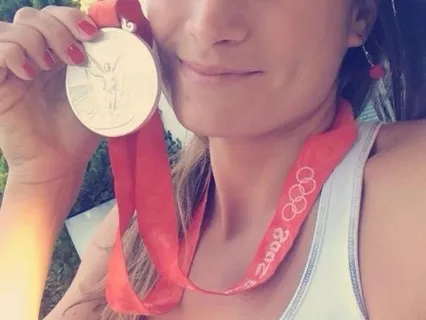
Who competed in the 2008 Summer Olympics,
Correct?
Yes.
Well,
So also Athens 2004 and London 2012.
But yeah,
Biggest success was in Beijing 2008.
Oh my goodness.
And what would you do?
I did 200 freestyle and I won a silver medal for Slovenia,
Which was the first ever swimming medal won for my country.
So I had.
Congratulations.
Thank you.
Yeah.
You're a star in Slovenia.
You are.
Yes.
I mean,
It's a country with only two million people.
So I think three quarters of the country woke up in the morning to watch my finals.
So that's so cool.
Now,
With that being said,
I mean,
Today you're on the mind body podcast.
I can be talking about some things that have to do not only with the physical achievements that you'd accomplish,
But also on our end,
What goes beyond that?
What goes beyond the physical?
What goes into the mental and the emotional?
Now,
One thing is you're you actually started in the Olympics at a very young age,
Correct?
Yeah,
True.
I was I was 16 at my first Olympics.
Wow.
How do you even how do you even like I think when I'm 16,
I'm thinking boys.
So what does it take?
What kind of mental training at that point were you involved in to prepare for the largest sporting event in the world at the age of 16?
Great question.
So I've actually always been one of those athletes that dream big.
And ever since I was seven or six,
Seven,
When I started swimming,
I kind of had this dream of winning an Olympic medal.
And everyone always used to tell me,
Man,
Like,
You know,
That's very ambitious.
Are you sure?
I mean,
You know,
Well,
My family and my closest friends,
They always believed in me,
Especially when I was getting better around that age,
14 to 16.
But everyone used to say they used to doubt my big dreams.
And I just never let that get in my way.
So with 16,
Though,
Just making the Olympic team for me was a big deal.
So it was just a dream come true just to make it.
I can't say that at that moment I was the most mentally tough because also that year I won two European junior titles.
And that was very important for me for my junior category.
And then going into Olympics,
I was actually really distracted.
So I was just taking pictures with everyone in the Olympic village.
Yeah,
Trading pins and those sorts of things.
And enjoying the opening ceremony.
So,
But if you don't mind,
I can just share a little quick story of how I got ready for my 2008,
Which I was 20 and I was a lot more mentally mature as an athlete.
So that's where I can talk about mental preparation.
Sure.
It sounded like your confidence grew with the European championships,
But I don't know,
I've never been to the Olympics,
So I have to go on what you and Andrea talk about.
But I'm guessing when you're that young,
It might be overwhelming.
Is that possible?
Is that true?
That's such a great point.
So for me,
It was,
I mean,
I don't think I was as focused,
Right?
So I came in with great results.
I should have been fifth in the final with my best time,
But then I think the nerves got to me.
I remember getting ready for my race.
It didn't feel as good as it should.
I think,
Yeah,
Physically I tightened up.
I was a little scared.
So yeah.
But then I learned the lesson and four years later in Beijing,
I really turned up that notch of mental preparation in 2006.
It all started in 2006 where somehow deep down in my heart,
I really started believing that I can win an Olympic medal.
And one of my high school friends actually believed in me more than I did.
And he told me,
You know what?
You should just draw an Olympic medal around your neck on a picture.
That's awesome.
Yeah.
And then he did that.
So I didn't do it.
And then the next day he did it for me and on paint,
He just drew this Olympic medal around my neck.
It was gold and it said Beijing 2008.
And I told him,
You're crazy.
What are you thinking?
And he told me,
Sarah,
Just print this out,
Stick it on your wall.
I love that.
Yeah.
And that's what happened.
It's a great visual.
You're seeing it every day.
Where did you put that picture up,
Sarah?
It was in my living room.
I'm sorry,
Living room,
Bedroom.
In my bedroom.
And yeah,
I actually,
I saw that picture every single day from 2006 to 2008.
And as I was progressing and getting better,
I actually also wrote down a time,
Which was the world record in 2007 that year.
So my mom comes in and she's like,
Oh,
There's the,
Oh,
There's the world.
I put like,
You're ambitious.
Which was actually,
You know,
Two sec,
No,
Well,
So nearly three seconds faster than my time in 2007,
But I just never let any doubt come in the way of thinking,
Hey,
You know,
This isn't possible.
So for,
I think visualizing that medal and visualizing that result,
Of course it took more mental effort along the way to do that.
I actually sat down and I could picture myself in my head swimming that exact time.
And I used to do that not every single day,
But I put a lot of time and effort into,
You know,
Really sitting down,
Quieting my mind and visualizing that and really pretending that I have already achieved that success.
My family was there support to support me.
My dad and I used to joke around a year before 2008 Olympics,
You know,
Like,
Hey,
You won an Olympic medal.
How would you respond?
Well,
Me and my dad were on this journey of,
You know,
This is possible and it's going to happen.
Whereas my mom was like,
Oh my God,
You're brainwashing my kid.
You know,
So yeah,
It sounds like you did it yourself,
Like something within you.
I mean,
It was already naturally doing some of these steps that we often teach other people.
Right.
So I did,
I did naturally come to that.
I don't know how,
But I've,
Yeah,
I guess I did.
So,
But yeah,
Visualizing was a really big part of my success.
And I used to,
I mean,
Every single practice,
If things didn't go well,
I used to actually erase.
I used to pretend I have this white eraser in my head and I used to erase the practice and kind of reswim it.
So I used to.
Oh,
That's great.
It's like a mulligan.
It's like a do-over,
But in your mind of sorts.
Yeah.
Right.
So yeah,
Things like that.
My attitude was always in place.
I woke up every single morning at 440 and jumped in the pool at 515 knowing that work needs to get done.
And then of course,
I mean,
It sounds all rainbows and unicorns,
But actually in 2007,
I had a really,
Really bad season and it only,
You know,
Half a year before Beijing things started to roll out the way I wanted them to.
So just staying persistent and,
You know,
Seeing failure as an opportunity and growing and learning.
All those actually normal things that come along as,
You know,
Aspects of performance.
So I think,
Yeah,
They came more naturally to me.
If I had some additional help,
I think the medal would have been gold.
Can I ask you a question?
Something keeps running through my mind,
Comparing the two Olympics.
Do you think,
And don't let me put words in your mouth,
That there was any difference between like happy to get there and then the second Olympics is like more commitment to do better.
Like it's beyond hoping I do well.
It's like committing to do well in a sense.
Like I'm going to take action to commit to it.
Great point.
I couldn't be more true.
I think as a 16 year old,
Like you said,
I think I just,
Not that I wasn't committed.
I just don't even,
I never went beyond thinking of something more than just making it.
Yeah.
And then really when,
You know,
When I started becoming that senior,
So like an older swimmer and getting more international experience from world.
I mean,
Like just the senior categories,
Junior.
Yeah.
But yeah.
So experience things like that.
I think they really contribute.
So yeah,
In Beijing,
I really knew that I have to get my job done instead of just kind of being there and being all happy.
So yeah.
Well,
So speaking of job done.
So in Beijing,
In the heat going into the final,
You actually broke the Olympic record.
Is that correct?
Well,
Yes.
How did you,
Yes,
You know,
Google is awesome.
No,
Cause as I'm,
As I was creeping you,
I had to do it.
You know what I'm saying?
So I was looking online to understand a little bit more about you go and try to like frame myself for being on the line with such an accomplished athlete.
And let alone as everyone can hear on the line,
What a wonderful person you are.
But considering you did that on your own.
And I think Chris and Colleen,
We had talked about this on probably one of our earlier podcasts as I was kind of the athlete on the hot seat a little bit was I didn't have formal training,
But you say sometimes people just get it or they have that,
That thing that clicks in their brain that helps them to manage and cope and learn and grow mentally as well as physically as an athlete.
Yeah.
I think what really helped me for example,
Was the support I had at home.
I think you said,
Yeah,
I did it by myself,
But I think family support is a huge deal for parents that have athletes at home.
They all understand the commitment it takes to drive to practice every single day,
Twice a day and meets and all of that.
So I think the support comes from there.
I have a twin brother and I used to be really competitive with him when we were kids and my mom used to train us.
I spent most of my childhood living in Dubai in United Arab Emirates and my mom was our coach.
So I think all those little things contribute to you growing into this athlete.
Whereas,
Yeah,
When you're older,
You really do need to figure out on your own whether or not this is something you want.
And how bad do you want it?
And I think the biggest difference maker is in that question,
How bad do you really want it and how committed are you willing to stay to make those dreams and goals come true?
Because there's millions of other athletes around this planet who want it just as much,
But it's more about how much are you willing to give of yourself every single day,
Committing to being an athlete 24 hours a day.
This means,
Yeah,
Well,
Getting school work done on time.
Yeah.
So all of those things.
And then luckily,
Somehow I got there myself,
But which is a sad thing because in Europe,
Sports psychology is kind of made fun of.
I mean,
Not mostly,
Yeah,
In Slovenia.
Well,
So they say,
Oh,
You can't figure it out on your own.
You need help.
So I actually,
Luckily,
I was lucky because somehow I got positive type of personality whereas a lot of my friends who are just as big of potentials never made it because they choked under those situations.
So use some support.
You're saying,
You know,
I don't think the culture,
I mean,
Maybe the culture here in the US there is a little bit better,
But I do think there's still a stigma.
I think that goes with being an athlete,
Sort of like I can do this myself.
I'm strong enough.
I should be able to figure this out.
I even think about,
You know,
How often suck it up princess,
Like what's wrong?
Just get it done.
Don't say anything.
Just get the job done or get off the court.
It was kind of like that mentality,
Same thing with the words that we heard as an athlete from our coaching and from that stuff.
So I would agree with you.
Absolutely.
So it takes a lot of mental effort to just,
Yeah,
By yourself,
Stay strong.
If you don't have that,
Well,
Yeah,
Like I said,
My family was my biggest support system.
My coach was actually crazy.
I mean,
He was yelling,
Shouting at us and yeah,
Like a lot of swimmers quit because of him,
But he was this really tough guy.
And somehow I didn't let that get to me.
So I just kept on my journey and I knew work has to be done regardless of my relationship with my coach.
So I think a lot of factors have to come into play when it comes down to what makes an athlete really mentally strong and fit to deal with all those sorts of pressures.
And something really important too.
I think you said you have to want it bad enough.
And I think at some point you have to decide this is my goal,
Right?
And not my parents goal or a coach's goal or someone I should please or of that nature.
It's more like,
I think it has to be a deep commitment within yourself.
So Sarah,
I have a question for you.
Being as young as you were when you went to your first Olympics.
I just want to kind of go back to that.
That's so interesting to me in how far you went at a young age.
Now being that young and how many hours,
Like I have two questions.
The first question is how many hours would you say that you would be putting in on a weekly basis in the pool and in training or conditioning or whatever it may be,
How many hours a week would you say prior to the first Olympics in 2004 that you were putting in to prepare,
Get ready for,
Qualify and then make it to the Olympics?
How many hours a week would you say?
So I just have to make it clear that until I was 13,
I didn't train twice a day.
So I actually,
I was one of those late bloomers and I didn't take it that harsh from such an early age.
So from 13 to 16 years of age,
I actually did start training twice a day,
But well,
And not even every day twice a day,
But let's say on average I spent five hours a day in the water on a double practice and you know,
Times five,
Let's say that was a little less than around 20 hours.
No,
A little more.
Well,
Okay,
Let's say just when I was around 16,
Yeah,
20 hours a day,
A week in the water.
And then we had three to four times a week also gym sessions,
Which lasted an hour and a half.
So prior,
Yeah,
To 16,
Not as much as then later on.
Yeah.
But with that being said,
You know,
Those ages are growing ages mentally and physically,
Right?
Where you're learning about yourself as a human being,
There's puberty,
There's all these things that are going on.
And you might've,
When I look back,
Just sacrificing childhood,
You know,
The things that happen,
How do you,
Do you,
Do you look back on those years and you,
You,
You wonder,
You think about the things you could have been doing instead of swimming.
Do you have any regrets whatsoever?
You know,
I've just,
I'm just,
I'm thinking out loud.
No,
I love it.
I see.
I've never been one of those teenagers.
Actually,
I don't think I had time to be a teenager.
No,
Actually,
Well,
No,
That's so not true.
I did.
I had all the fun I needed to.
And my mom,
She took me to parties and I even stayed up late till one or two AM.
And then she came to pick me up whether,
You know,
If it was in a different city or,
So I did enjoy my friends at school.
I did make sure that I played and I had fun,
But I think it was just all so well organized that I did get the work in at practice.
And I was so committed to that,
That it was a hundred percent.
And when I needed to have fun,
I did.
And I actually took my,
My swimmer friends were my friends.
I mean,
I came to practice to also have a good time with them.
And that environment was really inspiring and motivating.
We had a blast in vans,
Traveling to meets.
And I mean,
Throughout my whole career,
Even at college when I swam for Cal and it's all those little things that make it fun.
And I love working out and practicing and pushing my limits.
So even as a younger kid,
It's,
It's crazy to say that,
But You still had fun,
You still had fun doing that.
So,
Yeah,
That's my point.
So it was fun.
You know,
It was challenging.
Of course it was really tough,
But I mean,
I guess when you love what you do,
It's,
There's always,
There has to be a sacrifice.
If you want those goals and dreams,
They just can't come without the hard work.
So Sarah,
How did you get to Cal?
Yeah.
So I,
I was such a foreigner.
I didn't even know what recruiting trips meant.
So in 2007,
We had world championships in Melbourne and I was swimming really well.
I actually got seventh in the final.
I had,
I wish I medaled there,
But I got food poisoning two days before my 200 fly.
Yeah.
So I got this IV,
You know,
Just before my race and I was like,
Oh,
So,
But yeah,
I met my coach there,
Terry McKeever,
Who was on the USA staff and she just kept track of my results.
I have to say that I had two Slovenian swimmer friends on the men's Cal swim team.
So they just,
Yeah.
So they told me,
They were like,
Sarah,
You're not going anywhere else but Berkeley.
So no pressure.
Yeah.
So they just introduced me to the coach.
She seemed really interested.
And then in 2007 in the,
Well,
Yeah,
October,
November,
I just signed my full scholarship,
Which for me was the biggest reward I could ever get through swimming.
So,
Yeah.
And then in 2008,
I came actually four days after Beijing,
I came to Cal with a medal.
And there was,
Yeah.
So really,
That's something I've always also dreamed of is continuing my education at such a high level and being able to swim at the same time because the US is really only the place in the world where you can combine or just,
You know,
Be a student athlete,
Combine sports and academics.
So yeah,
It doesn't happen in Europe.
You're either a professional athlete or you just quit your sport and you dedicate yourself to being a student.
So yeah,
That was also a dream come true.
And this is where you develop more interest in mindfulness,
Right?
Well,
Let's do this.
Let's take a break.
We'll take a pause.
Again,
We're going to keep our listeners on the edge of their seats.
So we're going to take a quick break right here.
When we come back,
We'll start to go into how Sarah's experiences as an athlete has now translated into an interest in academics and the area of mindfulness and sports psychology.
So we'll be right back.
Don't forget to try out Fuse lenses for all of your replacement sunglass needs.
Just go to www.
Psychologyofsport.
Net forward slash fuse to find your brand and frame.
Pick your color.
Order your brand new lenses to arrive.
If they don't have them,
They'll send you a prepaid label.
You send your shades to them.
They'll send back your sunglasses with custom lenses installed.
Believe me,
They look awesome.
I'm rocking a set myself.
You can check out their new Bella lens,
The world's only custom cut pink mirrored lenses.
So go to www.
Psychologyofsport.
Net forward slash fuse today to order your new set of lenses.
Okay,
We're back.
Sorry to cut us all off in the middle there,
But I wanted to make sure that we took just a quick moment for our sponsor.
But Sarah and Chris and Colleen,
You guys had a question for Sarah as we look into where her career as an athlete and what she's learned as an athlete has now evolved into her academics and moving forward.
Exactly.
I know,
I mean,
I know Sarah,
You and I share an interest in sort of the mindfulness aspect of sport.
And I love kind of the research that you've gone into and with your experience.
So can you just talk a little bit about how maybe you got started and what led you to that route?
Yeah,
Of course.
So in Berkeley,
Just so everyone knows,
That's where I started developing my love for psychology.
And I was just obsessed with all my classes.
And I was like,
Wow,
This is something that really interests me.
And more than anything,
I really do understand.
I mean,
Especially when it comes to performance psychology,
I understand it.
I've gone through it and just that passion continued into that academic field,
Mostly because I'm so eager to help people fulfill their potential.
I mean,
Seeing people that haven't fulfilled their potential throughout my career makes me really want to do this and say,
Hey,
Athletes,
There's so much potential out there and not everyone is achieving it because they have that mental blockage.
So finishing my degree from Berkeley,
I actually went to San Diego to work at the UCSD Department of Psychiatry.
Dr.
Martin Paulus was the leader of our OptiBrain lab.
It's called OptiBrain because we were actually discovering neural mechanisms of resilience.
So in simple terms,
You're trying to look at the brain.
You're looking at the structural and functional level.
So you're looking at how on the structural and functional level a brain appears resilient,
Right?
So under stress.
So how does someone come back or remain strong in spite of?
In spite of challenges.
Yes,
Exactly.
So that was really interesting for me because I've,
Like an Olympic medal was one of my dreams,
But then becoming a published researcher was another.
You have good balls,
Sarah.
Can you study your brain?
I was really fortunate to work in that lab under the leadership of Dr.
Lori Hayes,
Who was a postdoc and I worked with her.
And what we did is we compared brains of US Navy SEALs,
Marines,
Olympic athletes,
And well,
College campus students.
They all go through quite a bit of stress.
That's all fair.
Yes.
Well,
So what it comes down to is that mindfulness and awareness that really differentiates these groups of people.
So we have these high resilient elite performers compared to the average population that's not so much exposed to stress.
I mean,
Yeah,
You know,
Exams is good,
But not at the level of like an Olympic athlete or a Navy SEAL or something like that.
Exactly.
And so Navy SEALs also went through their really famous MMFT mindfulness based mind fitness training.
And what we did is we scanned their brains prior and post their mindfulness training program.
The most intriguing part about all these studies is just showing how the more aware you are of a situation.
So we're talking even situational awareness and then awareness of your thoughts and then physiological responses to stress.
So the more aware we are,
The more in control we are of that situation.
Meaning that once you're in,
So while we stress them out,
We stress out the study participants by making them breathe through a tube.
And then this tube is blocked at certain intervals.
Oh my goodness.
So it's kind of like breathing through a straw.
So we're looking at how do these people even anticipate stress and then how do they deal with stress and how do they recover post this fist?
It is for everyone that like if someone restricts your breathing,
Right?
It's a physical.
It's like going underwater for the Navy SEALs.
So it's very similar to what they actually have to do.
Right.
Or swimmers,
You know,
When you breathe through a straw.
Yeah.
So the thing is though that because we're so used to being exposed to these crazy challenges,
Our brains are actually wired to deal with whatever comes our way.
So what happens with these elite high performing athletes,
Really resilient people is not only are you able to deal with the stressor better,
Meaning,
You know,
You're more calm,
Your brain activity is much more calm.
You're also likely to anticipate the stressor.
So you're so aware of the situation that you're actually preparing even ahead of time.
Right.
So I kind of anticipate it coming because while you do get this,
You know,
Little signal,
Hey,
You have 25% chance that we're going to restrict your breathing.
So what happens is I prepare or,
You know,
So let's say a Navy SEAL,
He prepares ahead of time saying,
Okay,
I have to adjust my breathing.
I have to keep my thoughts,
You know,
Under control and say everything is okay.
Right.
So he's aware like his thoughts and his breathing.
Right.
So he's in the moment to be able to do that to manage that.
I guess have an awareness of that.
Perfect.
Right.
So that's the exact point.
He like he or she,
Whoever it might be,
Is staying in the moment and really dealing with the situation as it goes.
And then post stressor,
It actually,
Your brain,
Your levels of stress really go back to normal as if nothing ever happened.
So it's really that quick bouncing back.
Recovery.
Yeah.
It's like cardio for your brain if you like train your endurance,
Then you recover quicker from the,
Exactly.
Yeah.
But I think that's actually what sports psychology is.
Like in a nutshell,
It's recovery for the brain.
I like it.
It's like this,
Right?
Yeah.
Or it's,
I feel it,
It's more of,
It's that whole training of how,
How are you going to be able to deal with a stressful situation?
How do you anticipate it?
How do you deal with it once it's happening?
And then,
Yeah,
Like you said,
How do you recover from it?
And it's just interesting,
Sorry,
Sarah interrupted you,
But is the idea that I think some coaches think that's bad to plan,
To plan for X,
Y or Z.
I don't know.
Do you have a thought about that?
Well,
So yeah,
I mean,
A lot of coaches,
Unfortunately,
Even that I know are not even aware of the situation of how important it is to,
Yeah,
To prepare in advance.
Well,
Actually,
Well,
Some,
Yes,
I'm not,
I can't say for every coach,
But it's really important to plan ahead,
Right?
You have to have that performance plan of,
You know,
Even anticipating,
Hey,
If something happens,
How do I just,
If I miss my turn on the wall,
What can I do to recover from that?
Right.
But as an athlete,
You have to be even more aware because you're the one in this,
In that situation.
So it's all up to you.
How do you mentally kind of stay focused and concentrated,
Right?
When,
When something unexpected comes your way.
Well,
Something just made me think of something.
Again,
My brain goes off.
I apologize to everybody who's listened to us before,
Cause my brain goes off.
This is one thing,
As you mentioned about coaches,
This is something I didn't realize until just right now.
Now when I think about coaching,
As I'm starting to coach now,
I'm one of very few coaches that have also played at a high level,
At least where,
Where I'm coaching.
So I'm curious as to from you,
When you think of your coach,
Your very tough coach that was very stern and strict or in your field,
How many coaches have actually been swimmers at a high level that can relate and even understand the situation to be able to help or even understand that help is required.
Well,
From my personal experience,
I can tell you that in my group of coaches,
None were actually at a really high,
High level.
But I think though that that's what makes coaches,
I think in some way really good is because they are amazing coaches,
Even,
Even though they haven't been at that level themselves.
So I think that sometimes is beneficial because if you've been at that level yourself,
Then I think you could possibly over coach and you think,
You know,
I don't know,
I see it as differently.
So it doesn't really matter at what level the coaches,
As long as this coach gets you to the level where,
You know,
Is that high class,
That's what's most understandable.
I think it was just more to the fact of,
Is that why coaches don't understand this as well and may not appreciate the value of this because they haven't had to go to that point to even know how important it is.
Although they are wonderful coaches.
Don't get me wrong.
I mean,
I'm,
I may have played at a high level,
But I'm the stupidest coach out of all the coaches I deal with.
But,
But,
But I bring a different aspect to the sport,
But they're wonderful coaches,
But do they truly understand?
And I've had conversations with my head coach on more than one occasion where he doesn't understand necessarily the mindset of the female athlete and I've had to defend them and just help him to understand what they're thinking and why they may be responding the way that they are to a situation.
But maybe that's one of the things that might be worth considering for maybe how to get through to a coach or maybe get them to understand what they don't understand and why it might be important for their athletes.
Of course,
I think Chris could possibly say more on this.
She's worked more in that field,
But I think,
Like you said,
What really makes,
Let's say,
Andrea you as a coach that valuable is just the fact that you know what kind of stress and pressure athletes go through at that level.
And that's where I think the sports psychology comes in where you can really contribute and say,
Hey,
You know,
These are the things that need to be also taken care of in order for you to perform.
A coach can get you physically ready,
But they don't know the mental aspect of what it takes to get there.
So you're totally right.
So you as an athlete who's been there,
You know how well the mental aspect,
I think is 90% of the game in the final.
And so,
You know,
That's where you can really contribute.
And I think it's really important.
I think there's a growing awareness among coaches about the value of sports psychology.
I think it's more professional and Olympic and elite athletes talk about using it and it becomes more okay,
Quote unquote,
To use.
I think there is a sense of opening to it.
And there is the risk where I do think some coaches still think of it as weak or don't try to my territory.
There's a territory sort of process to it when really it's not about coaching the athlete in any way.
It's about helping them know what they do when they're successful.
I think a lot of successful athletes,
Sometimes they're simply not aware what they're doing to make them successful.
But they already have the tools,
But when they're struggling,
They haven't figured out what do I actually do when I'm successful?
I think it's a little bit what Sarah's research is about too.
We're finding that,
You know,
When they are successful,
This is what's happening in the brain and this is what they're doing.
And that's so good for us to know because then we can actually teach it.
So true.
Yeah.
No,
That's just a great point.
It's all teachable and that's the beauty of it,
You know?
And the more the word is spread out,
The more we talk about mindfulness techniques,
All other types of performance psychology,
You know,
That aspects that are also really necessary.
I mean,
If you master all of that,
You know,
There's just you have a lot more chance to really make it because you have to make it when that opportunity comes.
And it's in that like that's the moment that's where you have to make it.
And if you don't,
You know,
You miss your chance.
So how do you make it in a moment where it matters most?
And when you have that opportunity that's available for future and now coaches,
Really people who are on the forefront of this are really going to lead the path in the mental game.
And I think mindfulness can really do it.
I think it's a not quite as aggressive approach as sports psychology for a coach.
But I think mindfulness techniques is a doorway into understanding the power of the mind.
So I think you're right,
Sarah.
I think we need to just talking about it,
Keep giving tools and tips as to how to do it and create awareness.
And I think that's where this podcast comes in.
Sorry about that,
Sarah.
I think that's where this podcast comes in is that this is a casual conversational informational opportunity to share real life scenarios,
Not only as professionals,
But also speaking to individuals like Sarah,
Who has lived it understand is appreciates it has gone beyond that because it's an important part of your journey.
And hopefully somebody's listening that will start the conversation somewhere else.
So this conversation continues in another staff room or in the locker room with athletes or with coaches at a conference.
Hopefully this starts as that little spark that gets the conversation and some change on the go.
Yeah.
I think what's really important to say is that as athletes,
We're actually really lucky that we're exposed to challenges every single day where you have the ability to kind of practice that awareness of your physical body,
Of your mind every single day.
I think,
Andrea,
You can relate,
But at practice,
When you go through grueling practices,
You have to stay positive.
You have to have that positive self-talk.
You need to know how to let go of those doubts and fears.
And it's all that,
And you're exposed to that every single day at practice,
All those hours.
And we naturally have that opportunity to say,
Hey,
Thoughts are just thoughts.
Just let them go,
Be in the moment,
Let the body move.
Where even like the eraser tool.
Yeah.
Yeah.
The white is more of exactly that.
That's awesome.
I'm just going to practice erasing my words,
Like not everything I say is true.
How do I move on?
And Sarah,
What I hear you saying is this kind of,
It's really up to you to do that.
It's up to that particular person to take that approach that you have to do that because no one's going to do it for you.
I think one thing- Yeah,
True.
But I think people in general,
I mean,
What's beneficial is that you take that into your every single day life.
How do you deal with traffic?
How do you deal with- Right.
Doing laundry.
Like,
Right.
Traffic's a good one.
Chris.
Chris is arriving.
He needs an eraser.
She's going to bring a whiteboard eraser with her and get it right by the dash.
It's like,
Here you go,
Swipe it away.
It's good.
Yeah.
So it's all about,
And the best thing is that the more you do it,
It just becomes so natural.
And that's the beauty of training your brain to really,
When stress comes about,
That you have that sudden click and you turn the situation around,
Whether you say,
Hey,
Everything is okay.
I'm back,
Everything's under control because if you don't,
Then that stress takes over and it just causes chaos instead of letting you do the best you can do.
And those skills,
They just don't go away.
That's why I'm such a big believer in training your brain and especially with those mindfulness exercises to be more aware because,
Yeah,
Then you're the master.
And I feel like you can handle anything that comes your way.
So that's mental smartness,
I think,
Not just mental toughness.
It's knowing that there's tools and that if I learn about them,
I can use them.
And just like you were talking about the hours you put in for practice,
You also put in time like visualizing,
Like you practiced your tools.
So there's some practicality to it.
I think that people think it's kind of hard to measure,
Kind of hard to see,
Kind of hard to feel,
But really there is something to it that's very practical that it's down to earth.
You can do it.
You can bring it into your real life.
I just saw a quote just yesterday from Billie Jean King,
The tennis player.
Wonderful.
She said that when they take surveys of women in business of the fortune 500 companies,
The successful women's reported that 80% of them were in sports as young women.
Yes.
Wow.
No way.
Yeah.
So talk about bringing it to real life.
I mean,
These skills are transferable and they do help you succeed in life.
I think that's a great point,
Sarah.
I actually have one question that's been burning in the back of my brain since the very beginning.
Now,
Because my brain is always on fire.
And this is for the entire group.
So we talked about mindfulness,
But I believe,
And I think we had this conversation a little bit before,
That there is a difference in the challenges faced by athletes,
Male or female,
Whether they're in an individual sport or a team sport.
Now for you,
Sarah,
You swam,
But did you do any other sports or were you involved in any kind of team based sports at any point in your career or as you were younger or maybe now?
Yeah.
Well,
So no,
I've only swam.
I'm one of those.
I came to the US and everyone was like,
Oh,
I did baseball and basketball and volleyball when I was small.
And I was like,
No,
I just swam.
I didn't have,
Well,
So yeah,
So I just swam.
But the first time I experienced swimming more as a team sport was when I joined Cal.
And I think you're right.
So the psychology of a team sport,
Even though you're an individual swimmer,
There's still a different component to being a part of a bigger group.
It's actually really beneficial.
I think as an individual athlete,
Your mental game has to be so much more on.
I mean,
I'm just,
It's me and the pool and I look at that bottom of the pool and the line and I just keep going up and down.
Whereas if I think about being in a group and here are my teammates to support me,
That's really crucial to your everyday success and eventual success.
I think being a part of a group that inspires you,
Motivates you and helps you when you have tough days,
When you as an individual can't get out of bed.
So yeah,
That's,
I mean,
I have no real experience with a group sport,
But for me,
Just being as a bigger part of a team really helped me stay motivated and committed and loved,
Loved college swimming.
It's incredible.
I thought it was more fun than the Olympics.
It sounds like you've obviously had such a wonderful experience in your career.
But you can tell us,
I mean,
You know,
As a team sport.
Yeah,
You're a volleyball Andrea.
I mean,
Basketball or Sam or something.
Yeah,
There you go.
I played both.
I played individual sports and team sports.
I think Sarah is exactly right.
It's a whole different mindset.
You know,
Golf,
For example,
Is a whole other mindset.
You have to be on and you have to be ready to go.
Whereas with the team,
You can lean on them a little bit more and you can get away with a little less focus,
So to speak.
I've seen the other side where,
As you talk a lot about support,
That's great,
But you don't choose your teammates.
And if there's any type of conflict that adds more challenge to you as an individual,
Should there be,
You know,
When I went from playing amateur sport to playing pro in Europe,
Very different landscape.
The minute you go into a pro scenario and it's not necessarily about team,
Depending on the individuals on the team with you.
Sometimes it can be very negative.
It can be very,
It doesn't gel and you just have to find a way to cast on this.
Oh no,
No,
No.
We so can.
Oh my goodness.
So unfortunately we're actually getting too close to the end here.
I have one big question if you guys wouldn't mind me asking this one.
If we want to.
When you're done,
Andrea.
Oh,
You do too.
I have two questions to end this up.
So Sarah,
Now that you have been through being an athlete at a very high level from a very beginner level to a very high level and then moved on to this career,
If you were to look back and if you were to be the mental coach for you in 2004,
What skills would you teach yourself and what would be words of wisdom and nuggets would you give to yourself as you're on your way to the 2004 Olympics?
What would that be?
Right.
I think,
Well,
You know,
You have to consider the age.
So the thing is with young athletes,
The beauty of it is that you have nothing to lose and you come and you can just fully enjoy yourself.
You're new.
Nobody knows who you are.
Nothing is expected of you.
So I would just,
You know,
I think not that I felt the pressure I needed to do well,
But I kind of did too.
You know,
It was,
I was the youngest Olympian and people were expecting a lot from me.
So I just wish someone told me,
Hey,
You know,
You're here,
Enjoy it.
This is it.
This is your dream moment.
Have a good time.
Just,
And let go,
Let go and just do what you know best.
And right.
And you have nothing to lose.
I wish I heard that.
I think that would really help me relax.
Maybe more breathing techniques.
I don't even think I ever thought about breathing when I was 15 or 16,
You know,
Just to take a few deep breaths before I get on,
On the blocks.
And more of that visualizing,
I think it's really crucial if kids start early,
If you go with that mindset of knowing what you need to do in a race.
I think as a 16 year old,
I still just kind of did it.
I just went for it.
But kind of learning those skills of how do you approach a race is also really important.
But like I said,
As a 16 year old at Olympics,
I would just say,
Enjoy,
You have nothing to lose.
Awesome.
Can I hire you as a coach?
I mean,
What would you all say?
You know,
You have,
All you have like Chris has consulting experience and I don't know.
I would tell the person almost the same thing as you were talking.
I was thinking 16 year old,
You're right.
There's one thing really nice about being young and that is you have nothing to lose.
Right.
And I think it's a whole different mind frame when you go in four and eight years later where now someone knows you or they're going for your back.
It's really different.
And even in college,
It's a little bit like that.
You come in sometimes as an unknown and then you become the person to be.
And so it's your mind frame really switches.
Don't you wish you always stayed in that mind frame?
Yeah.
Yeah.
Because it's like,
I don't know who that person is.
I really don't care.
I'm just going to do my race.
No big deal.
And that's like,
Oh my God,
That's so and so.
I can't believe I'm in their race.
Yeah.
Maybe we should just stick to that.
Guys,
We have nothing to lose.
Like our life.
There you go.
So,
Chris,
I believe you had a question.
Yeah,
It's Colleen.
And my final question for today for Sarah is,
Did you accomplish your next goal?
Are you published?
I did.
We got published in the case.
Yay!
And my third biggest dream was being on a TED talk and there's a TED talk in Slovenia,
TEDx Slovenia in November and that's,
I got a TED talk too.
So congratulations.
Yay!
We get her first though.
That's awesome.
Can you let us know when that's done?
Oh,
Thank you.
I will.
Yeah.
I'll be talking about my new projects and things I'm working on with aviation psychology and getting pilots mentally tough and resilient.
Wow.
So yeah.
Oh great.
Sarah,
Congratulations.
Congrats.
Bye.
Thank you.
And congrats,
You know,
Saying all of you.
I'm still at the beginning of my career.
I just finished my sports career.
So just trying to make it in the real world now.
We can't wait to like keep tabs of you,
But I just thought of,
I'm going to ask because we have like a couple of seconds left.
I have one more question.
So when you went to the Olympics in 2008,
Did you take that picture of you with the medal on your neck with you when you were there?
The one that your friend had made for you?
No,
It was in my house.
But then in Slovenia,
Yeah,
I didn't take it with me.
But I kept it was crazy though.
So just real quick before my race in 2008,
I actually got all my stuff ready for the open for the victory ceremony.
So because my backpack and everything is further away at the warm down pool.
So I actually kind of,
I really believed in myself.
So I got everything ready for the medal ceremony and I just kept it closer so that I had time to go there.
Oh my God.
High five Sarah.
You're like in the pool,
You're looking at the line as you're going,
Going,
My stuff is right there.
I'm ready.
As you're like swimming,
Going through your.
.
.
Oh,
That's so awesome.
That is so powerful,
Sarah.
So powerful.
I kept the attitude,
But the picture was in my house.
But then my whole country knew about it in the interviews that followed.
And I think the best part of all of it is just sharing my story,
Especially with little kids in Slovenia.
It's a tiny country.
You drive across my country in two hours and I just tell kids,
I mean,
I have a favorite quote that says,
If your dreams don't scare you,
They're not big enough.
And I just want kids to go big and set those goals high.
And that's just why I'm here.
And I'm lucky I made it with all my support and with my hard work.
And that's just the story I want to share.
And if you really want something,
It's really possible.
There's no one stopping you,
Just your head.
So get your head right.
Go see a sports psychologist.
Yeah,
Go see a sports psychologist.
Read Sarah's paper.
Read Sarah's published paper.
Sarah,
Can we post your published paper on the podcast so people can read it if they want to?
Yeah,
My lab,
I mean,
Me and my lab mates and Dr.
Marz and Paulus,
Who was the leader of the group,
Were really happy with it.
It got published in Behavioral Neuroscience a month ago.
So I'll share it with you and then you can share it.
More studies like that will be coming on that awareness and resilience.
So yeah.
Great,
Sarah.
Keep up the good work.
Thank you.
Thank you girls so much,
You guys.
Yeah,
Such a pleasure.
If anyone who's listening needs help,
They know who to call.
There's four of us here.
Well,
Three and a half.
I'm the half.
Andrew is the half.
No,
Not like I am.
We all have different opinions.
Well,
Thank you all so much.
My goodness,
The time goes by so quickly.
And thank you to all of our listeners for listening in on the MindBody podcast.
And I'm hoping,
And I'm prefacing this,
That maybe we'll get a chance to get Sarah Isakovich back again in the future where we can talk about more exciting things that you're working on and we get to pick your brain in the hot seat.
That would be great.
Thank you so much.
Have a great day,
Guys.
Thank you all.
Thank you.
Thank you.