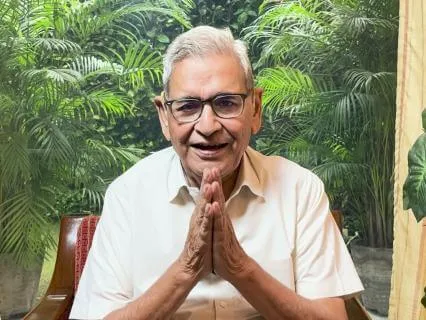
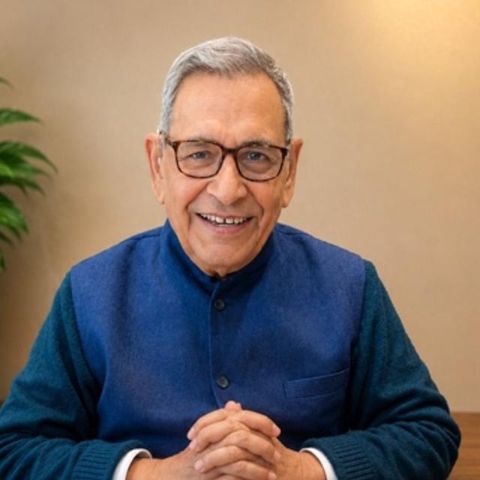
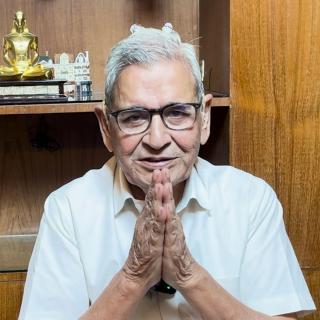
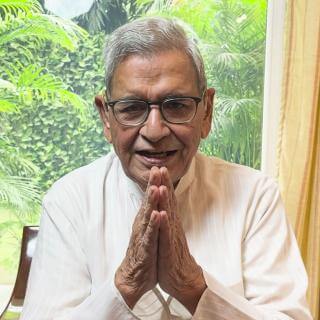
Namaste and Jai Jinendra.
Today we are going to talk about about the first spiritual trait of the soul.
Supreme forgiveness.
Or Uttam Shama.
So,
What is forgiveness?
What do we mean by forgiveness?
Forgiveness begins with an understanding.
Of the divine nature of our own soul.
An example,
In simple terms,
Forgiveness means we do not allow anger to arise.
Even when we feel provoked by the behavior of another person or even by our own perception of that behavior.
And most importantly,
We do not develop a desire for revenge.
Let me repeat that.
Someone may hurt me.
Someone may insult me.
Someone may behave unfairly with me.
But what I have a choice.
I can allow anger,
And the wrench.
Good day.
All right.
Or I can pause,
Understand what is happening within me and respond with forgiveness.
This is the beginning of forgiveness.
Forgiveness does not mean that we approve of wrong behaviour.
It does not mean that we should not take corrective action.
It means that while taking appropriate action,
We do not allow hatred,
Revenge or destructive anger to take control over the mind.
Forgiveness therefore weakens the destructive power of anger.
And when we practice forgiveness,
Sincerely,
We experience greater inner well-being.
Let us understand forgiveness through some examples.
I start with the first example.
Of Bahubali from Jain literature.
In Jain literature,
We have the wonderful example of King Bahubali.
Bahubali fought a war with his step-brother.
King Bharat.
And after winning the battle,
He had every reason to feel victorious.
He had defeated his opponent.
He had the power.
He could have continued the conflict.
But what did he do ultimately?
He forgave his brother.
And relinquished his empire to him.
Just think about that.
When we have power over another person,
It is easy to take revenge.
But true strength is demonstrated.
When we have the power.
To retaliate and yet choose forgiveness.
This is the spirit of forgiveness.
Let us take another example,
Jesus Christ.
When Jesus Christ was being crucified.
Crucified.
What was it?
His response.
What did it say about?
The people who were killing him.
He prayed for those who were responsible.
And ask that they may be forgiven.
Because they did not fully understand the consequences of their actions.
Think about the magnitude of this example.
A person is being killed.
And yet he is praying for the well-being of those who are killing him.
What an extraordinary expression of forgiveness.
It tells us that forgiveness is not weakness.
It can be an expression of extraordinary inner strength.
I give you another example from our own times.
Mahatma Gandhi We see a similar spread.
In the life of Mahatma Gandhi.
During his years in South Africa,
And later during India's freedom struggle.
Gandhi made non-violence and forgiveness central to his response to injustice.
He demonstrated that we can oppose injustice without developing hatred towards the person who commits this injustice.
Thus he showed that we can oppose an action without hating the person.
With this we come to the opposite of forgiveness,
Anger.
Now let us look at the opposite of forgiveness,
Anger.
I often like to describe anger and forgiveness as two sides of the same coin.
When anger dominates,
Forgiveness disappears.
And Ren.
Forgiveness becomes.
.
.
Stronger,
Anger becomes weaker.
So,
The question is why do we become angry?
Very often anger arises because something has not happened as per our way of thinking or the way we wanted it to happen.
Perhaps I had tried to do something and failed.
Perhaps somebody did not listen to me.
Or perhaps somebody did not behave.
According to my expectations.
Perhaps something Someone criticize me.
Perhaps someone did something that I consulted disrespectfully.
And immediately anger arises.
But let us pause and ask ourselves.
Where is the real source of this anger?
Is it in the person entirely?
Is something happening within me?
Perhaps my expectations were not fulfilled.
Perhaps the ego was hurt.
Perhaps my perception was wrong.
Perhaps I was unable to accept what happened.
Perhaps I myself made a mistake.
The real source of anger lies not only in what the other person did,
But also in me,
In my own inadequacies,
Expectations and perceptions.
This is why forgiveness requires us to look within.
With this,
Let us see what is the cost of anger.
Anger is not simply an unpleasant emotion.
It can affect us at many levels.
First the physical level and the one which we observe first.
When we become angry,
Our body reacts.
Our stress level increases.
Our blood pressure increases.
Our breathing becomes faster and our body becomes tense.
And repeated anger can contribute to various lifestyle-related health problems.
Second,
The mental level.
When we are angry,
Can we think clearly?
Perhaps not.
Our mind becomes agitated.
VDX.
Great today.
We may see things that we later regret.
So anger reduces our ability to think.
Clearly,
Calmly.
And make wise decisions.
Third,
Another important social level.
What happens when someone is habitually angry?
People begin to avoid that person.
Relationships become strained.
Family members may withdraw.
Colleagues may hesitate to interact.
Slowly,
The angry cut person can become isolated or lonely.
And finally,
The spiritual level.
According to Jain philosophy,
And that is one of the.
Severest kashayas or tainted emotions or inner passions that contribute to karmic bondage,
That is extended state of unhappiness or pain.
So anger affects us physically,
Mentally,
Socially and spiritually.
And therefore we need to ask,
Who is harmed first by my anger?
The other person or me?
And invariably the answer is I or me.
Before my anger hurts somebody else,
It is already hurting me.
That is why forgiveness is such a powerful antidote to anger.
Forgiving others and asking for forgiveness,
This is another aspect of forgiveness.
We need to learn not only to forgive,
Those who have wronged us.
But also to seek forgiveness from those whom we have wronged.
Why?
Because we are not always the victim.
Sometimes we are the cause of someone else's pain.
We may have spoken harshly.
We may have behaved disrespectfully.
We may have acted carelessly.
We may have misunderstood someone.
We may have allowed our anger,
Ego or expectations to hurt another person.
So forgiveness has two dimensions.
I forgive you and please forgive me.
Both are necessary for inner peace.
And Jainism takes this idea even further.
We do not seek forgiveness only from human beings.
We seek forgiveness from all living beings like plants,
Insects,
Birds,
Animals and other forms of life.
Why?
Because our actions directly or indirectly may cause harm to other living beings.
And we will get their reactions soon.
Or later.
So,
We develop and attitude of humility,
I may have caused harm,
Knowingly too or unknowingly.
I seek forgiveness.
What happens when we do not forgive?
Now imagine that somebody has hurt you.
We continue thinking about it.
We play the incident again and again.
We become resentful.
We say to ourselves,
How could he do this to me?
I will never forgive him.
I will teach him a lesson.
What happens?
Does the other person suffer?
Perhaps no.
But who is carrying the anger?
24 hours a day,
Me or I am carrying the anger.
That person may have forgotten the incident.
But I continue carrying it.
So resentment becomes a burden that I carry within myself.
It destroys my peace of mind.
It affects my relationships and it creates further conflict.
This is why forgiveness is life.
Oiling the wheel of life,
Making the life smoother.
It allows life to move more.
Sincerely or smoothly.
It helps us live in harmony with our fellow beings.
And according to Jain philosophy,
The attitude of forgiveness also contributes to accruing of meritorious karmas or becoming happier.
Now and later.
Now comes the practical question.
How do I actually practice forgiveness?
First of all,
Let us understand that there are some important prerequisites to practice forgiveness.
The first is forbearance.
We need to develop the ability to bear difficult situations without immediately reacting.
That is give a pause.
Sometimes things could have been much worse.
So instead of immediately becoming angry,
We can pause and think.
I am grateful that the situation was not worse.
This attitude of gratitude can reduce the intensity of anger.
Second.
Cut it.
I have to be brave.
There is a beautiful saying.
Chama Virasya Bhushanam that is Forgiveness is the ornament of the brave or only brave can forgive.
Why do we say this?
Because forgiveness requires strength.
Anybody can become angry,
Anybody can shout.
Anybody can retaliate.
But it takes courage to remain calm when we are provoked.
It takes strength.
To control our emotions.
Our own anger.
It takes inner courage to forgive.
We know and say that the elders,
The stronger,
And the more mature.
People have a special responsibility to forgive the younger or less mature persons.
Wisely.
Because young people are more likely to make mistakes.
The role of the elder is not simply to punish.
It is to guide,
Correct,
And help the person grow.
Of course,
Forgetfulness should not be confused with cowardice.
If I am unable to respond because I am afraid,
That is not necessarily forgiveness.
True forgiveness comes from inner strength.
That is why forgiveness is the ornament of the brave.
Only brave can exercise forgiveness.
How do we practice forgiveness in everyday life?
Let us now bring this idea into our daily life.
Forgiveness is not something that we practice only during religious festivals.
It has to become part of our lifestyle.
First,
Perform our duties sincerely.
Very important.
When we do our duties diligently and responsibly.
We reduce many situations that create conflict.
At the same time,
We should learn to be respectful towards others and practice gratitude.
Second.
Take corrective action whenever necessary.
Suppose somebody is repeatedly disrespectful to you.
Or someone is disobedient.
Or someone is indisciplined.
Or someone is shouting and disturbing you and others.
Should we simply tolerate everything in the name of forgiveness?
No.
Forgiveness does not mean abandoning responsibility.
We may need to take corrective action.
But while taking corrective action.
We should avoid hatred.
We should take it without hatred.
Revenge.
Or unnecessary anger.
This is the difference.
Action can be fun.
While the mind remains peaceful.
Forgiveness and our lifestyle.
Forgiveness also means developing a feeling of co-existence and accommodation.
We are all different.
We have different personalities.
Different opinions,
Different experiences,
Different expectations.
If we expect everyone to behave exactly as we want,
We will constantly become.
Instead we can learn to accommodate differences.
We can say you are different from me and that is okay.
This attitude reduces Any more shuttle?
And helps us.
Live together peacefully.
So forgiveness is not merely an occasional act.
It becomes a way of life.
And a continuous practice.
Now we see that forgiveness is universal and forgiveness is not limited to Jainism.
It is a universal human value.
Different religious traditions have developed different practices for seeking forgiveness and repentance.
For example,
Christian practice Confession.
Through which a person acknowledges wrongdoing,
Repents,
And seeks forgiveness.
Jews of the young people.
A sacred day associated with repentance and seeking forgiveness.
And Jain practice Pratirika Mantra.
A daily audit of our activities,
Reflecting on our actions,
Recognizing our mistakes and seeking forgiveness.
During the last annual day of our destruction period,
There is a spirit of forgiveness which is a special culmination.
Jain's word is owned with the words Mithyami Dukkadam.
And the beauty and this beautiful Jan Krayer says Come maybe?
So ready,
Madam?
Some real diva.
Come unto me.
Maybe,
But I don't know for sure.
We had a very charming.
New Guinea.
The message is,
I forgive all living beings.
May all living beings forgive me for my faults.
I have friendship with all living beings.
And I have animosity towards none.
Just listen to the depth of this message.
I forgive everyone.
May everyone forgive me.
I have friendship with all living men and I have animosity towards nobody.
Can you imagine what our world would be like if we genuinely lived by these four sentences?
How much anger would disappear?
How much conflict would end?
How many relationships could be created?
And?
And most importantly,
How much peace could we experience within ourselves.
A small resolution.
Let us make it as a small resolution today.
We can conclude today's discussion.
But let us not treat forgiveness merely as an idea.
Let us make it a personal practice.
The next time someone hurts us,
Let us pause.
Before reacting.
Let us ask forgiveness.
Do I want to carry this anger?
Or do I want to experience peace?
And when we realize that we have hurt someone else.
Let us have the courage to say Please forgive me.
I'm sorry.
Let us forgive those who have hurt us.
Let us seek forgiveness from those Oh,
I have heart.
Let us seek forgiveness from those whom we have hurt.
Let us reduce anger.
Let us increase forbearance.
Let us develop gratitude.
Let us become brave enough.
To forgive.
Because ultimately,
Forgiveness is not a favor we do for someone else.
It is a favour we do for ourselves.
It frees our mind.
It protects our relationships,
It reduces anger and it takes us one step closer to understanding the peaceful,
Compassionate and divine nature of our own soul.
So let us make a simple resolution.
I will reduce my anger.
I will practice forgiveness.
I will see forgiveness when I am at fault.
And I will try to live with friendship towards all living beings.
Thank you.
Jai Jinendra.
Namaste.