So,
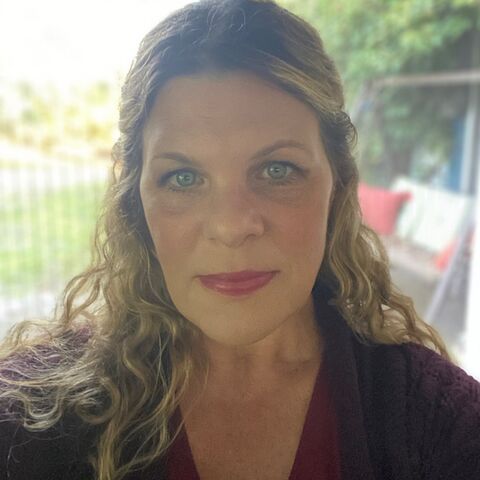
I just started this talk by sharing something I've been dealing with personally this past year,
Which is that back in July when I finally started to venture out to my annual medical checkups again after receiving the vaccine,
It was discovered by one of my doctors that I had breast cancer,
Which was definitely a real wake-up call for me.
Thankfully,
Today,
After having had a surgery and about a month of radiation treatments,
I am now very happy to say that I am officially now a breast cancer survivor.
And so,
To celebrate,
Last week my husband and I drove out to one of my very favorite places in the world,
Which is the Blandy Experimental Farm in Boyes,
Virginia,
Which is part of the Virginia Arboretum,
And it's just a really beautiful place to be any time of year,
Really.
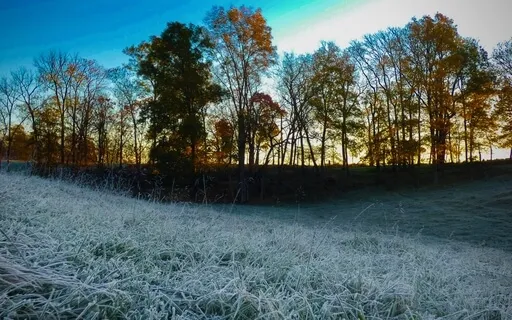
And because we wanted to get a better view of all the colors that are out right now,
We ended up sitting on a bench up on a hill.
And as we were sitting there and talking,
I started getting a bit weepy about how grateful I was for having come through all of this and almost being at the other side of it now,
With a very new understanding of how precious this life is,
And also,
Of course,
How fleeting.
And I told my husband how much I really wanted to deepen my commitment to truly slow down and enjoy and make the most of what time I have left while I still have it.
And towards the end of this conversation,
I actually heard myself say,
I am so afraid that I'm going to lose this perspective and just start speeding up again.
I'm afraid that I'm going to somehow take this time that I have for granted again.
And I said,
I just wish there was something,
Something to help me to remember every single day,
Because honestly,
I just don't want to let myself forget this new commitment and this new awareness.
And as I was saying it,
I remembered,
Because it's not only something I teach,
But it's also something I need to confess that I seem to have forgotten to practice daily,
Which is something the Buddha called the five remembrances.
And so I thought I'd explore these five a little more in this talk,
And I'm going to start with the four remembrances,
Which I think are really important.
And I think that's something that I really need to be aware of.
And I'm going to start with the five remembrances,
Which are really important.
And I'm going to start with the five remembrances,
And so I thought I'd explore these five a little more in this talk,
Mainly because I've now renewed my commitment to really contemplate these every single day as the Buddha prescribes.
So I first learned about these five remembrances about 25 years ago,
When I was only about maybe five years into my meditation practice,
So I was still very new to all of this.
I was also at the time at a place spiritually where I really wanted to push myself to go deeper and to honor the advice of one of my favorite nuns,
Pema Chodron,
To quote,
Go to the places that scare you.
And I think I must have just read her book on that subject,
But for those of you who have read anything of Pema's,
You'll recognize that this is essentially her basic message for everything,
The entire practice,
Go to the places that scare you.
So Pema was taught in the Shambhala Tibetan tradition by Chöy Güm Chöngpa Rinpoche,
Who founded the school that I studied at,
Naropa University,
Which is in Boulder,
Colorado.
So I read quite a bit of her work,
And Pema often quotes the famous fierce Tibetan yogini,
Matching Labdron,
Who advised us to quote,
Approach what you find impulsive,
Help the ones you think you cannot help,
And go to the places that scare you.
So I was feeling a bit brave,
And I signed up to attend a silent week-long retreat at a Buddhist monastery on the subject of death.
And I need to confess here that at the time I was still in my 20s,
And I had actually never been to a funeral at that time.
And I was often very embarrassed to even tell people this,
Mainly because I just felt so naive when it came to death,
Especially as a younger person.
And as it turns out,
I wouldn't actually attend a funeral until I was almost 40 years old,
When my father-in-law suddenly passed away from a heart attack.
So when I was still in my 20s,
I found myself on this silent retreat on death.
And it was something that really terrified me,
Not only because it's something we all fear,
But because it was something that just seemed so mysterious to me,
Something I'd not yet really felt or touched.
And one of the teachers on this retreat was a Californian-born monk named Bantirahula,
Who happens to be a very tall,
Six-foot-five man,
Who kind of looks a little like Lurch from the Adams family,
Honestly.
And when you first meet him,
He seems a bit intimidating,
Mainly because of his height.
But he's actually one of the kindest people that I've ever met,
And he's also really funny.
So I remember all of us doing walking meditation in the hall during this retreat,
And when the bell rang to let us know when it was time to stop,
In a very deep,
Low voice,
Bantirahula said,
The bell tolls for thee.
So he was really good about trying to lighten the mood during our retreat.
But honestly,
As a confession,
What I remember feeling on that retreat is mostly terrified.
I was mostly terrified the entire time.
So on about day three or four,
About the time when people are starting to feel pretty raw and vulnerable after sitting in silence for so many days,
The monks opened up their private library for us,
And it's usually closed off to the public.
And they opened it up so that we go in and look at all these special books they had there on death.
So inside the library,
It was a small library,
But there was a long conference table and about eight chairs were around it.
And on the table were these very giant books of photography with blown up photos of the body of a man in Asia,
Showing him when he had first died,
I think from a gunshot wound.
And then all the subsequent photos showed the slow process of this man's body as it was decaying.
And so every giant photo would show a new level of the body's decay,
And also a group of monks who were circled around the body and meditating and contemplating on this process.
And in fact,
In traditional Buddhist monasteries,
Especially in Asia and India,
Meditating at the charnel grounds is considered a really important and integral part of practice.
And in the Satapatana Sutra,
Which is in essence the Buddha's main teachings on how to practice insight meditation,
There are instructions for what are called the nine cemetery contemplations.
Which are very graphic.
So prior to looking at these photos,
Our teachers had really encouraged us to actually imagine putting ourselves there.
To imagine things like the smells that the monks must have been smelling and the flies and the maggots,
Just all of it.
And I remember really trying hard to stay with this,
To honor my commitment to face what was repulsive or scary.
And I could do it for about five minutes,
And then I kind of ran out of the room with my hand over my mouth.
And at the time,
Of course,
I felt like I'd just really blown it.
I was embarrassed because I had failed to stay with the teachings of approaching what you find repulsive.
I just couldn't do it.
So both during and after that retreat,
I remember feeling really disappointed in myself for being so terrified and also repulsed really,
Probably for the entire time that I was there.
And yet,
What I vividly do remember taking away from that retreat was something that I'd written down in my notebook.
And these were the five recollections or the five remembrances that the monks had told us were important to recall every single day,
Not only as a way to deepen our own practice,
But as a way to discover an increasing sense of peace and joy and freedom.
So even though I considered that retreat a kind of personal failure,
I had been given these five jewels,
Really the treasure of the practice.
And honestly,
They proved to be maybe the most important,
Profound,
And transformative aspect of my practice,
Because again,
They all involve being willing to step closer to the places that I've been.
And so I was able to take them closer to the places that scare me.
In the Buddhist teachings,
These five remembrances are from the subjects for contemplation and the Upajjana Sutta,
Which is a sermon where the Buddha asks us to consider these five things again,
Every single day,
Not just once,
But continually throughout the day.
In fact,
The Buddha said that reflecting on these five truths causes the of the eightfold path to take birth within us.
They are that important.
So I'm going to read these to you.
These are the five contemplations or recollections.
The first is,
I am of the nature to grow old.
There is no way to escape growing old.
The second is,
I'm of the nature to have ill health.
There is no way to escape ill health.
The third one is,
I am of the nature to die.
There is no way to escape death.
And those first three,
By the way,
Aging,
Sickness,
And death,
Are often called the three heavenly messengers.
The fourth remembrance or recollection is,
All that is dear to me and everyone I love are of the nature to change.
There is no way to escape being separated from them.
And the fifth one is,
My actions are my only true belongings.
I cannot escape the consequences of my actions.
My actions are the ground upon which I stand.
And so these five truths are also sometimes called the five inevitables.
The five inevitably.
And Pema Chodron actually condensed them into one pith question that we can ask ourselves,
Which I find somehow a little less scary and easier to remember.
Just one question we can maybe ask ourselves every day,
Which is,
Since death is certain and death is not,
Certain and the timing of death uncertain,
What is the most important thing?
I'll repeat that.
Since death is certain and the timing of death uncertain,
What is the most important thing?
There's actually an even more condensed version of this,
Which comes from the great Korean Zen master Shin San,
Who was famous for saying two simple words,
Which is soon dead,
Soon dead.
A really modern version of this is actually a phone app that someone told me about years ago,
Which is called iCroak,
I slash C-R-O-A-K,
ICroak.
So each time you open your phone,
It reminds you,
Don't forget you're going to die.
And then it offers you a quote about this.
It's actually a really fun app to read.
There's lots of great quotes,
And it really is a good reminder.
On some of the retreats I've attended,
The teachers actually hang skeletons up on the stage where they're sitting,
So that we in the audience will not forget.
Soon dead,
Soon dead.
In the Zen tradition,
Students are reminded of these five reflections in a kind of short poem,
Which is written across a thick wooden block in black sumi ink,
And usually sat at the entrance to the Zen meditation hall so that students can see it each time they pass.
And the words on this block are,
Be aware of the great matter of birth and death.
Life passes swiftly.
Wake up,
Wake up.
Do not waste this life.
And prior to each sit at the Zen monasteries,
The block is struck with a mallet to call students to the zendo.
And gradually over the years,
What happens is that the mallet wears a hole where it hits the block,
And eventually the words on it disappear,
And the block itself becomes the teaching.
And I learned about that block from the great teacher Frank Ostaseski,
Who is the co-founder of the Zen Hospice Project and also founder of the Metta Institute,
And he's been honored by the Dalai Lama for his great work with the dying.
He also wrote a very beautiful book about his work called The Five Invitations,
Discovering what death can teach us about living fully.
And in it,
Frank reflects on the tradition of this block being struck and fading away in this way.
He says,
It seems this is what comes of being vulnerable.
When we relax the clinging to our treasured beliefs and ideas,
Soften our resistance to the blows of life,
Stop trying to manage the uncertainty and hold ourselves more lightly,
We gradually become a less solid thing.
Less defended,
We are more receptive to our deeper nature.
It acts on us.
It influences us by illuminating the dark places,
By shaking loose the calcification that is so hardened in and around our hearts.
As the teachings show us,
It is our strong grip on all of it,
Everything in our lives,
Including a sense of ourselves as a solid permanent thing that is the main source of our suffering when we wage war with the truth of impermanence.
And through practice,
We can discover a kind of paradox,
Which is that our freedom and happiness does not come from trying to control everything,
Trying to control situations,
Other people,
Ourselves,
But it comes from learning to let go.
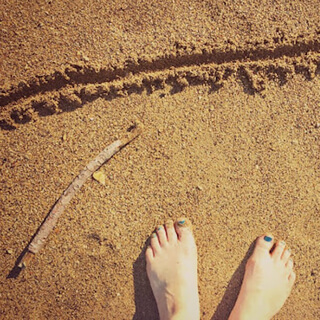
It comes when we stop trying to hold on to that which is constantly slipping through our fingers,
Just like sand.
So as a kind of spiritual warrior facing the places that scare us,
We are being asked to return again and again to the wise words of one of my favorite teachers,
Bikio Anaglio,
Who sums up the entire practice in four words,
Which many of you who listen to me,
I think,
Know by heart,
Which are keep calmly knowing change.
That's it,
The whole practice in four words,
Keep calmly knowing change.
And I actually use that phrase so often that many years ago,
A student of mine made me a bumper sticker that has those four words on them,
And I stuck it onto the back of my car so that I could be reminded every time I got into the car.
But this past year,
I noticed something happening,
Which was that just like that Zen block,
The words on my bumper sticker had become so faded that they had almost completely disappeared,
Which actually served as its own kind of reminder for me whenever I looked at it.
Happily,
The student who made me those bumper stickers actually made me about a dozen of them.
And after I gave a bunch of them away,
I still have a few left.
So last week as part of my renewed commitment to myself,
I replaced the old one with the new one.
And I'm so happy about this really,
To be reminded of impermanence whenever I go out to my car,
Because again,
The passing of time is so easy to take for granted.
And to forget.
Just as a for instance,
I recall many years ago,
Someone saying to me that at some point in your childhood,
You and your friends went outside to play together for the very last time.
And none of you knew it.
None of you knew.
So part of this practice of keep calmly knowing change is to really be aware of the endings and to have gratitude for the precious fleeting time that we've been given so that we'll be more aware of living more of those moments rather than missing them as they're passing us by.
In the Sutras,
There's a story about the Buddha asking several of the monks in his Sangha,
How often do you contemplate death?
And one of them replied,
Lord,
I contemplate death every day.
Not good enough,
The Buddha said.
And he asked another monk who said,
Lord,
I contemplate death with each mouthful that I eat during the meal.
The Buddha said better,
But not good enough.
What about you?
And the third monk said,
Lord,
I contemplate death with each inhale and each exhale.
And according to the Buddha,
The third monk had the right answer.
So in the Sadapatana Sutta,
We're asked to remember the inhalation comes in and it goes out and one day it will not come back in again.
And really that's it.
That's all there is between you and death.
Just that inhalation and that next inhalation.
This practice of remembering is so important actually.
It is said that the Buddha's final words on his deathbed were,
All conditioned things are impermanent.
Strive on with diligence.
All conditioned things are impermanent.
Strive on with diligence.
All conditioned things are impermanent.
Strive on with diligence.
And again,
Those first three remembrances or insights that we are all subject to illness,
Old age and death are actually what originally led the Buddha when he was still Prince Siddhartha and he took his royal palace of luxury and to go forth into homelessness as a monk to discover if there was freedom from suffering.
And it's really very helpful for us to remember that in fact he did discover this freedom,
Which is why we practice so that we can also discover the same thing.
So often what I find is that people think of the Buddha's emphasis on the truth of suffering and impermanence.
They think of it as a kind of grim downer.
Like who wants to think about death?
You know,
Especially here in our Western culture,
Dying tends to be tucked away in hospitals and hospices where most of us don't have to see it or be intimate with it on a daily basis.
Even aging tends to be hidden or maybe sometimes considered something that is either wrong or interestingly something we can somehow avoid.
For instance,
We're encouraged to use miracle working anti-aging creams or other pills or products that are advertised as something that is not helping to stop the aging process as if this were possible.
And sadly this kind of thinking is unfortunate because it gives us this idea that change and aging and death are all somehow wrong or sometimes even unnatural instead of being intricately woven into the very of our existence.
And of course by not looking at it what happens is that we end up fearing it even more.
Even today in places like Thailand and Burma when a family member dies,
Instead of asking a funeral parlor to take the body away and to put makeup on it to make it look alive,
It is still very customary in many Buddhist families to wash the body themselves and to dress it and to then burn it on a pile while everyone gathers to watch this.
Ajahn Jigaro who spent a year in Thailand said of this process,
There is an opportunity to see the natural end of life,
The end of one cycle of life and that has a very good effect in helping us to rise up and come to terms with this reality rather than it being a ghost,
A skeleton in the closet waiting to sneak out and haunt us.
Anything that is not brought out and fully confronted,
Fully comes to terms with has power over you.
Ghosts usually haunt at night when you can't see them.
They sneak up behind you when you're not looking and can't see them.
When you put on the light there is no ghost.
In order to have power over us to make us frightened it must be something that we can't face,
Something that we can't fully consciously clearly see.
It must remain unknown and mysterious.
As long as we allow death to remain that way it will bring fear into our hearts.
I just love that description.
And so with these five remembrances this is essentially what the Buddha is asking us to do,
To put a light on impermanence.
He's asking us to very bravely take a good look at it and really contemplate it so that instead of the idea of death shutting us down in fear,
Looking at the truth of it actually helps to wake us up.
And when we really start to recognize and acknowledge that life is indeed fleeting and short it just makes every second of it,
Every second of it that much more precious.
One of my very favorite teachings from the Buddha is when he uses some simple images that are super easy for us to remember to let us know how we should quote contemplate our conditioned existence in this fleeting world.
This is how we do it.
Like a tiny drop of dew or a bubble floating in a stream.
Like a flash of lightning in a summer cloud or a flickering lamp,
An illusion,
A phantom or a dream.
I'm going to repeat those.
This is how we should contemplate our conditioned existence in this fleeting world.
Like a tiny drop of dew or a bubble floating in a stream.
Like a flash of lightning in a summer cloud or a flickering lamp,
An illusion,
A phantom or a dream.
So the message here is that when we can truly allow ourselves to remember that our time here is like a flash of lightning in a summer cloud,
Instead of this being a sad or scary thing,
It can really motivate us to want to be even more present for our actual lives.
You know,
Suddenly we no longer want to be asleep and living in the dream world of the past or the dream world of the future or the dream land of some other life other than the one we're actually living right now.
And so when we're living in this dream world,
We're living in this dream world instead of spending all of our moments worrying about the future or gnawing on what has already happened in the past.
What happens is that we begin to really want to fully live our own amazing,
Awesome,
Imperfect,
Messy lives.
Or maybe the full catastrophe,
As the teacher John Kebit-Zinn calls it,
You know,
Life just as it is right now as we're living in.
And of course,
You know,
This doesn't mean we don't all have dreams and goals or try to make life happier for ourselves and others.
Of course,
We all want this to enjoy more happiness and joy in our lives.
It's that we are also agreeing to just be here right now with our actual lives as they are in each moment.
Essentially,
We're agreeing to be awake to our lives and to constantly remember in the words of the Zen Master Thich Nhat Hanh,
This is it.
This is it.
This is my life.
There's also a great passage in Tolkien's Fellowship of the Rings that I like to remember where Frodo says to Gandalf,
I wish it need not have happened in my time.
Gandalf says,
So do I,
And so do all who live to see such times,
But that is not for them to decide.
All we have to decide is what to do with the time that is given us.
All we have to decide is what to do with the time that is given us.
And so remembering this,
That all we have is the short time that has been given to us,
Not only emphasizes the beauty and preciousness of our lives,
But it makes the time we have with our friends and our loved ones,
Again,
That much more precious as well.
This is because when we can remember in every moment that they might not always be here,
What happens is that we stop taking them for granted or stop fighting with them so much or judging them so much.
We start allowing them to be imperfect and human just like we are.
And Thich Nhat Hanh actually offers a really simple practice for us to help us to remember this fourth recollection.
He calls this hugging meditation.
He says that whenever you're with someone that you care about,
Partner or friend or maybe your child,
To hug them for three full breaths,
Three breaths,
And to remember all that is dear to me and everyone I love are of the nature to change.
There is no way to escape being separated from them.
And we want to remember again,
This isn't a practice that's intended to make us feel sad or cause us to cling even more tightly to our loved ones or even to become cold or indifferent.
It's meant to help us to remember to hold these loved ones as exquisitely dear and precious and to not be afraid to hold them for a few moments and to not take them for granted but to be awake to them.
And also,
It helps us to be better able to let them go when their time comes.
And we can actually do this with everything in our lives.
We can make everything dear and precious by remembering again that all of it,
Every single bit of it is impermanent and will eventually go,
Including ourselves.
The great teacher Mark Epstein tells a pretty famous story about when he and several friends were first learning about Buddhism and they traveled to Thailand to meet the great Ajahn Chah,
Who's the teacher of my teachers.
Mark writes,
Gathering around him after our arrival,
We asked him to explain the Buddha's teachings.
He motioned to a glass sitting to one side of him.
You see this glass?
He asked us.
I love this glass.
It holds water admirably.
When the sun shines on it,
It reflects the light beautifully.
When I tap it,
It has a lovely ring.
Yet for me,
This glass is already broken.
When the wind knocks it over or my elbow knocks it off the shelf and it falls to the ground and shatters,
I say,
Of course.
But when I understand that this glass is already broken,
Every minute with it is precious.
And so we might even use that same reflection maybe whenever we're in an argument with someone.
We might remember,
For instance,
Someday this person in front of me won't be here anymore.
So how do I want to act now?
Again,
We might ask ourselves,
What's the most important thing?
What's the most important thing?
We might even remember this when we're in a kind of argument with ourselves.
We might recall someday I myself will not be here anymore.
So how do I want to treat myself right now?
What's the most important thing?
What's the most important thing?
Which brings us to the fifth remembrance,
Which is my actions are my only true belongings.
I cannot escape the consequences of my actions.
My actions are the ground upon which I stand.
And whenever I think about this fifth remembrance,
I tend to recall that very few people on their death beds think,
You know,
I really wish I'd spent more time at the office or maybe I wish I'd spent even just a little bit more time on Facebook or social media,
Etc.
With this fifth recollection,
What the Buddha is asking us to contemplate daily is our deepest values,
Which include how we want to live our lives and what we want to leave behind.
As the poet Hafiz writes,
Now is the season to know that everything you do is sacred.
Now is the season to know that everything you do is sacred.
And the teacher Bodhipaksha suggests that whenever we're recalling the truth of this recollection,
To imagine that we're on our deathbeds looking back at our lives.
And as we do,
We might imagine asking ourselves questions like,
How is it that I really lived all the hours of my life?
How is it that I really lived all the hours of my life?
We might even consider what is it that I could,
What is it that I could have let go of?
What could I have let go of?
Maybe it's a kind of mindless habit that doesn't bring us a lot of joy,
Like maybe spending too much time on the internet or watching too much TV or eating too much or whatever it is.
It might be a way of thinking about ourselves or others.
It's also a habit of thinking.
It might just be a grudge,
Something we haven't been able to let go of or to forgive.
Just some things to start questioning with this fifth recollection.
And I love the way the poet David White suggests that we use this practice in our lives.
He writes,
Apprentice yourself to the curve of your own disappearance.
Apprentice yourself to the curve of your own disappearance.
Just love that.
And so whenever we can remember these five truths or recollections,
Remembrances,
What happens is that besides making us less fearful,
It actually helps us to become more calm because in essence,
We're preparing ourselves for painful changes we'll experience in the future by reflecting on and acknowledging their inevitability.
Often when we don't reflect upon eventual loss,
Not only does it make our lives more constricted and much less joyful,
It can actually make the time of our death extremely painful and difficult because of our inability to let go.
To quote Ajaan Chah again,
People go through life blindly,
Ignoring death like revelers at a party feasting on fine foods.
They ignore that later they will have to go to the toilet so they don't bother to find out where there is one.
When nature finally calls,
They have no idea where to go and they are in a mess.
So a few years ago now,
My husband picked up a movie at the library,
Which he often does,
And this one was called The Age of Adeline.
And I need to admit that I thought it was really,
Really overdone,
But it also had a pretty great message.
It was about this 29-year-old woman who was in a car accident and by some kind of magic,
The accident resulted in her no longer being able to age.
And so at age 99,
She still looked exactly the same to everyone,
Which is something many of us all say that we want,
Right?
Perfect.
Great.
Except it was actually pretty awful and heartbreaking because over the years,
Everyone around her continued to age.
And so she was very much including her partners and her daughter and her dogs,
Everyone she knew,
Her co-workers,
Everyone in her community.
And so she ended up needing to move away again and again to hide her secret.
And she could never,
Ever have a true relationship,
Which was so painful for her.
And I'm very sorry to give this away,
But the joy of the movie came when one day,
After another accident,
Of course,
She discovered the beauty and the miracle of a new gray hair,
Which is really the exact opposite of how many of us greet our bodies as they age,
Isn't it?
So maybe we can all hold on to that image and remember that the aging process is natural and that along with death,
It happens to all of us.
And that it's not something for us to fear,
But something that can help us to remember to let go and to help us to nurture gratitude again for each precious,
Fleeting moment for all the moments we have lived and all the moments we have yet to live.
As the Buddha promises us,
If we can truly bow to and embrace these five remembrances,
Instead of it leading us towards more sadness and grief,
Ultimately it leads us to profound happiness or what is often called the Mahasukha,
The great bliss.
In the Dhammapada,
The Buddha tells us,
All things are impermanent.
Seeing this with insight,
One becomes disenchanted with suffering.
This is the path to purity.
Now repeat that.
All things are impermanent.
Seeing this with insight,
One becomes disenchanted with suffering.
This is the path to purity.
So I think I'll end there and invite you,
If you'd like,
Into a short meditation contemplation on the five remembrances.
So you might,
If you're sitting,
Close the eyes.
Take a nice deep breath in,
Deep breath out.
If you're driving the car,
Walking,
You might get in touch with your sit bones or the bottom of your feet.
Feel yourself connected to the earth.
Become more embodied and touch with your breath.
Aware of each inhale,
Each exhale.
Each inhale receiving a new moment of life.
Each exhale letting go.
With each exhale letting the body soften,
The mind,
Heart,
Body.
Opening up to what's right here.
This moment.
Just being present to however the mind,
Body,
Heart is in this moment.
Whatever's happening around you.
Sound,
Movement,
Sight,
Whatever's happening.
Unless you're ready,
I invite you to consider Pema Chodron's question,
Which is,
Since death is certain and the timing of death uncertain,
What is the most important thing?
Since death is certain and the timing of death uncertain,
What is the most important thing?
What is the most important thing?
Now you might even consider,
How is it that I have really lived all the hours of my life?
How is it that I have really lived all the hours of my life?
Now you might consider,
What is it that I might let go of?
What could I let go of?
Again,
It might be an unskillful habit or distraction.
It might be a way of thinking about yourself or others or maybe a grudge or something you haven't been able to let go of or forgive.
Just consider.
Finally,
You might now consider,
How can I best use the time that I've been given?
How might I best use the time that I've been given?
And with the eyes still closed,
Just listening to these words from Rumi who tells us,
The breeze at dawn has secrets to tell you.
Don't go back to sleep.
You must ask for what you really want.
Don't go back to sleep.
People are going back and forth across the door sill where the two worlds touch.
The door is round and open.
Don't go back to sleep.
Namaste and blessings.
I hope you enjoyed this talk.
These talks are always offered freely so that no one is ever denied access to these teachings and your support really makes a difference.
Dhanah is an ancient Pali word meaning spontaneous generosity of heart.
If you feel inspired to offer Dhanah,
You can do so by visiting my website at www.
Mindfulvalley.
Com.
Thank you so much.