So I don't know about you,
But sometimes really old random phrases or song lyrics from my childhood will just kind of suddenly pop up out of nowhere in my mind and because I continue to be Fascinated by how our minds work and how it remembers things It was really interesting for me this month to recognize that one particular phrase Has appeared to me at least once a year probably since elementary school or maybe even earlier so for almost 60 years now and What seems to prompt it is when I do one particular thing Which is to flip open the calendar to March Apparently every year this lets an old nursery rhyme know that it is time to float up out of the dark ocean of my childhood memories and rise to the surface and I'm sure these words are something we probably all know Which are March winds and April showers bring forth May flowers March winds and April showers bring forth May flowers and Of course as a child,
I'm sure this helped me to remember what the weather was going to bring us in the spring But today as a Buddhist teacher,
I honestly find so much meaning in that really simple phrase The first thing that comes to my mind is that it really directly points one of the main teachings of our practice Which is the truth that everything in this life is Constantly changing and impermanent all the seasons all beings creatures things situations emotions the universe itself and of course ourselves We are all in constant never-ending Motion and transition it also reminds me that thankfully life is not just going to bring us a constant barrage of wind and rain and snow Yay,
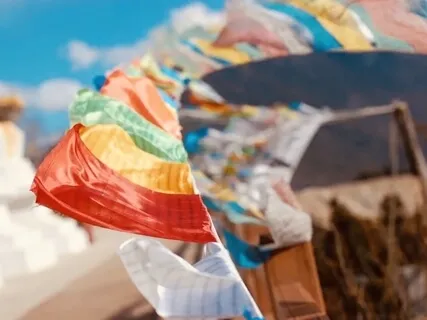
It's also going to bring us Sun and flowers Which again are also impermanent and on and on and on it goes So that phrase or rhyme also points to what I really want to explore today Which is something the Buddha called the eight worldly winds though you may also have heard them described as the eight vicissitudes or concerns The eight dharmas or conditions or attachments and I'm sure there's many more of these but because it's the windy season and Because right now as I'm recording this it's blowing like crazy outside for this talk,
I think I'm just gonna stick with the eight worldly winds and With that in mind.
I want to start by reading this short description of the winds directly from the look of a pati sutta Where the Buddha tells us this this is monks,
Which means us these eight worldly Conditions spin after the world and the world spins after these eight worldly conditions which eight gain and loss status and disgrace praise and blame and Pleasure and pain.
These are the eight worldly conditions that spin after the world and the world spins after these eight worldly conditions And I'll read those again gain and loss status and disgrace praise and blame pleasure and pain and so you might have noticed that basically these are four pairs of opposite conditions and If we can think of them as kind of umbrella categories it can help us to remember that they are mainly referring to all the conditions in our lives that we hope for and All of those that we fear.
So for instance,
We all tend to seek out and maybe hope for Gain status praise and pleasure and then we all of course tend to fear or not want loss disgrace Blame or pain,
Of course,
This just seems like a really obvious truth But the idea here is that if through our practice we can start paying closer attention to these We'll start to notice that not only are all of these conditions Constantly arising and passing changing just like everything but that we ourselves are Constantly either wanting or not wanting these particular things at both conscious and unconscious levels and Depending on how we are relating to them our fears and our hopes about these eight worldly wins this can often dictate how we experience our entire world before I go on I just want to pause for a second and Remind us that it's not that wanting or fearing any of these things in and of themselves Is going to cause us to create suffering and stress Of course,
We want things like gain and status praise and pleasure And of course,
We don't want loss disgrace pain and blame It's really okay.
We're all human.
It's just the way we're wired to want or not want those things We also want to remember and keep in mind that we really don't have a lot of control over these different conditions Again,
They are constantly arriving and departing throughout our entire lives just like the wind.
So for example sometimes they can arrive as a slight breeze that doesn't last that long or Sometimes of course they can arrive in the form of a really intense storm that might completely shake up our whole world or Maybe it lasts just much longer Than we expected it to so an example of this might be Experiencing a slight breeze of some minor insult,
Right?
It doesn't last that long or We might experience a more serious storm like maybe a difficult health diagnosis and again with both of these We really just don't have a lot of control over what arises in our lives and Again,
These conditions or winds Really aren't the problem because if that were the case Life itself would be a problem,
Right?
What we're being asked to recognize Is that our level of either attachment or resistance?
Who are wanting or not wanting any of these conditions?
Is essentially what's going to determine our level of stress and suffering or our sense of balance and ease?
Okay,
So this is really the key the most important thing to remember that our level of attachment or resistance is What is going to determine our level of stress or ease?
For instance if we take a closer look we might notice that whenever we find ourselves swept up Into wanting or not wanting it can often feel like we're trapped in some sort of stress tornado,
Right?
Like we're basically just being spun around and around by these winds and What we tend to want sometimes desperately right is to just make it stop we want the pain of the wanting or the not wanting to somehow be fixed and What this means is having things turn out Exactly the way we want them to Because somehow we think that that is what's going to fix it Of course the problem is that this is really truly impossible to make everyone and everything in our lives be exactly as we want them to be all the time and As we all know we each have all manner and variety of strategies To try to avoid the pain and frustration of all this wanting and not wanting all of which of course just tends to make things Even worse one of my professors at Naropa University The great teacher Judy leaf once wrote what I thought was a really good explanation of this.
She wrote It's one thing to recognize what we would like to attract and what we prefer to get rid of in quite another to be obsessed with getting our way and Terrified of things going wrong these cycles of hope and fear She said occupy our minds and capture our energy No matter what is happening to us.
We think it could be better or at least different no matter who we are We think we could be better or at least different Nothing is ever good enough And so we can never relax and so here.
She's really describing what the Buddha called Dukkha or suffering Which has often been translated as the suffering that we experience when we cannot seem to find permanent satisfaction If we think about this we often tend to have this notion mostly unconsciously,
But sometimes even consciously That if we could just set up our lives to only experience those pleasant winds Then we could really achieve permanent satisfaction Satisfaction So it's like sometimes we have a kind of hopeful underlying belief that someday Finally we're gonna discover that sweet spot and life is just gonna stay that way permanently Permanent satisfaction,
But as those of us who've lived on this planet long enough can attest life just has a way of continuing to pull that rug out from under us and and disrupting that wish over and over and over again,
And this is Actually exactly what the Buddha was trying to draw our attention to 2600 years ago now Right after his enlightenment when he offered us his first sermon on the four noble truths In that very first double truth the Buddha simply acknowledged there is suffering There is suffering or there is Dukkha Dissatisfaction as well as the truth that we all experience this right so none of us are immune to this So if this is really it if this is life itself The full catastrophe as the teacher John Kabat-Zinn is called it.
What do we do right?
How do we work with this?
How do we remain steady and find some peace and ease in the very center of the storm?
So to begin our practice is really inviting us to actively Become much more conscious about our particular fears and hopes so that we can learn how not to cling to tightly To what we want and to not so strongly reject or push away what we don't want and so we really want to become more aware of and Explore our particular hopes and fears so that we'll be able to really catch ourselves more quickly Whenever we find that we've been swept up again into a kind of stressful tornado of wanting or not wanting One of the ways that we can start to take a closer look at these is through the eyes of the ancient Buddhist philosopher Nagarjuna who turned these eight conditions as the eight worldly preoccupations as in these are the fears and hopes that we all tend to Preoccupy ourselves with you might even just take a moment right now Just to consider this for a minute for yourself.
Are you in any way right now?
Preoccupied with wanting something in your life,
Maybe Some gain status pleasure praise just take a moment to think about this You might also consider if you're maybe preoccupied with not wanting something,
Right?
So maybe not wanting some loss or Afraid of some disgrace or pain or blame So just take a moment to think about that One of the great things about our mindfulness practice is that it really can help us to more clearly see and acknowledge What our mind tends to be focused on or again preoccupied with so that we can hold it up into the light of our awareness And really examine it a bit and see if we can in some way start to let go Maybe let be and create a little more space around it It can also be really helpful for us to better understand why our clinging and resistance are Causing us so much extra stress And so I thought we might dive into this a little bit By taking a closer look at each of these four pairs of winds or conditions.
So to begin we might consider Why does hoping for something or fearing the loss of something?
Tend to cause us so much stress and as a reminder it is not that we don't hope or want or That we don't have fear of losing things again.
Of course we do.
It's just part of being human but as the Buddha so wisely points out the problem lies in our level of attachment to these things or Maybe we can think of it as the amount of hope that we invest in things turning out Particular way.
So for instance,
We tend to put so much weight into things being exactly as we want them to be That we end up in a way carrying that sort of mental weight around with us almost like we're literally carrying heavy chains around because we're so unwilling to let go of our expectations of how things should be and With this worldly wind hope of gain and fear of loss One particular word that we can very consciously invite ourselves to become much more aware of is the word should As in I should or he she they should or it should be somehow different than it is The word should is actually almost always toxic So when we can start to notice our level of attachment to our shoulds It can really shed some light on how much stress it's causing us Which can really help us to start letting go of our tight grip a little more.
There's a helpful reminder of this I often tell students not to should all over themselves.
I Hope that's helpful to remember.
Please don't should all over yourself There's also a wonderful old parable from the Zen tradition that I like to remember when working with this one And I think many of you have likely already heard it involves a farmer and his son Who had a beloved stallion who helped the family earn a living one day the horse ran away and their neighbors acclaimed Your horse ran away.
What terrible luck and the farmer replied?
Maybe so maybe not.
We'll see a few days later.
The horse returned home leaving a few wild mares back to the farm And the neighbors shouted your horse returned brought several horses home with him.
What great luck the farmer replied Maybe so maybe not We'll see later that week the farmer's son was trying to break one of the mares and she threw him to the ground Broke his leg and the villagers cried your son broke his leg.
What terrible luck the farmer replied Maybe so maybe not.
We'll see so obviously The story can go on and on and on and it does But I hope you get the point.
I actually love that Zen phrase so much I've had it written on a sticky note for years now Because it really does help remind me to loosen my grip and become more willing to live with uncertainty Rather than holding on so tightly so we can try to remember Maybe so maybe not we'll see another of those pair of worldly winds that we can explore is our desire for status or even fame as well as our fear of disgrace or maybe Insignificance and with this one I find it really helpful to remember that our hope and our fear are on these two things It's actually built into our DNA So we all want to feel some sort of belonging to a particular Community or a tribe and we all fear disgrace of somehow being ostracized From the collective in ancient times.
We all survived in smaller tribes So being excluded from this usually meant the unlikely prospect of trying to survive on our own in Really harsh conditions and so we're actually wired to have these hopes and fears It's really okay.
It's so good to remember but again If we want to reduce our suffering around this We want to use our practice to take a good look at our current day attachment to these ancient hopes and fears So for instance instead of having a fear about survival Today what we might find ourselves trying to protect is our image of ourselves or maybe our story about ourselves or About how things reflect on our identity or our ego this December I went up to Massachusetts on a longer retreat and I spent some of my time in the library and In a book that I was reading by the teacher Mark Epstein I was so happy to come across a story that I hadn't heard before about one of my old writing teachers the great beat poet Allen Ginsberg Apparently when Allen was in India studying with the Indian teacher Debra Hababa many considered a saint he was bemoaning to Baba about how he and a close friend had recently grown apart and How lonely he was feeling because of this in the book the interaction was described this way quote on His tiny platform suspended over the rushing waters of the Ganges Baba looked at Allen He tilted his head from side to side and sucked his teeth Oh,
He exclaimed and with a tenderness that struck deep at Allen's heart.
He said softly how Wounded how wounded and Epstein wrote about this in his gentle caring but unsparing and unsentimental way the Baba's retort helped bring Ginsberg self Identification as a wounded soul into awareness This is so important what Baba was gently pointing out was that?
While the loneliness was definitely causing Allen some pain his Identity of himself as someone who was quote wounded Was what was causing him the most suffering as the Buddha so wisely told us Whatever is taken to be a self will cause suffering Whatever is taken to be a self will cause suffering so essentially what Baba's response did was to knock Allen out of his delusion and Suddenly he could see how much extra suffering he was creating for himself by defining himself in this way What he realized was that this was just a really old habit of mind arising from a kind of entrenched established identity that was formed in childhood and it was causing him to suffer even more and Just as a confession as I was reading that story in the library I was feeling a bit of the same and so this really struck me at the right moment I was so grateful it also occurred to me that the opposite of this phrase might be so special which is another phrase that I've heard and It's when we think that we are somehow so much more important than other people that in some way we're special which is also simply another kind of identity,
Isn't it and Again,
It's one that can cause us so much pain when we're believing it or maybe even when we're trying to nurture it and maintain it and so Now whenever I noticed myself being blown around if you will by this particular wind I have yet another phrase written on a sticky note to ponder Which is so special so wounded So special so wounded that phrase also very closely relates to another one of those pairs Which are two that we are almost constantly being bombarded with Which are the winds of praise and blame?
So as with all the others we make notice that with these winds we often feel like we want a kind of perfection here too,
Don't we and also a kind of permanence Which mainly involves only wanting positive opinions of ourselves from others?
Which fortunately again sadly is just completely impossible and Personally whenever I'm struggling with this particular wind I like to remind myself of a famous passage from the Buddha Was actually criticized quite a lot when he was alive in it He tells us this this has been going on through the ages They criticize the silent ones.
They criticize the talkative ones.
They criticize the moderate ones There is no one in the world that escapes criticism There never was and never will be nor is there now the wholly criticized or the wholly Approved and I just love that passage because it can help us to remember that again We're not special and we're not being singled out Right.
We're not the only ones being wounded by criticism Even though when it's happening,
Of course,
You really often feel like that just last week I was given a great example of this when my husband and I were watching an old episode of The Office and the character Pam You likely know is the office secretary Was telling the interviewer quote.
I hate the idea that someone out there hates me I even hate thinking that Al Qaeda hates me.
I think that if they got to know me,
They wouldn't hate me It just sound really funny So when we're investigating this one another thing to notice is whether our Dukka or dissatisfaction might be showing up in the form of feeling like we can just never get enough praise to Fully satisfy us.
There's something to ponder on the flip side We can also notice if we're somehow feeling like we can never be fully free From the threat of being found wanting in some way Never free of that threat of being found wanting with this particular wind We might also notice that when we're really attached to both our hope and our fear about how we're being perceived It can often feel like we're being pushed and pulled back and forth and back and forth by other people's different opinions of us right We might even notice again how maybe Preoccupied we can become with this the Tibetan Buddhist master Lama.
Yes.
She calls this the constant yo-yo effect Which he describes this way someone gave me a present.
I feel so happy Someone took away my gift.
I'm so unhappy Somebody says you're wonderful and I feel up Somebody says you made a mistake and then my mood goes down and I'm sure we can all relate to that I actually remember Experiencing a very clear example of this when I was reading some of the comments about a talk that I'd recently posted and in the first Comment this person wrote that she really appreciated hearing my laughter throughout the talk and that she'd been laughing right along with me and In the very next comment box someone else had written that while they had really enjoyed my talk They found my laughter just completely distracting And so in the span of about 30 seconds,
Maybe less I got to experience those two opposites praise and blame right in the same moment and so it caught me because I was experiencing both at the same time and I didn't know which one was true if you will and my ego suddenly had nothing to do and nowhere to go and In that moment,
I noticed that there was really no identity that I could hook myself to and so I found myself just laughing out loud about this and I also recognized that if I'd only gotten one of those comments,
I probably would have had a much different experience and what it reminded me was that really neither comment was really about me at all and Recognizing this I could truly let go of needing again to feel either special or wounded It was really very liberating which brings me to the fourth pair of winds which are often called the winds of pleasure and pain and these two are probably the most difficult ones for all of us because Basically,
They encompass all the others the Indian Buddhist philosopher Nagarjuna again termed this pair of winds happiness versus suffering and he explained that we tend to look at things in terms of our hope for happiness and our fear of suffering and Whatever I'm teaching newcomers about the practice.
I often like to describe how in the teachings our emotional lives are often likened to the ocean Which as you might imagine experiences all these different winds All of which can create a variety of different waves in the water And so if we can imagine that we ourselves are that ocean The truth is that it's our common tendency to only want to experience The waves or the winds of gain pleasure Success and praise right we tend to really welcome those or maybe even seek them out And of course,
We also tend to want to resist those inevitable waves that come that Might be filled with pain or grief anger Maybe a sense of failure or blame We really don't want to experience those waves But again,
The problem is that whenever we resist or try to black out all those difficult waves that arrive what happens is that we ourselves tend to become more like ice cubes than flowing water and Sadly in our effort to kind of protect ourselves by trying to block it out or resist what happens is that we only end up hardening our own hearts and And instead of protecting us what happens is that we not only lock in whatever that wave brought Grief or the anger the blame etc.
We also end up blocking out our full capacity for joy You know our full capacity for experiencing life itself So essentially what the teachings around all of these different winds are asking of us is to practice Which means not perfectly practice riding all of those waves or winds of our lives fully Allowing each of them to be experienced as they arrive And to let ourselves fully feel them to feel the joy and the gladness as well as the grief Or the anger or whatever it is without automatically maybe acting out on these emotions or or clinging to them or resisting them instead What we're being asked to do is to fully investigate These winds when they arrive we to open up to them and see what they might have to teach us and to allow them to kind of soften us so that we can truly start to experience more flow and ease in our lives Many years ago.
There was a famous phrase attributed to Jon Kabat-Zinn that was turned into posters that I used to see at some of the retreat centers It's a really common phrase so you may have heard it,
But it relates to this teaching Which is you can't stop the waves,
But you can learn to surf You can't stop the waves,
But you can learn to surf another one my teachers Jonathan Faust Offers a kind of shorter version of that phrase which is simply surfs up Surfs up and I have to admit I love that one first because it's much simpler to remember and Also,
Because it's really light Surfs up which might help us add a little humor into the mix when the winds are not so strong and heavy We might even use another one of those sticky note phrases.
There's a reminder to us that you know,
This is it Right.
One of those winds is simply arising surfs up and instead of resisting or holding on We can instead practice becoming open to fully knowing What it is that's flowing through and honestly this opening up to the knowing is Really our whole practice,
Right?
It's learning how we can courageously soften and open more and more Instead of clinging and resisting and in doing so we can discover so much more peace My favorite Buddhist on Pema Chodron says it this way we want to know our pain So that we can stop endlessly running.
We want to know our pleasure so we can stop endlessly grasping Then somehow our questions get bigger and our inquisitiveness more vast We want to know about loss so we might understand other people when their lives are falling apart We want to know about gain So we might understand other people when they are delighted or when they get arrogant and puffed up and carried away When we become more insightful and compassionate about how we ourselves get hooked We spontaneously feel more tenderness for the human race So when we're working with these eight wins what we're really practicing Essentially is the quality of equanimity Which is often been called the fruit of our whole practice in the Pali language There are several words for equanimity But the most common of these is upekka and its root meaning is to look over So it refers to the equanimity that arises from the power of observation the ability to see Without being caught by what we see Equanimity is also a word that's often used for this ability to quote weather the storm of our lives With what is called balanced awareness,
Right a sense of steadiness and ease in the midst of all these fluid changing impermanent conditions so for this reason for this reason equanimity has also been translated as Tatra Mahatata,
Which ultimately means To stand in the middle of all of this To stand in the middle of all of this So sometimes as encouragement it helps me to recall this image from the teachings where the Buddha tells us quote praise and blame recognition and disregard gain and loss Pleasure and sorrow come and go like the wind Rest like a giant tree in the midst of them all Rest like a giant tree in the midst of them all remembering of course that a healthy tree flows and bends and sings with the wind allows the wind to wash through and Finally before I want to offer you a short meditation on these eight worldly winds I feel in a way almost always required to mention my very favorite phrase about equanimity Which comes from one of my favorite teachers Bikkuni Oh Who very famously summed up our entire practice in?
Four words the whole practice which is keep calmly knowing change Keep calmly knowing change Change so we keep which means continually calmly without reacting knowing being aware of The truth of change in a very similar way in the look of a pati sutta Where the Buddha first introduces us to the teachings of the eight worldly winds he tells us this gain loss status disgrace censure praise pleasure pain these conditions among humans are inconstant in permanent and subject to change Knowing this the wise person mindful ponders these changing conditions Desirable things don't charm the mind undesirable ones bring no resistance ones welcoming and rebelling are scattered gone to their end Do not exist so that's some encouragement maybe for us and I'd like to invite you now into a meditation on the eight worldly winds if this is available for you And so you if you're listening somewhere at home,
Maybe where you can sit I'd like to invite you to come into a comfortable posture Maybe closing the eyes Taking a few nice deep breaths in Slow breaths out pull around so these on your own Just to come into the body Become embodied if you're out walking or driving as you're listening to this You might place some attention on your breath,
And then maybe notice The bottom of your feet as you're walking or your seat and the cushion if you're driving your hands on the steering wheel in some way Notice your body become more embodied more present.
You'll be listening to sound some of you may be able to hear the wind or the cows Here,
And I'm hearing here on the farm as you continue to notice the breath in the body Using that as your anchor bring you home to the body you might also relax Different parts of the body really let go so again if you're sitting You might notice the earth holding you the weight of your body being held by the earth See if you can let go a little more with the support of the earth you might notice your shoulders See if you can drop the shoulders a bit let go here You might notice the center of the palms you can soften the center of the palms open the hands a little more the gesture of receiving Letting go you might notice the face see if you can soften here Skin letting the forehead be smooth eyes Soft and their sockets eat slightly parted so the jaw can relax still aware breathing and each exhale letting The body soften a little more letting the mind become more clear and as you're ready I'd like to invite you to consider what might be particularly maybe preoccupied with lately What is your mind preoccupied with lately and with as much kindness and compassion as you can muster without any judgment?
Just for clarity you might consider am I preoccupied with hoping for something or?
Am I fearing something take a moment to consider?
If you're caught up in hoping or fearing as you're ready like to invite you to consider am I preoccupied?
With gaining some sort of status or am I maybe afraid of losing it in some way?
No,
Light a wrong answer just consider as you're ready now Like to invite you to consider am I preoccupied?
Lately with some particular praise or blame wanting praise fearing blame Etc again,
No right or wrong answers Just consider as you're ready now Like to invite you to consider am I preoccupied?
With seeking out some sort of pleasure or maybe avoiding some sort of pain again No right or wrong answers.
Just consider with as much kindness and compassion as you can as you're ready Now like to invite you to just pick one of those things that I mentioned maybe One that feels the strongest to you Or something you're the most preoccupied with and I want to invite you to notice how you've been holding it You might even consider how has this been working for you?
Has this been living in the body?
This hope or this fear how I've been holding it as you're ready Now you might consider using those Zen phrases from the story of the farmer and see what happens when you ask yourself something like Maybe so maybe not.
We'll see maybe so maybe not.
We'll see just see how that lands I might even consider two other phrases from the Zen tradition Which are not always so not always so and my favorite which is what if nothing's wrong?
What if nothing's wrong,
So just try on whatever seems to resonate and Consider if you might view whatever you've been struggling with a little differently You might even consider what might help me discover some more space around this