Very good.
So tonight I wanted to talk about equanimity and this is in Pali called Upeka and as many of you may know it's the last of the seven factors of awakening or the seven treasures or friends or satabha jangas,
Those seven factors that we've been exploring these past few months and for those of you who may not know what these are,
These are seven profound qualities of mind and heart that when we cultivate them are said to lead to awakening itself.
So these seven are really important and you know with all this fear about the coronavirus right now I think it's actually a really good topic for us to consider this topic of equanimity.
It's exactly what we need right now,
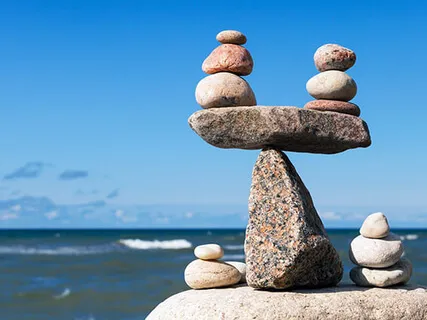
Finding a sense of balance.
As many of you may know or recall equanimity or balanced awareness is actually considered the fruit of our entire practice.
It's so important actually that it's often been referred to as the doorway to liberation,
The doorway to liberation.
And the great teacher Joseph Goldstein said that one could argue that quote the whole path to enlightenment rests on the maturing of this powerful beautiful factor,
Whole practice.
In the suttas the Buddha described the equanimous mind is quote abundant,
Exalted,
Immeasurable,
Without hostility and without ill will.
The Dalai Lama has called it immeasurable impartiality.
I like that one a lot.
Immeasurable impartiality.
And if any of you are feeling a bit intimidated right now by this,
I want to remind us that as Joseph Goldstein suggests what we're doing is maturing in equanimity,
Which means that we can actually experience the fruit of our practice in the beginning and throughout the whole line of it.
We can experience equanimity as we continue to follow this path and practice.
That's the really good news.
We don't need to achieve enlightenment in order to experience a sense of equanimity.
We actually discover it all along the way.
Many of you may be surprised to hear this,
But from age four till about age 24 for me,
For about 20 years,
I was a competitive gymnast and I traveled around the country competing in a team.
So whenever I think of equanimity or balanced awareness,
It helps me remember that we can all mature in our balance as we practice more and more,
Just like we step onto a beam and practice our balance.
We can mature in that.
And we might even imagine ourselves as equanimity gymnasts stepping onto that beam of life,
If you will,
Which is a line that is really being constantly wobbled,
Throwing us off balance by what are considered the eight worldly winds of life.
And many of you may recall these.
Pleasure and pain,
Right?
Gain or loss.
Praise or blame.
Shame and shame,
Right?
How many of you experienced any of these today,
Right?
Yeah,
They're just kind of constant,
Right?
And we might think of this coronavirus as a kind of storm that's blowing in.
It's another wind that's blowing in and kind of putting us off balance.
Anybody feel off balance right now?
Everybody?
Yeah.
So the idea is this,
That even in the beginning,
In the face of all these winds,
In the face of everything that is constantly trying to throw us off balance,
We're still not going to fall off the beam every second or react negatively every time that we fall off,
Okay?
And happily,
The more we practice,
The more familiar we become with the beam,
If you will,
And our own balancing skills,
When those winds blow in,
Which they will,
Sometimes very suddenly,
We'll have much more trust in our own ability to not let them topple us over as much.
We'll trust in that more.
I very vividly recall a time about 15,
Might be 20 years ago now,
When I suddenly realized that I'd experienced a bit of this balanced awareness in my own life and that I'd somehow used it,
This practice of UPECA,
To maintain my balance in the face of a really strong wind.
My husband,
Brent and I were living in Brooklyn,
New York then.
But during the eight years or so that we were there,
Brent used to love to take the train into the city to go to this film center in the East Village called Anthology.
And Anthology was great.
It would show these very old vintage art films sometimes.
And some of them were crazy long,
Like three or four or six hours long.
I remember one of them was six hours.
So I would usually pass on going to these films with them for watching for that long.
And because they were so long and because honestly,
Brent would indulge sometimes and watch a few at a time because he was there,
He would often get home really late.
It was about 45 minutes on the subway back to Brooklyn.
And so he would never call me because he didn't want to wake me up.
So when the phone rang at about midnight or so,
I was a little worried.
Why is he calling?
And what I heard on the other end was my husband groaning in agony and the voices of some police officers and subway workers saying,
Sir,
Sir,
There's a lot of blood.
Please don't try to get up.
And then I heard an announcement on the loudspeaker that said,
Everyone,
We're going to have to evacuate this train.
And I was screaming,
Hello,
Hello,
Into the phone,
Of course.
But no one could hear me.
And about two seconds later,
The phone went dead.
And I tried calling back multiple times.
And it just kept ringing and ringing and ringing.
So it's after midnight.
And this is what I'm left with.
And without knowing what was happening,
I actually didn't want to call anybody to wake them up.
I didn't know what was going on.
And so I found myself in a situation where I could not distract myself from myself,
Right,
From what I was feeling.
And I was experiencing what the Buddhist nun,
Pema Shodran,
Has often called the wisdom of no escape,
The wisdom of no escape.
And so as I was faced with this dilemma of being literally stuck with what was happening with no one but myself to turn to,
I decided to turn to my practice.
I actually consciously took refuge in my practice.
Because it did seem at that time like the most comforting,
Natural place to go,
Go to my practice.
And so I remember very vividly sitting down consciously,
Closing my eyes,
Putting my hand to my heart,
And taking some very long,
Deep conscious breaths to help to calm me down.
I knew that would help calm me.
And to help me to find a little more steadiness,
A little more balance in this wind that was trying to topple me.
I need to find balance here.
And I don't remember how long I did this,
But after a while I do remember that some space started to open in my mind,
Some space.
And I started to get really curious about what was happening in my mind and my body and heart.
And of course what I recognized was that panic was happening.
And I clearly remember going,
Ah,
Huh,
This is panic.
This is what panic feels like.
And it might seem like really common sense,
But that little recognition of saying,
Ah,
This is panic,
That recognition of what I was experiencing helped me to lift my head up out of the ocean of my thoughts,
If you will,
And emotions that were trying to pull me under,
That current.
It stopped me from being totally carried away by the storm of what was going on.
So after I had named it,
I knew that I was also going to need to then allow the panic to just be there with me,
Right?
And because I knew that this was going to be incredibly difficult,
Who wants to be with panic,
Right?
I also knew that I needed to very consciously invite a sense of kindness and compassion to this experience,
To the panic,
To the fear,
To the racing thoughts.
I did invite it.
And when I did,
When I invited Metta,
It really did feel like I was sitting with a very kind,
Gentle friend who was simply allowing me to feel and think whatever I was feeling and thinking,
You know?
It was like,
Of course I would feel this way,
Wouldn't I?
That would happen.
Of course I would feel that way.
It was really okay.
It was okay.
And as you may recall,
One of the root meanings of Metta,
Loving kindness,
Is Mitra,
Which means friend,
Mitra.
And the second root meaning of Metta is gentle.
So the gentle part of it is like a gentle rain that falls on everything evenly.
It doesn't stop over here and rain on this and not on that.
Rains on everything.
So it was allowing,
Gently allowing.
So when we're inviting and practicing Metta,
We're allowing all of our thoughts and emotions to arise and pass.
And we're not judging them.
And we aren't,
By the way,
Judging ourselves for having them.
We aren't beating ourselves up by thinking that we should or shouldn't be thinking or feeling something different.
We aren't,
As I always say,
We aren't shoulding all over ourselves.
It's toxic when we say,
I shouldn't be feeling fear.
Anybody have that now?
Gosh,
What's wrong with me?
I should be feeling more calm.
I should be more balanced.
I should,
I should,
I should.
Don't do it.
So after I'd invited kindness and compassion to be here,
I also knew that if I was going to stay,
I was also going to need to drop out of my racing thinking mind.
Get out of the storm of that and go directly to my body.
That's what the practice asks us to do.
So I intentionally placed more of my attention on my breath and tried to collect my attention on just this one thing.
Just on the simple breathing in,
Breathing out,
As best as I could given the circumstances.
Collecting my attention,
Breathing in,
Breathing out.
A few weeks ago in here,
I talked about the practice of zooming in,
Like a camera lens,
Gathering our attention on the breath using the practice of concentration,
Samadhi,
Which is the sixth factor of awakening.
And we use that to create some calm in both the mind and the body,
Which in turn creates more space so that we can really see what's happening more clearly.
We're not in the storm of it.
We can really see more clearly.
So after I'd done this breathing practice for a while,
In my concentration,
Samadhi had stabilized a bit.
I started asking myself some questions,
Getting curious,
Letting my curiosity work.
So I would ask things like,
OK,
What does panic feel like in the body,
In the mind?
Racing heart,
Shallow breathing,
Rushing mind,
Rushing thoughts.
There was a shakiness,
Not just in my hands,
But really all throughout my body.
And as I did this,
After a while,
The breathing,
Being curious about what was happening in my body,
I started to notice that my mind had also become still enough that I could start investigating a little bit what was going on in there too.
So in order to see these thoughts even more clearly,
I started asking myself questions like,
OK,
What am I believing here?
What thoughts are creating this physical reaction?
Because the physical reaction of panic doesn't come out of nowhere,
Does it?
It's being created by thought.
We're creating the physical feeling of panic in the body because of our thinking.
Unless someone's right there with a knife at your throat,
Nothing's really happening besides your own thoughts,
Right?
And what I discovered was that my mind was busy creating all sorts of different scenarios,
Of course,
Like my husband had been shot.
I didn't know,
Or stabbed,
Or that maybe he had some horrible illness that neither of us had known about before this.
And I also found it really curious to see my mind running way ahead into the future.
I was thinking things like,
I had hours to do this,
So what would I do without him?
And I was also getting a little crazy with my thinking,
Like,
Would I be in litigation with whoever stabbed him for years?
No.
Or where would I live when I moved back to Boulder,
Colorado,
Which I really love,
And I started thinking about that.
I had a lot of time on my hands.
And it was really kind of fun and fascinating,
Actually,
To watch my mind just do its thing.
And after observing this drama for a while,
I started to also question the validity of my thoughts.
And I used some phrasing that I've picked up over the years from the Zen tradition,
Which is things like,
Maybe so,
Maybe not,
The beautiful,
Maybe so,
Maybe not.
Not always so.
And my favorite,
Which is,
What if nothing's wrong?
What if nothing's wrong?
And the truth was,
I didn't really have any facts to go on.
So really,
Everything really could be fine.
What if nothing's wrong?
And isn't this true for so much of our lives,
Right?
For almost everything,
Really?
We really just don't know.
Do we?
Do we know?
As Mark Twain once told us,
I've lived a long life and seen a lot of hard times,
Most of which never happened.
So in our practice,
We're being asked to learn to allow ourselves to actually rest,
To rest in this not knowing,
Which,
As we all know,
Is incredibly difficult,
Or we wouldn't be here.
Our tendency is to want resolution,
Usually right now,
Right?
And we also tend to feel incredibly uncomfortable or anxious or even fearful in any kind of uncertainty,
Any kind.
We tend to want to run away from it,
Right?
Or fight it,
Or totally distract ourselves,
Or blame ourselves or others.
Sometimes to blame,
Someone's got to be blamed for this.
Or cover it over.
Or pretend it's not there.
Or maybe just ignore whatever's happening,
Right?
We all have these tendencies.
I'm just going to ignore it.
Maybe it'll go away.
Instead of any of these things,
Our practice is asking us to learn how to stay right in the center of that uncertainty,
Right in the middle of that storm,
To stay.
Now this doesn't mean that we run around frantically in the not knowing,
Kind of grasping at solutions.
We are asked to rest in this and become curious in order to discover the truth.
Pema Shodran tells us this,
As human beings,
Not only do we seek resolution,
But we also feel that we deserve resolution.
However,
Not only do we not deserve resolution,
We suffer from resolution.
We don't deserve resolution.
We deserve something better than that.
We deserve our birthright,
Which is the middle way,
An open state of mind that can relax with paradox and ambiguity.
So that evening or morning really,
As I waited for the next two or three hours,
I practiced,
Which means always not perfectly resting in my practice as best as I could,
Resting in the not knowing,
With metta and compassion as my companions with me.
And instead of feeling like I was in the ocean of it all,
Without an anchor,
Really struggling,
I really felt more like I was sitting calmly in a boat.
I was still experiencing the storm,
But it was more of a kind calm observer of this,
Right?
It wasn't in the ocean.
And I realized with some surprise actually that I was finally allowing myself to just sort of ride the waves of it all,
Letting the thoughts and emotions come and go,
And maintaining a relative state of balance or equanimity,
Right?
Hadn't been knocked off the beam.
And by the time my husband called me from the hospital and told me that he had gotten food poisoning from some bad chocolate milk of all things,
He'd fallen and hit his head and he'd gotten some stitches.
I was able to respond with a calm,
Kind,
Tired place and really take care of him from that place,
Rather from an exhausted,
Frantic person who was off balance.
And what was really interesting to me actually was that I didn't do any of this purposely,
Really.
I remember thinking about this on the taxi right there.
My practice was just right there.
I did all of this almost on automatic,
Right,
Finding my balance.
So when we're used to practicing this way daily on the cushion as encouragement,
It happens more and more often,
Our equanimity.
It just kind of kicks in.
We don't have to grab too far for it.
It's there.
It's very similar to how we learn anything.
We eventually learn to trust ourselves,
Just like maybe driving our cars or playing a musical instrument or walking on a balance beam.
Over time,
We learn to remain balanced,
Knowing that we don't need to automatically react or be so attached to or so aversive to other people,
Situations,
Or ourselves,
Because we can react to ourselves,
Too,
Can't we?
Be aversive to ourselves.
And even if we fall,
Which we all will,
We're going to all fall off that beam again and again,
We can trust ourselves to get back up and try again.
Even if things don't go our way,
We're going to know more and more how to meet them.
We'll have more trust in that,
More trust in how we meet other people,
Situations in our lives.
Equanimity can hold us in that way.
My friend and teacher,
Pat Coffey,
Has described equanimity as being the strong back to the soft front of the heart.
It's also been said that equanimity is actually what we experience when we offer our meta,
Our loving kindness,
To both our joys and our sorrows.
We're offering a balanced awareness of all of it.
The word equanimity actually comes from the Latin phrase,
Eiko animo,
Which means with a calm,
Even mind.
Eiko animo,
Which means with a calm,
Even mind.
So what this means is that even if we're in some kind of physical pain or struggling in some way,
The truth is that more and more as we begin to recognize that our contentment,
Our contentment comes from learning to be with what is,
With a kind and patient and balanced mind.
It's this idea of,
All right,
This isn't what I'd planned or what any of us have planned,
But this is it.
This is it,
Those three words in the Zen tradition,
Which are always and forever followed by now what?
This is it,
Now what?
What might be best here?
Best attitude,
Best plan?
What's the kindness,
Most compassionate response to this?
Now what?
And it's actually a very warm,
Compassionate,
Wise,
Mature way of responding and living rather than closing down,
Becoming angry,
Resentful,
Bitter,
Fearful,
All of the ways that we harden our heart.
The Buddha said that mature equanimity produces a radiance and warmth of being.
And the Tibetan word for this warmth is called siwa,
And it's spelled T-S-E-W-A,
Siwa.
It's a warmth,
A radiance of being.
And have you ever met someone like this?
You know,
It's like someone who has that calm and balance during both moments of great joy and also great sorrow.
They're meeting all the experiences in the same way with calmness and kindness and balance.
And this person's not cold,
Right?
It's not a cold response.
It feels good to be in their presence.
And yet there's this really popular myth in this country that when Buddhists talk about equanimity,
They're talking about something very serious and kind of like a dry neutrality or a cool aloofness.
Some people even think about it as maybe like resignation or indifference,
Right,
As a Buddhist way of thinking.
And it's most painful.
It involves an attitude of,
Well,
I don't matter anyway,
I guess,
Or these things always happen to me.
It's just one more thing happening to me or even I just need to grit my teeth and smile and get through this.
I just need to get through it.
And what do we do?
Do you think it's like,
Doesn't that feel hard?
I'm just going to get through this.
Just got to get and be resentful about it too.
This type of relating is actually considered the near enemy of equanimity,
Something that can disguise itself as equanimity.
But both resignation and indifference involve a kind of coldness.
And so they both involve a sense of feeling disconnected from whatever's happening,
Disconnected.
If you think about it,
When we're indifferent or resigned,
We've actually become separated from our hearts,
Haven't we?
Rather than with our hearts,
With one another,
We've become cold,
Not warm,
When we're not connecting,
Not connecting with ourselves or others or a situation.
In fact,
Whenever we're making it all about me rather than feeling a part of,
We harden.
Think about that.
Isn't that true?
Right?
We harden.
So with equanimity practice,
We are being asked to warm up and to soften.
So instead of armoring up and defending,
Going into battle with our shield of no,
We really allow ourselves to feel whatever we're feeling.
Again,
With great kindness,
We bathe in kindness and compassion.
Because the truth is,
Really,
If we harden our hearts against all the pain that we feel in this world,
Guess what?
We also block out all the joy and all the connection,
And we just get isolated and blocked.
In his famous essay,
Notes of a Native Son,
The writer James Baldwin points to this.
As it began to seem that one would have to hold in the mind forever two ideas which seemed to be in opposition.
The first idea was acceptance,
The acceptance totally without rancor of life as it is and men as they are.
In the light of this idea,
It goes without saying that injustice is a commonplace.
But this did not mean that one could be complacent.
For the second idea was of equal power,
That one must never in one's life accept these injustices as commonplace,
But must fight them with all of one's strength.
This fight begins,
However,
In the heart.
And it now had been laid to my charge to keep my own heart free of hatred and despair.
Free of hatred and despair.
So the beauty of equanimity really begins to happen when that wave of fear,
Anger,
Sadness comes and we can allow ourselves in a way to take the hit.
When we can allow it,
We're going to be able to bounce back that much quicker because we've allowed it to arise and pass within us.
We haven't resisted it,
Okay?
A few years ago,
There was a very rare earthquake in Virginia.
I know most of us,
And everybody remember that?
Everybody here for that?
Wasn't that weird?
And,
You know,
I think most of us,
Who didn't feel it?
Who wasn't experiencing that?
Anybody in here?
No hands raised.
So we all experience that.
But we all did so a little differently.
My friend and his wife live in this great little house that they built in the ground.
It's like a hobbit house.
You can mow on top of it,
You know?
And when I talked to them,
What they remember was this really short blip or rumbling.
Most people felt it a lot longer.
And so the reason for this I found fascinating.
Their house actually has no real walls,
Right?
It's made of earth.
So it basically,
There was less resistance.
So it arose and passed that much quicker.
They barely felt it.
They came into balance so much quicker because there wasn't resistance.
And as most of us know,
Resistance in our lives makes everything so much more difficult.
It makes the suffering that's here just last longer.
That's all it does,
Really.
Isn't that true?
Check that out in your own lives.
It honestly just makes it worse.
And as a reminder,
It's not,
Of course,
That there's no suffering in this life.
The first noble truth is there is suffering.
It's just the truth.
And say all life is suffering,
Happily.
There is suffering.
But resisting what is unpleasant only adds stress to an already difficult situation.
That's all it does.
It's that old equation of pain times resistance equals the amount of stress and suffering that we're going to experience.
I like to think of it as pain times our no.
It's an easier way to remember it.
But if you're saying no to equals the amount of pain and suffering we're going to experience.
Think about what you're saying no to.
I don't want that.
It shouldn't be.
It's all your shoulds are the no's.
So it can be really great practice to just simply start investigating the strength of our no's.
The strength of I don't want that.
It,
He,
She,
They shouldn't be.
And we can start to investigate when we're resisting rather than allowing.
And maybe investigate when we're allowing and what that feels like.
What does it feel like when we're allowing?
And by the way,
This type of allowing never ever means that we're allowing or approving of some kind of bad behavior or approving of some kind of bad situation.
Or that we don't of course act to change something.
Of course we do.
It's just saying that the experience of our own suffering and pain and struggle is going to be that much worse if we go into battle with our no's.
When we're not allowing or being willing to be with whatever we're feeling or believing about something.
As we practice equanimity we gradually learn that we can let things flow through like a wave.
We can see there are rising and there are inevitable passing and the continuation of this.
Our practice of equanimity then really involves Bicchio and Alio's famous summary of our entire practice which he describes in four words and I know you all know because it's on my bumper sticker and I say it constantly.
Which is keep calmly knowing change.
That's it.
Keep calmly,
Not frantically,
Keep calmly knowing,
Being aware of change.
In the Pali language there are several different words for equanimity.
The most common is upekka and its root meaning means to look over.
And this refers to the equanimity that arises from the power of our observation.
The ability to see without being caught by what we're seeing.
Ability to see without being caught by it.
And this is really where our formal practice on the occasion comes into play.
Because again it allows us to be aware of whatever's happening,
The thoughts and emotions that are arising within us without necessarily believing them as true and without necessarily acting on them.
We can learn to simply rest again in the awareness of whatever's happening.
And more and more we can begin to notice that that resting place itself is calm.
The surface of the ocean might be riled but in the center,
It's witnessing that is calm.
In India the word upekka was also sometimes used to mean to see with patience,
To see with patience.
And the theologian Howard Thurman has said that we need to practice looking at the world with quiet eyes.
Ah,
Just love that.
This form of practice is often also compared to a grandmotherly love.
The grandmother clearly loves her grandchildren but thanks to her experience with her own children she's less likely to be caught up in reaction to the drama when her grandchild maybe screams something like,
I hate you and runs off,
Right?
When they can't get their way,
Hate you.
And in the same way we can even begin to recognize when we ourselves in some way say I hate you to ourselves or maybe to some situation.
Think about that this week,
Have you said I hate this situation?
I hate it,
Right?
Or I hate myself or I hate that person or this.
And we can see that it isn't necessarily true or maybe necessary or very helpful to be able to deal with whatever's happening to have that kind of resistance.
It's not necessary or helpful,
Okay?
Finally I want to leave you with another word that's often translated as equanimity which is tatra majjhata which means to stand in the middle of all of this.
To stand in the middle of all of this.
And as you might recall the Buddha actually termed our whole practice as the middle way.
So when we're walking the path of the middle way what we begin to realize more and more is that happiness is at the very center,
It's at the center of wanting and aversion,
Okay?
The great Indian philosopher Krishnamurti tells us this,
When the mind is still and tranquil not seeking any answer or solution,
Neither resisting or avoiding,
It is only then that there can be a regeneration because then the mind is capable of perceiving what is true and it is the truth that liberates not our effort to be free.
It is the truth that liberates not our effort to be free.
So I think I'm going to end there and invite us into practice.
So whenever you're ready maybe just gently closing the eyes.
Maybe taking a nice deep breath in,
Deep breath out.
A couple of rounds of these remembering,
Focusing on the breath can really help calm the mind and the body and create some more space.
So see if you can use your practice in this way just for the next minute or so to very consciously bring your attention to the breath and this moment with a kind of metta friendliness,
Karuna compassion.
And if it's helpful you can always place one hand or both on the heart or one hand on the belly as a way to bring more kindness here.
Also again a sense of a smile in the corner of the eyes and the lips can help with that sense of caring and kindness and gentleness.
That's all of it.
Whenever you're ready,
I'm going to invite you to begin to ask yourself a question,
Which is,
What am I saying no to?
Really strongly.
What am I not wanting to be a certain way?
Myself,
A situation,
Another person.
What am I screaming no to?
And be really honest with yourself.
No judgment.
Just notice your no,
Your armoring here.
And begin to notice what that does to the mind-heart body.
How does it feel to live with that no?
And then you might go directly to the heart and ask it what it needs.
What's underneath the no?
You allow yourself to feel what's underneath the no in the heart.
Just let it be with kindness.
My teacher Tara Brock often says to say,
This belongs,
Or this too,
It's okay.
See if there's a softening as you allow.
And if it feels still blocked,
Pay attention to the feeling of resistance itself.
Allow that.
Bring care to that.
And again,
You might ask the question,
Heart,
What do you need?
What do you need?
Just listen.
Finally,
With the eyes still closed,
Just listening to these words from William Stafford who tells us,
I like to live in the sound of water,
In the feel of the mountain air.
A sharp reminder hits me,
This world is still alive.
It stretches out there,
Shivering towards its own creation,
And I am a part of it.
Even my breathing enters into this elaborate give and take,
This bowing to sun and moon,
Day and night,
Winter,
Summer,
Storm,
Still.
This tranquil chaos that seems to be going somewhere.
This wilderness with a great peacefulness in it.
This motionless turmoil,
This everything dance.
I hope you enjoyed this talk.
These talks are always offered freely so that no one is ever denied access to these teachings and your support really makes a difference.
Dana is an ancient Pali word meaning spontaneous generosity of heart.
If you feel inspired to offer Dana,
You can do so by visiting my website at www.
Mindfulvalley.
Com.
Thank you so much.