You So,
This week,
As Easter arrives,
And the weather is starting to warm up,
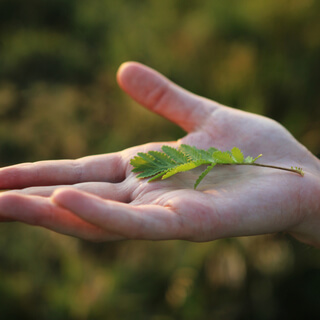
And everything is starting to bloom,
I've been thinking a lot about all the different metaphors that this season always brings with it about awakening and resurrection.
And,
Of course,
This is true every spring,
But unlike other years,
This year's,
The awakening feels palpably different as we're all just starting to wake up or maybe emerge from this incredibly difficult year that we've all been through and,
Of course,
Are continuing to go through.
And while this new rising does have a feeling of hopefulness to it,
As spring so often does,
Many of us have also expressed feeling uncertain and hesitant and fragile and maybe just plain exhausted.
Which I think is very similar to how we feel when we're grieving.
And given what we've all been through,
This just makes sense.
Recently,
I was listening to an interview with Dr.
Christine Runyon,
Who's a clinical psychologist and also a mindfulness instructor,
And she went as far as to say that what we've all been through this past year has been a species-level trauma.
Just think about that,
That we've all experienced a species-level trauma which just feels so big,
It's almost hard to contemplate.
And so as we all start to gradually and gently step out into the world again and maybe very slowly start to interact with one another,
It's incredibly important for us to keep in mind that every single one of us has been deeply affected and activated by this pandemic,
Which means that we're likely going to feel a bit more vulnerable or raw,
And we're also very likely grieving again in some way,
Which is so important to actually recognize and acknowledge.
Because on top of the pandemic itself,
Many of us have also gone through a whole series of difficult and painful losses this year as a result of the pandemic.
So for instance,
Almost all of us have lost precious time with our friends and community and loved ones,
And we've all lost all those moments that we plan for ourselves as we do.
Many of us have also lost our jobs,
Our businesses,
Our sources of income.
We may have even lost our homes or the lives of friends or loved ones.
Here in the United States,
We've also experienced what seems like an overwhelming amount of stressful social,
Political,
And racial traumas this year.
Too many to count,
Really.
Very overwhelming.
And of course,
We're also all faced with our own personal difficulties,
Mainly because this is just the nature of life itself,
Isn't it,
Which is continually giving us what the teachings call the inevitable 10,
000 joys and the 10,
000 sorrows.
And so right now,
Even though we may be experiencing some new joy,
Maybe the joy of spring finally arriving or the hope that this pandemic is finally coming to some kind of an end,
It's crucial for us to keep in mind that,
Again,
Each one of us has been affected by this very challenging past year and are likely experiencing some lingering or maybe even current or ongoing hurt.
And if we think about it,
This is always true,
Isn't it?
We are actually always,
All of us,
In some way,
Experiencing some lingering or current hurt or struggle.
It's what the Buddha reminds us in the first noble truth.
They were suffering,
And we all experience it.
It's just part of being alive on this earth.
And because life itself inevitably involves some pain and suffering,
The teachings urge us over and over to make a very strong,
Conscious,
Concerted effort to remember to keep in mind that others are also hurting,
Often in ways that we can't truly ever know.
So to me,
What seems to be the most crucially needed right now as we all begin to arise or awaken from this incredibly difficult period in our history is the care that we might offer someone in mourning,
Which you might imagine includes our kindness and compassion and empathy,
Not only for others,
But absolutely also for ourselves.
And I realize that this might just seem like basic common sense,
But sadly,
Kindness is actually not something that always comes naturally to us.
As one of my teachers,
The great Sylvia Borstein,
Once said,
I am thankful that thus far today,
I have not had any unkind thoughts or said any harsh words or done anything that I regret.
However,
Now I need to get out of bed,
And so things may become more difficult.
As we all know,
It can sometimes be really hard work.
And apparently,
According to modern researchers,
It seems to be getting even harder for us to simply be kind to ourselves and to one another.
In fact,
Recent studies have shown that the qualities of kindness,
Compassion,
And empathy have actually been on a sharp decline for the past two decades.
About 10 years ago,
Actually,
Researchers who had been studying the levels of empathy in college students discovered that students in 2011 had become 75% less empathetic than they were 30 years earlier.
Just think about that.
Our young adults had become 75% less caring about others,
And that was 10 years ago.
So we can only imagine what that percentage might be today.
Just last week,
The Dalai Lama put out a statement warning us that if our levels of empathy continue to decline and we become even more unkind and cruel and uncaring towards one another,
We might just not survive as a species.
He said,
Compassion is the basis of our survival,
Not just a religious matter.
Our very life depends on the affection of others,
So it is in our interest to take their concerns into account.
We must think more about inner values and cultivate compassion in our own lives.
And I need to confess that I was sort of floored by this dire warning from this extremely wise old teacher who believes that our greatest threat right now is not necessarily a deadly global pandemic,
But the diminishing levels of kindness,
Compassion,
And care that we show towards one another.
And to me,
This just really emphasizes how essential our spiritual practice is right now,
Especially as we consider how the teachings not only urge us to make every effort to cultivate kindness and compassion,
But at the very least to make sure that we do not do any harm either to ourselves or to others,
The very least,
Do no harm.
This is just so important to honor ourselves and each other in our practice by committing ourselves to do no harm.
In the Dhammapada,
The Buddha tells us,
As a bee gathering nectar does not harm or disturb the color and fragrance of the flower,
So do the wise move through the world.
And this pledge that we make to ourselves to do no harm is called Ahimsa,
Which is often translated as nonviolence.
And in the Buddhist tradition,
The practice of Ahimsa is called sila,
Or moral discipline.
And as the Dalai Lama said,
Our practice of sila really cannot be underestimated.
The word sila,
S-I-L-A,
Actually derives from another word,
Which means bed,
And it's often thought of as the bedrock or the foundation upon which our entire spiritual practice is built.
The concept of sila was first introduced more than 2,
500 years ago when the Buddha gave us his very first sermon at Sarnath when he presented what he called the Four Noble Truths.
And of course,
The very first of these truths is that there is suffering.
And if we think about it,
This first truth might actually be the most important one for us to keep in mind because if our practice is to have an ongoing awareness of suffering,
It can actually profoundly affect our actions in this world.
The other three truths explain that there is a reason for the suffering,
That there is a way out of the suffering,
And that we can discover this way out by following what is called the Noble Eightfold Path,
Or sometimes it's also known as the Wheel of Dharma.
And to help us to remember the eight paths or the eight spokes,
The Buddha broke them down for us into three main categories,
And these include meditation,
Or samadhi,
Wisdom,
Or panna,
And finally sila,
Which is moral discipline.
And along with asking us to do no harm through our speech,
Our actions,
Our livelihoods,
The practice of sila also invites us to cultivate an aspiration to actually help relieve the suffering of both ourselves and others.
And if we really consider why we're practicing in the first place,
We might even begin to view our practice of sila as the entire fruit of our effort because the truth is,
Of course,
We aren't practicing simply so that we can reach some sublime,
Otherworldly,
Or transcendental state,
Or learn how to speak in Pali,
Or learn how to hone our concentration skills so that we can become even more successful.
We are practicing in order to develop our capacity for kindness,
Compassion,
And joy,
And to free ourselves from what are often called the three poisons,
Those things that cause ourselves and others harm,
Which are greed,
Hatred,
And delusion,
The three poisons.
And of course,
Beyond the many obvious reasons that we don't want to cause harm,
One of the main reasons is that when we ourselves are not being mindful about the well-being of others and either unintentionally or even intentionally cause some hurt or pain,
It actually ends up causing ourselves more harm because what happens is that we end up hardening our own hearts.
This is so important that we learn to be more mindful and careful about our own hearts and to guard them from the kind of damage that can occur when we aren't being mindful about protecting another person's well-being from our own harmful speech or actions.
As the teachings show us,
Our sense of separation is actually an illusion.
We truly are all intimately interconnected,
Which means that everything we do for others reverberates back into our own minds and bodies and hearts.
If any of you have ever received an email from me,
You may have noticed that I almost always end my letters by saying that my words were sent with kind wishes or metta,
Which means unconditional friendliness.
And as a confession,
Part of why I do this is because it serves as a very gentle reminder for me to be more mindful and careful about the well-being of whoever I'm writing to.
So I really use it as a kind of ongoing practice to try to make sure that I'm not intentionally or unintentionally causing any hurt or harm for the other person or even for myself,
Even if the harm that I'm causing is simply the pain that I'm creating in my own mind and heart by chewing on any sense of ill will or resentment or anger,
Envy,
Et cetera,
Which is so harmful.
This is true especially when I'm writing to someone who I maybe don't love so much or maybe someone who has caused me harm in some way.
I really want to be careful with their hearts too and to care about this.
Remembering as Henry Wadsworth Longfellow once wrote,
If we could read the secret history of our enemies,
We should find in each one's life,
Sorrow and suffering to disarm all hostility.
Very often when I'm having difficulty offering my kind of wishes to a particular person,
I like to remind myself that maybe if this person were truly happy and knew the causes of happiness,
They wouldn't behave the way that they're behaving and therefore I really do wish them happiness.
I really do wish them well.
And over the years of doing this practice,
One thing that I've discovered is that even if someone has insulted me in some way,
The best and kindest response is very often no response at all.
In fact,
Whenever I'm tempted to respond with some sort of thinly veiled barb,
I like to remember or remind myself of these two questions that were once asked of the Buddha,
Which was,
What is the most destructive organ in the human body?
What is the most helpful organ in the human body?
And as you might imagine,
His answer to both questions was the same.
It's the tongue.
I also like to reflect on these wise words from the writer Craig Ruver,
Who tells us,
Regardless of how justified you might believe you are in seeking your revenge,
It's important to remember that life is not a game and simply getting even does not mean you've won the battle.
It just means you've lost your self-respect.
It also really helps me to recall the famous Metta Sutta,
Which the Buddha asks us to recite as a kind of aspiration for ourselves,
Or as a kind of ongoing wish for the happiness of both ourselves and others.
And as encouragement before I offer you the sutta,
I want to mention that several years ago,
Scientists at the University of Wisconsin-Madison researched a group of Buddhist monks who practice this traditional Metta prayer every single day of their lives.
And what they discovered was that a part of the brain that relates to compassion in these monks had literally grown bigger and made them more compassionate to both themselves and others.
So they quite literally took these words to heart.
And what they recited was this.
This is the Metta Sutta.
Happy at rest.
May all beings be happy at heart.
Whatever beings there may be,
Weak or strong,
Without exception,
Long,
Large,
Middling,
Short,
Subtle,
Blatant,
Seen and unseen,
Near and far,
Born and seeking birth,
May all beings be happy at heart.
Let no one deceive another or despise anyone anywhere or through anger or irritation,
Wish for another to suffer.
And for me,
The key words in the Metta Sutta are without exception,
Which means that we are practicing offer our Metta or unconditional friendliness to everyone,
To all beings without exception.
And again,
This means especially towards those who we might not particularly like so much,
Or even those who we might consider our enemies in some way,
Which means people we know don't have our best interest in mind or even maybe out to get us in some way.
So this is where our practice really meets the road,
If you will.
Because even though it's tempting,
As the Sutta reminds us,
We really never,
Ever,
Ever want to wish for another to suffer or to nurture our resentment or maybe even go as far as to try to get some revenge in some way.
One of my very favorite teachers,
Philip Moffitt,
Once described the dangers of this so well.
He said,
Resentment,
Whether cold fury or smoldering rage,
Hardens your emotions,
Narrows your options in responding to life,
Clouds your judgment,
Locks you out of experiencing the flow of life,
Shifts your attention from those who matter to you,
To those who you disdain and deadens your spirit.
Why would you choose to live in this manner?
It gives those who wronged you an even greater victory than their original act.
So true.
This winter,
I sort of accidentally learned a lot about resentment and revenge.
Because things were so bleak this year and my husband and I wanted to lighten things up a bit,
We ended up buying an old TV series on DVD called Once Upon a Time,
Which the writers in an interview that I watched said was all about hope.
And it also looked like a bit of light fun,
Which we were sort of desperately needing this winter.
And for those of you who may not have seen it,
The plot line is that the evil queen from the famous Snow White fairy tale has cast a curse on all the other fairy tale characters in the world.
And she's made them believe that the real people living in this small town in Maine and none of them realizes who they are,
Except,
Of course,
For the queen.
And to get an idea of her mind before she cast this curse,
The evil queen tells all the fairy tale characters this.
And please forgive me because I can't do the voice or add the dramatic music here,
But you might imagine.
She says,
Soon everything you love,
Everything all of you love will be taken from you forever.
And out of your suffering will rise my victory.
I shall destroy your happiness if it's the last thing I do.
So this is what she tells everyone.
And the premise was that she made everyone suffer this cruel fate simply as a way to get revenge on her nemesis,
Snow White.
Who later in the series says this to the queen,
Even if you can't admit what you did,
I forgive you anyway.
Your life must be filled with such incredible loneliness if your only joy comes from destroying everyone else's happiness.
It's so sad because despite what you think,
It will not make you happy.
It's only going to leave a giant hole in your heart.
And to me,
The entire series seemed to be an intensive study in Seela.
Because in almost every single episode,
It showed us two sides of the coin.
So on one hand,
It showed us exactly what happens when we only seek out our own happiness or power,
Or when we intentionally cause others harm in some way.
And it also showed us what happens when we offer ourselves and others our care and kindness and compassion and empathy.
And one of the things I dearly loved about the series was that the writers used what I thought was a perfect and simple visual effect to show what self-centeredness,
Meanness,
Cruelty,
Or the desire for power does to the heart.
And it was definitely a little shocking and gruesome.
But some of the magical characters were given the ability to literally reach into someone else's chest,
Rip out their hearts,
And hold it in their hands.
This meant that both the characters and we,
The audience,
Could see directly into a character's heart.
Even the person,
Of course,
Whose heart had been ripped out.
And what they found was often a surprise even to themselves.
So as you might imagine,
The main heroes or sheroes of the story all had hearts that were mostly glowing red.
But those who were looking for either power or revenge or personal gain had hearts that had been partially burnt or charred.
In fact,
The most corrupt of the characters had very little red in their hearts at all because they'd been so charred from all their harmful words and actions over the years.
And if any of you are now thinking about the heart of maybe someone you believe is cruel or even about your own heart,
What I also loved about the series is that not a single character's heart was completely fully red or flawless.
And because we were all able to see and witness the good parts of each character,
We could literally see inside their hearts.
We ended up loving all of them,
Even and maybe most especially those whose hearts had been the most charred,
Because those characters were the ones who had the most to overcome and happily they did.
I thought it really reflected the truth of our shared humanity,
Which is the truth that not a single one of us is perfect.
And because we've all lived in this world,
We all have charred parts of the heart.
It's just part of being a human on this planet.
All of us have either unintentionally or even maybe intentionally caused harm to both ourselves and to others,
Every single one of us.
And the good news is that with practice and intention and time,
We truly can begin to create more good in this world.
We can become forces of good in this world.
And through our intentional speech and action,
Start to heal the pain rather than create even more of it.
We can,
In the Buddha's words,
Awaken.
During the many months that we were watching the show,
I kept remembering a very beloved passage from the Dhammapada where the Buddha tells us this.
Think not lightly of evil,
Saying,
It will not come to me.
Drop by drop is the water pot filled.
Likewise,
The fool gathering it little by little fills oneself with evil.
Think not lightly of good,
Saying,
It will not come to me.
Drop by drop is the water pot filled.
Likewise,
The wise person gathering it little by little fills oneself with good.
One of my favorite passages.
And for those of you again who haven't seen it,
My sincere apologies if I'm spoiling it for you.
But over the course of the series,
As the evil queen continues to be offered kindness,
Compassion and empathy from all the other characters,
All of whom,
Of course,
She had wished harm.
What happens is that she starts to care for them as much as she cares for herself,
So much so that she's finally transformed into the good queen.
And in the end,
They actually ask her to lead them.
Drop by drop,
She was filled with good.
She was awakened.
In the early 1990s,
When I was studying Buddhism at Naropa University in Boulder,
Colorado,
One of my professors had us watch the movie Groundhog Day,
Which is widely considered a classic Buddhist tale.
Especially as it involves the concept of karma,
But it also shows how over time again,
Drop by drop,
Our intention for good can quite radically not only change us,
But everyone around us.
And I think that the Once Upon a Time series could really be viewed in the same light,
Because it shows the kind of transformation,
Or again,
The awakening that can happen when we start to really become conscious of and examine all the ways that our beliefs about ourselves and others might be causing harm.
And of course,
This is exactly what our practice is asking us to do.
The idea is that as we get better and better at being with and investigating our own minds and hearts,
We very naturally start to have more and more compassion for ourselves and for all of the life experiences that we've had to go through.
And as we start to care about and have compassion for all the harm and struggles that we ourselves have endured,
Maybe even as children,
We start to more clearly see how so many of our choices and actions in the world have been based on this conditioning,
These beliefs that have been conditioned.
And as we continue,
And our sense of self and our compassion starts to expand even wider to include others,
We begin to see and truly understand the many ways that others also experiencing suffering in similar ways.
And when this becomes even more clear,
We just naturally stop being willing or even able actually to harm them.
Because we understand that the very last thing we would ever want to do is to add any more sorrow to the 10,
000 sorrows that we are all already experiencing.
In fact,
Along with not being able or willing to harm,
We start to develop a stronger and stronger need to actually help relieve the suffering,
Because the vastness of the sorrow has become so clear to us.
The poet Emily Dickinson once described this compassionate aspiration so beautifully.
She wrote,
If I can stop one heart from breaking,
I shall not live in vain.
If I can ease one life,
The aching or cool one pain or help one fainting Robin onto his nest again.
I shall not live in vain.
So it's incredibly important for us to remember that our practice of no harm or sila is not simply a side aspect of our practice.
Without it,
We really have no chance of finding any kind of freedom or happiness or awakening.
It's just simply not possible.
Earlier this week,
I was watching a live online session with the Dalai Lama.
And they were asking him questions and someone raised their hand to ask,
What is enlightenment?
And his answer was that enlightenment is the bright light of the mind that appears when all the different negative emotions that cause ourselves and others harm have been removed.
And have been replaced with a mind that is infused with infinite kindness and compassion for both ourselves and others.
And what I found fascinating was that while I was watching the Dalai Lama,
As he continued to explain and to use the word mind,
He never once pointed to his head.
He kept pointing directly to his heart over and over,
Which just made me tear up with joy.
During my early training in the Shambhala tradition more than 30 years ago,
I learned about the term Bodhicitta,
Which means awakened Bodhi,
Mind heart,
Chitta,
Bodhicitta.
The mind and the heart,
I learned,
Are not separate.
And in fact,
The heart is considered more powerful of the two and then it directs the two.
And Bodhicitta is what the Dalai Lama was talking about when he gave his answer.
And again,
It's really what we're all aiming for and also how we are being asked to practice.
Bodhicitta has been described as a spontaneous wish to attain enlightenment,
Motivated by great compassion for all sentient beings,
Accompanied by a falling away of the attachment to the illusion of an inherently existing self.
And this is exactly what the characters in both of the movies that I mentioned discovered.
That the key to our awakening hinges on our letting go of our own self-centeredness and truly caring about the welfare of all beings,
Which of course includes ourselves.
There's a really lovely poem that I love by Rudy Francisco that I think exemplifies this wish so well.
He writes,
She asked me to kill the spider.
Instead,
I get the most peaceful weapons I can find.
I take a cup and a napkin.
I catch the spider,
Put it outside and allow it to walk away.
If I am ever caught in the wrong place at the wrong time,
Just being alive,
Not bothering anyone.
I hope I am greeted with the same kind of mercy.
And finally,
As we're coming to an end,
I'd like to offer you a brief meditation on kindness or the practice of metta.
So wherever you are,
You might want to settle a little bit,
Maybe close the eyes if you can,
Or just start to rest the body,
Settle into the body in some way.
So if you're out walking,
You might want to feel the bottom of your feet on whatever you're walking on.
You become more embodied.
If you're sitting,
You can also sense the feet connecting to the earth and also your sit bones in the chair or cushion.
Let the body sink down.
Let the mind sink into the body.
So that you're becoming more and more present and embodied right now here.
If you're aware of the movement of the breath,
You might even take a nice deep breath in,
Slow breath out,
Maybe a couple of rounds of these on your own to get more in touch with the body and the breath.
And each exhale letting the body settle,
The mind settle.
Sometimes it can help to bring just a slight smile to the corner of the eyes and the lips as a way of inviting a sense of friendliness,
Kindness.
Not a covering over of anything,
Just a sense of a friend being here.
Friendliness.
You might gently start to relax or loosen some of the tension in the body.
So you might start with the whole area of the face,
Softening the forehead,
Eyes,
Cheeks,
Jaw,
Neck,
Shoulders,
Letting the shoulders drop.
Still breathing.
You might sense into the hands,
Let the center of the palms be soft,
Sense whatever the hands are touching each other,
Your body or the air.
You might sense the tummy,
Let the tummy soften a bit,
Let the breath enter the belly.
Again,
You might sense the sit bones,
Maybe imagine the whole skeleton,
Maybe loosening a bit,
Letting all the muscles and tension in the body soften around the skeleton.
You're letting go.
To invite you to breathe right directly into the heart.
Imagine this as you breathe in.
Imagine breathing directly into the heart center.
And even imagine the shape of the heart.
Softening the warmth of the heart.
And if it's helpful,
You can place a hand there,
Both hands on the heart.
You could place one hand on the heart,
One on the belly.
If that's comfortable.
In some way,
Holding yourself with the breath and yourself with a sense of kindness,
Compassion,
Care.
And as you're ready,
I'd like to invite you to reflect without any judgment on ways that you may have recently been unkind in some way to yourself.
Maybe through thoughts or actions.
No judgment,
Just taking an honest look at this for a moment.
At some way that you may have been unkind to yourself recently.
And as you do,
See if you can sense how this lives in your heart.
How does this live in the heart?
Really taking on a slow.
And now as you're ready,
You might consider all the ways that you might offer yourself your own kindness,
Compassion,
Care,
And empathy.
How might you offer yourself more of your own kindness,
Compassion,
Care,
And empathy?
You might even consider some kind of words that you might like to say to yourself or maybe make some kind of commitment to yourself to be even more kind.
And as you do,
Sense how this kindness might live in your heart.
How might this kindness live in the heart?
How might this kindness live in your heart?
Now as you're ready,
I'd like to invite you to reflect,
Again,
Without any judgment at all.
Reflect on ways that you may have recently been unkind to someone in your life or to others in some way.
And as you do,
See if you can sense how this lives in your heart,
How this lives in your heart.
And as you do,
See if you can sense how this lives in your heart or in others in some way.
Again,
Maybe through words,
Actions,
Or even just thoughts,
Unkind thoughts.
Remembering no judgment,
Just taking an honest look at this for a moment.
And again,
Maybe sensing how this unkindness might live in the heart.
And again,
Maybe through words,
Actions,
Or even just thoughts.
And now as you're ready,
You might consider some ways that you might be more kind to that person or those people in your life.
How might you be more kind?
You might even consider some kind words you might say or some action you might take.
You might consider making a kind of commitment to yourself to be even more kind to this person or people.
And sense how that kindness might live in the heart.
And then you might consider making a kind of commitment to yourself to be even more kind to this person or people.
How might you be more kind to this person or people?
And finally,
With the eyes to close,
I invite you to listen to these words from the poet Laura Grace Weldon,
Who writes,
You don't know me,
But I miss you,
Fellow walkers,
Dad with double stroller,
Rainbow-legging woman,
Earnest black hound,
Haulin' gray-beared,
Man on a never-slack leash.
I miss the marks check-out clerk with three-nose rings,
Bitten nails,
Sardonic asides.
Miss the librarian whose voice is soft as my mother's was,
Back when I sobbed myself weak,
Her hand stroking my hair while she looked out the window.
Wherever you are now,
I wish you well,
Cast light around you each night before sleep.
I want your granny to pull through,
Your job to stick around,
Your landlord to grant you every dispensation.
I want flowers to sprout in your garbage,
Old milk to turn into yogurt.
May your junk mail transform into loans forgiven,
Scholarships granted,
Grievances forgotten.
May we see each other soon,
Smile in recognition,
Reimagine a world where we all breathe free.
Namaste and blessings.
I hope you enjoyed this talk.
These talks are always offered freely so that no one is ever denied access to these teachings,
And your support really makes a difference.
Dhanah is an ancient Pali word meaning spontaneous generosity of heart.
If you feel inspired to offer Dhanah,
You can do so by visiting my website at www.
Mindfulvalley.
Com.
Thank you so much.