Hello,
Welcome to Serenity Wellness Podcast.
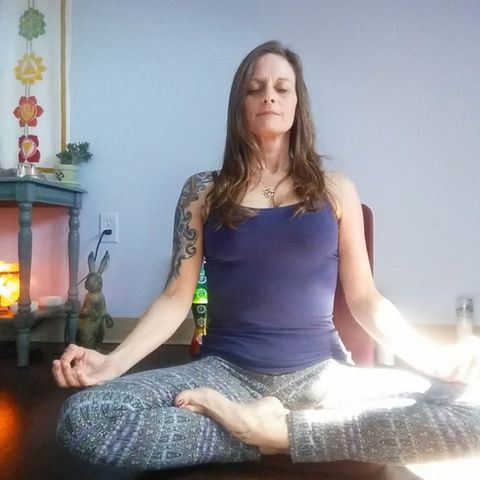
My name is Nicole White and I'll be your host.
This podcast is dedicated to helping you tap into your full potential of how you can heal and balance your mental,
Emotional,
And physical wellbeing.
Together,
Let's explore inner self,
Connect with our strength,
And manifest your true nature,
One full of love,
Purpose,
And passion.
Welcome to episode 45,
Expectation dump.
As we've been working through areas related to acceptance and impermanence,
An important aspect to be mindful of relates to our expectations.
We hold expectations in several categories,
Creating high emotions and chaotic situations.
This triad of acceptance,
Impermanence,
And expectations all web together.
But as we increase our mindful awareness in these areas,
It allows us to connect with wellness tools to create a healthy and balanced way of being.
An expectation is a strongly held belief that something should or will happen or that it'll be a certain way.
And we also then have a high attachment to it.
So that's what ends up creating high emotional reactions and an impact on our physical and energy body.
Remember,
They're all connected.
The expectations we carry fall into many different categories,
And we'll fuel them with our judgments,
Criticisms,
And fears.
Keeping in mind that expectations and boundaries are not the same thing.
And I'll highlight this as we move through the information,
But you can also check out boundaries are not selfish and pushy people for more specific information related to boundaries.
With expectations,
One category relates to self.
We can hold on to expectations about our body,
Expecting it look and behave a certain way,
Maybe a specific number on the scale,
So many inches around the waist,
Be at a certain level of physical ability.
We'll even have expectations on how our body should digest food and get angry.
If we have a food allergy or there are certain foods,
Our body doesn't want us eating and doesn't digest properly.
So even frustration and anger if her body is not meeting our expectation.
We'll have an expectation related to our emotions that they feel and play out in a specific way.
So we avoid some altogether while escalating others.
We expect our mind to think,
Perceive,
Learn and digest how we want it to.
And when those expectations are met,
It ends up leading to perfectionism,
Avoidance,
And self-defeating thoughts.
Those shoulds and always and nevers,
Catastrophic thinking,
The fortune telling and mind reading,
And those other unhelpful thinking styles that we talked about.
This can pop up with meditation practice as we expect our minds to be quiet versus moving into that observation mode with curiosity and non-attachment.
These expectations we hold towards ourselves,
We'll often place onto others,
Expecting they feel,
React,
Speak,
Behave,
Believe,
And perceive the way that we want them to,
Placing our shoulds onto them.
This can often lead to,
Again,
High frustration,
Resentment,
Sometimes even retaliation.
And these expectations are often even unspoken,
But we'll still have an attachment to them and an emotional reaction when they're unmet.
It's like we expect the person to also read our minds and emotions.
Individuals who use passive-aggressive communication styles will expect others to be the detective of their words to understand the true meaning.
And often it's presented in a condescending and judgmental way.
With texting,
For example,
It's another area where people will expect that someone responds in a certain time period or in a certain way.
And when they don't,
We'll start creating stories which create emotion.
And then we respond with that emotion that the story created,
Not even the reality of the lapse of time between messages,
For example.
We can expect others to be in the same rhythm as we are,
Even if it's a chaotic rhythm.
We'll be short on time and end up getting into road rage type feelings because the person in front of us is going the speed limit,
Expecting they should be needing or wanting to go the same speed as us.
Again,
Getting more frustrated and elevated in our car.
We can expect others to feel how we do,
Wanting a certain emotional response or reaction.
And sometimes people will even have such a high expectation of this that they will try to get the other person in a bad mood if they're in a bad mood,
Trying to create this matching of emotion and this expectation that others are in the same emotional place as they are.
So many different areas that we can place these expectations onto ourselves and others and these high emotional reactions that can be attached leading to feelings of resentment,
Anger and sadness.
An area to keep in mind here is that expectations are not the same as boundaries,
As I mentioned.
When we establish healthy boundaries with others,
It doesn't mean they're going to respect the boundary.
Boundaries aren't about expecting the person to honor it.
If they choose not to respect the boundary,
Then it means accepting that that's where they're at.
And it might mean leading to reestablishing further boundaries,
As I talked about in Pushy People.
You know,
Sometimes when we set these boundaries,
We can get pushback from others because of their expectations.
They can start adding judgment,
Saying things like you're too sensitive or being selfish or sometimes even harsher words,
Trying to force us back into maybe an element of control or disorganized attachment that they have going on.
They may become what I call the badgering bully,
Where you might ask for some space and time and they won't permit it.
Or a technique for emotion regulation and communication is if you have a tendency to get angry,
Say,
In the way you communicate and you're working on de-escalating and more effective communication,
A tool might be to tell the other person,
I need a few minutes to cool off.
Let me think this through and let's try to talk about this again in 20 minutes.
And then we try to walk away and calm down.
And I'll often hear from people while I did that,
But they keep following me and they keep yelling or they're saying stuff really loud about me still in the other room so I could hear it trying to stir me up.
So that badgering bully where we're trying to do something effective with space and asking for that healthy boundary and sometimes others are not respecting it.
So we have to reestablish and reorganize what that is.
Not expecting them to follow the boundary,
Recognizing where they are,
And then reestablishing other boundaries if we need to.
Sometimes it can be difficult because sometimes we're working on boundaries related to toxic behaviors and communication styles.
And again,
Paying attention to that use of language,
Toxic behaviors,
Communication styles,
Or emotions,
Not a toxic person.
So people can be stuck in toxicity,
It does not mean they are a toxic person,
But it still means we have to set boundaries.
Sometimes when we set boundaries,
It can take an adjustment for others to work through their expectations and false stories.
For example,
With texting,
I am one who does not have a notification go off on my phone.
I mean,
It'll show me on my phone if someone texts me or if I get an email.
I'd prefer not to have the email on there,
But I have to as a business owner.
But with that,
It doesn't like sound notify me for anything.
So it can be long periods of time before I read a message.
And it can take me long periods of time to respond because sometimes I get a lot of messages.
So with that,
It took some adjustment for people to understand that that is just a boundary for me.
I don't want my phone notifying me because I try my best to be mindfully present in whatever I'm doing.
And if my phone keeps going off with notifications,
It's going to create high distractibility for me.
And at times,
It can even create overwhelm or stress if I feel like I'm getting overwhelmed or bombarded with messages.
So it's a boundary for me in my healthy balance in life and my desire to be mindfully present in what I'm doing.
So that adjustment period was,
You know,
Others having to have some time and space to work through any stories that they might create.
Even though I would tell people that I do this,
You know,
They could still get stories of,
I wonder why she's not responding back,
Or I wonder what that means.
All those things that we can create.
So sometimes it takes a bit of adjustment for others around us,
But giving them the opportunity to adjust to our boundaries and not expecting that they're going to do so.
When we identify where our expectations come in,
Then we can notice our mental,
Emotional,
And behavioral reactions.
We can start owning our part of challenging situations or breakdowns in connection.
Like in this texting example,
Are you one who will create a story if an expectation is not met in terms of how quickly someone should respond or how emotionally charged they should or shouldn't respond?
And then you yourself potentially reacting emotionally from the stories that you create.
That would be an example of sitting within self and looking at your own stuff.
Or do you at times ask someone for their opinion or advice,
But have an expectation that their response is going to be something specific.
And then when they don't meet that expectation,
Might try to talk them that direction,
Or at times even get defensive until they get the answer right.
So being mindful of our own stuff,
Our own patterns,
And what we might bring in to break down communication and connection.
Our environment is another area where we carry around expectations.
Having a certain temperature,
Weather,
Flow of the day,
Room to be a certain way,
And then having an emotional reaction when it doesn't go that way.
For example,
Today it's chilly here,
We've got some snow squalls going on,
And some people are angry.
They are angry at the weather.
We get angry because it's too cold,
Because it's snowing,
Because it's too hot,
It's too humid,
It's too rainy.
So getting angry about the weather.
We'll get angry because we have a plan for our day and we think everything around the environment and flow of our day should go as we expect it to.
And then have high frustration or stress when things don't go as we plan them to be.
Versus practicing that awareness that there's often things that are out of our control that we have to flow and adjust with.
Today in this podcast is a great example.
I started my third time recording.
I started and I was a bit through and the trash truck came out front.
I record this podcast at my house and I wasn't going to get angry at the trash truck,
But it was super loud.
So I didn't want that in the background of the recording,
But it's trash day.
The trash truck is supposed to be coming at some point and they're certainly not running their trash pickup schedule off of my random podcasting times.
So I stopped,
Had to rerecord.
In round two,
I started again,
Few minutes in my neighbor's dog started barking really loud nonstop.
So I was like,
Well,
People don't want that in the background.
So I had to stop and then I went and got ready for work and came back here for round three.
And I just had to surrender with that flow and recognize it wasn't going to go as I planned because now recording this now will mean I can't actually post it till later tonight when I get home from work.
And that wasn't part of the plan,
But I can't,
Well I could,
But I don't want to get myself wrapped up in a high expectation it's going to play out that way when I know that there's things around me that are just not in my control that I have to adjust to and work through.
So recognizing when even our environment will try to place expectations and have emotional reactions when things don't go as we want.
When we carry around these areas of expectation,
They can increase our emotions and reactions.
It leads to an increased desire and attempt to control feelings of resentment and resistance to acceptance.
Again acceptance does not mean accepting toxic behavior.
You establish boundaries there.
Accepting is about accepting things as they are and using that reality for your decision-making.
Being mindful of how expectations elevate our storytelling,
Mind reading,
And connection to illusionary mind,
All of which increase our emotional,
Physical,
And energy imbalances.
They also further break down our communication with self and others.
Again with others we'll try to prove our point,
Change their mind,
And morph them into our mold.
Your wellness toolbox areas that you have been working on gathering and practicing all build together to help dissolve the attachment to these expectations.
Our mindful connection to self,
Being present,
Noticing our judgments,
And how those judgments are pointing to aspects of our self for healing.
The practice of acceptance and noticing where you're resisting.
Using impermanence to get out of storytelling,
Catastrophic thinking,
And feeling stuck.
Recognizing and sitting with our own stuff,
Blanketed in compassion and loving kindness to work on healing and understanding our part in toxic patterns.
Identifying those bricks that we carry around in our backpack.
Taking time to recognize our body reactions to emotion,
How these aspects are so tied together.
And when we pay attention to our physical reactions,
It can be a great tool to assist us in de-escalation.
We can focus on balancing our breath with that diaphragmatic breathing,
That 4-4-8 count,
Or that dot-dot tool for space.
So that 4-4-8 count being breathe in for four,
Hold for four,
Breathe out for eight,
Maybe doing a few cycles of that.
That dot-dot-dot is where you connect it to breath and then place the dot on paper and connect it back to breath.
And the dots were placed any time a thought,
Emotion,
Or perception change came in.
And then also identifying those areas,
The physical areas in our body where we hold tension,
Releasing and relaxing them.
Breathing in and letting go.
Understanding acceptance,
Compassion,
Non-judgment,
Trust and surrender with self as tools of wellness.
When we let go of expectations,
It opens space for a deeper connection with others,
More present and engaged communication,
And a broader appreciation of humanness.
That uniqueness and oneness of us all.
Thank you as always for joining me.
You can check us out at Serenity Wellness Center or Serenity Wellness Tools.
Also Facebook and Instagram to see what else we have going on.
As always,
Thank you and love and thoughts of healing out to all of you in Australia.
Thanks so much everyone.
Have a great day and I'll talk to you soon.