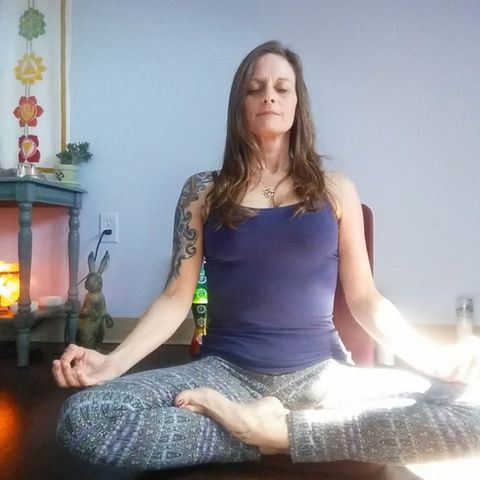
Hello,
Welcome to Serenity Wellness Podcast.
My name is Nicole White and I'll be your host for this podcast series.
This series is dedicated to helping you tap into your full potential of how you can heal and balance your mental,
Emotional,
And physical wellbeing.
Together,
Let's explore inner self,
Connect to our strength,
And manifest your true nature.
One full of love,
Purpose,
And passion.
Welcome to episode four.
Welcome back to those of you who have been following me on this new journey and welcome to those of you who are new.
I hope that you enjoy today's episode.
Thanks again for all your support and for your encouragement and for sharing this podcast with others to help spread the word and just get these tools and techniques out there for people to build their own wellness toolbox.
So thank you again.
I as always greatly appreciate it in my heart and soul.
I hope you guys are finding some connection to breath.
We've worked on moving that breath down into the diaphragm as well as how you can use breath to give a bit of space in thinking and doing and impulse control.
And then also maybe some of those mindfulness tools that we started to work on on Mindful Monday.
And hopefully some of you have been able to take that opportunity and give yourself permission to take a mindful shower or drink a mindful cup of tea or coffee.
I had a delicious cup of coffee this morning from Englebein Coffee House which is in Milheim.
You should check them out if you haven't already.
But also I was able to grind the coffee up this morning so really tapping into that aroma that it adds to the air before I went through the whole other part of the process.
So mindful shower or coffee or tea.
Hopefully some of you were able to enjoy some of that.
So today what we're going to look or talk about today in episode four is a little bit more about what your thoughts have to do with the things that we're going to be building on and learning and tools and techniques that you're going to be potentially adding to your wellness toolbox along this journey.
So with today and looking at thoughts if you think back to episode two when we looked at that anxious body cycle and how everything's kind of collaborating,
Communicating together and escalating our internal kind of response and crisis center.
And so one of those areas if you remember in that loop was our thoughts and how our thoughts can start racing and start creating stories and what ifs and all of that.
And so we're going to through you know the next couple weeks here start diving a little bit deeper into what that means in that cycle itself.
The thoughts.
What they do in our physical and emotional body and how that taps into some alternatives of how you might connect and how you might think and what that could look like in your everyday life.
We talked Mindful Monday.
We talked a little bit about being the observer versus the participator of our thoughts.
You know we have over 60,
000 thoughts a day and if we're participating in all of those not only is it exhausting but it's also has a pretty profound impact on our physical being.
You know many of us have probably heard about the placebo effect.
That's when in research they give you know a control group.
They'll give them the placebo.
So it's like a sugar pill.
And then you know the other group will get the actual medication whatever it is that they're testing or looking at.
And percentage wise I mean there's been tons of research on this so I can't give you exact percentage because it you know varies but so many participants in that control group who are only receiving the placebo.
So it's a sugar pill has no medication in it are actually experiencing the benefits as though they took the medication and that's because the mind is so powerful.
It's one example.
Another it's actually has a term for it.
It's called medical student syndrome and that it's some of the research again there's been a lot of studies that look at this but some of the research is as high as 70 to 80 percent of medical students in it's usually their third years when it really starts spiking.
They start having psychosomatic symptoms where they start thinking that they're having the ailments that they are researching in their medical journey in medical school.
I know myself as well as many of the other students in my cohort and I'm sure it's happened among many other cohorts in graduate school and even other professionals I talk to in my field also have experienced this and that's when you start diving deeper in grad school in the realm of psychology and the mind and you know what are you know diagnosed or disorders or I just don't really kind of use those terms in my work with people I just see things often more as patterns or certainly you know there's certainly some situations where our brain also correlates with maybe more of a diseased model in some elements but again I just my way of kind of connecting and working with people is just more from a naturalistic holistic way of how do we rework and rewire the system but again that's just my way and there's many different ways out there of treatment and helping others to heal.
So anyway the medical student syndrome and how yes that's where I was with my own journey in grad school.
I know that many of us you know when we started diving deeper in psychology and like especially the abnormal psych classes that you start taking in grad school you start thinking like oh man I've got that I have that and so you know we would often talk about that like whoa once you start diving into these symptoms and all that kind of stuff we can easily think ourselves into having think ourselves into feeling and that can elevate so much that we even think ourselves into experiencing where we'll have like the physical pain in our body and all that kind of stuff.
So those are just a couple examples there's you know a lot of different examples out there in research in terms of that but we can also look at research there's a Japanese scientist he passed in I think 2014 but his name was Masaru I'm hopefully pronouncing that right Masaru Uemoto and he did tons of research where he looked at what are molecules and put them under a microscope and looked at how we can change water molecule structure based off thought or word.
So he believed and researched about how human consciousness can affect the structure and components of water molecules and so when he did this he had either people meditate on this water or say certain words to it and there's books out there you can look up his books and stuff there's books out there where he takes pictures of the difference and like those that were vibrated thought or word that had to do with kindness or love or compassion or healing or all the you know sunshiny stuff they were beautiful and then those what are molecules that were given thought again it could just be a thought meditating towards it or a word that had to do with more you know yucky energy of like hate and anger the structure was like dark and not dark I mean it's water molecule but you know what I mean like it was yucky so that's the best way to describe it but look up the pictures they're all over and I'll try to provide some links here in the notes today.
So with his research he looked at the water molecules and structure again through either thought or word and then he took this further you know many people and that's why I mentioned a little in each episode about research because many people like the science behind it it just helps us connect the mind into what's called wise mind but that's a whole different segment down the line but it helps us kind of bring in that concrete science mind with a little bit more of the emotion mind to get into wise mind so a lot of people like that combination or you know those who are more science minded it helps them to bring in a little bit more of the emotion mind to help in the understanding of all this.
So Mr.
Emoto he then took this research further a lot of people have redone this and so with this first part he took like three mason jars or some sort of jar like that and then he put a cup of white rice in each jar and then filled it so that water would cover the rice.
So for 30 days the first jar he would say a kind word too the second jar he said a mean word too and then the third jar he completely ignored.
So he did this for 30 days and at the end of the 30 days the first jar of rice that he was kind to was white rice you could probably eat it.
The second jar that he was mean to was all moldy and the third jar that he ignored was so moldy that it was like growing up the jar and trying to get out of the lid.
So many people have redone that you know you can even maybe consider doing it yourself at home.
So that was one experience that he did to help us really see in our eyes too what we are doing to ourselves every day.
If we have over 60,
000 thoughts a day think how many words we speak think of what some of those thoughts and words sound like and are we making ourselves moldy.
If we can do that to rice and we can do that to water and we are actually over I don't know 70% water it might even be higher than that.
Are we making ourselves moldy the way we think the way we speak to ourselves and to others.
So that's why we're going to start diving a little bit deeper into how we think because it's so important.
Some schools there's been several so I can't tell you exactly where they're at and stuff like that and maybe if you work in a school this would be a cool thing to bring to your own school.
So schools are helping they're furthering this research by Mr.
Emoto and looking at they brought in plants and they had elementary school students speak to the one plant in a nice way and then the second plant they bullied and that plant died.
Dead.
So it was such a profound and these are that plant stuff is still happening in schools and again maybe you might be able to bring it to your school if you work in a school but it was such a profound understanding for students you know in the elementary level to have this concrete awareness of man what is bullying doing.
I just killed a plant.
You know poor plant but you know they just killed a plant because they were mean to it.
So there's all kind of different ways that people are tweaking this research and amazing results that Dr.
Or Mr.
Emoto has helped us to start tapping into.
So when we look at this we can think of this notion of what research is showing us in terms of thoughts and words and the awareness that that brings to us that every thought and every word carries a vibration.
Every thought and every word.
You can think of it in terms of when you start having a couple thoughts.
It's like kind of at the base of the ground.
It's kind of down there with the grass and then you start building on those thoughts and you start building the trunk of a tree and then those thoughts start getting even deeper and so now this trunk is starting to grow larger and these thoughts are starting to splinter out into other thoughts because now they remind you of that time back then or the other time you didn't do this that or the other or the time you had that conversation.
It's just you know they start splintering off into a ton of different ways you know depending on you and where you go.
So now you have not only this thick trunk that you've built you have the branches that are all of these you know thoughts that are here there and everywhere and sometimes people will actually kind of branch out even further and further and now these roots of the tree have to get deeper and stronger to hold this tree that you're building in your thoughts and those roots signify the emotion and how rooted we become in where we take ourselves in the way that we think.
Sometimes people even take it out further and their tree will start to pollinate trees around them and suddenly they're stuck in a forest and they have all these deep roots and all these emotions that are all tangled in together and they're not even sure where they came from and in the present moment in front of them everything is fine and they are safe and they feel okay but they've taken themselves in their mind into this forest with all these emotions that really have nothing to do with the present moment like we've talked about during Mindful Monday.
So this idea of this tree building or this idea of molding ourselves and what are we actually doing to ourselves in our everyday life and what we might begin to bring into our awareness especially with you know starting to incorporate this everyday mindfulness that we're going to keep working on but the more we become aware it's so empowering because these things they're just thoughts and if we can begin to have more awareness then we begin to become more the observer and then the vibration is not building these trees that we can't even figure out the emotion and how it got created.
So with this what I'm going to talk to you then about today is just starting to look at words and we're going to build upon this in a lot of episodes in the future and how this has to do with many different things but we're just going to start today with looking at some word cycles that we often will use in our everyday life in communication towards ourselves but also communication with others.
So when I begin to go through these the way that you're going to allow this to do some imprinting for yourself and open up this door of awareness or this folder of awareness through the next week until we talk again further about this next on next Wednesday's episode but this is going to help you to open up this awareness for yourself which for some people it gets a little overwhelming initially because we're like man I just thought that again or there's that word again but at the same time it is super empowering because once you're aware you have the opportunity for change and when we walk around blindly we just don't and so you know again this practice is about awareness being mindfully aware to allow ourselves the opportunity to heal ourselves through just these slight changes that create different patterns different cycles which create different neural network pathways and all this cool stuff that happens even within our brain when we do this stuff it's just about change and allowing ourselves permission to do that change because if we don't attach to every thought and every word first off as the observer you know if we're not attaching and participating then we're not downloading and you can think about it in terms of like a computer and if you just put code out there and you never hit enter well then the code is just a bunch of jibber-jabber and and doesn't really make sense of anything but once you hit enter then the computer gets it and now it becomes something.
Sometimes people will talk about this further when we look more at emotion regulation and fear of emotion and going from primary to secondary emotion but sometimes you know we can get a little bit heated in our emotion.
I myself I will own it back in the day I was not the best with my anger management skills and would get a little heated.
I've worked on that a lot over the past 20 years or so.
So I feel like I'm much better with that but yes not so much you know in my 20s and with that you know some people and myself included we can still struggle with that and it's an example of this idea of download in that area is you know sometimes when we can get a little bit heated or frustrated etc we might start sending a text message or we might respond or start sending an email out that has some words in it that are probably going to kind of discombobulate us in life a little bit further that they're actually probably going to escalate the situation and sometimes people can go for the jugular especially in text messages or words towards people we care about the most and you know if we never hit send you know sometimes we allow ourselves to pause recognize and delete well that other person doesn't have to experience that vibration of what we were trying to put out there to them.
We still do and we still have to work through that but that's one of those opportunities of the pause of like whoa okay what just happened what was that about for me right there how do I cool down my system a little so I can actually effectively communicate what's going on for me because most times not always but most times when we get into that elevated state of that heated emotion that's actually our secondary emotion often you know it's more about we're hurt or sad or anxious anxiety and anger go so hand in hand but anyway that's a whole nother topic and segment the point of that was all about this pause and observe and if we're not participating then we're not downloading and so today we're going to look at thoughts or excuse me words that we use and again we might recognize we use them a lot at first but this awareness allows change and then we're not downloading those words any longer because we're not participating with them if that makes sense hopefully so today's words when I say these words and explain to you kind of like two different categories if you would of words I'm going to share with you today when I share these words with you I'm going to explain to you some things they create when we use them in self in emotion and then when we use them towards others in communication after I explain this again in your own mind just catalog and become aware if these are words you use and give yourself in your mind one or two examples of how you use it so that will be for each category what that's going to do is help you open up this folder of awareness over the next week which again you might initially notice you use these words a lot super super common but it's going to bring empowerment then because it's just a thought it's just a word and there's I don't know I'm not good at that kind of stuff but I think there's a lot of words in the dictionary so we can choose some other ones if we want that have a more beautiful vibration so category one category one is our nevers evers always I'm never going to feel better nothing ever goes right in my life you always do that I always do that this always happens so the never ever always when we use those words towards ourself we give up we're defeated we feel hopeless we feel helpless if it's always going to happen what's my opportunity for change how am I ever going to feel better if it's always happening it's never going to change just think about that if we're telling ourselves that what you know what motivates us we already feel like there's no hope there's no plan it's not like I could set a goal and it's going to change because it's never going to change right so never ever always hopeless helpless defeated depression anxiety when we use it towards others in communication it usually doesn't go too well if you're saying to a friend or your partner or family member you never listen do they truly never listen you're probably going to get a defensive response back or it's going to take the communication in a whole different pathway that has nothing to do with actually what you're trying to express share and bring a mutual understanding about so these words when we communicate them in a way to try to have an understanding of what we're feeling or what we're thinking when we use them with others we are usually not very effectively communicating what we are thinking or what we are feeling so be on the lookout for the nevers evers always and then again catalog in your own mind one or two examples if you are one who uses those words ways that you use them category two is the shoulds the coulds the woods and the wise I should have done that I could have done that I would have done that I shouldn't have done that how could I have done that or the wise why did I do that when we use it towards ourselves it falls into a lot of judgment we can oftentimes trickle some other words with it of self-defeating thoughts and words towards ourselves which we'll talk about more when we get into the topic about judgment but with this the shoulds the coulds the woods and the wise it again makes us feel trapped it brings in other judgment towards ourselves which is often critical it's not supportive language it's not something we would probably say to our grandmother you know say for example I can't just say any family member because I know many of us out there have not the healthiest communication cycles with family but you know typically like the elders in our family we can kind of be a little bit more calm with so with that when we place it on others it often discombobulates the communication as well they often will come back with a defensive response or feel misunderstood and it can again further splinter the connection with the people around you and is often not an effective way to let them know really how you're feeling or what you're thinking the wise are a whole different kind of beast of their own when we say why to ourself or when we say why to others the likelihood that it is going to come back with a defensive response is very high think about the nature of a why question it kind of requires a defense right you're asking a why but when we get a defensive response back we're not usually embracing it it kind of spirals again into a whole different avenue of communication when we use the why questions towards ourself it's almost like our adolescent self comes out for those of us well I guess I shouldn't say that because some adolescents weren't pushy-backy I guess I don't think that's a word but you know I'm not you know but it's like this this kind of defiant nature towards ourselves when we ask ourself a why we come back in such a defensive nature for you know for what we're trying to defend and so we get like in this boxing ring with ourself and how effective is that so being on the lookout for the could shoulds woods and the whys encouraging yourself to to be considerate of maybe rewording and re-engaging your why questions towards self and others because again it typically just leads to a defensive response that's the nature of a why question and then we often don't embrace a defensive response it just spirals into a whole different avenue of things so that is your open awareness that you can sit with over this next week and we'll continue to build upon that as well one last thing before we wrap up today and that is just a little breath technique for you as we continue to build our connection with breath and all the tools it's going to help us to maybe put in put into that wellness toolbox and how it also correlates to our work we're doing in mindfulness and further on down the line meditation so this here is a way to just cool and soothe the body to release tension if you remember on mindful monday at the end there I took you through that brief it was kind of a what you would consider progressive relaxation just going from the top to the bottom and releasing we'll go into a deeper progressive relaxation in the future but that brief episode we went through there you could potentially feel how your body system was holding on to tension in places you weren't aware of and how maybe towards the end even though I think it was only like five minutes I'm not really sure I didn't look but I think the meditation was maybe like five minutes even just that short period of time how connecting to breath and connecting to breath and relaxation and releasing allowed maybe at the end of that you to feel that your body felt a little bit different there was a little more space a little more compassion a little more just relaxation and surrender so this technique here is a way to help your body also release sometimes we hold on to tension with our breath like we've been talking about but also how it kind of holds that tension like we experienced on monday with the body so what this is is it's just a four four eight count and what you do with this is you just breathe in for a count of four hold for a count of four and then exhale for a count of eight so I'll just take you through one cycle or maybe two cycles how about we do two cycles so again just taking a nice deep breath when I start counting and then you're going to hold and then you're going to exhale so kind of breathe in for one two three four hold one two three four release seven six five four three two one exhale and now breathe in one two three four hold one two three four and exhale eight seven six five four three two one okay thank you and with that again that was just a short demonstration for you two cycles but you can do that for a few cycles you don't even have to do it for like a minute long you might feel a little light-headed initially but it's because you're letting your body actually release a little more of that oxygen we hold on to in a way that's not letting us just release that tension release that just build up in our body that the oxygen exhales helping us and trying to assist us in releasing it also brings a little more awareness to our body system if we happen to be up in that chest breathing when we just pause let me just take that nice deep breath counting the counting cycle helps quiet the mind like we kind of saw in that experience well counting kind of does the same thing it's letting us have space as you saw with the one two threes ABCs it's hard to count do anything else or do anything else and count at the same time so counting the breath also just gives space if you're wrapped up in one of those thought cycles that you're creating trees and branches maybe for is deep roots all that other stuff we're talking about and building upon with that that is our episode for today I want to give you a little reminder that tomorrow I'm going to be putting out a special episode for Valentine's Day and it's just going to be a guided meditation that I'll be doing on taking you to the river of love connecting you to the divine love that is you it is going to help you really connect and blossom and grow in this ability that is unconditional love towards yourself and towards others because again you are love so I will help to guide you to that connection and really help experience it so that can continue to grow from there after that then our next episode will be our next mindful Monday where we'll continue to work on some mindfulness practices and everyday life and I'll continue to help you understand further about what this is doing to your mind body and all that great stuff with that again thank you so much for joining me and I hope that you join me in future episodes if you're more interested in learning about what we do at my wellness center please check us out our website serenity wellness center c-e-n-t-r-e like center county so serenity wellness center.
Com you can also follow us on facebook and instagram to stay up to date and I do other kind of posts and stuff on there related to research articles and inspiration for your day also if you are local we do tomorrow we also have embodied yoga with Jen Bauer at noon and then we have our free Reiki circle tomorrow evening and that starts at seven please register for those events if you plan to attend and at the end of the month whatever the last third Thursday is I should have checked the date but I think it might be the 28th sorry it's making noise on my microphone so I just tried to check the date so I'm not going to do that but whatever the date is last Thursday of the month I believe it is February 28th from 6 30 to 7 30 we have some amazing crystal ball sound healing with Rosanna if you haven't experienced that yet I highly encourage you to come along and check that out but again please register if you plan to join us thanks again everyone for spending this time with me and sharing space I look forward to continuing to talk with you and help you to build your wellness toolbox don't forget it's different for everybody so just tap in and listen see what your body and soul needs for today have a great one I'll talk to you soon bye.