Hello,
Welcome to Serenity Wellness Podcast.
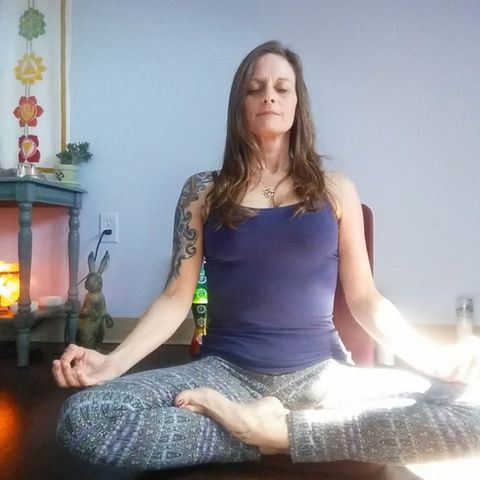
My name is Nicole White and I'll be your host.
This podcast is dedicated to helping you tap into your full potential of how you can heal and balance your mental,
Emotional,
And physical wellbeing.
Together,
Let's explore inner self,
Connect with our strength,
And manifest your true nature,
One full of love,
Purpose,
And passion.
Welcome to episode 37,
Wise Mind.
Today we're going to explore our three primary states of mind and how to practice connecting more with wise mind,
A place of inner wisdom,
Emotion regulation,
And a connection to our genuine self.
If you've been listening,
You're already aware of this,
But in case you're new,
In addition to owning Serenity Wellness Center,
One of the roles there I have is as a dialectical behavior therapist.
And in this wise mind that we're going to talk about,
This is a tool or technique that we teach within dialectical behavior therapy.
But as we talk about it,
You might find certain aspects familiar to you through other ways or things that you have learned in terms of your emotion,
Intellect,
Or a connection to intuition.
But with this,
In any realm,
The more we understand about our state of mind,
It allows us to have a greater connection to our genuine self,
Emotion regulation,
But also brings clarity on our unhealthy patterns,
Impulses,
And self-sabotaging decisions or behaviors that we hold.
Through practice,
Connecting to wise mind becomes a way of living.
It allows for clear and improved decision-making and improvement in our relationships with ourselves as well as others.
With these mindsets that we're going to go through,
Know that you have access to all of them.
You may find that you are primarily using one or the other right now,
Or that they are more your go-to,
But you do have access to everything I'm going to talk about today with you.
The first state we're going to look at is our emotional mind.
This is when our thinking and behaviors are controlled mostly by our emotions.
Our logical thinking can be distorted,
Cloudy,
Or seem like we can't even gain access to it.
We may see facts or know facts,
But can easily also distort them based off our current emotion.
You might,
For example,
Be presented with information on one day and you're feeling anxious that day,
And you might process that information a certain way.
And if it were presented to you maybe three days later and maybe you were sad that day,
You may process it completely differently.
So when we're in this emotional mind,
We can tend to process information,
Facts,
And perceptions around us based on the emotion that we are in.
I talk about this in What Do Thoughts Have to Do with It in that episode four when we talk about emotional reasoning.
That's where we will put on glasses or a detective hat and go on a search for all the reasons we should feel that emotion we're feeling.
So if we're feeling anxious,
We'll go on a search for all the reasons we should be feeling anxious or depressed or angry.
So we will have that emotion and then we go on the search to elevate the emotion instead of regulate the emotion.
So that emotional reasoning.
When we are in emotional mind,
It can also create more impulsive decisions,
Self-sabotaging behaviors,
And we will often act without thinking or thinking about the consequence of our actions.
It can create high reactivity.
We can get into thought cycles or thought loops that continue to contribute to elevating that emotion,
And then we can get very reactive within that cycle,
Often taking that emotion out on other circumstances around us,
Individuals around us,
Or creating that backlash towards ourselves.
So this emotional mind and some of the disruption that it can often cause for us,
And when we allow it to be our guide,
It can cause chronic cycles of anxiety,
Depression,
Anger,
Or self-sabotaging behaviors.
It can create difficulty in relationships or sustaining relationships.
It can cause problems with our daily decision making due to that high impulsivity or high reaction cycle,
And it can even lead to problems at work or holding our job.
Keeping in mind with this that we don't ever want to discount our emotions.
We want to be aware of them,
But we also want to try to regulate them in a way that they are not kind of hijacking us or taking us over.
Some things to think about or keep in mind if you find that you are in more of this emotional mindset.
One is about the body awareness.
Keeping in mind that power of pause,
As we talked about in episode 24.
The power of pause is so powerful in terms of,
You know,
We can pause even for 90 seconds before we engage in a behavior can create enough of a pause to make a different choice.
Or sometimes if we notice we are elevated,
That pause and communication can be very helpful so that we're not coming through and at it from just an emotional space.
We can also have pause for 24 hours,
And we will oftentimes find when we reevaluate the next day,
Our emotions are shifted,
Or the impulse is not there,
Or we have a new perspective or desire for ourselves.
So this power of pause with impulsivity and allowing ourselves to have a little more awareness there can be a valuable tool and resource.
We also want to check in on how we're breathing.
Are you chest breathing or are you deep diaphragmically breathing down below your belly button where we have our natural sequence of breath?
Are you potentially holding your breath?
So pay attention to how you're breathing as that also creates emotion regulation.
And then again,
Remembering about body tension,
Checking in with your body,
How and where you may be holding tension.
Are your shoulders up by your ears?
Or maybe they're folded in and you're trying to fold inside yourself,
Kind of trying to go into a ball and hide.
Are you clenching your jaw?
Is the tongue at the roof of your mouth?
So check in and see where you're holding tension.
Maybe consider practicing that progressive relaxation that we went over in episode six.
Our body is one of the biggest tools for emotion regulation.
How we hold our body signals our mind and emotion.
If we're walking around tense and pacing,
We're going to increase our anxiety and our anger.
So paying attention and being mindfully aware in that body awareness.
Can I pause?
How am I breathing?
How am I holding tension and what does that look like and feel like?
The more we practice tools and emotion regulation,
The more we are guided into wise mind.
Another thing to consider here is noticing your mind.
Where do your thoughts go?
Notice how your story changes based on your emotion.
Recognize your thought loops and where they are coming from.
Is it a pattern of thinking?
Is it a fear that is creating these loops or behaviors or choices?
Is it potentially a learned behavior or learned emotional response system that you're working through?
Challenge your auto scripts.
Is this true?
Is this absolutely true?
What factual evidence do I see and know to support that?
And remembering to kind of be the judge of that evidence.
Don't just let it slide through as an emotional piece of evidence.
Faxful evidence and remembering we don't want to discount our emotion or stuff them or ignore them.
We just don't want our emotional mind to be the driving force.
This is not a 100% as in everything in life.
And I'll repeat this maybe once or twice as we talk through this,
But at times we may need to be emotional minded as our forefront.
You know,
It's some where some of our survival skills lie and we have to emotionally respond in a given circumstance.
But for the most part,
We want to try to have more of a wise mind awareness as much as we can.
The other area is the reasoning mind is this other mind state.
The reasoning mind is when we approach things intellectually.
We'll use facts that can be observed or measured,
Kind of thinking more in terms of the science mind.
We'll plan things out,
Use logic and rationalization.
But this can also create an avoidance or numbing out of our emotion if we are only using our reasoning mind.
It can also be a circumstance where we will flip over into reasoning mind when we become overwhelmed with a pattern of emotional mind.
So we become overtaxed or exhausted from the high frequency of emotional response that we want to just numb all of that out.
So we end up flipping over to reasoning mind and numbing out those emotions,
Which again isn't maybe the healthiest place to be.
The wise mind,
Which we'll talk about,
Might be more effective.
As I mentioned with the emotional mind,
You know,
At times we might also just want to be in reasoning mind.
There are benefits of this mindset.
You know,
It helps us get things done,
Solve problems,
Build and create,
And all the areas in science and research where this reasoning mind being in the forefront is needed.
We just want to be mindful not to get stuck there and use that as our forefront all the time.
When we only rely on this mind state,
It can cause us to disconnect from our genuine self because we're discounting often our own emotions and our own needs.
It can also create communication challenges because we can then inadvertently discount the emotions of others or not allow ourselves to get into active listening or that communicating to listen,
As we talked about in episode 19.
Even when we're in this mindset and we're trying to get into active listening,
We can tend to be listening to respond.
We can tend to be getting ourselves more into a fix-it mode.
And so we're listening as a way to listen to help fix the problem instead of listening to listen.
And at times this can also lead to a decreased connection to the empathy and compassion of the other person's emotions.
Because again,
We're kind of training ourselves in this to not feel.
Our tendency to use one or the other can be,
Again,
A learned behavior or a pattern that we find ourselves stuck in or an avoid avoidance cycle.
But the more we open our awareness,
Then the more we're able to shift and change and blend in a fuller way.
And I'll be talking a little bit more about some more techniques after we go through the wise mind.
So wise mind is this integration of our emotional and our rational minds.
It's where our intuition lies.
And our intuition is this exchange and communication of our conscious and subconscious mind working together.
We can actually feel our intuition center or this wise mind in our body when we connect with it through meditative experiences or just through increased awareness of physical sensation in our body.
It's often felt in our gut.
It's where you get that term gut feeling about things.
And also in the space between our brows,
Which is known as the third eye.
So we can actually feel this wise mind or this intuitive flow in our body system if we allow ourselves to connect there.
When we're in a place of acceptance and non-judgment,
It's often when we're in the state of wise mind.
It's a place of deep knowing and inner wisdom.
This knowing can sometimes not really involve a lot of intellectualizing or analyzing and can just simply be a knowing feeling that we have.
This intuition that guides us,
This inner knowing.
And it can take some practice to really distinguish and get familiar with what intuition feels like within you and when it can be your guide.
But through practice and getting to know your own system and your own body signals,
It's a valuable tool in allowing for guidance.
This knowing can also include observing the facts and analyzing,
Knowing our emotions,
How we are feeling in each moment,
And the connection to our sensory experiences.
And remembering we're not always in wise mind.
And sometimes it can be beneficial to be just in the emotional mind or just in the rational mind in certain circumstances.
That emotional mind having those survival instincts and that rational mind having more of or the reasoning mind having more of the problem solving or science areas for us.
Being in wise mind will allow for improved emotion regulation,
A connection to our genuine self,
Improvements and an increase in healthy decision making,
And a decrease in impulsivity.
It can improve our relationships with ourselves and others and have an increased connection to higher consciousness,
Allowing space for stillness and a change of our inner vibration of energy,
Which then changes the energy that we put out.
It elevates our connection to our intuition and our inner wisdom.
So the more we practice this,
The more we then get in tune really with what this can provide and create for us in our own lives.
So how do we bring this all together?
In addition to some of those areas that I had already talked about,
Some other things that you can do are this practice of daily mindfulness.
Having yourself to practice more being in the present moment allows us to connect fully and deeply to everything we are experiencing in the moment.
And the more we do that,
The more it allows us to have a greater understanding and awareness,
But also a greater connection to wise mind.
Remembering everything you do in your day,
You can do in a mindful way.
You're connecting to the full experience of the moment.
You're using maybe all five senses to connect at that time,
Recognizing any emotional or physical experiences that you are having.
You can also practice conscious breathing.
So maybe taking five to 10 minutes of sitting with your breath,
The sensation of the flow within your body and how your body rises and falls.
You can also practice following your breath.
So follow the in breath and follow it all the way down in below your belly button,
Feeling and connecting with that sensation where your intuition lies.
And as you exhale,
Following that breath all the way out into the top and connecting with that space between your brows.
And you might do that for five to 10 minutes,
Connecting with this flow and feeling of your breath.
You may also do some identification and reflection,
Asking yourself things like,
When have I used emotional mind?
When have I used reasoning mind?
What would that have looked like if I were using wise mind?
So asking yourself,
When did you use wise mind?
When are moments,
Experiences or examples when you followed your intuition?
What did that feel like inside?
What was the outcome of that?
The more you tap in and ask these questions and connect to awareness,
The more you're also going to be aware of your own intuitive guidance.
And when we follow our intuition,
We have those increases in serendipitous experiences around us and those synchronicities that end up filing or falling into place.
So asking yourself some of these questions in some identification and reflection.
You may also set a goal for yourself.
Maybe a goal would be I'm going to practice one tool for 10 minutes a day for a week.
Or maybe I'm going to practice one tool for 30 minutes a day,
Four times a week.
You know,
Giving yourself a realistic goal to start putting things in place for yourself.
Start maybe scheduling this time and space for yourself.
Because again,
Everything I'm teaching here and in these podcasts you have access to and the ability to create in your life.
It's a beautiful thing about dialectical behavior therapy and the tools and techniques because they can apply to anyone.
And in their use,
They start to build upon each other and create this beautiful kind of synchronicity within us.
But also within these change elements,
It changes things within.
It changes our emotion regulation.
It changes patterns and habits we may be stuck in.
It provides learning and opportunities and tools that maybe we didn't have access to before.
It also creates new neural network pathways in our brain and taps into neuroplasticity.
It allows for us to heal within,
Which helps those generational threads and the things that we are starting to gently and lightly talk about in relation to epigenetics.
So all of these things and then also when we do them,
The effect it has on our physical body in reducing the chronic stress cycle,
The worry cycles,
Or the anger cycles,
In allowing us to get out of avoidance cycles of our emotion to experience and to know and to feel.
So all of these elements also help us in our physical body because as we change those things,
We're changing all within us in the whole body system.
With that,
I hope you find these things helpful in terms of some consideration to add to your wellness toolbox,
Thinking more in terms of wise mind and the benefits it may allow for your own life and your healing and connection with self and others,
Breaking apart patterns and developing new ones,
Allowing for more insight and more healthy decision-making in your life.
As always,
Thank you so much for joining me.
I look forward to talking with you again soon and some of the upcoming podcasts I have scheduled that I think you're going to enjoy as well.
If you'd like to check us out,
You can check us out online at Serenity Wellness Center,
C-e-n-t-r-e.
Com,
Or on Facebook and Instagram.
Thanks so much and I look forward to talking with you again soon.
Have a good one.