Hello,
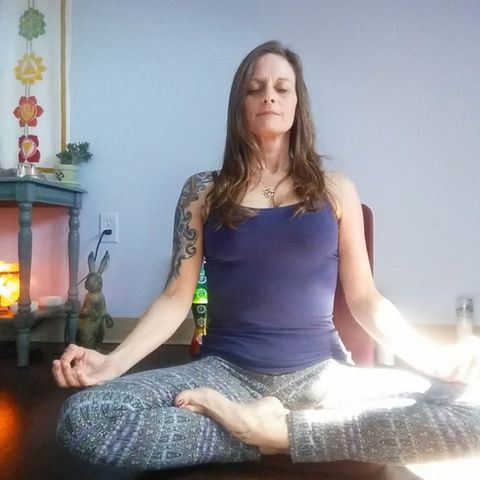
Welcome to Serenity Wellness Podcast.
My name is Nicole White and I'll be your host.
This podcast is dedicated to helping you tap into your full potential of how you can heal and balance your mental,
Emotional,
And physical well-being.
Together let's explore inner self,
Connect to our strength,
And manifest your true nature,
One full of love,
Purpose,
And passion.
Welcome to Episode 21,
Boundaries Are Not Selfish.
Thank you as always for continuing on this journey with me and listening and sharing this podcast with others,
But also thank you for all your questions.
It helps guide me on how to put these episodes together and I am putting together some future episodes where I will be answering your questions directly,
So keep them coming my way.
I really appreciate it.
So today we're going to talk about boundaries and how establishing boundaries are not selfish and that can be a message that can be confusing for people sometimes.
So we're going to look at what boundaries are,
What makes them important,
Some common challenges or obstacles we find in establishing and connecting with these boundaries,
And how to begin to establish those healthy boundaries in your life.
We've talked a little bit about boundaries in the emotional ladders episode,
The episode about communication,
And also the latest episode,
Dysfunctional relationship patterns that we can get pulled into.
So today we're going to look at this a little bit further and explore this topic due to its critical impact it has on our health and well-being.
This exploration of boundaries is an area that comes up so frequently in my discussions with clients.
It's just something that we often will struggle with in different ways and in different,
You know,
For different reasons and we end up having these challenges and they play out in life and we can experience them very differently,
But the difficulty with boundaries is a very common theme that people try to figure out when they become aware that it is a struggle for them.
Healthy boundaries and having healthy boundaries are when we practice self-respect and self-love,
When we understand our limits and establish healthy connections and what we accept from others.
It allows ourself to say no when we mean no,
To stop putting ourselves and our needs and wants on the back burner.
Sometimes we don't even have them on the back burner,
We just forget they even exist or never even take the time to tap in and think about what's important to us as a person as well.
Sometimes we'll allow ourselves to accept things that are simply unacceptable in terms of the treatment that we receive from others in our life.
When we establish and stay firm in our boundaries,
We value our needs and feelings and our emotional well-being.
We embrace our ability to consciously choose what happens within us and what surrounds our being.
Again,
This can be difficult for us to tap into and explore and connect to,
But through practice and awareness and beginning to further connect to the conscious way that we can live,
It does not become so challenging and becomes more of this way of living.
This challenge at first,
For many people,
Can come about for different reasons.
Again,
Through this increased awareness in our relationships and the connection with ourselves and others,
It doesn't become such a difficult task.
It becomes more of this way of how we connect and through the use of assertive communication,
How we establish these healthy boundaries.
By doing so,
It ends up creating its own motivation loop to keep it going because of the healing aspects it ends up providing.
Healthy boundaries,
As I mentioned at the beginning,
Are a critical aspect of our mental,
Emotional,
And physical well-being.
When we don't have compassion toward our own needs and boundaries,
We can get depleted,
We can feel less than and helpless,
Feel stuck and overwhelmed.
It can create feelings like resentment and anxious cycles in our body system.
As we've talked about in previous episodes,
This impacts our adrenals,
Our cortisol levels,
Our serotonin and dopamine,
Our circadian rhythms,
The inflammation cycle in our body,
Among many other things,
Even digestion,
Absorption of minerals and vitamins.
I mean,
It goes on and on the many ways that something even like boundaries can drastically impact our everyday living and the way that we function in our own human body.
How we end up learning or not learning boundaries is through early life experiences and our relationships and they end up creating patterns for how we connect and establish boundaries in our life.
Some examples are if you were raised in an environment where there was high anger,
You might try to establish your boundaries with others through aggressive means also,
Or you might end up on the other end of the spectrum and become very passive in your role and avoid conflict at all costs or say nothing due to fear.
If you were raised in an environment where you often took on a parent role towards your siblings or maybe even having to take on or feeling obligated at that time in your life to take on this role of being a parent to your parent,
Or if you were raised or living in a home with alcoholism or addiction cycles,
You might find now in life that it's challenging to separate others' emotions and suffering from your own.
You might find that you often try to take on the responsibility to fix it for them and to ease their pain and suffering,
Sometimes even putting in more work than the other person is doing.
And this can also create some codependency cycles and we'll talk more about codependency in another episode.
It's kind of a whole topic that I want to try to pull out in and of itself to explore with you.
But this can again create codependency and one of the aspects of that is this entanglement of this responsibility and need to fix and accountability that really is not ours.
Sometimes too with this idea of what we learn or we don't learn comes from society.
Society can send us wrong and sometimes pretty disturbing messages about boundaries.
I certainly hope this message has vanished.
I mean,
As I mentioned,
My daughter is 26 so I'm not too tapped in with elementary age doings or sayings anymore.
But I remember growing up when I was in elementary school and stuff,
That message that they would say or society would say or whoever people around about how people would say,
Oh,
If a boy is teasing you,
He really likes you.
That just means he's flirting with you.
What?
Like,
No.
What kind of message does that send on the receiving end?
But also as the doer of that behavior,
Is that teaching people how they grow into effective adults in forming relationships?
Probably not.
I mean,
I think most of us are aware when we pause and look at that,
That that is not a healthy teaching at all.
And again,
I hope that that message is not still something that we say to elementary school children,
But I am not certain of that.
So if you're aware that that is happening,
Maybe you can also help to bring about change.
I also remember as an older teen and young adult sometimes hearing this message in society related to sexual boundaries and,
Oh,
If you start some intimacy with someone and you don't allow them to climax,
Somehow you should feel guilty or selfish about that because maybe they need that or you're going to even hearing like,
Oh,
You're going to cause injury in their testicles or some kind of crazy stuff like that.
And here it is,
You know,
Number one,
That's not my responsibility.
You know,
We as our own being have the right to say no at any time.
And if you are old enough and think you're mature enough to be intimate with someone and climaxing is not at the end of it and you need that,
Well,
Then you should be old enough and mature enough to know how to take care of yourself and not try to put that on someone else through guilt,
Shame or anything else.
So those are just some things that kind of pop up in my memory of this twisted disturbing message that we can sometimes provide.
And then,
You know,
Don't worry,
I'm not going to get into politics here,
But we're as a society working through some darkness right now in some messages we're getting as a society on our own personal boundaries with our body and our rights and what is and is not acceptable and our right to say no and to choose what that means in terms of ourself and not allowing others to tell us what we have a right to do with our own body.
So we have this learning,
We have these societal messages,
These twisted and sometimes dark messages that we get from society and recognizing that this can create challenges for us in trying to figure out how to effectively establish these personal boundaries for ourselves.
And as we continue to explore this here,
Something that is important to keep in mind and I'll repeat this as we talk about it,
I'm sure,
But something that's important to keep in mind is that as we set these healthy personal boundaries,
We're not responsible for the feelings and behaviors of others as they digest and work through those boundaries.
And I'll talk a little bit more about this as we continue to unfold here in this episode about what all this means.
So there's a few common obstacles that people end up facing when establishing and setting healthy boundaries.
One area is fear.
This fear area relates to fear that it's going to jeopardize our relationship,
Fear that the other person is not going to respect the boundaries that we're setting and then we're not going to know what to do with that and how to proceed with staying firm in what we will and will not accept in our life.
At times we might fear the other person's emotional reactions,
Especially if they have high anger or abusive behavior.
Sometimes this can lead to high people pleasing behavior and avoiding conflict or as I mentioned,
Even some codependency cycles in our life that we'll talk about more in another episode.
But when we're thinking about those more challenging boundaries,
It's important again to keep in mind that when we establish healthy boundaries,
There can be shifts and changes in relationships.
Sometimes we're caught in an unhealthy entanglement with toxic behavior patterns with others.
As we become more conscious and firm in our boundaries,
This causes others in that entanglement to also have to change.
You can get resistance from them,
Sometimes some even retaliation,
Unfortunately.
You might get an increase in the behavior that you're trying to set that boundary with.
You might find the person trying to have attempts to make you feel guilty or unjustified in the boundary.
Being firm in your boundary is important,
Not allowing others to manipulate you away from your truth and what you know is important for you.
Again,
An example to think about is how if you set a boundary and then you allow others to talk you away from your boundary and how when setting these boundaries,
It might shift and establish new relationship dynamics and sometimes certain types of people in our life might try to escalate or try to talk us away or make us feel guilty.
And if you give in and you let go of that boundary,
Then you're reestablishing a whole cycle and enabling toxic behavior towards yourself.
You're not establishing self-respect and self-care.
You can think about a child in a grocery store with a parent and the child wants the balloon and the parent says no and the child starts screaming and they get the balloon.
The next time they're in the grocery store,
The child tries the same behavior.
The parent's trying to establish boundaries and that no means no.
Now the child wants to escalate.
Now they're not just yelling,
They're throwing themselves on the floor.
They maybe even knock something off the shelf.
Eyes and attention is getting drawn towards parent.
Parent gets balloon.
What did child just learn?
Let me escalate,
Create embarrassment and discomfort and my parent will give in.
Are children that concrete and manipulative?
Not in the same mind frame of adults,
But we are teaching them to do that.
When we do that and we give the balloon,
We're the teacher.
So we must establish and stay firm with our boundaries as adults with adults.
I just use the example of the child in the balloon to help you see,
But this applies to every aspect of our life as we're going to continue to talk about.
Another area that causes some obstacles in establishing and setting these boundaries is related to guilt and shame.
This is internally feeling unworthy of setting these boundaries,
Thinking that it's somehow selfish and that it means you don't care about the person or the situation.
When you establish healthy boundaries,
It does not mean that you lack compassion and empathy.
It doesn't mean that you're being selfish by taking care of you.
You staying stuck in an unhealthy pattern just keeps everyone stuck and enables the behavior to continue,
Prohibiting growth for both individuals.
Not wanting to cause any difficult emotions for others.
This idea of guilt and shame is another one.
You don't want to make the other person feel disappointed or make them sad.
You're trying again when you do this to take on the responsibility for how others feel and process their emotions.
This is not your job.
Your job is to connect within you and to allow yourself self love,
Self respect and compassion to your needs and allowing yourself to recognize what is and is not acceptable from the behaviors of others towards you.
If you're a therapist,
Yeah I guess this is your job,
But only when you're seeing a client.
If you're a parent,
Yeah you're teaching so that your child can learn,
But boundaries are just as relevant as you can see in that quick example of the balloon.
Another area that causes an obstacle is expectations.
These are expectations towards ourself,
Expecting that we're going to be the fixer,
Putting our own needs aside as we've talked about,
Maybe sometimes not even recognizing what those needs are,
Thinking it's somehow your responsibility to take care of other people's stuff and that this idea that you expect yourself to do that because again if you don't then it means you don't care or you're not empathetic or compassionate.
And again that is not true.
Letting yourself have boundaries does not mean that you do not care.
It means that you are establishing healthiness in your life and in your connections with others around you.
You can also feel this idea of an obstacle in setting these boundaries is picking up or deciding to catch expectations that are thrown at you from others,
But the only way to own them is if you catch them.
People can put all kinds of expectations out there,
But it is your choice of what you own and how you live your life.
It might be difficult to establish and put down these boundaries,
But you have a right to do so and to allow yourself to recognize that it's important for you in your own healthiness.
And another obstacle is uncertainty,
Uncertainty of how to even tap into the awareness and how to begin to establish healthy boundaries for yourself and with others.
As we've talked about,
We often might have not learned,
Sorry for the dogs barking in the background.
I figured that was going to happen.
I'm watching my daughter's dogs right now.
So there must be somebody walking by on the street.
But how to establish these healthy boundaries for yourself and with others and how to get started on this process.
So something is important to consider is how your boundaries relate to your mental,
Emotional,
Physical and spiritual self.
When we're thinking about mental and emotional boundaries,
These include your thoughts,
Your values,
Feelings and opinions,
And that these are respected.
It doesn't mean that the other person has to agree.
But what it does mean is there's not disrespect,
There's not belittling your opinion,
Being degrading,
Using name calling or intimidation to create shame,
Guilt,
Embarrassment or fear.
It means respecting your boundaries and not gossiping,
Lying to you,
Trying to manipulate your feelings,
Not using things that you shared against you or verbally talking over you and yelling,
Putting you down,
Not respecting your emotions,
Your mental well-being.
Another area when you're thinking about boundaries is your physical.
Your physical boundaries include your personal space,
Your things,
Your privacy and your time.
You can think in terms of how we all have our personal bubble.
What is your personal bubble?
Your personal space that is important to you and making sure that you create and establish those boundaries with others.
We think about sometimes in family relationships,
Again,
This teaching that we do to children.
A child might not want to hug a family member because they're just not comfortable with touch or being touched in a hugging way for whatever reason.
We can hear sometimes parents saying,
Oh no,
Go hug so and so because they're family.
That's not teaching our children to respect and establish what feels right for them in their boundaries.
So we want to try to encourage this idea for ourselves,
The recognition of what our personal space is and what our personal boundaries are.
Thinking in terms of your time as well,
Respecting yourself to know the importance of boundaries with your time and to provide an opportunity and permission for life balance.
Often I will hear things about work environments and how this taps into respect and boundaries of time.
Sometimes it has to do with this pressured feeling people feel of,
Well,
I have to check me email after work because that's kind of this unspoken expectation and that's what other people are doing.
And if I don't do that,
Then that might mean or look like I'm a slacker.
And so therefore let me compromise and put away my own self boundaries with time,
Which then does not allow for self balance,
Which is not teaching me how to take care of me,
Which is going to make me feel resentful,
Overburdened,
Overworked and burnout.
So work environment and making sure that you're not falling into this niche that isn't about establishing a healthy boundary for yourself.
Another example when I work with others and hear often about is certain professional careers and how they themselves lead to this pressure.
And one area that I often hear about is professors and how it's this again unspoken and sometimes spoken expectation that they work all the time.
And I hear things about how professors will talk about,
I just put in 80 hours or 90 hours or I didn't get any sleep or I didn't have time for my family.
And if you're a professor,
Just know that your students are listening,
Know that they are hearing you and that's not what they want to establish in their future.
It creates anxiety and fear of them also getting into the academic field and being a professor themselves,
Because people are being more open and aware and conscious about the importance of life balance.
And when your grad students hear you talking about the struggles and the lack of life balance and the impact it has on this idea of wellness,
Just know that you are not selling the position to them.
What it is doing though is what I hear and have worked with grad students is that it is developing a deep awareness in the new students and graduating classes that are coming up within grad school where those who are wanting to be professors are so aware of this that they are dedicating motivation for change in the future of really trying to change that dynamic and recognizing that in academia,
Life balance is also just as important.
So that's just a couple of examples.
Unfortunately,
There's so many when it comes to work and pressure that we feel and this idea of boundaries of time.
Space.
Where was I at there?
Sorry,
I went on a little tangent and I don't really write things down for these,
So I try to stay on track in my brain so I don't lose my focus.
Let's talk about physical boundaries.
Yes,
And time.
We want to also think in terms of these boundaries with our physical space.
I gave that example of children and hugging,
But also in terms of ourselves as adults,
What our boundaries are for ourselves with personal space,
Those personal bubbles,
With touch,
With people making flirtatious or sexual innuendos towards you if that is something uncomfortable and that you are not okay with,
Allowing yourself permission to let the person know and to stop the behavior because again,
We are in charge of what we allow in our life from others.
Another aspect of this physical boundary looks at or involves our privacy and our things,
Making sure that people respect our things.
They are not breaking your items,
They are not taking things and never returning them.
They are not disrespecting your privacy and needing to check your cell phone and check your emails and check your social media because this idea of you don't have privacy.
So keep that in mind and what healthy boundaries are in terms of physical,
Your personal space,
Your things,
Your privacy and your time.
And then also spiritual boundaries,
Allowing yourself to have whatever connection that is or is not for you without feeling guilt,
Shame or judgment or fear as your lens of what is connecting you.
If you feel judged or pressured by others in terms of your spiritual boundaries,
Remembering yourself that that is their emotions and fears,
Not yours.
You are your own person and have the choice to connect to whatever feels right for you.
So how to begin some of this process?
We are talking about some of the obstacles,
Some of the learning or non-learning and how do we start down this road if we feel uncertain of how to start this process and establishing knowing,
I guess would be the first thing and establishing those boundaries with others.
So to begin the process of embracing and establishing these healthy boundaries,
You first want to take time to tap in and become more aware of what your obstacles are and where they come from.
As we talked about a little earlier,
How we all have some different areas that these are early,
You know,
These early patterns that are established because once we become aware,
Then we can create a whole different pattern.
Our patterns are not forever.
They don't have to be stuck there in order for change to happen,
Though we have to be aware and conscious of what's going on.
Be mindful of the guidebook that you live your life through.
And if that guidebook holds the same roles,
You would encourage someone you love to follow be respectful of your needs,
Your boundaries,
Your mental,
Emotional and physical health.
Know that you matter and that it's not selfish for that to be important to you.
Be mindful of your triggers and don't ignore red flags.
Get curious about the emotions you experience and ask yourself what they're about.
Notice when you experience heightened emotions of anxiety,
Depression and resentment around certain people in your life.
Know that you're worthy of healthy connections in your life and that if others cannot respect those boundaries,
It's acceptable and healthy to dissolve those connections.
Even if that means people close to you or sometimes family members,
It doesn't mean it's going to be easy to do.
But at the same time,
You have a right to be respected and for people to respect the boundaries you establish.
And if they continually choose not to do so,
Then you also have a right to dissolve those relationships.
Trust what you know in front of you.
Don't allow yourself to make decisions or excuses for other people or their negative behaviors.
It just makes you ignore red flags.
Enable the behavior and it will take you further away from your own healthiness.
Something also to just be mindful of is that this overall sense of tiredness and depletion when you can be around certain people.
Some of us are a little more tapped into our empathetic connections and the emotions of others.
As I mentioned before,
We all have this ability,
Just we're tapped in at different levels for different reasons.
So at times this can create some of these feelings until we learn how to manage and separate energy.
There's also individuals that know how to unintentionally or some intentionally,
Unfortunately,
Can suck the energy from other people around them.
I'm going to talk more about this when I start talking about energy and energy work and the understanding of our energy body and entanglement it can get in with others around us.
But for now,
Just let yourself pay attention to your intuition.
If something keeps telling you that a person is creating a toxic impact on your wellness,
Give yourself permission to create space.
And then also you want to start practicing assertive language and start small to get familiar and comfortable with owning your truth.
Sometimes we have to establish these boundaries with very difficult people in our life.
And I'm going to talk more about some additional tools and how to work on establishing these boundaries with difficult and sometimes very angry people where we really have to cut ties or establish extremely firm boundaries.
So I'm going to give you some more tools and techniques and an upcoming episode on that.
But letting yourself start to practice at a low level this assertive language and beginning to create these boundaries with others.
And hopefully these will give you some areas to provide or to have a starting block to explore and get curious about how to become more conscious and connected to healthy boundaries in your life.
Just allow yourself also to get help and support as needed with a family member,
Friend,
A spirit guide or support group or therapist.
And if you have concerns for your safety,
Please contact your local crisis number or the National Domestic Violence Hotline at 800-799-7233.
We all deserve self love,
Respect and healthy boundaries in our life.
And through practice,
It becomes a way of living that creates its own motivation loop in the healing that it allows and brings into your life.
You have the power to choose how you'll be treated emotionally,
Mentally and physically.
And today is the day you can start to own that.
I hope that helps some today in opening up this a little further with boundaries and gave you some tools to start to incorporate in terms of opening up your conscious awareness and beginning to establish these healthy boundaries for yourself and healthy boundaries with others around you.
As always,
Thank you everyone for being with me today and spending some time and space.
And if you have some more questions,
You can send me some questions at info at Serenity Wellness Center,
C-E-N-T-R-E dot com.
So Serenity Wellness Center dot com.
And you can also check me out online at Serenity Wellness Tools dot com to see what's going on at the center and learn more about what I have happening.
So as always,
Thank you and have a beautiful day.
Talk to you soon.