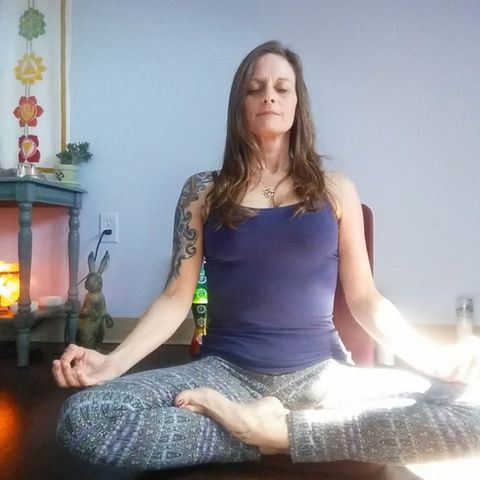
Hi there.
Welcome to episode 83,
Core Values.
This is part one of four of the Balance and Boundaries course,
All four episodes coming your way.
Hi there.
Welcome to week one of Balance and Boundaries.
Over the next four weeks,
I'm going to share information with you related to healthy boundaries and help you identify areas in life that maybe you're not moving in alignment with what you would like to with boundaries with others or even boundaries within yourself.
It's very common for us to have just some confusion or misunderstanding around boundaries.
It might be that we just grew up in environments without healthy boundaries or communities without healthy boundaries.
Maybe we just didn't have the tools or awareness,
Or maybe we're just stuck in our own patterns or habits that aren't even aligned with us being healthy towards others in boundaries.
But the more we slow down and the more we see and understand,
It gives us opportunity and chance to move into what we're looking for.
Because the more we have healthy boundaries in our life,
The greater impact it has on our mental health in a very positive way.
We're going to build some parts over the next four weeks that will start to blend and mold together.
And those things will then allow you to figure out where you might need to shift a little,
To have a little bit more focus on,
Or maybe even some areas that you might need to dissolve.
But it's all within your capacity to move into healthiness for yourself.
The first area I want to cover today is related to personal values.
When we don't have a lot of awareness or understanding around our personal values,
It can be really easy to get kind of discombobulated related to our boundaries and how we're living life.
And there's many different reasons that we might lose sight of this,
Which we'll talk about in just a moment.
But when we have understanding of our personal values,
It could be kind of like a map,
A guide of how we want to be moving through life.
When you're thinking of personal values,
It's about what's important to you.
Like the ideal way for you to be living in this world.
You can kind of think of that.
I know,
Big topic,
Big category,
But what's your ideal way of moving through life?
And you'll find your personal values are there.
It is different for everyone.
None of us are the same.
Even identical twins are not the same.
If you're an identical twin,
I'm not telling you anything you don't know.
But for individuals who aren't identical twins,
Just know that even identical twins are not the same in terms of their values and everything else.
But what are your values?
And how aligned are you with having them in your life?
That's what we're going to talk about today.
Before I help you to explore your personal values,
I want to first kind of point out,
There's many different reasons,
But I'm going to give you maybe the top five or six reasons that individuals might find themselves not in alignment with healthy boundaries or their own values in this situation that we're going to talk about today.
But also they might find that they're living in these different ways according to someone else's values.
And that someone else's values might not even be the same core values that you really have within you.
Some common categories here.
The first one is related to job and career.
Individuals might find themselves in a job or career that is not in alignment with their values.
And this could be in lots of different ways.
I'll just give you maybe two examples here.
So one might be your personal value might be related to outdoors.
You really value being outside and maybe you value travel.
And then you might find yourself in a career or in a job where you're behind a desk in a corporate job,
Nine to five,
No outside,
No travel.
Or you might find yourself in a factory type position where it's very monotonous and routine and maybe you really value creativity and out of the box thinking.
You could see how that is going to be really hard and challenging,
Maybe not really feeling a lot of satisfaction within that if you're misaligned there.
And in job and career can even have to do with ethics.
We might have a strong connection to our own ethical guidelines and find ourselves accepting being in a job or career that does not match our ethics and values that can really be hard on the soul,
Especially when it comes to ethics and values that are really aligned with ethics.
You know,
The outdoor travel,
It's going to create maybe not a nice cozy feeling inside going to work,
But it might not be at the same level of discomfort if you're working in a position,
A career,
Or a job that is not even in alignment with your ethics and your morals.
So your job and career.
And sometimes people find themselves in that because they're like living based on someone else's values.
I was told to get in that career.
That's all I knew.
That's what my family told me to do.
If I went into the career that I really desire,
Then what are people going to think of me?
Or it's not making the money that people tell me I should make.
Maybe money is not even as important to you,
But maybe you're living off of someone else's value who it's a high,
High importance to them.
So job and career is a common area there that we might find that we're kind of misthreaded or not in alignment with our core value.
And we're moving through life,
Right?
Remember the ideal way that we are living in this world.
Job and career.
And are you in alignment with you?
Another common area is about our surroundings.
So core values,
Our core values,
And what are we engaging in life outside of job and career?
What's our environment,
Even through food,
Through music,
Or resources that we're reading,
Or different functions that we're going to,
You know,
Events and things like that.
So what are we doing?
Like,
What are we doing?
What are we doing in life in our everyday outside of,
You know,
Job career?
And is it in alignment with our core values?
Or do we have this sense of obligation?
Do we have a sense of guilt if we say no?
Or it's only one for me to fit in.
People do things for all kind of reasons that they step away from themselves and then have all this emotional spillover in terms of self.
Maybe the quiet chatter of the mind or the quiet vibration of the heart.
It's not really feeling in alignment with them,
But they'll,
You know,
Keep moving through it in that way based off maybe misalignment or again,
Someone else's core values.
We can also find it in terms of conversation.
You might find ourselves in conversations with others that they might say something that it's not necessarily about not being in alignment with our values.
I am one who encourages others to talk with people who don't necessarily have the same exact values,
Ideas as you,
But it doesn't mean collecting them as your own.
It's about understanding individual differences.
It's about gaining awareness through,
You know,
Different opinions,
Different belief systems.
So I always encourage people to not put yourself in this cookie cutter that you're surrounding yourself with just people who are identical to you.
But when you're thinking about this idea of conversation and how it might not be in alignment with your values and this like threshold,
If you would,
What I'm talking about here in boundaries.
So say you're like at a gathering or something and someone is not having the same values as you,
But the threshold example,
Maybe they are speaking down on a certain race or speaking down on a certain belief system in a way that is very judgmental,
Condescending,
Harsh,
Or even abusive.
And we might find ourselves all stirred up inside and not being able to find our voice to advocate or to share our belief.
It's not about stepping into aggression,
Right?
It's not like demanding that this person see what we see or feel what we feel in our heart,
Empathy,
Compassion,
All that if they're being,
You know,
Abusive and stuff in their language.
But finding a way that we can move into assertive language that we're not just being in that space and letting that kind of conversation happen.
And then we do don't do anything with our own voice.
And I'm not telling you to step into an unsafe situation for sure,
But we will walk away from that and then we have all this internal stuff like I just kind of like let that happen.
It's like for example,
This was years ago that I looked at this research.
So I'm sure it's been redone many times since then because I'm talking like probably while we're 13 years ago that I looked at this research.
So it was when I was working in high schools as a counselor and this research was looking at bullying.
And if someone was getting bullied it was specifically looking at playgrounds and lunchtime behaviors and activities.
Those are the two big areas big times of the day if you would that bullying happens.
Lunchtime such a stressful situation for kids and recess.
So the research I was looking at was around those two different pockets of time and they had study after study that was showing it just takes one individual.
It took one individual to make the difference to say something and stand up for the person who is being bullied to have the bully step away and stop.
So the voice can be just one voice to make a change in the setting and scenery.
It doesn't mean that you're going to change the mindset of that individual.
If someone's,
You know racist and they're being all unkind in how they are viewing other individuals or how they're speaking of individuals.
You sharing your voice in your core values or your beliefs is not necessarily going to change that person's opinion of life,
Right?
It's not going to change maybe their core value,
But you're going to feel different inside you knowing that you're trying to stand firm with who you are in difficult situations.
And again,
I'm not advising anyone to get yourself in a risky situation or a harm related situation.
So you would make sure that you're moving yourself into you know,
Maybe out of the scene for example and into a different situation.
If it's not in alignment with safety to use your voice,
You can always remove yourself from that type of setting as well.
Another area to consider here where we get misaligned or we might be living off of someone else's values and that is related to our intimate relationships.
Sometimes we might find ourselves that we aren't even making choices in our life in relation to the people that we surround ourselves with in friendships,
But also intimate relationships.
Sometimes people will get into intimate relationships because family pressure or pressure from their friends or they might be in a relationship and they find that they feel kind of stuck there.
They don't really know how to move away from it or what that would look like,
Fear of the unknown or they might find themselves in an abusive relationship and really feel unsafe and uncertain about how to get away.
And know that wherever you are located there is often some type of service for you.
Even if it's your local crisis line for mental health,
And I will have the national hotline in my information below,
But there's often also resource centers or safety centers for individuals who are going through domestic abuse in some sort.
So there's centers and help lines regardless of gender,
Regardless of relationship status,
People are there to help you.
So if you're finding that you're trapped in a situation because of safety and you know that it's not in relation to your values,
Please allow yourself to reach out for help.
There's many of us out there who are happy to help you get back into alignment with yourself in a safe way.
So we have our jobs and careers.
We have the things like what are we doing in life?
How are we moving through life?
What are we surrounding ourselves with?
We have conversations that we might be in.
And then we even have intimate relationships.
Another area that we might find we're misaligned or we're living by someone else's values is related to when we might find that we are kind of moving into a chameleon-like way of living.
It's like we become shapeshifters almost.
Wherever I am,
That's who I will be.
Whoever I'm with,
That's who I become.
What does that even mean?
It means that you're not in alignment with your core values,
Your beliefs.
Maybe it's because of a lack of trust in self.
Maybe it's because of maybe feeling high emotions around decision-making about what you feel,
What you believe.
Maybe there's self-esteem things there related to a desire to just fit in.
So we mold and shift and change as a trying to fit in with others.
But who are we?
Who are you fitting in with if you don't know what's important to you?
And what's that really filling or fueling in you if it's not in alignment with what's really underneath or in your heart space.
So we can become shapeshifters or chameleons,
You know,
Adjusting and camouflaging ourselves,
Wearing masks and costumes to just fit into situations,
Scenario or surroundings.
One last area that is common here is in relation to really that balanced part more maybe than any of the others I mentioned here.
And that has to do with how we're balancing life in a way that we're not forgetting about ourselves.
We can move into doing doing doing and making sure that we're available for everyone,
But ourselves.
And in that we lose sight of who we are.
We might not even slow down enough to ask ourselves what we value to look within or to even recognize our own desires,
Our passions.
We may find that we're in this role because of other people's values,
Or we may find that we get in this role because that's how we learn to be even if it's not healthy.
So if you had an unhealthy living environment growing up,
You might find that you get into that role because you were probably put into a parentified role at a very young age in life.
And that can make us feel misbalanced where we have to do do.
And at times it can also be about just wanting to keep the peace wanting to keep harmony in our surroundings or for other people.
What about self?
Where's your inner harmony?
If you're doing that,
Are you even noticing how within you you're not having harmony and the harm that it creates in self?
You might not notice if that is a category that you're fitting into because think about it.
When do you focus on you to notice,
Right?
Like we're doing doing that.
Then we're exhausted by the end of the day.
We just want to go to sleep or we're trying to sleep and then we're staying awake because we're worried about everybody else and what we still have to do.
So those are some categories.
Not all but some to just maybe kind of have in your awareness so that you can see what ones really maybe stand out for you or which ones don't.
So let's start talking now a little bit more about the values.
As I mentioned sometimes it can be really hard for us to even identify what our values are.
Very common,
But here are some guided questions that you can ask yourself and I encourage you to keep a journal if you're able through these courses and this will be a place that you might want to write these down.
What are my values?
The first question you want to ask yourself is what inspires me?
And as you're kind of thinking about inspiration or you're connecting to inspiration,
This question of what inspires me,
You can maybe connect with the body feeling.
When we feel inspired,
We feel often a sense of excitement,
Of creativity,
Of like this energy that runs through us in a different way than maybe if we're feeling stuck,
Stagnant or confused.
So find examples of what inspires you.
When do you feel that inspiration running through you?
Like this beautiful buzz almost that goes through our body.
Another question that you can ask yourself is when do I feel most connected with myself in the moment?
What are the things you're doing?
What are the environments you're in,
The people you're around,
The stuff that you're absorbing,
Where you feel embodied,
You want to be there,
You don't have a desire to kind of tap out from the experience,
Like all your senses are in,
You're wanting to experience the moment.
What are those moments for you?
You'll find values there.
You can also look at what type of stories make me feel happy when I read them.
And when you notice what stories make you feel happy when you read them,
Look at what's there.
Look what's within the story.
What does the individual in the story,
What are they kind of vibrating out?
What are they showing you that they value through their actions?
What do you notice?
What about the story makes you feel good?
And it might even tap into that first question there,
Inspiration,
The story might inspire you,
But what about it?
What do you notice?
The qualities,
The values that the story holds.
When you think about that area I mentioned about job and career,
You can also ask yourself,
What career would I be in if money and other constraints were not in the way?
Remembering back to that first thing I said towards the beginning,
What's your ideal way of living in this world?
If you had no constraints,
What career would you be in?
As many of you know,
In adult life,
We spend a lot of time at our jobs and in our careers.
And if we're not in one that's in alignment with our core values,
It can be really tricky to want to get up and go to work.
You know,
You might find yourself clock watching like,
Oh,
How much time do I have left?
Am I almost done?
Or distracting yourself during your day on the job.
Like I want to do anything but be here in this moment,
Not feeling connected to self in the moment.
When we're in alignment with a job and career that matches our values,
Our skills,
The things that inspire us and that we have passion around,
It makes a substantial difference in how we move through life.
What are those constraints?
What values do you have that you might find that would best align with your job or career?
You can also check out Design Your Ideal Life over on my other YouTube channel,
Mental Health Therapy Tools,
And it'll help you kind of put all this together even further if you're one who is trying to figure out this career part of things.
It's based off career counseling.
And another big question you can ask yourself to help start locating your values is,
What changes do I hope to see in the world?
What would you like to see different?
And what does it mean to you?
When you think about the changes that you want to see in the world,
What makes those changes something that you want to see?
What makes them on your list?
The next area to look at also is when you're thinking about your values and the different areas that we might misalign and how we might start to move more into alignment.
A good way to start is to begin to list your values.
So you want to start looking at common threads that you have.
The answers to those questions that we just went over.
Look at what pops out in those questions.
Look for the common areas that you notice a value and then you want to start a list.
Try to keep your list at a maximum of 10 because you want to make the list something that seems sustainable,
Seems doable,
Where if you have,
There's lots of values.
Let me just put that out there.
But say you have a list of 30 values and then you're trying to move them into implementing them in life.
That's going to probably feel overwhelming.
10 might even feel overwhelming.
Just try to keep it at a maximum of 10.
So you have your list,
Kind of gathering information from the answers to the questions on values,
And then you want to order them in priority.
So 1 to 10 order them in the priority for you personally of those values that you came up with.
And as you start ordering them,
Start to notice how present they are now in your life.
What are things that we find important to have in the way that we are living and moving through life in this world?
Another area we want to try to have some mindfulness around is about what steers us away from those values.
Common areas that will steer us away from what we truly value are listed here.
One is about a lack of awareness.
We just might not have even noticed we had values before.
Again,
We can really move through life pretty blindly,
Just autopilot,
Not slowing down,
Not even paying attention to ourselves.
So we might just not have had awareness around our values.
We might just be comfortable in what we're already doing,
Even if it's not in alignment.
So we might even realize,
Recognize,
And notice that these values are not in alignment with how we are moving through life,
But we might just be comfortable with what we're already doing.
We're used to the feeling,
So why change it kind of thing.
We could also have some fears,
Fears of change or the unknowns that could come through change,
Or we might even find ourselves unworthy.
We might have the idea or desire even to move more in alignment with our actual core values,
But we might then follow it with language like,
Oh,
But it's not really available for me.
It's kind of for everybody else,
But not me.
Or we might also need more knowledge.
We might need to gain more information and more skills.
We might have to kind of become more aware before we're aware.
All of these different areas can help you to start to narrow down and have some understanding around your core values.
You can also pay attention to your feelings,
How you feel.
Keep shifting around here because the lights coming in the window and getting my eyes.
Pay attention to your emotional feelings because they can also be a good guide of when you feel good doing something and when maybe you don't feel good doing something.
Just give some common examples here.
Say that you have a high value on presence when you're sharing company with someone and then you notice that whatever reason you're getting on your phone a lot,
Or they're getting on their phone a lot that might not feel comfortable for you.
It might not bring warm cozy emotion because maybe it's not in alignment with the value of presence when you're with someone else or in their company.
Another example might be related to honesty.
So say you have high value of honesty and then you find yourself not being honest.
Well,
That's probably not going to feel good for you or if you're trying to live within integrity and then you find that you're gossiping that might not feel good for you.
Maybe in the moment,
You're not paying attention to the feeling but the after effect the ripple that goes with it can often help us to recognize what doesn't feel right or if you value the environment and living sustainably.
It really might cause a certain emotion if you see someone throw something out their window or you're driving down the road and a window is open in your car and something accidentally flies out like,
Oh my goodness,
I feel like I should turn around and go get it kind of thing or you're on a hike and you take a bag with you to pick up letter that you're finding along the way.
Those are examples like pay attention to what's kind of happening in life and how you feel around the happening and that can also give you a little bit of a like a flashlight onto some of your values.
One last little step here before we wrap up this first week of information.
They have your values max of 10.
You have thought about them to list them in order.
You've had some idea about what's steering you away from them.
Maybe how present they are in your life.
So your next step here then would be to look at your list.
Just start with maybe the first one your top value and then list a couple ideas of how you would implement that into your life or maybe things are already doing in life that you notice really hold that value and really are able to kind of cultivate the value in a very present way.
So you might already be doing some things or you might need to add some things that maybe down the line.
You'll be able to incorporate use once we have an understanding around our values.
Then we can shift it into goal with we know and now we can move into what do I want to do with this information?
Wow,
Look at these values.
I have look at how I'm feeding them.
Look at how I'm feeling them and look at how I'm stamping on them and depleting them or I'm tearing them away or ignoring them completely.
We could be all over the place,
Right?
But slow down so that you can give yourself the opportunity to get to know you to get to know what your boundaries are because that's where we find balance when we're moving through life in a way of healthy boundaries.
Our emotional wellness has a significant interchange there.
So the more we know the more we can move it into our ideal way of living in this world,
Which in turn is going to have a grand and beautiful effect on your mental health.
Thank you for joining me today.
I hope you enjoy starting to break some of this down.
Give yourself a week of kind of gently letting it unfold and then we'll continue to build upon this.
Thank you so much and I'll see you soon.