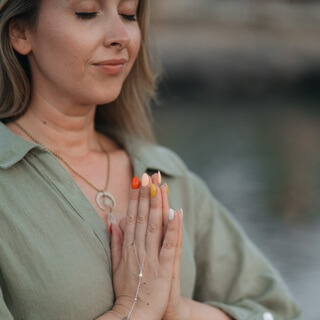
Welcome back into the Anxiety Series.
I'm Scarlet,
Qualified Therapist,
Here to teach you everything I know from my practice and my own personal life.
Today,
In terms of looking at anxiety,
What I want to teach you is actually a really practical tool that you can do because it's nice being able to kind of reframe things in your mind.
Sometimes when we start to actually put that into practice and we make it something physical and it can almost become like a kind of ritual or an exercise we do,
This can just be a really nice way to kind of cement things.
Today,
I'm going to teach you something called the Worry Jar Exercise.
And the Worry Jar Exercise,
What you're going to need for this,
You don't need to get this right now,
But just to say what you're going to need for it,
Is a jar or some sort of container,
A pen and some paper.
And so what you're going to do,
Or what you can do if you want to do this,
You don't have to do this,
But what you're going to do is basically you're going to,
Over the course of a month,
You can do this over a course of a week,
But I would say a month because it gives you a amount of time.
Over the course of a month,
Every time,
And I mean every time,
Every time you have a worry,
Let's maybe just say a worry that lasts more than,
You know,
A few minutes.
It's not just like a five second worry,
But you have a worry.
Every time you have a worry,
I want you to write it down on a piece of paper,
Kind of fold it up and pop it in that jar.
And if you're out and about and this happens,
What you can do is you can just write it down on your phone or write it down on somewhere you can access.
And then when you get back home,
Go and write it down,
Even if the problem's already got solved by then,
Write it down,
Put it in your jar.
So what you will find is by the end of doing this for a month,
You,
Well,
You might be someone that kind of goes,
Oh,
There's not really a lot in this jar,
But the majority of people,
Especially if you tend to worry or you're at times having anxieties come up,
Fears come up,
That jar is going to be pretty full up and it's going to be full up with all sorts of things that have run through your mind over the course of a month.
So what is the point in doing this?
Well,
The point in actually doing this is so that you can physically see,
Literally see how many worries are going through your mind all the time.
And that can almost be quite shocking to be like,
Well,
There is so many pieces of paper folded up in this jar that I almost can't even fit them all in.
Or it might just be interesting.
You might be like,
There's less or there's more than I thought.
So first,
It just gives you a bit of a gauge on that.
But then what you do after at the end of the month,
What you do is you open that jar and you go back and read through every single thing that's in there.
And when I've got people doing this,
And when I've done this myself,
It is just so interesting to see because what will happen is you'll open up all these pieces of paper and you'll look at it and you'll probably go,
Ah,
OK,
Yeah,
That one I do remember feeling really stressed about,
But that resolved itself.
Or,
Ah,
Actually,
That one did escalate,
But again,
It did get solved.
You might open another piece of paper and you might go,
I do not even remember that.
What even was that?
No,
No recollection of that.
Can't even remember worrying about that because you don't.
And yet it's been a worry that has caused that fear,
That anxiety.
It was enough for you to write it down on a piece of paper and put it in your jar and you might have actually completely forgotten about it.
Then there's going to be probably some worries that you go,
Yeah,
Do you know what?
That is an ongoing one.
So you're going to have almost like a pile that might be some ongoing worries.
You might not.
So for you,
They all might be things that have actually got resolved,
But they may be kind of ongoing things that are on your mind or,
You know,
An ongoing,
Let's say,
Relationship issue that hasn't got solved overnight.
But I think what's so powerful,
Like I say,
About this is seeing how much is in that jar and how much just does,
In all honesty,
Gets resolved or you move through or isn't perfect,
But you're just no longer in that headspace with it.
And so I encourage you to do this if you know you worry a lot,
If you know anxiety is coming up a lot,
Because it's going to really empower you.
This can really help to allow you to see just how many things you do actually work through or go or get resolved or just shift and change naturally.
Because the anxious mind,
As you'll probably at times be able to relate to,
The anxious mind tells you,
Oh my gosh,
This is a disaster.
This is terrible.
This is the end of the world.
And this is just the end.
This is the end of something.
This is the end of.
.
.
Anxiety tends to do that.
It's kind of life or death.
It certainly doesn't tell you there's a solution,
Basically.
It certainly doesn't say,
Hey,
This is all part of life.
And this is going to be just one part of many things that get resolved or shift and change.
And so when you then see this physically,
On physical paper,
Physical things that represent those worries,
And then you see just how many without,
And this is a really interesting thing,
Some of them without you even doing anything,
Dare I say,
Without you taking control and needing to do anything,
Resolved themselves or was just bigger than you,
Beyond you,
Were things that you didn't need to get involved in.
This can really help to cement in your mind this image so that when you then start to have another worry,
Which you will,
I don't expect you're going to do this and you're never going to worry again,
But so that when you then have another worry,
You're able to go,
Hmm,
Remember all those things in my worry jar last month that got resolved and you've got this sort of image in your mind of,
It's okay for things to feel as though they're not going to be resolved at the time,
But I've seen month after month how many things do.
Now,
If you're there saying,
But what about those big things?
What about when we have a worry and it is big and it is bad and it doesn't get resolved?
Well,
That's actually for a different talk.
And with that,
What we talk about is trusting in your ability to cope should bad things happen.
That's basically what we do with everything outside of the things that don't get resolved is yes,
Okay,
Difficult things happen,
But still that's just not the end of the road.
We then have to deal with that.
And a lot of soothing anxiety can also be about trusting in ourselves to cope should we need to.
So as I say,
That's for a different talk and perhaps to listen to that with me.
But in the meantime,
See if you want to do this exercise,
See what happens and allow this to be part of your visual,
Almost evidence-based stuff that you're building to say,
See,
Do you know what?
So many things I worry about.
I don't need to.
And so many things do get resolved without me needing to figure it all out,
Have all the answers.
See how you with that.
I'm excited for you to do that.
I'm actually going to go.
I think I'll do that myself.
You know,
I feel like I need to do that again and I'll see you again in another talk.