Hello and welcome.
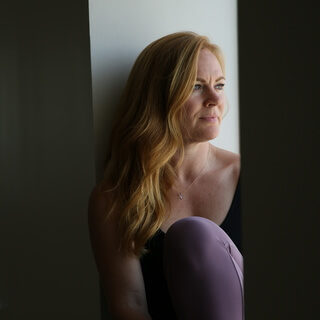
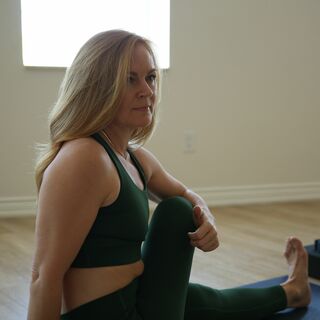
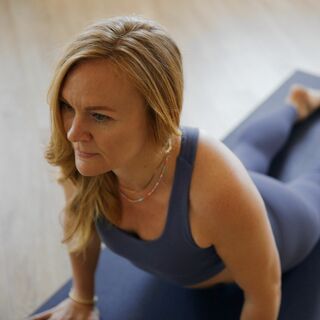
My name is Nathania,
And I'm here to guide you through a compassion
Exercise.
I am a true believer that what we practice,
We strengthen.
We have the most
Incredible capacity to rewire our brain and to create these automatic ways of being.
So
If compassion is a way of being that you want to strengthen and live from more,
Then
Practice this exercise daily.
Compassion is a sacred and transformative quality that
Enables us to connect deeply with ourselves and others,
Sparking positive change in our
Inner and our outer worlds.
It goes beyond sympathy or pity,
Requiring us to actively
Engage with the suffering and challenges that you and others face.
Compassion is rooted
In acknowledging our shared humanity and having the willingness to truly understand and empathize
With the experiences and emotions of others.
It helps us step outside of our own perspectives
With an open heart and without judgment.
There are three elements that help us build compassion.
The first one is vulnerability.
To truly connect with others and show compassion,
We must be
Willing to embrace vulnerability.
This means letting go of defenses,
Being open to discomfort,
And acknowledging our limitations and perfections.
By allowing vulnerability,
We create a safe space
For others to share their pain,
Their struggles.
It fosters deeper connection and understanding.
When we acknowledge that we have both strength and struggle,
When we share not just the strength,
But also the struggle with the world,
We create the vulnerability necessary to build the connections
That foster true connection and compassion.
Empathy is the second element of compassion.
It is another essential quality that helps us understand the emotions and experiences
Of others.
It helps us convey that understanding in a way that validates other people's feelings.
Empathy requires us to step into someone else's shoes and imagine how they might be feeling.
By practicing and strengthening empathy,
We can build those bridges of deep,
Meaningful connection
And demonstrate to others that they are seen,
They are heard,
And they are valued just as they are.
The third and final element to compassion is action.
Action plays an important role in alleviating
The suffering of others and ourselves.
It is not enough to simply feel empathy and understand
Someone's feelings.
We must also be prepared to act.
This can manifest in various ways.
We can hold space for someone,
Allow them to be heard as we listen.
We can offer emotional
Support and validate their feelings.
We can suggest solutions or guidance that will help
Them come up and out of their suffering.
Compassion is more than just a feeling.
It's a practice
That demands deliberate action and engagement.
The first element,
Vulnerability,
Plus the
Second element,
Empathy,
Plus the third element,
Action,
Is what delivers wholeheartedly a
Compassionate experience for someone.
Practicing compassion,
It holds a myriad of benefits.
It
Enhances the individual well-being as well as the collective community cohesion,
The people that
We're with.
It fosters positive emotions and it reduces feelings of isolation and loneliness.
As
Mentioned before,
My favorite part of compassion is it strengthens relationships because it nurtures
Trust,
Understanding,
And connections.
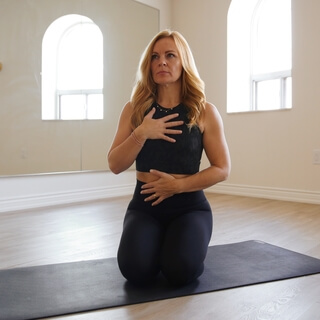
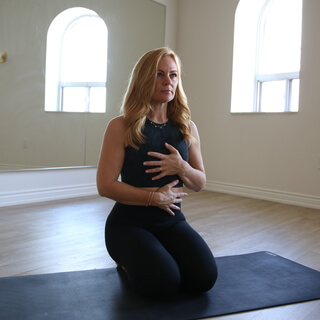
So let's begin our compassion exercise together.
Find a
Seated position and allow yourself to rest in space.
Wherever your feet land,
Allow them to
Feel grounded,
Rooted into place.
And then draw your focus up your legs towards your sits bones.
See if you can remove the flesh so that the sits bones connect to your chair,
Your cushion.
And
Then on your next in-breath,
Lengthen your spine.
Grow tall right up through the crown of your head.
And as you let go of that breath,
Pull the shoulders down and allow the hands to rest on
The thighs.
Keep your awareness of breath.
Breathe in,
Notice how you breathe in.
Breathe
Out,
Notice how you breathe out.
Inhale,
Notice all of the sensations in the body as you open and
Expand and fill up.
And then exhale,
Soften just a little more deeply into your seated position.
Inhale,
Notice.
Exhale,
Let go.
Our compassion exercise begins with love.
At any point,
If your
Thoughts wander away from our efforts,
Bring it back to breath and join me wherever I am in the
Practice.
In the mind's eye,
Will you consider something that you are deeply grateful for?
Go
Ahead,
See it vividly with all of your senses.
What do you see?
What do you smell?
What do you
Hear?
What do you taste?
What do you feel?
Maybe it's a person or a place or an event in your life,
Go ahead and experience whatever it is you are deeply grateful for.
Allow the sensation of love
As you feel into this gratitude to swell outside of the heart and spill over into the whole body.
What do you feel?
What does love feel like?
Breathe into those sensations,
Lengthen them,
Let them expand and grow into all the parts of you.
Let it feel good.
And then in this beautiful
Effort of love,
Can you slowly untether yourself from this practice of gratitude,
Maintaining the
Sensation of ease that love has brought you,
Softness,
Tenderness,
And we'll shift over to
Vulnerability.
Can you look deep within yourself and ask honestly,
How am I doing?
I ask you how
You're doing in an effort to draw some transparency into what you need today.
How are your energy
Levels?
Do you need to slow down or maybe speed up?
Is there something you could say no to,
Or maybe you're
Ready to say yes to?
Only you know where to meet yourself today.
Could you begin that process now?
It
Starts with being honest.
How am I doing today?
What do I need today?
And how can I show compassion
Towards myself today?
And then allowing yourself to breathe in and out,
Letting go of that exercise of
Vulnerability,
Of checking in,
Of acknowledging what you need.
And we shift over to empathy.
Could you
Imagine bringing yourself back to a situation that recently felt difficult or challenging for you?
Perhaps
You were alone,
Or perhaps you were with someone else.
Choose an event,
An email,
A text,
A conversation that
You had with someone else.
Can you see that person now,
In this situation?
Can you rise up out of your
Perspective and put them into theirs?
Can you imagine them doing the very best that they could in that moment with
The tools they have?
What emotions were they feeling?
What perspective,
Perhaps different from yours,
Were they
Feeling?
How did they see the situation or event take place?
If this arises,
Any feelings of discomfort in you return to
Your breath.
You're under no obligation to stay in this situation,
Pulling yourself out whenever you need.
And if it feels
Comfortable to do so,
Stay and linger in this other person's perspective.
Allowing yourself the richness available to you
When you're willing to step into somebody else's shoes.
Stay curious and try to drop any judgment.
With empathy,
Consider this
Other person's perspectives and emotions.
And as you do,
Begin to acknowledge any responsibility that you could take in this
Situation.
It's very easy for us to identify what other people didn't do right,
Or try to control things outside of ourselves that we
Cannot control.
But there's a lot of empowerment that can be found in tuning in and taking responsibility for something we could have
Said differently,
Something we could have owned,
And allowing ourselves to see it and to begin the process that is repair.
Is there
Something that you could do or say to take responsibility for how you felt in that moment?
Now you can linger here for as long as you
Need.
Or you can take a couple of cleansing,
Deep,
Slow,
Long breaths with me.
Allowing yourself to shift out of this empathetic state.
As we
Move into action,
Our third component of living a more compassionate life,
Can you identify three,
Three small acts of kindness that you can do
Today or maybe tomorrow,
That you can do in the next 24 hours?
Each and every human,
All beings are capable of performing nine acts of
Kindness a day.
We're going to focus on three,
Three small ways that you can show kindness and compassion.
The brain recognizes our ability to do
Something,
Not through thought.
Thought is an established neuron or synapse or pathway.
The brain recognizes our ability by imagining it.
By
Imagining these acts of kindness,
Go ahead,
See yourself doing them now.
Be very specific.
Who's it with?
Where are you?
What will it cost or
Not?
Could be as simple as writing a kind text or email.
As you identify these acts of kindness,
Imagine yourself doing them.
That reinforces in the
Brain your ability,
Your ability to perform these tasks.
Then start to marinate in the feelings,
The sensation that these acts of kindness will give you
Access to.
Synapses are formed,
The ability to be compassionate are formed in imagining and feeling.
Don't just think of these acts of kindness,
See them and feel
Them.
You can linger here longer if you'd like.
You can complete nine acts of kindness,
Visualizing them,
Feeling into them.
Or you can move on with me as we take a moment to
Reflect.
Reflecting on the intention of growing our ability to be more compassionate.
Why is this important for you?
What will leading a more compassionate life give you
Access to?
Join me here every day.
Commit to grounding in love through gratitude,
To connecting vulnerably with your own needs,
Not just recognizing your
Strengths,
But where you may be struggling,
Where you can show compassion to yourself.
And then with empathy,
Acknowledging a situation that felt challenging and
Committing to seeing the other person's perspective,
Being curious instead of judgmental.
Seeing the space of forgiveness and opening,
Releasing yourself from resentment and tension and unease.
And
Then identifying actions,
Ways to insert compassion and kindness into your day purposefully and with intention.
And then always,
Always grounding back through the power of reflection on why this is important to you so you can reaffirm your practice every
Day.
It is from here where I remind you,
What we practice,
We strengthen.
So go ahead,
Give yourself permission to practice compassion every day.
And I look forward to hearing all about your success.
Thank you for practicing with me today.