What's up my loves and welcome back.
We are redefining what it means to be spiritual in the modern world.
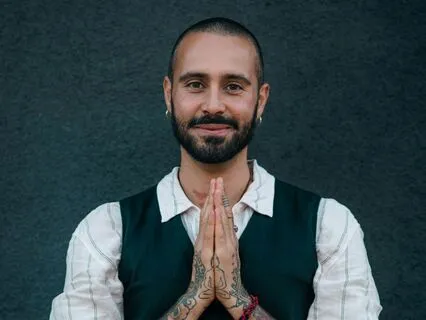
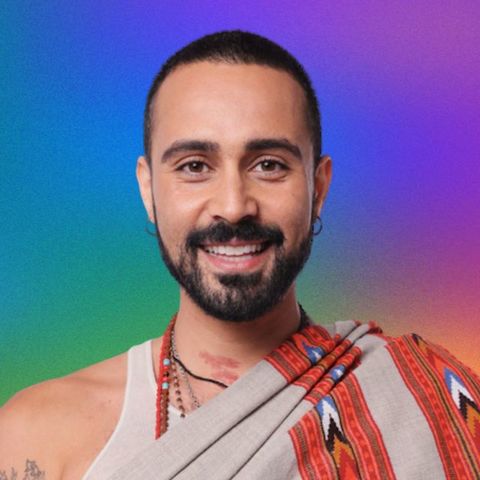
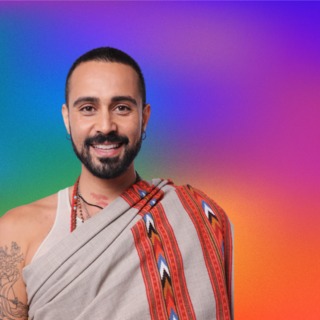
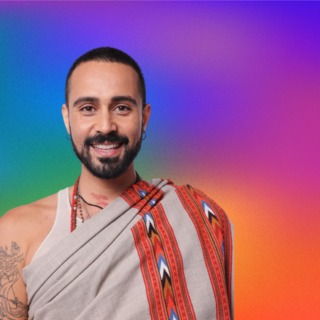
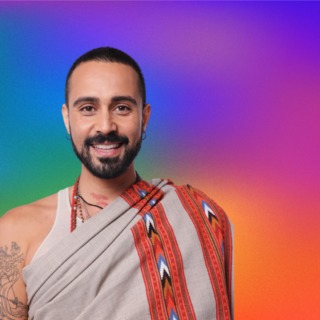
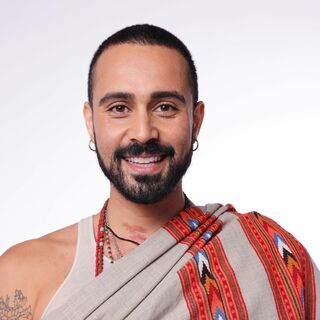
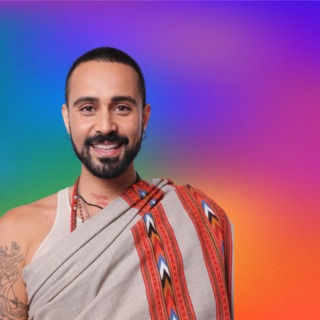
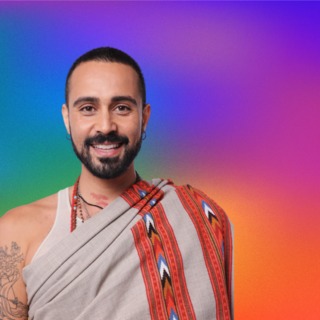
I'm your host,
Sade Simone.
I'm a mystic and artist,
Transformational speaker,
Two-time bestselling author,
Also the creator of the Somatic Activated Healing Method.
And guess what?
Today's guest is just you and me,
Honey.
Listen,
In today's episode,
We're going to be exploring trance states through spiritual embodiment.
We have looked at trance states with our stinky eye for too long.
We have to bring back this euphoric,
Ecstatic state into our lives through the point of view of dance.
So there's a lot of ways to enter state of trance,
But in what we're going to share today,
It's through the point of view of dance.
Can dance lead us to liberation?
Can dance help us to heal?
Can the trance state be the gateway to a plane of liberation,
Healing,
Where we are able to have connection with all the holy beings?
Find out.
Love you.
Enjoy the episode.
Your thinking process is co-created with the thinking process of the world.
If the vast majority of the world believes X,
Y,
And Z about X,
Y,
And Z,
Sorry brothers and sisters and queers of the light,
You will too,
Unless you take these moments to break free and start to allow a whole new way of experiencing reality to make itself known to you through these practices that crack the code,
You know,
That crack you out of this.
Are we communicating?
Is this landing?
Are we arriving somewhere?
Yeah?
Okay,
Good.
So what are trance states?
I put some quotes from indigenous cultures from around the world.
It's very important to also know that before industrialized,
Before the industry of religion,
You know,
Before the capitalistic approach to mystical states,
Hear me,
Before the capitalistic toxic approach to mystical states took a hold of the world,
Trance states,
Mystical states were the norm,
Were the norm.
They were something that we cultivated,
You know,
We used to come together for it,
You know,
We danced into trance,
We sing into trance,
We created into trance.
Now with the world that,
With the ways that the elite,
What does that mean?
People with more privilege,
Right?
They were the ones who actually wrote the history books.
You didn't hear the folk mother in the slums of India,
The magician,
The witch,
The legendary healer in a tiny little Himalayan village.
You didn't hear,
She didn't write the book that we are now,
You know,
Indoctrinated and socialized into believing.
Are we communicating?
The elite throughout history were the ones who have written what we know today.
But when you look under the hood and you realize,
Oh,
Wow,
It's probably a group of white men that got together and wrote this,
Hey,
Honey,
They left us all out.
Queer people,
Female-identified people,
You know,
Brown,
Black,
They are like,
No,
We know better.
So it's important,
Like not going to like,
You know,
Shame spiral,
Blame spiral,
Guilt spiral around if this is why you're here,
To learn something new,
To know that trance has always happened across the world.
And we'll talk a little bit more historical points,
But I just want you to give you the,
Just a tiny little bit of context so you start to understand that it's not that we're talking about something that's new,
It's not that we're talking about something that is,
That only happened in far in between people here and there,
No.
It's important to know that trance has been the backbone of how humans created so much of what we're inspired by today.
So much of what's beautiful about life.
So much about what's,
You know,
Like paradoxical about life.
Trance gives us the capacity to hang in that space where beauty and pain can exist,
You know?
So important to know that,
And it's also important to know that in today's class,
I will not be focusing on trance through other practices,
Like,
You know,
There is a lot of ways of achieving the trance state,
But because the backbone of the work that I'm doing and the path that we're creating,
We are here to dance people into trance.
We are here to dance people into trance.
So what we're going to be talking about is entering a state of trance through ritualized dance practices,
Okay?
However,
It's important to know for your own research,
For your own life,
That trance can be entered into through a variety of different ways,
You know?
Are we following?
Yeah?
Okay.
So here's some of the quotes that I pulled together,
And I try to do a good job from getting people from all over the world to give you,
Like,
A global view.
So this is an Indonesian shamanic saying.
In the ecstasy of,
Excuse me,
In the ecstasy of surrendering to the rhythm,
The spirits are awakened,
And we become one with a divine energy that surrounds us.
This right here is a very important aspect of state of trance.
It's feeling connected to all things and all people all at once.
When people ask me,
What is the greatest gift of 10 years of spiritual practice?
Depending who's asking,
I say this or that.
But the truth of it is feeling deeply connected to people,
Feeling deeply connected.
Because the vast majority of us,
I think the biggest sickness of the world is apathy.
We are so apathetic,
We're so disconnected.
We are unwilling to get to know our neighbors,
Our friends,
In deep,
Intimate ways.
We're unwilling to go to the edge of feeling awkward for the sake of connection.
And feeling connected to all people and all things is the greatest gift,
And it's also a real deep practice.
Because at any moment,
We are navigating the waves that we are all navigating,
Happy,
Sad,
Inspired,
Depressed.
How do we navigate all of it without preference,
Without rigidity,
Without holding on,
Without craving?
This is the work of spiritual embodiment.
That is the work of spiritual embodiment,
Is to get you to that plane,
All right?
So,
And this is different than feeling like,
Calling yourself an empath.
Oh,
I feel everybody's feelings.
This is a deep connection to unseen forces.
This is a deep connection to nature spirits.
This is a deep connection to the birds,
The wind,
To the sky,
To the sun,
Deep connection to everything that is all around us.
It's a sense of belonging.
And it can sound a little ineffable and a little bit like,
Okay,
Cute,
Look,
I know we're all one,
Unity consciousness.
I'm not talking about that,
Sisters and brothers and queers of the light.
Yeah,
There's an aspect of that to it.
But I'm talking about,
It moves me to the point of tears on a regular basis,
You know,
That I could literally be like,
Wow,
We're all in the midst of an experience together.
That's rough,
Honey.
That's rough.
And then,
Wow,
All the foot on the wake up list today,
Me too.
We're blessed.
You know,
That,
That is what I'm speaking about.
Feeling connected to that.
Okay.
Okay.
Now,
This is an African shamanic saying.
And there's no specific African region,
East Africa,
West Africa,
South or North Africa.
I mean,
North Africa will come a little later because we have Morocco here.
But in Africa,
In its main sort of domain,
Up until today,
You know,
Regardless of how how much missionaries have tried to destroy indigenous communities of Africa,
They still trance out,
You know,
They still trance out and they still do not give the white people think it's crazy because they know,
They know something that we don't know.
And now here we are trying to find out,
You know,
We're socializing ourselves into a new way of being.
Okay.
So here's what it says.
When the drum calls,
We enter the sacred space of trance where the spirits speak through us guiding and healing the community.
When the drum calls,
We enter the sacred space of trance where the spirits speak through us guiding and healing the community.
I love this because it,
It,
It really speaks to something that I noticed so often.
Just going to make a note where we left off so I can give you some downloads on this one.
You know,
In the somatic activated healing work,
Oftentimes what I'm doing is I'm bringing this deep,
Dark beats,
These tribal drums,
This kind of music that elicit movement.
And sometimes that movement is dark and ugly and monster-like and scary.
And it's really interesting just to watch.
And I say interest because I'm being sweet and kind and graceful and simultaneously annoying to watch,
You know,
I'm like literally shut up,
Get moving.
And I'm also like,
You know,
I'm your teacher,
So I'm loving you through it.
But I'm also like in the human experience with you,
Like the freer you get,
The freer we can all get.
Freedom is relational.
It's required.
Get free so I can get free too,
You know,
That,
That part.
So I watch when the drum kicks into the room,
When the beat enters the room and I notice people who are either like,
Okay,
Go there,
You know,
Move me,
Move through me.
Let the past unravel out of me.
Let the burdens of the old move through me and out of me.
Let me give voice to my past without words.
Let me give voice to my past without words.
Let my body communicate all the ways that I didn't have a chance to communicate through the dance.
And I don't see people doing that.
And I get on the mic,
Honey,
And I'm screaming at the people,
Literally,
Look at me at the rehab center two weeks ago.
I mean,
Granted,
The person who filmed that,
I think they're here today,
They did a fantastic job at capturing the beautiful moments.
And it was a beautiful class.
And I don't have that kind of like capacity to do when we are on Zoom online.
But this right here,
When the drum calls,
Do you follow?
Do you hear?
Do you listen?
Do you listen to the call of the drum?
It's a prehistorical calling.
It's an archaic calling and not archaic as bad and old and shouldn't look at that.
It's like,
Do you listen and do you follow?
Are you that person that when the music plays at the supermarket,
You give it a little,
You turn to your best friend and you're like,
Hmm,
Hmm,
Hmm,
Hmm,
Hmm,
Like,
Or are you that person who's like,
Don't you wish your girlfriend was a freak like me?
And you just like whisper under your breath.
But you don't like,
Don't you wish your girlfriend was a freak like me?
You don't give it.
If you don't give it,
That's part of you not following the call of the drum.
Are we communicating y'all?
This is what it takes for freedom to take place.
Are we communicating?
So when the drum calls,
Do you follow?
Do you listen?
Do you let yourself be guided?
And I'm that the example of that song isn't like the best example,
But it is a great example because it really,
You know,
Like how often do I allow myself to,
To move when the body wants to be moved,
When the past wants to be given voice and not the story of the past,
But the movement of the past and somatic activated healing in the work of our,
Of our somatic philosophy that we have co-created here from the trance state.
We're not engaging in the stories of the past,
We're engaging with the feeling tone,
With the texture of the past,
Or we're giving it a non-verbal story through movement.
And when we give our past non-verbal,
Non-conceptualized,
Non-storified capacity to move through our bodies and out of our bodies,
That creates the bridge into a state of trance.
Are we communicating?
Are we tracking?
Okay.
So this is the Sufi tradition.
In the whirling of the dervishes,
We lose ourselves and we find the divine.
The dance becomes a prayer,
A path to enlightenment.
In the whirling of the dervishes,
We lose ourselves and we find the divine.
The dance becomes a prayer,
A path to enlightenment.
We lose ourselves and find the divine.
This is a very important topic and I'm going to go over it in detail later.
I'm just kind of creating context for you guys to understand what we're doing here.
What do we lose when we say we're losing ourselves?
What do we say?
What does that mean?
The fixed ideas of who we are,
Conditioning,
Ego,
Stories,
Individuation,
Beautiful,
Beautiful,
Beautiful.
These are all students who've been practicing this for a long time.
So it's kind of like doesn't count y'all,
But thank you,
Keep it coming.
If y'all didn't know this,
I'll be mad,
But you know,
Because you know,
But listen,
It's good that you're reminded of this stuff.
What we lose,
It's all of this,
All of this.
And also there's something to be said about this.
To enter into a state of trance,
Being embodied is the first step.
And then disembodied is the next step.
So first becoming embodied and then disembodied and the disembodiment is not that you are no longer have a body or have yourself,
All that still exists in relative level.
There's something that happens around the rigidity and the fixedness and the solidity of who you are and the way you see yourself on the world that falls away.
You really become nobody.
And I've spoken about this before briefly as we got into the class,
But when I tell that I feel deeply connected to every single thing,
The connection that I feel is not conditioned,
Is not myopic,
It's not,
It's not circumstantial,
It's not,
It's not like colonized and socialized.
It's something that surpasses all belief systems.
It's gnosis,
You know,
It's a gnosis,
A deep inner knowing that in Buddhism,
In the Christian sort of Judeo-Christian literature,
They call it a gnosis.
In the Buddhist world,
We call it spontaneous arising.
It's a quality of shunyata,
It's a quality of emptiness.
It's a realization that we only exist in context of each other,
That we only exist as a social body,
That we only exist interdependently,
Not independently.
That's hard to hear.
It's hard to hear sometimes.
And so we lose ourselves and find the divinity and that connection that I'm,
That I'm seeing that I'm deeply connected to all people.
That's what I'm speaking about.
It's feeling so deeply connected to all people that I don't know where I end and where they begin.
The boundaries that separate us fade away.
That's the work that we're trying to arrive at.
However,
Hear me out.
A lot of you haven't had a chance to actually claim yourself and claim your experience.
And from one side,
It's like,
Yeah,
That sucks,
Right?
Because it's good to know who you are.
It's good to know your preferences.
It's good to know what you like and what you don't like.
It's good to know what sets you free or keeps you in an inflammatory,
Toxic state.
And once you get to know all of that,
Then the rigidity and the fixedness and the solidity of all that has to start to loosen.
Or when someone says,
Do you eat Thai food?
And you have historically said no.
And you're like,
Yeah,
It's that simple.
It's to that place.
It's to that place.
It's to that place where we are actually testing our edge.
Ram Dass says that he's been sober for,
God knows,
Decades.
He passed.
But towards the end of his father's life,
His father was dying.
So he stopped teaching to go spend time with his father.
And Ram Dass is one of the greatest mystics that's ever lived,
Brought so much intuition and wisdom into the Western world.
He trained in the East and in the North of India with Nimco Rolibaba,
An amazing mystic,
One that had these emanation bodies,
Played tricks in society.
It was like a true riot of a mystic,
Would appear in three different places at the same time.
People would be like,
What is even happening?
How are you here and there and there?
People were just like,
What is going on?
He was a riot.
And I love riots,
Naturally.
Ram Dass says,
And I'm giving you an idea about becoming nobody,
About we lose ourselves and we find the divine.
His dad is dying.
He goes spend time with his dad,
And he's been sober and a vegetarian for decades.
His dad,
All he wanted to do with him was drink a glass of champagne and eat oysters.
You think Ram Dass said,
No,
I am not going to eat oysters.
I'm a vegetarian.
I don't eat,
You know,
Animals.
Or you think I'm going to drink champagne with you?
No,
I'm sober.
These are bad things.
That's the call to lose yourself.
That's the call to lose yourself.
Does that make sense?
That's the call that you got to learn how to make.
How do you make that?
Not after a class like this and all of a sudden you just got weight.
You just woke up.
You know,
Your awakening happened during COVID.
You're not ready for that.
If you just cracked the code during COVID,
Honey,
You got a couple more years to go at least before your rigidity and your preferences could start to dissolve a little bit.
But navigate that line.
Navigate that line with more flexibility,
You know.
Navigate the lines with a little bit more flexibility.
So this is we lose ourselves and we find the divine.
That is the divine in the Sufi saying,
In the whirling of the dervishes,
We lose ourselves and we find the divine.
The dance becomes a prayer,
A path to enlightenment.
This is the dance that we're being called into is losing ourselves,
Which means what?
Losing my preferences,
My rigidity.
And then enter into the divine.
Divine is what?
Connection.
The first stage of experiencing divinity is connection,
Not intuition about a new business idea,
Honey.
Granted,
That's a cute look,
Too,
But that's not the that's not the divine that the mystics spoke about.
The divine that the great saints and sages of what earth have spoken about is that is the awakening of deep interconnection.
You know,
Deep interconnection.
So that's very important thing to know.
Very important thing to know,
You know,
And only you will know in your own life what that looks like.
Are my preferences,
Listen closer to this,
Are my preferences setting me free or keeping me stuck?
Are my boundaries setting me free or keeping me stuck?
Can I enter the state of trance where I become nobody and then nobodiness then orients my somebodiness?
Are we communicating right now?
I don't even know what I just said,
But it was fierce.
Next.
It's the Native American saying.
So Native American,
It's usually speaking to North American tribes,
Right?
Trance is the gateway to the realm of the ancestors where wisdom and guidance are bestowed upon us.
Trance the gateway to the realm of the ancestors where wisdom and guidance are bestowed upon us.
This one,
There's many ways to interpret.
And what I also want to say is that in the context of trance that I am teaching today,
We are not speaking about possession,
Okay?
In the realm of trance,
It's very known to,
And you've heard people say this before,
And one of our teachers,
Anna Scott,
Said this in a Zoom meeting with all the teachers for the membership the other day,
She says,
Let go and let God.
And I love that.
And also there's danger in that space,
Right?
And danger in that space because we oftentimes,
Because of the ways we're living,
Because of the ways that we are creating,
Self-producing ourselves and our future and our present moment,
And the consequence of how we've been producing ourselves,
Our present moment shows up in X,
Y,
And Z ways.
And if you open up to a more esoteric view of unseen beings existing in the world of the seen,
Then when we open ourselves up to the trance state and we're speaking to our ancestors,
One could download that information,
One could speak to that information simply by saying,
I had this massive insight,
I had this massive change of heart,
I've had this massive realization.
It could be that simple.
One could name that as like,
You know,
One of my ancestors came to me and spoke to me and this and this and that,
Or within that realm of ancestor speaking and direct guidance from beings seen and unseen,
Lived in this plane or unlived in this plane,
As we know it.
In the space of trance,
What can often happen is possession,
Which is something that doesn't happen unless you are allowing it to happen,
And also doesn't happen without the consent to happen.
And also,
If your motivation isn't clear,
You know,
So it's very important that when you're dancing to a state of trance,
Your motivation is always,
You know,
Set and clear.
When I used to go with my ex-boyfriend Ben to the cemetery,
I would always claim,
You know,
Banners that we're going into the cemetery with.
And I would always like,
You know,
Establish the boundary of what was allowed and what wasn't allowed,
You know.
So when we are starting our dance practice into a trance,
It's very important to always know this,
You know,
Because sometimes what we may be hearing in the state of trance,
If we don't have that clear motivation,
Isn't benevolent,
You know.
And it's important for me to name this,
And it's a little like,
Now we have this to worry about.
No,
And yes.
Okay,
So it's a little texture there.
So,
Siberian shamanic saying,
In the sacred circle of the shamanic trance,
We travel to unseen realms,
Retrieving lost parts of ourselves and healing our souls.
What I want to highlight here,
Retrieving lost parts of ourselves and healing our souls.
Really simple way to interpret this,
It's how much of your current energy,
How much of your current attention is right now currently split,
Thinking about the ex-boyfriend,
Thinking about lunch,
Thinking about that deal,
Thinking about this thing,
Thinking about that thing,
And that thing,
And this thing,
And that thing.
Like how much of your current energy is right now in this very moment split across all planes of existence,
Without even being aware that you're fully split.
When we enter into the trance,
We are retrieving lost parts of ourselves,
Which means what we're calling back our energy.
We're calling back our energy into our bodies,
And from that place,
Then we can shoot up into these realms,
You know.
So,
The trance grants us that.
Does that make sense?
And it's something that happens naturally.
It's something that happens naturally.
It's something that like,
As you dance into the dance,
As you trance from the dance,
You're calling back your energy.
And it's not like,
Let me go into a trance because I'm so scattered.
I'm so not concentrated.
It's not that basic,
Honey,
But that's also,
You know,
It's good too,
But it's not,
It doesn't have to happen in that way.
You don't have to name it.
It's like a byproduct of it.
It's a consequence of entering the trance,
Okay?
So,
Important to name that.
So,
This is the Moroccan Nagwa tradition,
And I'm probably pronouncing it wrong.
It's G-N-A-W-A tradition,
Gnawa tradition.
I'm going to say it like that.
Forgive me for mispronouncing it.
And it says,
Dance rituals transport us to a state of trance where the boundaries of the self dissolve and unity with the universe is realized.
I'm reading this one to emphasize the fact that people from different tribes across the world,
In the North Americas,
In the African region,
In the Siberian region,
Like far and wide in Indonesia,
Like literally in every corner of the world,
They're all speaking to that same place that we're speaking about,
You know,
Dissolving the self.
And we'll get to why that's so scary in a second,
Okay?
This is in Brazil,
Candomblé tradition.
Candomblé is a Afro-Brazilian religion.
It was brought to Brazil during the times of slavery,
And it flourished in a really powerful way in Brazil.
So,
In the ecstatic rituals of the Candomblé tradition,
Which is drumming and dancing,
And there's a lot of that,
We merge with the divine energies receiving guidance and healing from the Orishas.
Orishas are the deities,
Right?
Or the gods and goddesses,
However you want to see it.
And this is one of the reasons why when you read my bio these days,
Like all of the greatest things that I've been able to create have all come from a state of trance,
Have all come from not me,
Like,
Thinking about the questions and hoping to answer the questions by thinking upon them,
Or like,
You know,
Researching them out.
It's all made itself known to me through the trance state.
I bring the questions to the dance,
You know?
I bring the questions to the dance,
And then the answers live through me.
The answers dance through me.
Is this making sense?
Very important that as a dance practitioner,
As a trance practitioner to be,
You will be bringing your questions to the dance.
And sometimes,
Listen to this,
Your questions will not have an answer because you're not ready for the answer.
Because you're not ready for the answer.
You know,
And a lot of times,
We hold back from going into a state of trance,
That really deeply inspired state,
Because we're afraid to hear that kind of guidance.
We're afraid to hear that kind of guidance.
Because once we hear it,
You can't unhear it.
You can't unhear the fact that you have this big,
Powerful,
Bold mission and you're here to end poverty,
You know,
Like that.
Because the trance is going to give you some deep.
All of a sudden,
You're running for mayor of your town.
I don't know.
All of a sudden,
You're like working at a homeless shelter.
All of a sudden,
You're,
You know,
Shaving your head and like joining and stuff.
I don't know.
Like,
It is wild what the trance guidance could offer your life.
However,
We are afraid of it.
So physiologically,
We hold ourselves back.
So when the drum calls,
We go a little bit like,
We don't go.
That is you holding yourself back from cracking the cold into that space,
You know?
Okay,
So let's go into,
Write down your questions for this first part,
Okay?
Now,
I want to,
I want to speak about the sort of trance states through history.
These are sort of historians,
Archaeologists,
And authors who've written beautiful things about it.
So we are kind of like building some more information,
You know?
Information,
You know?
So Brian Fagan,
Who's an archaeologist and author,
Says,
Trance states were an integral part of ancient religious practices,
Allowing individuals to transcend the boundaries of the physical world and commune with the divine.
Emphasizing that point,
These earlier quotes that I read to you were from shamans,
Wise beings,
Sages,
Witches,
Wizards,
Mystics,
Who are living this work,
Who are speaking these words in their tribes.
And then from that tribal language,
It's sort of seeped into the collective culture,
And then we get to hear it now.
And then we get to hear it now.
Now we have people who have been socialized,
Not into trance,
Who have been socialized into studying trance,
Who have been socialized into being scared of trance.
But then we have great beings who are writing beautiful things about it,
Who are now sparking our curiosity to re-enter that place,
To be curious about that place,
Okay?
Which is very important,
You know?
Very important,
Because historically,
As I said,
The elite has pathologized,
Criminalized,
Demonized trance states.
And now this resurgence of trance,
It's really calling us to curiosity.
And the curiosity for the unseen,
You know,
For the divine,
For the mystic realm,
Okay?
So here we go.
Jean Cortes,
Archaeologist and prehistorian.
They say,
Ancient cave paintings and rock art suggest that altered states of consciousness,
Possibly induced by trance,
Played a significant role in the spiritual lives of our ancestors.
I love hearing stuff like this,
Because it's studying cave paintings.
We're able to see that our ancestors were already trancing out,
You know?
Like seeking higher wisdom,
Going beyond the boundaries of our fixed self,
Going beyond the boundaries of the material world.
And I personally don't like the word altered states,
Which comes up a lot in trance.
I don't think it's altered state is a way to speak about trance.
I think it's a natural state.
It's our baseline,
It's our backbone,
You know?
It's operating from that place.
And the work begins,
Like,
Can I stabilize the wisdom from a trance state in my life?
So then it's not an altered state of consciousness,
It's your new normal.
Can that be your new normal?
So that's the offering,
Okay?
Are we communicating?
Yeah?
Jeremy Narbi,
An anthropologist and author,
Says,
The examination of ancient artifacts and rituals reveals a deep connection between trance states and the religious experiences of ancient civilizations.
Michael Harner,
Anthropologist and author,
By studying ancient shamanic practices and examining archaeological evidence,
We gain insights into the role of trance states in facilitating healing,
Divination,
And spiritual transformation.
Michael Harner,
Anthropologist and author,
If you guys want these names,
Too.
So,
Last quote on this stuff,
Just to give you more,
Like,
Historical context for this,
Mircea Eliade,
Historian of religion.
Trance states were a fundamental aspect of the religious ceremonies of ancient cultures,
Serving as a means to establish communication with the spirit world.
It's very important to know that before religion became industrialized,
Before religion became a part of society,
Before religion became industrialized,
Before religion became,
You know,
Part of the toxic capitalistic,
You know,
Domain,
Which capitalism is good.
However,
There's toxic aspects of it,
Which most of us are socialized into,
Right?
Before that,
Trance states were part of Christianity,
Were part of the Judeo-Christian sects and mystical paths,
You know.
They have just been,
You know,
Stripped away because of fear of the kinds of information and downloads that those who were trancing through the dance into those states of deep,
Profound wisdom were bringing back and were sort of creating a riot.
And a riot,
In my vocabulary,
Is bringing about information that was illuminating shadow aspects,
Bringing about information that was illuminating blind spots.
It was living like such a bright light that wherever that person that entered into the trance walked,
There was no way for you to not see your own shadow.
There was no way for you to not see your own blind spots.
There is no way for you to not see your own unresolved baggage,
Okay?
So,
Now,
When did the pathologization of trance states begin?
There isn't like a specific date.
I can't tell you it was like,
You know,
The specific date at this afternoon.
It wasn't like that.
It kind of has been happening.
But there is a couple main points that I want to tell you guys so we're all in that same realm.
Stanley Krippner,
Psychologist and author,
Says,
The pathologization of trance states can be attributed to a fear of the unknown and a desire for social control in increasingly hierarchical societies.
Why would they want the folk people to have access to the most profound wisdom?
Why would they allow themselves to be manipulated?
Why would they allow that?
If the folk person,
If your local bodega owner was entering into a state of trance in communion with the deities,
In communion with the gods and goddesses,
The saints,
The sages,
The ancestors,
Everything that is benevolent and holy,
Why would they allow that?
When the guy in the throne with the thing and the da-da-da-da-da,
They wouldn't want that person to have access to the wisdom of the saints and sages.
So what did they do?
They criminalized trance states to make sure that that kind of information was only within those to assert socioeconomical background.
However,
We've always have still going to go into that place because we know how and we're worthy of it.
So your choice to enter a state of trance,
It's your choice to say hierarchical systems into these socioeconomical systems that's criminalizing poverty,
That's pathologizing poverty and destroying our world.
Are we communicating?
You know,
So your choice to go into the dance floor and enter into a state of trance is it's you literally dismantling,
Unraveling out of your system,
Unsocializing it out of your system,
All the ways that this hierarchy that keeps us stuck,
This systemic oppression happens because we're all bought into it.
We all bought into it that white people are better than black,
That straight people are better than gays.
We all have been socialized into that as the norm.
When you go into a state of trance where all of that dissolves,
This hierarchical system fades away.
What are you doing?
You're moving society towards the right,
Towards the holy,
Towards the benevolent.
Are we communicating?
So when you hear the psychologist speaking about that,
It has to,
It has to know.
I pray,
I hope,
I wish that it moves you out of your comfort zone to dance into that state so you become a beacon to dismantle homophobia,
Racism,
Queer phobia.
All of the things that are wrong with our society,
We can dance into the answers,
Living us,
And then you're now walking as a permission slip for a new approach,
For a new way of living,
Being,
Existing.
Are we communicating?
Is this too much?
Have I lost you?
We're good?
We're navigating?
Okay.
John Ryan Hale,
Psychoanalyst and author.
Trance states were once revered as sacred and associated with spiritual enlightenment.
But with the rise of organized religions,
They came to be seen as a threat to religious authorities and were subsequently pathologized.
It's really important to know that before religions became institutionalized and capitalized and all that stuff,
Music and dance were part of every single practice,
Every single mystical practice,
You know.
And it's interesting to read the commentary of some of the Buddhist texts that are shaming folk people for dancing,
Shaming folk people for singing.
And it's,
In my view,
This is my view,
This isn't like the Buddhist doctrine speaking through me,
No.
But hey girl,
Maybe.
We don't know,
Right?
Who's talking?
But listen,
My view as a cultural commentator,
As a cultural analyst,
As someone who is observing reality details and creating patterns and noticing the annoying,
Boring patterns that we're all,
You know,
Living under and operating by.
My view is that all these texts that are shaming trans states and shaming dancing and singing,
That is all because it's been filtered through the mouth of the translator.
I said it and I'm not unsaying it.
So that's there.
Don't need to be repeated.
But that.
Okay,
So now.
Stanley Kripner,
We read a quote from him earlier.
Psychologist and author.
He says,
The medicalization and pathologization of trans states can be attributed to the influence of Western psychiatry,
Which seeks to classify and categorize human experiences within the framework of mental disorders.
Now,
This is when the thing starts to get a little.
This is when the dance starts to get a little,
You know,
A little texture,
Okay?
You got to take this information.
You got to take this information and be with it.
You got to take this information and be with it.
You can't take this information that I'm giving you guys and live it as the highest truth.
If it feels like that in your body,
Then go,
Girl,
Live.
But if there's a little bit of skepticism around it,
Maybe you have a fear of being inspired and you have a fear of being liberated.
You have a fear of being okay.
That's also another piece of the puzzle.
And there's also a call to embody this information,
To dance this information into being yours,
Dancing this information to being yours.
Okay?
So,
Important to know,
I'm going to talk a little bit about the,
The psychiatrical,
Psychiatrical.
Now it became like this theatrical thing.
It's not what I mean.
It's psychiatric approach to these inspired states.
And so here with,
With like grace and openness,
You know,
We'll get there in a second.
Let me just tell you one more thing.
Trans states challenge the boundaries of the ego and the rational mind posing a threat to societal norms that prioritize control and conformity leading to their pathologization.
Graham St.
Jones,
Anthropologist and author.
Now that we have this framework,
Let's go a little bit deeper.
Okay?
Psychiatric movement took place 19th and 20th century.
And through that,
It's been very helpful to give name to experiences that weren't named before.
Okay?
It was very helpful to give name to experience that weren't named before.
So that's good.
Wording the world is good.
Okay?
Wording the world is good.
And it's also fun.
So paradox,
Right?
You know,
As a teacher,
It's my job to always bring you into that space of paradox where two realities can coexist together,
And then that will propel you to open a third reality,
Right?
So when we see someone in a state of trance,
Oftentimes,
Because of how we've been socialized,
We're scared of it.
You know,
And that fear,
What is scary,
What happens,
Gets named as bad.
And if it's bad,
Has to be healed,
Has to be transformed,
Has to be resolved.
We quickly go into these planes of resolution.
But we know that everything just comes to be and falls apart,
Comes to be,
Comes together and falls apart again.
And resolution isn't something that is part of the spiritual path.
It's an openness for things to come together and fall away,
Come together and fall away.
That's what we're seeking.
You know,
Pema Chodron says,
The great Buddhist master,
Soon to be a saint in my view,
She says,
We are so desperate for resolution.
We're so desperate for resolve.
But we are worthy of something much bigger,
Much more profound.
We're worthy of this ambiguity,
This paradoxical state of openness for things to come together and fall apart,
Come together and fall apart.
Because when you think about the things that you consider resolve,
Are they resolved?
You know,
Are they resolved?
Just reflect on that.
Like,
Is there such thing as resolution in our lives?
No.
Things have just come together for a certain time,
And then they fall apart.
And maybe that coming together stays on and sticks for a little while,
But they fall apart again.
You know,
That's just the nature of this reality that we're in.
Everything that's in this realm of existence,
It's inherently impermanent.
So the fact that things come together and fall apart is,
And I don't know why I went in this whole rant about it,
But oh,
Speaking about the things that we demonize,
Speaking about the things that we are pathologizing and afraid of,
All of that stuff.
Trance gets categorized in that space because when we go into a state of trance,
We come out changed.
And how dare you change so quick?
How dare you go into your,
Be all moping around and all like,
And then go into a trance and come out like,
I am a legend.
I'm going to change the world.
How dare you go into that?
What do we call that?
Manic.
Oh,
She's manic again.
Oh,
She's delusional again.
Oh,
She's hysterical again.
Okay.
And that,
Me using the,
The,
The,
The pronoun she,
Her,
It's because there is someone that we can attribute.
I forgot the person's name.
I was just listening to about this,
The history of,
Of in the space of trance like that.
There was a dude,
A French person who,
Who is like the guy who sort of coined the,
The,
The,
The hysterical thing for women,
You know,
And then that kind of like became the,
The sort of norm to say,
Oh,
Women are hysterical,
You know,
But what if the hysteria was a state of trance?
What if the hysteria was a radical choice to stand up for yourself and stand up for the unseen world?
What if that,
What if that was an actual radical choice to say enough with hierarchical homophobic transphobic?
What if it was like a choice to say enough with the systems that don't work?
And then the man couldn't hear it.
So what did they say?
Oh,
She's unwell,
Medicate her,
You know,
And I'm saying all this.
So you realize that this information,
It's not,
It's not something that I'm telling you for the first time,
You know,
This in your body,
You know,
Oh,
She's in her period.
She's unhinged.
That language is in the space,
You know,
Like I heard somewhere that I think my ex-boyfriend said this to me.
Men are obsessed with war because they're participating in an offering,
A blood offering to the mother,
Because women can offer blood regularly to earth and men can't.
So the way that they offer blood,
This is a little bit like texture to hear,
But just invite the mystical realm and to invite the more esoteric view,
Texture,
Politically incorrect thing,
Totally no controversial taboo,
I know.
But I'm like,
Oh,
That's so interesting way of thinking about it,
You know,
And,
But what happens when men come back from war,
You know,
They have created such massive devastation,
Such massive harm,
And then they are forever changed,
Not by the holy acts,
But by the destruction,
You know,
Things to just reflect on.
Things to just,
Like I told you,
This was a critical analysis into life,
Okay?
So the main thing I want you to know is that trans states,
When someone could be something today and be something totally different,
15,
20 minutes later,
That idea that someone could radically change has been pathologized because we are afraid of change.
Can you hear that?
Can you hear that?
Can you embody that?
Can you live this in your being,
Vital information?
You are allowed to radically change your life.
You're allowed to radically change your perspective about those people who've hurt you.
You're allowed to radically change your perspective about yourself.
This is what the state of trans offers.
You're allowed to radically change everything you want.
Your perspective should and can change.
The trans offers you that,
Okay?
So the main reason states of trans in the earlier,
In the more recent years,
Have become demonized is because of the psychiatric movement,
Which is very helpful,
Very helpful,
And also fixed label to anything is never helpful.
Fixed label to anything is never helpful.
Becoming your label,
Never helping.
Living by your label as your identity,
Never helpful.
Just knowing all this.
And I know there are psychologists in the room.
I know there's people that work in that space in the room.
I know,
And I see you.
So we're dancing that dance together,
Okay?
Now,
There's also something else to name here,
Which is the,
What they call enlightenment period,
Or like scientific rationalism or scientific revolution in the 17th and 17th,
18th centuries,
Which,
As far as I'm concerned,
Ain't a season of enlightenment,
Honey,
Okay?
It's a season of,
Like,
Conformity.
It's a season of,
Like,
Conformity.
It's a season of boxes.
But also,
Simultaneously,
A season,
A time in human history of beautiful things,
Beautiful discoveries,
You know?
Within that space,
What do they focus on?
They focus on reason,
Rationality.
They focus on the scientific approach,
Which means what?
Do this to get this.
This plus this equals that.
But in the realm of the mystical,
In the realm of the trance,
Do this plus this,
It doesn't equals this,
Girl.
It equals something fully unhinged,
Completely unheard of.
And that's scary for people.
Are we communicating?
Can you hear that?
That when you bring your questions into the trance,
The answers will not be,
Why don't you just get a haircut and tell your boss that you need a raise?
No!
The answers will be,
Quit that job and tell the boss,
And go spend 10 days in silence in the woods,
You know?
It's never going to give you just a little something,
Just a little change.
No.
When you bring your questions to the trance,
Into the dance,
The answers will never be,
Why don't you just wear red lipstick now?
Why don't you just do your eyebrows a little different?
Why don't you just get a new bag?
Get a new bag!
Get a new bag.
Actually,
You know what?
Why don't you get a new car?
Get a new car.
That's it.
That's it.
Get a new car.
It's never going to be that.
But that is what society wants from us.
But we are mystical,
Mystics in the making,
Embodying in the spiritual,
Which means what?
When the 17th,
18th century Enlightenment season,
The scientific reasoning,
And na-na-na-na-na took over the world,
You know,
It says you can go into a state of trance.
And again,
I'm only using the context of the dance into trance,
Not all the other ways,
Okay?
If you can go into it and come out renewed,
Transformed,
Wiser,
Calmer,
More patient,
Legendary,
Bright,
Like there's a light inside of you that it doesn't,
Like nothing's changed physical about you.
But you enter the room and it's just like,
That.
How do we put that into a box?
How do we name that?
How do we conceptualize that?
How do we pathologize that?
How do we give that a fixed label?
We can't,
And because we can't,
It's scary.
So,
Through the psychiatric revolution,
Which is helpful,
With the Enlightenment scientific scientific revolution,
17th,
18th century,
And then 19th and 20th century,
All that stuff,
Helpful.
And for the mystic,
For us,
We're walking the path of spiritual embodiment,
Of trance states,
Not helpful,
Not anymore,
Not anymore.
Okay,
Did that lift you up?
Was that life-affirming for you?
Did that,
Like,
Inspire you?
I love you all!