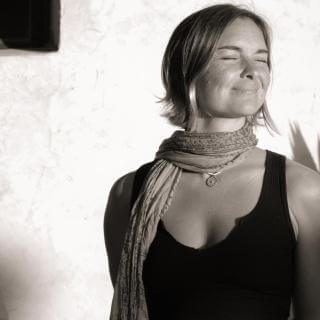
Welcome to Regulated Rush.
This is a 30-minute in-movement meditation.
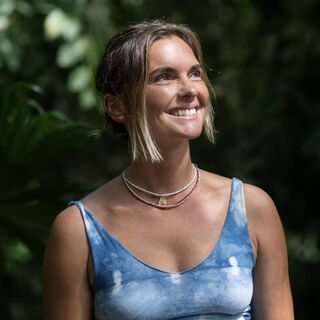
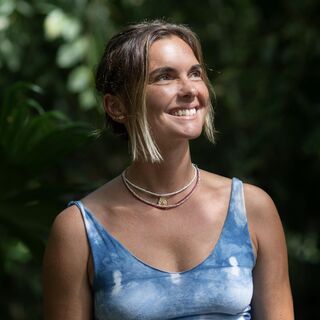
My name is Luz.
I am co-founder of Rhyme.
Welcome and enjoy.
You are in motion.
And that is perfect.
This practice is made for this moment.
We are going to implement some simple tools to calm your nervous system while you move.
We are going to do that through breath,
Body awareness and rhythm.
So,
No need to stop.
No need to slow down.
This is about staying connected while life moves fast.
So,
Take a deep breath through your nose.
And exhale slowly through your mouth.
And do that again.
One more time.
Breathing in.
And release.
So,
While you are moving,
Try to always stay connected to your breath.
Or at least bring the awareness back to the breath.
We tend to hold our breath.
We tend to hold our muscles.
We want to relax our body while we are in movement.
While we are rushing,
Maybe.
So,
Throughout this meditation,
We will bring your awareness back to the body while you are in movement.
So,
Let's start with the feet.
So,
Bring your awareness to your feet.
Bring your awareness to your feet and your shoes.
Even when you are walking,
Just notice your feet.
And feel the ground beneath you.
And let some of your weight fall into the earth.
Just feel that.
Feel the earth beneath you.
Keep moving.
Keep being.
Come back to the breath.
Notice your breath again.
And let it stay soft.
And find a rhythm.
Breathing in consciously.
And breathing out.
And maybe you want to start with a longer breath out.
A longer breath out than your exhale.
This gives your body space to send the signal,
I am safe.
Even if I am in a rush,
There is nothing going on.
I am okay.
I am safe.
Soft breath in.
Soft breath out.
Relax your body while breathing.
And it is okay when you catch yourself not breathing.
Or when your breath is a little bit more fast.
That is fine.
Try to slow it down again.
Come back to that rhythm.
Slowing down the breath.
And it is easier to slow down the breath out.
Relaxing the nervous system.
Sending a signal,
I am safe.
So,
Breathing out more slowly.
You can even do that with your mouth open.
Or even make a sound.
Make a sound like a hum.
Or a little bit more power with the breath out.
Like a sigh.
So,
While you are in movement.
Let's also ground your body.
Without stopping.
So,
While you are in movement,
While you are doing things.
Just feel the breath inside of your ribs.
Just feel it.
Short noticing.
Your breath inside of your ribs.
And when you breathe out,
Send it down.
Send it all the way through your legs to your feet.
Just follow it while in movement.
And it doesn't need to match your step.
Or your movement.
Just let it be steady.
So,
Breathing in,
Filling up your body.
And send the breath all the way down through your legs to your feet.
Notice your legs.
Are you moving with tension or with power?
Notice that in your legs.
Can you maybe relax your legs a little bit?
Without releasing power.
Powerful can also be soft.
Not forced,
Just steady.
So,
Bring some calmness into your legs.
And if you are standing or shifting.
Notice how your muscles are holding you.
Let them hold,
But not grip.
Relaxing your legs.
Again,
Come back to the breath.
And exhale slowly.
We are sending signals to the body.
We are safe.
It's all good.
We are here.
Rushing.
Moving fast.
But regulated.
Let's bring some focus to your eyes.
Try to keep your eyes soft.
If we keep our eyes soft.
We send a signal to the brain that we are relaxing our muscles.
Especially around the eyes that are connected to focus as well.
So,
If we have the ability to soften our eyes while we are in a rush.
When we are in speedy motion.
We send a signal to the brain that we are actually not hyper-focusing.
We are not in danger,
But we are okay.
We are just moving really fast.
So,
Try to relax the muscles in your eyes.
Focus on your forehead.
Where can you soften just a little bit?
Feeling your breath.
Longer exhale if it's needed.
If you feel that is helping you.
How are your eyebrows?
Maybe move your eyes a little bit.
Move your eyebrows a little bit.
You can create some tension in your eyebrows and letting it go again.
Making them soft with intention.
Your jaws.
Maybe move your jaws as well.
Left and right,
Up front and back.
Giving it some space with your tongue.
You can move your tongue a little bit.
Give it some space.
Breathe in.
And with the breath out,
Drop your shoulders.
Relax your shoulders.
We tend to hold a lot of tension in the shoulder area.
So,
We can let that go.
Let it go.
Soften.
Breathing in.
Soften the shoulders.
Soft eyes.
Maybe not everything will resonate or not everything is doable in movement.
That is fine.
Just pick up the things that are doable.
Pick up the things that feel good and repeat them.
Breathing in.
Slow,
Long breath out.
And if that felt good before,
Give it a little bit more strength when you are breathing out.
A little bit more forceful.
You can even make a sound if no one is around.
Or you feel safe enough to make a humming sound.
Breathing in.
Letting go of the tension in your face,
Tension in your shoulders,
Your chest.
And you can repeat this line softly in your mind too.
I can move fast and stay soft inside as well.
I can move fast and stay soft.
Move fast and stay soft.
Breathing in.
And letting it go.
Stay connected to your body.
Maybe you want to shake your shoulders.
Letting it go.
Tension in the shoulders.
Letting it go.
And feel your belly.
A lot of times when we move fast,
We tend to hold our belly.
We tend to hold some tension there too.
Let it go.
Breathing into your belly.
Long exhale out.
Letting it go.
Letting go of the tension.
Letting your belly be what it needs to be,
What it is.
Embracing our true reality in this very moment.
Letting it go.
Maybe you even want to imagine breathing into your belly.
And if you have the space or the time,
Maybe you can even put a hand on your belly.
Holding your belly.
And letting it go.
Soften.
Give it space.
Sending signals.
We're constantly sending signals to the body.
We're safe.
We're good.
We are in motion and we can move fast.
But we can be still soft inside.
We can still feel safe.
Without spiking our nervous system up.
Let's again go back to the eyes and soften.
Soften your nervous system through the eyes.
We call this the peripheral awareness.
With our eyes we focus.
We hyper-focus or we are in a peripheral state.
So while you're in movement,
Be aware of how you focus.
Are you hyper-focusing?
Are you concentrating on one thing only?
Just try to zoom out and create a more peripheral view behind your eyes.
This sends a very fast and effective signal to the nervous system to calm down.
And if you are hyper-focusing,
If you are doing something that requires your focus,
Maybe look up.
Look up or look away.
Somewhere where there is a little bit more space.
Soften the eyes.
Just for a little moment.
Soften the eyes.
Soften the body.
Deep breath in.
Long exhale out.
Soften the eyes and go back to your focus.
Don't stare.
Just receive.
Tell your body you're safe.
Within movement,
You're okay.
Let your body receive.
And breathe.
Big breath in.
And letting it go again.
Connect with your inner rhythm.
Not the place of your task.
Not the rhythm of the world.
But your rhythm.
You.
Notice your feet.
Notice your breath.
Notice your inner tempo.
And slow down the breath.
Relax your muscles.
When we do this and when we feel safe here,
We're way more effective in doing our tasks.
Tapping into your nervous system,
The beat of your nervous system.
And let it guide you from the inside.
So when you feel like you're tensing up,
Relax it again.
Use your muscles with ease.
Give it space.
You don't have to match the speed around you or the pressure of finishing something.
Or arriving on time.
You can do it with ease.
Without slowing down.
You can do it with ease in your body.
Feel your body.
And if you have the space,
Maybe feel your hips and sway left to right.
Maybe you can move a little bit.
Back and forth.
Swaying.
Move your arms.
Move something.
Do it with ease.
Do it with some focus and awareness.
Even in a rush we can move slowly.
It's not about control.
It's about rhythm.
Breathing in.
Full body breath in.
Full body breath out.
Letting it go again.
Giving it space.
Giving yourself space to feel and to be.
And continue what you're doing with more ease.
Come back to the eyes.
Soften the eyes again.
Repeat what felt good.
What did you do that felt good?
What did you notice changed for you when you did that?
Just repeat that.
Soft shoulders.
Soft eyes.
Long breaths out.
Keep being with your breath.
Surrender.
Rhythmic breath.
Repeat what felt good before.
Keep noticing your body.
Where can you let go a little bit?
Where can you create some more space?
Continue with this.
Continue.
Focusing on your body.
Focusing on your task.
Focusing on whatever you need to do in this very moment.
Move fast but move regulated.
Regulation is key to feel safe and to not get drained by whatever you're doing.
Teaching your body resilience.
Teaching your body that it's okay to move fast.
You're okay.
Deep breath in.
And release.
Soften your eyes.
Tuning in your body.
Where can you soften what requires a little bit of your attention,
Your awareness,
Your focus?
Letting it go.
Notice your breath.
Big inhale.
Big exhale.
Slowing down your body.
Regulate.
Soften.
Stay with yourself.
Do what works.
Tuning in.
Where can you soften?
Do you need to breathe in deeply?
Do you need a big breath out?
Are you breathing?
What do you notice?
Coming back to the breath.
Coming back to your body.
Are you still breathing?
Focus on the breath.
Find your rhythm.
Find your rhythm.
What do you need?
Check in.
Breathe in.
Keep breathing.
Remind yourself to breathe.
And if it's helpful,
Breathe in deeply.
Deep breaths out.
Longer breaths out than the inhale.
What helped before?
What was supportive?
Do that again.
Repeat it.
Where can you relax?
Your muscles.
Unnecessary tension in the muscles can cause tension.
Cause dysregulation eventually.
Or provoke it even more.
So let go.
Maybe your shoulders.
Maybe your hands,
Your feet,
Your legs.
Where is it?
Or are you good?
Perfect.
Keep breathing.
Keep being with yourself.
Keep your body regulated with the breath.
Keep breathing.
Keep being with your breath.
Letting go.
Soft eyes.
Maybe a moment to gaze.
Create some space between what you were doing and your body.
Just a little tiny second break.
Gaze in the distance.
Soften your eyes.
Peripheral view.
Deep breath in.
Letting it go.
Come back to what you were doing again.
Keep breathing.
Keep your rhythm with your breath.
Continue this for yourself.
Continue to breathe.
Continue to repeat what worked during this meditation.
During this movement.
During this regulated rush.
And remember that it is okay if it doesn't always work.
But this reminder,
This meditation can give you a little bit more peace.
During what you were doing.
And I hope this helped you and supported you.
Let's come back to this meditation if it was.
To stimulate your system in a different way.
To build resilience.
Good luck with what you're doing.
And just keep staying with yourself.
Give yourself peace and safety.
Thank you.