Hi,
I'm Bob O'Haver.
Welcome to the Why Meditate podcast.
I'm asking questions of teachers,
Scientists,
And religious leaders.
Thanks again.
Now on with our discussion.
Hi,
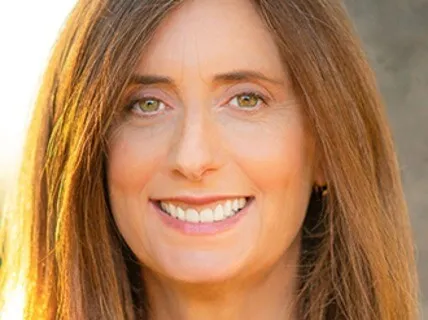
I'm Diane Winston,
Director of Mindfulness Education at UCLA.
And we're just going to jump right into it with the first question,
And it is,
Why meditate?
Why not meditate?
It's such a broad question,
But there's so many dimensions to it.
I think about all the scientific research showing why mindfulness is helpful and how it improves all sorts of things like physical health conditions and reduces blood pressure,
Reduces stress.
I think about how it's helpful for anxiety and depression and all sorts of mental health concerns,
And there's so many different studies these days that have been showing the benefits of mindfulness.
So there's,
As I said,
The physical health that impacts insomnia.
It can impact cardiovascular disease.
It can impact just a whole array of stress-related health conditions.
Just around that,
Are you using the same mindful meditation that you're teaching here,
Or are you using different types of meditations for different types of ailments or chronic pain or those kind of things,
Or working with different therapies?
It kind of depends.
There's been about three or four thousand studies,
And they all do different things.
The most popular thing that's been done probably is mindfulness-based stress reduction in the mindfulness world.
So a lot of the symptoms that I mentioned,
They've gone through an eight-week protocol with mindfulness-based stress reduction.
But there are different protocols.
We've done research on MAPS,
Our six-week program.
We've done it related to insomnia,
Related to surviving breast cancer,
Related to.
.
.
We're working on one right now with Alzheimer caregivers,
Seeing if it improves their ability to just quality of life and less stress and so forth.
So MAPS is research.
But then there's a lot of other studies that just teach people a meditation and then look at the results of that and put them on a certain task and to see what even one hour of meditation can do.
I mean,
There's a whole range of ways- Really,
Just saying,
Okay,
Meditate for one hour.
You've never meditated before,
And now you're better at this.
Maybe that's not exactly what's happening,
But I've seen things where they- But over a period of time.
Yeah,
They might give someone a task.
They might measure social anxiety and then teach them 10 minutes of loving kindness meditation and then see the results of that and whether it actually decreases social anxiety.
Sometimes it's just taught in little bite-sized pieces.
There's a whole range of the way mindfulness is taught.
Kind of figuring out how to study it.
Yeah,
Yeah,
Yeah.
Along with going along with teaching.
There's lots of different areas which our mental and physical health can be improved through mindfulness practice and also just to say that mindfulness is not the same as meditation.
Mindfulness is a type of meditation.
Maybe this is a later question,
But meditation is a big category.
Sports is a big category and there's hundreds of sports and there's many,
Many types of meditation.
Mindfulness is the one that's my expertise.
I'm very familiar with the research,
But if you go over to the Transcendental Meditation World,
They'll tell you all about their research.
Of course.
It just depends.
Also,
A lot of research has been done around attention,
Impacting attention.
When I was first hired here 12,
15 years ago,
We were doing a study on adolescents and adults with ADHD.
We saw that going through an eight-week program that we designed specifically for them improved their ability to pay attention.
So much so that the scientists were saying,
Well,
What kind of medication did you put them on?
We said,
No,
It was meditation,
Not medication.
So attention has improved.
Then there's even a lot of research looking at people's brains and how it impacts brain structure.
There was someone at UCLA researching long-term meditators and found that they had more cortical folds than people of the same age range.
That's pretty interesting.
If you meditate,
Your brain has more- Any exercise for the brain.
Yeah,
Yeah.
You can think of it as an exercise for the brain.
Some of the early studies that were first done looking at long-term meditators,
Like monks who've been in the caves for 30 years or something,
Found that they had thicker certain areas of the brain than people of the same age range.
So the two areas in the original study that was done out of Harvard in,
I think,
2005,
Found that long-term meditators,
You know who I'm talking about,
Who they were looking at,
Like the Olympic athletes of meditation,
Their prefrontal cortex and insular cortex were thicker than people of the same age range.
Prefrontal cortex is what we think of as the CEO of our brain,
Executive functioning,
Delayed gratification,
Working memory,
Impulse control.
The thing that develops last when you're growing up.
Exactly.
So it was thicker than people who of the same age range that they compared it to.
So I'm answering on a kind of,
I'm answering sort of like from a clinical perspective,
Like why meditate?
And I wanted to start with that,
But then I kind of wanted to dig a little deeper into my own personal experience and why I meditate and also having worked with thousands of students now,
What I see has been beneficial.
So that was where I wanted to start.
When I think about why meditate,
It's probably for me been the most important thing I've ever done in my life.
Just finding meditation.
I was really lucky because I got into it when I was in my early 20s.
And I think at that age,
We're still developing,
Right?
The brain's not fully developed.
And it really spoke to me in such a profound way.
And I remember having this insight into like,
Wow,
I can understand my mind by simply paying attention to it.
And out of that sent me on a long journey of mindfulness practice and living in monasteries and doing long retreats and so forth.
But mostly I was meditating at that time because it was so incredibly interesting.
Getting to know this mind and what it does and seeing the habits and the patterns and all of the things like,
Wow.
And then there could be relief from those habits and patterns.
That was the really exciting part that I could not in the beginning,
But ultimately begin to quiet my mind and have these places of ease and equanimity and then the resulting joy and compassion and connection.
So for me,
Mindfulness and meditation are synonymous for me,
Although I do have done other meditations in my life.
But for me,
It's like a deep dive into myself and it's profound and sometimes surprising and beautiful and sometimes scary and weird.
And our minds are these amazing things.
So I think that the biggest gift over the years of having done now about 30 years of meditating is that I'll never fully understand my mind,
But I have all sorts of tools and skills to deal with whatever is arising.
So whether anxiety arises over my daughter or loss or grief,
I have so many skills.
I always have this place of a refuge inside me that never goes away.
And even when I get flustered and crazy about this and that,
Because of my meditation practice,
There's always a place to return to.
And that's the greatest gift I could.
What is your definition of mindfulness and what is your vision of a mindful life?
I have a definition that I've been using for some time,
Which you probably know,
Which is paying attention to our present moment experiences with openness and curiosity and a willingness to be with what is.
So for me,
Mindfulness is.
.
.
The word mindfulness is actually broad.
That's sort of the technical definition and the definition that involves the placement of attention,
Like the training of attention into the present moment,
Bringing it back again and again to the present moment with certain qualities,
Capacity to be with.
So there are some definitions of mindfulness that are popular that use the non-judgmental awareness.
And I'm not crazy about that because I've found that when students start meditating,
They often find their mind is filled with judgments.
And then if they hear they're supposed to be non-judgmental to be mindful,
Then they think they're doing something wrong.
So I've kind of replaced it in my definition with willingness to be with what is.
Step back and one more time on that,
Because I didn't quite catch the beginning of what is mindfulness as it relates to judgment.
Right.
So there's a quality inherent in mindfulness that's about.
.
.
We can use lots of words.
We can use acceptance,
Non-judgmentalness,
Equanimity.
I use willingness to be with what is.
So it's not merely paying attention,
But it's also the attitude with which we pay attention.
So we pay attention with a quality of kindness,
Of willingness,
Of openness to the experience,
Of not being in resistance with life.
So you can be paying attention to something,
But be wishing you were doing something else many,
Many,
Many times.
We've all done.
That happens.
But with mindfulness,
It's much more open.
And so the word non-judgmental,
It can work for some people.
Anyway,
I'm not so crazy about it.
And also just another definition,
The word judgment is like the negative part of judgment.
And then the positive part,
You refer to that as discernment,
Correct?
Because that was confusing to me in the beginning,
Here,
Is the way you talked about those things.
Important part of mindfulness.
It's helping us to make decisions that lead to more and more happiness and less and less suffering.
So when we say without judgment,
It could imply the non-discernment piece.
And we don't want that.
We want people to make ethical,
Wholesome,
Healthy decisions or choices in life.
That's kind of how I define mindfulness.
There's different ways of being mindful.
We can be mindful in a very focused way,
Like a telephoto lens on a camera where we're really just paying attention to our breathing breath after breath.
We can be mindful in a very wide open way where we're noticing everything around us.
And both of them are mindfulness.
So there's more spacious awareness.
There's more focused mindfulness.
There's all sorts of ways in which we can be mindful and we can bring mindfulness to whatever we're doing.
As of course you know.
For me,
Mindfulness is,
I mean,
There's that specific definition and then there's kind of living a quality of mindfulness in life,
Which I think was sort of the second part of your question.
And mindful life is interesting because there's a way,
And we teach this quite a bit here at the Mindful Awareness Research Center,
You can bring mindfulness into daily activities.
That mindfulness is not just meant for your 15 minutes or 30 minutes when you're sitting on your meditation cushion or chair.
We sit in chairs a lot here at UCLA.
We do.
And I took a little bit of getting used to it.
Right.
Well,
You're welcome to sit in your chair.
I know.
I know.
I mean in the cushion.
So we can think that mindfulness is just during this protected time period.
But what we teach of course is that we can bring it into all of life.
So we can bring it into when you're walking down the street.
Of course we teach walking meditation,
So that teaches you how to integrate that.
It's not necessarily when you're doing walking down the street,
You're not walking like a zombie very slowly.
You're just being normal.
You're just walking.
Right.
You're being normal.
And being aware.
Noticing your body,
Noticing your body's sensations,
Your feet on the ground,
The touch,
The movement.
We can do it even more informally than that when you're washing dishes or when you're shaking a shower or when we teach a lot of relational mindfulness practices.
So as you also know that we do a lot where we learn how to speak and listen mindfully.
And that's an incredible place to practice mindfulness.
It is a good one.
And also a really interesting place because you're right there with another person.
Can we teach ourselves to show up in that way?
So mindfulness,
So one way of thinking about the mindful life is how we just bring mindfulness off the cushion or chair into life.
A new thing that's been happening for me because I got a dog recently.
I used to get up and meditate,
But now- Get up and take care of the dog.
I have to get up and take the dog for a walk.
The second he recognizes I'm awake,
He's,
Mm,
Mm,
Mm.
So I've just turned the walk into a kind of casual dog walking meditation.
And initially the first part is a lot of me kind of thinking and following him because he's trying to do his business.
But there's a point where my mind lets go and just kind of rests in a place of more awareness and there's more like a flow where he's with me and we're just kind of walking gently.
And there's like,
Oh,
I'm getting my morning meditation in even though it's a little bit more informal.
So there's ways of incorporating into life.
But the question of mindful life is an interesting question to me because I think it also implies.
.
.
I guess what I wanted to say is it doesn't mean that we have to be mindful every second of our day to live a mindful life.
That would be number one,
Unrealistic.
And number two,
Not a lot of fun.
I have to be mindful every single second.
But a mindful life to me is a life that's about the values of mindfulness.
So a life that's about integrity,
That's an ethical life.
A life that's about compassion,
Care,
Connection.
A life that's about awareness and self-reflection and growth,
Interpersonal growth.
Those are all things that make up a mindful life.
And I would say,
Like for myself,
I hope I lead a mindful life.
I try.
And some of it's that very deliberate,
Like,
Okay,
I'm walking the dog,
I'm practicing mindfulness.
But a lot of it is like the approach that I'm taking that even when I do yell out my kid,
What is it,
Yesterday,
She had turned the thermostat up to 78.
And I went,
I went,
Mira,
Why did you do this?
And then my,
Luckily,
Grandma was there and she was like,
I don't think she knew that she wasn't supposed to do that.
And then of course I took a breath and I calmed down and I realized that I had made,
I had done something unnecessary and I could just be there in kindness with her once I could let go of my story about,
Oh,
I can't believe that kid turned the heater up to 78 degrees.
What is she doing?
So it's really about living a life of attunement and awareness and connection.
And those are the things that to me make up a mindful life.
And it would be unrealistic to be like,
I said that,
To have always being mindful every second.
And also that carries with it a kind of like self-judgment quality that I'm not interested in.
Like you have to be mindful and there's something wrong if you're not mindful.
And sometimes life is just like,
We're hanging out with our friends and we're having a good time or we're petting the dog and we're not being deliberately mindful.
But it's like the larger intention that guides our vision for who we want to be in the world.
When there's awareness is present,
Wow,
I'm so connected to awareness or I'm so mindful as I am washing the dishes today.
And sometimes I'm not.
But it's the kind of the larger container,
The spirit of goodness really that permeates a life that is dedicated to mindfulness.
That's what I'm interested in when I think about my life.
The next question is,
What is your definition?
What is the difference between,
And the definition I suppose,
Between meditation,
Contemplation and prayer?
So I was saying earlier that meditation is a big category and there's lots of different types underneath it.
And then I would probably say that contemplation and prayer were types of meditation,
But you could also maybe argue that contemplation is the bigger category and meditation is under it.
And they also come from different traditions.
Contemplative,
Well,
There's contemplative prayer,
Right?
And then there's that is often associated with Christianity.
And I know that in some secular circles,
We've been using the word contemplation to get out of using the word meditation.
But I think contemplation is more,
I don't know.
See,
I'm a little biased because I think of meditation,
I mean,
I'm so kind of mindfulness focused that when I think about meditation,
My mind goes there.
But I know there's so,
Like when we do the loving kindness meditations,
Which are meditations that cultivate different states of heart and mind,
That's different than mindfulness.
When we do a visualization meditation,
And then you could say there's a contemplation meditation where you reflect on a particular topic and our mind contemplates that topic.
But that may not be how other people talk about it.
They may use it as an umbrella term.
That's more how I see it.
How you see it as well.
To me,
Prayer,
Again,
I associate more in religious traditions,
And I think of prayer as either an asking for or a listening.
I love the most beautiful definitions of prayer I hear,
The ones that are about listening.
That's not about like,
I want to get,
I'm going to pray for my new car or something.
But the ones that are connected to gratitude and listening to a deeper wisdom,
Whether it's someone's conception of God or an inner knowing,
To me,
That's different than a mindfulness practice,
Which is really about,
As we know,
This cultivation of awareness of a moment to moment awareness.
But I will say that in my meditation practice of many years of mindfulness,
I've used all different types,
All the ones that I mentioned that you're not even mentioning.
And sometimes I might have a prayer offering in my meditation in the morning,
Or I might,
Sometimes a lot of times people will say that they hear loving kindness meditation,
And they say,
Oh,
I've been doing that with praying.
So I've had a lot of people over the years say it feels very close to prayer.
So I think that there's,
When I've tried to define meditation,
I don't know if it's the best definition.
I'll often say it's methods of inward investigation.
And I feel like contemplation is also a method of inward investigation and prayer can be too.
Prayer to me connects a little bit to an external source.
Whereas contemplation,
We can contemplate our lives,
We can contemplate,
We can take a topic.
Like when I studied Tibetan Buddhism,
You would take a topic and you would just contemplate it so you would think about death and you would think about death is uncertain and the time of death is uncertain.
Death is certain,
Sorry,
Not uncertain.
Definitely good enough.
The time of death is uncertain.
And you would contemplate that and you would sit there for hours thinking about death.
And that was an incredibly powerful meditation,
Very different than what we do with the mindfulness practice.
It'd be a little depressing if we did that.
If we spent our whole time doing that.
We need to spend the whole time thinking about death.
How do you see us being able to promote compassion in ourselves?
Well,
First I want to link it directly to meditation and to answer the first part of the question.
I think that these practices,
Mindfulness practice,
Let's just say,
Is directly linked to compassion in a number of ways.
Partially it's going back to what we were talking about,
That willingness to be with what is.
That willingness to be with what is is no small matter.
That means that you are sitting there with whatever is happening.
And it could be something like a fly landing on you and you're willing to be with it,
But it could also be the depth of your despair and loss and grief and anger and rage and anxiety.
Because you sit with that,
Some people define mindfulness as a kind attention.
I think that's a lovely but sort of incomplete,
But you are bringing kind attention to your experience.
So if you're sitting there meditating and you're saying,
Get back to the breath now,
That's not a kind attention.
If you're having a feeling arise and you're saying,
I shouldn't be having this,
There's something wrong,
That's also not a kind attention.
And that's not how you cultivate it in mindfulness.
So what instead you're doing is this loving,
Allowing,
Letting be,
Being with,
Being with ourselves.
And that in itself is a cultivation of kindness and compassion for ourselves.
And the more we can cultivate it for ourselves,
The more there's energy to have compassion outwards.
So that's the first way that compassion is cultivated.
And the second way is one of the things that happens in mindfulness practice is that quality that we often talk about at UCLA of disidentification.
That there's a sense of me,
Me,
Me,
Me,
Oh no,
I really want my kid to be like this and they have to be like this and I'm going to die.
They're not like,
Okay,
I'm going to let it go.
I'm going to just see it as a thought.
I'm wanting that so much.
And then we disidentify from the thought or the emotion.
And what that does is it begins to over time as we're constantly letting go over and over in our meditation practice and that skill transfers into daily life.
As we're constantly doing that,
We start to break down this like kind of reified sense of me,
Me,
Me,
Right?
The self-centeredness that many of us kind of live by.
And in that space of less being about me,
There's more opportunity for love and compassion and kindness to arise.
So it's like what's in the way of being loving?
It's me,
Me,
Me.
It's I'm so important.
I need it to be my way.
I mean,
I know when I'm that way with my daughter,
You have to be a certain way.
I'm not seeing her for who she is and the love is kind of blocked.
You know what I mean?
And then when I can let go and I'm like,
Oh,
She's just,
She's that way.
She's different than I am.
There's much more of a connection and empathy and compassion.
So that's the second way in these practices,
Cultivate compassion.
And then the third is that we,
As you know,
We deliberately cultivate them doing cultivation practices.
Like we can practice compassion.
We can practice loving kindness.
So that's how we kind of work on our internal.
And I will say this.
I know there's a kind of mysterious quality to it.
Like I would say that most people,
Most of the students I've had and the colleagues and friends that I've had,
Most people just kind of mysteriously and automatically become more compassionate when they practice mindfulness over time.
It's kind of beautiful.
It just happens.
And I really trust that process without exactly knowing why.
There are people,
I will say,
I've met people who that's not the case,
But they usually were stuck in some other way when,
Anyway.
So then the question you asked was about how do we then bring it out into the world?
So say more about that question.
Right.
It's just how do we promote it in the world around us?
I think there's something very profound about how interchange impacts outer change and that the more we transform,
The more that begins to transform our relationships and our communities and our jobs and our institutions that we're part of.
So there's a very kind of very slow but real transformation that happens as people practice.
And as there's more compassion,
We become more available to others.
We begin to become,
Want to work for institutions that,
And help create that within our institutions.
So I kind of jokingly call the work that I do at UCLA,
Cognitive justice work,
Because it's like we're really transforming minds.
Maybe we should call it cardio cognitive justice,
But transforming hearts and minds.
And like I said,
It's not the kind of fast change of activism,
Although we teach mindfulness to activists and that can be really supportive to their work,
But it's more the slow change of actually transforming human beings and developing more compassion,
Which then goes out into the world.
So that to me is like the bottom line.
And then there's other things that are more explicit that we can do as practitioners that promote compassion.
And that means maybe people do compassionate acts or you get involved with organizations or you,
I mean,
There's so many amazing stories.
I mean,
I know people who have gone to,
Like a colleague of mine went to Burma and saw the plight of what was happening with the Rohingyas.
And he just started an organization to raise money for that.
And that was like a very compassionate response that came out of his practice and his exposure.
So I think there are many ways we can promote it.
And I guess lastly,
I will say,
Kind of going back to what you said before about we need kindness so much right now.
Like I've never ever seen what's going on in this country,
In this world.
I've never seen such a kind of,
What is the word I'm looking for?
But it's like a deification of meanness.
And it's like,
It's not exactly what I want to say,
But you know what I'm getting at.
It's a glorification.
That's the word,
Right?
It's not even a lack of civility.
It's way beyond that.
It's way beyond that.
It's an encouragement to do the opposite of kindness.
And so I think when you ask that question of how do we promote kindness,
I think more than ever right now,
We need to be somehow,
I don't know exactly.
Maybe you're listeners or you can figure this out,
But doing what you're doing,
Promoting kindness out into the world and the regaining civility and regaining ethics and regaining a basis of love.
And that is really hard right now in these times.
A lot of deep breaths.
It's true.
Thank you very much for the time.
Thanks for listening today.
Now take a minute or two to take it in.
Close your eyes and you can sit with what you just heard.
The music will continue for about three and a half minutes.
Have a beautiful day.