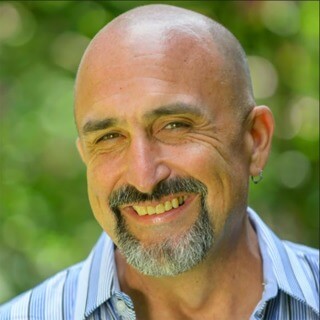
I'm here with Mitra Manesh and his meditation teacher.
Mindfulness based coach.
The first question I have is why meditate?
Why meditate?
Because meditation is the study of self and eventually we can no longer skip over ourselves.
And we need to meet,
Date,
Accept and hopefully greet ourselves.
And also meditation is a great sampler of how a mindful life can look like.
So hopefully and eventually we would like to copy and paste what we do in our meditation in our daily life.
Nobody has approached it from that place yet.
The next question is what is your definition of mindfulness and what does it look like to live a mindful life?
So as you know I teach mindfulness and have taught it for many many decades.
So I've created my own definition.
Nothing unusual,
Just something that goes home for me.
And the way I define mindfulness is being awake and present with curiosity and compassion.
So I used four key words and the first one is awake.
You may say what do you mean Mitra?
I'm sitting here.
Obviously I'm awake.
I drove four hours.
But I'm not talking about physical awakeness.
I'm talking about with a sense of being aware and awake and knowingly being here.
It's opposite of being on autopilot.
The second word I use was present and that is basically the opposite of being either in the past or in the future.
And you've heard me say that the past is wonderful and we do want to go there but with a visitor's visa.
Because we want to learn or even maybe remember our great experiences and learn from them even.
And also the future.
We would like to go there to lightly,
The key word here is lightly,
Plan and come back to the present moment.
So whenever we stay there too long either in the past or future then that's where all our troubles reside.
The extreme of being in the past brings a sense of sadness and even depression.
And extreme of being in the future brings a sense of anxiousness and anxiety.
So every sadness and depression needs a past and every anxiousness and anxiety needs a future.
So it's looking,
But if we are looking into the past we're looking at it in a light way.
We're observing it as opposed to living it.
Exactly.
And we're observing it for a purpose.
That's why I call it the visitor visa.
I'm going to this city for a purpose for the limited period of stay.
And I'm going to see some things of interest,
Learn something,
Hopefully expand my horizon of understanding life.
So it's very purposeful.
I don't go there to lament.
I go there to learn.
It's a different app.
Same thing with planning.
I go there to plan because of course if you and I didn't plan we wouldn't be able to meet today.
However,
When anything even good,
And I have another relationship with good and bad,
But let's call it good.
Whenever we do something over a certain line it turns into something not useful.
So planning is fantastic.
Pushing the planning and over planning is uncomfortable.
Over,
Over,
Over planning now I'm in a very difficult zone.
And why can't we really plan and determine the future?
Because at best I plan the day,
The hour,
The week with the knowing of that present moment.
And as you know the knowings or the facts are always changing.
So I planned,
You planned to be here half an hour earlier.
Right.
Did you know the traffic would be as.
.
.
No.
Why?
Because that was not predictable.
You gave it probably half an hour here and there,
But yet something different happened.
And that is a great example for how life works.
We plan it with the information that we have at the time when you left or when you plan to leave.
But things changed completely out of your control perhaps even.
So that's why we need to just plan it and leave it,
Come back to the present moment.
And so that we can actually be open and able to dance with the present moment information and circumstances.
Right.
You know he answered it.
I had a question but you answered it in your answer.
It was great.
I love the,
I've always liked your reference to the past and the present and the future,
You know,
And how you live in those.
Because we all live in that every day but we have to be able to understand it and put it in perspective.
Exactly and it can serve you.
They can completely serve you.
I mean learning from the past is an amazing,
You know,
Experience.
Being able to lightly plan the future is fantastic.
It gives you some sense of knowing where you're going.
But then you have to understand the nature of,
The impermanent nature of everything that things will change.
So that's the awakeness and presence.
Then I used two other words and I said curiosity with a sense of curiosity and compassion.
So curiosity basically says I don't know but I'm very interested to know.
That's the message of curiosity which is very opposite of,
For instance,
Judgment.
Judgment says either I know or I don't know but I'm pretending that I know and by the way I don't like it this way.
Right.
You better be that way.
Sure.
So curiosity is almost beautifully childlike that,
You know,
How children like to know.
They don't have any sort of severe disposition or judgment about things.
You know,
They just like to know.
It's just,
It's new.
Exactly.
With a sense of honest,
Like,
You know,
Do tell.
Whatever it is,
You know,
Tell me about this food you eat.
Tell me about this place you've come from.
Tell me about this idea you have.
So curiosity is sort of something that allows us to let judgment settle down and not be so activated in us.
And of course compassion.
Compassion.
Hold on to that one because that's one of the questions I want to approach these in my little order here.
No problem.
Anyway,
So the next question is what is the difference between meditation,
Contemplation,
And prayer?
Okay.
So meditation means basically becoming familiar with in meaning.
But really it means becoming familiar with self,
Getting to know oneself.
Of course there are many different kinds of meditations.
I'm not going to get into it.
Of course.
But in essence meditation means that,
Getting to know yourself.
Contemplation means really looking for the truth or truth of something particular.
Because contemplation can be focused.
Like there are practices when I take mindfulness to workplaces.
Sometimes when they need to make a collective decision,
When they have like,
You know,
Group gatherings.
We put out,
Clarify a question and allow everybody to contemplate.
So it's a very focused contemplation.
We're looking for an answer for a very specific question.
Right.
So that's contemplation for looking for a particular truth to this question or this subject.
And then we have contemplation which is open contemplation.
That you just contemplate for the truth in general.
Which is a very philosophical and old way of finding out a lot.
So if you look at the history of philosophy,
Many,
Many people that at least I see as my teachers,
Such as Rumi.
They did a lot of contemplation.
But the contemplation wasn't for anything particular.
It was just contemplation of finding the truth.
Of life.
Of life.
What's going on.
So that's contemplation.
So contemplation is looking for the truth or truth of something.
Meditation is getting familiar with self in the parenthesis.
And then prayer is wishing for or asking for something in particular.
And of course it depends on your definition or the person's definition of what prayer means to them.
It has a whole spectrum.
But in general is either I'm praying just generally for someone or I'm asking for something.
So they're completely different in their outcomes.
But their processes are the same because they all require a sense of going in.
Right.
So it's a journey to within and brings a sense of self-connection before we even take it to the next step and say why we're going in.
So first we go in and then we may go in for understanding and getting to know ourselves.
We may be going in to ask or wish or pray for someone.
Or we may be going in to actually find the truth or the truth of something.
Right.
Right.
That's great.
The last question is how do we promote compassion in ourselves and the world around us?
Because I just look around and that's what made the biggest impression on me is that the world itself needs more.
It needs a lot more compassion than it has for fellow humans for oneself.
And I just am looking for that answer.
So first of all we cannot give compassion when we do not hold compassion.
We cannot in fact give anything that we do not hold.
I can only give you what I hold.
So the first step to compassion is self-compassion.
However the way I see compassion I like to see it as a common passion.
You know looking at compassion and really looking at it from a point of view of not thinking compassionately but feeling compassionately.
Because compassion has become fashionable.
Right.
And anything that becomes fashionable and it's beautiful by the way.
I have nothing against that.
However anything that becomes fashionable it's in the danger of becoming a little bit not true to its essence.
So we all know the vocabulary.
Right.
We all know the practices.
And it's interesting sometimes when I work with one-on-one clients and I talk about compassion they say yeah yeah yeah I'm very compassionate.
I say like blah blah blah and they say the words and I say okay and tell me how you feel.
Because somehow I don't see the energy of compassion right now.
But I could be wrong you know.
And when I ask that question it goes deeper.
You say oh feeling?
I say yeah.
Because feeling compassion is very different than thinking compassion.
So because it's fashionable a lot of us are thinking compassionately.
Meaning I use the words I do all the practices.
And by the way there's nothing wrong with that.
As a start.
Absolutely.
Yes.
And you do it until you feel it.
Right.
But it's important to really pay attention to feeling compassion and experiencing it in a deeper sense.
And really seeing it as a verb because it's not something that you just wish it's something that you do.
And that's a very huge responsibility basically to have that common passion.
In the context that we use it in the mindfulness is really compassion is kindness at the times of difficulties.
That's the difference between compassion and kindness in the sense that at least I use it in.
Sure.
These are just words and they're not you know.
Of course.
They haven't come from sky.
But basically to understand the difference between kindness and compassion.
Compassion is more called for when we're going through difficult and challenging experiences and times.
Or others are going through the same.
So it is really understanding that that common passion is all of our passion for wanting to be happy and pain free.
So with that when we are going through the trying time that's the time we really need to give ourselves more of the feeling of compassion.
And really understand that as opposed to being in our head.
Exactly.
Exactly.
But of course that's the most difficult time to do it.
Of course.
Of course.
That's why you start small and you start when it's not that urgent.
That's why you incorporate the compassion practice in everyday life when you're not in desperate need.
It's almost like insurance you know.
We have all these insurances and I don't know about you.
I've hardly used them.
But what it is is for the day that you know I really cannot afford to do whatever it is that I normally do.
And compassion is that internal insurance.
It is really working very small and I always suggest that you start very very very small.
Meaning start compassion when you forget your keys.
You know just give yourself some kind of compassionate experience instead of saying ah so whatever.
You just say ah I forgot I'm human.
That's interesting.
Another day of being human and especially overwhelmed human probably.
Overwhelmed with all the things that we have to do and we have to pay attention to.
So bringing compassion over you know not finding your keys.
Then you can take it one notch higher and then higher and then you can do it when you make big mistakes and we do.
And we do.
And eventually we need to be able to be there for ourselves and others when larger bigger more consequential mistakes take place in life.
And sooner or later they do.
Right so that is really how we that's the second part of my question.
Is that how this is how we manifest that in the world.
This is how we promote it around us by having it in us.
Exactly.
It's basically the voice with which we see so-called mistakes in life or things that have gone wrong in life or the pain of life.
So pain as you know happens all the time in different sizes but they will arrive.
The question is how do I choose to face this pain which determines the level of suffering by the way.
Of course.
When compassion is present then suffering is you know at its minimal level.
Right.
But when compassion is not present then there is the pain.
There is my judgment about the pain.
There's my judgment about myself experiencing the pain.
And of course if there are other people involved there's my judgment about them.
And you know I always say we have judgment about ourselves the world and the people in the world.
So there are three layers on top of the pain whereas when compassion is there then it's a completely different experience.
Right.
Right.
Right.
All right.
That that's the whole thing.
Wow.
I really appreciate the time.
I've been like I said I've been looking forward to this and it just yeah thank you.
This is going to be a good addition.
I it gives some insights and it puts it in some in some different ways.
I mean that was one of the motivations for this whole thing and interviewing all the different people because people get things from different teachers.
Yes.
They get things they hear a phrase or a turn of phrase or the way they put something and that that one little thing connects.
And that's what I'm hoping by doing this is that I can help people connect with somebody that's that they resonate with.
Yes thank you.
It's a great journey that you've started.
Yes.
And it's beautiful to to go to different people and ask them because you're right everybody has their one in through the door.
Right.
And I do find that sometimes the underlying truth is the same.
Yes.
You know I mean there is an underlying truth that we all live by and have ethically and morally and and that that drives us.
But I think that the expression of that is different from every single person and that that was the thing that when it dawned on me that that was that was the thing.
That was what it was that was the exciting part.
That's where I got excited and I said okay this is worth it no matter what it takes.
We all want to go to the airport but there are many roads to the airport.
That's right.
Thank you very much.
Thank you.