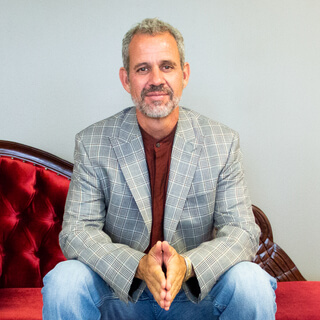
We're having a great time here at John P.
Milton's house in Crestone,
Colorado on a snowy winter day in 2019.
And I had emailed John three questions for our podcast.
And the first question was on the fundamental truth.
So,
We're about six words into those sentences now.
And yet,
This may be the third or fourth part of this series,
Depending on where you tuned in.
So,
If you can listen to the first part,
That's awesome.
But I'm pretty sure that whatever,
Wherever you start is going to be the right place for you to start.
And so,
We're talking about perceptual fields.
We're talking about the ways beings receive information.
And if you wouldn't mind,
John,
Maybe you could,
Again,
Just mention what the perceptual fields are.
And then I think you wanted to sort of expand on that point.
Oh,
Yeah.
I think when we last chatted,
I was mentioning that in trying to find a common ground in many cultures.
I'm not saying these are the only ways to slice up the pie of life and how we experience it.
But if you take a look at this and find a common ground where many cultures can come together and agree they're having an experience,
The experience of sight,
The experience of sound,
The experience of touch,
Of taste and smell,
And then,
Of course,
Of movement and balance,
Which we all experience in certain ways.
And for many who have refined a little bit deeper,
The experience of the life force itself can be a very powerful one.
And then the way in which emotions and thoughts display.
So,
I call those the nine experiential fields.
They fill up the experience of life from birth to death.
And then,
Of course,
We often utilize those fields to explore things in the outer world,
In the outer nature,
And discover them just like we were.
I think we talked a bit about how a baby just naturally loves to go out and go gaga over just about everything and put it in its mouth,
Play with it,
Go,
Basically explore.
It's an amazing mystery of life.
So these nine fields are what in the way of nature,
When we're working in the way of nature community,
We use them as the foundation to explore this gift of life.
And we discover how for the most part we tend to get bored with something if we stayed with it for a bit with one of those fields,
We want to move on to something else.
But we've discovered that if we stay with that particular experiential field like sight and some object like a stone or a tree,
And we go deeper and deeper with that,
And we even go through the level where we feel somewhat bored,
We discover that boredom is actually a kind of lack of refinement of our ability to perceive what's the freshness of what's arising in the moment.
So through that embracing of even boredom,
We go deeper and deeper through newer and newer levels of the freshness and the richness of the experiential life through that experiential field.
And that we call the process of refinement.
And we do that with each one of those nine fields,
The multitude of different things.
By and large,
We mostly work with this with the beauty of nature itself,
Wild nature,
As a starting point.
And then later on,
You can bring it into the city,
Into your home,
Into urban environments,
Wherever it's the experience of life happens everywhere.
You speak a lot of nature supporting us.
And I know you recommend being in a natural space as just very supportive of these practices.
Many of us live in highly congested urban environments.
Some people can easily get to wild nature,
Probably less and less anymore.
Some people it might be a plant in their house.
But ideally,
Maybe the more pristine,
I don't want to say the more pristine,
The better,
Because I've just learned that I could spend an eternity being very interested in going very deep with this black beautiful onyx fear in front of me.
Shungite.
Shungite.
Sorry.
Shungite.
Yeah,
My apologies.
Not very refined in the hearing perceptual field.
Shungite.
Nature as a support.
Could you expound a little bit on nature as a support?
Well,
My background is both as a meditator and one who has explored many traditions of spiritual cultivation.
But at the same time,
I became very involved with ecology,
Biology,
And the life sciences.
And one of the things that really impressed me is that virtually all of the life sciences point to the fact that we human beings co-evolved within the body of nature,
The body of certain kinds of ecosystems.
We co-evolved.
That means we as organisms evolved in collaboration,
In cooperation often and synergy with the rest of life in the living organisms of the populations,
The species,
And the ecosystems that made up our environment.
So every one of our senses evolved and often our food and our ability to stay alive co-evolved in the context of becoming part of that natural system.
And we were part of that natural system.
So everything in us over several million years of our speciation co-evolved in that context of being part of wild nature.
So when we return to wild nature,
Everything fires up because it recognizes that co-evolutionary process that gave us birth as a species,
As an organism.
So the power of going back into wild nature fires up all those ancient synapses that recognize,
Oh,
I'm back home into this amazing natural system of life that gave birth to me,
My species,
My population,
And my being part of this ecosystem.
Now we happen to be in a time now,
That's very important because it helps us return to kind of a natural joy that was present in that state of being.
I've lived with a lot of peoples that still live that way in a state of complete harmony and oneness with their natural ecosystem.
The joy of their life is just remarkable for the most part.
In society we just had a visit from the Kogi people and spent some wonderful time with them.
They came here for a visit from Colombia to the Sacred Land Sanctuary here in Crestown where we've been preserving a number of sacred sites,
Hopefully in perpetuity,
Which are remarkable,
Extraordinary.
The Kogi have the same kind of preservation in the lands that they are preserving on their sacred mountain in coastlines of their part of Colombia,
What we now call Colombia,
The country of Colombia,
In Santa Marta Mountain.
So you have some peoples like that,
Especially indigenous peoples,
That have maintained that being part of the natural system and the joy and the happiness and the exuberance of life and the freshness of life is preserved in those cultures.
They also spend a lot of time giving thankfulness back to all of life.
Everything they do,
They do in a sense of relationship with their ecosystem,
With Mother Earth,
Pachamama and the entire natural system,
Living system of life.
So many of the crises that we face today,
In addition to the joy that comes back when you start doing this in wild nature,
We also recognize the fact that we are way out of balance these days with the planet and the planetary life system,
Life support system.
So if we are going to return to some level of real connection to the rest of the planet and being part of both the local ecosystem that we are a member of as well as the larger planetary biosphere that we are part of,
We must develop our capacity to return through these non-experiential fields.
That is all we have got.
So that is the raw material,
That is the vehicle for doing this.
And by exploring a common ground way of refining this,
Which we have done with the way of nature community,
We offer this back out as a gift to modern humans to enter into the kind of experience that many indigenous peoples have by birth rate.
We come back to that.
But if you don't have the experience of connecting to relatively wild natural nature that has been not heavily modified,
It is harder to gain that kind of insight and that kind of experience.
So it is good to have some basis for wild nature as a foundation for these practices.
If you don't,
Then a tree,
A stone,
A patch,
A backyard garden can be fabulous and a very good place to start.
But even in those cases I recommend going beyond the domesticated level of reconnection to nature into the wild level of reconnection.
Because this is the kind of nature that evolved over billions of years and it holds wisdom that we are only beginning to recover as a human species.
And if we are going to come back into balance with nature in a way that we must now if we are going to survive and all of life is going to survive,
We are at a point where in order to come back into harmony and balance,
We must have this experience of being a foundational part of all life in nature and take responsibility for that relationship.
Make it a healthy and productive one,
A good one,
Instead of just when will we take what we want.
I have a deep sense of very good news here.
And the good news is that all of life co-evolved for millennia,
Possibly for millions,
Maybe billions of years.
And we are natural beings.
We have gone through,
All beings have gone through this together.
And I am realizing that many of us,
Maybe most of us,
Certainly in most cities,
Societies,
We have just sort of forgotten who we are.
We have just forgotten.
We have ignored it.
We have ignored it,
Forgotten,
Ignored it,
Trampled on it,
Had a version,
Whatever.
But through the perceptual fields,
Which I love the phrase,
That's all we have got.
These perceptual fields are the raw material,
The vehicle that we can sort of reclaim our natural place in this interconnectivity,
In this dance of life.
And treating that in a sacred way allows us to,
In many ways as you described it,
Recover our joy,
Recover the fundamental joy that existed for a long time.
It's really recently been lost.
Yes.
And we,
As I mentioned,
The only reason I know this on the personal level is that by going deep into being alone in nature for extended periods of time,
Which I have done,
Which my life,
There is a huge,
Powerful,
Profound level of joy that comes from that.
When we run a sacred passage program,
The faces that come out from those deep immersions in the sacred passage are radiant and filled with joy and profound happiness.
Most indigenous peoples have the capacity to drop into that almost all the time,
If they wish.
And this is what's been lost.
Yeah.
So when I say that there's a lot of hope here,
There's also a lot of risk.
And we've certainly gone in the direction that we put a new definition to the word wholesome,
Wholesome meaning good for you,
Good for me,
Sustainable.
Good for you,
Good for me,
Sustainable.
Those are the things to adopt and pretty much everything else are the things to avoid.
And what you're talking about,
Going deep into the perceptual fields,
Moving from a real disconnected state to a connected state,
To a communal state,
To a union state,
To a progression of no separation of just a oneness,
Which then brings us right into this profound natural state of maybe stillness or source.
You've really provided ways.
You state very clearly you're not saying these are the only ways,
The only path by any means at all,
But there is a methodology and an underlying theoretical framework that should one choose to,
They can progress.