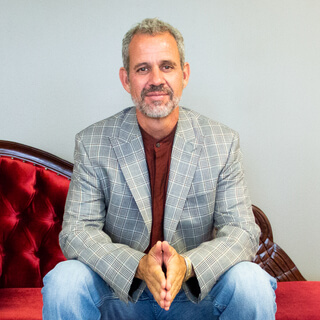
So I'm here with John P.
Milton in his home in Crestone,
Colorado on a beautiful wintery snowy day,
Really close to Thanksgiving 2019.
I'm very thankful to be here and thank you for having me John.
Great to have you here.
Good to see you Rick.
So in two of your works specifically,
Sky Above Earth Below and in your most recent work which is a book and really a field guide,
Cultivating Natural Liberation,
You propose a fundamental truth.
That's how you label it,
A fundamental truth that all perceived form is interconnected,
Constantly changes,
Continually arises from,
Manifests within and returns to primordial source.
That's a mouthful.
You care to provide some level of clarity for our listeners,
What in the heck that possibly means and how it could help our lives or all be.
I think you've expressed that very succinctly and beautifully.
Thank you.
I think we've spent some time with it.
Yeah that's the first of what I often refer to as the twelve principles of natural liberation.
They're the result of essentializing,
Maybe that's coining a word there,
Essentializing.
If you try to find the essential essence of many of the great past to enlightenment and to liberation and more liberated state,
What is that pathway to a freer,
More open,
More joyful state of being?
And so these twelve core principles are stages or steps along that pathway.
They tend to build from the first to the second to the third to the fourth or you might enter in more like a matrix spontaneously into the system in different ways at different times.
So we lay them all out both as a sequence but also as a matrix.
And the first one is this one you just beautifully expressed,
Very succinct.
So all perceived form.
What do you mean by all perceived form?
Basically means that everything that we,
From birth to death we go through life and we,
If you really find out what is the essential experience of life,
Aside from the philosophies and the thought ideas about what we go through,
What is the actual experience of this life that we live?
And the experience for the most part is made up of the experience of what we see,
What we hear,
What we touch,
What we taste,
What we smell.
For some who have cultivated their sense of life force or chi,
They have the experience of energy,
The life force becomes very clear.
We also can have the experience of movement and balance.
And we just had a wonderful day up at the Sacred Land Sanctuary and we moved through the snowy realms up there.
And that experience of movement,
Whether it be in a vehicle or walking or just the movement of the arm and the hand moving through the atmosphere.
Movement itself and the balance when you're walking,
It goes along with movement or running.
And then of course the experience of the display of emotions and the flow of thought.
So when I stopped to look at the general experience of life that most humans have,
It seemed to boil down to those twelve basic fields.
So I'd say taste,
Smell,
Touch,
Balance and movement,
Energy,
Cultivation or energy,
Connection,
The flow of thought and the movement of the flow of emotion to our beings.
So those would be all perceived forms.
Yeah,
They're experiences.
Any experience is by and large maybe always going to come through one or a combination of those fields.
And obviously often they come in a combination.
So the second part,
All perceived forms are interconnected.
What about the interconnected piece?
Well if it's okay with you I'd like to get to after we explore first the nature of the form itself a bit.
And then maybe that'll be a little bit more self-evident.
As we… if you really examine all of those form aspects,
Each one of them goes through a process of transformation and change moment by moment.
We may or may not be aware of how these changes occur but whether we are aware of them or we're not aware of them,
They're happening.
We know when we investigate at a quantum level for sure these form aspects are constantly transforming whether we perceive it or not.
And from just the standpoint of how we perceive these form aspects really are changing from moment to moment if we investigate a little bit more deeply.
So we discover that for example if you're looking at a stone which appears to be very stable and then we look away and we look at something else and then we look back at the stone.
It may appear to be the same but that's because you create the idea that that's the same thing,
The same stone.
Actually the angle of the head,
The angle of the eyes,
The movement of the light coming from the fire behind you,
Playing upon the stone,
The way in which your mind and your emotions are engaging the stone,
All of those things are changing moment by moment.
But we have not refined ourself well enough to be aware of how unique each moment is in perception.
And so that's why we say everything in the world of these perceived forms in the subject continues change and transformation from birth to death as we flow through life.
It's interesting because when John just mentioned looking at a stone there's a beautiful,
It looks like onyx,
I'm not sure.
It's called shungite.
Shungite ball.
From Russia.
Very dark.
And when he said if you look at a stone,
Which I did,
And then I looked away,
Which I did,
And then when I came back John was right,
I had a preconceived idea of it being the same,
But as soon as you started pointing out the subtle differences,
Which are 100% certain,
There's no way I came back at exactly the same eye angle,
Exactly the same head tilt,
Was looking at the exact same place,
And it immediately created sort of a pause for me to look more deeply at what I was perceiving.
Just like that.
Exactly.
So it gives each one of us as we begin to refine our perceptions and our experiences and our senses in those non-experiential fields as we call them,
As we refine them we become more and more aware of the fact that the experience of life is actually incredibly dynamic,
Totally novel,
And every moment is unique unto itself.
Yeah,
So you used the word display and dance and the dance of life,
And I think I just got an insight to another level of understanding of that because it is moment to moment awareness of this fluid,
Constantly changing,
Ever evolving perceptual field that's going on all of the time,
It's always right now.
Yeah,
It's totally present.
Yeah,
Totally present.
So all perceived form.
So I like hanging out there for a bit,
John,
Because I know that you believe cultivating,
You also use the word a lot,
Refinement,
That refining these perceptual fields is quite useful,
Very helpful for the individual,
Probably for groups.
And how would one,
Let's say I wanted to work with sight,
How would you suggest we begin our working with sight to refine it?
Well,
It's helpful to give it its own space and time to unfold in a deeper fashion.
If we do that,
Then we might say we don't try to cut off sound or touch.
I mean,
Three of the most powerful ones that we experience and relate to most of our lives are sight is very strong for many people,
And of course sound and touch.
Those are very strong and they're present with us almost all the time in various combinations.
So if you're going to cultivate sight at a deeper level and refine it,
One of the first things that you would do is to take the other senses,
The other experiential fields that you're involved with,
Like sound and touch,
And they take a bit of a backseat and you really drop deep into the pure experience of sight itself,
And you might also explore working with one thing that's being seen,
That you're seeing,
And rest with that for a period of time so you're not constantly changing the sight volitionally.
I'm getting a little bored looking at this,
So I'm going to look over here at that.
We just rest in what is there if we're looking at the stone.
We've already discovered that we tend to categorize it right away so we lose the moment by moment appreciation of the uniqueness of that stone.
If you sit with that stone for a couple of hours just looking at the stone and experiencing the stone from a visual standpoint,
You're probably going to experience a little boredom.
The sameness of that experience begins to overwhelm you,
But as you go through the experience of boredom,
One of my early teachers had a wonderful expression,
He said,
Make boredom your friend.
In that sense,
If you really wrap your arms around the experience of sight and the boredom,
That comes from sticking with the lack of the grossification of your perception,
The lack of capacity to really see the freshness of each moment as it rises moment by moment.
That's when boredom begins to take over.
Boredom is really the lack of seeing this fresh,
Unique,
Totally alive quality that is there for us as the present of the present if we're really with the perceptual field in its true way.
By staying with that one thing,
In this case the stone,
Over a period of time you begin to enter a much deeper level of how your mind tends to both categorize what you're seeing as the same thing and lock you into a sense of it.
Nothing else is happening,
You're in a very stagnant state.
Actually you're in a very dynamic state,
But you can only discover that by first embracing what you perceive to be the stagnation,
Where does that stagnation come from,
And then investigating actually the underlying freshness.
I mean the experience of stagnation is actually one of the fresh displays of the moment.
That is awesome.
I love that.
I love that.
It's a beautiful paradox.
It is a beautiful paradox.
I don't mean a paradox,
I mean a paradox.
Could be a paradox.
I guess it could be a paradox and we could stare at them for a long time.
That was just incredibly rich.
I'm excited to go back and listen to this and go through that exercise.
I particularly like the idea of boredom just really being something to stay with,
Work with,
Befriend as one of your early teachers said,
And then realize that it's,
I think you may have said the word grossification.
Yeah,
I had to kind of invent that word.
My apologies.
Just as I had to come up with essentialize,
Essentialization,
I was seeking to find a word that captured the deadening down of these twelve fields of experience and these beautiful nine experiential fields of life.
These twelve stages of transformation of these nine experiential fields which are so foundational and found in most cultures.
And the best word I could come up with for that deadening down,
That kind of dumbing down and lack of refinement was the word grossification.
I remember as a kid I used to hang out with my teenage friends and they'd say I might go play in the mud or something because I love swamps and I love going out into the deep and muck of a swamp and feeling how it sucks your feet down into the rich,
Damp blackness of the earth and then hold you there.
And then when you pull your foot out it just goes.
I've had that experience myself.
It's a fantastic thing.
I like it too.
What a beautiful.
I love that.
I love that expression.
But many of my friends when I was engaging in stuff like that they'd say,
Oh that's gross.
And that's when I first came up with the word grossification might mean.
So that's where grossification comes from,
Those early experiences of friends saying that's gross,
What are you doing that for,
Playing around in that muck in those swamps.
So you were,
It sounds like completely engaged,
Present with that experience.
Yeah the complete embrace of the beautiful sense of touch and the view and the sound.
We just engaged three.
The feeling of the pull of the earth through the touch on the skin,
The rich blackness of the soil of a swamp.
And then the suckings as you pull the leg out of the muck.
So in that state I can see you just really having fun as a little boy.
I can see you really being curious and just super interested.
And in that moment it's sort of the opposite of grossification.
It's totally involved in the mystery of these perceptual fields.
And I think most kids naturally do that.
I mean what little boy or girl doesn't like to go out and play in the mud,
You know.
They all do.
Or get a nice piece of chocolate and wipe it all over their mouths if they're enjoying the taste of the chocolate.
It's natural.
Yeah it is natural.
And it's part of the exploration of this amazing gift of life we have.
So if you really begin to…so if we have this gift of life,
Of course it is a gift,
And if you have the interest in going deeper with that gift then of course you become involved in how to refine each one of those non-experiential fields.
How do I really begin to appreciate the richness and the beauty and the aliveness,
The freshness of each one of those fields?
And then how do I engage different so-called objects in that same way?
That's another aspect of the United Fields.
We begin with the idea that everything else is outside of ourselves.
But as you go through the process of refinement you begin to discover actually the supposed object,
The thing that's the other,
The outside one,
Is actually one with you.
And that sense of separation begins to dissolve into a unique bonding of outer nature and inner nature.
And the two begin to come together into a deep,
Deep,
Rich environment of outer and inner nature truth,
Moment by moment.
And then if you go deeper yet,
You discover that those two aspects of nature,
The outer nature aspect of the stone and the inner nature aspect of the way in which that stone is experienced through sight and touch and perhaps even the sound of the stone if it was dropping on the floor,
Something like that.
Maybe you can taste the rock and see what that's like.
We'll save that for later.
But as you explore that richness of this thing we call stone,
You begin to discover that it's both multifaceted and it has many,
Many qualities which all arise from a kind of pure awareness that holds every single one of those aspects of the nine experiential fields.
So you can follow every one of those experiences back into the base of pure awareness which makes the nine experiential fields possible.
Without that base you would have no nine experiential fields.
And I really think that,
So there's two points that come to mind,
One is,
And I believe it's implied in what you've been talking about,
Is behind this there's an intention.
And there's an intention to discover more,
To go deeper,
To experience this thing we might call stone.
And that intention leads to the exploration.
And the exploration leads to the unfolding.
Yeah,
It's a natural process.
I mean if you look at babies,
They naturally do this.
And they explore with everything.
I mean they put stuff in their mouths that most moms and dads are terrified of.
They're afraid they're going to come down with who knows what.
Or swallow the wrong thing.
I remember when I had my first child I was so nervous about everything that she put in her mouth or ate.
And by my fourth one I could probably be chewing on a pile of roaches.
Sorry,
Jordan.
And roaches don't taste good at all.
My youngest daughter's in the other room.
But really didn't let her eat roaches.
And so the intentionality plays a vital role.
And then I think you're already,
You have naturally moved in to the second part of the fundamental truth.
So we just briefly touched on the idea of all perceived forms.
And I think we can see that there's probably lifetimes of learning in any one of them.
Much less the gestalt,
The whole thing.
But then the idea of is it outside,
We turn things into objects.
Is it inside,
Is it outside?
Where's the experience happening?
This type of exploration naturally seems to,
I feel we would gain,
By doing that we would start to naturally see the interconnectivity.
Yes,
At several levels by the way.
You begin to discover,
First of all you begin to discover that each one of those so-called objects that's separate from ourselves,
As you begin to explore like a stone or a tree using sight and sound and taste and smell and touch and so on.
You begin to discover that actually by staying with it and working with all those nine fields of experience,
With each one of them you begin to go through a process of first being separate,
Disconnected,
Then going into the experience of connection,
Something,
There's something there that's very,
A profound kind of connection.
Not a big deal but I have to make a big philosophy about that but it's just a natural feeling of being part of it,
Being connected with it.
And then you go deep into that experience and then suddenly you begin to have deeper experiences of what we might call,
I've used the term communion for that level,
Where you actually begin to experience profound levels of connection.
And word in Latin is aricole,
Com means with,
So it's with the union.
And I think in the Catholic Church it was used in that same sense in terms of spiritual contribution.
So here we're applying that in the refinement process.
And then you go deeper yet and you might have some experience of where you and the stone or the tree or whatever the other being might be or a loved one,
A lover.
I think many have had the experience of you and the loved one merging,
Becoming one.
The experiences of being one being completely together and unified.
Or maybe you have that same experience with a very special sacred place for you where you go and you bond very deeply with that sacred place and you're completely at one with it.
So in that way we can drop the com part off of communion.
Then you move from communion to union.
So these are natural stages that we explore in the leaves,
Especially in the Cultivating Natural Liberation Book of Leaves.
And we go through that sequence with all of the fields.
And then ultimately you learn how to follow the fields in the other direction instead of going out,
You go back into where do they arise internally.
And at that point you arrive at the pure source awareness level.
And that is the level at which all the form aspects are completely unified.
At the level of pure awareness all of these forms arise out of that same primordial state.
And that primordial state provides the mother and the father of all form.
And in that sense all form drive back to that fundamental unifying level of pure being.
And it seems that everyone wants to feel completely connected,
Absorbed,
Supported,
Whether we call that base state awareness or source or God or whatever.
It seems like that is just a deep longing of beings.
And one of the things you've provided me is there's definitely effort involved.
But there's a path.
And the path has really been your lifelong synthesis,
Study and immersion in many of the world's great traditions to find the commonalities and what's really been sustainable and what are consistent natural principles.
And you have done the lifelong work of refining that to in a way that your loved ones,
Friends,
Students,
You made it accessible for us in ways,
Methods,
Techniques that if we put forward the commitment,
There's certainly commitment,
Then many of these things,
And I know this to be true,
They start to reveal themselves.
And I know personally that when I get a taste,
It is such a sweet taste that I want to go further.
I want to go further.
And like you said,
There are times when there's restlessness,
Boredom,
All of these things and perceptual field of the display of emotion arises and I want to get anywhere else but doing this.
Yeah,
The beauty of course is that those moments,
Those are actually beautiful invitations for a deepening,
They're powerful invitations to the deepening possibility.