Hello,
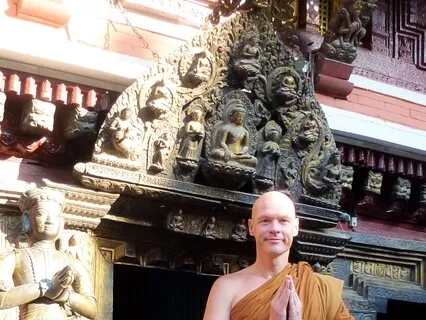
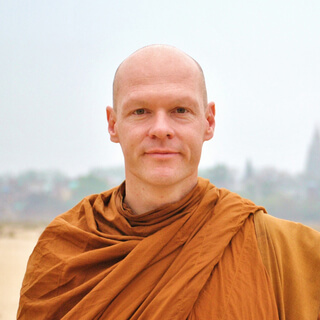
This is Ajahn Achalo.
The talk that I'm sharing with you on this occasion is a talk that I gave while teaching a meditation retreat in the Cameron Highlands in Malaysia.
Most of the people attending were Malaysians of Chinese ethnicity who will have grown up with Mahayana images in their homes and although the main themes of the meditation retreat were those taught in the Theravada,
Many people had doubts around the quality of aspiration and vows,
Previous practices.
So in this talk I'm trying to help people have a bit more clarity with regards to our aspiration,
Our goals and the eventual outcome of all our spiritual practice.
And I think this area is both fascinating and fundamentally important because being clear in our goal and our aspiration is what will make it possible to put forth a consistent and sincere effort.
And as far as I've studied and as far as I see in my own practice,
It's only through putting forth a focused,
Consistent and sincere effort that we are able to get good results in our practice.
So I hope that this talk is helpful for people.
I also need to say that while teaching retreats we've been experimenting with the different kinds of recording devices,
Microphones,
Amplifiers,
Traveling around and teaching not in centers but teaching in different places and setting up a retreat.
There's always some experimenting.
It's not like recording in a studio.
Sometimes we use several devices and then choose the one which is best.
On this occasion we were testing a very,
Very good and expensive recorder.
The good news is that the voice is very clear.
The not so good news is that the microphone is extremely sensitive and so it also picked up quite a bit of ambient noise.
So before listening I'd like to make one suggestion.
In Tibetan practices,
As a preliminary,
People are encouraged to invite all of their friends and family,
Their ancestors,
All beings with karmic connections and even their enemies,
To come and do the practice with them.
If we do this,
I set the intention to invite all of our friends and our family to come and listen to the Dhamma talk with us,
That we may all grow in Dhamma together,
Then naturally we'll expect a little bit of noise,
A bit of a cough,
A bit of a sniffle.
Another thing that's very important in practice is learning how to focus on that we need to focus upon without becoming too irritated by the other things which impinge.
Let's face it,
Wherever we are in this world,
Unless it's a sensory deprivation tank,
There's going to be sense impingement.
In my own practice,
Even when we go off into the jungle on retreat for periods of months,
There's always noise in Asia.
Insects,
Crickets,
Birds,
Branches and trees falling even in the jungle.
People practicing with Ajahn Mahabuwa would have to put up with the sounds of forest chickens.
There's just noise all the time.
And so we train ourselves to focus on that which is important,
That which is helpful,
And try to be equanimous towards that which isn't our focus.
So if we can have that attitude,
I do believe that the information contained in the talk is valuable,
Which is why I'm sharing it.
And you might have to be a little bit patient with the occasional dog barking in the distance,
A motorbike driving past,
Understanding that these noises arise and cease,
And just continue to listen and try to find something helpful in the talk.
And so I do sincerely hope that something I've shared here is helpful to you.
May you all be well.
May you be happy.
May you grow in Dhamma wherever you find yourself now.
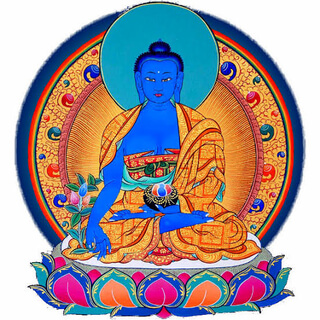
It's come to my attention that a few of my older students have a Bodhisattva from previous practices,
And other people have taken one in recent years,
And some of them are feeling confusion about this.
And so there's a question.
Some that believe that to be enlightened you have to be a Buddha.
But Arahants are also enlightened,
Question mark.
What is the difference between an Arahant and a Buddha?
What is the difference between liberation and enlightenment?
Another question.
Do Arahants have to cultivate further to become a Buddha later,
As taught in some Mahayana teachings?
So I hand out these surveys to people asking about previous practice,
And about 10% of the group has taken a Bodhisattva vow at some point.
And because of that I thought I would share a little bit regarding different qualities of aspiration.
Because I like to help people to have clarity about this at least.
More clarity.
So being in Ajahn Chah's tradition,
We've been reading on Pocca going through the suttas,
The first teachings,
Some of the Buddha's life,
Going through these Theravada lists,
Five Hindrances,
Five Powers.
Ajahn Chah did say in one talk that we're all like Bodhisattvas because we're all building on the requisite qualities so that we can have insight and liberation.
So Bodhisattvas are dedicated to building virtuous qualities with the aspiration to be a Buddha as the final outcome.
But Lompoccha said we're all like Bodhisattvas.
I think this points to an interesting.
.
.
I've considered these issues over many years and I think all good practice is similar.
And I think the only difference is if a person aspires to be a Buddha,
You're going to be doing the same practices for much,
Much,
Much longer.
But essentially the practices of cultivating mindfulness,
Developing wisdom,
Cultivating insight,
Cultivating the four brahmin viharas as we do,
It's all the same.
But it's just a matter of how long one wants to do it with the intention of benefiting how many extra beings in the process.
Another thing Ajahn Chah said,
Of course,
In a different talk,
Is a wonderful.
.
.
Because Ajahn Chah's practice is so present moment based,
It's called the Pachupana Dhamma.
Ajahn Samedho talks about this constantly,
Or frequently,
Very frequently.
He said,
Don't be a Buddha,
Don't be a Bodhisatta,
Don't be an Arahant,
Don't be anything at all.
Because if you are anything at all,
You will suffer.
And this is pointing to not grasping at being.
And we were studying the Dhammacakasuta,
The three types of craving which give rise to suffering,
Which are the cause of suffering.
One of them is the craving for being.
And so it's a personal choice and it's a complex issue and it has very serious implications.
Well here we are in a Mahayana temple.
Chinese,
Malaysians,
Many people grow up with Mahayana images in their homes and visiting Mahayana temples and meet Mahayana teachings as well as Theravada teachings.
So it's understandable that there's a little bit of confusion at times.
First thing I'd like to say is,
We do this chant,
Namutasa bhagavato arahato samma sambuddhasa.
The Buddha is an Arahant,
A perfectly enlightened being.
So the Buddha describes himself as an Arahant.
I think this is something we should notice.
The Buddha also describes in the suttas,
Mentions in the suttas,
That when he's teaching people to become enlightened,
When they attain that result,
He praises them for being liberated and he praises the liberation as being the same liberation that he has.
So I think we can separate,
It's a bit of confusion about what is liberation,
What is enlightenment.
So Arahants are liberated and they're enlightened as far as I'm concerned.
But the difference between an Arahant and a Buddha is the Buddha has all of the perfections built to a truly extraordinary degree so that he has remarkable qualities and enormous merit.
So a Buddha has mastery of the psychic powers,
The capacity to emanate other bodies,
He has the miracle of teaching to a very profound degree,
Perfecting the wisdom,
By Rami.
Then having built merit for hundreds of thousands of eons,
Then he has a huge following of beings who have built the virtues alongside and other beings who have built virtue alongside his students so that when he sets in motion the wheel of Dhamma,
He in not very long has great disciples,
Foremost disciples and he ends up with this whole team where this synergy occurs,
Where he's establishing a Buddha's dispensation in the world which liberates millions of beings.
So the outcome in terms of the consequences for other beings in samsara,
The enlightenment of a Buddha with all of that enormous merit,
All of those powerful vows,
All of that delaying his complete liberation,
Hundreds of thousands of lives,
With the expressing intention of benefiting as many beings as possible.
So the liberation is the same,
If we trust the Buddha's words in the Sutta and I do.
The liberation is the same.
The difference is the amount of merit and the amount of qualities and the timing of the enlightenment.
So there can only be one teaching Buddha in the world at any one time.
Some Mahayana Suttas do say that the Arahants,
That one shouldn't aspire for Arahantship because the Arahants will have to fulfil Buddhahood later.
This isn't said in any of the 84,
000 verses in the Pali scriptures as far as I'm aware and I believe my teacher is an Arahant and I've discussed this issue with him so I'm going to share with you what he said.
And that's all I can do.
Obviously I care for my students and I want people to have clarity about this issue and for myself what can we do other than make the wisest decision we have with the information that we have.
But my preference in this matter would be to trust the experience of someone who is established in Arahantship to explain to me what he thinks about this matter.
So I'm just going to read that last paragraph that we read together because it's related this afternoon.
The second last paragraph in the Anathalakanasuta.
The Buddha's been teaching the bhikkhus to contemplate the five khandhas and see them as not self.
In doing so they become disenchanted.
Their passions fade away.
With the fading of passion the heart is liberated.
With liberation there comes a knowledge.
It is liberated and they know.
Destroyed is birth.
The holy life has been lived out.
Done is what had to be done.
There is no more coming into any state of being.
So that seems pretty clear to me.
Sorry I was just reading the second last paragraph in the five sermon.
Going back to the last paragraph in the Anathalakanasuta.
Thus spoke the Blessed One,
Delighted the group of five bhikkhus,
Rejoiced in what the Lord had said.
Moreover,
While this discourse was being delivered,
The minds of the five bhikkhus were freed from their defilements through clinging no more.
So here the Buddha is saying no more clinging.
That seems a pretty absolute statement.
There's no clinging at all.
The next suta is saying having become disenchanted,
Free from the defilements without any further attachment.
So when I asked Anathana Maham,
As a little bit of a background,
After my eighth rainy season retreat I went to India with a good friend and with my younger brother.
And we actually went to Sarah monastery,
A large Tibetan monastery in southern India.
And I heard His Holiness the Dalai Lama give commentaries about the Bodhisatta Bhumis.
So I listened to His Holiness give,
I think it was a ten day teaching on the path of the Bodhisattas.
And I went back to my teacher in Thailand and he was asking what it was like.
And I told him that I found it,
I found the condescension that can sometimes exist in the Mahayana with regards to Arahants.
I told him that I found that painful.
As much as I have faith and respect in Bodhisattas and quite love the Bodhisatta ideal and I have faith in the celestial Bodhisattas,
You don't have a Buddha without a Bodhisatta.
So you have to feel gratitude and love towards the Bodhisattvas.
And of course just as this Buddha was a Bodhisatta before he was a Buddha,
Obviously now there are Bodhisattas who will be future Buddhas,
Many.
So I don't doubt Bodhisattas,
I don't doubt the Bodhisatta path.
But I did find the,
This idea that the Arahants had not yet finished and that they had to cultivate further didn't gel with what I learnt from in my own studies.
And so I asked my Aachchan,
What do you have to say about this Aachchan?
And he said,
The process of liberating the mind is about uprooting attachment and clinging.
When all attachment and clinging to conditions have been let go of,
The mind is liberated.
How could a liberated mind then go and pick up attachment and clinging?
And he said,
I understand the Bodhisattas but they don't understand me,
He said.
And that was a very respectful statement.
He didn't say,
I don't know,
I'll have to wait and see.
What he said was,
All clinging,
All grasping to conditions have been let go of,
The mind is established in liberation.
And he looked confused and he was like,
How,
How could,
Having attained to that,
How could you then pick up conditions?
So when Lord Buddha says the Arahants' liberation is equal to the Buddha's liberation,
I tend to believe that's true.
And my own teacher said as much.
In the suttas,
The Bodhisattva path,
It's talked about in terms of the Buddha's own aspiration in past lives,
His own cultivation.
So the way it usually occurs is a being,
A practitioner has virtue developed to the point where they could be an Arahant.
And they meet a Buddha and they're so inspired by that Buddha that they develop a resolve to be as impressive,
As wonderful,
As beautiful as him.
And so they make some very grand offering.
And then they ask Lord Buddha to give them a prediction of Buddhahood,
Future Buddhahood.
And so this occurred with our Buddha,
Kottama Buddha,
Shakyamuni Buddha,
When he was a Sumedha and he threw himself in a puddle and asked the Buddha to walk on him.
So the Buddha wouldn't get muddy feet and made other offerings and then asked for the prediction of Buddhahood.
And Dipankara Buddha gave him his prediction that he would be in so many hundreds of thousands of eons away,
He would be Siddhāta Kottama who would become Shakyamuni Buddha.
So in terms of taking a Bodhisattva vow,
If one is not yet at that level,
It's not yet binding in the same way as if you've received a prediction from the Buddha.
So what's interesting,
What we know from the biography of Lompoman,
The teacher of our teacher's teacher,
The greatest Arahant in Thailand last century,
Is that one of his biographies written by one of his closest students,
Apparently Lompoman said it had been 500 lives since he could have been an Arahant and he was cultivating the Bodhisattva path.
He realized after those 500 lives that he'd only come a very small fraction of the great distance he had to travel,
Samsarically speaking,
In order to become a teaching Buddha.
And he essentially cashed in what he'd accumulated,
He decided that he was going to go for liberation in that life.
And so he did relinquish his Bodhisattva vow.
Because he had spent so much longer developing virtue than many people would,
He wound up being one of the most gifted teachers and is generally respected as being the monk who was most important in regenerating the meditation tradition within the whole Thai nation.
So he's a very good example of,
Because it's a recent example and he says himself it was 500 lives since he could have been an Arahant.
And we see clearly what the consequences were of those extra 500 lives.
That he had more psychic power,
More samadhi,
More merit,
More gifts of teaching and he was such an inspiring example that he regenerated the Thai forest tradition and many many many houses in Thailand have a picture of Lompoman.
So you can see what the result is.
The Bodhisattva practitioner invests many many more lives basically doing the same practice.
And when they attain to their liberation they have enormous skills and they effect tremendous benefit.
But the thing to be mindful of is that 500 lives is not a flash in the pan is it?
And for Lompoman to have spent an extra 500 lives and then realize that he'd only come a fraction of the way of what would be required to be a teaching Buddha.
So if people aspire to be a bodhisattva practitioner and aspire to be a teaching Buddha,
I as one of your teachers offer my Anumatana and I sincerely rejoice.
But we do have to be realistic about the consequences.
It's as we chant in the chanting,
Birth is dukkha,
Aging is dukkha,
Death is dukkha.
And a bodhisattva practitioner is going to have to practice with that for millions of lives.
So if one is seriously taking that on it has to be very sincere.
And with regards to the consequences of our aspirations when they are sincere,
There are the obvious and the not so obvious.
So I do think it's the case that if somebody really truly aspires to be a bodhisattva practitioner to the point of Buddhahood,
Then there are obviously other beings on the bodhisattva path who would try to keep an eye out for other bodhisattva practitioners.
So there is a field of merit.
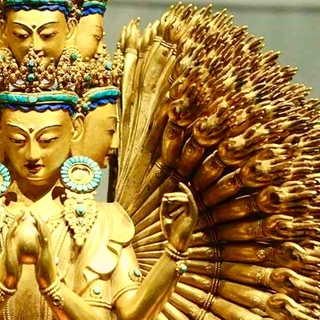
And all of the monks and nuns in this monastery for example have taken a bodhisattva vow and they chant their Amitāva Sutta and their Siddhikāva Sutta and their Samantabhadra Sutta.
So they do their prudish towards these great bodhisattvas.
And I'm sure that there you receive a certain type of blessing.
Lord Buddha does explain in Dei Manusati when we recollect deities with appreciation we become dear to deities.
Extrapolating from that some of the bodhisattvas,
The great ones,
Celestial bodhisattvas are in heaven realms and if a person thinks of them with great regard and respect and love they will become aware of you and there will be certain,
I'm sure,
Certain blessings,
Certain protection that can come.
But it requires sincerity.
So if a person takes this vow it requires great courage,
Great patience,
Great sincerity and then certain protections come.
But if a person,
I'm looking at the surveys of the 60 people attending the retreat and most people said that they wanted to attain a significant level of insight,
Less life if they could and to be liberated from samsara as quickly as possible.
Again we need to be sincere because,
And we need to be clear in that aspiration because there are also consequences for our rebirth.
For example if you really want to be an arahant as quickly as possible,
Liberated as quickly as possible and you're very clear about that,
That's going to increase your chances of being born in places where there are arahants teaching the quickest way to enlightenment.
If you on the other hand want to be a bodhisattva practitioner that's going to increase your likelihood of being born in a place where mahayana is predominantly practiced.
So there are implications.
So some people however,
I also know from reading these things there's a lot of I'm not sure,
I'm not sure,
I'm not sure.
All of you people who wrote I'm not sure are kidding.
It's okay,
It's okay because at least you're clear about the fact that you're not sure.
But it's good to give it some thought and if you're pretty sure that you're getting a bit weary of this suffering business and you'd like to be an arahant as quickly as possible and you try to help a few people along the way,
I think it's great to get really clear about that because even the quickest,
Quickest path to arahantship is not easy.
Nobody says that any path to liberation is easy.
It's just quick compared to other paths to liberation.
So you are going to need conducive circumstances to achieve this goal and it would be good to be clear about it if you can be.
If there's another type of person that feels like,
Well hang on,
You become a stream enterer,
You get your jhanas,
You begin to have some psychic powers,
You just get to the point where you can actually genuinely help people and you can't be reborn anymore.
And you've got all this family and all these friends and all the people that you care for and you're like out of here.
And there's a certain type of person that feels that that's a shame.
You're just getting to the point where you have enough bharami to affect some good and genuinely help people.
You might be able to teach or encourage and if you enter the stream,
No more than seven lives.
And so there is a certain type of person the reason they're not sure is it might be because of compassion.
It might be because of an altruistic inclination,
A genuine desire to serve,
To help.
So but then when you're faced with Krikapatharahanship,
Buddhahood and so people aren't sure sometimes.
I've been in the position where I've translated for Tanajana Nanak on this subject and he has said what he suggested as a middle way for people who have an altruistic inclination but who might not yet be heroic enough to want to be a Buddha.
He said one thing that one can do is attain aim to attain the path of Srimad-Gita.
To attain the path of Srimad-Gita one has to want to realize Nibbana.
It's not possible to attain the stream entry state without the aspiration to realize Nibbana.
He said once you've established in the path of stream entry you can then make your vow that you will return to the human realm for each of the remaining seven lives and help as many people as you possibly can.
He said that's one way of assuring a certain amount of safety as we've studied.
Stream entries are free from hellish rebirths.
You won't be born in a ghost realm,
An animal realm or a hell realm if you attain to stream entry.
If you are a baby bodhisattva and you haven't attained the stream entry the likelihood of you having to go to hell for a few times is quite high I would say.
So it's a serious thing to consider and if one.
.
.
He had also said when I was translating on another occasion he said it's okay if you're not sure.
It's okay to know that you're not sure.
But what he recommended was a great deal of practice at a certain point the decision will make itself.
So what happens in spiritual practice is practice that we're undergoing,
Undertaking,
Engaged in.
We were reading earlier today the Kymika Sutta and the Anattalakana Sutta,
The process of seeing the five aggregates and seeing the impermanence not self nature of them and seeing this clearly the clinging is abandoned.
I lost my thread.
There's a lot of threads to pull together here.
I'm just remembering some things that the Dalai Lama said when I attended his teachings in India.
So the Vajrayana sometimes states,
I'm just going to mention it because I know some of you have studied Vajrayana as well.
The Vajrayana states by practicing Vajrayana Tantra it's possible to attain Buddhahood in one lifetime.
So this is commonly said when people representing the Vajrayana tradition tell you why their tradition is superior.
The Vajrayana tradition is superior because by practicing Vajrayana Tantra you can achieve Buddhahood in one lifetime.
This is frequently said.
Unfortunately I've not yet met some Vajrayana practitioner who attained Buddhahood in one lifetime and as much as I would love to.
His Holiness the 14th Dalai Lama and speaking of Vajrayana practitioners and speaking of Bodhisatta practitioners I have great loving regard and respect for the Dalai Lama.
I've attended his teachings many times and I think he's the real thing.
And he said about this statement,
He said personally I relate to this statement as being akin to Chinese propaganda.
He said you can't become a Buddha in one life practicing Vajrayana Tantra.
And so the Dalai Lama represents Vajrayana Tantra and he's saying this is an incorrect statement as far as he's concerned.
And the other thing and I found this interesting in Vajrayana prayers one aspires to be a Buddha in order to liberate all sentient beings.
So then there's a question isn't there given that there's been four Buddhas this aeon already and given that we're not liberated it seems to be the case that Buddhas can't liberate all beings.
One has to notice this.
So it might be the case that if Ajahn Parvara aspires to be a Buddha and he wants to liberate all sentient beings that he might become a Buddha but he might not successfully liberate all sentient beings.
So I've had these doubts because I attend these teachings.
I love Buddhism and I love all the Buddhist schools and I love to study broadly but one does notice at times that doesn't make sense.
And Lord Buddha did say in the Kalama Sutta in doubtful matters it's appropriate to doubt.
The Buddha didn't say one shouldn't have doubts about these things.
One is expected to use discriminating intelligence and if it doesn't make sense don't take it on and take things on when they do make good sense.
So Dalai Lama said he said it's not possible so this is it.
There he was representing the Vajrayana tradition when they say this prayers he said it's not possible to liberate all sentient beings but he was talking to 15,
000 monks and nuns at the time and he said the reason that we should all aspire to be Buddhas because he's representing the Buddhahood school of Buddhism they all take the Bodhisattva.
He said the reason that we should all aspire to be Buddhas is because each one of us has karmic connections with millions of beings and those and as a Buddha you will liberate those millions of beings and if we all aspire to do that then there is a chance of liberating all sentient beings.
So okay,
Valid point but no individual no matter how long you spend no individual will liberate all sentient beings it's not possible but he did say if you want the metta varami if you want the brahmabhiharas of a Buddha you have to intend to benefit and liberate every sentient being so there's a reason for saying the prayer you're not going to have the complete and full Nita varami to fulfill the bodhisattva bhumi where you can be a Buddha unless you genuinely intend to liberate every sentient being so that impartiality in breadth of the loving kindness it just has to include every being everywhere that's how broad the meta is but what occurs is once you receive a prediction from a Buddha you will become a Buddha and you will liberate beings karmically connected with you who have that auspicious connection probably many millions but I just wanted to say a few words about hopefully clarify the difference in the approach that yeah that's what I was going to say it's come back now Ajahn Anand was saying we're talking about investigating the khandhas and seeing the impermanence the not self of it what happens is when the spiritual varami gets right to a certain point the mind is going to go in one of two directions it's going to it's going to start having vipassana jnana so that means direct vipassana insight deep vipassana insight this is occurring just below the level where it would actually experience nibbana and enter the stream of nibbana so when the mind gets to that point the varami is right to a certain degree it either is going to enter the stream or it's going to choose to keep building virtue for longer and then when the being gets this is tana janana was translating for him he says when a being gets to that point they know for themselves because they make that choice from that level of barami where they have the conviction they're at a level where they could actually attain stream entry there's quite a bit of spiritual virtue there and a lot of conviction a lot of sincerity a lot of integrity and then that being makes the choice to build barami further we don't know how long for for example long for man he spent 500 lines and then he he changed his mind so another way of approaching it is to just practice really a lot and let that decision make itself at the at that time so if one can be clear one aspires to be in our heart quickly i think it's good that's what one aspires to or if one is really quite confident that the bodhisattas are so inspiring and beautiful and you really resonate with the epitome of altruism and that's the only choice for you who you couldn't imagine not helping as many beings as possible in the process then you're probably the kind of person that could take the bodhisattva and mean it and some people say you know i've been talking about some of the things that vatrayana say which sometimes hasn't made perfect sense sometimes terrellata practitioners say the entire mahayana was made up and not the buddha's teachings especially scholars because when you look at mahayana texts many of them don't occur until a thousand years after the buddha's maha parinibbana so if you're a scholar you look at that and it's like hmm i doubt this came from the buddha and it's fair enough from a scholarly point of view but from the point of view of the existence of bodhisattvas you don't have buddhas without bodhisattvas and buddha mentioned the coming of metria and metria was actually a monk in the buddha's time and there is a sutta where somebody was offering a beautiful robe and they wanted to offer it to the buddha the buddha didn't accept it and he pointed to a junior monk at the end of the line and the donor was disappointed and the buddha said don't be disappointed this is the future metria buddha and and the donor was very pleased so we that's and i think that's the only example that we clearly have the abode satay in in the in the teravadman scriptures so i hope some of that was helpful but i have heard nothing else i don't want to mention names because i'll get in trouble but i do notice the monks with some gifts and those monks are teravadman monks teravadman masters and those monks have mentioned the fact that they have had conversations with manju shri samantabhadra metria and avalokiteshvara and siddhikaba and amitabha so in terms of this teravadman tendency to dismiss the whole mahayana one has to be careful because if you say that the beings that have the most barami in the universe don't exist and it's all a lie that wouldn't be very good karma and when it when it comes to considering these matters sometimes it's good to say i don't know so i don't know but for myself because i know monks who i deeply truly respect who have told me see i would have said i don't know i would have said i don't know if manju shri or samantabhadra exists but since a monk who i deeply respect who has considerable abilities and is a teacher's teravada wonderfully and is a teravadman master since he confided in me privately that he has seen and has conversations with these beings then i don't have any doubt about their existence so i thought i'd offer these thoughts to you i hope it's helpful to some of you