Did anybody have any peaceful moments?
Raise your hands.
Oh,
Very nice.
Did anybody find that if you started with kind of relaxation and acceptance and a bit of meta,
Did anybody find it was easier to be with the breath after that?
Very good.
I also have that experience.
So tonight,
Rather than introduce any new themes,
I thought I would do a little bit of overview of some of the themes that I've already talked about.
Coming on a month now of offering some teachings at the BSV.
I've covered quite a few subjects,
Important to Buddhist practice.
Just remind you of some of those subjects.
What we cultivate,
How we cultivate it,
Why we cultivate it.
So I've put quite a bit of emphasis on awareness of impermanence and death and dying.
We understand that contemplating death,
Becoming aware of impermanence,
Is helpful in several ways.
First of all,
It helps us to live with more heedfulness.
So we bring more of a quality of care and appreciation to our life when we remember that it is a fragile thing,
That it's something that we can't take for granted.
The other benefit is that when the time of our death comes,
That if we've contemplated it before that,
That hopefully there won't be too much aversion to the idea or shock or denial,
So that we can be somewhat a little bit more prepared for that.
Now the very important benefit to Buddhist practice is weakening habitual delusion,
Which perceives things as permanent.
And this perception of permanence is based largely upon our experience of the body.
If we do think about it,
We can see that it's changing from childhood to adolescence to adult,
Middle-aged,
Aging.
But we often don't think about it.
The sense of self,
Which is somewhat solid to our perception,
It's a habit that we have.
It's a very deep habit.
So we train in a meditation discipline of reminding ourselves that it's definitely going to die this body.
We don't know when.
It could be today.
So this is central in all Buddhist traditions.
What this does,
Training in this way,
Is it does weaken that,
The solidity of that perception that we have,
That I am this body,
This is myself,
And we've been here for a long time and we're going to be here for a long time.
It challenges that and it undermines it,
Undermines it in a good way.
So the sense of self will still be there,
But there's more spaciousness around it,
More relaxation around it,
More clarity,
More awareness around it.
And Ajahn Chah likes to use that phrase maine,
Not sure.
So it's like,
Okay,
There is this body,
There is this sense of self,
But it's not sure.
It's not a sure thing.
It's not a solid thing.
It's not an unchanging thing.
And it could change.
In fact,
It's going to change.
So it's good to be just dropping that into consciousness a lot.
We don't have to get depressed about it.
It's just contemplating the truth really.
It's just becoming more accepting of the truth.
People find that when they become more accepting of the truth,
Actually often find you're more relaxed in your life,
More happy in your life,
Frees up a lot of energy to not have to hold things so tightly.
Contemplation of death,
If cultivated as a meditation,
This isn't probably talked about very much,
But I also just like to mention where these practices can go.
If cultivated properly,
It can lead to this state called Upajara Samadhi,
Which is a touching on Jhana.
To be in a state of Upajara Samadhi would mean that there are very,
Very subtle hindrances.
Hardly any thoughts,
And the only thoughts would be wholesome.
And the mind is basically engaged in its theme of contemplation.
That experience has a lot of happiness in it.
The experience of a mind collected one-pointedly on a theme of contemplation.
That's a lot of happiness in that.
So we tend not to think that contemplating on death could be happy,
Could be a happy experience.
But when the mind picks up this awareness of impermanence as a meditation object,
It becomes very sober and very serene.
And I'm going to give you a story from my main teacher in Thailand,
Ajahn Anand.
He took up meditation on death as his main practice for the first four years of his life as a bhikkhu.
And I remember him telling me,
Now obviously I'll say this about Ajahn Anand before I finish that paragraph,
Is that he's obviously a gifted meditator.
And I would say have meditated quite a lot in past lives.
So he was very gifted.
But he took this meditation as his main theme of meditation.
And he told me that he was once in a state of Upajara Samadhi for three months.
So the thing about,
And I'd just like to mention this,
I get a sense of where does this go?
Could you imagine that?
Being perfectly mindful of your meditation object,
Having very,
Very subtle hindrances,
Experiencing a great deal of serenity and bliss for three months.
So I know someone who did it.
And from then on things got better for Ajahn Anand.
That was the beginning.
After that,
When monks start to have liberating insights,
They're never separated from certain qualities of rapture and bliss and serenity and tranquility.
If those insights are deep enough.
So contemplation of death can lay the foundation for very deep penetrative insights.
And it's usually understood that to develop those insights then one actually has to contemplate the nature of the body,
Not just its death.
You contemplate the paths or the elements.
But the contemplation of death prepares the mind.
It collects it.
It makes it sober.
It weakens delusion.
It makes it want to meditate.
You realize I don't want to die having not developed some insight.
So just giving a broad overview of why this is helpful in the basic way and ultimately helpful in a profound way,
Where we go with this.
The other practice I've put a lot of emphasis on is the practice of loving kindness.
One of the most obvious reasons is it's pleasant.
It's a pleasant thing.
So the first noble truth there is dukkha.
Many Buddhists,
Many people come to Buddhist practice because they notice that there's suffering in life.
So we have sensitivity to suffering,
To unsatisfactoriness,
And we want some freedom from suffering.
We want more satisfaction.
So loving kindness is a tool.
It's a method that reduces suffering.
So although we're not yet liberated from suffering,
If we cultivate this meditation we can have breaks from it.
It's very important.
And if you want to be able to sustain your effort in meditation,
It's really important that we learn to let the mind rest.
Once again,
Metta starts as thoughts and feelings and intentions.
If we train in a meditation discipline with loving kindness,
Loving kindness can go to the point of absorption.
You can develop metta jhana.
So in metta jhana,
No hindrances at all.
A mind collected in the radiance and powerful rapture of loving kindness just radiating out in all directions.
So that's the potential of loving kindness practice,
Which is a pretty amazing potential.
In terms of our,
You know,
As many benefits,
So that's where it can go and that's where it will go,
I'd actually like to say.
If people keep it up,
People keep it up,
That's where it will go.
One of the wonderful things about being a monk,
Especially in a place like Thailand,
Is that I know people who have metta jhana.
So it's like on one level it's a bit of a theory that this is where it can go.
But then you meet people who have that as something of an accomplishment.
And just in their presence you can feel waves of goodwill,
Waves of love,
Waves of acceptance,
Embracing your body and your mind,
Coming out of their mind.
Very powerful.
So that's where loving kindness does go.
And there are beings on the planet,
I'd say still many beings who have this,
Fortunately for us.
The other thing that cultivating loving kindness does is it makes the mind sensitive.
And that's a kind of a double-edged sword,
But it is inevitable,
It's necessary to have a sensitive mind.
When you accustomed the mind to this very pure energy,
You notice those other energies which aren't pure.
So it's like if we never do that,
If we never bring in this bright,
Loving,
Benevolent,
Magnanimous energy,
We might not notice these other energies so much.
But when you do,
And you do it repeatedly and you do it as a discipline and you become accustomed to a heart imbued with loving kindness,
A quality of acceptance,
A quality of serenity,
Of thinking kind thoughts with people no matter how difficult they are,
That you have moments where you can think kind thoughts with people,
Well then you notice a jealous thought,
An angry thought,
An impatient thought,
A critical thought.
And that also can be a bit painful,
Can't it,
When we can see how many not very beautiful thoughts we have.
And then we have to be patient with ourselves.
We have to offer this quality.
I always try to encourage practicing loving kindness with a quality of acceptance of the things as they are now.
And on top of that we add this wish that we keep cultivating ourselves that things might get a bit better,
But not through rejecting what is now,
But just through keeping up our discipline,
Keeping up our efforts.
So loving kindness can give us some happiness in our meditation and it is very helpful in the process of the Buddhist teaching,
Do good,
Avoid harm,
Purify the mind.
So the practice of loving kindness helps us to avoid harm.
We notice a critical thought,
We notice an angry thought,
We don't want to act on it.
And it is working on this purifying the mind,
Weakening the levels of aversion in the mind,
Lowering the levels of aversion.
And once again leading to samadhi,
Eventually,
If we keep it up.
A lot of experience of rapture and bliss.
And then also people who cultivate loving kindness tend to be a source of blessing in the lives of others.
Other people trust people who have loving kindness.
And this can be enormously helpful in the lives of human beings to know someone who they feel is truly sane and who they truly trust.
I remember when I was a young monk at Wat Nanachat,
Ajahn Pasanno was one of the abbots.
And I remember having this distinct feeling of this is the first human being I ever met who I really think is sane.
So I was 23 at the time and I've met a lot of people,
But I felt that this one is a really sane person.
And that's probably,
I think he'd been a monk for 20 years at that time and he was an abbot as well.
So he's often teaching,
Often encouraging people,
Often listening to the various types of suffering and problems that people have.
So he developed a lot of patience,
A lot of acceptance,
A lot of discipline and a lot of non-judgment as well.
Just kind of an honest sense of what the human situation is and what people struggle with is and trying to offer something to that.
A lot of humility as well.
So he was a good example of someone who cultivated loving kindness as a discipline.
One of the first people I met who cultivated that.
Now he's the abbot of the monastery in California,
Ajahn Chandra Pran's monastery in California.
And he places more and more emphasis on metta now.
I think he's over 60 now.
He places even more and more emphasis.
He sees it's incredibly important for Westerners to relax that critical faculty that we all have.
So our culture is incredibly critical when it comes to.
.
.
We don't even realize it because we grew up in it,
But it is.
The way the media tears apart political leaders and political parties' policies and economic policies or whatever,
There's just this thing there in our culture.
If you can feel it and get a sense for what it is,
And then what we do with media,
Like critics about movies,
About just the sense of everyone has a right to kind of dissect things and say what isn't good enough about it and how it could have been better.
That's happening a lot in our culture and we grow up with that as entertainment.
So weakening that,
Learning to put that down.
You don't have to be a critic.
You can train yourself.
The thing about loving kindness is that it helps you to see what's good in things and it helps you to accept things as they are.
What a relief.
It's a very painful,
Heady experience when we're always in this situation of judging.
And many of us have been trained to do this,
But we can train ourselves not to do it.
So a lot of benefits for loving kindness.
It also produces a great deal of good karma.
So that's nice to know.
If you don't have so much money,
You can do extra loving kindness and you'll be creating even more good karma than people who have money giving it away to.
We understand the various types of making merit,
Producing punya in Pali,
Good karma.
Dhanah,
Giving away of things and of time produces a certain amount of good karma,
Certain type of good karma.
Keeping ethical precepts generates even more good karma.
But then in this realm of mental development,
It makes even more good karma,
The Buddha explains.
So it really is the case that if you train yourself to sit on your cushion for a bit longer and do this extra 10 minutes of metta every day,
That you'll be racking up the chips of good karma.
The other thing I've been giving a lot of emphasis to of course is breath meditation and very helpful,
Very important for just placing mindfulness on an object that isn't a concept,
That you can't really make a self out of.
It's right there in the middle of the experience but it's not a self.
So it's very difficult to not feel identified with thoughts.
It's very difficult to not feel identified with emotions.
But I think it'd probably be difficult to feel identified with a breath.
It's like when you just really bring bare awareness to know a breath as a breath,
One in breath,
One out breath.
For that moment there's no karma being made with self concept,
Is there?
So it's right there,
One in breath.
Don't pay attention to anything else,
Pay attention to the in breath.
Okay,
You're not indulging a self view there,
Very nice.
Excellent training,
Very powerful,
Wonderful meditation tool.
The Buddha called it the king of meditations.
So it seems so simple.
Once again,
When the mind really learns,
It seems simple as a theory,
But when the mind really learns how to do it,
How to use it as a tool to put down other objects and stay with that object,
It's incredibly powerful.
Precisely because it is in the very center of your conscious experience.
It helps you drop,
You can drop the whole conditioned world from your perception if you really train it.
Once again it leads to jhana,
It leads to absorption,
If the breath will get.
.
.
If you become very mindful of the breath,
You'll find that the breath becomes refined.
You become more mindful of the breath,
You'll find that the breath becomes even more refined.
And then so you train,
You train in this.
.
.
As the breath gets more subtle,
The mindfulness has to get sharper.
You keep training that mindfulness to just be with that breath and also stay in the center in those spaces,
Don't go out.
And then people find the breath completely disappears.
Now what happens at that moment,
It's not that the breath is disappearing,
It's that the mind is letting go of its awareness of the body and turning inwards.
So the breath,
The mindfulness of breathing,
Will take the mind inside.
There's one of those phrases in Pali,
Leading inwards,
The dharma of the Buddha,
The teachings of the Buddha leading inwards.
Now obviously that's a very powerful experience for someone who wants to develop less attachment to the perceptions,
The fact that,
You know,
Sights,
Sounds,
Smells,
Touch,
Thoughts,
All of these things which are so important to us,
The pleasant sounds that we want,
The unpleasant sounds that we don't want,
The tastes that we want,
The feelings that we want,
The emotions that we want.
If people can have an experience of completely dropping it all for a period of time and having the experience of being conscious without conceiving of a world,
Without conceiving of a self,
And without conceiving of others,
Obviously going to give you quite a bit of a bit more faith in what the Buddha's thinking about.
It's like,
Can be also described as a little temporary liberation.
It's not liberation,
But it's very close.
Temporary liberation,
You can have a break,
Have a rest.
So,
Most of us can't do that,
But most of us can get close.
So that's the Upajara experience,
Where the hindrances are very subtle.
And it's almost as if you can feel it,
You can feel that there's something else and you know it's better.
And the mind is like,
It's aware of some kind of radiance or some kind of space or some kind of emptiness.
And it's just there,
It's almost like you can smell it,
You can hear it,
You can taste it.
And the practice is just to stay there when you get in that space.
If you get in that space,
Oftentimes it's in retreats.
If people do a ten day retreat,
They might get to that space.
So an obstruction in that space is when you want,
When you get into wanting it to go deeper,
Then that subtle peacefulness goes like that,
If that thought comes in at that moment.
Because it has nothing to do with the self and what the self wants.
What it has to do with is mindfulness sustained on its object without wondering.
That's all it is.
Mindfulness sustained on its object.
You do that,
You can let go of the whole sensual world if you can just do it long enough,
With enough sincerity.
So once again,
It's a simple teaching,
Simple method,
Incredibly profound direction though,
That we can take it in.
So it's nice to feel confident about these kind of results that these basic practices will give,
Will give,
I like to say that phrase,
If we just keep up with it.
I was talking the other day about then training this mindfulness,
Because the teachers in Thailand say that training mindfulness of the body is the best place to train the mindfulness,
Because then that very mindfulness becomes aware of mind objects and dhammas.
So then we were looking at that list of wholesome mental qualities and unwholesome mental qualities.
So then training in bringing this awareness to our experience and knowing what we're thinking,
Knowing what's affecting the mind,
Also very important.
But then I'm also aware that in doing all of these practices and then trying to focus on them all,
It's quite an amazing focus we have to maintain,
Isn't it?
So it's like you want to maintain your awareness of impermanence,
You want to keep your breath,
Mindful of your breath,
You want to know what's wholesome and unwholesome,
You want to be caught up in any loving kindness.
It's a lot to do and it's a lot to stay focused on.
So the other part of this talk I wanted to talk about is how do we do that?
How do we maintain our focus?
And then there's another thing that I was talking about,
Another list I like to talk about often is the five spiritual faculties or the five spiritual powers.
And then the first one is faith.
And the reason I like to mention faith is because when people have faith,
It becomes possible to focus in extraordinary ways.
As an example,
Ajahn Sumedho,
A long-term abbot of Amaravati,
Ajahn Chah's first Western disciple,
He went on a pilgrimage in Tibet,
Ajahn Sumedho really enjoys contemplating empty space.
So one of his students invited him,
Several of his students invited him,
And he wanted to go to the Tibetan Plateau.
He also likes to listen to the sound of silence,
So he wanted to go somewhere on the planet where he could be in an environment which supported that and experience what that might be like.
And he probably also wanted to break from the monastery,
And it's fair enough.
And so he was there and he was contemplating that huge,
Empty sky on the Tibetan Plateau.
And he went around this mountain called Mount Kailash.
So Mount Kailash is a mountain in Tibet which is sacred to Tibetan Buddhists.
They believe that it's a holy site,
And they try to circumambulate it once in their lives.
And I think it's a little bit more than 50 kilometers to get around this one mountain which is shaped like a pyramid.
It's also at 5,
000 meters high,
So it's not much oxygen there.
And I think in the summer it can be 30 degrees in the daytime and minus 20 at night.
So it's an extreme place.
Anyway,
Ajahn Sumedho went there and he did get around it.
I think he was in his 60s at the time.
He got around that mountain and he loved it,
But he found it physically quite difficult.
What he was telling me though was that there were Tibetans there doing this three steps one bow practice around the mountain.
So with hardly any oxygen.
And they didn't have,
You know,
The kind of stuff that the Westerners have.
They didn't have the flasks and the underwear and the lip balm and the sunscreen.
And you know,
These are Tibetan villagers with a lot of faith.
But they were doing this,
Taking three steps and then sliding on the ground,
Which was rocks.
And then getting up again and taking three steps.
Now what he explained to me was that they were overtaking him.
And he said the look of joy and happiness on their face,
He said they were the happiest people he'd ever seen.
And the reason I give this example is just like,
This is a little bit extreme,
But it's a good example of what's possible when you have faith.
So it's like,
Faith is an energy,
Isn't it?
It's like when you really have faith in something,
It stimulates energy.
And so when the Buddha says that faith is a faculty,
It's a faculty that can be tapped into,
Accessed or cultivated to the point where it then becomes a power.
So you have these five spiritual faculties,
Satta,
Virya,
Sati,
Samadhi,
Panya.
That's satta is faith.
Virya is effort.
Sati is mindfulness.
Samadhi,
Concentration,
Panya,
Wisdom.
So as you know,
As human beings we have these are like faculties.
There is some mindfulness there.
Often it's fuzzy,
Often it's absorbed in unskillful things.
There is a capacity to concentrate.
We have to concentrate to tie your shoes or whatever.
Some wisdom,
You know,
Intelligence.
But these things,
And there is faith.
Now this is what I wanted to talk about.
And it's good to have a look at where,
Where is our faith?
And first of all,
And so what I'm suggesting is if we really have faith in the Buddha's enlightenment,
And if we really have faith in the Dhamma,
Which is the teachings that he's elucidated,
Articulated,
Which basically articulate the truth.
Dhamma is the truth.
And the Buddha discovered the ultimate truth.
He unveiled the ignorance from the truth.
And then he points to us how to meditate and contemplate things so that we can understand the truth and then see the truth.
So if we think about the Dhamma in all of its wonderfulness,
We probably do have faith.
And if we think about what that Buddha,
What the Buddha accomplished under the Bodhi tree,
After those millions of lifetimes of making Vahrami.
The thing is,
We've been brought up in a culture which doesn't hold spiritual virtue very high.
So that's something I wanted to just point to.
What that probably means is that your faith may be absorbed in other things and you might not even know it.
So if faith is a faculty,
What is it that you have faith in?
And that's something that you have to ask yourself,
Because I'm asking you to ask yourself this in a way so that you can retract your face from objects that don't deserve it and then put it somewhere where it will be useful.
Just an example I'll give about Australian culture is like,
If you go into a foreign country,
It's like,
First of all,
Alcohol is everywhere in this country.
It's everywhere.
If you go to the beach,
If you go out going to the forest,
Anywhere you go there is alcohol in this country.
Okay,
Fair enough,
It's normal.
But just to be conscious of how it's marketed.
Now in Asia,
In Thailand,
People have a nice shelf in their house,
Very high.
They put the Buddha there and they put pictures of Arahants there.
And high things in the house belong to the spiritual domain,
At least traditionally,
It's changing a lot.
But for centuries it was like that.
This has an effect on the mind.
That is high.
That's what we hold high.
But in Australia,
What is on the top shelf?
Now in Asia,
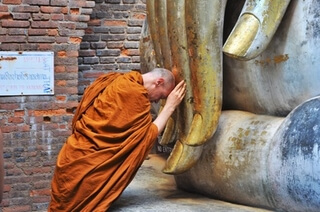
You put gold leaf on Buddhas,
Images of Buddhas,
Images of Arahants.
You rub gold leaf on the top shelf.
And in Asia,
You rub gold leaf.
So when these things are marketed,
How often is there gold there?
So it's good to understand that people are selling you things and encouraging you to place things high,
Which don't deserve to be there.
And it's good to become mindful of that.
Technology.
Unfortunately,
People are conditioned to be devoted to it.
One of my students came to the monastery in Thailand and she had a t-shirt that said,
I am my iPhone.
And I was restraining myself from screaming at her.
You are not your bloody iPhone.
But that was produced by the Apple Corporation,
That t-shirt,
And is being spread.
Do they have the same logo in Australia?
Oh no.
So just understand that this kind of pitch is being sold to you all the time.
You've got very power.
You've got the most intelligent people on the planet thinking up advertising campaigns to absorb your attention and to make you devoted to things.
And this affects us all very deeply,
And me less,
Though,
Because I have the good fortune to live in a monastery.
But for all of you,
I have to see all those billboards.
And I remember in Sydney,
Just as I was leaving Sydney 15 years ago,
16 years ago,
That when it started to be that it was every step on the train station,
I was thinking,
Oh god,
This really is getting a bit much.
And it's almost everywhere you look,
And now they move,
Don't they?
In the train stations,
They kind of,
Do they have that as well?
They kind of absorb your attention.
And so just to be aware that that's happening.
You're exposed to that a lot.
And just have a look.
Are you devoted to your iPhone?
Maybe you are.
I hope not.
But if you are,
You know,
Just become mindful of that.
And then it's a little bit difficult in this culture,
Isn't it,
To how do you generate this faith?
So we have to know,
If we understand with our logic and our reason what we have faith in,
The Buddhist teachings make good sense.
We might even meet people who are good examples of that practice.
We have faith in that practice.
Okay,
When we investigate it,
We have faith.
But does that faith translate into a lot of bright,
Joyful energy?
Sometimes,
Maybe,
If someone else is helping you to place your faith there.
But in traditional Asia,
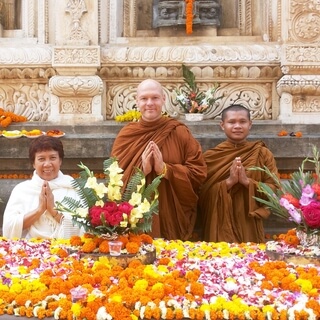
People do this daily when they do their poojas.
They come and they collect the best flowers in the garden,
And they have a small statue,
And they chant their verses in Pali,
Or Chinese,
Or Tibetan,
Or whatever it is.
And they brighten their mind with this quality of loving devotion.
And they feel very happy and very content in doing that.
And we can look at that and think,
Well,
That's a supersede of the Buddha.
And we can think,
Well,
That's superstitious,
Or I don't like rituals,
Or whatever.
But just look at the fact that they're happy and experiencing some contentment with less as well.
Less stuff,
More joy.
So it's,
You know,
This is a very revealing.
So I don't know how you're going to find more faith in your life.
I don't know,
But I'm just trying to encourage you.
Because what I was talking about,
All these things we need to focus on,
It's a lot to focus on.
We've got a lot of work to do,
And it's difficult to maintain focus.
But the point I wanted to make is when the mind has faith,
The mind can focus.
When you tap into energy that faith arouses,
You will find the capacity to focus.
If those Tibetans can lay their body around that mountain at 5,
000 meters,
50 kilometers,
Some of them do it three times before they go home.
This is what a human being is capable of.
Talking about the discipline and the focus that people are capable of when faith is powerful.
Now whether you think it's even skillful to place your body 50 kilometers around Mount Kailash,
That's a different thing.
It's just,
I'm pointing out the kind of energy and the kind of focus that is possible.
Now faith then translates into energy,
Which is the next of the spiritual powers.
So faith is what we need to then get the energy to focus.
Sata virya.
And focus on what?
Well then sati is next,
Isn't it?
So then we apply our sati.
Having faith,
Having generated some energy,
We then apply our mindfulness in these skillful ways.
What is the result?
Samadhi.
And then we use our samadhi,
Our mindfulness,
And then hopefully what is the result then is some wisdom.
But I think when the Buddha makes this beautiful list,
He says these five qualities lead to and merge in the deathless.
These five powers.
That's a very profound statement.
And Ajahn Samadhi used to use that.
Sata virya sati samadhi panya.
In his early days at Ajahn Chah's monastery he used it as a mantra because he wanted to check.
He was checking our mind.
Because he wanted to check.
He was checking our spiritual faculties,
Our spiritual powers in balance,
In harmony.
Does he have all of those things humming?
Because if you do,
The result is going to be liberating insight.
If you really get those five qualities going,
Running,
Purring,
And then there's going to be insight.
There's going to be samadhi.
Eventually there's going to be liberation.
The Buddha contemplated these five qualities for a week after his enlightenment before he taught anyone.
He said,
Wow,
These five qualities.
So there we have it.
We have this beautiful simple list.
And I love that list because it's so simple.
But I also think when the Buddha makes this list,
There's a point to the order.
Understanding that he has profound wisdom.
There is a point in this order.
So for many of us wisdom comes first.
Our intellect.
And that's great.
Whatever brings people to practice is great.
But at a certain point,
If we really want to be able to focus on all the things that we need to focus on,
Then I think that heart of faith needs to be opened.
So then it's just ask you to consider ways.
How can you deepen your faith in the Buddha and deepen your faith in the Dhamma?
And how can you open your heart to it with a quality of appreciation,
Deep appreciation and energy?
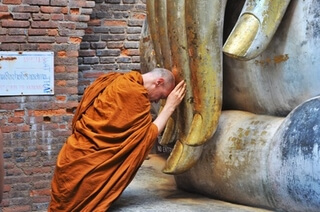
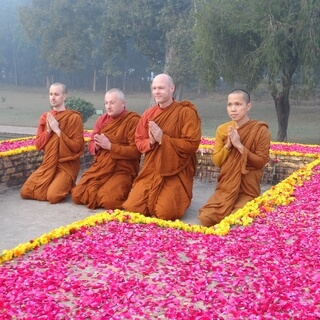
In Asia,
Traditionally what people will do is pilgrimage,
Paying respects to teachers.
So you'll go to these famous monasteries.
You'll go to see famous monks and nuns.
You make that effort.
You express your faith by doing a pilgrimage.
And the poojas that people do,
I'm just saying this is what people do in Asia.
So maybe you can do some of these things.
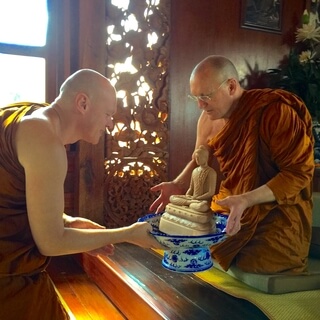
Have a nice shrine at home.
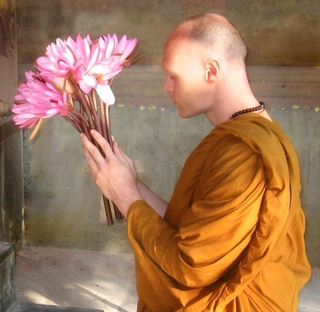
Offer some nice flowers,
Offer some nice incense.
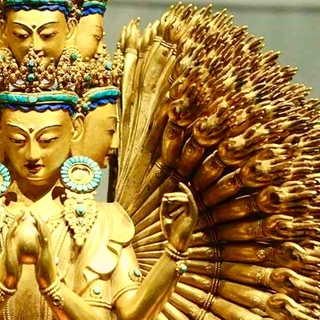
Get a Buddha that really does look beautiful.
Something that reminds you of those qualities.
These days in Thailand,
Sometimes I get a bit upset when I visit some of my friends in the village if someone's sick or someone's dying.
And there's a brand new motorbike out the front and everyone's got a mobile phone and the Buddha,
Which I was just talking about how traditionally I hold it high but it's covered in cobwebs and it's not a very attractive one.
And I'm kind of like,
If you can afford a motorbike and a mobile phone,
You can afford a beautiful Buddha.
It's what I think but often don't say.
But in terms of how we,
What we can do,
It's like for me,
I have a beautiful shrine.
When you're a monk,
People give you nice statues.
So I have a couple of nice statues which remind me,
Okay,
This statue looks peaceful.
This one looks wise.
This one looks compassionate.
And they look at that,
Contemplate those qualities.
Yeah,
The Buddha was the most wise.
The Buddha was the kindest being.
Wow,
Wonderful.
And then close the eyes.
We just can't use these things to remind ourselves.
It might be a painting.
Nepalese do beautiful paintings of Buddhas.
Incredible.
So it might be worth investing a little bit.
Get something and put it out where you'll see it.
Make a shrine room,
A room where you only meditate.
I mean these days people have a computer room,
Don't they?
Yeah.
So put the computer in the bedroom and make the computer in the shrine room.
That's just one suggestion.
Get the computers out of the meditation room.
Turn the phone off when you meditate.
But anyway,
There are things to do but that's your realm of exploration.
I just wanted to offer that encouragement and suggestion that putting your face in the right place will help you find the energy to focus in these ways that we can focus that will lead to such wonderful results.
I hope that some of what I shared has been helpful.
Anyone have any questions?
Yeah,
Thank you for saying that.
It's very important.
The question is,
The question was that this element of faith and the critical habit that many of us have,
One of the areas where we might be lacking in faith is a belief in our own ability to realize that truth.
So that's very important.
And this is one of those things again that meta practice helps.
You can see the self-critical habit,
Even the self-loathing habit,
You can see it as a habit.
When you cultivate loving-kindness,
There'll be periods of time where it's not there.
Sometimes this can be like something which is staining the mind.
It's so habitual,
Especially if you learn it in early childhood.
And then when one cultivates loving-kindness diligently,
Consistently,
It's like a wedge gets in there and there's moments where it's not there.
And then people begin to notice it.
You'll notice when you're having a feeling like you hate yourself,
And you notice when you're when it's fine.
And that's very important.
And you want to have more and more moments where that's dropped.
You don't need that.
Then you just have to contemplate the fact that the Buddha didn't say,
There are some beings that can get enlightened.
The rest of those stupid Wally's are going to ferment in hell.
He didn't say that.
He said,
You know,
This is the potential of conscious beings.
So that includes us.
So we have to challenge it.
You have to apply that this is right view,
Isn't it?
It's like,
And I was talking about this the other day when we were talking about chilesa being dark negative qualities which cloud the mind temporarily,
But the mind of having a nature that it can be liberated,
That basically,
Greed,
Hatred and delusion can be uprooted from minds.
That's what the Buddha proved.
So the Buddha's unenlightened mind wasn't any different to our unenlightened minds.
I say the point when he decided that he wanted to become a bodhisattva,
At that point,
From that point on,
He becomes a little bit different to us.
But before then,
He had ordinary greed,
Ordinary hatred and ordinary delusion,
Even the Buddha.
And Ajahn Liam,
Who's the abbot of Ajahn Chah's monastery now,
He says beautiful phrases,
Purity is born from impurity,
Wisdom is born from ignorance.
So this is a very affirming and accepting statement.
So this situation,
This deluded situation,
Is precisely the situation in which wisdom will be born.
And if there wasn't delusion,
There couldn't be the cessation of delusion.
Similarly with greed and hatred.
So it's understanding that any Buddha,
Any arahant,
Any bodhisattva started out exactly like this.
Same root chelasas.
And then the nature of the mind is revealed through practice,
Is purified.
And these things drop away.
So that's,
You know,
You have to challenge those habits.
It's like we're talking about the different types of conceit.
So to think that you're wonderful and really special and better than others is conceited,
But to think that you're worse.
You can't do it,
Other people can,
But you can't is conceit.
So it's like we don't say that with harshness,
But we see it for what it is.
That self-view,
Going in the tendency of rejection and aversion,
That's hatred there,
Aimed at the self,
That's deluded.
That's wrong view.
There's no self here.
It's precisely because ultimately there is no self that this conventional self can be liberated.
So you have to challenge it.
The bodhisattva can be enlightened,
The arahant can be enlightened,
The bodhisattva can be enlightened.
So who are you to say I can't?
Sometimes we have to get a bit fierce with those kind of thought habits that we have.
Fight them.
Fight them with wisdom and fight them with love.