31:42

Towards Peerless Wisdom & Boundless Compassion

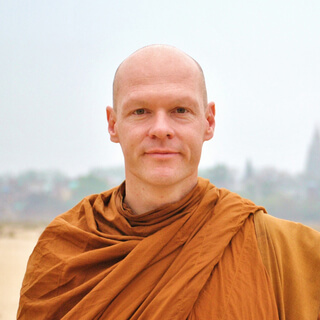
by Ajahn Achalo

Rated
4.8
Type
talks
Activity
Meditation
Suitable for
Everyone
Plays
11.4k

Ajahn describes some similarities between the way the Theravada and Mahayana Buddhist traditions contemplate 'emptiness' as the antidote to deluded grasping. Find insights here to gain wisdom and limitless compassion for others and one's self.

BuddhismWisdomCompassionEmptinessMeditationNon ReactivityBrahmaviharaNirvanaDependent OriginationBodhisattvaHeart SutraDhamma VichayaTheravada And Mahayana ParallelsHigher WisdomFormlessnessBrahma ViharasSpace AwarenessCo DependencyUltimate TruthLoving Kindness For All BeingsMeditation On BreathEmptiness ContemplationBodhisattva PractitionerNirvana Realization

Transcript

Good evening everybody.

Nice to see you all.

The other night we did the meditation before the talk.

I think tonight we might give the talk for the meditation.

See how that goes.

Yesterday I had the good fortune to attend His Holiness the Dalai Lama's commentary on the Heart Sutra in a big Vietnamese temple in Braeburn.

So today I've been spending a little bit of time recollecting some of the things that he said and I thought I might share some of what he said with you as far as my memory remembers anyway and then draw some parallels between the Theravada that we practice because there are very many parallels that was what was wonderful to observe.

So for myself in terms of listening to Dhamma I trained with Ajahn Jaya Saro and Ajahn Pasanno in my early years.

Later when I understood more Thai I spent time and listened to a lot of teachings by Thanachara Nan.

All of these monks are disciples of Ajahn Chah.

Also spent some time with Ajahn Samedo.

So listened to a lot of good Dharma in English but in the monastery where I'm an abbot in Thailand mostly we listen to I put on CDs of Ajahn Nan and we listen to the teachings in Thai mostly.

So for me it's very nice being a monk for 17 years very nice to go and listen to His Holiness every now and then because contemplating the same Dharma but hearing it from a slightly different angle and it's good for Dhamma Wichaya.

Dhamma Wichaya is this faculty that we have for investigating Dhamma.

It's one of the seven factors of enlightenment.

So it's very good to be contemplating Dhamma.

So yesterday His Holiness was talking about the Heart Sutra which the Mahayana tells us was taught on Vulture's Peak Mountain by a Bodhisattva called Avalokiteshvara and it was taught to what it's what that Suta says a great assembly of beings.

Now I've been to Vulture's Peak a few times and I've meditated there and it's a lovely place to meditate but it's very small area on top of that mountain so I had wondered where did that great assembly of beings assemble.

Now His Holiness said yesterday and this is interesting because I've never heard him say it this frankly he said that teaching was taught to he called deities so in the Theravada we would call them Devata,

Tevada in Thai,

Radiant beings.

So a lot of people doubt this it's not in the Pali Canon so a lot of Theravadans doubt the Mahayana Sutas and I'm not going to try to convince anyone that the Mahayana Sutas are real but our own text do tell us that the Buddha did teach the devas for one watch of every evening for 45 years of his life so certainly there are occasions where the Buddha was teaching the devas.

One example is in Jetavana a radiant deva appeared and filled the whole monastery with her radiance and asked Lord Buddha what gives rise to the most auspicious conditions what gives rise to the most highest blessings and the Lord Buddha taught 38 practices which give rise to the greatest blessing called the Mangala Sutta so we have examples like this where the Buddha gives teachings to devas possibly others not recorded but the Mahayana and the Vajrayana tend to have more symbolic they use symbolism a little more than our suttas.

Our suttas tend to be very practical instructions sensible analogies parables metaphors that the Buddha himself explained but in the Mahayana and Vajrayana you get more symbolic meanings and so there was a mantra taught in that Sutta it's the end of the Sutta is called the the mantra of the perfection of wisdom and the mantra goes.

.

.

And what His Holiness said it means is basically go go further go even further into Bodhi.

Bodhi meaning Bodhinyana the wisdom insight knowing things according to truth so then he said how do we practice that according to the Pali tradition so we actually talked about how we go about practicing that and spoke directly basically exactly how my own teachers teach us that there are three ways to cultivate wisdom before we talk about wisdom on a foundation of Sila when His Holiness said this very beautifully and it was exactly what Ajahn Chah would say as far as I could tell on a foundation of Sila keeping your five precepts or your monk or nuns precepts if you're a monastic one maintains consistent mindfulness so that's knowing one's thoughts knowing one's posture keeping the mind clear and wholesome then with that foundation of good ethics and consistent mindfulness it's possible to practice one pointedness basically some Samadhi arises with that Samadhi the mindfulness is strengthened and then through one's investigations the wisdom is sharper and insight occurs which uproots delusions and destroys ignorance so that was a very succinct and accurate as far as I can tell description about how we how we practice then in terms of developing wisdom there are three ways or three levels one is through listening to teachings so or that can be reading as well studying the suitors reading commentaries listening to Dharma talks this is one way that we develop wisdom we hear these concepts that point to the truth and we we begin to contemplate them the next level is deeply investigating and contemplating that analytically in Pali we would say Yonis Omanis Akhara wise reflection reflective meditations then there's another level of wisdom that we experience through practicing in-depth meditation a great deal so that's the wisdom that comes from meditation on a deeper level so that's what he was saying this mantra got a go para gate go further parasam gate go even further into Bodhi it's the three types of wisdom that lead one into knowing the ultimate truth so that was nice that was relevant he pointed to the probably the most important line in a suitor is this line form is emptiness emptiness is form form is not other than emptiness and this is actually very profound statement and it can be easily misunderstood or ridiculed even but his holiness was explaining what it means and this is pointing once again to ultimate truth form is emptiness emptiness is form form is not other than emptiness and so he gave the example he was asking what does that mean he gave the example of an elephant now in this day and age an elephant probably isn't the best example because for us elephant is something exotic something in a circus or a zoo or something that you go to Thailand to see or ride on but in ancient India an elephant was a symbol of power it was something that the king had it was something that the army had it was something that got decorated at weddings and and taken out on special occasions so the elephant was central to Indians as a symbol of power but to us it seems a little strange but anyway he was saying suppose you have a forest and listen this analogy also exists in our suitors suppose you you want to cultivate an awareness of emptiness and you're in a forest grove and there no are no elephants that's the other thing is in the old days there are lots of elephants in the jungle which is where the monks and nuns were practicing so you contemplate the absence of the elephant in that jungle grove just to get a sense of the way perceptions work and to become a little more aware of space now all of us in our habits tend to fixate on things and tend to react so we're very fixated on objects so that means the people that you like and the people that you don't like the people that you like you tend to really like them people that you don't like you tend to really not like them and then there's the food that we like in the food we don't like and the sounds we like in the sounds we don't like and for most people unless they begin to train their minds basically you'll be stuck with that experience for a long long time we just deepen our habits of liking and not liking and reacting endlessly and it's very exhausting actually but in meditation training we contemplate the way we perceive things and meditate and reflect and so this example of you're in a jungle and you meditate upon the absence of the elephant what it points to is an awareness of empty space and Arjun Semedho talks about this a lot especially in his retreats that he used to teach the monastics because in monastic life we have to associate with people that we wouldn't choose to associate with and we can't avoid them and it's good it's grist for the mill for practice that you get to practice with irritating people that you might have to sit in the line right next to the monk that you like least that if he was the monk that ordained one year before you and that might be every day that you're in the monastery and it's very good because you get to see here he comes and you get to see the feeling and you get to see the thoughts and you can see a reaction and you get to train within this container you know exactly what time you're gonna see this and you get to train but so he was saying it's really helpful and really important to bring awareness to the space around the person so if you're sitting in the hall and they're two rows in front of you or two rows behind you as I look at the space around them and investigate okay the reaction occurs when you look at them and you perceive them and then you react but if you look at the space and you place your awareness and your attention on the space you don't have the reaction and so we train ourselves in it as a discipline to be aware of space and place attention at space and this is very helpful and important in meditation practice we do the same thing without irritating thoughts and our obsessive thoughts and compulsions what you do is when you notice the thought you just get determined to watch it until it ceases and then when it ceases notice the space after the thought ceases because our thoughts are very intoxicating they're very diluting we believe them they take us for a ride and so in meditation practice as you do more and more when you're having that thought those thought complexes those proliferations that are unpleasant that you're basically fed up with but you can't quite stop you just set the intention I'm gonna be with this until it ceases and I know it's gonna cease and when it ceases I'm gonna notice that cessation and then I'm gonna allow myself to be aware of the space that occurs after something ceases awareness of space and awareness of cessation awareness of the absence of things is an important part of our meditation practice it's part of that contemplation of Dhamma which gives rise to wisdom and weakens delusion and when we meditate more deeply as part of that third type of wisdom when we experience directly for ourselves the absence of suffering due to letting go of the causes of suffering so that was one way but this wasn't what that statement His Holiness was saying this is not what the statement form is emptiness emptiness is form form is not other than emptiness that's not what it's pointing to he also said this other thing that you could say is there is no elephant you could say that as a statement even if the elephant was there as a kind of a denial or I think he used the word abnegation but he says that's irrational and illogical because you can't say as soon as you say there is no elephant you're already acknowledging the elephant in saying that it doesn't exist so that's not and they use this funny word that's not tenable so that's not a tenable statement then what are you saying this statement means form is emptiness emptiness is form form is not other than emptiness is there is no independently existing solid unchanging elephant so this is where we get to Buddhist the real Buddhist contemplations but it just some of Pada dependent co-arising so what the elephant is is a combination of many things that have supported that form for a period of time but there's nothing in the elephant if you investigate the trunk or the tusks or the eyes the ears the tail the skin there's no one part of it that you can point to and say it's the elephant separately existing independent solid elephant it's when all of those things come together in that particular shape we call it conventionally an elephant essentially what it was pointing to is the same thing that Lord Buddha points to is that the elephant is made of the four elements and has consciousness and the consciousness was born into the form of an elephant according to its karma but basically the elephant is always changing so it was a baby elephant an adolescent elephant an adult elephant and if it lives a long life it grows old and then it dies but there's nothing solid about the elephant at all even though it's a very big that's the other thing about the example of elephants is they're very big aren't they they're very compelling and convincing phenomena I mean if there's an elephant in the room you notice it but what the Sutta is pointing to is the fact that its nature is in constant flux and even though it's appearing there's nothing about it which is solid and there's nothing about it that can stay still even for a second so and what he was explaining that is when people train in understanding this if you use your analytical skills contemplation and meditation you can come to the point where you see forms and as you see them you know them to be empty in nature and he says this isn't about being intellectually sophisticated or clever I'm trying to show off he said it's the direct antidote to the delusion that we all experience of grasping at things as being solid and real and he says so all of this reactivity that we have around that particular being that we perceive as being solidly that person who we don't like our enemy our mother-in-law our ex-husband or whoever it is there's a very solid perception in the mind that person who causes me so much suffering and then basically this is the antidote it's the remedy it's the method which weakens the grasping so that when you see that person if you could understand there's no solidly inherently existing mother-in-law she is ultimately empty even now while she's sitting there she's empty and if you understand that if you really train in this in a meditative discipline that you can experience that that even when you see the forms you know them to be empty and when you know them to be empty you don't react to them so that's what it really points to is the capacity to to be non-reactive to be equanimous to be to maintain equilibrium to be serene to be peaceful the Buddha says peacefulness is the highest happiness at the absence of suffering so it's very nice to listen to his Holiness talk about those things and thinking probably a more relevant example these days as you could say there's no inherently existing Lexus or Benz or Bima that might be for us a example of something that we're very interested in lots of people want it just thinking if there was anything else oh yes so he was saying the way that he employs this analytical meditation to see the inherently empty nature of beings is to train in having an impartial loving-kindness that is equal for all beings so when we recognize that we like some beings some people and we don't like other people when you set the intention to have loving-kindness and compassion for all of them the more insight that you can develop about the fact that they're not a solidly existing in the way that they appear and that their nature is empty or in Theravada we would say not self they are not self impermanent then the obstruction of perceiving people as enemies or even having people that one likes or dislikes or feels neutral towards can be completely pacified so that you just see all beings as being deserving of loving kindness and compassion and as soon as you see one if you've trained in the Brahma Viharas we call them if you've trained in loving kindness compassion mudita as soon as you see a being you respond with thoughts of loving-kindness that's the other advantage of training the mind to see beings as not being solid so we can see that these methods these trainings very profound and have a lot of benefits and you see that they go hand-in-hand so in Theravada we would usually say that we train in the four Brahma Viharas as a support as a way that we as Buddha say do good avoid harm purify the mind this is a very powerful tools that we use in the process of purifying the mind so we use loving kindness to weaken aversion and also to generate merit and to the Buddha says in one Sutta the 11 benefits of cultivating loving-kindness is that those who have loving-kindness their minds concentrate easily so for all of us who want to experience peace in meditation training in metta has that particular benefit that once we become somewhat adept the mind will become peaceful quickly and easily similarly with compassion it's a beautiful way to respond to suffering rather than responding with aversion or fear or even with a trauma when we see terrible suffering that if the heart can respond just with a quality of care and wishing that it wasn't like that then you have a noble and divine response and mudita empathic joy appreciative choice empathetic joy is going against the tendency towards being competitive or jealous so these these powerful divine emotions help us to purify the mind they give us a wholesome mind state to hold on to and radiate while helping us to put down the unskillful ones and equanimity really beautiful and profound quality that's not quite understood it's not indifference it's not ignoring something it's actually based in wisdom it's a its serenity equipoise coming from understanding the nature of things so there's a lot of wisdom and there's a lot of Samadhi in the experience of equanimity serenity Ajahn Samadhi uses the word serenity very beautiful word we would all like to be serene so we train in the Brahma Viharas to keep our minds wholesome while we train in these three types of wisdom listening to Dhamma studying Dhamma and contemplating Dhamma and then meditating and developing our insight so I just thought I'd share a little bit of what his holiness said and try to draw some parallels and now hopefully you're in the mood to meditate aware of one in breath nose chest abdomen arising staying for some time ceasing aware of the out-breaths arising staying ceasing and just knowing the breath in constant flux constantly changing its nature is empty there's no solid breath allowing ourselves to become comfortable with that it's good news it means we don't have to grasp at anything that which knows emptiness is mindful awareness and mindful awareness is something that once we've generated it we can relax into it just relaxing into the awareness that knows everything as not solid not self not mine and putting those thoughts and conceptions and constructs aside for a period of time and resting resting with the awareness of a breath breathing in but breathing out though placing the mind gently experiencing the breath aware resting but not holding on to anything putting everything down breathing in placing the awareness nose chest abdomen breathing out putting down the past putting down the future putting down others putting down oneself putting it all down allowing it to be empty one in breath put one out breath dough just knowing the feelings as they change just thinking a little about the talk earlier and the example of his Holiness of Dalama thought I might add just a couple of things it's a in a way pointing to the potential of these Buddhist practices that we've met and where they lead and it's very encouraging when we occasionally meet people who exhibit the results of their good practice very encouraging so along with those contemplations contemplating the lack of an independently existing solid self in any being how that aids in developing an impartial quality of loving-kindness and compassion and someone who's a bodhisattva practitioner is determined about developing a lot of compassion for a lot of beings just as our Buddha did for four countless periods and a hundred thousand eons before he was Lord Buddha the other bodhisattvas the serious ones also practice in this way they develop a sense of feeling a personal responsibility for the well-being of everybody and that's what restrains them in a way from entering Nirvana because the more you meditate and the more you become sensitive to suffering the Buddha's instruction is to let go of its causes and when you let go of its causes you experience great peace and eventually you experience Nirvana and Dalai Lama also explained that Nirvana is not a place it's not a state it's a realization so it occurs in your mind and it's the fulfillment of samadhi and insight and mindfulness the eightfold path all working together the fulfillment is a realization of all of the delusion and confusion falling away and that which remains is the experience of Nirvana but someone like his holiness you can see in his being an incredible humility and you can understand that on one level he has enormous loving-kindness and great compassion and great wisdom and great learning and these days he also has great worldly acclaim he's very famous he's probably if you could ask the people in the world currently who they would most like to meet I expect that his holiness Dalai Lama probably comes first if you could take a poll but for him I really believe it's the case that as wonderful as those qualities are he really knows that they're empty in himself as well so why would you make anything out of them his own realization his own understanding is functioning internally as well as externally so he knows he's empty so he's not going to make anything out of emptiness and then in terms of that realizing to some degree his ultimate nature the peace and the goodness ultimately there's a lot of goodness in human beings and so that same wisdom and that same training enables him literally along with his training to respond to every being with loving-kindness and compassion enables him to meet with some really what I would find difficult to be with people like when he got the congressional award from George Bush it's a nice occasion getting the congressional award but just this capacity that he has to look at everybody and I think instantly see their potential so he doesn't see George Bush he sees a potential Buddha who is even now ultimately good temporarily obscured and the thing of the result of this training especially after hundreds of lifetimes is he doesn't even have to try and that's why he says he ends his day radiating loving-kindness to the prisoners that torture Tibetans in Tibet is that he doesn't have to let go of grudge he doesn't have to let go of anger he genuinely feels concern for the karma that they make and when he wishes that they be well he hopes that they're able to let go of the delusions that allow them to behave in that way because what they're doing is they're creating their own future suffering so it's wonderful I'm very lucky because I get to sit about four meters from him and I make him my meditation and just observe the way he responds to questions and the way he expresses his wisdom with a great deal of humility and humor and self deprecation but I share to some small degree what I can of what he shared with us yesterday I hope it's helpful something else we'll do tonight if people are interested many people in this room I remember from two years ago and many of you actually made a contribution at that time I wasn't intending to stay very long but I ended up staying nearly three months and the consequence of that was many of you made small donations some of you made big donations at the end of that three months there was a sizable amount of fund towards establishing the monastery I've been building in Thailand so that was very helpful and one of the reasons that I came back to Melbourne is I actually wanted to just check in with some of the people that helped me that contribution at that time was very helpful because one of the lessons I've learned as an abbot is that however much they tell you it will cost double it because the first work project that had been commenced when I came to Australia because my mother was unwell by the time I went back I realized that there wasn't enough money and fortunately the contribution from the Buddhist of Melbourne helped a lot to get through that first year and so I am grateful for that and I thought I'd like to show some photographs if people wanted to see what what we've been building there and what you also helped to build but I don't want to be like a like a mother forcing you to look at the pictures of the baby or them so it is optional you don't have to look at the pictures go home and get under the warm duvet if you like it but before that was there any questions about the talk or the meditation give me for the opportunity I explained it perfectly well nobody has any confusion wonderful thank you I wish so look some pictures

Meet your Teacher

Ajahn AchaloChiang Mai, จ.เชียงใหม่, Thailand
4.8 (566)

Recent Reviews

Chris

August 12, 2025

Another wonderful talk. I always enjoy these short bursts of insight.

Kathy

July 10, 2025

Helpful teaching to see the emptiness and impermanent in all. Thank you.

Alice

July 9, 2025

i liked the bit towards the end. how the dali lama has compassion for everyone because he hopes they can see the future karma they’re creating and that they can let go and see the delusion they’ve created 🦋🩵💜🦋🩵💜🦋🩵💜🦋🩵💜🦋🩵

Leslie

July 11, 2024

I have learned so much, in listening to this talk and meditation. I had it on repeat and so it really felt deeply instructive. I practice alone and so many questions I have had about not-self and emptiness have been beautifully answered. Namaste 🙏🏼

Kathleen

December 30, 2022

Sharing your spiritual experience of the Dalia Lama with us is inspiring. Thank you.

Stassie

May 27, 2022

A profoundly important topic discussed with fresh simplicity and bright clarity, where the wisdom of His Holliness the Dalai Lama can be felt too. Thank you 🙏🏻

Siobhán

September 29, 2020

Thanks for sharing this recording. A wonderful insight. I thank you for this beautiful description it makes many things understandable and leads to consideration of things I had never heard before. Many blessings and loving kindness to you. Siobhán 🙏

Eric

November 21, 2019

Thank you for sharing this, Ajahn Achalo!

Kelly

September 1, 2019

Comforting Peaceful Soothing 🙏🏻

Felicity

August 19, 2019

Good translation into everyday terms of the Buddha’s teaching. Particularly liked the explanation between the 2 different streams of Mahayana and Hinayana.

Kimberlie

August 15, 2019

True enjoyment. So grateful to listen to his teachings.

Michelle

July 24, 2019

Very helpful. Thank you.

Krystyna

March 31, 2019

Insightful and well spoken talk, will listen to again thank you!

Useki

March 26, 2019

Thank you for the clarity and support for my meditation journey. This is exactly what I needed to hear at this moment.

Garnette

March 17, 2019

Beautifully balancing in higher chakras as far as I know. Thanks for the talk.

Mahesh

March 6, 2019

Very nicely explained!

Ajahn

March 3, 2019

Essential guidance for endless practice....thank you. Beautifully spoken. Namaste 🙏

Andrew

March 2, 2019

Quickly becoming my favorite teacher.

Monica

February 25, 2019

What an amazing message! Just what I needed to hear

Rose

February 3, 2019

Great insight , very moving talk . Thank you

More from Ajahn Achalo

Loading...

Related Meditations

Loading...

Related Teachers

Loading...
© 2026 Ajahn Achalo. All rights reserved. All copyright in this work remains with the original creator. No part of this material may be reproduced, distributed, or transmitted in any form or by any means, without the prior written permission of the copyright owner.

How can we help?

Sleep better
Reduce stress or anxiety
Meditation
Spirituality
Something else