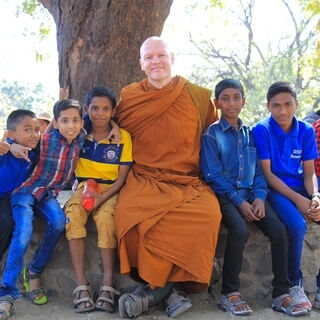
So there's a few things I'd like to cover as we're here in Rajasthya and tomorrow we're going to Nalanda.
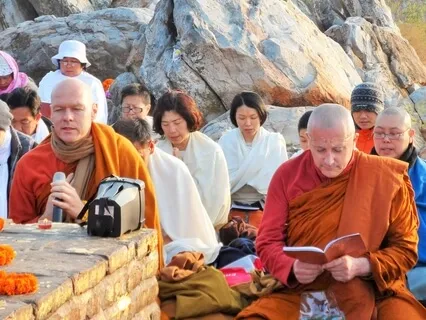
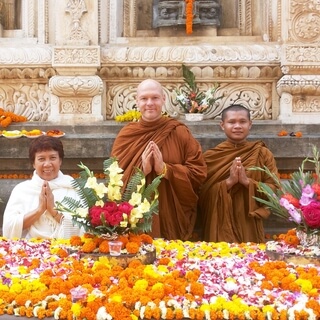
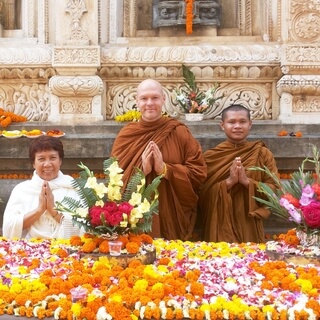
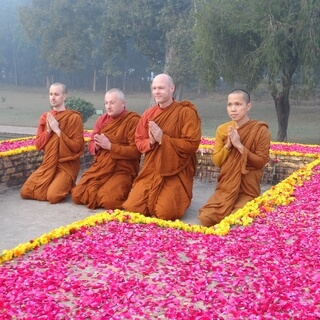
First thing I would like to talk about since we just did a lovely Pooja and had a lovely quiet meditation in the Velavana,
The ancient site of the Velavana bamboo grove first monastery ever in this Buddha's dispensation.
Then remember it was also the place where the Awadapati Moka was taught.
So that's actually not a very long text and I thought since it's fresh in our minds and we just went and paid respects there,
Should read through that and we can contemplate what it was that the Buddha actually taught.
Often in Thailand people come together because they're very impressed by the miracle that 1250 Arahants spontaneously gathered on the full moon in the month of Manka but sometimes not actually so interested in what the Buddha taught them which is more important than the fact of the miracle.
So let's have a look at what he taught.
Later the Padimokka became the 227 monks rules.
In the beginning this first utterance of the Padimokka it was laying down a framework of principles that if the monks could live within those principles basically most of the rules wouldn't have been needed to be made but as the Sangha grew in numbers then perhaps the quality of the monks wasn't the same as the very first few thousand who were all extraordinary Arahants.
After that when monks were in training and at different stages in their capacities and their development certain things came up and more and more rules need to be laid down.
Some of them also were cultural it wasn't just the monks did something wrong it was that culturally certain things were appropriate inappropriate so the Buddha made rules to help his sasana last a long time.
There's always different translations but the first line is enduring patience is the highest austerity.
It's also sometimes translated as patient endurance is foremost among austere practices because it burns up the chilesa of greed and hatred and delusion.
The supreme incinerator of defilements that is sometimes translated as Nibbana is supreme say the Buddhas.
He is not a true monk who harms another nor a true renunciate who oppresses others.
This is the Dhammapada verse it's part of the Awadapadimokka that most Buddhists know to avoid all evil to cultivate good and to cleanse one's mind.
This is the teaching of Buddhas.
Not despising not harming restraint according to the code of monastic discipline.
Moderation in food dwelling in solitude devotion to meditation this is the teaching of Buddhas.
So some very central important themes there.
I think it is important for the Buddha to keep it really clear and simple so that in the future when he's not there to qualify things anymore people can refer to this.
This is one of the earliest teachings about what's appropriate in terms of restraint and composure.
And later generations because we're talking about how some people get enlightened it seems much more easily than others and we if we don't understand we're going to explore a bit later the causes for the apparent quick enlightenment that lay way in the past.
But we can misunderstand for example Nanguisakha she became a Sotapanna at the age of seven and she still went went ahead and had many children and beautiful jewels and lovely dresses and etc etc.
But if you read the history of her vow she had actually trained in taking care of many previous Buddhas and her development or her position as the foremost female supporter of the Sangha in that final life is a result of not exaggerating millions of lives.
And when we look what the Buddha says the teachings of Buddhas patient endurance.
You can see there's a lot of renunciation involved basically.
What this is pointing to is when it comes to greed we have to restrain it and when we restrain it we have to endure with the pain of desire.
There's really no way around it.
So it's a lot of people get a bit deluded about this idea.
If you're just generous if you're generous enough you don't have to restrain your desire and eventually you'll be enlightened likeuisakha.
It's not true and this is why Buddha makes it really clear.
What he is saying in terms of a spiritual practitioner moderation in food,
Devotion to meditation,
Delighting in solitude and this is the teaching of Buddhas.
So there's a lot of sense restraint there's a lot of renunciation.
This is inevitable this is the real practice of Dhamma.
So that's restraining the energies of greed with regards restraining the energies of anger.
It's just very clear.
Not despising not harming.
He's not a true monk who harms another and not a true renunciate who oppresses others.
It's very clear isn't it?
If you harm if you oppress you're not a spiritual practitioner.
Simple.
No absolutely no room for negotiation there.
If you harm if you oppress this is for the monks.
You are not a true monk.
You're not a summoner but it extends to any sincere spiritual practitioner doesn't it?
So as we get further away from the Buddha's dispensation and there's more pressure on people in some respect to be flexible with their level of sila and traditions of making merit people can get into this I'll make a certain amount of bad karma and I'll make up for it by making good karma but basically if your livelihood is involved with harming beings you can't consider yourself a genuine spiritual practitioner.
So basically we have to purify our livelihood.
For monks that means as the Buddha said devotion to meditation and restraint within the monastic discipline that's the right livelihood of monks.
Know how we should behave.
So also coming back now to Venerable Sariputta.
Remember it was at Velavana that Sariputta walked in and Mahamoghalana walked in and the Buddha was teaching a group of monks and he said here are my two chief disciples.
It's a very special place.
At the end of that teaching the Buddha was teaching the monks present who were not yet arahants became arahants.
Sariputta and Mahamoghalana did not.
They went into retreat and Mahamoghalana became an arahant after a week.
Sariputta became an arahant after two weeks.
I wanted to talk a little bit more about the original vow that made it possible for this right-hand man of the Buddha to become enlightened after listening to one four-line stanza to become a Sotapanna and then to become the arahant with wisdom equal to the Buddha after two more weeks of practice.
We can see that the origin of that was a long time ago.
So I should say that this is not a direct sutta reference.
This is coming from the ancient commentary.
It does make sense though and it's held to be true by most people.
I'm talking about the time where Sariputta made his vow,
What the occasion was.
At that time the being who was to become the Venerable Sariputta was born into a rich Brahman family and was given the name Sarada.
At the same time the future Mahamoghalana was born into a wealthy householder family and was named Sirivadana.
The two families were acquainted and the boys became playmates and close friends.
On the death of his father,
Sarada inherited the vast family fortune but before long reflecting in solitude on his own inevitable mortality he decided to abandon all his property and go forth seeking a path to deliverance.
Sarada approached his friend Sirivadana and invited him to join him on his quest but Sirivadana still too strongly attached to the world refused.
Sarada however was firm in his decision.
He gave away all his wealth,
Left the household and took up the life of a matted hair ascetic.
Quickly and without difficulty he mastered the mundane meditative attainments and supernormal powers and attracted to himself a band of disciples.
Thus his hermitage gradually became home to a large community of ascetics.
At this time the Buddha Anumodhasi,
The 18th Buddha counting back from the present Buddha Gautama,
Had arisen in the world.
One day on emerging from meditative meditative absorption the Buddha Anumodhasi cast his net of knowledge out upon the world and beheld the ascetic Sarada and his retinue.
Realizing that a visit to this community would bring great benefits to many beings he left behind his monks and journeyed to their hermitage alone.
Sarada noticed the marks of physical excellence on the body of his visitor and at once understood that his guest was a fully enlightened one.
He humbly offered him a seat of honor and provided him with a meal from the food gathered by his disciples.
Meanwhile the Buddha's monks had come to join him at the hermitage.
100,
000 arahants free from all defilements led by the two chief disciples Nisabha and Anuma.
To honor the Buddha the ascetic Sarada took a large canopy of flowers and standing behind the Blessed One held it over his head.
The master entered the attainment of cessation,
Nirodha Samapati,
The meditative state wherein perception,
Feeling and other mental processes utterly cease.
He remained absorbed in that in this state for a full week while throughout that entire week Sarada stood behind him holding aloft the canopy of flowers.
I'll just say something to you about this.
That attainment is like the highest purest meditative state.
So when the Buddha did that it looks to me like he's giving him this very special opportunity to make the most merit possible with his gesture.
So in staying in that highest possible meditative absorption state and he's holding this canopy of flowers above him with great devotion for a week,
At the end of the week the Buddha emerged from the attainment of cessation and requested his two chief disciples to give talks to the community of ascetics.
When they had finished speaking he himself spoke and at the end of this discourse all the ascetic pupils of Sarada attained arahantship and asked to be admitted to the Buddhist order of monks.
Sarada however did not attain arahantship nor any other stage of sanctity for as he listened to the discourse of the chief disciple Nisabha and observed his pleasing deportment the aspiration arose in his mind to become the first chief disciple of a Buddha in the future.
Thus when the proceedings were finished he approached the Buddha Anumodasi prostrated himself at his feet and declared Lord as the fruit of the act of homage I perform toward you by holding the canopy of flowers over you for a week I do not aspire for rulership over the gods nor for the status of Mahabrahma nor for any other fruit but this that in the future I might become the chief disciple of a fully enlightened one.
The master thought will his aspiration succeed and sending out his knowledge into the future he saw that it would then he spoke to Sarada thus this aspiration of yours will not be barren in the future after an incalculable age and 100,
000 eons a Buddha by the name of Gautama will arise in the world and you will be his first chief disciple the marshal of the Dhamma named Sariputta.
After the Buddha left Sarada went to his friend Sri Vadhana and urged him to make an aspiration to become the second chief disciple of Buddha Gautama.
Sri Vadhana had a lavish arms hall built and after all the preparations were complete invited the master and his monks to come for an alms meal.
For a full week Sri Vadhana provided the Buddha and the monks with their daily meal.
At the end of the festivities having offered costly robes to all the monks he approached the Buddha and announced by the power of this merit may I become the second chief disciple of the same Buddha under whom my friend Sarada will become the first chief disciple.
The master looked into the future and seeing that the aspiration would be fulfilled he gave Sri Vadhana the prediction he would become the second chief disciple of the Buddha Gautama a monk of great power and might known by the name Moggallana.
So you can see that the being that became Sariputta was already extraordinary he attained he gave up great wealth he attained Jhanas and psychic powers he had a following he had enough merit that the Buddha would personally come to teach him it's pretty amazing and then after that he's got a hundred thousand eons to go so you you can imagine that before that there's been a great deal of preparation already and I would assume that this Buddha Anumodhasi was able to see this is chief disciple material and he's doing his the Buddha's like a CEO of his dispensation but he thought he also has an eye on the future Buddhas and a vast view and samsara and the intention to help as many beings as possible and I would assume that he saw this one is has potential for managing director of the future Buddha and so we were talking overnight about why this is necessary the Buddha as a sage who ends up having Kings as patrons you can imagine he has to receive guests as a certain there's a certain role that he has to play where he has to be available for royal people military people wealthy people and you can see that the monk the second-hand man the right-hand man who knows the teachings as well as the Buddha has the same level of wisdom you can see how important he is because he's less busy but you can see how important he is in actually ratifying getting the work done establishing those beings in in liberation so it's why Buddhas need for most disciples but one thing I wanted to talk about as well as this because we're going to the village where Sariputta was born and also where he passed away tomorrow last pilgrimage we didn't spend as long in Rajkia so we've got a bit more time to explore some of these other wonderful characters around Buddha you can see the results of all of the investment of building beautiful qualities of Sariputta is known for his wisdom equal to the Buddha in wisdom but what is less known about him is how kind he was and how humble and how modest and when you read about these qualities it's very very moving so I'll share a little bit with you about how unlike many managing directors there's a couple of nice and managing directors in this room so these comments aren't about you but unlike unlike some managing directors people can become arrogant people can become cruel people can become proud they're number two and they give give the orders and check the results and fire people all of that stuff that's part of the job but you'll see Sariputta was number two and incredibly humble it's a very inspiring actually so he's a he's a beautiful model to hold up of someone who is an entire we would say both very game and very Narak so you have someone who's extremely talented extremely skilled and extremely lovely so that's why I'm a big fan of Sariputta among the bhikkhus Sariputta was outstanding as one who helped others in the deva daha-sutta the Buddha himself said of his great disciple Sariputta bhikkhus is wise and a helper of his fellow monks the commentary in explanation of these words refers to a traditional distinction among the ways of helping others Sariputta was a helper in two ways by giving material help and by giving the help of the Dhamma elaborating on the way he provided material help the commentary says that the elder did not go on arms round in the early morning as the other bhikkhus did instead when they had all gone he walked around the entire monastery grounds and wherever he saw an unsweep place he swept it wherever refuse had not been removed he threw it away where furniture such as beds and chairs or earthenware had not been properly arranged he put them in order he did this so that the non-buddhist ascetics who might visit the monastery would not see any disorderliness and speaking contempt of the bhikkhus then he used to go to the hall for the sick and having spoken consoling words to the patients he would ask them about their needs to procure their requirements he took with him young novices and went in search of medicine either by way of the customary arms round or to some appropriate place when the medicine was obtained he would give it to the novices saying caring for the sick has been praised by the master go now good people and be heedful after sending them back to the monastery sick room he would go on the arms round or take his meal at a supporter's house the above was his routine when staying for some time at a monastery but when going on a journey on foot with the Blessed One he did not walk at the head of the procession shot with sandals and umbrella in hand as one who thinks I am the chief disciple rather he would let the young novices take his ball and robes and go on ahead with the others while he himself would first attend to those who were old very young or unwell making them apply oil to any source they might have on their bodies then either later on the same day or on the next day he would leave together with them because of his solicitude for others on one occasion Sariputta arrived particularly late at a place where the others were resting for this reason he did not get proper quarters and had to pass the night seated under a tent made from robes having seen this the next day the master caused the monks to assemble and told them the story of the elephant the monkey and the partridge who after deciding which was the eldest of them lived together showing respect for the most senior he then laid down the rule the lodging should be allocated according to seniority so that's very beautiful isn't it you imagine the monk foremost in wisdom establishing I would imagine many thousands possibly tens of thousands of beings in states of liberation and having the status of being the right-hand man the most important after the Buddha and he's checking to see if leaves are swept the rubbish has thrown out and checking in on the sick people so you can see the beautiful roundness of character that that comes obviously from hard work over a long time because you know most nobody's perfect except for the Buddha and then sorry put it comes close as number two but you can see it's very beautiful to see what is the result of that path of building barami so that you can be more helpful to more people so sorry put it is a beautiful example of that and another thing I want to read is about his passing away it's actually quite a fun story his mom was a Brahmin and even though her son was the chief disciple of the Buddha and by the end of his life had developed you know a great deal of fame and respect and honor and the mother still didn't have faith in him very interesting isn't it you see the degree to which Hindus Brahmins can be attached to their faith in their gods and also many other realized masters have said that it's difficult for children to teach their parents in general parents will tend to see their kids as their kids no matter no matter what happens so I'll read a little bit about that story this occurred in Nalanda so it's a nice thing to read about Nalanda before I talk about his death like to talk about his meditation skills so he was not just a wonderful teacher and a great guy he was an our hunt and he did have profound liberated purified mind and incredible meditation skills and another reason I want to mention it now is because our Chinese Malaysian pilgrims chanted the heart sutra on vultures peak this morning nine times those who can't speak Chinese we were listening meditating the heart sutra talks about the ultimate empty nature of phenomena and sometimes it's criticized because it has these phrases there's no path no fruit no eyes no ears no nose no tongue nobody and it's basically like a negation and it says there isn't anything and people don't quite get that but I'm going to read this explanation or description of sorry put his meditation and then I will consider that on one occasion sorry put it described to Ananda how he could enter a unique state of concentration in which he would not be cognizant of any familiar object of cognition in regard to the earth element he was without perception of earth and so also in regard to the other three elements the four immaterial objects and everything else pertaining to this world or even to the world beyond and yet he said he was not entirely without perception his only perception was Nibbana is the cessation of becoming so he's not aware of the earth water fire or air he's not aware of this world or the other world he's not aware of immaterial objects is there eyes ears nose tongue body path or fruit in that experience there isn't is there from the perspective of the enlightened mind delighting in its liberation there isn't anything I just thought I'd make that point Ajahn Chah once a Western disciple in America read to him the heart sutra and Ajahn Chah said it is a description of the highest wisdom in that short version that they read to him he said it's a shame it doesn't describe more in more detail the way to realize that Ajahn Anand has also said that contemplation of emptiness is the contemplation of the goal of liberation so when you're liberated you will understand emptiness and you will understand what is the experience of emptiness but it's not nihilism something experiences the emptiness the writer of this piece comment this inscrutable attainment seems to be identical with the meditative abiding in voidness sunyata vihara or abiding in emptiness that the venerable Sariputta regularly cultivated we read in the Pindabhatta Paris Sutta Sutta that the Buddha once noticed that Sariputta's features were serene and radiant and asked him how he had acquired such radiance Sariputta replied that he frequently practiced the abiding in voidness thereupon the Buddha explained that this was the abode of great men and proceeded to describe it in detail the commentary identifies this abiding in voidness with the fruition attainment of our hanship a sunyata vihara can also be described as abiding in emptiness when Sariputta became absorbed in this meditative state even the gods from the highest heavens descended to venerate him as the venerable Mahakasava testifies in the following verses these many Davis powerful and glorious 10,
000 Davis from Brahma's company stand with joined hands worshiping him Sariputta wise marshal of the Dharma the great meditator in concentration homage to you Oh thoroughbred man homage to you Oh supreme man we do not know what it is independence on which you meditate so that's very interesting you understand the Brahma Davis are the most adept at concentration and coming from the highest heavens they can see an incredible radiance they come down and venerate it and they can't see where he is that's the what the Buddha's teachings lead to heaven and beyond so this is the beyond sometimes called Nirvana Dattu the Nirvana element the liberated state something that only people who have experienced it experience but it's all about potential so as I read now about sorry putters passing into final Nirvana then you'll see some of these Davis who had great respect for him come and pay their respects to him we now come to the year of the Masters Parinibbana his complete passing away the Blessed One had spent the rainy season at Belluva gamma a village near Visali and when the retreat was over he left that place and returned by stages to Savati arriving back at the Jaitavana monastery there the elder sorry putter the marshal of the Dharma paid homage to the Blessed One and went to his day quarters when his own disciples had saluted him and left he swept the place and spread his leather mat then having rinsed his feet he sat down cross-legged and entered into the fruition attainment of our hundship at the time predetermined by him he arose from the meditation and this thought occurred to him do the enlightened ones pass away into final Nirvana first or do the chief disciples do so and he saw that it is the chief disciples who pass away first thereupon he considered his own life force and saw that its residue would sustain him for only one more week then he considered where shall I attain final Nirvana and he thought Rahula attained final Nirvana among the deities of the 33 the elder Anya Kondanya at the Chaddanta Lake in the Himalayas where then shall I pass away while thinking this over repeatedly he remembered his mother and the thought came to him although she is the mother of seven arahants she has no faith in the Buddha the Dharma and the Sangha has she the supportive conditions in her to acquire that faith or has she not investigating the matter he discerned that she had the supportive conditions for the path of stream entry and then he asked himself through whose instruction can she win to the penetration of truth he saw that it could not come about through anyone else's instruction in the Dharma but his own this is I want to make a comment here sorry put it is sometimes misunderstood to not have psychic powers and that is a study is a misunderstanding because there was one occasion where he was meditating and a yaka demonic entity came and whacked him on the back of the head and he didn't notice and he didn't feel anything the reason he didn't notice or feel anything is because he was in a Jhana so when the mind turns inward into a Jhanic state and it's also the reason his head didn't explode if you if you in a meditative Jhanic state as I have heard the physical organism can't be hurt but also the mind has turned away from outward sensory if it's a higher Jhanic state it's turned away from the sense objects so it's not aware of sights or sounds or feelings it's absorbed inwardly so he came out of that and Mahamudgala said how are you feeling sorry puta and he says well I feel okay got a bit of a headache and he said yeah this yaka just came and whacked you on the back of the head and anyone else's head would have exploded and he said he said it's wonderful it's marvelous I didn't see so much as a mud sprite but Mahamudgala saw that but the reason he didn't see the mud sprite is he was in his absorption so here you have him contemplating himself where should I die and it's obviously through his own abilities that he he becomes aware the chief disciples become should pass away before the Buddha and then he considers where should I die and then he remembers his mums and then he considers does she have the capacity and then he sees that she has the capacity to be a stream enter so that's him using his psychic powers and this is the way these great our hands use their psychic powers they can see the level of barmy that beings have that's why Lord Buddha can scan the world after his morning meditation and see who is right but go and teach them and they become enlightened so it's using the divine eye and it can see that in us the level of our accumulated virtue how much key laser is in there how much mindfulness how much concentration how much wisdom how much merit has been produced purifying the mind how right is the mind and then they know the ones that they can teach and the ones they can't teach another analogy is like when the Buddha was considering not teaching and Brahma Saham Patti said to him there are beings who will understand and then he surveyed the world and he saw that beings are like a lotuses some of them are in the mud most of them are in the mud some of their in murky water some are up close to the light beginning to open and some are above the water ready to open and he saw yes there are beings who have spiritual faculties which are ripe enough to blossom if the Buddha teaches him so here sorry put to his investigating his mother's mind with his own mind and he is able to see oh she is right and the only one that can teach her is me so he's going to pay his last debt of gratitude to his dear old mum he saw that it could not come about through anyone else's instruction in the dharma but his own and following upon that there came the thought if I now remain indifferent people will say sorry puta has been a helper to so many others on the day for instance when he preached the discourse to the deities of tranquil mind a large number of Davis attained our hardship and still more of them penetrated to the first three paths and on other occasions there were many who attained to stream entry and there were thousands of families who were reborn in heavenly worlds after the elder had inspired them with joyous confidence in the triple gem yet despite this he cannot remove the wrong views of his own mother thus people may speak of me therefore I shall free my mother from her wrong views and shall attain final Nibbana in the very chamber where I was born having made that decision he thought this very day I shall ask the masters permission and then leave for Nalaka and calling the elder Chunda who was his attendant he said friend Chunda please ask our group of 500 bhikkhus to take their bowls and robes for I wish to go to Nalaka and the elder Chunda did as he was bidden the bhikkhus put their lodgings in order took their bowls and robes and presented themselves before the elder sorry puta he for his own part had tidied up his living quarters and swept the place where he used to spend the day standing at the gate he looked back at the place thinking this is my last sight of it there will be no more coming back then together with the 500 bhikkhus he went to the Blessed One this is in Savati probably jetavana which we will go to in a few days then together with the 500 bhikkhus he went to the Blessed One saluted him and spoke Oh Lord may the Blessed One permit may the exalted one consent the time has come for me to attain final Nibbana I have relinquished the life force Lord of the world Oh greatest sage I soon shall be released from life going and coming shall be no more this is the last time I worship you short is the life that now remains to me but seven days from now and I shall lay this body down throwing the burden off grant it Oh master give permission Lord at last the time has come for my final Nibbana now I have relinquished the will to live now says the text if the Enlightened One were to have replied you may attain final Nibbana hostile sectarians would say that he was speaking in praise of death and if he had replied do not attain final Nibbana they would say that he extolled the continuation of the round of existence therefore the Blessed One did not speak in either way but asked where will you attain final Nibbana Sariputta replied in the Magadha country in a village called Nalaka in the chamber where I was born then the Blessed One said do Sariputta what you think timely but now your elder and younger brethren in the Sangha will no longer have the chance to see a bhikkhu like you give them one last discourse on the Dhamma the great elder then gave a discourse in which he displayed all his wondrous powers arising to the loftiest heights of truth descending to mundane truths rising again and again descending he expounded the Dhamma directly and with similes and when he had ended his discourse he paid homage at the feet of the master embracing his legs he said so that I might worship these feet I have fulfilled the ten perfections throughout an incalculable period and a hundred thousand eons my heart's wish has found fulfillment from now on there will be no more contact or meeting that intimate connection is now severed I shall soon enter the city of Nibbana the unaging undying peaceful blissful heart assaging and secure which has been entered by many hundreds of thousands of Buddhas if any deed or word of mine did not please you O Lord may the Blessed One forgive me it is now time for me to go now once before the Buddha had answered this when he said there is nothing be it in deeds or words for which I should have to reproach you Sariputta for you are learned Sariputta of great wisdom of broad and bright wisdom of quick keen and penetrative wisdom so now he answered in the same way I forgive you Sariputta he said but there was not a single word or deed of yours that was displeasing to me do now sorry put a what you think timely from this we see that on those few occasions when the master seemed to reproach his disciple it was not that he was displeased with him in any way but rather that he was pointing out another approach to a situation another way of viewing a problem immediately after the master had given his permission and sorry put I had risen from paying homage at his feet the great earth cried out and with a single huge tremor shook to its watery boundaries it was as though the great earth wished to say though I bear these girdling mountain ranges with Mount Maru the encircling mountain walls in the Himalayas I cannot sustain on this day so vast an accumulation of virtue and mighty thunder split the heavens a vast cloud appeared and heavy rain poured down then the Blessed One thought I shall now permit the marshal of the Dharma to depart and he rose from the seat of the Dharma went to put to his fragrant cell and there stood on the jewel slab three times sorry put a circumambulated the cell keeping it to his right and paid reverence at the four places and this thought was in his mind it was an incalculable period and a hundred thousand eons ago that I prostrated at the feet of Buddha Anima dasi and made the aspiration to see you this aspiration has been realized and I have seen you at the first meeting it was my first sight of you now it is my last and there will be none in the future and with raised hands joined in salutation he departed going backwards until the Blessed One was out of sight and yet again the great earth unable to bear it trembled to its watery boundaries the Blessed One then addressed the Bhikkhus who surrounded him go Bhikkhus he said accompany your elder brother at these words all the four assemblies of devotees at once went out of Jetavana leaving the Blessed One there alone the citizens of Savati also having heard the news went out of the city in an unending stream carrying incense and flowers in their hands and with their wet their hair wet the sign of the morning they followed the elder lamenting and weeping sorry put it then admonished the crowd saying this is a road that none can avoid and asked them to return and to the monks who had accompanied him he said you may go back now do not neglect the master thus he made them go back and with only his own group of disciples he continued on his way yet still some of the people followed him lamenting formally our noble monk went on journeys and returned but this is a journey without return to them the elder said be heedful friends of such nature indeed are all things that are formed and conditioned and he made them turn back during his journey sorry put it bent one night wherever he stopped and thus for one week he favored many people with the last sight of him reaching Nalika village in the evening he stopped near a banyan tree at the village gate it happened at that time a nephew of the elder upa Revata by name had gone outside the village and there so sorry put it he approached the elder saluted him and remained standing the elder asked him is your grand aunt at home yes venerable sir he replied then go and announce our coming said the elder and if she asked why I have come tell her that I shall stay in the village for one day and ask her to prepare my birth chamber and provide lodgings for 500 bikkus upa Revata went to his grand aunt and said grand aunt my uncle has come where is he now she asked at the village gate is he alone or has he someone else come with him he has come with 500 bikkus and when she asked him why has he come he gave her the message the elder had entrusted to him then she thought why does he ask me to provide lodgings for so many after becoming a monk in his youth does he want to be a layman again in his old age but she arranged the birth chamber for the elder and lodgings for the bikkus and torches lit and then sent for the elder sorry putter accompanied by the bikkus then went up to the terrace of the house and entered his birth chamber after sitting down he asked the bikkus to go to their quarters they had hardly left when a grave illness dysentery fell upon the elder and he felt severe pains when one pail was bought in another was carried out the Brahman woman thought the news of my son is not good and she stood leaning by the door of her own room and then it happened the text tells us that the four great divine kings asked themselves where may he now be dwelling the marshal of the Dharma and they perceived they perceived that he was at Nalaka in his birth chamber lying on the bed of his final passing away let us go for a last sight of him they said that's the four divine kings of the chatu Maharaja we were chanting the Dhammacakasuttu today the Davis of the four kings the lowest heaven realm when they reached the birth chamber they saluted the elder and remained standing who are you asked the elder we are the great divine kings venerable sir why have you come we want to attend on you during your illness let it be said sorry puta there is an attendant here you may go when they had left they came in the same manner Saka or Indra the king of the Davis and after him Mahabrahma and all of them the elder dismissed in the same way the Brahman woman seeing the coming and going of these deities asked herself who could they have been who paid homage to my son and then left and she went to the door of the elders room and asked the venerable Chunda for news about the elders condition Chunda conveyed the inquiry to the elder telling him the great upasika lay devotee has come sorry puta asked her why have you come at this unusual hour to see you dear she replied tell me who were those who came first the four great divine kings upasika are you then greater than they she asked they are like temple attendants said the elder ever since our master took rebirth they have stood guard over him with swords in hand after they had left who was it that came then dear it was Saka king of the Davis are you then greater than the king of the Davis dear he is like a novice who carries a because belongings and said sorry puta when our master returned from the heaven of the 33 Saka took his bowl and robe and descended to earth together with him and when Saka had gone who was it that came after him filling the room with his radiance who pass aka that was your own Lord and master maha brahma then are you greater my son even than my Lord maha brahma yes upasika on the day when our master was born it is said that for maha brahmahs received the great being in a golden net upon hearing this the Brahman woman thought if my son's power is such as this what must be the majestic power of my son's master and Lord and while she was thinking this suddenly a rapture and joy arose in her suffusing her entire body the elder thought a rapture and joy have arisen in my mother now is the time to preach the dharma to her and he said what was it you were thinking about upasika I was thinking she replied if my son has such virtue what must be the virtue of his master sorry puta answered at the moment of my master's birth at his great renunciation of worldly life on his attaining enlightenment and at his first turning of the dharma wheel on all these occasions the ten thousand fold world system quaked and shook none is there who equals him in virtue in concentration in wisdom in deliverance and in the knowledge and vision of deliverance and then he explained to her in detail the words of homage such indeed is that blessed one it'd be so bakawa and thus he gave her an exposition of the dharma basing it on the virtues of the Buddha when the Dharma talk given by her beloved son had come to an end the Brahman woman was firmly established in the fleet of stream entry and she said oh my dear upasika why did you act like that why during all these years did you not bestow on me this ambrosial knowledge of the deathless the elder thought now I have given my mother the Brahman woman rupa sorry the nursing fee for bringing me up this should suffice and he dismissed her with the words you may go now upasika when she was gone he said what is the time now tunda venerable sir it is early dawn and the elder said let the community of bikus assemble when the bikus had assembled he said to tunda lift me up to a sitting position tunda and tunda did so then the elder spoke to the big who's saying for 44 years I have lived and traveled with you my brethren if any deed or word of mine was unpleasant to you forgive me brethren and they replied venerable sir you have never given us the least displeasure although we have followed you inseparably like your shadow but may you venerable sir grant forgiveness to us after the elder gathered his large robe around him covering his face and lay down on his right side then just as the master was to do at his own parinibbana he entered into the nine successive attainments of meditation in forward and reverse order and beginning again with the first absorption he led his meditation up to the fourth absorption and at the moment after he entered it just at the crest of the rising Sun appeared over the horizon he utterly passed away into the nibbana element without residue and it was a full moon day of the month Katika which by the solar calendar corresponds to October and November so that's how sorry puta passed away very beautiful him leaving savati and the entire monastic order following him and the entire village following him with wet hair and flowers and weeping and he was such an impeccable example of wisdom and virtue and kindness the Buddha said there is not a single word that you said can you imagine serving somebody for 44 years and you didn't put a word out of place pretty amazing but it came from a great deal of preparation and practice so such extraordinary beings are dependent on conditions there was among the nuns foremost in wisdom and among the bikunis there was foremost in psychic powers I might just read a few of the in Thailand they talk about the Buddha Boris up the Buddhist company and then Buddhist sasa Nikachon the members of the of the company and it it's a bit like that except that it doesn't exist for commerce or for making profits it exists for helping people to grow spiritually it's a altruistic corporation but it does require the cooperation of a large team of people with many skills of which the Buddha is obviously the head sorry puta was his number two mahamma gala number three but after that you have a great number of other wonderful monks there was one is talking about interesting enlightenments there was one woman by the name of Kama who was a consort one of the King's retinue not his wife and she was listening to an I can't remember who was relaying the teaching or giving the teaching in the palace but she became an o-hunt there she was dressed in her beautiful palace gear and listening to the sermon she became an o-hunt in that one teaching it's quite extraordinary but one of the reasons I wanted to begin this talk with the water party mocha is because you can be sure that in previous life she practiced sense restraint she practiced moderation in food she practiced living in seclusion she practiced not harming and there in that final life it was very easy so as we know sorry puta was foremost in great wisdom mahamma galana foremost in psychic potency foremost in ascetic practices Mahakasapa so you can see different monks and nuns need to be examples of different things so on one level the Buddha saying should practice central strain renunciation be content with little eat little delight in solitude but then there are the monk and the nun who represent that perfectly so they don't just have the teaching then they have the living flesh and blood role model I won't go through them all but I'll just mention a few interesting laypeople as well forest dwellers so there were certain monks that wouldn't stay in kutis would only sleep under trees for the Buddha required that everybody sleep in a kuti in the wet season but outside of that rivet up sleeping under trees his whole life severely Thai people like severely because he was the our hunt that got the most good stuff foremost in offerings the one most pleasing and agreeable to Davis Palinda Vacha foremost to those who attain the analytical knowledges maha kutika foremost of the because who is most learned that was venerable Ananda who had required that the Buddha tell him everything he taught everyone on every occasion and remembered it isn't that amazing so that great discipleship he put a lot of preparation into that Ananda has several he actually has I think it's here I can see five he won five categories among those with a good memory Ananda among those who with a quick grasp getting the meaning quickly Ananda foremost among those who are resolute and under foremost among personal attendance Ananda and the monastery that I founded in Thailand and under Gary because we hope that the monks train themselves like an under the abbot also so bikinis we have some very gifted bikinis the foremost in seniority of the bikinis was maha paja patti the woman who had been the wet nurse to the Buddha after his mother passed away his auntie among those with great wisdom is Kema among those with psychic potency upalawana so you can see you have the foremost in wisdom in the song foremost in psychic power and they will be performing a function very similar to sorry put her in Moggallana with the bikinis training them ripening them through different stages of insight to complete liberation those who uphold the discipline most foremost bikini was Patachara foremost among the meditators was Nanda and this goes on so foremost in recollecting past lives was a bad a Kapilani and then amongst the laypeople you have the foremost in donor male one is Sudhata Ananda Pindaka who offered the Jaitavana for the foremost female lay donor of course is with Saka and this goes on but you can see that by the time Lord Buddha attained his Buddhahood he had the whole team there ready and all these people had witnessed other great disciples or great attendants male and female lay devotees under previous Buddhas and become particularly inspired they aspire for their own enlightenment but they see they find it very beautiful to aspire to helping a lot of other people as well we need these great beings extra compassionate highly inspired types to put in the all of the extra work so that you have a beautifully well-oiled machine that is extremely effective and lasts a long time you think about Buddhist monasticism in terms of cultural entities 2,
500 years is a long time we think of how many countries have risen and fallen risen and fallen and how many wars and how completely places change and the monastic discipline is basically the monastic discipline the rules of the rules the robes look pretty similar and it's amazing actually how clear and well formulated and effective it is and and also how many people have been involved in that and can wear seeing Lumpur man and Ajahn Chah as coming from that lineage of Mahakasapa really the forest dutanga tradition keeping strictly the rules in letter and in meaning so you need the example of the monks like Mahakasapa and then you need those people who have the integrity to practice like those people and keep holding down because they had the example there were the monks that that said because not long after the Buddha passed away there was one older monk that said oh thank God he's dead we don't have to keep those minor rules anymore they're so annoying so he'd only been he'd only passed away not very long and of course one of the elders heard that and Mahakasapa I believe and said we'll be keeping all the rules and so he became he became the one that represented that those monks who were determined to keep the rules and yeah the Theravada the forest the strict vinyay practitioners in the Theravada so anyway we've covered quite a bit of ground I thought it was good while we're in Rajgir to mention some of the things Lord Buddha taught at Vellavana and also of his meeting of Sariputta and Moggallana as we're going to Nalanda tomorrow to bring to mind how gracious and beautiful it was of Sariputta to walk in his final days as an old man to go and teach his dear old mum and see that the great Arahants really are teachers of gods and humans it's amazing isn't it that Indra the four great kings Brahma coming paying respects to the Arahant he's a I'm not sure if his mum saw a radiance or she actually saw the beings but she obviously had was it six Arahant children interesting isn't it seven Arahant children okay amazing so obviously you have to have a lot of you imagine how much merit you have that the beings coming into your womb have this incredible virtue but there's a little bit of stubbornness you know which only a chief disciple could remove I hope something I shared was useful